2027 Artificial Intelligence Degree Programs With Thesis-Optional Tracks

Co-Founder and Chief Data Scientist
Many prospective graduate students with backgrounds outside computer science struggle to find flexible degree programs that accommodate their need to balance career shifts and personal commitments. Traditional artificial intelligence programs often require extensive thesis work, which can extend timelines and demand significant research experience. This creates barriers for working professionals eager to enter the AI industry efficiently.
Identifying programs with thesis-optional tracks can streamline the transition and improve accessibility. This article examines available accredited artificial intelligence degree options that offer thesis flexibility and highlights how these pathways support career pivots without sacrificing academic rigor or industry relevance.
Key Things You Should Know
- Many artificial intelligence degree programs in 2026 offer thesis-optional tracks to accommodate students focused on applied skills and expedited graduation.
- Thesis-optional options often include project-based or comprehensive exams, appealing to over 40% of AI graduate students seeking industry roles.
- These flexible programs address the growing demand for AI professionals and the need for diverse, practical experience over traditional research.
What are thesis-optional artificial intelligence degree programs in the United States?
Thesis-optional artificial intelligence degree programs in the United States allow students to graduate without completing a traditional research thesis. Instead, these programs often include alternatives such as capstone projects, comprehensive exams, or applied research work. This flexibility suits those focused on gaining practical skills and entering the AI workforce faster rather than pursuing a research-heavy academic career.
Typically offered at the master's level, many United States artificial intelligence graduate programs without a thesis requirement emphasize coursework in machine learning, neural networks, data science, and AI ethics. Some institutions provide specific tracks or specializations that distinguish thesis and non-thesis options, with the latter requiring added coursework or a significant real-world AI project in industries such as healthcare, finance, or autonomous systems.
These thesis-optional paths respond to the growing demand for AI professionals skilled in development, deployment, and management of AI solutions. According to U.S. labor data, a significant percentage of computer and information research scientists hold master's degrees, highlighting the value of practice-oriented education. Prospective students should consider project scope, industry collaborations, and curriculum alignment with career goals like AI engineering or data analysis.
For those seeking quicker completion times, exploring the fastest computer science degree options can be beneficial alongside thesis-optional pathways.
Which AI degrees offer thesis-optional tracks, and how do they differ?
Several AI degrees in 2026 include thesis-optional tracks designed for students prioritizing practical skills over academic research. These alternatives replace a traditional thesis with activities such as capstone projects, comprehensive exams, or additional coursework.
Thesis-optional programs are common in professional master's degrees in AI, computer science, and data science. They emphasize applied knowledge and industry readiness, differing significantly from thesis tracks that focus on original research and formal academic papers. For instance, some universities offer a professional master's in AI with a team-based capstone project tackling real-world AI challenges instead of a thesis. This illustrates the differences between thesis and non-thesis AI degree programs offered nationwide.
- Thesis tracks target students aiming for doctoral studies or research careers by requiring original research and academic writing.
- Thesis-optional tracks focus on project work, internships, or exams that build immediate technical and problem-solving skills for industry roles.
- Credit requirements vary, with thesis tracks demanding research hours and fewer electives, while thesis-optional tracks allocate more credits to practical coursework.
In 2024, 61% of U.S. master's degrees in computer and information sciences were awarded as professional practice degrees rather than research/scholarship, reflecting the rise of non-thesis tracks. Prospective students should consider career goals carefully, as thesis-optional degrees generally allow faster completion and offer direct pathways into industry, while thesis tracks suit those pursuing AI research or PhD programs.
For those interested in broader options, data science undergraduate rankings provide valuable insights into affordable and reputable programs that complement AI studies.
How do employers view thesis-optional AI degrees versus thesis-based programs?
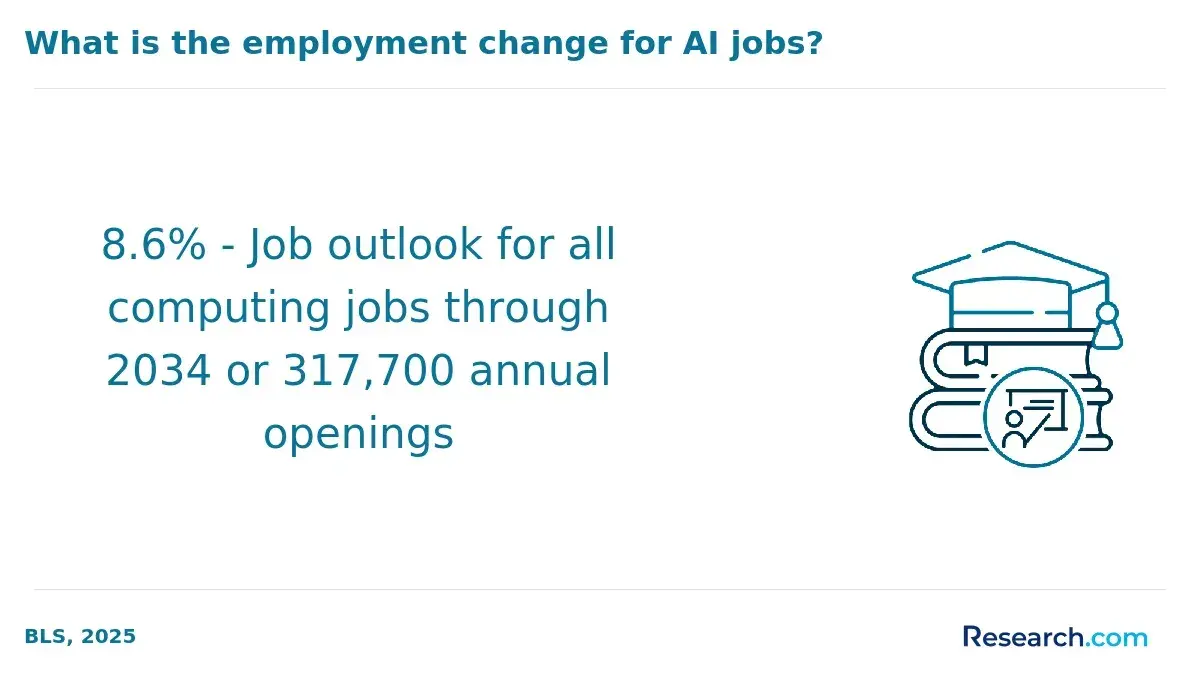
Employers tend to prioritize demonstrated AI skills over whether a degree includes a thesis. According to the Work Trend Index by Microsoft and LinkedIn, 72% of employers are more likely to hire candidates with AI skills than those without. This highlights that practical skills, problem-solving ability, and project experience matter more than the thesis versus non-thesis distinction in hiring decisions. Evidence of technical proficiency and real-world application is often more persuasive than formal research alone.
Thesis-optional artificial intelligence degrees often emphasize hands-on learning, internships, and project-based courses aligned with industry needs. Graduates from such programs usually provide tangible portfolios, code samples, or deployment experience, which employers value. Conversely, thesis-based programs showcase deep research capability and critical thinking, appealing to roles focused on innovation or R&D.
Students aiming for software development, machine learning engineering, or data science roles may find thesis-optional tracks offer faster skill acquisition and relevant experience. However, for those targeting academic careers, research roles, or advanced AI algorithm design, a thesis can demonstrate rigorous research skills effectively.
Key considerations for prospective students include:
- Assessing employer expectations in your target sector or company type.
- Balancing project experience with theoretical knowledge.
- Leveraging internships, certifications, or open-source contributions alongside your degree.
Ultimately, mastery of AI tools and techniques drives hiring decisions, making thesis choice less critical than skill mastery and proof of applying AI methods effectively. For those researching programs, exploring the best online masters in artificial intelligence can provide insights into affordable, skill-focused options. Employer views on thesis-based versus thesis-optional AI programs suggest that adapting education to meet industry demands often benefits candidates most.
What accreditation should AI degree programs have to be considered reputable?
Accredited artificial intelligence degree programs in North America often require approval from recognized agencies to ensure quality education. ABET (Accreditation Board for Engineering and Technology) is the leading accreditor for computing and related fields, offering accreditation through its Computing Accreditation Commission (CAC). ABET-accredited programs align curriculum standards with industry needs, covering AI fundamentals, algorithms, data structures, and ethical practices.
Regional accreditation standards for AI degree programs also play a critical role; organizations such as the Middle States Commission on Higher Education (MSCHE) and the Western Association of Schools and Colleges (WASC) verify institutional quality and complement program-specific accreditation. This dual approach improves graduate eligibility for financial aid, graduate schools, and enhances job prospects.
Choosing AI programs with ABET-CAC or proper regional accreditation ensures rigor and recognition. Nonaccredited programs might lack recognition by professional bodies or fail to meet certain certification requirements. Some institutions also offer AI-related accreditation through computer science or software engineering departments.
For students seeking related fields, exploring a cyber security degree can be a valuable option that shares overlapping skills and demands.
- Validates the curriculum meets industry standards and ethical AI practices.
- Enhances eligibility for federal financial aid and post-graduate opportunities.
- Increases employability by meeting employer accreditation expectations.
What coursework and skills are typical in thesis-optional AI programs?
Thesis-optional artificial intelligence degree programs focus on practical skills and core coursework to prepare students for industry roles quickly. Coursework typically covers machine learning algorithms, data structures, neural networks, natural language processing, computer vision, and AI ethics. Students complete hands-on projects or capstone experiences that showcase their ability to design and evaluate AI systems without committing to a research thesis.
Programming expertise, particularly in Python, is vital. According to the 2024 AI Jobs Report by Lightcast, 70% of AI specialist job listings require Python skills. These programs emphasize Python libraries like TensorFlow, PyTorch, and scikit-learn to build strong coding foundations for model development and deployment.
Additional skills include data preprocessing, model optimization, evaluation metrics, and understanding AI bias and interpretability to ensure ethical AI applications. Students also gain knowledge of cloud computing tools to support scalable AI solutions.
Electives may cover reinforcement learning, robotics, or AI applications in healthcare and finance, allowing tailored skill development aligned with career goals. Without a thesis, students can concentrate more on applied skills and industry certifications, facilitating transitions to roles such as AI engineer, data scientist, or machine learning specialist.
These programs equip students with practical expertise in essential AI technologies, programming, and ethical considerations to meet evolving job market demands efficiently.
What admissions requirements are common for AI master's programs with thesis-optional tracks?
Common admissions requirements for AI master's programs offering thesis-optional tracks generally include a bachelor's degree in computer science, engineering, mathematics, or data science. Applicants must demonstrate strong skills in programming, algorithms, and statistics. Most programs expect a minimum GPA of 3.0 on a 4.0 scale. Graduate standardized tests such as the GRE or GMAT remain relevant; notably, 80% of AACSB-accredited business schools accepted either exam for master's admissions, providing flexibility for students applying to AI programs within business or analytics departments.
Letters of recommendation-usually two to three-help evaluate academic potential and professional aptitude. A statement of purpose is required, outlining career goals, relevant experience, and motivation for pursuing AI without a thesis. Some programs ask for a resume noting technical projects or industry background, especially for non-traditional applicants.
Prerequisite coursework often includes linear algebra, calculus, probability, and machine learning. Conditional admission with bridge courses may be available for those lacking some prerequisites. International students typically must submit TOEFL or IELTS scores to prove English proficiency.
Professional experience can weigh heavily in admissions for thesis-optional tracks focused on applied learning, with some programs using interviews or portfolio reviews to assess candidate fit and practical expertise.
How long do thesis-optional AI programs take, and what do they cost?
Thesis-optional artificial intelligence degree programs generally take two to three years of full-time study. When a thesis is not required, students often complete extra coursework, projects, or comprehensive exams instead, which can offer more flexible or accelerated paths. Part-time enrollment may stretch the duration to four years or longer depending on the school and student pace.
Tuition costs vary widely by institution type, residency, and program format. For U.S. public four-year universities, out-of-state graduate tuition averages around $14,250 per year, based on the College Board's Trends in College Pricing 2024. Private institutions and specialized ai programs often exceed $30,000 annually. Additional expenses can include student fees, course materials, and required technology related to ai research.
Online or hybrid thesis-optional programs might reduce some costs like housing and offer competitive tuition but it is important to verify if these programs qualify for in-state tuition or financial aid. Program structure also matters; some emphasize capstone projects instead of theses, impacting time to finish. Prospective students should check credit load per term and availability of accelerated tracks.
- Typically 2-3 years full-time or 4+ years part-time
- Out-of-state public tuition around $14,250 annually
- Private and specialized programs may exceed $30,000 yearly
- Additional costs for fees, materials, and tech tools
Careful comparison of program details and costs helps ensure you select the best fit for your schedule and budget.
How do online thesis-optional AI programs compare with on-campus formats?
Online thesis-optional AI programs provide flexibility that on-campus options often lack. Students juggling work, family, or remote living benefit from asynchronous courses and fewer residency requirements. These programs typically allow learners to progress at their own pace, accommodating varying schedules. Conversely, on-campus programs offer direct access to faculty, research labs, and peer collaboration, which is valuable for those seeking hands-on experience or intensive networking.
More than half of U.S. graduate students enroll in at least one distance education course, showing how online AI education has become widely accepted. This shift means online programs commonly match traditional settings in curriculum quality and instructor expertise, although some practical elements like labs or specialized hardware may be adapted or limited.
Online thesis-optional tracks emphasize applied projects or comprehensive exams, appealing to professionals aiming to boost skills without committing to heavy research. Meanwhile, on-campus formats often require a thesis for those considering academic or research-intensive careers.
Key considerations when choosing include:
- Access to faculty mentorship and research opportunities
- Program reputation and industry connections
- Schedule flexibility and time to degree completion
- Availability of AI-specific labs or resources
- Cost differences and financial aid options
Ultimately, online programs favor flexibility and professional goals, while on-campus formats suit students prioritizing immersive research environments.
What AI careers can you pursue with a thesis-optional degree?
Graduates of thesis-optional artificial intelligence degrees often find career opportunities centered on practical AI implementation and applied research. Roles such as AI software engineer, machine learning engineer, and data scientist emphasize hands-on skills and experience over original thesis research. These positions focus on developing, deploying, and optimizing AI models within commercial and industrial sectors, making capstone projects or non-thesis coursework highly relevant.
Careers in AI product management and analytics are also well-suited for those without a thesis requirement, as they combine technical expertise with business insight and typically involve less emphasis on novel research. In addition, fields like AI ethics and policy analysis increasingly value applied knowledge gained through advanced courses and internships rather than academic theses.
The demand for generative AI expertise continues to grow rapidly. Data from the LinkedIn Economic Graph indicates a 400% increase in job postings requiring generative AI skills, highlighting opportunities in creative AI development, natural language processing, and AI-driven content creation. These sectors prioritize professionals with practical project experience over traditional research backgrounds.
Additional roles suitable for graduates include AI support engineers, training data specialists, and implementation consultants. These jobs require strong technical and problem-solving skills, often developed through industry projects and coursework, demonstrating that thesis-optional degrees remain viable pathways for building a successful AI career.
What are typical salaries and job outlook for AI graduates in the U.S.?
Graduates of artificial intelligence degree programs in the U.S. generally enjoy strong salary prospects. The median annual wage for data scientists-a common role for AI graduates-was $108,020 in May 2024 according to the U.S. Bureau of Labor Statistics. Salaries for AI-related roles such as machine learning engineer, AI research scientist, and AI software developer often range from $90,000 to over $150,000 depending on experience, location, and industry.
In tech hubs like Silicon Valley or New York, machine learning engineers frequently earn above $130,000. The job market outlook is positive, with the Bureau of Labor Statistics projecting a 36% growth rate for data science and related fields from 2021 to 2031-much faster than average.
Key industries driving demand include healthcare, finance, automotive, and e-commerce. Graduates with thesis-optional programs can build competitive skills through internships, research projects, and certifications. Proficiency in programming languages like Python and experience with AI frameworks such as TensorFlow or PyTorch further boost employability and salary potential.
Regional factors also influence job availability and pay. Candidates targeting established tech ecosystems or government AI initiatives often find more opportunities. Adjacent fields like robotics and natural language processing also offer viable career paths.
Other Things You Should Know About Artificial Intelligence
Thesis-optional AI degree tracks in 2027 often focus more on coursework and practical projects than extensive research. These tracks typically offer flexibility in electives and may replace the thesis with a capstone project or additional classes, allowing students to tailor their learning to career-oriented skills.
Yes, many artificial intelligence degree programs, even those with thesis-optional tracks, provide foundational research skills through project work, capstone courses, and exposure to cutting-edge AI techniques. While non-thesis options may focus more on practical applications, students often have opportunities to conduct research or collaborate with faculty on AI innovations if they choose to.
Practical experience in artificial intelligence programs often involves hands-on projects, internships, and collaboration with industry partners. Students may develop machine learning models, work with real datasets, or contribute to software development projects, which enhance skills that are directly applicable in the AI workforce. Some programs also incorporate competitions and hackathons to simulate real-world problem solving.
Ethical issues are increasingly emphasized in artificial intelligence curricula, addressing concerns like bias in algorithms, data privacy, and the societal impact of AI deployment. Many programs include dedicated courses or modules on AI ethics, ensuring students understand the responsibilities and challenges associated with developing and implementing AI technologies.
References
- 16 Artificial Intelligence Career Paths https://www.calmu.edu/news/artificial-intelligence-career-paths
- M.SC. IN Artificial Intelligence https://put.poznan.pl/msc-artificial-intelligence
- Employers favor AI talent with master’s degrees, job posts indicate https://www.hrdive.com/news/AI-jobs-masters-degrees/720285/
- Top 10 AI graduate degree programs https://www.cio.com/article/350315/top-10-ai-graduate-degree-programs.html
- What is the Best Degree for an AI Career? | SNHU https://www.snhu.edu/about-us/newsroom/stem/best-degree-for-an-artificial-intelligence-career
- Artificial Intelligence - Master's Degree https://www.jku.at/en/degree-programs/types-of-degree-programs/masters-degree-programs/ma-artificial-intelligence/
- Artificial intelligence for science and technology | Università degli Studi di Milano Statale https://www.unimi.it/en/education/master-programme/artificial-intelligence-science-and-technology
- AI Jobs in the U.S.: Salaries, Skills, and Career Growth in 2025 https://www.h2kinfosys.com/blog/ai-jobs-in-the-u-s-salaries-skills-and-career-growth-in-2025/
- Colleges are touting AI degree programs. Here's how to decide if it's worth the cost https://www.cnbc.com/2024/03/02/college-ai-degree-programs-are-booming-will-jobs-exist-for-graduates.html
- Who Accredits Artificial Intelligence (AI) Degree Programs? - AI Degrees Online https://aidegreesonline.com/accreditation/who-accredits-ai-degree-programs/