2027 AI Bachelor's Degrees for Students Interested in FinTech

Co-Founder and Chief Data Scientist
Students aiming to enter the FinTech sector often face challenges merging technical skills with financial expertise. Many come from unrelated undergraduate backgrounds and lack a clear, flexible path to build foundational knowledge in artificial intelligence tailored to finance. This gap limits their ability to compete for advanced roles in a rapidly evolving digital economy. Identifying accredited programs that integrate AI concepts with financial technologies becomes essential for career pivots.
This article explores bachelor's degrees that offer such interdisciplinary education, guiding readers toward programs designed to bridge their skills gap and enhance employability in FinTech industries.
Key Things You Should Know
- Bachelor's degrees combining artificial intelligence and fintech offer comprehensive skills in data analysis, machine learning, and financial technology tools, addressing a 40% projected job growth in fintech AI roles by 2030.
- Programs emphasize ethical AI use in finance, preparing students for compliance with evolving regulations like the 2024 Crypto and AI Data Protection Act.
- U.S. universities increasingly partner with fintech firms to provide hands-on experience, with 65% of graduates securing industry internships before graduation in 2025.
What is an AI bachelor's degree focused on FinTech?
An ai bachelor's degree in fintech applications blends core artificial intelligence principles with hands-on financial technology skills. Students gain expertise in machine learning, data analytics, natural language processing, and algorithm design tailored to banking, investment, and insurance sectors. Course topics often include financial markets, blockchain, risk management, and cybersecurity, preparing graduates to develop AI-driven solutions for finance.
These fintech-focused artificial intelligence undergraduate programs train students to build automated systems such as fraud detection models, credit scoring tools, and robo-advisors that enhance financial decision-making. Practical experience may involve creating predictive algorithms that analyze trading patterns or customer behaviors using extensive financial datasets, or developing chatbots and portfolio optimization tools.
With the financial industry predicted by the McKinsey Global Institute to gain $200-$340 billion annually from generative AI, demand for AI skills in banking and insurance is growing. Graduates can pursue careers in AI model development, compliance automation, and risk analytics-requiring a strong blend of finance knowledge and AI techniques.
Programs vary: some emphasize quantitative finance and advanced algorithm creation, while others focus on scalable software engineering for fintech platforms. Students should seek programs offering internships, exposure to financial datasets, and coursework covering regulatory frameworks alongside AI methods.
Prospective students should consider their career goals in investment banking, financial consulting, or AI product development and choose degrees balancing theoretical foundations with applied fintech innovations. To learn more about what can you do with an applied artificial intelligence degree, exploring career paths in AI is essential.
Which accredited U.S. schools offer strong AI bachelor's programs for FinTech?
Several accredited U.S. universities offering AI bachelor's degrees for FinTech provide excellent pathways into this dynamic industry. Carnegie Mellon University stands out with a BS in Artificial Intelligence, where graduates earn a median salary of about $150,000 four years after graduation, indicating strong returns for students focused on financial technologies.
Top U.S. schools with strong AI programs in FinTech also include the Massachusetts Institute of Technology (MIT), offering interdisciplinary AI courses emphasizing machine learning, data analytics, and financial modeling within its Electrical Engineering and Computer Science department.
- Stanford University features AI concentrations designed for data-driven decision-making, essential in algorithmic trading and risk assessment.
- The University of California, Berkeley presents AI tracks paired with economics and business analytics, preparing students for financial systems automation and fraud detection.
Prospective students should seek programs integrating finance-specific electives or industry partnerships to gain practical experience. Internships and project-based learning allow the application of AI concepts to real financial data challenges, while accreditation ensures curriculum quality and career prospects.
Program flexibility is key. Opportunities to combine AI fundamentals with cybersecurity, blockchain, or quantitative finance courses broaden career options in FinTech. Evaluating graduate outcomes and research opportunities helps students choose programs balancing theory with financial sector relevance.
For those concerned about cost, comparing tuition fees alongside curriculum quality is vital; resources like the mechanical engineering degree online cost data can provide useful benchmarks even within STEM fields.
What jobs can you get with an AI bachelor's degree in FinTech?
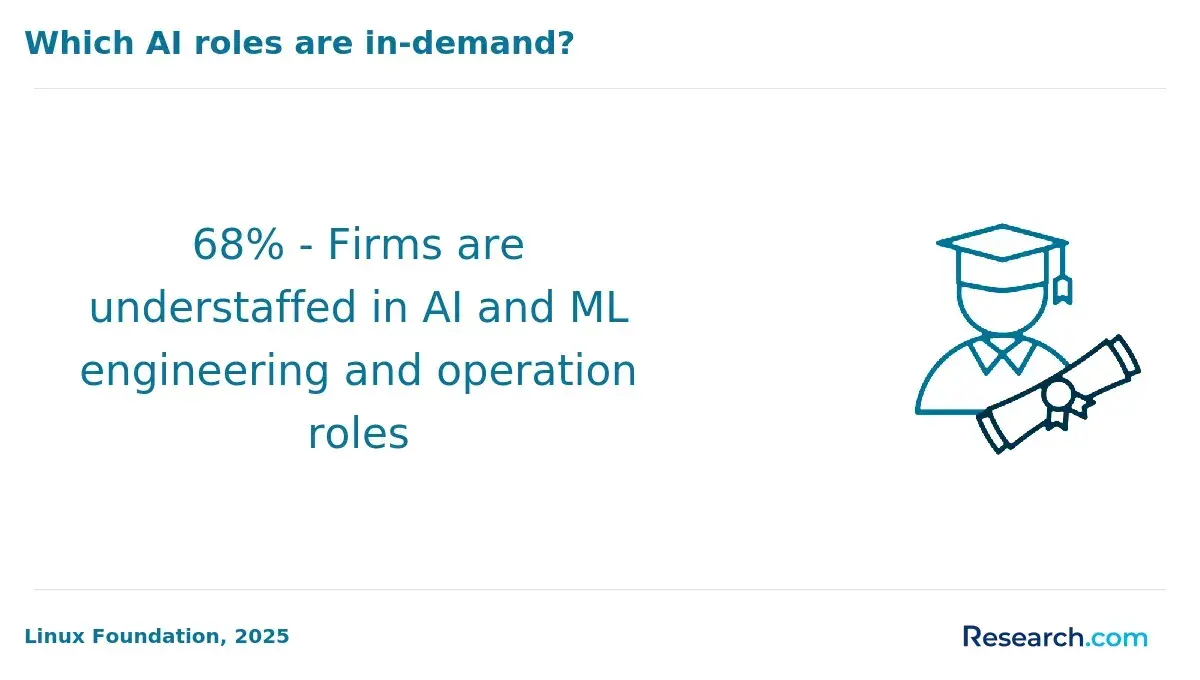
An AI bachelor's degree with a focus on FinTech equips graduates for specialized roles that merge finance and technology. Key positions include AI and machine learning specialist, quantitative analyst, algorithmic trader, data scientist, and risk analyst within financial institutions. These roles involve designing AI models to enhance trading algorithms, automate credit scoring, detect fraud, and optimize customer experience.
Machine learning roles for FinTech graduates often encompass developing systems that analyze large datasets to predict market trends and customer behavior. Quantitative analysts apply mathematical models and AI techniques for portfolio management to maximize returns and manage risk. Algorithmic traders use AI to execute high-frequency trades faster and more accurately than human traders.
Risk analysts leverage AI-driven tools to evaluate credit risk and market volatility, supporting banks in regulatory compliance and strategic decisions. Data scientists build predictive models to identify fraud by detecting abnormal patterns in millions of transactions. Graduates with AI finance analyst jobs in FinTech industry frequently also move into product management, guiding the creation of innovative financial services powered by AI.
The World Economic Forum's Future of Jobs Report (2025) ranks AI and machine learning specialists among the fastest-growing roles globally through 2030, reflecting ongoing demand in financial services amid digital transformation and regulatory pressures.
Students should seek internships with fintech startups or large banks' innovation labs for practical experience. Certifications in AI tools and proficiency in Python, R, and TensorFlow enhance employability. Competitive entry-level salaries often exceed $90,000 annually and increase rapidly with experience. Exploring online degrees in ai can provide flexible paths to this career field.
What courses and skills matter most for AI in financial technology?
Programming skills, especially in Python, are critical for AI programming and financial modeling skills in fintech. Python is frequently cited as the top requested skill in job postings related to generative ai, making Python-focused courses essential. Core coursework should cover machine learning and deep learning for predictive modeling, data structures and algorithms to handle large financial datasets, and statistical analysis for risk assessment.
- Natural language processing to interpret financial news and regulatory texts
- Database management with both SQL and NoSQL for diverse data storage needs
Understanding finance fundamentals such as investments, derivatives, and portfolio management supports machine learning applications in fintech. Cybersecurity courses also play an important role because of the sensitive nature of financial data and increased threats of fraud.
- Algorithmic trading simulations
- Fraud detection systems using classification algorithms
- AI-based customer credit scoring models
Hands-on experience with AI frameworks like TensorFlow or PyTorch is valuable, along with familiarity with cloud platforms such as AWS and Azure to develop scalable AI solutions. Strong problem-solving abilities and a solid foundation in mathematics, including linear algebra and calculus, are vital to optimize AI models in financial technology.
For those exploring advanced education options, consider a data science masters online to deepen expertise relevant to AI-driven financial innovation.
What are the admission requirements for AI bachelor's programs targeting FinTech?
Admission to bachelor's programs in artificial intelligence with a FinTech focus varies but generally requires strong skills in mathematics, computer science, and analytical reasoning. Applicants must submit high school transcripts showing proficiency in algebra, calculus, and programming. Traditional standardized tests like the SAT or ACT are less emphasized, as many schools adopt test-optional policies. For instance, fewer than half of applicants submitted SAT/ACT scores in the Common App's 2024-2025 cycle for AI-related programs.
Admissions committees increasingly weigh:
- A personal statement demonstrating passion for AI, finance, or technology
- Letters of recommendation from math or science teachers highlighting quantitative and problem-solving skills
- Strong GPA in STEM subjects
- Portfolios or documented projects showcasing programming or financial modeling expertise at selective institutions
Some schools require interviews or supplemental questions to evaluate motivation and fit. International candidates might need TOEFL or IELTS scores. Specific course prerequisites like statistics, economics, or data structures may be necessary, especially for transfer students with relevant college credits. Practical experience through AI tools, coding bootcamps, or FinTech internships further strengthens applications where tests are less critical. Students should focus on demonstrating quantitative aptitude, programming skills, and genuine interest in AI applications within financial services to meet evolving admission standards.
How do online AI bachelor's programs compare to on-campus options for FinTech?
Online ai bachelor's programs offer significant flexibility and accessibility, ideal for students balancing work or family responsibilities. Data from the National Center for Education Statistics (NCES), Digest of Education Statistics indicates that most undergraduates have taken at least one distance-education course, underlining how online and hybrid formats have become widespread in tech-focused degrees.
On-campus programs provide direct interaction with faculty and peers, enhanced by hands-on experiences such as labs and group projects. Students benefit from immediate access to campus career services, networking events, and internships. Online programs, while lacking physical presence, use virtual labs, simulations, and remote collaboration tools but require strong self-discipline and time management.
Cost is an important factor: online options often reduce expenses related to housing and commuting. However, tuition rates vary widely, so prospective students should evaluate accreditation and faculty expertise, especially in ai and financial technology fields.
Some universities offer hybrid models that blend online coursework with occasional campus immersion, enhancing networking and mentorship opportunities. Careers in FinTech require practical skills in machine learning, data analysis, and financial regulations, so students should ensure their program aligns with industry certifications and emerging technologies. Strong career support networks, both virtual and onsite, are crucial for job placement success.
How long does an AI bachelor's degree take and what does it cost?
An AI bachelor's degree generally requires four years to complete at most U.S. universities, following a traditional full-time undergraduate schedule. Some programs provide accelerated options that can shorten this time to three years through heavier course loads or summer sessions. Part-time enrollment may extend completion to five or six years depending on individual pacing.
Tuition costs vary widely by institution type and residency status. In-state tuition and fees at public four-year universities average about $11,260 annually, based on College Board's Trends in College Pricing. Private universities often charge two to three times this amount, with specialized AI programs sometimes exceeding $40,000 per year. Location also impacts costs; fees differ between states like California, Texas, and New York, and between schools that house AI within computer science or engineering departments.
Financial aid, scholarships, and work-study programs can greatly reduce expenses, so students should explore these options early. Community colleges offering AI-related associate degrees can serve as affordable starting points before transferring to a four-year institution, lowering overall costs.
For reliable information on AI education and financial planning, resources like the College Board's website and sector-specific research platforms offer valuable insights.
What specializations best align AI study with FinTech career paths?
Specializations that link artificial intelligence with careers in fintech often focus on cybersecurity, machine learning, and financial data analytics. Cybersecurity paired with machine learning is essential due to the high cost of data breaches; IBM's Cost of a Data Breach Report notes an average expense of $4.88 million per breach. This creates strong demand for experts in fraud detection, anomaly detection, model security, and data privacy within AI frameworks.
Key areas of study include:
- Machine learning for real-time fraud and anomaly detection in financial transactions.
- Securing AI models against tampering and adversarial attacks threatening financial systems.
- Privacy-preserving AI techniques such as federated learning and differential privacy to handle sensitive data compliantly with GDPR and CCPA regulations.
Financial data science and algorithmic trading are also valuable specializations, leveraging AI to analyze market trends, optimize investments, and automate decisions. Integrating AI with quantitative finance, econometrics, and blockchain technology prepares students for innovation in decentralized finance (DeFi) platforms.
Gaining hands-on experience through internships or projects with financial institutions using AI for credit risk assessment or customer behavior analysis enhances career readiness. Combining AI with risk management and regulatory technology (RegTech) addresses unique compliance challenges in fintech.
Targeting these areas equips students with the skills needed to meet fintech's data-driven and security demands while reducing significant financial risks.
Which certifications help AI bachelor's graduates stand out in FinTech?
Certifications significantly boost the value of AI bachelor's graduates pursuing careers in FinTech by proving specialized knowledge and practical skills. Key credentials focus heavily on cybersecurity, addressing a global workforce gap of about 4 million professionals in this sector, according to the ISC2 Cybersecurity Workforce Study. Important certifications include CompTIA Security+, (ISC)² Systems Security Certified Practitioner (SSCP), and Certified Information Systems Security Professional (CISSP).
Security+ offers entry-level validation for network security and threat mitigation. The SSCP confirms expertise in managing secure infrastructures, suitable for FinTech roles centered on risk management and secure transactions. CISSP targets experienced professionals aiming for leadership or architect positions in cybersecurity operations within FinTech companies.
Data science certifications such as the Certified Analytics Professional (CAP) or those from SAS and IBM also help graduates demonstrate proficiency in financial modeling, fraud detection, and decision automation-key areas driving FinTech innovation. Cloud certifications like AWS Certified Machine Learning and Google Professional Data Engineer support scalable AI tool deployment in FinTech environments.
Graduates should prioritize certifications that match their targeted FinTech niche:
- Quantitative analysis roles benefit from data science certifications.
- Cybersecurity-focused roles require security credentials.
This targeted strategy enhances employability by meeting FinTech employers' growing demand for professionals combining AI expertise with specialized business and security knowledge.
What salary and job outlook can AI bachelor's graduates expect in FinTech?
Graduates holding a bachelor's degree in artificial intelligence who focus on the FinTech sector can expect a robust job market and competitive salaries. Data scientist roles, closely aligned with AI-driven analytics in finance, are expected to grow by 35% over the next decade, according to the U.S. Bureau of Labor Statistics Occupational Outlook Handbook. This growth outpaces the average for all occupations, highlighting the demand for AI expertise in financial technology.
Median salaries for these positions were approximately $108,020 as of May 2023, with entry-level roles often starting above $85,000 in key financial centers. Advanced roles such as senior data scientists, machine learning engineers, and AI researchers can easily surpass six-figure incomes.
Job security and growth potential are strong due to FinTech's reliance on AI for credit scoring, fraud detection, automated trading, and customer personalization. Adding knowledge of financial regulations, blockchain, or cybersecurity enhances a graduate's appeal to employers.
To strengthen career prospects in this field:
- Secure internships at companies specializing in AI applications in lending, payments, and wealth management.
- Build programming skills in Python, R, and SQL, along with AI frameworks like TensorFlow or PyTorch.
- Create a portfolio showcasing machine learning projects addressing real financial challenges.
Other Things You Should Know About Artificial Intelligence
Students can specialize in FinTech by choosing elective courses or a concentration offered by universities like Stanford, MIT, or Georgia Tech in their AI Bachelor's programs. These specializations often include courses on blockchain, digital payments, and financial data analytics.
Prerequisites typically include a high school diploma with strong math and science grades, and occasionally standardized test scores. Some programs may require specific coursework in calculus or programming languages to equip students for the FinTech-oriented curriculum in 2027.
Python is the most common requirement, and many programs also expect SQL and one additional language such as Java or C++. These courses support machine learning, database work, and financial data analysis used in FinTech applications.
Internships are highly valuable because they provide real-world experience in applying AI concepts to FinTech problems. They offer opportunities to work with industry tools, collaborate on practical projects, and build networks. Such experiences can significantly enhance job readiness and improve employment prospects after graduation.
References
- AI in Fintech Explained | How Artificial Intelligence Transforms Finance https://www.wpi.edu/news/explainers/financial-technology-ai-fintech
- Number of Universities Offering AI Programs in the US - Programs.com https://programs.com/resources/universities-offering-ai-programs/
- Best AI Certifications to Boost Your Career in 2026 – Dataquest https://www.dataquest.io/blog/best-ai-certifications/
- Choosing the Right Fintech Certifications for Your Career Goals and Skillset - Finance, Tech & Analytics Career Resources | Imarticus Blog https://imarticus.org/blog/choosing-the-right-fintech-certifications-for-your-career-goals-and-skillset/
- Online Bachelor’s Degree: Artificial Intelligence https://www.umgc.edu/online-degrees/bachelors/artificial-intelligence-ai
- 7 High-Paying AI Careers in Fintech https://vault.com/blogs/salary-and-benefits/7-high-paying-ai-careers-in-fintech
- Financial Technology | VIZJA University https://vizja.pl/en/specjalizacja/financial-technology-fintech/
- Fintech and Digital Transformation in Finance (Major on the Financial Management bachelor program) https://www.kozminski.edu.pl/en/fintech-and-digital-transformation-finance-major-financial-management-bachelor-program
- Best FinTech Courses & Certifications (2025) - Bankers By Day https://www.bankersbyday.com/fintech-courses-certifications/
- Artificial Intelligence in Finance: 9 AI Courses to Build Your Skills https://xledger.com/blog/artificial-intelligence-in-finance-9-ai-courses-to-build-your-skills/