2027 Cost Per Credit for AI Bachelor's Degree Programs

Co-Founder and Chief Data Scientist
Choosing a bachelor's degree program in artificial intelligence can become overwhelming when faced with varying costs per credit across institutions in 2026. Many prospective students struggle to estimate total tuition expenses, especially when balancing work or family commitments alongside education. This financial uncertainty may delay enrollment or lead to uninformed decisions. Understanding the cost per credit enables better budget planning and comparison between programs offering flexible, accredited options. This article examines the 2026 cost per credit for AI bachelor's degree programs nationwide, helping readers make informed choices to efficiently invest in their education and career transition.
Key Things You Should Know
- The average cost per credit for AI bachelor's degrees in 2026 ranges from $350 at public institutions to $900 at private universities.
- Online AI programs often offer more affordable per-credit rates, with some as low as $300, appealing to working professionals and remote learners.
- Financial aid and scholarships specifically targeting STEM and AI fields can reduce effective costs by up to 40%, improving accessibility for diverse student populations.
How much does a bachelor's degree in artificial intelligence cost per credit hour at accredited U.S. universities?
The cost per credit hour for artificial intelligence bachelor's degree programs at accredited U.S. universities varies significantly depending on the institution type and residency status. Public universities typically offer the most affordable rates, with in-state students paying between $200 and $600 per credit hour. Out-of-state students at public institutions face higher fees, generally ranging from $500 to $1,200 per credit hour. In contrast, private universities often charge between $1,000 and $1,700 per credit hour, reflecting their generally higher tuition costs.
For example, some private universities report total annual tuition around $39,750, which breaks down to approximately $1,325 per credit hour based on a full-time course load of 30 credits. This aligns closely with market averages for private schools offering specialized programs like artificial intelligence.
Additional mandatory fees-such as technology, lab, and student services fees-can add $50 to $200 per credit hour. Online AI bachelor's programs sometimes provide alternative pricing, including flat-term rates or discounted per-credit prices, typically ranging from $400 to $900.
Students researching the average tuition cost per credit for artificial intelligence bachelor's programs in the United States should carefully review university websites and consult financial aid offices to plan their expenses. Comparing public in-state rates with private university tuition can yield substantial savings. For those exploring career opportunities related to their AI education, resources like AI degrees offer valuable insights.
What is the difference between online and campus-based artificial intelligence bachelor's programs in terms of pricing and format?
Online artificial intelligence bachelor's degree programs offer a significant cost advantage, with tuition averaging between $10,000 and $15,000 per year compared to traditional campus-based options that usually exceed $30,000 annually. This pricing comparison of campus-based and online artificial intelligence degrees reflects savings on housing, commuting, and campus fees. Tuition differences also impact the cost per credit for online artificial intelligence bachelor's programs, making online education a budget-friendly alternative.
The educational format varies distinctly between the two. Online programs tend to be asynchronous, granting flexibility for students who work or manage family commitments, while campus-based programs require fixed class schedules with in-person attendance. These on-campus formats often provide hands-on experiences and direct interaction with faculty and peers, which benefit students interested in immersive learning and networking.
Within online options, some degrees blend synchronous sessions or hybrid models that include occasional campus visits. Physical campus options frequently offer access to laboratories and AI research facilities unavailable fully to online students. Prospective learners must weigh personal priorities such as budget, learning style, and career goals when choosing between these paths.
For those seeking affordable and flexible educational routes, exploring options like the online mechanical engineering degree can provide additional insights into equivalent cost structures and program designs in related STEM fields.
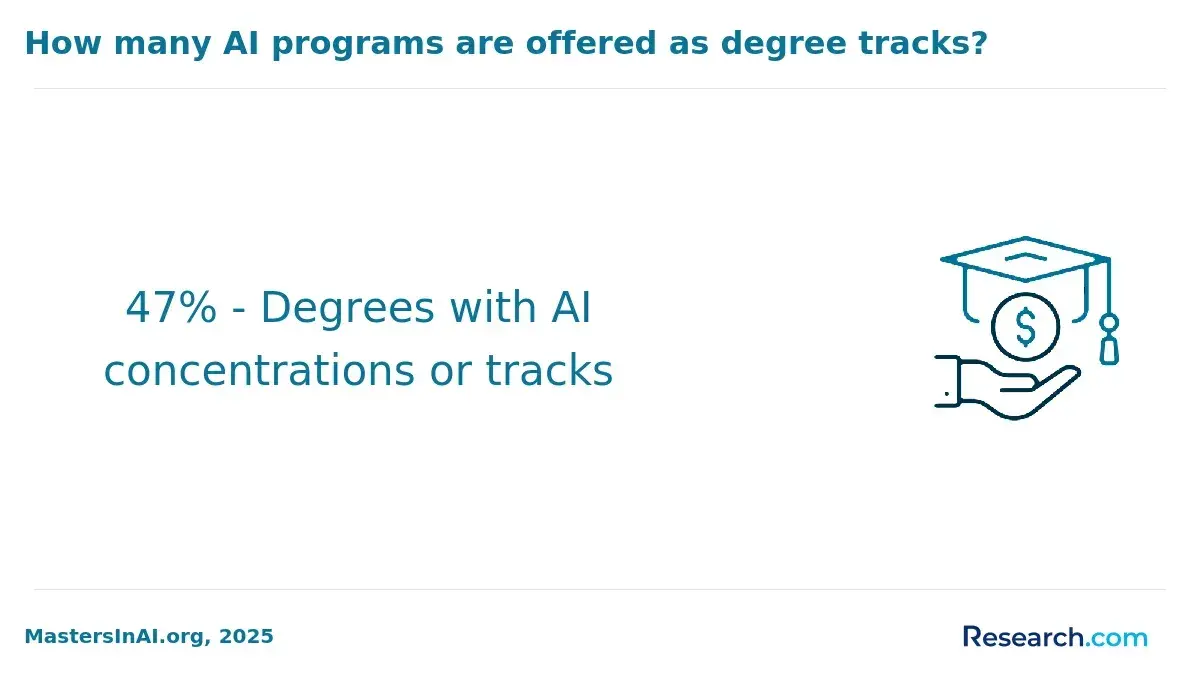
Which accredited universities offer artificial intelligence bachelor's degrees, and how do their per-credit costs compare?
Over 150 accredited U.S. universities offer bachelor's degree programs specifically in artificial intelligence, encompassing public state universities, private institutions, and specialized technology schools. The per-credit cost for these AI bachelor's degrees varies, generally ranging from $200 to $600 per credit. This variation stems from differences in institution type and location, as well as program delivery.
Public universities tend to provide more affordable tuition, usually charging between $200 and $350 per credit for in-state students. For example, the University of California and University of Texas systems offer AI degree credits for roughly $250 to $300 to residents. Out-of-state tuition can increase costs to around $400 or more per credit.
Private and specialized schools often command higher prices, with tuition typically between $450 and $600 per credit. Prestigious universities such as Carnegie Mellon University and Massachusetts Institute of Technology (MIT) fall into this category, offering advanced curricula and strong research opportunities.
Online AI bachelor's degrees, available through several accredited institutions, often have per-credit costs similar to public universities, usually between $300 and $400. This option allows students to avoid relocation or commuting expenses, making it a cost-effective alternative. For prospective students comparing programs, evaluating per-credit costs alongside quality and delivery mode is essential to find the best fit. Detailed information about affordable engineering schools can be found at affordable engineering schools.
When examining the top accredited institutions for artificial intelligence bachelor programs and average credit hour pricing, students should balance cost with educational rigor and opportunities for career growth.
What are the typical admission requirements for artificial intelligence bachelor's degree programs?
Typical admission criteria for artificial intelligence bachelor's degrees include a strong academic record, solid standardized test scores, and relevant coursework. Successful candidates generally have SAT scores above 1,450 and a GPA of 3.8 or higher, reflecting the competitive admission process and high academic standards.
The eligibility requirements for AI bachelor's programs emphasize completion of advanced high school courses, especially in mathematics and computer science. Data shows that 92% of admitted students took classes like calculus, statistics, programming, or data structures, which form the essential groundwork for AI curricula.
Many programs also ask for essays or personal statements that highlight analytical skills or interest in AI fields. Letters of recommendation from math or science teachers add weight to applications, while involvement in STEM clubs or coding competitions can enhance prospects, although they are not always mandatory.
Admission variations occur by institution; some place less emphasis on SAT/ACT scores and more on GPA or portfolios featuring programming or robotics projects. Additional requirements might include prerequisite courses or interviews assessing problem-solving aptitude. International applicants often need proof of English proficiency, such as TOEFL or IELTS scores.
For students aiming to broaden their skills, exploring related fields can be helpful. For instance, reviewing cybersecurity programs may provide complementary opportunities relevant to AI careers.
How long does it take to complete an artificial intelligence bachelor's degree, and how does program length affect total cost?
The duration to complete an artificial intelligence bachelor's degree typically ranges from four to five years, which directly impacts the total cost of education. Students finishing in four years often pay between $160,000 and $240,000 in tuition, based on data from the National Center for Education Statistics. Extending study beyond four years can increase tuition costs to over $200,000 and sometimes exceed $300,000.
Several factors influence these differences. Full-time students who maintain a consistent course load usually graduate within four years, avoiding extra fees for additional semesters. On the other hand, part-time enrollment, course failures, or adding minors and dual majors can prolong the program and increase expenses. Balancing work or family commitments might lead some students to take five or more years, significantly raising costs.
Program structure also plays a crucial role. Some colleges offer accelerated or competency-based models that allow students to finish sooner, reducing overall costs. Others have longer prerequisite chains or limited course availability, which may delay graduation. Choosing a program with clear pathways and support services helps minimize extra semesters and costs.
Students should consider length versus affordability carefully. Longer programs not only mean higher tuition but also increased living and opportunity costs. Strategies like credit transfers and summer courses can shorten degree time and help control total expenditures.
What core courses and technical skills are included in artificial intelligence bachelor's degree curricula?
Core courses in artificial intelligence bachelor's degree programs generally require 45 to 50 credit hours, with a strong focus on mathematics, computer science, and AI-specific subjects. A 2024 curriculum analysis by the Computing Accreditation Commission found that 98% of accredited programs require courses in machine learning, neural networks, and data structures. These form the essential technical foundation for AI education, equipping students to design algorithms and understand AI model structures.
Mathematics classes emphasize linear algebra, calculus, probability, and statistics, which are vital for grasping algorithm theory and analyzing data patterns used in predictive modeling and decision making. Computer science coursework often covers programming languages such as Python, Java, or C++, with attention to algorithm development, software engineering, and database systems.
Courses focused specifically on artificial intelligence include natural language processing, computer vision, robotics, and automated reasoning. For instance, natural language processing trains students in machine understanding of human language, while computer vision teaches image recognition and interpretation techniques. Robotics classes typically involve hands-on projects related to autonomous systems.
Students build technical skills in coding machine learning models, managing extensive datasets, and employing AI frameworks like TensorFlow or PyTorch. They also learn algorithm optimization and model evaluation, preparing them for careers in AI research, development, and deployment across industries. Electives often address ethics, AI law, and human-computer interaction to highlight societal and usability concerns.
Such curricula balance theoretical knowledge, practical coding experience, and interdisciplinary insights needed for success in artificial intelligence fields today.
What career paths and job titles are available for graduates with an artificial intelligence bachelor's degree?
Graduates holding a bachelor's degree in artificial intelligence typically explore at least eight distinct career paths, reflecting the field's versatility. Leading entry-level positions include machine learning engineer, data scientist, and AI research scientist, which together account for 67% of roles occupied by recent graduates.
Machine learning engineers create algorithms and models that allow computers to learn from data, applying their programming expertise and neural network knowledge across industries such as healthcare, finance, and autonomous vehicles. Data scientists analyze vast datasets to uncover actionable insights, supporting sectors like marketing analytics, risk management, and product innovation. AI research scientists work on advancing core technologies by developing new models or refining existing methods, often within academic and corporate research environments.
Additional career options span AI software development, robotics engineering focused on autonomous systems, and AI ethics roles addressing societal impact and regulatory concerns. Some graduates enter AI product management, leveraging technical skills to steer product development in tech firms.
To meet industry demands, employers often seek proficiency in Python, TensorFlow, and cloud platforms. Enhancing employability through internships or specialized certifications can be valuable. Recognizing this range of opportunities helps students and professionals tailor their skills and career strategies effectively.
What is the average starting salary and long-term earning potential for artificial intelligence bachelor's degree holders?
Graduates with a bachelor's degree in artificial intelligence start their careers earning between $95,000 and $110,000, according to data from the Bureau of Labor Statistics and Glassdoor. This starting salary notably exceeds the median for other bachelor's degree holders, reflecting strong industry demand for AI skills.
After five to ten years of experience, mid-career earnings for AI graduates typically range from $150,000 to $180,000, offering a 58% premium over median salaries for all bachelor's degree holders. This highlights the significant long-term financial advantages of pursuing an AI-focused education.
Professionals specializing in machine learning engineering, AI research, or data science often see substantial income growth as they gain experience and enter senior roles. For example, AI graduates in healthcare technology can start near $100,000 and surpass $160,000 within five years.
Factors such as location, employer type, and technical expertise also influence earning potential. Graduates working in major tech hubs or sectors like finance and autonomous vehicles often receive higher compensation. Continuous learning in emerging AI frameworks and programming languages further boosts salary prospects.
Considering these earning trajectories helps prospective students weigh the cost of tuition against future income potential. The premium most AI graduates command justifies the investment in top-tier programs by delivering sustained financial rewards over a career.
What is the job outlook and labor market demand for artificial intelligence professionals through 2030?
The employment outlook for artificial intelligence professionals is exceptionally positive, with roles in AI and machine learning projected to grow by 35% through 2032, according to the U.S. Bureau of Labor Statistics Occupational Outlook Handbook. This growth far exceeds the 3% average for all jobs, signaling strong demand across multiple sectors. Each year, more than 67,000 new positions are expected to open in the United States alone.
Opportunities span beyond traditional technology companies, extending to healthcare, finance, automotive industries, and government agencies. AI specialists in these fields develop solutions for automation, predictive analytics, and decision-making, such as algorithms for medical diagnostics or optimizing retail supply chains.
Students and professionals aiming for careers in AI should build skills aligned with market needs, including expertise in machine learning frameworks, natural language processing, and data engineering. Employers prioritize candidates with interdisciplinary knowledge combining programming, statistics, and domain-specific insights. Career paths vary from research-focused roles to practical AI engineering positions.
To stand out, acquiring hands-on experience through internships or certifications is essential. The competitive landscape demands blending foundational theory with technical skills. Given the robust labor market demand, graduates with degrees in artificial intelligence can expect a broad range of career options in numerous industries, supported by comprehensive labor data.
What professional certifications or credentials complement an artificial intelligence bachelor's degree in the job market?
Professional certifications enhance the value of an artificial intelligence bachelor's degree by improving job prospects and earning potential. Credentials like AWS Certified Machine Learning and Google Cloud Professional Data Engineer demonstrate hands-on skills in deploying AI models and managing cloud infrastructure, which employers seek. Data from Coursera and the Project Management Institute show that AI graduates with such certifications can increase their starting salaries by 18-22% and shorten job search durations by 35%.
Other important certifications include Certified Analytics Professional (CAP), emphasizing data analysis and decision-making, and Microsoft Certified: Azure AI Engineer Associate, which focuses on AI solutions within Microsoft's cloud environment. For those aiming for project management roles in AI, the PMP (Project Management Professional) credential offers a competitive edge by validating expertise in managing AI initiatives.
Advanced technical proficiency is often required beyond academic training. Certifications like Certified TensorFlow Developer and IBM AI Engineering Professional Certificate improve practical skills with AI tools and frameworks, boosting job performance and innovation abilities. Selecting certifications aligned with career goals-cloud-focused for infrastructure roles or analytics and AI engineering for data science-is crucial.
Combining an artificial intelligence degree with targeted professional credentials maximizes employability and salary potential in a competitive market.
Other Things You Should Know About Artificial Intelligence
Most artificial intelligence bachelor's programs require a strong foundation in mathematics, particularly calculus and linear algebra, along with coursework in computer science fundamentals. Some programs may expect prior exposure to programming languages like Python or Java. These prerequisites ensure students can successfully handle the technical and analytical coursework involved in AI studies.
Yes, many artificial intelligence bachelor's programs offer specializations or elective tracks such as machine learning, robotics, natural language processing, or computer vision. These options allow students to focus their studies on specific AI subfields that align with their career goals. Specializations vary by institution, so it is important to review program offerings carefully.
Hands-on experience is crucial in artificial intelligence education, as it strengthens practical skills beyond theoretical knowledge. Many programs incorporate labs, projects, internships, or capstone courses where students apply AI techniques to solve real-world problems. This experience enhances employability and prepares students for the rapidly evolving AI industry.
In 2027, factors affecting the cost per credit for AI bachelor's degree programs include the institution's prestige, program duration, and additional resources like lab access. For those interested in further specialization, exploring a master’s in AI in healthcare could offer insights into advanced cost structures.
In 2027, online AI bachelor's degree programs may offer lower costs per credit than on-campus options due to reduced overhead. However, the actual savings can vary by institution. For broader career advancement, consider a master’s in AI in healthcare.
References
- Online Bachelor’s Degree: Artificial Intelligence https://www.umgc.edu/online-degrees/bachelors/artificial-intelligence-ai
- Top 10 AI certifications and courses for 2025 https://www.techtarget.com/whatis/feature/10-top-artificial-intelligence-certifications-and-courses
- Best Online AI Degrees: 2025 Rankings & Program Directory - MastersInAI.org https://www.mastersinai.org/degrees/online-artificial-intelligence-degrees/
- 40 Best Colleges in the U.S. for Artificial Intelligence (Undergraduate) https://www.greatvaluecolleges.net/artificial-intelligence-colleges/
- Best Artificial Intelligence Bachelor's Degree Programs 2026 https://hakia.com/degrees/artificial-intelligence/best-bachelors-programs/
- What Are the Career Paths After a Bachelor of Science in AI https://tetr.com/blog/what-are-the-career-paths-after-a-bachelor-of-science-in-ai
- How to Get into a BSc in AI Program | Admission Guide 2025 https://futurense.com/blog/bsc-ai-program
- Best AI Certifications to Boost Your Career in 2026 – Dataquest https://www.dataquest.io/blog/best-ai-certifications/
- 23 Top AI Certifications to Know | Built In https://builtin.com/articles/ai-certification