2027 Most Affordable Paths Into AI Careers

Co-Founder and Chief Data Scientist
Many professionals with degrees in unrelated fields face challenges when trying to enter the field of artificial intelligence. Traditional pathways often require time-intensive, costly education or prior technical experience, which limits access for career changers. The rapid growth of AI demands accessible, flexible options for acquiring relevant skills without significant financial strain. This article explores the most affordable routes into AI careers that accommodate diverse backgrounds and busy schedules. It guides readers through practical, accredited programs and learning opportunities designed to facilitate a successful pivot into the artificial intelligence industry with minimal barriers.
Key Things You Should Know
- Online certificate programs and bootcamps have surged in popularity, offering focused AI skills at under $5,000, significantly lowering traditional education costs.
- Federal and state grants now frequently support STEM and AI-related studies, making career shifts more financially accessible for working professionals.
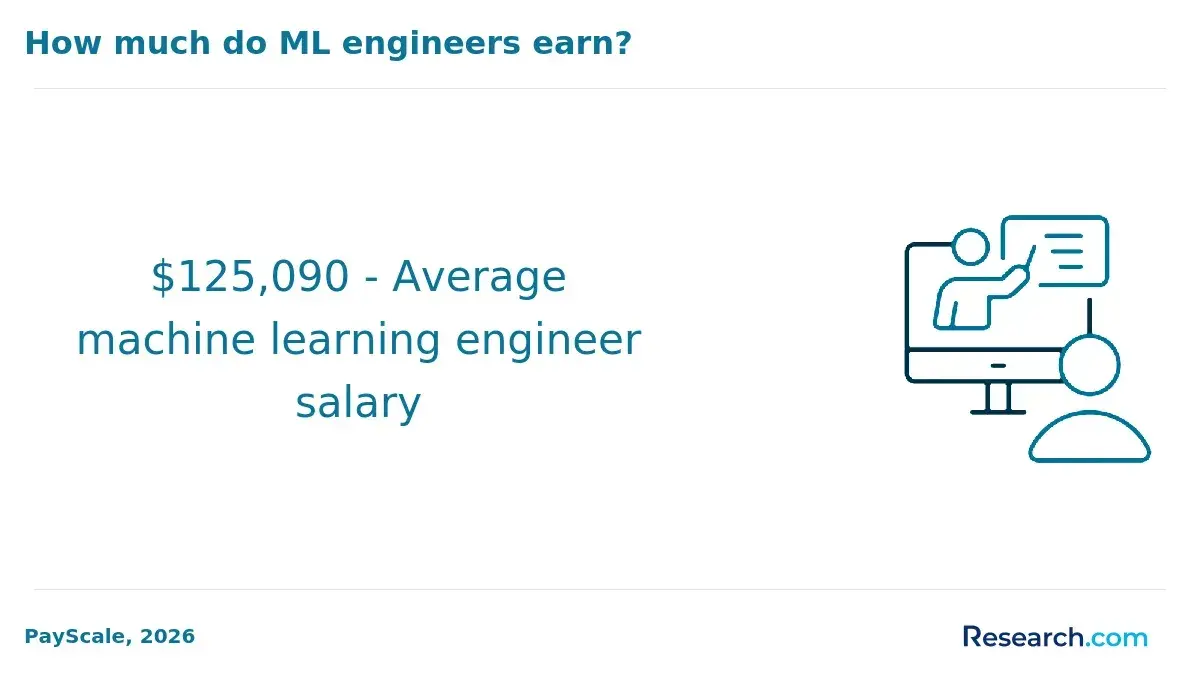
- Employment in AI roles is expected to grow 36% through 2031, with entry-level salaries averaging $85,000 nationwide, highlighting strong ROI for affordable training paths.
What are the most affordable education pathways into artificial intelligence careers?
In the US, most affordable education pathways into artificial intelligence careers prioritize skill acquisition over formal degrees. Data from LinkedIn Workplace Learning shows 72% of employers hiring for AI roles value skills and experience more than diplomas. This shift makes low-cost routes to start a career in artificial intelligence increasingly viable.
Online platforms such as Coursera, edX, and Udacity offer accessible AI and machine learning courses created by leading universities and industry experts. Many provide free access to materials, with optional certifications under $100, while more structured specializations or nanodegrees typically range from $300 to $1,000.
Technical bootcamps deliver accelerated, practical training focused on Python, data analysis, and machine learning frameworks. Priced between $7,000 and $15,000, bootcamps offer hands-on experience suitable for career switchers and new graduates. Community colleges also provide affordable foundational courses, with tuition as low as a few thousand dollars per semester.
Self-study remains a cost-effective option using free, open-source resources and textbooks. Platforms like GitHub and AI research repositories support learners aiming to build skills independently. Combining these learning paths with internships, freelance work, or competitions on sites like Kaggle can further validate expertise for employers.
For those seeking formal education options, an online computer science degree can be a flexible and affordable choice that aligns with industry needs.
Do you need a degree to work in artificial intelligence, and which levels cost least?
You do not need a four-year degree to enter artificial intelligence careers. Burning Glass Institute's mobility analysis reveals that 29% of U.S. workers moving into AI and data science roles from 2020 to 2024 held sub-bachelor credentials, such as associate degrees, certificates, or community college qualifications. This highlights that affordable, shorter educational pathways can provide viable entry points into AI.
Community colleges and associate degree programs usually cost significantly less than traditional bachelor's degrees, often ranging from $3,500 to $10,000 in tuition, compared to $40,000 to $100,000 for four-year universities. These programs supply the technical foundation employers seek in fields like computer science, data analytics, or machine learning, making them some of the most affordable education levels for artificial intelligence jobs.
Certificates focusing on AI-related skills, such as Python, R programming, machine learning frameworks, or data tools, offer flexible, lower-cost alternatives. Typically costing between $1,000 and $5,000, these courses emphasize practical skills highly valued by employers. Many candidates supplement sub-bachelor credentials with online courses and portfolio projects to boost their job prospects.
While bachelor's and advanced degrees can deepen theoretical knowledge and expand opportunities, employers increasingly prioritize demonstrable skills over formal degrees. For those seeking guidance on accessible credentials, exploring degrees in AI online can be a helpful resource regarding degree requirements for artificial intelligence careers.
How do community colleges and bootcamps compare as low-cost paths into AI jobs?
Community colleges and bootcamps offer distinct, low-cost training options for AI jobs in the US, each catering to different needs. Community colleges provide comprehensive programs lasting around two years, combining foundational skills and general education, often costing between $3,500 and $6,000. These programs award associate degrees or certificates and are ideal for students seeking a balanced education with recognized credentials.
Bootcamps deliver intensive, short-term training focused on practical skills and portfolio projects, usually lasting three to six months, with costs ranging from $10,000 to $15,000. Their curricula prioritize current industry technologies, making them appealing to career changers wanting to upskill rapidly with job placement in mind.
Another affordable path includes online certificates from major tech companies like Google, IBM, and Microsoft. Google reports that 75% of U.S. completers of its Career Certificates achieve positive career outcomes within six months. These certificates often center on IT and data skills that lead directly to AI roles, offering flexibility without long degree commitments.
Choosing the right path depends on personal timeline, budget, and experience. Combining options, such as starting with a certificate and then attending a bootcamp, can maximize career prospects. For those exploring specialized fields, consider programs like a video game development degree that integrate AI concepts with creativity, expanding job opportunities in the tech sector.
Which accredited online AI and machine learning programs offer the best value?
Accredited online artificial intelligence programs with the best value often balance affordability, curriculum quality, and career outcomes. Public universities offering online master's degrees, such as the University of Florida and Arizona State University, typically charge $15,000-$25,000 total for comprehensive AI or data science degrees. These programs provide solid foundational knowledge, access to experienced faculty, and recognized accreditation to support long-term career growth.
Specialized bootcamps and intensive upskilling programs serve as accelerated paths into AI fields. According to the Council on Integrity in Results Reporting (CIRR), 41% of bootcamp graduates secure AI, machine learning, or data-related roles within a year. Options like Springboard, Udacity's Nanodegree, and IBM's AI Engineering Professional Certificate cost $7,000 to $15,000, making them an efficient choice for rapid reskilling without committing to a full degree.
For those seeking targeted AI expertise, accredited certificate programs from prestigious institutions such as Stanford and MIT cost between $5,000 and $10,000. These credentials leverage university's reputation to bolster resumes and career advancement. When considering top value machine learning degrees from accredited online schools, it is essential to evaluate total cost alongside outcomes, credential recognition, and support services that enhance return on investment.
Career placement, project-based learning, and clear graduate employment data play key roles in value assessment. For students interested in practical, fast-track options in tech fields, the fastest online cyber security degree can complement AI study and expand career opportunities.
How does the cost of campus-based AI degrees compare to online options?
Campus-based AI degrees often come with high costs, including tuition, housing, and fees, frequently exceeding $40,000 to $60,000 annually at many public and private universities when combined with living expenses. In contrast, online programs provide a more affordable alternative by offering lower tuition without the need for relocation or commuting, benefiting working professionals and a wider student demographic.
A notable example is Georgia Tech's Online Master of Science in Computer Science (OMSCS), which charges significantly less than many on-campus versions. This program's flexible schedule enables students to work while studying. More than 85% of OMSCS graduates report salary increases, with a median boost of around $21,000. This reflects strong career value, particularly in fields like machine learning and AI.
Online degrees typically maintain the same curriculum and faculty expertise found in campus programs but reduce expenses related to physical attendance. However, some students might miss out on the networking and campus resource opportunities that in-person programs offer.
Key factors for choosing between campus and online AI degrees include:
- Financial capacity and debt considerations
- Preferred learning environment
- Career goals and expected salary outcomes
What AI courses and skills should budget-conscious learners prioritize to be job-ready?
Budget-conscious learners seeking careers in artificial intelligence should focus on foundational skills such as Python programming, machine learning fundamentals, and data handling. Proficiency with libraries like NumPy, pandas, and scikit-learn is crucial for building effective models and managing data sets. Online platforms offering free or affordable courses, including Coursera's machine learning specialization and fast.ai's practical deep learning for coders, are excellent starting points.
Developing a robust portfolio by engaging in hands-on projects hosted on GitHub or entering competitions on Kaggle greatly enhances employability. According to GitHub's 2024 State of the Octoverse, AI and machine learning repositories surged by 248% in two years, with contributors 3.5 times more likely to attribute career advancements to their portfolios. This underscores the importance of self-driven learning and tangible project experience.
Important skills to acquire include:
- Machine learning algorithms and neural networks basics
- Hands-on use of TensorFlow or PyTorch frameworks
- Data preprocessing and feature engineering
- Version control with Git for team collaboration
- Cloud platforms like AWS or Google Cloud for model deployment
Engaging in open-source AI projects also builds practical experience and networking potential. Consistent contributions not only strengthen portfolios but also provide exposure to industry practices and emerging challenges. Prioritizing these learning strategies supports readiness for entry-level AI roles with minimal expense.
How long do affordable AI programs typically take, and what are total tuition costs?
Affordable artificial intelligence programs generally span 3 to 12 months, varying by format and depth. Community colleges and online bootcamps often offer focused training lasting 3 to 6 months, emphasizing practical skills. More in-depth professional certificates from universities usually extend to 6 to 12 months, blending theory with hands-on projects to prepare learners for advanced roles.
Tuition costs for these programs vary widely but typically range from $1,000 to $7,000. Bootcamp-style courses are more affordable, usually between $1,000 and $3,000, ideal for fast skill development. Accredited professional certificates and specialized online courses tend to cost $3,000 to $7,000, balancing affordability with recognized credentials.
According to a 2024 IBM SkillsBuild report, 61% of workers who completed AI and data upskilling within their companies moved into roles with expanded AI responsibilities within 12 months. This highlights the impact of well-designed programs aligned with career goals.
Key considerations when selecting a program include:
- Balancing part-time or full-time schedules with work commitments
- Programs emphasizing project-based learning to build a portfolio
- Availability of career support services for smoother job transitions
- The value of regional accreditation for broader recognition
Evaluating these factors helps candidates choose an efficient path to acquire artificial intelligence skills that align realistically with their budgets and ambitions.
What entry-level AI and data roles can you access through low-cost training?
Entry-level roles in AI and data fields offer accessible pathways through affordable training. Positions such as cloud specialist, MLOps technician, and data engineer rely on foundational skills that can be developed with certifications like AWS Certified Solutions Architect, Microsoft Azure Data Engineer Associate, and Google Cloud Professional Data Engineer.
These credentials typically cost less than $500 and can be earned within three to six months with part-time study. Training emphasizes practical skills including managing cloud infrastructure, orchestrating machine learning workflows, and building data pipelines, which are essential for organizations deploying AI systems.
Other promising roles include data analysts and junior machine learning engineers, who use data manipulation, basic programming (Python or R), and open-source ML tools. Low-cost or free courses are often available through community colleges, MOOCs, and bootcamps, offering flexibility for those balancing work or other commitments.
- Cloud provider certifications help build essential infrastructure knowledge.
- Targeted credentials in data engineering or MLOps validate skills employers seek.
- Advanced cloud or data certifications correlate with a median 21% salary increase according to Global Knowledge's IT Skills and Salary Report.
These approaches provide a practical, affordable route to AI careers without requiring advanced degrees or direct research experience.
What salary ranges and job outlook can graduates of affordable AI programs expect?
Graduates of affordable Artificial Intelligence programs can expect entry-level salaries starting around $60,000, particularly in roles such as data annotation and junior model training. Within 12 to 18 months, specialized positions like prompt engineering and AI training-data specialists often earn near $90,000. This rapid growth is notable among career changers over 30 from non-technical backgrounds, according to a 2024 study by EIT Campus.
Opportunities in AI continue to expand, especially in natural language processing, machine learning deployment, and prompt design. Employers increasingly prioritize practical AI skills over formal advanced degrees, benefiting graduates of fast-track, affordable programs.
Salaries can exceed $120,000 for those progressing to AI engineering or applied research roles within 2 to 3 years. Geographic location influences compensation, with urban tech hubs offering higher pay offset by greater living costs.
Graduates should focus on roles that leverage emerging AI workflows, including:
- Prompt engineering to improve system usability and model accuracy
- Data training and annotation for high-quality supervised datasets
- AI operations and integration within existing software systems
Building a portfolio of projects and certifications improves employment prospects and salary potential. Networking in AI communities and contributing to open-source projects can accelerate career growth. Affordable AI education programs offer a pathway to competitive salaries and robust job prospects in an evolving market.
How can students verify accreditation, quality, and ROI of low-cost AI programs?
Students seeking affordable AI programs should carefully verify accreditation, quality, and return on investment (ROI) before enrolling. Confirm that the institution holds accreditation from agencies recognized by the U.S. Department of Education or the Council for Higher Education Accreditation. Regional accreditation is generally more respected and often a key factor for eligibility for federal financial aid.
Review the curriculum for coverage of essential topics such as machine learning, data science, neural networks, and programming languages like Python. Programs affiliated with reputable organizations or taught by faculty with real-world industry experience tend to offer higher-quality education.
To assess ROI, prioritize programs that share transparent data on graduate outcomes, including job placement rates, starting salaries, and alumni career growth. AI-related roles have shown rapid growth with a significant salary premium, making strong employer connections crucial. Prospective students should also consider if the program offers internships, mentorship, or industry networking opportunities.
Additional quality checks include consulting third-party reviews and alumni feedback on platforms such as Niche and LinkedIn. These insights can provide a clearer picture of career success after completing the program.
Other Things You Should Know About Artificial Intelligence
Python is the most widely used programming language in artificial intelligence due to its simplicity and extensive libraries like TensorFlow and PyTorch. Other important languages include R for statistical analysis, Java for scalability in enterprise applications, and C++ for performance-critical AI components. Familiarity with these languages can significantly improve your ability to develop and deploy AI models.
No, artificial intelligence encompasses more than just machine learning. It includes various subfields such as natural language processing, computer vision, robotics, and expert systems. Machine learning is a crucial component, but AI also involves rule-based systems and symbolic reasoning techniques.
Technology, finance, healthcare, automotive, and retail are some of the top industries employing AI professionals. These sectors use AI for tasks like data analysis, automation, customer service, and product development. Growing adoption of AI across many other industries is creating diverse job opportunities.
In 2027, valuable free online resources for learning AI include Coursera’s Machine Learning by Andrew Ng, edX’s Introduction to Artificial Intelligence by Microsoft, Google's AI for Everyone course, and Fast.ai’s Practical Deep Learning for Coders. These platforms offer comprehensive courses to build foundational AI skills at no cost.
References
- What’s the ROI in AI? – ROI Institute https://roiinstitute.net/whats-the-roi-in-ai/
- Assuring higher education’s quality in the age of AI is no easy task https://www.eua.eu/our-work/expert-voices/assuring-higher-educations-quality-in-the-age-of-ai-is-no-easy-task.html
- Online Bachelor’s Degree: Artificial Intelligence https://www.umgc.edu/online-degrees/bachelors/artificial-intelligence-ai
- College or Coding Bootcamp: Which Tech Path is Right for You? https://www.codeplatoon.org/blog/coding-bootcamp-or-college
- 14 Best Entry Level AI Jobs: A Beginners Guide | Mercor https://www.mercor.com/resources/experts/best-entry-level-ai-jobs-guide/
- Ultimate Guide: How to Choose the Right AI Training Course to Boost Your Career - ONLC https://www.onlc.com/blog/how-to-choose-ai-training-courses/
- The Easiest Path to a High-Paying AI Career (No PhD Required) https://hispanicpronetwork.ning.com/profiles/blogs/the-easiest-path-to-a-high-paying-ai-career-no-phd-required
- Best AI Courses Online: Free and Paid Options Compared https://hakia.com/news/best-ai-courses-online/
- AI Jobs With No Experience â 10+ Entry-Level Roles | Beginner Guide 2026 â Mindrift https://mindrift.ai/blog/ai-jobs-with-no-experience
- Which is the Best Course on Artificial Intelligence for your Career? https://zabeelinstitute.ae/blog/best-course-on-artificial-intelligence-for-career/