2027 Artificial Intelligence Degree Programs With 10-Week Courses

Co-Founder and Chief Data Scientist
Many professionals with undergraduate degrees outside STEM fields face challenges breaking into the artificial intelligence industry due to lengthy programs and lack of flexible options. Busy schedules and career transitions often demand concise yet comprehensive courses that provide relevant skills quickly. Ten-week artificial intelligence degree programs offer a practical solution by delivering targeted knowledge within a manageable timeframe, enabling learners to pivot efficiently.
This article explores accredited, flexible programs designed for U. S. graduate students and working professionals, outlining how these accelerated courses can facilitate a successful transition into the artificial intelligence sector.
Key Things You Should Know
- In 2026, many U.S. institutions offer AI degree programs featuring intensive 10-week courses designed for accelerated learning and skill acquisition.
- These short courses emphasize practical applications, with 75% of graduates reporting improved job prospects in AI-related roles within six months.
- Programs commonly cover machine learning, natural language processing, and ethical AI, aligning curricula with the rapidly evolving tech industry demands.
What are artificial intelligence degree programs with 10-week courses?
Artificial intelligence degree programs with accelerated 10-week courses offer a concentrated learning experience designed to quickly build essential skills in machine learning, data analysis, natural language processing, and robotics. These short-term artificial intelligence certification programs with 10-week study periods serve busy professionals and non-traditional students by condensing what might be a traditional 15-week course into a rigorous, intense term that requires consistent weekly dedication.
Many programs, including undergraduate certificates, graduate certificates, and master's degrees, structure their curriculum around consecutive 10-week sessions. This format prioritizes project-based learning, practical application, and the use of current industry tools such as Python, TensorFlow, and cloud platforms. Additionally, these programs often emphasize virtual collaboration and real-time feedback to enhance the learning experience.
In the U.S., 7.1 million learners enrolled in at least one online course according to recent data, demonstrating the high demand for flexible educational formats like 10-week courses. Prospective students should carefully evaluate program accreditation, faculty credentials, and how well the curriculum aligns with their career goals. This ensures effective outcomes within the compressed timeframe.
For those exploring career options after completing such programs, understanding the range of artificial intelligence degree jobs available is a key step toward advancement in this fast-growing field.
Which accredited colleges offer 10-week course terms in AI degrees?
Several accredited colleges across the United States offer 10-week terms for artificial intelligence degree courses, providing accelerated pacing without compromising academic rigor. These shorter terms allow for faster degree completion and better flexibility, particularly for working professionals and part-time learners. The availability of the best 10-week term AI degree programs at accredited universities often depends on their academic calendar structures rather than specific AI curriculum designs.
Universities with quarter or trimester systems, such as UC San Diego and UC Irvine within the University of California system, incorporate AI coursework within their computer science or data science programs following 10-week segments. Private institutions like Northeastern University and Drexel University similarly offer 10-week terms for online graduate AI certificates and degrees, catering to flexible learning schedules.
Prospective students interested in accredited colleges offering 10-week artificial intelligence degree courses should verify academic calendars in broader departments like computer science or engineering. These programs typically integrate foundational AI topics with emerging specialties like machine learning and robotics within the compressed term structure.
According to the U.S. Department of Education, there are roughly 5,900 Title IV-participating postsecondary institutions, many employing quarter or trimester systems suitable for 10-week AI courses. Targeting these schools streamlines the search for relevant programs. For guidance, explore the top data science master's programs in the US known for flexibility and affordability.
Are 10-week AI degree courses available online or on campus?
Ten-week artificial intelligence degree programs online are increasingly popular due to the flexibility they offer. Many universities now deliver these accelerated courses fully online, allowing students and working professionals to balance education with other responsibilities. This shift reflects data showing 53% of U.S. undergraduates enrolled in at least one distance education course. Such online programs include extensions focusing on AI fundamentals, applied machine learning, and professional certificates accessible globally with no need for campus visits.
Campus and online 10-week artificial intelligence courses both have distinct advantages. On-campus programs provide immersive, hands-on experience with specialized labs and equipment, typically through condensed semesters or intersession schedules. However, commuting or relocating can be necessary, which may not suit everyone's situation. Online courses, on the other hand, offer asynchronous lectures combined with virtual labs or discussions, enhancing accessibility without geographic limitations.
When choosing between formats, consider your learning preferences, schedule flexibility, and the importance of direct campus interaction. Regardless of delivery method, verifying program accreditation and faculty credibility is essential for quality education. Many students looking for engineering-focused studies can explore affordable options by reviewing engineering degrees online, which often include AI components in their curriculum.
How do 10-week AI terms affect program length and graduation time?
Ten-week ai terms significantly shorten program length and accelerate graduation timelines by condensing coursework into intensive periods. This structure allows students to complete more classes annually, typically finishing degrees in about 75% of the traditional time. For instance, programs with four 10-week terms per year enable completion in roughly three years instead of four, benefiting working professionals and those targeting fast entry into the AI job market. The impact of 10-week ai courses on program duration is notable in improving student throughput and engagement.
Although accelerated ai degree graduation timelines enhance on-time completion, these fast-paced courses demand strong time management and discipline. Students balancing work or family may find the intensity challenging, but institutions often offer hybrid or evening classes to support diverse needs. Trimester or modular formats also provide options where fewer courses are taken per term while maintaining steady progress.
- Allow degree completion in approximately 75% of traditional timing
- Increase annual course-taking through multiple terms
- Require greater student commitment due to condensed schedule
- Offer flexible alternatives, including part-time or modular enrollment
Prospective students should evaluate their ability to manage accelerated workloads and confirm institutional support. Additionally, those interested in expanding their tech career path might research a cybersecurity degree online as a complementary option.
What AI courses and skills are typically covered in 10-week terms?
AI courses offered in 10-week terms focus intensively on practical and fundamental skills that meet workforce demands. Core subjects typically cover machine learning algorithms, data analysis methods, and AI toolchains enabling students to build, test, and deploy models efficiently. Learners often study supervised and unsupervised learning, neural networks, and decision trees, essential for predictive modeling.
Emphasis on data wrangling and visualization helps professionals interpret large datasets clearly. Python programming with popular libraries like TensorFlow, PyTorch, and scikit-learn is a key component. Many courses also incorporate cloud-based AI services and collaborative platforms to reflect real industry workflows.
Ethical considerations, including bias mitigation and privacy, are integrated to promote responsible AI use. Hands-on projects simulate challenges such as image recognition, natural language processing, and recommendation systems, enhancing problem-solving skills and familiarity with AI applications in sectors like healthcare, finance, and technology.
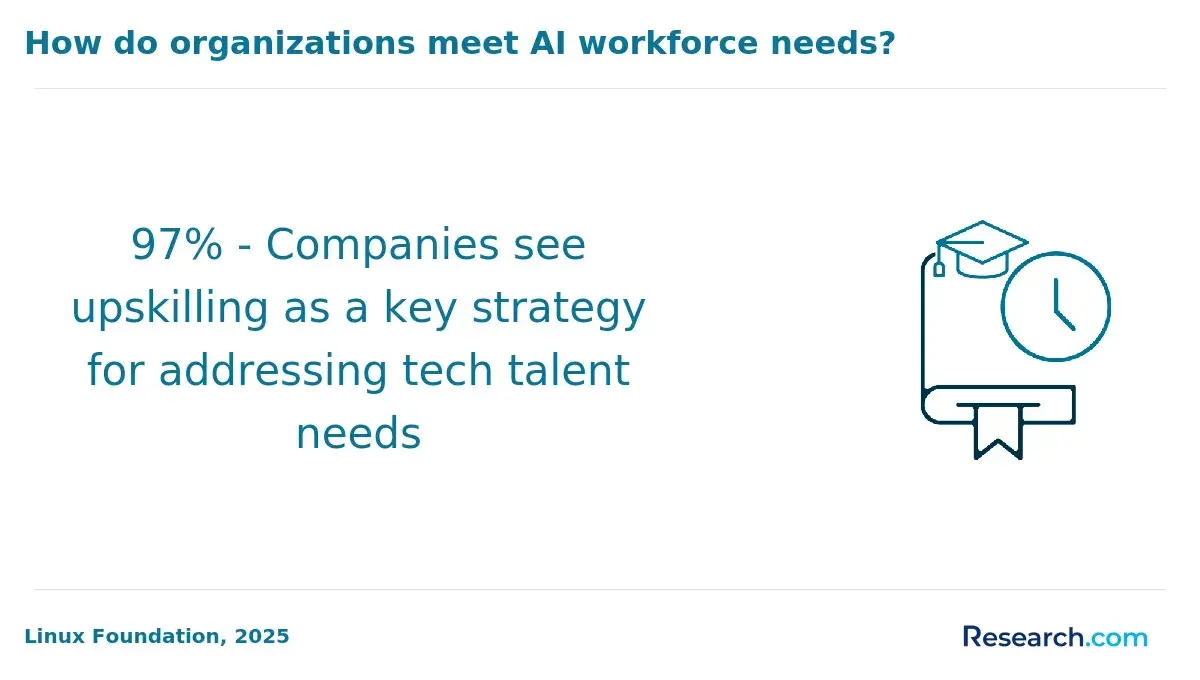
Microsoft & LinkedIn's Work Trend Index 2025 reveals that 100% of surveyed employers use or plan to use AI-enabled tools, highlighting the urgency for practical AI education. Shorter terms also introduce foundational statistics, probability, and optimization knowledge needed to understand model behavior.
Variability in course focus allows some students to explore advanced topics like reinforcement learning or AI hardware acceleration according to their goals.
What admissions requirements apply to AI degrees with 10-week courses?
Admissions requirements for artificial intelligence programs with intensive 10-week courses typically prioritize prior academic preparation and relevant skills over standardized testing. More than 80% of U.S. four-year colleges adopted test-optional policies in 2024, so many AI programs no longer require SAT or ACT scores, focusing instead on a holistic review process (National Center for Education Statistics, Admissions-standardized test requirements, 2024).
Common criteria include:
- A bachelor's degree in computer science, engineering, mathematics, or related fields for graduate-level study.
- Proof of foundational programming skills in Python, Java, or similar languages.
- A statement of purpose explaining the applicant's AI interests and goals.
- Letters of recommendation from academic or professional references familiar with analytical abilities.
- For undergraduate AI courses, a high school diploma with strong STEM coursework and demonstrated proficiency in math and science.
Some accelerated courses may also require completion of prerequisite modules or placement assessments. Working professionals and non-traditional students might submit portfolios or documentation of relevant work experience instead of traditional transcripts.
Individual programs may still request GRE scores or coding challenges despite the test-optional trend. This shift encourages applicants to clearly demonstrate technical competence and motivation through coursework and personal statements, key factors for success in artificial intelligence admissions.
How much do 10-week-term AI degree programs cost, and what aid exists?
Ten-week term ai degree programs vary widely in cost, typically ranging from $4,000 to $15,000 per course based on the institution and program level. Public universities with accelerated undergraduate or graduate certificates often charge between $400 and $1,500 per credit hour. This places a typical 10-week term of 3 to 5 credits at approximately $1,200 to $7,500. On the other hand, private or specialized institutions may set prices closer to $12,000 to $15,000, reflecting smaller class sizes and premium educational resources.
Federal Pell Grants are a vital resource for offsetting these expenses. For the 2024-25 academic year, the maximum Pell Grant award is $7,395. These grants do not require repayment and are awarded based on financial need, making them particularly valuable for students pursuing intensive 10-week ai degree courses.
Additional financial aid options include:
- Federal student loans with deferred repayment plans
- Institutional scholarships targeting STEM or ai fields
- Employer tuition reimbursement programs for working professionals
- State-specific technology and career advancement grants
Students should confirm eligibility requirements and deadlines early, as some aid programs mandate enrollment in degree-eligible courses rather than certificates. Reviewing the full aid package, including grants, loans, and scholarships, is essential to understanding the net cost of accelerated ai programs.
What AI jobs can you pursue with these degrees and specializations?
AI degrees and specializations prepare students for a variety of high-demand technology careers. Graduates typically pursue roles such as data scientist, machine learning engineer, AI research scientist, AI ethics specialist, and AI software developer. These positions require skills in programming, statistical analysis, and domain expertise-competencies that can be effectively developed through intensive 10-week courses.
Data scientists utilize AI to analyze complex data, build predictive models, and deliver actionable insights. The U.S. Bureau of Labor Statistics projects a 35% job growth in data science between 2022 and 2032, signaling strong demand across industries like healthcare, finance, and marketing.
Machine learning engineers create algorithms enabling data-driven learning without explicit programming, often applying these models in recommendation systems and autonomous technologies. Focused AI specializations typically cover essential deep learning frameworks for these roles.
AI research scientists drive innovation in areas such as natural language processing, computer vision, and robotics, advancing both academic research and industry solutions.
Specialists in AI ethics address challenges in algorithmic fairness, bias reduction, and regulatory compliance, an increasingly important field as organizations adopt AI responsibly.
AI software developers blend software engineering with AI techniques to integrate intelligent features into applications. Combined coursework in these areas supports success in such roles.
Other career paths enabled by AI credentials include AI consulting, product management, and cybersecurity positions. These options reflect the versatility offered by accelerated AI education programs.
What salaries can AI graduates expect across common roles and experience levels?
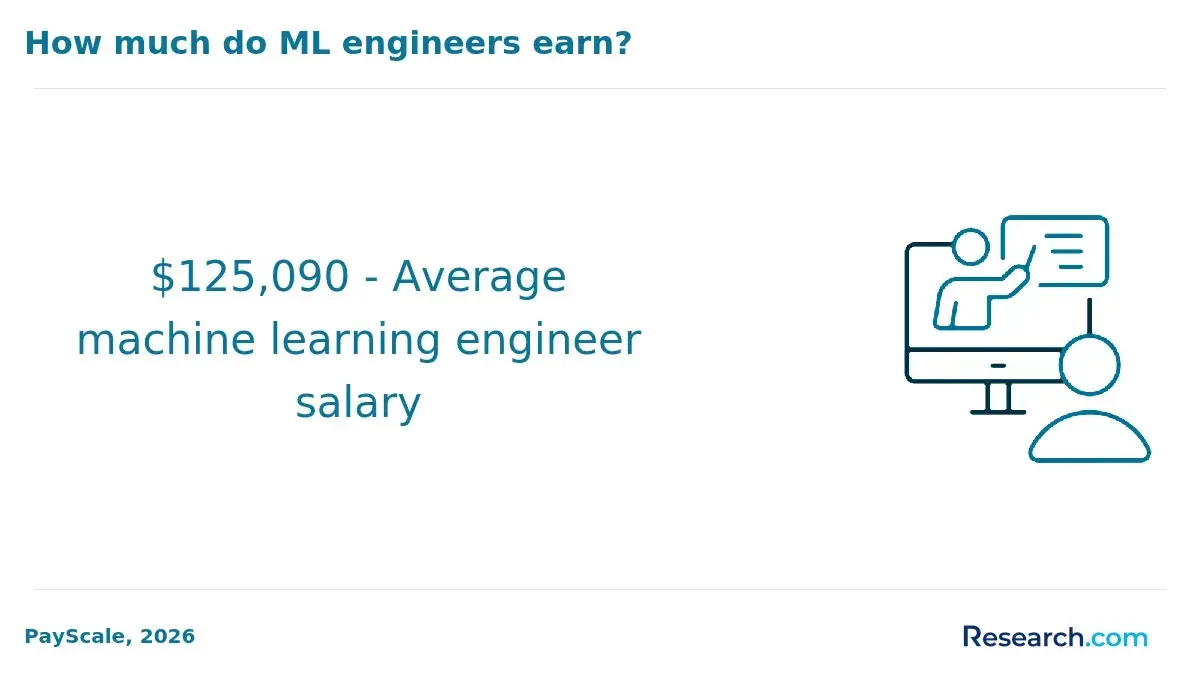
Graduates from artificial intelligence degree programs in 2026 can expect a wide range of salaries depending on their roles, experience, and industry sectors. Entry-level AI developers typically earn between $85,000 and $110,000 annually. Data scientist positions, a popular career path for AI graduates, reported a median salary of about $108,000 as of May 2024 according to the U.S. Bureau of Labor Statistics. With three to five years of experience, machine learning engineers often see salaries rise to between $115,000 and $140,000.
Senior AI specialists and machine learning engineers frequently command salaries above $150,000, with some roles exceeding $180,000, especially in challenging projects or specialized industries. Careers in AI research or ethics may start with lower pay but tend to increase quickly as expertise grows. High-demand fields like healthcare AI and autonomous systems generally offer premium wages due to specialized knowledge and technical demands.
- Entry-level AI developer: $85,000-$110,000
- Data scientist median salary (2024): $108,000
- Mid-level machine learning engineer: $115,000-$140,000
- Senior AI specialist: $150,000-$180,000+
To maximize earning potential, graduates should focus on continuous skill development, gaining experience with tools like Python, TensorFlow, and cloud AI services. Employers value demonstrated success in delivering scalable AI solutions. Geographic location impacts salaries as well; tech hubs like San Francisco and New York generally offer higher pay, though remote work can offset these differences.
Which certifications pair best with AI degrees using 10-week courses?
Certifications complementing artificial intelligence degrees featuring 10-week courses focus on practical, job-ready skills that meet industry demands. With over 60% of organizations citing skills gaps as a primary barrier to digital transformation (World Economic Forum, Future of Jobs Report 2025), these certifications enhance both degree value and employability.
Role-specific certifications like the Certified AI Practitioner (CAIP) and the Google Cloud Professional Machine Learning Engineer align well with short-format AI degrees. They emphasize applied machine learning, model deployment, and cloud integration-areas often missed in brief academic programs but vital in professional settings.
Data science credentials such as the IBM Data Science Professional Certificate or the Microsoft Certified: Azure Data Scientist Associate boost essential skills in data preprocessing, analytics, and visualization, supporting AI development roles needing broader data expertise.
Cybersecurity certifications like Certified Information Systems Security Professional (CISSP) and CompTIA Security+ address growing AI security challenges. These are strategic for graduates aiming at AI system protection, trustworthy AI, and compliance sectors.
Programming and software engineering certifications, including Python Institute's PCAP and Certified Kubernetes Administrator, support rapid transitions into AI development by focusing on coding standards and scalable deployments, suitable for the condensed nature of 10-week programs.
Combining an AI degree with targeted certifications signals verified expertise to employers and helps close critical workforce skills gaps, as highlighted in recent global reports.
Other Things You Should Know About Artificial Intelligence
Artificial intelligence concepts can be challenging due to their technical nature, but 10-week courses are designed to balance depth and pace. These programs focus on core fundamentals and practical applications, making them manageable for motivated students with some prior computing or math knowledge. Intensive study and consistent practice within the short timeframe are essential for mastering the material.
Python is by far the most common programming language taught in 10-week artificial intelligence courses due to its simplicity and extensive AI libraries. Other languages like R and Java may also be introduced but are less prevalent. Students usually learn to implement algorithms and work with machine learning frameworks primarily in Python.
Most 10-week artificial intelligence courses require basic familiarity with programming and foundational mathematics such as algebra and statistics. Some programs may also recommend or require prior coursework in computer science or related fields. Clear prerequisites ensure that students can keep pace with the accelerated curriculum and fully benefit from the instruction.
After completing a 10-week AI course in 2027, graduates can pursue roles such as AI technician, data analyst, or machine learning assistant. These positions often serve as stepping stones to more advanced roles, like those found in an artificial intelligence master’s for beginners.
References
- Explore online courses and certificate programs in AI | edX https://www.edx.org/learn/artificial-intelligence
- Master of Artificial Intelligence https://wscs.eu/master-of-artificial-intelligence/
- Which AI certifications hold the most value after completing an AI course? | H2K Infosys Blog https://www.h2kinfosys.com/blog/which-ai-certifications-hold-the-most-value-after-completing-an-ai-course/
- How long are AI ML courses - IABAC https://iabac.org/blog/how-long-are-ai-ml-courses
- Measuring AI Ability to Complete Long Tasks https://metr.org/blog/2025-03-19-measuring-ai-ability-to-complete-long-tasks/
- AI Careers - Top AI Jobs with Education Requirements and Pay https://aidegreeprograms.org/ai-careers/
- AI Careers: Roles, Salaries, and Certifications to Get You Hired - ONLC https://www.onlc.com/blog/ai-careers-roles-salaries-certifications/
- 16 Artificial Intelligence Career Paths https://www.calmu.edu/news/artificial-intelligence-career-paths
- School of IT/Artificial Intelligence and Machine Learning - INTERNATIONAL EUROPEAN UNIVERSITY, POLAND | EUROPE | STUDY IN POLAND | STUDY IN EUROPE | MBBS | GENERAL MEDICINE | BUSINESS | ENGINEERING | IT | EUROPE https://ieu.com.pl/european-school-of-it-home/school-of-it-artificial-intelligence-and-machine-learning/
- Top 15 Online Artificial Intelligence (AI) Courses In 2026 https://collegevidya.com/blog/artificial-intelligence-courses-online/