2027 AI Associate Degrees With the Best Net Price

Co-Founder and Chief Data Scientist
Many professionals with unrelated undergraduate degrees face challenges when trying to enter the artificial intelligence field due to the lack of affordable and flexible educational options. High tuition costs and limited program availability often delay or prevent career transitions into this rapidly growing sector.
Finding a pathway that balances quality, accreditation, and net price is critical for those seeking to upskill efficiently. This article highlights affordable associate degree programs in artificial intelligence, focusing on costs after financial aid, to help prospective students identify practical and economical routes to launching a successful career in the AI industry.
Key Things You Should Know
- Associate degrees in artificial intelligence offer affordable education, with average net prices ranging from $7,000 to $12,000 annually at community colleges in 2025-2026.
- These programs emphasize practical skills in machine learning, data analysis, and programming, preparing students for entry-level AI roles in growing tech job markets.
- Graduates often find strong job placement opportunities, with AI-related roles projected to grow over 15% by 2030, making associate degrees a strategic investment.
What is an AI associate degree, and what careers does it prepare you for?
An AI associate degree program offers foundational knowledge and practical skills in artificial intelligence technologies over two years. Coursework typically includes programming with languages like Python, machine learning basics, data analysis, and AI system design. These programs blend mathematics, statistics, and computer science fundamentals to help students understand AI algorithms and models.
Graduates often pursue careers in artificial intelligence for associate degree graduates that support AI infrastructure, data cleansing, model training, and deployment. Entry-level roles may include AI technician, junior data analyst, and machine learning assistant, providing hands-on experience with tools such as TensorFlow or PyTorch.
Such roles serve as stepping stones toward advanced positions like data scientist or AI engineer after gaining further experience or education. Various career paths also exist in quality assurance, AI product testing, and AI-driven business analysis. Certifications and internships enhance employability by adding practical experience.
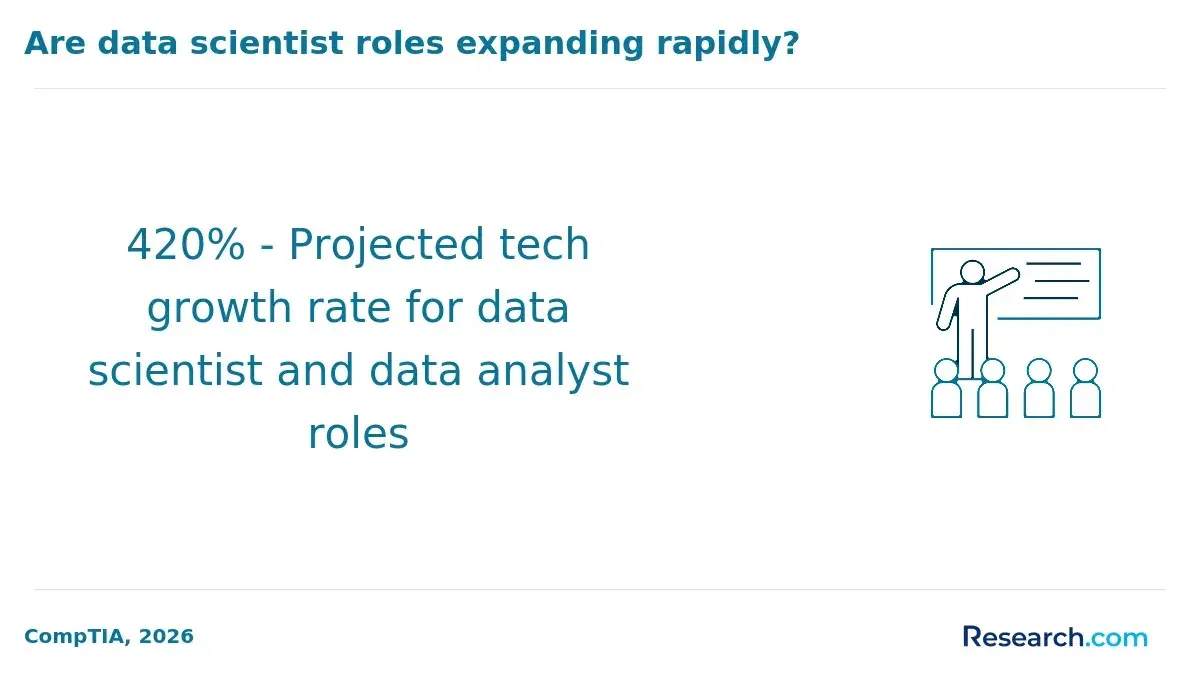
The U.S. Bureau of Labor Statistics projects a 36% increase in data scientist employment through 2033, reflecting strong growth in demand for professionals skilled in AI and data-driven decision-making. Prospective students should select AI programs that balance theoretical concepts with applied skills to meet real-world challenges.
For students considering accelerated pathways, a computer science degree accelerated option may provide a complementary route to AI expertise and faster career entry.
Which colleges offer AI associate degrees with the lowest net price?
Associate degrees in artificial intelligence with the lowest net price are primarily offered by public community colleges across the United States. These public two-year institutions averaged an annual net price of about $7,250 after grants and scholarships. This makes them prime options for those seeking AI associate degrees with the lowest net price in the United States.
Many programs focus on artificial intelligence programming, machine learning, and data science, combining affordability with relevant skills. Colleges offering affordable AI associate degree programs include:
- Foothill College (California) – offers an Associate in Science for Transfer in Artificial Intelligence with a net tuition near $6,800 annually.
- Houston Community College (Texas) – provides an Associate of Applied Science in Artificial Intelligence and Machine Learning at approximately $7,000 per year.
- Monroe Community College (New York) – has an AI and Robotics technician program costing around $7,200 annually.
Selecting public colleges is important as private institutions typically have higher costs, often exceeding $15,000 yearly after aid. Students should also explore federal and state grants, scholarships, and workforce training initiatives to further lower expenses. Checking each school's curriculum ensures alignment with career goals, whether aiming to transfer to a four-year university or enter the workforce directly.
Transparent net price calculators on college websites offer a helpful tool to project final costs based on individual finances. For those interested in expanding into engineering fields, also consider exploring an online mechanical engineering degree as a complementary pathway. Focusing on public two-year colleges with targeted programs allows prospective students to gain job-ready skills while minimizing debt obligations.
How do you compare net price versus tuition for AI associate programs?
Net price versus tuition comparison for AI associate programs highlights that tuition alone doesn't capture the full financial commitment. Tuition is the advertised cost set by colleges, but the net price reflects what students actually pay after factoring in grants, scholarships, and essential living expenses such as housing, food, transportation, and supplies.
For instance, while average published tuition and fees at public two-year colleges were $3,990, the true net price is significantly higher, especially for affordable AI associate degree costs in the United States (NCES Digest of Education Statistics). Key considerations include:
- Financial aid – may reduce tuition but often doesn't cover living expenses.
- Cost-of-living – affects the net price regardless of low tuition.
- On-campus housing – helps avoid commuting costs.
- Additional fees – AI-related labs or technology resources that can inflate overall expenses beyond tuition.
Students should use net price calculators offered by colleges or tools like the College Navigator to estimate real costs and avoid underbudgeting. Comparing only tuition risks underestimating total expenses, especially since AI programs may require specialized equipment or software that adds hidden costs. Prospective students exploring an engineering degree online should ensure they assess all components of net price to make informed financial decisions.
What accreditation should an AI associate degree program have?
An AI associate degree program should first obtain recognized institutional accreditation, followed by relevant programmatic accreditation when available. The most important requirement is that the school is accredited by an agency recognized by the U.S. Department of Education or the Council for Higher Education Accreditation, as this ensures the program meets national quality standards and qualifies for financial aid.
Regional accreditation is considered the gold standard for associate degrees. This includes agencies like the Higher Learning Commission, Middle States Commission on Higher Education, and Western Association of Schools and Colleges. Programs with this type of accreditation are more widely recognized by employers, including pathways into fields like an online cybersecurity degree.
For AI-specific quality, specialized accreditation adds extra value. The most relevant is the Accreditation Board for Engineering and Technology (ABET), which evaluates computing and engineering-related programs. In some cases, career-focused programs may also be accredited by organizations like the Accrediting Commission of Career Schools and Colleges or the Accreditation Council for Business Schools and Programs.
What courses and skills are taught in AI associate degree programs?
AI associate degree programs combine foundational skills and specialized coursework to prepare students for entry-level roles. Programming, especially Python, ranked #1 in the 2024 TIOBE Index, is a core focus, reflecting its vital role in AI and machine learning workflows for data manipulation, model development, and automation.
Other essential subjects include data structures, algorithms, and basic computer science principles that support AI software design. Key courses include:
- Introduction to artificial intelligence concepts and applications
- Machine learning fundamentals with supervised and unsupervised methods
- Statistics and probability for data analysis
- Data science techniques such as data collection, cleaning, and visualization
- Programming with Python and libraries like NumPy and TensorFlow
- Database management and SQL for large datasets
- Ethical considerations and social impacts of AI
Hands-on projects, coding labs, and real-world datasets help students develop practical skills for tasks like model training and evaluation. Graduates learn to write efficient code, understand AI system architectures, and apply mathematical models to problem-solving. Many programs also cover cloud computing basics and version control with Git to enhance collaboration.
Specializations may include natural language processing, computer vision, or robotics, aligning expertise with career paths in sectors like healthcare, finance, and autonomous systems.
Can you earn an AI associate degree online, and how do formats differ?
You can earn an AI associate degree entirely online, with programs designed to fit various learning preferences and schedules. Accredited community colleges and technical schools often provide these degrees through fully online formats, featuring video lectures, interactive assignments, and virtual labs that simulate hands-on experience. Some programs offer asynchronous learning, allowing students to study on their own time.
Hybrid formats also exist, combining online coursework with occasional in-person labs or workshops. This approach supports students who seek some face-to-face engagement while maintaining flexibility. A few programs might require on-campus internships or practicums to provide real-world AI technology experience.
Core topics covered usually include programming, machine learning fundamentals, and data analysis-key skills aligned with industry demands. According to the National Center for Education Statistics (NCES), a significant portion of U.S. undergraduates engage in online courses, reflecting the mainstream adoption of online and hybrid education models.
When choosing an online AI associate degree, consider accreditation, faculty expertise, and student support services. Hands-on projects and technical skill development opportunities are crucial for success in AI careers. Additionally, understanding transfer policies can benefit students planning to continue their education.
What are the admission requirements for AI associate degree programs?
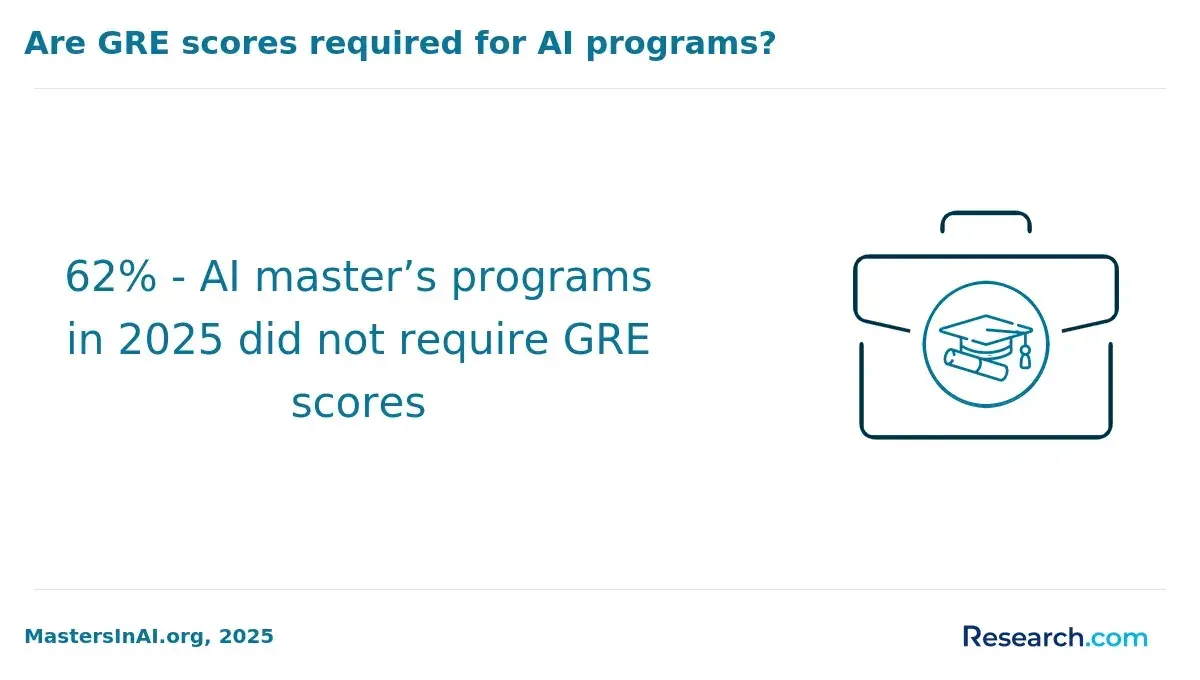
Admission requirements for AI associate degree programs are generally accessible and designed for entry-level students, with a focus on basic academic qualifications and readiness for technical coursework. Most programs require a high school diploma or GED, along with the submission of official transcripts.
Some colleges may also require placement tests in math and English or proof of foundational skills in computing, although standardized tests are often optional. Additional components often requested are:
- Personal statements outlining interest and career goals related to ai
- Letters of recommendation, especially for competitive admissions
- Proof of English proficiency through tests like TOEFL or IELTS for non-native speakers
Working professionals and transfer students may qualify by submitting prior college credits or relevant technical work experience. Early communication with admissions offices ensures clarity on required documentation. Carefully meeting these criteria improves prospects for entry into reputable AI associate degree programs.
How long does an AI associate degree take, and what are total costs?
An AI associate degree generally requires about two years of full-time study, though the timeline can differ for part-time students or those enrolled in accelerated courses. Many colleges offer flexible options such as evening and weekend classes, which help accommodate working professionals but may extend the completion period.
Costs extend beyond tuition. The NCES Digest of Education Statistics reports that the average total expense for attending a public two-year college was roughly $19,000 annually, including tuition, fees, room and board, textbooks, and other needs. Tuition is often less than half of this total.
When budgeting for an AI associate degree, students should consider:
- Tuition and mandatory fees, varying widely by state and institution.
- Living expenses, either on-campus housing or off-campus rent.
- Textbooks and supplies, which can be costly due to specialized technical materials.
- Transportation and personal expenses, especially for commuters or remote learners.
Financial aid, including grants and scholarships, can reduce net costs significantly. Community colleges typically offer lower tuition than four-year schools, which helps reduce the overall price. Prospective students are advised to use each program's net price calculator to obtain personalized cost estimates.
What jobs can you get with an AI associate degree without a bachelor's?
An AI associate degree opens doors to several technical roles in the U.S. job market without requiring a bachelor's degree. Common positions include computer support specialist, data technician, AI operations assistant, and junior machine learning technician. These roles emphasize maintaining AI systems, running data processes, and supporting IT infrastructure tailored to AI applications.
Computer support specialists offer a key entry point, earning a median annual wage of $60,810 as of May 2024. They resolve hardware and software issues, assist users with AI-powered tools, and ensure system reliability. This often requires hands-on experience with applied AI and data tools gained during an associate degree.
Other roles include data technicians who organize datasets for AI model training, handling cleaning and preliminary analysis, and AI operations assistants who monitor deployed AI systems daily, troubleshooting without developing algorithms. Employers are also increasingly seeking graduates with skills in Python programming, AI frameworks, cloud AI services, database management, and scripting.
Overall, an AI associate degree equips graduates with practical skills for sub-bachelor technical roles that support AI integration across industries, focusing on system support, implementation, and operational oversight rather than research or advanced development.
Which certifications pair best with an AI associate degree for hiring?
Certifications that complement an AI associate degree significantly boost employability by highlighting specialized expertise. Among the most valued is the CompTIA Security+, widely held among IT professionals and essential for roles involving data security, cybersecurity, and compliance. It provides foundational skills to protect AI systems and sensitive data.
Other notable certifications include:
- Microsoft Certified: Azure AI Fundamentals - validates knowledge of cloud-based AI services, a critical area as AI increasingly runs on cloud platforms.
- Google Associate Cloud Engineer - prepares candidates to deploy and manage AI solutions on Google Cloud, a leader in enterprise AI adoption.
- Certified Analytics Professional (CAP) - emphasizes analytics skills for interpreting AI-generated data and making informed decisions.
- TensorFlow Developer Certificate - shows proficiency in a leading AI framework, useful for hands-on AI modeling roles.
Hiring managers often seek AI associate degree graduates skilled in both AI and cybersecurity due to growing security challenges targeting AI systems. CompTIA Security+ bridges these domains well. Industry focus also matters: healthcare AI roles may prefer Health IT certifications, while finance AI positions might require data privacy credentials.
Pairing foundational AI training with targeted certifications in cloud deployment, security, and analytics remains a strategic approach for career advancement in the AI field.
Other Things You Should Know About Artificial Intelligence
Math proficiency, especially in areas like linear algebra, calculus, and statistics, is crucial for success in artificial intelligence associate degree programs. These subjects provide the foundation for understanding key AI concepts such as machine learning algorithms and data analysis. Students with strong math skills often find it easier to grasp complex AI techniques and perform well academically.
Common software tools in artificial intelligence associate degree programs include Python libraries like TensorFlow and PyTorch, which facilitate machine learning and neural network development. Programming languages such as Python, R, and sometimes Java are often taught, enabling students to build and test AI models effectively. Familiarity with data analysis tools and cloud platforms may also be part of the curriculum to reflect current industry practices.
Many artificial intelligence associate degree programs integrate internships or practical experience to enhance learning outcomes. These opportunities help students apply theoretical knowledge to real-world projects, develop technical skills, and gain valuable industry contacts. Although not universally mandatory, practical experience is highly recommended and sometimes required by more comprehensive programs.
The best AI associate degree programs in 2027 with the most affordable net prices often include community colleges and technical institutions. They typically offer solid foundational knowledge at a lower cost, allowing students to break into the AI field without substantial debt.
Graduates with an AI associate degree in 2027 can pursue roles like AI technician, data analyst, and junior machine learning engineer. These positions often involve working in industries ranging from finance to healthcare. Graduates may also consider advancing through an online master’s in AI in healthcare.
References
- Artificial Intelligence Course Eligibility: Requirements & Prerequisites https://www.mygreatlearning.com/artificial-intelligence/courses/eligibility
- qa.com | Top 10 Must Have AI Certifications in 2026 https://www.qa.com/browse/certifications/ai-certifications/
- Associate Degree in Artificial Intelligence https://admissions.umt.edu.pk/prog/ADP-AI.aspx
- The Prerequisites for Artificial Intelligence- IABAC - IABAC https://iabac.org/blog/what-are-the-prerequisites-for-artificial-intelligence-a-modern-approach
- AI Jobs With No Experience â 10+ Entry-Level Roles | Beginner Guide 2026 â Mindrift https://mindrift.ai/blog/ai-jobs-with-no-experience
- How Do Colleges’ Net Price Calculators Work? https://www.ivyscholars.com/how-do-colleges-net-price-calculators-work/
- Associate Degree in Artificial Intelligence https://aidegreeguide.com/degrees/ai-associate-degree-and-certificate-programs/
- AI, Tuition, and the Cost of Knowledge https://wallyboston.com/chatgpt-cost-of-knowledge/
- AI Degree Programs | Associate & Bachelor - Saras AI Institute https://www.sarasai.org/programs