2027 AI Master's Degrees That Include Recommendation Systems

Co-Founder and Chief Data Scientist
Choosing an AI master’s program for recommendation systems is a specific decision: you are not just looking for a general artificial intelligence degree, but for a curriculum that teaches personalization, ranking, user modeling, and large-scale machine learning. This matters for career changers, software professionals, analysts, and data workers who want to move into roles that build the systems behind product recommendations, search results, feeds, ads, streaming suggestions, and personalized digital experiences.
Recommendation systems sit at the intersection of machine learning, data engineering, statistics, product strategy, and ethics. A strong graduate program should help you understand both the algorithms and the production realities: sparse user data, cold-start problems, bias, privacy, evaluation metrics, and scalable deployment. This guide explains how to identify AI master’s degrees that include recommender-system training, what prerequisites you may need, how online and campus formats compare, what admissions and costs typically look like, and which careers this specialization can support.
Key Things You Should Know
- Master's degrees in AI that include recommendation systems emphasize machine learning, data mining, and user personalization, reflecting growing industry demand with a 28% job growth forecast through 2031.
- Programs increasingly incorporate practical projects using real-world datasets, with 65% offering hands-on experience in neural networks and collaborative filtering techniques.
- Graduates gain skills applicable to e-commerce, content streaming, and social media platforms, where personalized recommendation systems drive over 35% of user engagement metrics.
What are recommendation systems, and why are they central in AI master's programs?
Recommendation systems are AI models that predict what a user is likely to click, watch, buy, read, listen to, or engage with next. They are central in AI master’s programs because they turn core machine learning concepts into practical, high-impact applications. Students learn how data, algorithms, product design, and user behavior come together in systems that operate at scale.
In graduate AI coursework, recommender systems usually draw from machine learning, data mining, information retrieval, statistics, and human-centered design. Common methods include collaborative filtering, content-based filtering, and hybrid approaches. Collaborative filtering uses patterns in past user interactions to identify similarities among users or items. Content-based filtering relies on item attributes and user profiles. Hybrid systems combine multiple signals to improve relevance, especially when user behavior data is incomplete.
The business value is one reason these systems receive so much attention. McKinsey notes personalization can cut customer-acquisition costs by up to 50% and boost revenues by 5-15%. That level of impact makes recommender-system knowledge useful across e-commerce, streaming media, social networks, online education, healthcare, advertising, financial technology, and digital marketplaces.
Strong AI master’s programs also teach the limits and risks of recommendation algorithms. Students should expect to examine algorithmic bias, privacy, fairness, explainability, filter bubbles, and the difference between short-term engagement and long-term user trust. Technical topics may include matrix factorization, ranking models, deep learning, reinforcement learning, evaluation metrics, and A/B testing.
For students comparing career outcomes and wondering what jobs you can get with an AI degree, recommender-system skills are especially relevant because they connect model-building with measurable product and business outcomes.
Which AI master's degrees include recommendation systems coursework or specializations?
Recommendation systems are usually not offered as a standalone master’s degree. They are more often taught inside AI, computer science, data science, machine learning, information retrieval, or human-centered computing programs. When comparing AI master’s degrees with recommendation systems specialization, look beyond the program title and read the course catalog, elective list, capstone descriptions, and faculty research areas.
Several leading universities have programs or coursework connected to recommendation algorithms, collaborative filtering, personalization, ranking, and large-scale machine learning. Stanford, Carnegie Mellon University, and the University of Washington are examples of institutions whose AI-related graduate offerings include advanced machine learning and personalization topics. Stanford's Master of Science in Computer Science includes an elective called "Recommender Systems and Personalization," focusing on real-world evaluation metrics and scalability. Carnegie Mellon's specialization in Machine Learning and AI provides project-based experiences centered on recommendation engines used in e-commerce and content delivery. The University of Washington integrates recommendation systems into its "Machine Learning Specialization" with targeted courses and practical labs.
When evaluating programs, prioritize evidence that students actually build and test recommender systems. Useful signs include courses in information retrieval, machine learning systems, data mining, natural language processing, ranking algorithms, user modeling, and large-scale data engineering. Capstones, research labs, and industry-sponsored projects can be especially valuable because recommender systems are difficult to master through theory alone.
Coursera data shows that over 100 million learners worldwide have enrolled in courses tagged "Data Science," "Machine Learning," and "AI," underscoring persistent demand for skills related to recommendation systems. That demand also means applicants should compare programs carefully instead of assuming every AI degree provides the same depth in personalization and ranking.
Students who are balancing specialization with price may also want to review the cheapest data science masters in usa, since data science programs can include relevant recommender-system coursework even when the degree title does not explicitly mention AI.
How do you verify accreditation for AI master's programs teaching recommendation systems?
To verify accreditation, start with the institution rather than the individual recommender-systems course. In the US, a legitimate AI master’s program should be offered by an institution accredited by an agency recognized by the U.S. Department of Education or the Council for Higher Education Accreditation (CHEA). Accreditation affects degree credibility, transfer options, employer recognition, and eligibility for Title IV federal aid.
Use the U.S. Department of Education's official accreditation and federal student aid eligibility database as a first check. Then cross-reference the institution with the accreditor’s own website and the National Center for Education Statistics College Navigator. Do not rely only on marketing pages, rankings pages, or vague statements such as “recognized,” “approved,” or “aligned with industry standards.”
Regional accreditation, such as from the Middle States Commission on Higher Education or Western Association of Schools and Colleges, is generally considered a strong benchmark. National accreditation can be valid, but students should review it carefully, especially if they may later transfer credits, pursue a doctorate, or seek jobs with employers that screen for institutionally accredited degrees.
For accredited AI recommendation systems degrees, also confirm that the program is housed in a credible academic unit and that the curriculum is current. Specialized AI content changes quickly, so accreditation alone is not enough. Review faculty credentials, course update frequency, capstone expectations, access to computing resources, and whether students use current machine learning tools and datasets.
Before applying, contact admissions and ask direct questions: Is the institution currently accredited? Is the online program covered by the same accreditation as the campus program? Are students eligible for federal aid? Will the transcript show the same degree name? These checks reduce the risk of enrolling in a program that is expensive but weakly recognized. Students considering flexible study options can also compare an ai degree online as part of their search.
What prerequisite skills and coursework are needed for a recsys-focused AI master's?
A recsys-focused AI master’s is mathematically and technically demanding. The strongest applicants usually enter with programming experience, quantitative coursework, and some exposure to machine learning or data analysis. Students without a computer science degree can still be competitive, but they may need bridge courses, prerequisite classes, or a portfolio that proves readiness.
Python is the most important programming language for most machine learning and recommender-system coursework. Applicants should be comfortable writing clean code, debugging, using Git version control, and working with libraries such as NumPy, pandas, and scikit-learn. For advanced projects, familiarity with TensorFlow or PyTorch can help with neural recommendation models and deep collaborative filtering.
The core math background usually includes linear algebra, calculus, probability, and statistics. Linear algebra supports matrix factorization and embedding methods. Probability and statistics are needed for uncertainty, model evaluation, and experimental design. Optimization is also important because recommendation models often involve fitting parameters across very large, sparse datasets.
Relevant academic preparation may include data structures, algorithms, databases, machine learning, data mining, information retrieval, and natural language processing. SQL and data preprocessing skills are especially useful because recommender-system work often starts with messy behavioral data rather than clean classroom datasets.
Practical experience can compensate for gaps in formal coursework. Admissions committees may value projects involving user personalization, implicit feedback, ranking, search logs, recommendation datasets, or scalable model evaluation. Internships, research work, open-source contributions, and well-documented coding samples can help show that an applicant is ready for graduate-level AI work.
Professionals who want to combine AI expertise with security knowledge may also consider how an online cybersecurity degree could complement long-term goals in privacy, trust, and secure AI systems.
What core courses cover recommender systems, machine learning, and ranking algorithms?
Core coursework for recommender-system preparation usually combines machine learning theory, ranking methods, data engineering, and applied evaluation. The exact course names vary by school, but students should look for a curriculum that teaches both how recommendation models work and how they are measured in real systems.
- Machine Learning: supervised learning, unsupervised learning, reinforcement learning, probabilistic models, neural networks, decision trees, validation, regularization, and model selection.
- Recommender Systems: collaborative filtering, content-based filtering, matrix factorization, hybrid methods, cold-start problems, user-item interaction data, implicit feedback, and personalization strategies.
- Information Retrieval and Ranking Algorithms: search systems, PageRank, learning to rank, relevance scoring, precision, recall, and NDCG.
- Data Mining for Large-Scale Datasets: feature extraction, pattern recognition, clustering, sparse data handling, and large-scale behavioral data analysis.
- Natural Language Processing: text representation, embeddings, semantic similarity, and content understanding for recommendations based on articles, products, videos, reviews, or queries.
- Optimization and Bayesian Methods: parameter estimation, probabilistic reasoning, uncertainty modeling, and methods used in personalized ranking.
Hands-on courses should require students to build recommendation pipelines rather than only describe algorithms. Strong assignments may include training collaborative filtering models, comparing ranking metrics, handling sparse user-item matrices, testing neural recommenders, and evaluating recommendations against business or user-centered goals.
Many programs use practical tools such as TensorFlow, PyTorch, and Apache Spark to help students work with larger datasets and scalable workflows. Case studies from ecommerce, streaming, social media, and online advertising help students understand how model choices affect user experience and product outcomes.
The Stanford AI Index Report (2024) highlights a steady rise in ai research publications, which influences programs to integrate advanced machine learning methods, responsible AI frameworks, and current research topics. For students, the key question is whether a program turns that research into usable skills: building models, evaluating ranking quality, understanding fairness risks, and communicating trade-offs to technical and nontechnical stakeholders.
How do online AI master's programs teach recommendation systems compared to campus programs?
Online and campus AI master’s programs can teach the same recommender-system concepts, but the learning experience differs. Online programs usually emphasize flexibility, asynchronous lectures, cloud-based tools, auto-graded coding exercises, and remote collaboration. Campus programs often provide more scheduled interaction, in-person labs, research group access, and direct networking with faculty and peers.
In online AI master’s programs, students commonly build and test recommendation algorithms through cloud environments rather than local hardware. This can be effective for working professionals because assignments can be completed around job and family schedules. Online formats may also use modular lessons, simulations, discussion boards, live office hours, and project-based assessments covering collaborative filtering, matrix factorization, neural recommendation techniques, user profiling, and evaluation metrics.
Campus programs may offer easier access to in-person troubleshooting, lab meetings, research seminars, and specialized hardware such as GPUs for deep learning. They can be a better fit for students who want close faculty mentorship, teaching assistant support, or a pathway into research roles. The trade-off is often less scheduling flexibility and a greater need to relocate or commute.
Arizona State University's online AI master's program includes capstone projects that focus on practical applications using publicly available recommendation datasets. This type of applied project is important in any format because employers often want evidence that graduates can work with real data, evaluate model performance, and explain design decisions.
When comparing formats, ask how students access datasets, computing resources, faculty feedback, group projects, and career services. Also confirm whether the online and campus degrees have the same curriculum standards, transcript wording, and accreditation status. The better choice depends less on delivery mode and more on whether the program gives you enough practice building, testing, and explaining recommender systems.
What admissions requirements are common for AI master's programs in recommendation systems?
Admissions requirements for AI master’s programs with recommender-system coursework usually reflect the technical demands of graduate machine learning. Most applicants need a bachelor’s degree and evidence of preparation in computer science, software engineering, data science, mathematics, statistics, or a closely related field.
Common prerequisite coursework includes programming, data structures, algorithms, probability, statistics, linear algebra, and calculus. Programs may also prefer applicants who have taken databases, machine learning, artificial intelligence, or data mining. Candidates from unrelated undergraduate backgrounds should expect to explain how they have built the missing foundation through coursework, professional experience, certifications, or projects.
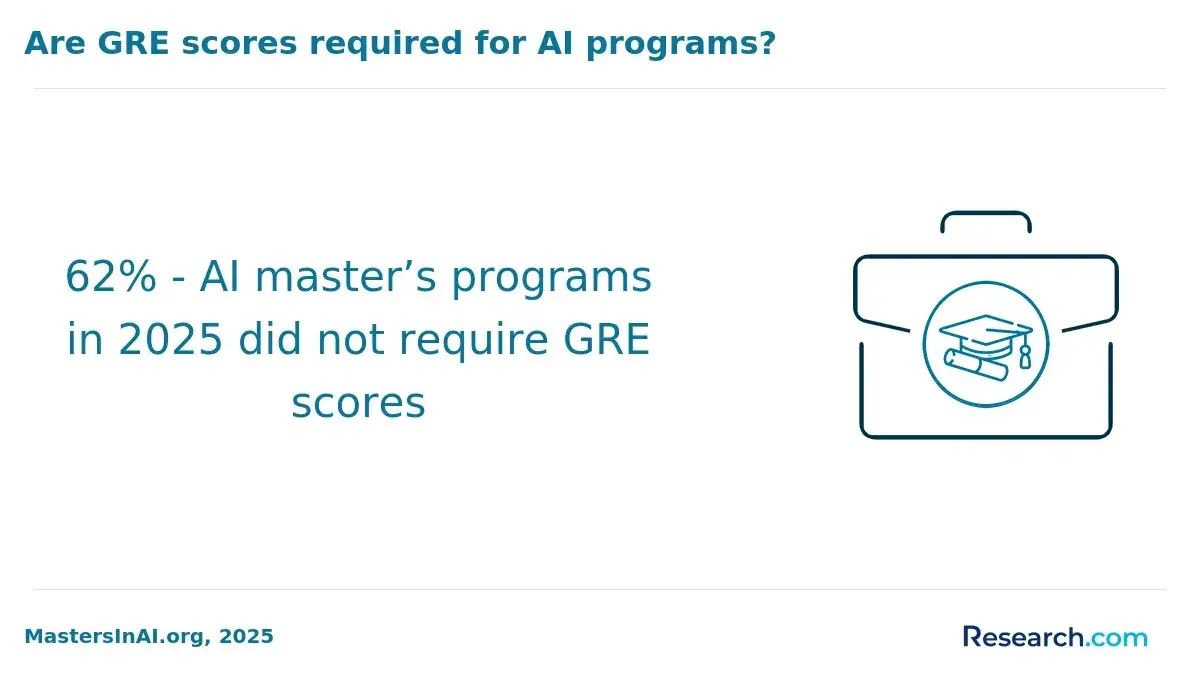
Many schools require the GRE, often with a minimum quantitative score for competitive candidates. International students must demonstrate English proficiency through standardized tests like the TOEFL. The ETS (TOEFL) Test and Score Data Summary highlights the widespread global use of TOEFL scores for assessing language abilities.
Typical application materials include:
- Official transcripts showing quantitative and computing preparation.
- Letters of recommendation that speak to technical ability, academic readiness, research potential, or professional performance.
- A statement of purpose explaining why the applicant wants to study AI, machine learning, or recommendation systems.
- A resume documenting work experience, internships, research, publications, or technical projects.
- Portfolio materials or coding samples, if the program requests evidence of hands-on ability with AI frameworks or datasets.
Applicants can strengthen their profiles by documenting projects that involve personalization, ranking, search, user behavior analysis, or machine learning model evaluation. A clear GitHub repository, capstone project, internship report, or research poster can be more persuasive than a generic claim of interest in AI.
If you lack formal computer science coursework, contact admissions before applying. Some programs allow conditional admission, prerequisite completion, or bridge coursework, while others expect applicants to arrive fully prepared. Knowing this early can save application fees and help you build a stronger timeline.
How long do these programs take, and what do tuition and fees cost?
AI master’s degrees with recommender-system coursework usually take 1.5 to 2 years of full-time study. Part-time and online formats may take 3 years or more, depending on course availability, pacing rules, prerequisites, and whether the student works while enrolled. Accelerated options may take 12 to 18 months, but they often require heavier course loads and stronger preparation before entry.
Tuition and fees vary widely by institution type, residency status, program format, and credit requirements. According to the National Center for Education Statistics (NCES) (2024), public universities charge $12,000 to $25,000 annually for in-state graduate tuition and fees, while out-of-state students pay between $25,000 and $40,000. Private nonprofit schools typically range from $30,000 to $60,000 or more per year.
Students should look beyond advertised tuition. A low cost per credit may still lead to a high total price if the program requires more credits, charges separate technology fees, or requires expensive software, travel, residencies, textbooks, or extended enrollment. Online students should ask about distance-learning fees and whether they have access to the same academic and career services as campus students.
As a rough comparison based on the figures above, two-year in-state tuition for an AI master's could total roughly $40,000 at a public university, compared to about $100,000 at a private institution. These figures do not automatically include living costs, health insurance, equipment, books, or lost income from reducing work hours.
- Shorter programs may reduce living expenses but can increase academic intensity.
- Part-time programs may be easier to manage while working but can extend the time before graduation.
- Public in-state options may offer lower tuition, but availability of specialized AI electives can vary.
- Private or highly selective programs may offer stronger networks or research access, but the return on investment depends on cost, aid, and career outcomes.
Before enrolling, request the full cost of attendance, not just tuition. Ask about scholarships, assistantships, employer tuition assistance, federal aid eligibility, payment plans, and whether transfer credits can reduce total cost. For broader graduate cost data, visit the NCES website.
What careers can you pursue with recsys skills from an AI master's degree?
Recommender-system skills can support careers in machine learning, data science, search, ranking, personalization, and AI product development. Graduates are prepared for roles where the goal is to use data to improve what users see, buy, watch, read, or interact with.
Common career paths include machine learning engineer, data scientist, recommender systems engineer, search and ranking specialist, AI specialist, applied scientist, research scientist, data analyst, and AI-focused product manager. These roles appear in e-commerce, streaming platforms, social media, online advertising, digital marketplaces, financial technology, healthcare, education technology, and enterprise software.
A machine learning engineer may build recommendation pipelines, train ranking models, or deploy personalization systems into production. A data scientist may analyze user behavior, run experiments, evaluate recommendation quality, and translate model results into product decisions. A search and ranking specialist may focus on relevance, retrieval, learning-to-rank methods, and metrics such as precision, recall, and NDCG.
Recommender-system work also involves practical challenges that employers value. These include cold-start problems, sparse interaction data, bias mitigation, privacy-preserving modeling, model monitoring, scalability, and balancing engagement with user trust. Graduates who can discuss these trade-offs clearly may be stronger candidates than those who only know algorithm names.
The World Economic Forum's Future of Jobs Report (2025) identifies AI and big data positions as rapidly growing career areas, reflecting high demand for professionals skilled in machine learning, deep learning frameworks, collaborative filtering, and real-time data processing.
For product-oriented roles, recsys knowledge helps teams design smarter user experiences and measure whether recommendations actually improve outcomes. For research-oriented roles, it can lead to work on new ranking models, fairness-aware personalization, explainable recommendations, or reinforcement learning approaches. The specialization is most valuable when paired with strong programming, statistics, communication, and product judgment.
What salaries and job outlook can graduates expect in recommender systems roles?
Graduates with recommender-system training can pursue roles tied to data science and machine learning, both of which remain strong areas within the AI labor market. Employment for data scientists, who work in closely related roles, is projected by the U.S. Bureau of Labor Statistics (BLS) to rise much faster than average through 2032, driven by increasing demand across industries like e-commerce, streaming, and social media.
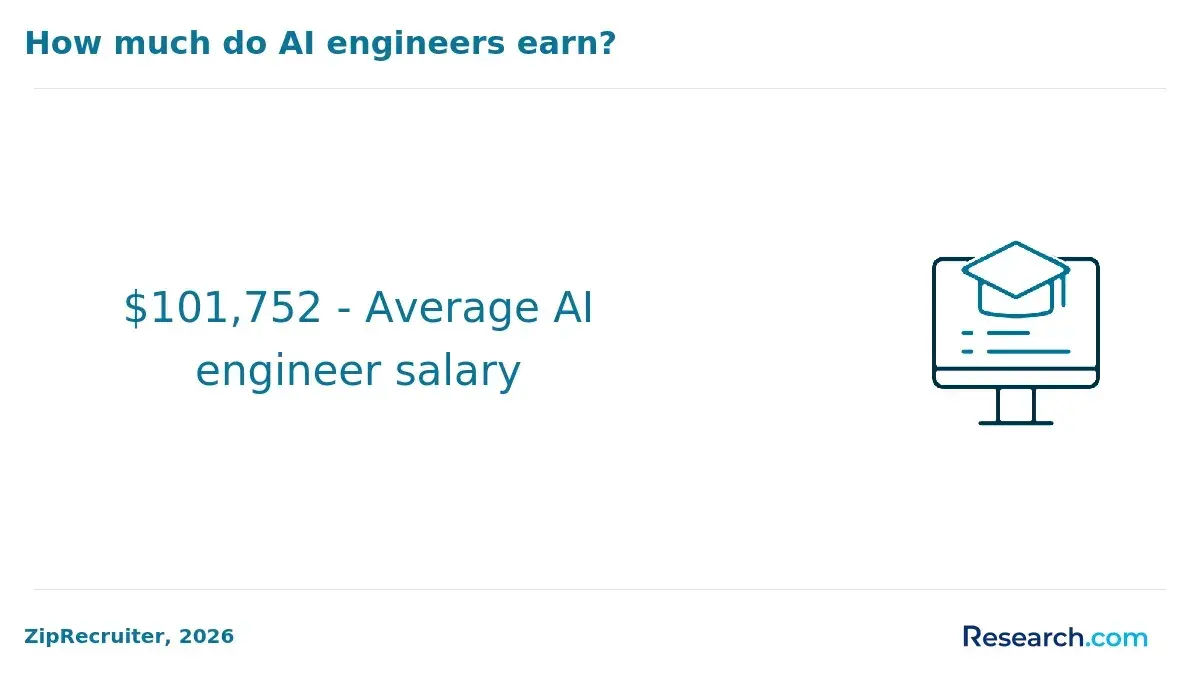
Median salaries for recommendation system professionals align with data scientist pay scales, with a median annual wage above $100,000 and top earners exceeding $150,000. Entry-level roles often start near $85,000, depending on factors such as location and experience.
Compensation can vary substantially by employer, city, seniority, technical depth, and whether the role is closer to analytics, software engineering, applied science, or research. Recommender-system specialists who can design models, engineer reliable data pipelines, run experiments, and explain business impact are often more competitive than candidates with only classroom exposure.
- Industry: Tech companies delivering personalized content tend to offer higher salaries.
- Technical expertise: Skills in machine learning frameworks, big data tools, and user behavior analytics boost compensation.
- Location: Urban hubs such as San Francisco, Seattle, and New York provide more opportunities and higher pay.
- Portfolio quality: Projects using TensorFlow, PyTorch, or Apache Mahout can help demonstrate practical readiness.
- Business impact: Experience improving engagement, conversion, retention, search relevance, or ranking quality can strengthen salary negotiations.
Typical job titles include machine learning engineer, data scientist, AI specialist, recommender systems engineer, search relevance engineer, applied scientist, and personalization engineer. The outlook is strongest for graduates who combine statistical knowledge, software engineering skill, scalable data experience, and awareness of ethical issues such as bias, transparency, and privacy.
For students choosing an AI master’s concentration, recommendation systems can be a practical specialization because it connects advanced machine learning with visible product outcomes and employer demand.
Other Things You Should Know About Artificial Intelligence
In 2027, AI master's programs typically include ethics modules focused on data privacy, algorithmic bias, and transparency. These courses aim to equip students with the skills to design fair and responsible recommendation systems.
Many programs require a final capstone, thesis, or applied project worth 6 to 12 credits. Students usually build a recommender prototype, evaluate it with offline metrics such as precision@k or NDCG, and submit a written report or thesis approved by a faculty supervisor.
In 2027, AI master's programs offer research opportunities in personalized recommendations, ethical AI, and algorithm development. Students may engage in projects to enhance recommendation accuracy in e-commerce, music, or video streaming, often collaborating with industry partners or utilizing real-world datasets.
Python and R are essential programming languages for AI master's students focusing on recommendation systems in 2027. These languages are used due to their powerful libraries like TensorFlow and Scikit-learn, which facilitate machine learning and artificial intelligence applications.
References
- How to Check if a Graduate Program is Accredited (and Why This Matters) | ProFellow https://www.profellow.com/tips/how-to-check-if-a-graduate-program-is-accredited-and-why-this-matters/
- Choosing a master’s degree: data science or artificial intelligence | edX https://www.edx.org/resources/choosing-a-masters-degree-data-science-or-artificial-intelligence
- What Are Recommender Systems? https://www.coveo.com/blog/what-is-a-recommendation-system/
- Top 10 Careers You Can Pursue With an Online Master’s in AI https://www.ucumberlands.edu/blog/careers-you-can-pursue-with-an-online-masters-in-ai
- Cost to Study in USA – Living Cost & Tuition Fees https://www.studies-overseas.com/blogs/cost-to-study-in-usa
- Learning to Rank for Recommender Systems: A Practical Guide | Shaped https://www.shaped.ai/blog/learning-to-rank-for-recommender-systems
- What Is a Recommendation System? – Intel https://www.intel.com/content/www/us/en/learn/recommendation-systems.html
- Nces https://nces.ed.gov
- 25 Best Master's in AI Programs - MastersInAI.org https://www.mastersinai.org/degrees/best-masters-in-artificial-intelligence/
- Best AI Master’s Programs in Europe for 2026 https://edubrain.ai/blog/best-ai-masters-in-europe/