2027 AI Degree Growth by State: Where Programs Are Expanding Fastest

Co-Founder and Chief Data Scientist
Many prospective graduate students encounter difficulty identifying where flexible, accredited programs in artificial intelligence are growing fastest. Geographic disparities in program availability can delay career transitions for those shifting from unrelated fields. Without clear insights, applicants risk committing to locations with limited opportunities or outdated curricula.
Understanding which states are rapidly expanding AI degree offerings helps candidates strategically select programs that align with industry demand and personal circumstances. This article explores state-by-state growth trends in graduate AI education, aiming to guide readers toward informed decisions about pursuing advanced study paths in this dynamic sector.
Key Things You Should Know
- In 2026, the fastest growth in artificial intelligence degree programs is seen in southern and midwestern states, with Texas and Ohio leading expansions by over 35% compared to 2024.
- Public universities account for nearly 70% of new AI-related offerings, reflecting increased state funding to meet workforce demands in technology sectors.
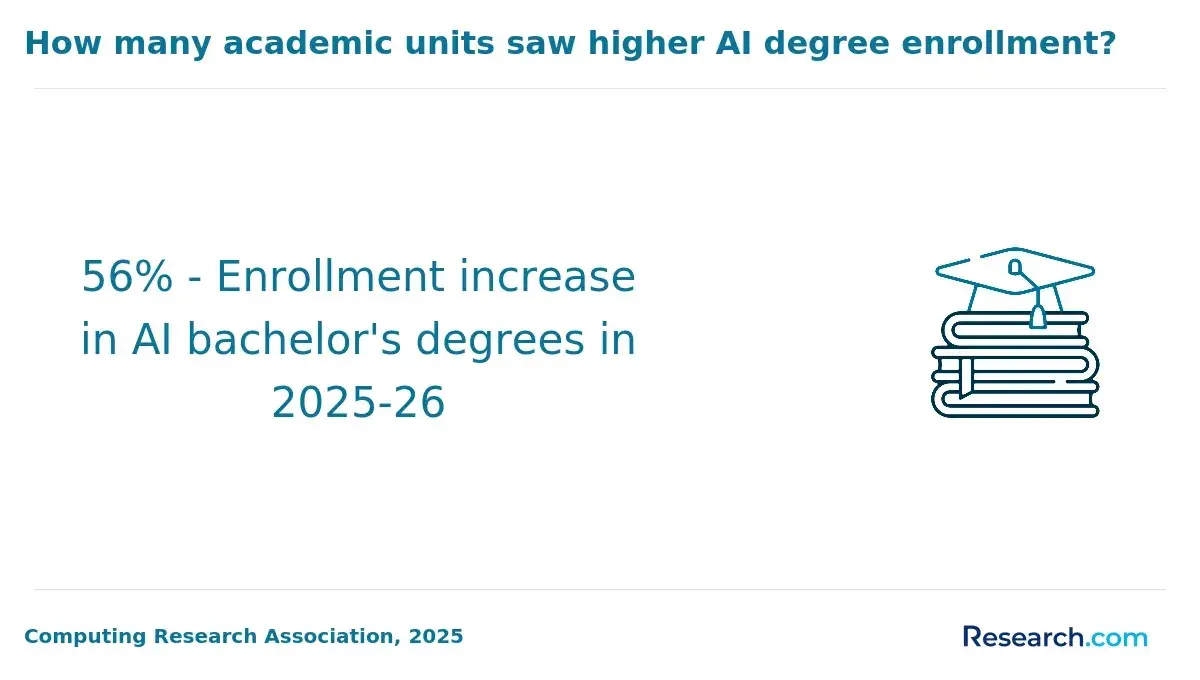
- Enrollment in AI degrees nationwide rose approximately 28% from 2024 to 2025, driven primarily by rising student interest in AI's application across industries.
Which states are seeing the fastest growth in accredited artificial intelligence degree programs?
States with the most rapid expansion of artificial intelligence degrees include California, Texas, and New York, which have significantly grown their accredited AI programs over the past three years. According to MastersInAI.org's 2025 AI Degree Report, the number of U.S. AI master's programs increased by 167%, from 116 to 310, marking one of the fastest expansions in graduate education nationwide.
California leads this growth due to its strong tech industry and established universities, adding more than 30 new AI programs since 2022. Texas follows, with major research institutions in Austin, Dallas, and Houston launching specialized degrees tailored to regional industry needs. New York's expansion is driven by Ivy League and private schools incorporating AI coursework in business and engineering.
Other states such as Massachusetts, Washington, and Georgia are also experiencing notable increases in AI degree offerings. These states benefit from investment in AI research hubs and partnerships with industry, often providing flexible online options alongside traditional on-campus programs to accommodate working professionals.
Prospective students should evaluate programs based not only on quantity but also on specialization areas like machine learning, robotics, or AI ethics, which vary widely by state and institution. Students seeking the fastest growing accredited artificial intelligence degree programs by state should consider those aligned with strong tech ecosystems that offer internships and employment opportunities after graduation. For a deeper view of related fields, explore the data science ranking, which offers insight into affordable and expanding data science programs connected to AI education.
How does AI degree availability compare across states and major U.S. regions?
Availability of AI degree programs varies widely across U.S. states, with the Northeast and West Coast leading due to strong technology hubs like Boston, New York, San Francisco, and Seattle. These regions host a high concentration of bachelor's, master's, and doctoral programs, supported by well-funded universities with industry connections.
The South and Midwest are experiencing rapid regional expansion of AI education programs, though they still offer fewer total degrees. States such as Texas and Georgia are aggressively increasing their AI degree program growth by state to meet workforce demands. Several Midwestern states have introduced new bachelor's and master's degrees recently, reflecting growing local interest and tech industry development. Data from MastersInAI.org shows a surge in ai education, with bachelor's degrees more than doubling-a 114.4% increase from 90 to 193 programs in just one year.
Prospective students should weigh factors like program quality and regional job opportunities. Coastal states typically offer extensive research resources and strong employment markets, while emerging programs in other regions may provide more competitive admissions and specialized local industry ties. For those looking to explore options, consider reviewing degrees in AI that balance affordability and quality across different states.
What types of artificial intelligence degrees and certificates do universities now offer?
Universities across the U.S. offer a wide array of artificial intelligence degree programs in US universities tailored to different career paths and skill levels. Core options include bachelor's degrees that combine foundational computer science courses with specialized topics such as machine learning, robotics, and natural language processing. At the graduate level, master's programs focus on advanced AI theory, deep learning, computer vision, and ethics, preparing students for research and industry positions.
Certificate programs serve professionals seeking targeted skills without committing to a full degree. These cover AI programming with Python, data analytics, and model deployment. Specialized certificates in areas like autonomous systems or AI-driven cybersecurity are also common, providing flexible pathways for career advancement.
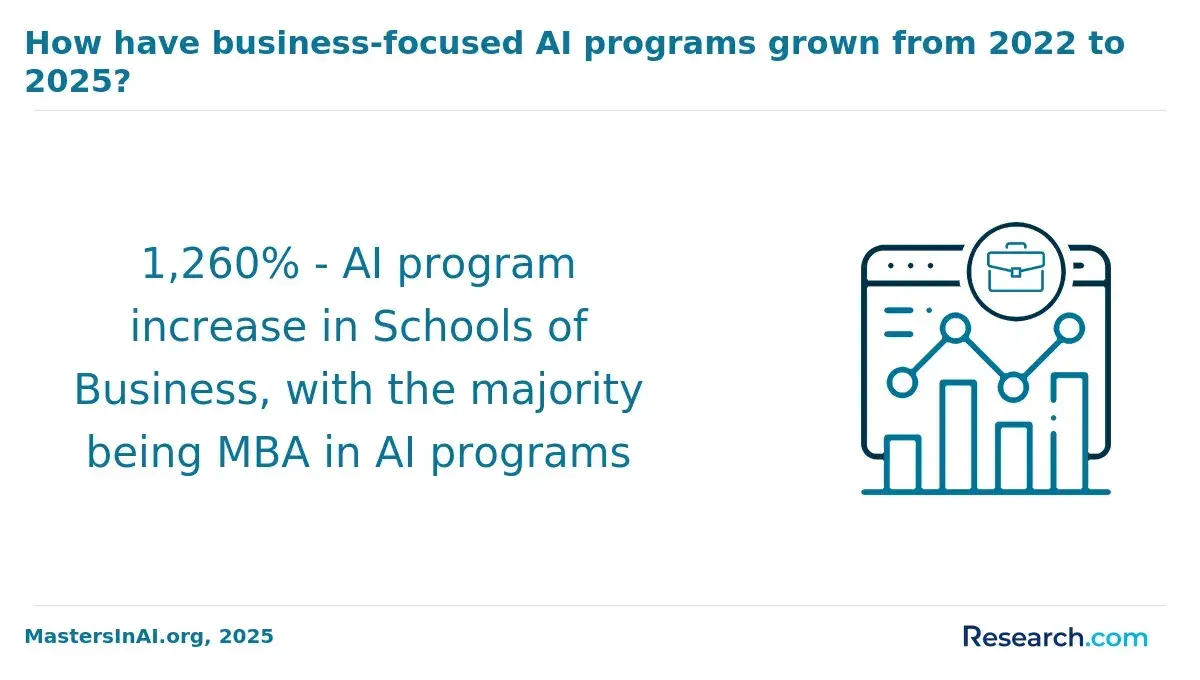
New interdisciplinary degrees blend AI with business analytics, healthcare informatics, or engineering to meet the technology's growing impact across sectors. Programs often emphasize practical learning through projects and industry partnerships, ensuring graduates gain hands-on experience suitable for diverse roles.
The South now accounts for 38.4% of all AI degree programs, with 113 universities offering 193 distinct options, reflecting considerable regional growth. This expansion benefits students by providing access to flagship state universities and smaller institutions, accommodating interests from theoretical research to applied or business-centered AI studies.
Selecting the right program depends on objectives like research, software development, data science, or AI ethics, and desired learning formats. For those seeking immediate skills, artificial intelligence certification options in North America offer a practical route. For a comprehensive path, bachelor's and master's degrees remain ideal. Prospective students can explore the best online MS in data science to complement AI expertise and enhance career opportunities.
How do online AI programs differ from campus-based options in flexibility and outcomes?
Online AI degree flexibility compared to campus programs is a key factor driving enrollment growth. Online programs let students access lectures, assignments, and exams asynchronously, fitting study around full-time work or family duties. Many offer recorded lectures and modular coursework, enabling learners to tailor their study pace across different time zones. This model suits self-directed students balancing multiple commitments.
Campus programs, meanwhile, focus on structured learning with direct interaction among faculty and peers, fostering collaboration and immersive experiences. These settings provide access to specialized labs and research facilities, which enhance practical skills and networking opportunities, often essential for careers needing hands-on AI expertise and teamwork.
Outcomes of online versus campus-based AI programs by state reveal notable trends. For instance, Florida has seen a 900% increase in online AI degree offerings, now boasting 30 programs. This expansion reflects broader recognition of the demand for scalable, flexible AI education nationwide, allowing learners to pursue diverse careers in AI development, data analysis, and machine learning without relocating.
Prospective students should weigh their learning styles, goals, and responsibilities. For more options in flexible tech education, consider an accelerated cyber security degree online that supports career advancement alongside studies.
What should students look for to verify accreditation and quality in AI programs?
Before enrolling in AI programs, students must verify institutional accreditation from recognized regional or national bodies endorsed by the U.S. Department of Education or the Council for Higher Education Accreditation. Programmatic accreditation from organizations like ABET also enhances credibility, especially for STEM-related programs.
It's crucial to assess curriculum rigor, including courses in machine learning, data science, robotics, and ethics, offered by faculty with strong research or industry backgrounds. Reviewing faculty publications and partnerships with tech companies can provide insights into program quality. Graduate outcomes, such as job placement rates, internships, and alumni success in AI careers, are valuable indicators of program effectiveness.
Programs located in emerging tech hubs, like the Midwest, often provide added networking benefits. According to Fiotip, Iowa's AI degree programs expanded by 1,000% and South Dakota's by 800% between 2022 and 2025, highlighting regional growth in this field. Hands-on experiences through capstone projects, internships, or cooperative education are essential for developing practical skills needed in competitive job markets.
Key points to verify include:
- Regional or national institutional accreditation.
- ABET or similar STEM program endorsements.
- Comprehensive curriculum covering core and emerging AI topics.
- Experienced faculty with strong research and industry ties.
- Robust graduate employment and internship records.
- Practical learning via projects or work placements.
What core courses and specializations are common in artificial intelligence degree curricula?
Core courses in artificial intelligence degree programs build a strong foundation with classes in programming, data structures, and algorithms. These technical skills prepare students for advanced machine learning topics, including supervised and unsupervised methods, neural networks, and deep learning. Mathematics like linear algebra, probability, statistics, and calculus reinforce understanding of model building and optimization.
Specialized courses often cover natural language processing, computer vision, robotics, and reinforcement learning, showcasing AI applications such as speech recognition, chatbot design, image classification, and autonomous driving. Ethics and societal impact have become essential parts of the curriculum, emphasizing privacy, bias, and responsible deployment. Hands-on projects or capstone experiences frequently use frameworks like Python, TensorFlow, or PyTorch to solve real-world problems.
Common specializations include AI for healthcare, autonomous systems, and data science, aligning education with distinct career pathways and industry needs. According to Georgetown's Center for Security and Emerging Technology, undergraduate and master's degree conferrals in AI have increased by roughly 120% since 2011, reflecting sustained annual growth near 5%. This surge highlights the importance of comprehensive, up-to-date curricula that equip students for evolving workforce demands.
What are typical admission requirements and prerequisites for entering AI degree programs?
Admission to AI degree programs typically requires a bachelor's degree in fields like computer science, engineering, or mathematics. Foundational knowledge in programming languages such as Python, Java, or C++, along with coursework in calculus, linear algebra, probability, and statistics, is often essential. Some applicants without a directly related undergraduate degree may need to complete prerequisite classes first.
Standardized tests like the GRE are commonly submitted, although some programs are beginning to waive this requirement as admissions evolve. Graduate applicants should demonstrate experience with algorithms, data structures, and basic machine learning concepts. Strong letters of recommendation and a clear personal statement focused on AI research or career goals are critical.
Work experience in technology or data science can sometimes replace academic prerequisites. Undergraduate AI tracks usually expect a solid high school foundation in math and science, with advanced placement courses in calculus and computer science favored. Placement exams to assess quantitative and programming skills may also be required.
The University of Idaho highlights labor market data from the U.S. Department of Education showing nearly 891,000 AI-related jobs nationwide. Projected growth stands at 17.3% nationally and 25.5% in the Mountain West, with median regional earnings expected to exceed $144,000 annually. This growth reflects both the competitiveness of admissions and the expanding career prospects for qualified AI graduates.
How long do AI degrees take to complete, and what are the usual tuition ranges?
AI degrees vary in duration based on the program's level and structure. Associate degrees typically take around two years of full-time study, offering a quicker path to foundational skills. Bachelor's degrees in AI or computer science with an AI focus usually require four years, covering theory, programming, and applied techniques. Master's programs last from one to two years and are aimed at students with relevant undergraduate backgrounds seeking advanced knowledge or research experience. Doctoral degrees extend from four to six years and emphasize original research within AI specialties.
Tuition costs differ significantly by institution type and degree level. Public universities charge between $10,000 and $20,000 annually for in-state undergraduates, with out-of-state fees reaching up to $35,000 per year. Private universities may range from $30,000 to $60,000 annually. Graduate programs generally cost more, with master's degrees averaging $20,000 to $50,000 per year. Online options can be more affordable and flexible for some students.
Recent data shows about 53% of AI programs are now offered as independent majors, while 47% are AI specializations within broader fields. Standalone AI degrees often require a full course load in the discipline, potentially increasing program length and tuition compared to embedded AI tracks. Prospective students should carefully evaluate program format, costs, and desired career outcomes to select the option best aligned with their goals.
Which AI-related career paths, job roles, and industries do these degrees support?
Degrees in artificial intelligence open doors to a wide range of rapidly evolving careers and industries. Graduates often work as AI engineers, data scientists, machine learning specialists, or robotics developers. Beyond these core technical roles, AI skills are increasingly valued in healthcare, finance, automotive, manufacturing, and cybersecurity sectors, where algorithm development, data analysis, and automation expertise are essential.
Job roles supported by AI education include natural language processing analysts, computer vision engineers, and AI product managers. These positions typically require proficiency in programming languages, statistical modeling, and integrating AI systems. For instance, healthcare providers use AI analysts to create predictive models for patient diagnoses, while financial institutions rely on AI specialists to detect fraud and improve trading algorithms.
Other industries adopting AI technologies include retail, where AI enhances inventory management and personalized marketing, and government agencies applying AI for public safety and smart city projects. This wide adoption allows students flexibility to shape careers aligned with personal interests and market trends.
The New York Times highlights a notable increase in AI academic programs, citing Northeastern University's Center for Inclusive Computing: U.S. universities grew from offering 5 AI majors in 2021 to 74 majors and minors by mid-2026. This surge reflects strong employer demand for AI expertise across sectors.
What salary expectations and long-term job outlook can graduates of AI programs anticipate?
Graduates of Artificial Intelligence programs typically begin their careers with salaries between $85,000 and $120,000 annually. Positions in machine learning engineering, data science, and AI research at the entry level often outpace traditional computer science roles in compensation. As professionals gain experience, mid-career salaries frequently reach $140,000 or higher due to the growing demand for specialized skills in areas like neural networks, natural language processing, and computer vision.
The employment outlook for AI-related fields remains strong, with projections indicating a 15% to 22% growth in jobs through 2031 as reported by the U.S. Bureau of Labor Statistics. Programs.com data highlights a rise in AI bachelor's programs from 90 to 193 within a two-year span, contrasted with declining enrollment in traditional computer science programs. This trend underscores a shift toward specialized education aligned with evolving market needs.
Careers for AI graduates often span diverse sectors such as healthcare technology, autonomous vehicles, finance, and government defense. Mastery of programming languages like Python and frameworks such as TensorFlow enhances employment prospects. Continuous learning through certifications or advanced degrees also supports ongoing career advancement and salary growth.
Overall, earning an AI degree offers a combination of competitive starting salaries, stable job opportunities, and applicability across multiple industries, making it a strategic choice for future careers.
Other Things You Should Know About Artificial Intelligence
In 2027, California, Texas, and New York are leading in the establishment of new AI degree programs. These states have invested significantly in technological infrastructure and academic-industry partnerships, facilitating the expansion and development of AI education to meet growing industry demands.
Artificial intelligence programs often update their curricula regularly to incorporate the latest research findings and industry trends. Many schools collaborate with tech companies and research institutions to provide students access to cutting-edge tools and real-world projects. This approach ensures that students learn practical skills that match the evolving demands of the AI job market.
Yes, numerous scholarships and financial aid options target students studying artificial intelligence, especially those pursuing STEM-related degrees. These can come from universities, private organizations, and government programs aiming to encourage growth in AI expertise. Prospective students should research and apply early, as some awards may require maintaining specific academic performance or involvement with AI research activities.
Internships and hands-on projects are critical components of artificial intelligence education, providing practical experience beyond classroom theory. They enable students to apply machine learning models, data analysis techniques, and AI development tools in real-world settings. Such experiences enhance employability by demonstrating the ability to solve complex problems and work effectively in collaborative environments.
References
- Top 20 Predictions from Experts on AI Job Loss https://aimultiple.com/ai-job-loss
- The States That Are Winning — And Losing — The Race To Dominate AI https://poetsandquantsforundergrads.com/news/the-states-that-are-winning-and-losing-the-race-to-dominate-ai/
- Best Colleges to Study Artificial Intelligence https://www.collegeadvisor.com/resources/study-artificial-intelligence/
- Best Artificial Intelligence Degree Programs 2026 https://hakia.com/degrees/artificial-intelligence/
- AI certificates | edX https://www.edx.org/certificates/ai-certificates
- 5 Benefits of an Online AI MS Degree | University of Bridgeport https://www.bridgeport.edu/news/benefits-of-online-ms-ai-degree/
- How to Get into a BSc in AI Program | Admission Guide 2025 https://futurense.com/blog/bsc-ai-program
- Seeking a Graduate Degree in Artificial Intelligence? https://blog.accepted.com/seeking-a-graduate-degree-in-artificial-intelligence/
- University Degree vs AI Bootcamp: Which is Best Career Path? https://agilefever.com/university-degree-vs-ai-bootcamp-which-is-best/
- Here’s How an AI Degree Stacks Up Against Other Options https://www.aidegree.org/blog/comparison-table