2027 The Future of AI Careers by Industry

Co-Founder and Chief Data Scientist
Many professionals with undergraduate degrees in unrelated fields face uncertainty when considering a shift to artificial intelligence careers. Rapid industry growth masks complex challenges in skill requirements and sector-specific demands. Deciding which path to take without a clear roadmap can stall career advancement and educational investment. This article examines emerging trends across industries, highlighting flexible, accredited educational opportunities tailored to diverse backgrounds. It aims to guide prospective graduate students and working professionals through informed decisions, enabling strategic pivots into artificial intelligence roles aligned with evolving market needs and personal career goals.
Key Things You Should Know
- Artificial intelligence integration will grow fastest in healthcare, finance, and manufacturing, with job openings in AI roles projected to increase by 35% from 2024 to 2026.
- Demand for interdisciplinary skills combining AI proficiency with domain expertise is rising, emphasizing education in ethics, data analysis, and industry-specific applications.
- Remote and hybrid work models are expanding AI career access nationwide, with 45% of AI-related positions offering flexible work arrangements in 2025.
How are AI career paths evolving across major industries in the United States?
AI career paths in the United States are evolving rapidly across major industries, reflecting increased demand for specialized skills and integrated roles. Workers with AI skills now earn an average wage premium of 56% over those in similar roles without these skills, a substantial rise from 25% just one year earlier, according to PwC's 2025 Global AI Jobs Barometer. This highlights growing valuation of AI competencies across sectors.
In healthcare, AI expertise is vital for predictive diagnostics, personalized treatment plans, and automated imaging analysis. Roles blend healthcare knowledge with AI skills as data scientists and machine learning engineers collaborate closely with clinicians. This trend illustrates the evolution of AI career paths in the United States.
Finance careers now demand proficiency in natural language processing, predictive modeling, and regulatory knowledge, extending beyond algorithmic trading into risk management and fraud detection. Professionals with economics or finance backgrounds increasingly upskill to meet these AI job market trends across major US industries.
Manufacturing and supply chains leverage AI for predictive maintenance and demand forecasting, merging engineering with AI programming and data analysis. Meanwhile, technology firms lead as the largest employers of AI talent, emphasizing interdisciplinary roles like AI governance specialists and explainability analysts.
Students and graduates should aim to develop hybrid skill sets that combine domain-specific AI knowledge and industry expertise. Pursuing an accelerated bachelor's degree computer science can be a strategic step to align with these market demands and enhance earning potential.
What education and skills do you need to work in artificial intelligence?
A strong educational foundation is essential for building a career in artificial intelligence in the US. Most entry-level roles require a bachelor's degree in computer science, data science, mathematics, or engineering, while advanced positions often call for a master's or doctoral degree with a focus on machine learning, natural language processing, or robotics. Supplementary coursework in probability, statistics, and linear algebra strengthens understanding of AI algorithms. These education pathways for artificial intelligence professionals in North America lay the groundwork for technical competency.
Key technical skills include proficiency in programming languages like Python, R, Java, and C++, as well as experience with AI frameworks such as TensorFlow and PyTorch. A successful AI professional must also master data preprocessing, feature engineering, and algorithm optimization. Soft skills such as critical thinking, problem-solving, and communication are vital for interdisciplinary collaboration and applying AI insights.
Familiarity with cloud platforms (AWS, Azure, Google Cloud) and big data tools increases employability. Practical experience gained through internships, coding contests, or open-source projects is highly beneficial. Certifications in machine learning or data science further exhibit a candidate's qualifications. The U.S. Bureau of Labor Statistics projects computer occupations to grow 11.7% from 2024 to 2034, largely driven by AI advances, underscoring demand for these skills.
Individuals exploring affordable study options can consider cheapest engineering colleges for a cost-effective start in artificial intelligence education.
Continuous learning is crucial to stay current with rapidly evolving AI technologies and methods.
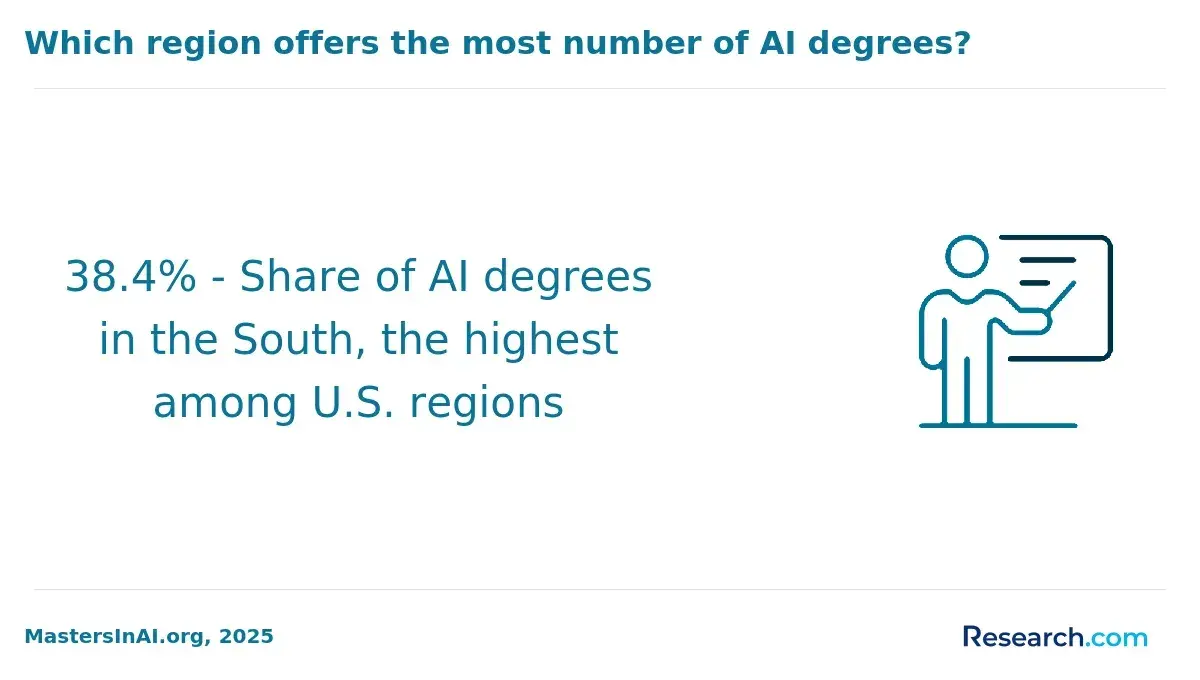
Which AI degrees and certificates best prepare you for industry-specific roles?
Degrees in computer science with specialized tracks in artificial intelligence or machine learning provide strong preparation for industry-specific AI roles. Bachelor's or master's programs focusing on data science, machine learning, natural language processing, or robotics equip students with essential technical foundations and algorithm expertise. These skills are crucial in sectors such as healthcare, automotive, and finance. Certifications offer targeted skill validation and are especially valuable for professionals transitioning into AI careers or deepening their expertise in niche tools or techniques, aligning well with the best ai degrees for industry roles.
In finance and fintech, where AI roles are projected to grow by 2 million jobs by 2030 per the World Economic Forum's Future of Jobs Report 2025, degrees combining computer science and finance provide a competitive edge. Programs emphasizing quantitative finance, algorithmic trading, and AI-driven risk management meet industry demands. Certificates in financial data analysis, blockchain, or applied machine learning further improve employability and represent some of the top ai certificates for specific industries.
Healthcare demands interdisciplinary degrees that blend AI with biomedical engineering, bioinformatics, or health informatics. Sector-specific certificates cover medical imaging AI, clinical data analytics, and regulatory-compliant AI systems. In manufacturing and automotive industries, degrees merging AI with control systems, IoT, or mechanical engineering prepare graduates for automation and predictive maintenance roles.
Emerging specializations include AI ethics certificates, critical for industries focusing on transparency and fairness regulations. Practical experience through internships or projects using frameworks like TensorFlow and PyTorch is highly valued by employers. Continuous learning through micro-credentials or modular courses helps professionals stay current. For those exploring related fields, a game design and development degree can also offer a pathway into AI applications in interactive media.
How do online and campus-based AI programs compare for career preparation?
Online and campus-based AI programs serve different career preparation needs. Online programs are ideal for working professionals or those without easy campus access, offering flexibility and often accelerated curriculums. They emphasize practical, project-based learning with regularly updated content to meet fast-changing industry demands. However, online formats may lack extensive hands-on opportunities with specialized labs or direct mentorship, which are valuable in advanced AI fields such as robotics or healthcare AI applications.
Campus-based AI education typically offers a more immersive experience, including access to faculty expertise, research labs, and peer collaboration. This helps students gain deeper theoretical insight alongside applied skills. For instance, students focusing on healthcare AI benefit from interdisciplinary university partnerships linking AI with biomedical departments.
Given that healthcare and biotech generative AI adoption is expected to boost global labor productivity by up to 7% of annual economic output by 2030, campus programs provide unique advantages through integrated clinical and ethical training. Comparing online and traditional AI education for job readiness often highlights stronger industry networks and internship opportunities with campus programs.
Factors to consider when choosing between formats include:
- Career goals-immediate application versus long-term research and development
- Access to internships and professional networks
- Preference for structured classroom learning or flexible self-paced study
- Financial and time commitments
Blended AI education models that mix online instruction with on-campus labs or practicums are emerging to bridge gaps in either format. Both pathways can lead to successful careers when combined with real-world experience and ongoing skill development. Prospective students interested in expanding their data skills may also explore data analytics masters programs that align well with AI career paths.
What coursework and specializations are included in AI programs by industry focus?
AI programs tailored by industry focus offer specialized coursework aligning with sector-specific challenges and technologies. In healthcare, students explore machine learning for medical imaging, natural language processing for electronic health records, and bioinformatics, while emphasizing interdisciplinary skills and courses on medical data ethics and regulatory compliance.
Finance AI curricula cover algorithmic trading, risk modeling, fraud detection, and predictive analytics. Topics include statistical learning, time-series forecasting, and reinforcement learning, preparing students to develop systems that optimize portfolio management and credit scoring.
Manufacturing, robotics, and Industry 4.0 programs integrate AI with automation and control systems, emphasizing robotics, computer vision, sensor fusion, and real-time analytics. Given that an MIT-Boston University study estimates AI and robotics could replace up to 2 million manufacturing workers in the U.S. by 2026, these programs also address workforce transitions and ethical automation issues. Students gain skills in designing adaptive robotics, predictive maintenance algorithms, and AI-driven quality control.
Hands-on projects often combine AI with the Internet of Things (IoT), enabling predictive analytics for production lines. Programming languages like Python and frameworks such as TensorFlow are common but applied according to industry needs.
Students should seek curricula balancing core AI theories-such as neural networks and probabilistic models-with applied industry courses. Certifications in cloud computing and data security are increasingly important for managing sector-specific data governance and deployment challenges.
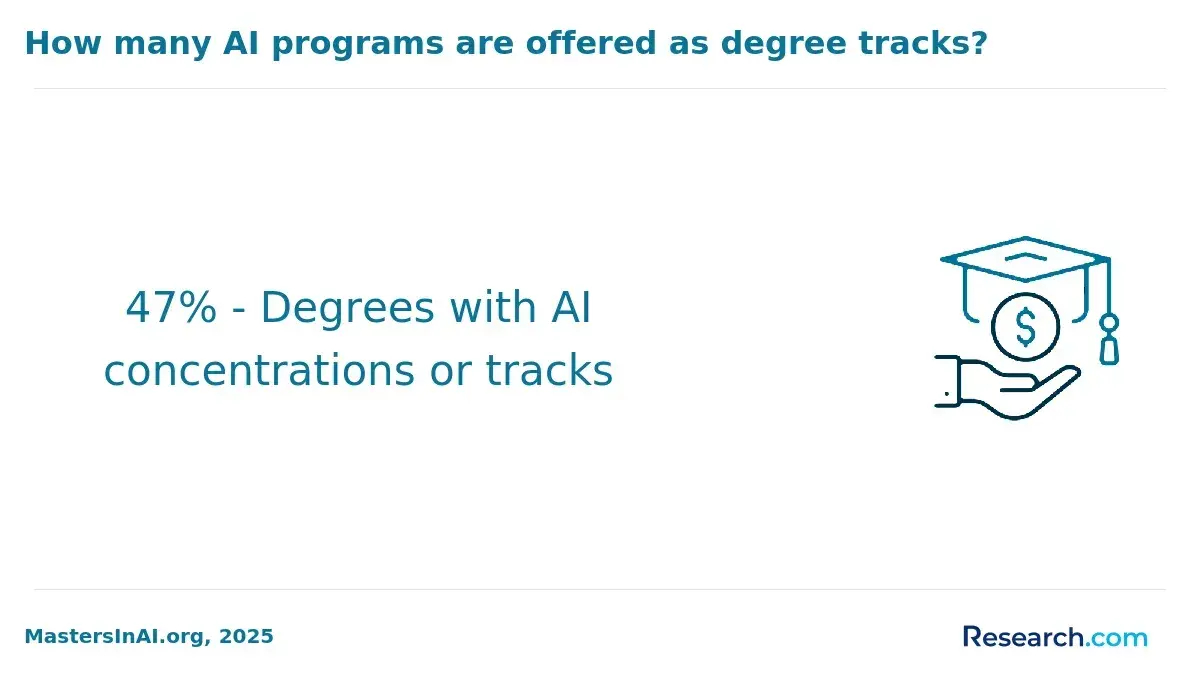
How long do AI programs take, and what do they cost at U.S. schools?
U.S. schools offer AI education ranging from short certificate courses to full degree programs. Certificate programs, lasting 3 to 6 months, often target skills like machine learning and data analysis, making them ideal for professionals seeking quick upskilling. Associate degrees take about 2 years, while bachelor's degrees require roughly 4 years and provide a thorough foundation in AI and computer science. Graduate programs, such as master's degrees in AI or data science, typically last 1 to 2 years and offer advanced training for research or technical careers.
Costs vary significantly by program and institution: certificate courses range from $1,000 to $5,000; public universities charge $10,000 to $40,000 per year for in-state bachelor's students; and private schools often exceed $50,000 annually. Graduate programs usually cost between $20,000 and $60,000 total. Online and part-time options provide flexible pathways for working professionals.
Labor market trends indicate soaring demand for AI-trained professionals. For example, Freethink reports that up to 65% of retail and customer-facing jobs could be automated by 2026, fueled by AI-powered personalization and analytics. This creates growing opportunities in marketing, media, and retail sectors for those with AI expertise.
Choosing the right program requires balancing duration, cost, and career goals. Short certificates offer rapid entry, while degrees deliver deeper knowledge and higher long-term earning potential.
What are the top AI job roles, salaries, and advancement opportunities by industry?
AI job roles and salaries differ widely across industries, reflecting varying adoption and application complexity. In technology, positions like AI engineer, data scientist, and machine learning specialist dominate, with entry salaries between $100,000 and $120,000 and senior AI architects earning more than $160,000. Career growth often leads to leadership roles in AI strategy and research management.
The healthcare sector is expanding rapidly in AI, especially for medical imaging analysts and bioinformatics experts. Salaries typically range from $90,000 to $140,000, with clinical AI consultants earning more through interdisciplinary expertise. Advancement paths often move toward AI ethics and regulatory advisory roles.
Finance professionals work as quantitative analysts, risk modelers, and algorithmic traders, with salaries starting at $95,000 and exceeding $150,000 for seasoned experts. Career progression focuses on AI-driven decision-making skills and compliance management.
Legal, compliance, and professional services face significant disruption. Around 14% of workers worldwide may need to change careers by 2030 due to AI, according to McKinsey Global Institute. Emerging roles include AI compliance analysts and legal tech developers, with salaries from $80,000 to over $130,000. Advancement often means moving into strategic roles for AI integration and risk management.
Continuous learning in new AI frameworks, interpretability, and ethical deployment is vital across all fields. Professionals blending AI expertise with domain knowledge and policy insight have the strongest leadership potential.
What is the long-term job outlook for AI professionals in different sectors?
AI professionals will be essential across diverse sectors, each demanding specific skills and knowledge. In healthcare, expertise in machine learning and data privacy compliance supports innovations in diagnostics, personalized treatment, and medical imaging analysis. Finance and insurance focus on fraud detection, algorithmic trading, and risk assessment, requiring strong predictive analytics and regulatory insight.
Manufacturing increasingly uses AI for predictive maintenance and quality control, making robotics integration and real-time data processing valuable skills. The education, training, and HR tech industries are experiencing significant growth-one survey found 78.9% of respondents expect AI's role in workplace decision-making to rise, creating demand for AI-literate professionals in recruitment and adaptive learning systems.
Technology companies drive AI innovation, focusing on ethical deployment, system scalability, and AI framework development. Government and defense sectors prioritize AI for security, calling for experts in cybersecurity and ethical AI practices.
- AI roles require ongoing upskilling in emerging tools and ethical guidelines.
- Cross-disciplinary knowledge boosts employability, especially in regulated fields.
- Entry-level candidates should combine domain-specific applications with core technical skills.
Success in AI careers depends on blending technical proficiency with sector-specific understanding. Pursuing targeted education and training strengthens competitiveness and responsiveness to evolving industry demands.
Are there industry-recognized AI certifications, and how do they impact careers?
Industry-recognized AI certifications play a crucial role in validating technical skills and domain expertise, significantly improving career prospects. Providers like Microsoft, Google, IBM, and the Association for the Advancement of Artificial Intelligence (AAAI) offer certifications that employers value highly. For example, the Microsoft Certified: Azure AI Engineer Associate credential demonstrates proficiency in designing and implementing AI solutions on Azure, a skill in growing demand.
These certifications offer structured learning paths, covering essential areas such as machine learning algorithms, natural language processing, and AI ethics. They complement formal education by focusing on hands-on skills and current industry tools, often influencing hiring and promotion decisions.
In public sector jobs and policy roles, certifications indicate preparedness for managing complex AI applications responsibly. The UK Department for Education and UK Government projects that AI-intensive jobs will grow twice as fast as average employment rates through the early 2030s, highlighting increasing demand.
Employers often prioritize candidates with certifications to reduce onboarding time and may consider them during salary negotiations. Selecting certifications aligned with your career goals-be it AI research, development, or implementation-is essential. Holding multiple certifications, from foundational to specialized, signals ongoing learning and adaptability in this rapidly evolving field.
How can you evaluate and choose an accredited, reputable AI program in the U.S.?
Choose an accredited AI program in the U.S. by verifying accreditation from recognized agencies such as the Higher Learning Commission or regional accreditors. Accreditation ensures academic standards are met and protects your educational investment. Review curricula to confirm coverage of essential topics like machine learning, data ethics, natural language processing, and software engineering, alongside practical experience through projects or internships.
Faculty qualifications are key-look for instructors with current expertise and strong industry or research ties, ensuring updated content and valuable networking opportunities. Consider program formats-on-campus, online, or hybrid-that fit your lifestyle. Evaluate duration, credit needs, and specializations that align with your career ambitions in fields like healthcare, finance, or manufacturing.
Graduation outcomes matter: assess job placement rates, employer partnerships, and alumni career progress to gauge real-world value. Factor in cost and financial aid options, using resources such as those from the U.S. Department of Education to identify eligible programs. Given projections that AI may create 170 million jobs by 2030 with a net gain of 78 million, prioritize programs emphasizing leadership, ethics, and strategic AI implementation skills to prepare for managerial roles.
Key questions to guide your choice include:
- Is the program accredited by a recognized U.S. agency?
- Does the curriculum provide up-to-date, hands-on AI training?
- Are faculty members experienced and connected to industry?
- What do graduate outcomes reveal about employment opportunities?
- Does the program offer flexibility and relevant specializations?
- Are leadership and ethical issues integrated into the coursework?
Other Things You Should Know About Artificial Intelligence
Artificial intelligence influences workforce diversity by potentially reducing human biases in hiring through algorithmic decision-making. However, AI systems must be carefully designed to avoid perpetuating existing biases in training data. Companies increasingly focus on inclusive AI development to promote fairness and diverse representation.
Key ethical concerns include data privacy, algorithmic bias, transparency, and accountability in AI decision-making. Ensuring ethical AI involves creating systems that respect user rights and operate without unfair discrimination. Regulatory frameworks and guidelines are evolving to address these issues across industries.
Interdisciplinary knowledge is crucial for AI careers since AI applications often require understanding of domain-specific challenges alongside technical skills. Fields such as healthcare, finance, and law benefit from professionals who blend AI expertise with subject matter knowledge. This combination enhances problem-solving and innovation in applied AI solutions.
AI is transforming healthcare by automating diagnostics, personalizing treatment plans, and enhancing patient care, creating opportunities for specialists proficient in data analysis and machine learning. Pursuing the best master’s programs in AI in healthcare equips professionals for these evolving roles.
References
- 6 AI Tools To Prepare Students for College and Career https://www.onegoal.org/about/blog/6-ai-tools-that-can-help-students-prepare-for-college-and-career/
- Which AI Certification Is Best? Are AI Certifications Worth It? https://www.flashfirejobs.com/blog/which-ai-certification-is-best
- Best AI Certifications to Boost Your Career in 2026 – Dataquest https://www.dataquest.io/blog/best-ai-certifications/
- The Real Cost of AI Tools for Schools: What Budgets Need to Account For https://openeducat.org/articles/cost-of-ai-tools-for-schools-budget-guide/
- Exploring AI Specializations: Which Path is Right for You? https://www.ironhack.com/us/blog/exploring-ai-specializations-which-path-is-right-for-you
- AI Skills for Life and Work: Labour market and skills projections https://www.gov.uk/government/publications/ai-skills-for-life-and-work-labour-market-and-skills-projections/ai-skills-for-life-and-work-labour-market-and-skills-projections
- AI’s Impact on Job Growth | J.P. Morgan Global Research https://www.jpmorgan.com/insights/global-research/artificial-intelligence/ai-impact-job-growth
- 7 Industry-Recognized AI Certifications and How to Make Them Count in Your Career | HackerNoon https://hackernoon.com/7-industry-recognized-ai-certifications-and-how-to-make-them-count-in-your-career
- How Universities Are Preparing Students for the Future of AI - AWIS https://awis.org/resource/how-universities-are-preparing-students-for-the-future-of-ai/
- Things to Know Before Pursuing an AI Career https://lumifylearn.com/blog/the-things-you-need-to-know-before-pursuing-a-career-in-artificial/