2027 Most Affordable AI Master's Degrees in the U.S.

Co-Founder and Chief Data Scientist
Many prospective graduate students face the challenge of entering the growing AI field without bearing substantial debt or sacrificing work flexibility. This dilemma intensifies for those transitioning from unrelated undergraduate backgrounds who need accredited, affordable programs tailored for career pivots. Finding programs that blend affordability with quality and flexibility remains a pressing concern.
The demand for accessible education pathways grows as more professionals seek to upskill in ai technologies. This article explores the most affordable AI master's degrees in the U. S. in 2027, highlighting programs that offer both financial feasibility and practical career advantages for diverse learners.
Key Things You Should Know
- In 2026, many affordable AI master's programs in the U.S. offer tuition rates averaging below $15,000 annually, significantly lowering barriers for diverse student populations.
- Programs increasingly emphasize practical skills such as machine learning, data ethics, and AI integration, aligning education with rapidly evolving industry demands.
- Online and hybrid formats expand accessibility, with over 40% of accredited AI master's degrees available remotely, accommodating working professionals and nontraditional students.
What are the most affordable AI master's degree programs available at accredited U.S. universities?
The most affordable AI master's degree programs in the U.S. typically come from public universities offering substantial in-state tuition benefits and flexible online formats. For example, the Georgia Institute of Technology provides a Master of Science in Computer Science with a specialization in machine learning and AI at about $10,000 for in-state students. Similarly, the University of Texas at Austin offers an online master's focused on AI and data analytics for roughly $11,000 to Texas residents.
Other options for the best accredited U.S. universities for affordable AI master's degrees include the University of Illinois Urbana-Champaign's online Master of Computer Science program featuring AI-related courses, with tuition near $21,000. The University of California, Santa Cruz, also provides an affordable online master's in AI emphasizing cost efficiency, charging around $18,000 for California residents.
Many affordable programs integrate AI specialization in broader computer science degrees, expanding options without significant price increases. Hybrid and online delivery reduces expenses tied to housing and campus facilities, helping budget-conscious learners. Students aiming for shorter study duration might explore a 1 year computer science degree online program that may include AI-focused coursework.
With an annual 3.2% rise in graduate tuition fees reported by the U.S. Bureau of Labor Statistics, evaluating total costs, including residency status and materials, remains vital for those seeking the most affordable AI master's degree programs in the U.S.
How much does an AI master's degree cost, and what financial aid options are available?
The cost of an AI master's degree program in the U.S. can vary significantly, ranging from $30,000 to $120,000 based on College Board data. Online programs typically offer savings of 40-50% compared to on-campus options. For instance, an on-campus program priced at $80,000 may cost around $40,000 when completed online, making remote learning an attractive option for many.
Financial aid options for AI master's students in America are crucial for managing expenses. Federal student loans provide fixed interest rates and flexible repayment plans for most students. Many universities also offer graduate assistantships that may waive tuition and provide stipends in exchange for teaching or research support, though availability varies by department.
Scholarships aimed at STEM and AI fields have become more common, funded by universities, industry organizations, and nonprofits like the National Science Foundation. These awards often require strong academic performance and can cover partial or full tuition.
Employer tuition reimbursement programs are another avenue, especially for those working in tech firms or companies involved in AI development. These programs usually require that the degree aligns with job responsibilities and that the program is accredited.
Due to high cost variability, budgeting must include tuition, living expenses, textbooks, and technology. Early exploration of funding and program formats can help avoid surprises. For those interested in cost-effective options, consulting the data science ranking may provide valuable insights.
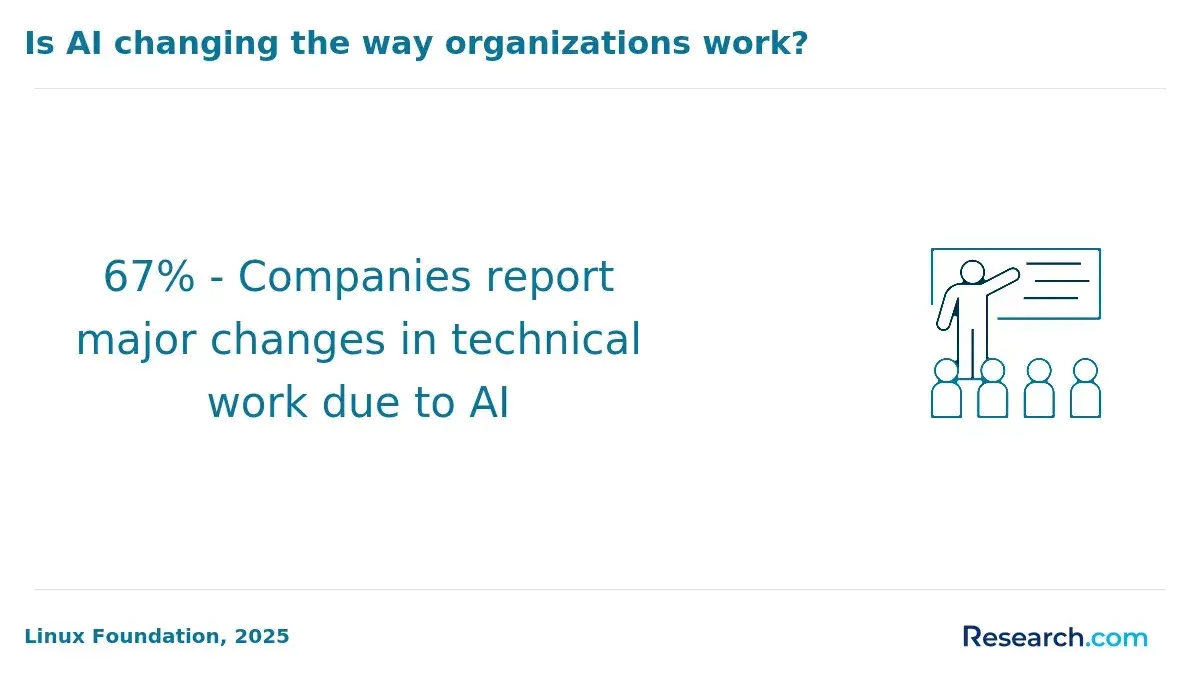
What is the typical curriculum and core coursework in an AI master's program?
The typical curriculum for AI master's programs in the U.S. emphasizes developing expertise in machine learning and deep learning, featured in 94% of courses at accredited universities. These core classes train students to create algorithms that learn from data and improve autonomously, forming the foundation of many AI applications.
Core coursework of artificial intelligence master's degrees in America also includes essential mathematical tools like statistics, probability, and linear algebra. Programming, especially in Python, and software engineering principles are key components that ensure students can implement AI solutions effectively.
Many programs cover specialized topics such as natural language processing and computer vision, which deal with text and image data, respectively. Reinforcement learning, focused on decision-making through trial and error, commonly features as well. Applied learning through projects or capstones enables students to solve real-world problems in areas like healthcare and autonomous systems.
Ethical AI and governance topics are increasingly integrated to address bias, accountability, and societal impact concerns. Electives may include robotics, advanced neural networks, or AI hardware optimization, providing flexibility to tailor education to career goals. Most programs require 30 to 36 credit hours, typically completed over 1.5 to 2 years of full-time study.
Prospective students are encouraged to carefully compare curricula to align study plans with career objectives. Those interested in related fields might also explore online engineering degrees that offer complementary skills valuable in AI careers.
Which U.S. universities offer AI master's degrees in online, hybrid, or fully in-person formats?
Several U.S. universities provide master's degrees in artificial intelligence with flexible delivery options, including online, hybrid, and fully in-person formats. For those seeking affordable ai master's degrees, programs vary widely in structure and focus. Johns Hopkins University offers a fully online Master of Science in Artificial Intelligence, designed for working professionals aiming for career growth without relocating. Carnegie Mellon University's hybrid Master of Science in Artificial Intelligence and Innovation combines on-campus residency with online coursework, appealing to students who want both in-person interaction and remote flexibility.
Stanford University delivers a traditional on-campus Master's in Artificial Intelligence within its Computer Science department, emphasizing theoretical foundations and research. Meanwhile, the University of Texas at Austin provides an online Master of Science in Computer Science with an AI specialization, accommodating those who prefer asynchronous learning from any location while maintaining virtual faculty access.
This growing availability of online, hybrid, and in-person ai master's degree programs in the U.S. aligns with increasing demand for flexible STEM education. According to the National Center for Education Statistics, online master's enrollments rose 15% year-over-year, with STEM programs representing 38% of all online graduate degrees. Prospective students should weigh curriculum rigor, faculty expertise, cost, and networking opportunities to find the best fit. Those balancing work or family often find flexible formats essential.
For insights on related tech degrees, consider reviewing the best online cyber security degrees that offer similar flexibility and career prospects.
What are the admission requirements and prerequisites for entering an AI master's program?
Admission to AI master's programs generally requires a bachelor's degree in computer science, engineering, mathematics, or a related STEM field. Foundational coursework in programming, data structures, linear algebra, calculus, and probability is commonly expected. Many schools also look for experience in machine learning or statistics, either through academic work or professional involvement.
GRE scores still play an important role, with about 72% of leading AI programs requiring them. However, nearly a third of these schools have dropped the GRE between 2022 and 2024, signaling a shift towards more holistic application reviews.
Applicants must usually submit letters of recommendation, a statement of purpose, and a resume that highlights relevant projects and skills. Internships or research experience in artificial intelligence or data science can enhance applications. Some institutions offer conditional admission or prerequisite courses to help non-technical candidates meet necessary knowledge requirements.
International students need to demonstrate English proficiency through exams like TOEFL or IELTS. Certain programs also mandate prior coursework in AI ethics or policy to ensure a well-rounded understanding of AI's societal impacts.
Requirements can vary widely; some programs insist on a minimum GPA of 3.0, while others prioritize innovative project portfolios. Prospective students should review individual program websites carefully to confirm prerequisites and prepare accordingly.
How long does it take to complete an affordable AI master's degree?
An affordable AI master's degree in the U.S. generally takes two years of full-time study. This timeline suits students who can fully commit to coursework and research. Part-time students, such as working professionals juggling employment, typically require three to four years to complete their degrees, based on data from Inside Higher Ed (2024). This longer period reflects the necessary flexibility for balancing various personal and professional responsibilities.
Flexible scheduling options-like evening classes, weekend sessions, and online courses-help reduce obstacles related to time-to-completion. Programs with asynchronous learning permit students to progress at their own pace, avoiding rigid semester schedules. For instance, Georgia Tech and the University of Texas at Austin offer online AI master's tracks catering to part-time learners, allowing extended program durations aligned with career demands.
Students should carefully consider their available time, financial resources, and career objectives when choosing between full-time and part-time enrollment. While full-time study accelerates graduation, it may limit the ability to work during the program. Part-time options provide balance but extend the timeline. Additionally, it is important to verify program delivery formats and credit requirements, as some institutions require a minimum number of in-person sessions, which may affect scheduling flexibility.
These timelines support prospective students in planning effectively for a career in a rapidly evolving field like AI.
What career roles and job titles do AI master's graduates typically pursue?
Graduates with a master's degree in artificial intelligence often pursue roles such as machine learning engineer, AI research scientist, and data scientist. These three positions accounted for 58% of AI-related job postings requiring a master's degree from 2022 to 2024, according to the LinkedIn Jobs Report (2024). Machine learning engineers focus on designing and implementing scalable AI models, while AI research scientists advance theoretical frameworks and novel methodologies. Data scientists use AI techniques to extract insights from large datasets in various industries.
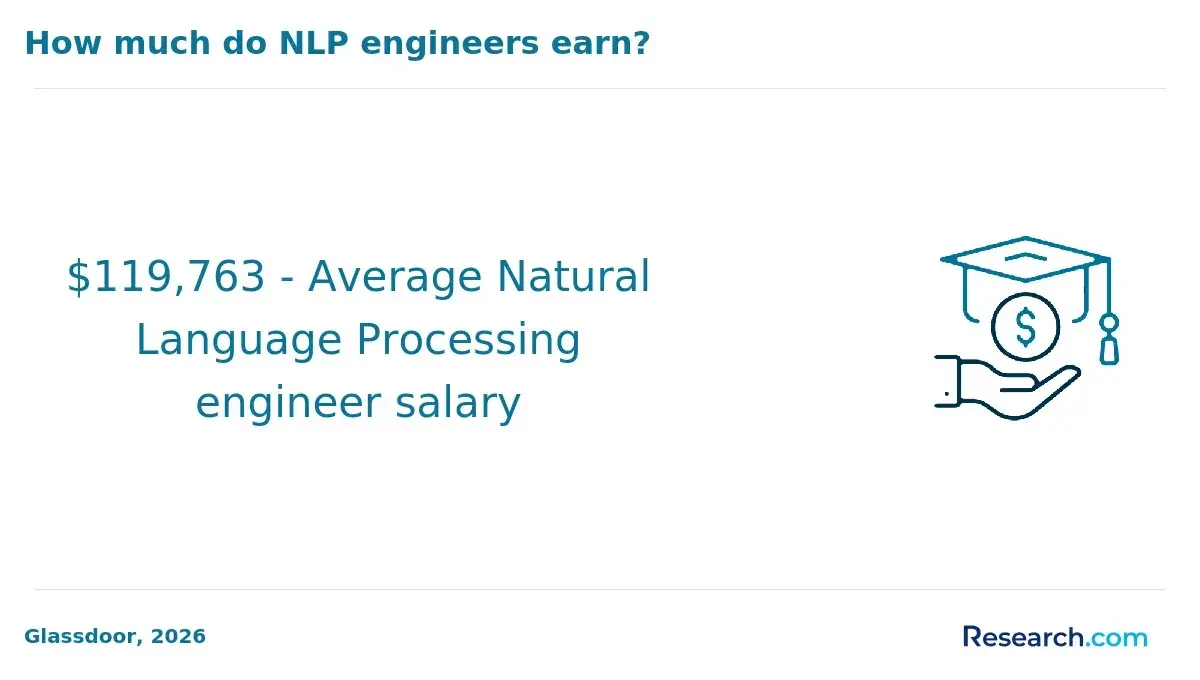
Other in-demand roles include AI software developer, natural language processing (NLP) engineer, computer vision engineer, and robotics engineer. NLP engineers create applications like chatbots and voice recognition systems, whereas computer vision engineers develop image and video analysis technologies. Robotics engineers apply AI to mechanical systems, enhancing automation and intelligent machine behavior. Additionally, AI ethics and policy roles are growing, addressing fairness and responsible deployment of AI technologies.
Graduates targeting industry research and development can find opportunities in technology giants, AI-focused firms, and startups. In academia or national labs, AI research scientist roles often require grant writing and publishing in peer-reviewed journals. Many AI master's holders also pursue data analyst or software engineering roles that utilize AI skills, offering a pathway to core AI fields later. AI-related master's job postings have risen 47% between 2022 and 2024, signaling expanding career prospects in this field.
What is the average salary for professionals with an AI master's degree in the U.S.?
Professionals with a master's degree in Artificial Intelligence in the U.S. earn starting salaries between $95,000 and $125,000, according to Glassdoor. This represents a 35-40% premium over tech roles requiring only a bachelor's degree. Mid-career salaries often exceed $180,000, showing the strong financial benefits of advanced AI education.
Salary levels vary based on industry, location, job role, and experience. AI specialists in tech hubs like Silicon Valley, Seattle, and New York usually earn closer to the higher end. Roles in machine learning engineering, AI research, or product management tend to offer competitive pay that increases with responsibility.
Investing in an AI master's degree can offer significant economic returns beyond initial employment. Graduates in sectors such as healthcare AI, autonomous vehicles, or fintech may experience faster salary growth due to high industry demand for specialized AI skills.
Prospective students should weigh salary data against tuition and time investment. Employers place greater value on expertise gained through graduate programs, reflected in salary premiums. Acquiring specialized knowledge in emerging AI subfields can further boost earning potential and career advancement.
What is the job outlook and industry demand for AI master's degree holders through 2032?
The job outlook for AI master's degree holders through 2032 is exceptionally strong, with a 35% growth rate projected for AI and machine learning specialists, far surpassing the 5% average across all occupations. This rapid expansion is driven by rising industry reliance on AI solutions in sectors like healthcare, finance, automotive, and cybersecurity.
Graduates can expect diverse roles, from developing intelligent algorithms to designing autonomous systems. Healthcare uses AI to improve diagnostic accuracy and patient outcomes through predictive analytics, while finance employs AI to detect fraud and automate trading. The automotive industry depends on AI expertise for advancing self-driving vehicle technology.
Employers prioritize practical skills in machine learning frameworks, data management, and ethical AI implementation. Demand extends across AI research, software engineering, and data science, where technical knowledge and domain-specific understanding are essential. Salary prospects remain competitive, often exceeding national tech averages for entry-level positions.
Students seeking affordable AI master's programs should focus on curricula aligned with industry needs and those offering internships or co-op opportunities, as hands-on experience is crucial for real-world problem solving.
How should prospective students evaluate and compare affordable AI master's programs for quality and value?
Prospective students evaluating affordable AI master's programs should prioritize ABET accreditation, a critical indicator of program quality and industry relevance. Graduates from ABET-accredited AI and computer science master's degrees achieve 89% employment within three months and average a 2.8 times ROI on their education costs within five years, according to the National Association of Colleges and Employers.
Cost alone is not enough to determine value. Candidates must consider curriculum depth, faculty expertise, and research opportunities. Some affordable programs offer specialized tracks in machine learning or natural language processing, aligning with specific career paths in sectors such as healthcare or finance. Others emphasize practical industry projects and internships, which boost job placement and real-world skills.
Delivery formats-online, hybrid, or on-campus-impact flexibility, expenses, and time management. Programs with strong industry partnerships provide valuable networking that raises employment prospects. Alumni outcomes, including salary growth and job titles, offer measurable evidence of program effectiveness.
Affordability also benefits from financial aid availability and part-time enrollment options. Examining faculty publications, lab facilities, and access to AI tools sheds light on academic rigor. Balancing accreditation, curriculum relevance, cost, and career services enables data-driven decisions that maximize the educational and financial value of AI master's programs.
Other Things You Should Know About Artificial Intelligence
While a background in computer science or a related field is often preferred, it is not always strictly required. Many programs accept students with strong quantitative skills from engineering, mathematics, or physics, provided they complete prerequisite courses. Some universities offer foundational classes in programming and algorithms to help bridge gaps for students coming from different academic backgrounds.
Most affordable AI master's programs in 2027 require around 30 to 36 credit hours. This typically includes core AI courses, electives, and a capstone project or thesis to complete the degree requirements.
No, many affordable AI master’s programs do not require the GRE. Instead, admissions often focus on a bachelor’s degree, transcripts, prerequisite math or programming courses, and letters of recommendation. Some universities make the GRE optional, while others waive it entirely for 2027 applicants.
References
- 6 High-Paying Jobs With a Master’s in AI | University of Bridgeport https://www.bridgeport.edu/news/high-paying-jobs-with-a-masters-in-ai/
- Top 10 Careers You Can Pursue With an Online Master’s in AI https://www.ucumberlands.edu/blog/careers-you-can-pursue-with-an-online-masters-in-ai
- How Long Does it Take to Get a Master’s Degree? https://www.aiuniv.edu/degrees/business/articles/how-long-does-it-take-to-get-a-masters-degree
- Most Affordable Online Master's in AI for 2025 https://www.mastersinai.org/degrees/affordable-online-masters-in-ai/
- Despite AI Cutting Entry-Level Roles, These Graduate Careers Remain in High Demand https://www.investopedia.com/despite-ai-cutting-entry-level-roles-these-graduate-careers-remain-in-high-demand-11913594
- Masters in Artificial Intelligence Salary: Earning The Degree & The Dollars https://aifwd.com/career/masters-in-artificial-intelligence-salary/
- 16 Artificial Intelligence Career Paths https://www.calmu.edu/news/artificial-intelligence-career-paths
- What AI really means for graduate jobs - The Choice by ESCP https://escp.eu/thechoice/tomorrow-choices/what-ai-really-means-for-graduate-jobs/
- The Most Affordable Master’s Degrees in Artificial Intelligence https://aidegreeguide.com/editors-choice/most-affordable-masters-degrees-in-artificial-intelligence/
- What Jobs Can I Get With a Master's in Artificial Intelligence? | CSU Global https://csuglobal.edu/blog/what-jobs-can-you-get-masters-artificial-intelligence