2027 Artificial Intelligence Degree Programs Best for Enterprise Tech Careers

Co-Founder and Chief Data Scientist
Many professionals with undergraduate degrees in unrelated fields face challenges when seeking careers in enterprise tech, especially in rapidly evolving areas like artificial intelligence. Without structured education that aligns with industry demands, transitioning can lead to skill gaps and missed opportunities.
Additionally, navigating program options and accreditation standards adds complexity. This article evaluates the best degree programs tailored for flexible, accredited education pathways. It aims to guide prospective students and working professionals in selecting programs that effectively prepare them for successful careers in the dynamic field of artificial intelligence within enterprise technology.
Key Things You Should Know
- Enterprise tech careers increasingly demand degrees integrating artificial intelligence with data science, software engineering, and business strategy, reflecting a 35% job growth forecast through 2030 according to the U.S. Bureau of Labor Statistics.
- Top programs in 2026 emphasize hands-on experience with AI tools like machine learning platforms and neural networks, ensuring graduates meet evolving industry needs and command median salaries above $110,000 annually.
- Interdisciplinary coursework and partnerships with tech companies accelerate practical skills, with 74% of AI degree holders securing employment within six months post-graduation, highlighting strong market alignment.
What is an artificial intelligence degree and how does it prepare enterprise tech leaders?
An artificial intelligence degree program for enterprise technology equips students with skills to design and deploy AI-driven solutions critical for technology leadership. These programs blend foundational AI theory with hands-on practice in machine learning operations (MLOps), cloud computing, software engineering, and data platforms. Graduates learn to develop scalable AI models integrated into enterprise environments.
This comprehensive training prepares professionals for managing AI systems in production, a growing need as Gartner predicts that by 2026, over 80% of enterprises will deploy generative AI APIs or applications. Core curriculum components often include:
- Machine learning algorithms and natural language processing
- Cloud platforms like AWS, Azure, or Google Cloud for AI deployment
- Software engineering principles applied to AI product development
- MLOps for continuous integration and monitoring
- Data engineering for AI training and inference
Strong AI degrees emphasize cloud-native AI solutions, platform scalability, and enterprise software project experience. Variations range from computer science degrees with AI specializations to dedicated AI master's programs focusing on enterprise cloud and data platforms.
Learning how an artificial intelligence degree prepares tech leaders involves mastering both technical skills and strategic insight into AI's business impact. Graduates can lead initiatives that boost operational efficiency and ensure governance in complex enterprises. For detailed information on the artificial intelligence degree salary, explore specialized resources addressing career outcomes and compensation.
Which AI degrees best fit enterprise software, cloud, and data platform careers?
Careers in enterprise software, cloud computing, and data platforms increasingly require strong foundations in machine learning, cloud architecture, and scalable data engineering. The best AI degrees for data platform and enterprise technology roles often include majors explicitly titled Artificial Intelligence, Data Science with AI specializations, or Computer Science focusing on cloud and distributed systems.
AI degree programs equip students with the skills needed to develop AI-powered enterprise applications, optimize cloud infrastructures, and manage large volumes of data effectively. Programs that combine practical coursework in cloud platforms like AWS, Azure, or Google Cloud with AI components uniquely prepare graduates for cloud-native AI solutions.
Emphasis on data engineering, algorithms, and big data analytics is essential for building and maintaining AI data infrastructures in enterprise environments. Those pursuing an enterprise artificial intelligence degree program for software and cloud careers should prioritize these technical areas.
Online and hybrid AI degree options offer flexibility for working professionals, allowing them to balance continuing education with career advancement. Statistics from the National Center for Education Statistics-IPEDS reveal that over half of U.S. postsecondary students take at least one distance education course.
Working professionals should seek programs emphasizing:
- Practical cloud AI deployments and DevOps integration
- Data pipeline management and AI model operationalization
- Enterprise cybersecurity and privacy in AI systems
This approach aligns with industry needs and enhances employability. For those exploring flexible options, a mechanical engineer degree online program may also demonstrate how specialized online degrees are effectively structured for career development.
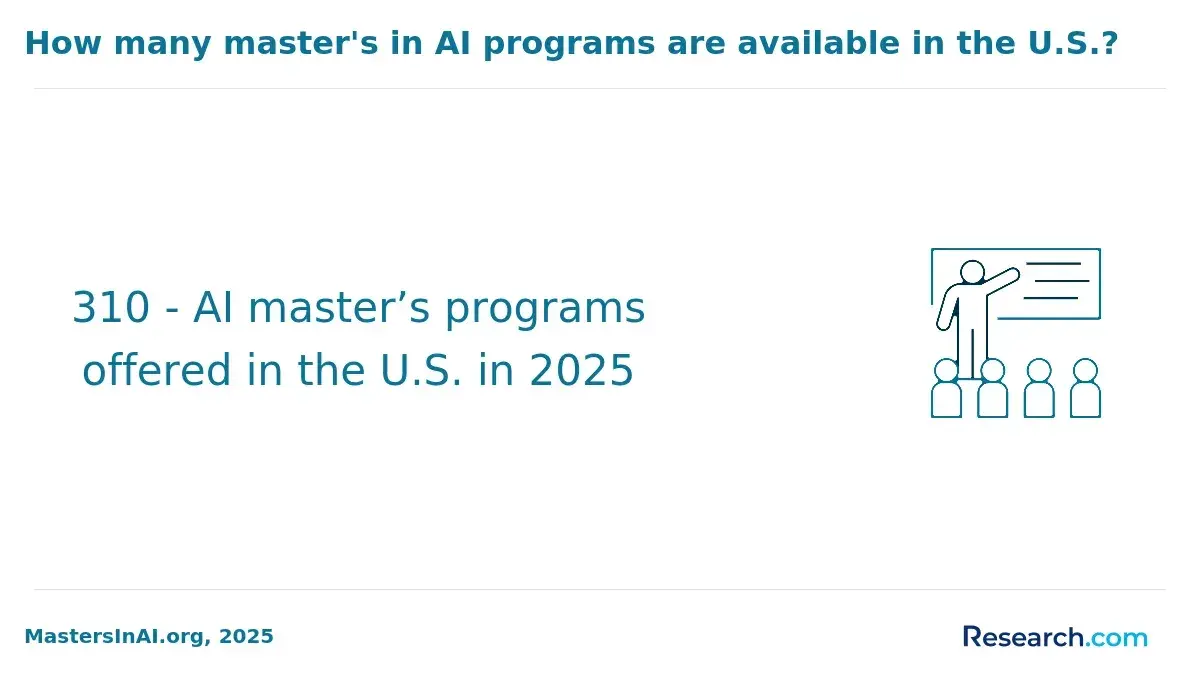
How do you choose an accredited AI program employers trust in the U.S.?
Prioritize regional or national accreditation recognized by the U.S. Department of Education or the Council for Higher Education Accreditation when selecting accredited artificial intelligence degree programs in the U.S. recognized by employers. Accreditation confirms the program meets rigorous standards valued by recruiters, such as approval from ABET for computing or regional bodies like Middle States or WASC.
Programs without proper accreditation may limit professional credentials and restrict access to federal financial aid. Look for programs offering curricula aligned with enterprise technology needs, including machine learning, data structures, algorithms, cloud computing, and AI ethics. Top U.S. artificial intelligence programs trusted by enterprise recruiters often update their courses to incorporate the latest industry trends and AI developments.
The admission process itself can indicate program rigor. Research shows many graduate AI programs now use GRE scores as part of a holistic review, focusing on academic history, research experience, and professional skills. This approach better prepares employer-preferred graduates for comprehensive readiness in their careers.
Examine faculty credentials and ongoing research, as programs with active industry collaborations tend to offer superior networking and project opportunities. Internship or cooperative education options connected to enterprise tech firms further enhance employment prospects after graduation.
Lastly, verify alumni placement rates in relevant enterprise roles, a key sign of how well employers value the degree. For students balancing cost concerns, exploring options such as the cheapest online civil engineering degree programs may provide additional perspective on affordable quality education.
What online AI degree options work best for working professionals?
Online artificial intelligence degree programs for working professionals emphasize flexibility and practical skills that apply directly to enterprise environments. These programs often feature asynchronous coursework and part-time enrollment, allowing busy professionals to advance their education without pausing careers. The best programs blend foundational theory with project-based assignments that reflect real-world challenges.
Flexible AI degree options for enterprise technology careers frequently offer specialized tracks in natural language processing, computer vision, or AI ethics. Elective courses focused on AI in business analytics or decision support systems prepare graduates for leadership roles in companies adopting AI solutions.
Given projections like the U.S. Bureau of Labor Statistics' 36% employment growth for data scientists through 2033. Professionals with AI and analytics expertise will be in high demand across finance, healthcare, and technology sectors.
Key factors for selecting an online AI degree include:
- Program accreditation and strong faculty expertise in applied artificial intelligence
- Networking opportunities and internships with enterprise partners
- Support services such as career counseling and technical mentorship
- Curriculum that aligns with current AI integration and automation trends in industry
Employers increasingly value candidates skilled in AI tools who also understand business impact. Adding certifications in cloud AI platforms or advanced analytics to degrees can boost employability. Working professionals seeking data science or AI education can explore the best online MS in data science to find reputable and affordable programs matching their goals.
What courses and skills should enterprise-focused AI programs include?
Enterprise-focused artificial intelligence programs should combine foundational knowledge with practical skills in data management, machine learning, and cloud computing. Key subjects include advanced machine learning algorithms, natural language processing, and data engineering to manage complex enterprise datasets effectively.
Proficiency in programming languages such as Python, R, and SQL, along with expertise in AI frameworks like TensorFlow and PyTorch, is essential. Students must also learn to deploy and scale AI models on cloud platforms, including AWS, Azure, or Google Cloud, which are critical for integration with existing IT systems.
Ethical considerations and cybersecurity principles tailored to AI systems prepare students for compliance and risk assessment challenges within enterprises. Real-world enterprise projects and datasets help develop problem-solving capabilities and business-oriented insight. Data visualization and interpretability skills enable graduates to communicate AI findings clearly to non-technical stakeholders.
Certifications in cloud services, data science, or machine learning significantly enhance career opportunities. Pearson VUE's Value of IT Certification 2024 report highlights that 28% of certified IT professionals received a raise following their most recent certification, demonstrating the value of combining an AI degree with targeted credentials for career growth.
What are typical admission requirements for AI bachelor's and master's programs?
Admission to AI bachelor's programs typically requires a solid background in mathematics and science. Applicants must usually present a high school diploma or equivalent, with coursework in calculus, algebra, physics, and computer science. Standardized tests like the SAT or ACT are commonly required, with competitive programs expecting math scores at or above the 75th percentile. Demonstrated programming skills in languages such as Python, Java, or C++, gained through classes or self-study, are also important.
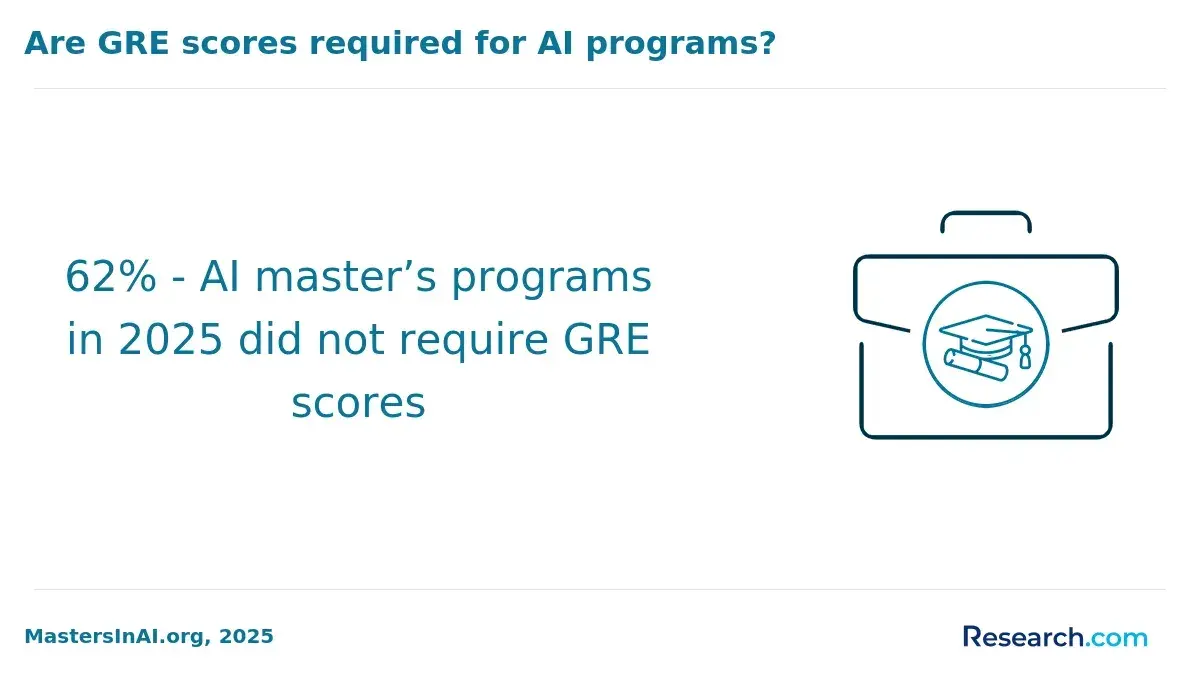
Master's programs demand an undergraduate degree in computer science, engineering, mathematics, or related STEM fields, with a minimum GPA often set at 3.0, and 3.5 for top-tier institutions. GRE scores are generally required, but some schools waive them for applicants with strong academic or professional backgrounds. Relevant coursework in algorithms, data structures, statistics, and machine learning strengthens applications.
Graduate admissions heavily rely on letters of recommendation from academic or professional sources that validate research potential and technical skills. A compelling statement of purpose outlining clear career objectives in enterprise tech and AI applications is also crucial. Work experience in software development or data analytics can improve admission chances, especially for non-traditional applicants.
According to the National Center for Education Statistics, only 48% of students admitted to STEM-related master's programs met GRE quantitative score thresholds, reflecting the competitive landscape. Prospective students should meet these benchmarks and build practical skills to enhance their candidacy.
How long do AI degree programs take and what do they cost?
AI degree programs vary widely in duration, ranging from six months to six years, depending on the level and format. Certificate and diploma programs typically take 6 to 12 months and focus on foundational skills, offering a faster path into AI roles. Bachelor's degrees usually require four years of full-time study, integrating general education with core AI and computer science courses.
Master's degrees take one to two years and concentrate on advanced topics such as machine learning, data analytics, and system development. Doctoral programs, emphasizing research and innovation, may span three to six years. Costs depend heavily on program type, institution, and residency.
According to the National Center for Education Statistics, average annual tuition is about $10,500 at public in-state universities versus roughly $38,000 at private institutions. A four-year bachelor's degree in AI at a public university could total approximately $42,000 in tuition alone. Master's programs range widely from $20,000 to over $70,000. Part-time or online programs offer more flexibility but often charge by credit hour, with rates from $500 to $1,500.
Financial aid options such as scholarships, employer tuition assistance, and federal aid help reduce costs. When choosing a program, consider:
- Time commitment
- Tuition and fees
- Career outcomes and industry demand
Bachelor's and master's degrees are widely valued for enterprise tech careers, providing broad, in-depth education essential for success in the AI field, as noted by the Computing Research Association.
What enterprise job roles can you get with an AI degree?
An AI degree prepares graduates for vital roles in technology-driven enterprises. Careers include data scientist positions, where professionals interpret vast datasets through machine learning algorithms to extract actionable insights. Machine learning engineers design and deploy AI models tailored to business challenges.
AI researchers push forward technology by developing innovative algorithms. AI product managers bridge technical teams and business objectives. Growing focus on AI ethics and governance creates roles such as AI compliance officers and ethics specialists, who ensure responsible AI deployment and regulatory compliance.
AI consultants assist companies in effectively integrating AI and customizing solutions for industry-specific needs. Cybersecurity analysts apply AI for threat detection and response, leveraging predictive modeling to protect systems. Natural language processing (NLP) engineers develop chatbots and voice assistants that enhance customer service experiences.
The U.S. Bureau of Labor Statistics projects a 22% growth in computer and information research science jobs, including AI-related roles, through 2032. Emerging roles, such as AI operations specialists, focus on maintaining and scaling AI infrastructure, while business intelligence analysts use AI tools to inform strategic decision-making and boost profitability.
What salaries can AI graduates expect in enterprise tech careers?
Graduates entering enterprise tech careers with a focus on artificial intelligence can expect starting salaries typically ranging from $90,000 to $130,000 annually, with median salaries around $120,000 according to the U.S. Bureau of Labor Statistics. Entry-level positions like AI engineers, machine learning specialists, and data scientists often start near $90,000 but increase rapidly with experience and proven technical skills.
Mid-career professionals with five to ten years of experience frequently earn between $130,000 and $170,000. Senior AI engineers at major firms typically make $150,000 to $180,000, with bonuses and stock options considerably boosting total compensation. Leadership roles such as AI project managers or chief AI officers can exceed $200,000 annually.
Salary variations depend on factors like geographic location, company size, and skill specialization. Those with expertise in natural language processing, computer vision, or reinforcement learning usually command higher pay. Workers in high-cost areas like Silicon Valley or New York often receive a 10% to 30% premium above national averages.
Industry sectors impact pay, with cloud computing, cybersecurity, and enterprise software companies generally offering more competitive packages than less tech-focused areas. Certifications in AWS, Azure, or advanced degrees enhance salary potential. Staying current with AI frameworks and deploying scalable solutions is vital for maximizing earning opportunities in this dynamic field.
Which certifications complement an AI degree for enterprise technology roles?
Certifications that enhance an artificial intelligence degree for enterprise technology roles focus on practical skills in data science, cloud platforms, cybersecurity, project management, and DevOps. These credentials validate critical expertise needed for successful AI implementation and maintenance in complex environments.
- Certified Data Scientist: Certifications from organizations like the Data Science Council of America (DASCA) emphasize advanced data analytics, essential for AI model development and deployment.
- Cloud certifications: AWS Certified Machine Learning - Specialty or Microsoft Certified: Azure AI Engineer highlight proficiency with cloud infrastructures where enterprise AI solutions typically operate.
- Certified Information Systems Security Professional (CISSP): This addresses the growing necessity for securing AI systems against cyber threats.
- Project Management Professional (PMP): It supports the management of AI projects, ensuring their efficient delivery within complex enterprises.
- DevOps certifications: AWS Certified DevOps Engineer or Certified Kubernetes Administrator (CKA) focus on the operational deployment and integration of AI models.
Data from Gartner shows that 85% of AI projects fail due to poor integration and deployment, reinforcing the need for multidisciplinary certifications that combine AI knowledge with cloud and security skills. Professionals targeting enterprise technology roles should select certifications aligned with their organization's tech stack and priorities.
For example, AI engineers in Microsoft ecosystems will benefit from Azure certifications, while those working in hybrid cloud environments should emphasize multi-cloud expertise. These certifications provide tangible proof of skills critical for real-world artificial intelligence projects.
Other Things You Should Know About Artificial Intelligence
In 2027, AI degree programs offer networking opportunities like industry conferences, mentorship programs with tech professionals, and collaboration projects with leading enterprises. These opportunities are designed to foster connections and provide real-world insights, enhancing students' readiness for enterprise tech careers.
Yes, graduates with artificial intelligence degrees often find opportunities beyond conventional tech firms. Industries such as healthcare, finance, automotive, and manufacturing increasingly rely on AI to improve efficiency and innovation. Knowledge from AI programs can be applied to roles in research, product development, and automation across diverse sectors.
Internships and hands-on projects are highly valuable for artificial intelligence students, providing real-world experience that complements academic learning. Practical exposure helps develop skills in applying AI models to enterprise problems and familiarizes students with industry tools and workflows. Many employers prioritize candidates with demonstrated experience through internships or co-op positions.
Yes, most artificial intelligence degree programs incorporate coursework on the ethical implications of AI technologies. Topics often include bias in machine learning, data privacy, and the societal impact of automation. Understanding these ethical issues prepares graduates to design and implement AI responsibly within enterprise environments.
References
- Top 10 jobs in artificial intelligence (AI) & who’s hiring https://joinhandshake.com/blog/students/artificial-intelligence-jobs/
- Cloud, AI, and Data: Power Skills That Will Shape Your Future Career https://helloskillio.com/cloud-ai-and-data-power-skills-that-will-shape-your-future-career/
- AI Certifications: Accredited Programs, Vendor Credentials, and Emerging Standards - Total Seminars https://totalsem.com/ai-certifications-accredited-programs-vendor-credentials-and-emerging-standards/
- Which AI Training Programs Do Employers Value Most in 2025? https://agilityinsights.ai/blog/which-ai-training-programs-are-most-valued-by-employers/
- Top Career Paths Utilising AI: A Guide for Aspiring Professionals https://regent.ac.za/blog/top-career-paths-utilising-ai-a-guide-for-aspiring-professionals
- Artificial Intelligence (AI) https://ai-master.org/requirements
- What Makes Us Different https://www.becomeaicertified.com/what-makes-us-different
- Top College Degrees That Will Land You the Highest-Paying AI Jobs in 2026 https://www.investopedia.com/top-college-degrees-that-will-land-you-the-highest-paying-ai-careers-in-2026-11923863
- Artificial Intelligence - Vistula University https://vistula.edu.pl/en/major/artificial-intelligence
- Application and admission - Master Artificial Intelligence https://www.uva.nl/shared-content/programmas/en/masters/artificial-intelligence/application-and-admission/international-prior-education/international-prior-education-foldout-menu.html