2027 Best AI Degrees for Students Interested in Retail Analytics

Co-Founder and Chief Data Scientist
Businesses in retail face growing challenges in understanding complex consumer behaviors and optimizing inventory using data. Professionals without formal training in artificial intelligence often struggle to leverage advanced analytics tools effectively, limiting their impact on strategic decisions. As retail analytics becomes increasingly data-driven, having specialized knowledge in machine learning and AI algorithms is essential to stay competitive. This article examines the best AI degree programs designed for students aiming to transition into retail analytics, focusing on flexibility and accreditation. It guides readers through selecting a program that equips them with relevant skills to solve real-world retail data problems efficiently.
Key Things You Should Know
- By 2027, degrees combining data science and artificial intelligence with retail analytics are expected to grow 35%, reflecting increasing industry demand for AI-driven customer insights and inventory optimization.
- Top programs emphasize machine learning, natural language processing, and predictive analytics to equip students with skills for enhancing personalized marketing and supply chain efficiency in retail.
- Graduates with AI-focused retail analytics degrees earn median starting salaries around $75,000 annually, with employment opportunities spanning e-commerce giants, consulting firms, and retail technology startups.
What are AI degrees focused on retail analytics, and who are they for?
AI degrees focused on retail analytics integrate core artificial intelligence techniques with expertise in retail operations, consumer behavior, and supply chain management. These programs train students to build predictive models, optimize inventory, and enhance personalized marketing using data-driven insights. Coursework often includes machine learning, natural language processing, big data analytics, and decision systems tailored to retail challenges. Prospective students interested in an accelerated computer science degree online may find these programs especially relevant.
AI degrees in retail analytics programs suit those aiming to enter or advance in retail technology. Ideal candidates have backgrounds in fields like computer science, statistics, business analytics, or economics and want to apply AI to revolutionize retail strategies. Graduates typically pursue careers as data scientists, retail analysts, or AI consultants focusing on e-commerce, brick-and-mortar stores, or omnichannel approaches.
Typical curriculum elements include algorithms predicting purchasing trends, chatbots for customer engagement, and generative AI for product recommendations. Specializations might cover demand forecasting, customer segmentation, or fraud detection within retail settings. Careers with AI retail analytics degrees are in high demand due to industry growth and economic impact.
McKinsey & Company estimates generative AI could contribute $240-$390 billion in annual economic value to retail, highlighting strong market demand. Students should seek programs offering hands-on projects with real retail datasets and collaborations with industry partners, essential for mastering complex data environments and fast-paced decision-making in retail analytics careers.
Which bachelor's and master's AI degrees best prepare students for retail analytics careers?
Bachelor's degrees in artificial intelligence, data science, or computer science with a specialization in AI provide a strong foundation for retail analytics careers. Programs emphasizing machine learning, data mining, and predictive modeling equip students to analyze consumer behavior, optimize inventory, and enhance personalized marketing. For those researching which bachelor's AI degrees for retail analytics careers best prepare graduates, degrees blending AI with business analytics or information systems are particularly effective.
Master's programs in artificial intelligence focused on retail analytics include options like Master of Science in Artificial Intelligence, Master of Data Science, and Master of Business Analytics with AI concentrations. These advanced programs cover applied machine learning, big data, and decision intelligence used for demand forecasting, price optimization, and supply chain management.
Successful retail analytics preparation involves hands-on projects with retail data, internships, or partnerships with companies. Proficiency in Python, R, SQL, and tools such as TensorFlow or PyTorch is often required. Ethical AI and data privacy considerations are increasingly prioritized by employers in the retail sector.
Prospective students can explore affordable options and broader educational paths, such as online mechanical engineering degrees, as diverse STEM backgrounds sometimes complement AI roles.
Ultimately, degrees that balance core AI skills with practical retail applications deliver the best outcomes for careers in retail analytics.
What retail analytics careers can you get with an AI degree?
Careers in retail analytics using artificial intelligence offer numerous opportunities to leverage data for smarter business decisions. Common roles include data scientist, retail analyst, and machine learning engineer, who develop predictive models to forecast consumer behavior. These models optimize inventory management, pricing strategies, and marketing campaigns. For example, retail analysts apply AI algorithms to detect purchasing trends that fuel personalized promotions, boosting customer engagement and revenue.
Job opportunities in retail analytics with an AI degree also span customer insights analysis. Professionals in this role use natural language processing and sentiment analysis to interpret customer feedback from social media and online reviews. This enables retailers to rapidly adjust products and services according to consumer preferences. Additionally, AI-powered supply chain analysts improve logistics by reducing delivery times and cutting costs.
The U.S. Bureau of Labor Statistics forecasts a 36% employment growth for data scientists from 2024 to 2034, reflecting growing demand for AI-skilled experts in retail and other sectors. Companies are increasingly investing in AI tools to maintain competitive edges, making roles in retail analytics highly desirable.
Students pursuing an AI degree should look for programs that emphasize practical experience with data analytics platforms, programming languages like Python or R, and machine learning frameworks. Expertise in big data and visualization tools is also valuable. Retailers seek candidates who combine technical proficiency with the ability to translate data insights into actionable strategies, tackling challenges in customer behavior prediction, inventory optimization, and dynamic pricing.
Prospective students may consider exploring affordable engineering schools to obtain a strong foundation in AI and data analytics.
How important is accreditation when choosing an AI degree for retail analytics?
Accreditation plays a crucial role when selecting an AI degree for retail analytics careers. It guarantees the program meets strict academic standards and impacts both education quality and employer recognition. Without accreditation, degrees risk being undervalued in the job market or ineligible for certifications, especially where retail analytics demands specialized technical skills.
Only students at accredited institutions typically qualify for federal student aid, including grants, loans, and work-study programs, according to the U.S. Department of Education, Federal Student Aid. This financial access is vital for many prospective students. Attending a non-accredited program often results in losing eligibility for such aid, increasing financial strain.
Accredited AI programs for retail analytics careers also benefit from better credit transfer options. If students change schools or pursue advanced degrees, credits from accredited programs transfer more easily. Employers at retail giants and analytics firms often prefer candidates from accredited backgrounds, viewing it as proof of solid formal training in AI methods tailored to retail consumer behavior and data patterns.
Look for regional or programmatic accreditation from bodies recognized by the Council for Higher Education Accreditation (CHEA) or the U.S. Department of Education, such as ABET for computing fields. To explore educational pathways, consider an online master data science program designed for affordability and rigor in AI and data analysis.
Should you choose an online or on-campus AI program for retail analytics?
Choosing between online and on-campus AI programs focused on retail analytics depends on your career goals, learning style, and personal situation. Online learning offers flexibility for those balancing work, family, or other commitments, making it ideal for professionals aiming to upskill without relocating. According to the National Center for Education Statistics / IPEDS, over half of U.S. undergraduates have taken at least one distance-education course, highlighting the growing acceptance and validity of online education.
On-campus programs provide benefits such as direct faculty access, face-to-face networking, and hands-on labs. These features are valuable for students who thrive in structured environments and in-person collaboration. Retail analytics coursework often involves complex projects requiring teamwork and specialized resources, which can be easier to manage on campus.
Key factors to consider include:
- Schedule flexibility: Online programs support asynchronous learning suited for working students.
- Networking opportunities: On-campus environments encourage immediate peer interaction and local industry connections.
- Technical resources: Access to specialized software and lab equipment is often easier on campus.
- Program reputation: Accreditation and alumni success matter equally across both formats.
Assess your obligations and preferences carefully to choose the learning mode that best fits your timeline and educational needs in retail analytics.
What courses and skills matter most in AI retail analytics programs?
AI retail analytics programs focus on key areas like data science, machine learning, and big data management. Mastery of programming languages such as Python and R is essential for creating predictive models and handling vast retail datasets. Statistical analysis courses help interpret consumer behaviors and sales trends, while knowledge of database systems like SQL and NoSQL aids in managing both structured and unstructured retail data efficiently.
Students learn machine learning techniques including classification, clustering, and recommendation algorithms to improve inventory management, personalized marketing, and demand forecasting. Courses on natural language processing are vital for analyzing customer sentiment from reviews and social media. Practical experience with frameworks like TensorFlow or PyTorch strengthens skills in deploying AI models.
Cloud computing platforms like AWS and Azure are integral, as many retailers move data processing to the cloud for scalability and cost efficiency. Supply chain management and business analytics coursework bridges technical expertise with strategic decision-making in retail operations. Emphasizing ethical AI use and data privacy is critical, given industry regulations and reputational risks.
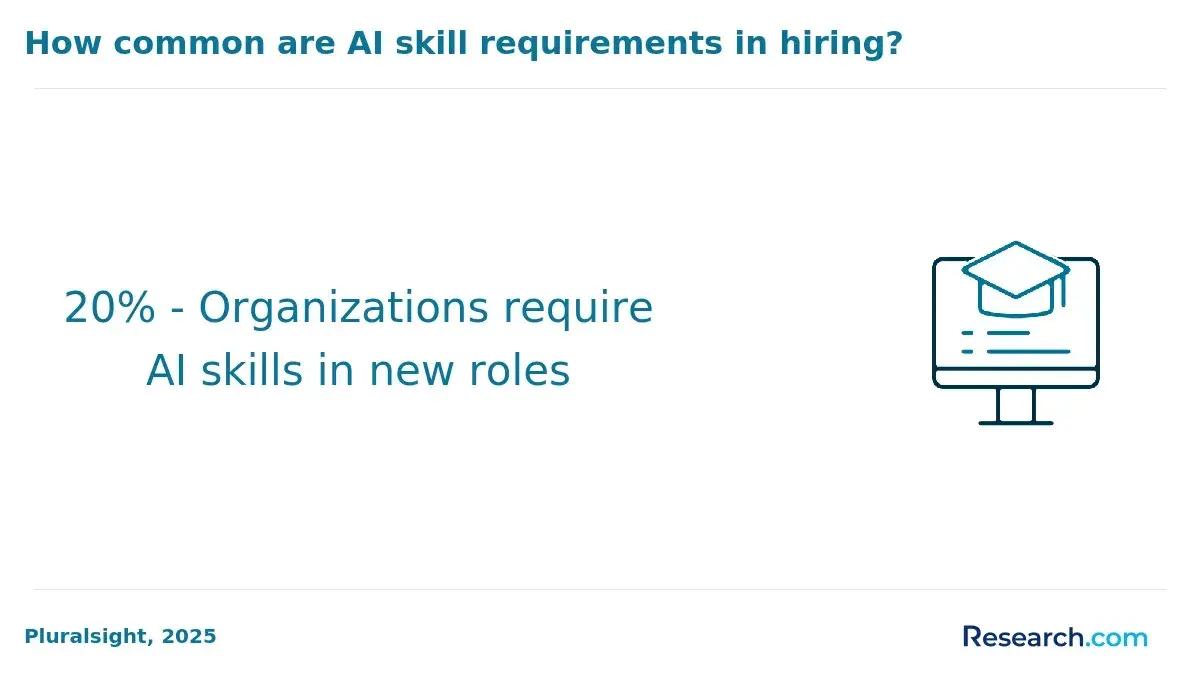
The World Economic Forum's Future of Jobs Report 2025 identifies "AI and big data" as top growth skills through 2030. Hands-on projects or retail-focused internships offer valuable exposure to real-world datasets and interdisciplinary collaboration between AI and business teams.
What admissions requirements are common for AI and data analytics degrees?
Admissions for AI and data analytics degrees typically require a bachelor's degree in fields such as computer science, statistics, mathematics, or business. Many programs expect a minimum GPA around 3.0 on a 4.0 scale. Applicants submit transcripts, letters of recommendation, and a statement of purpose emphasizing analytical skills and interest in retail analytics or AI applications.
Standardized tests like the GRE or GMAT are often required but are increasingly optional. Many graduate business programs adopt a "GRE/GMAT optional or accepted" policy, as noted by GMAC. Some schools waive test scores based on relevant work experience or prior academic performance.
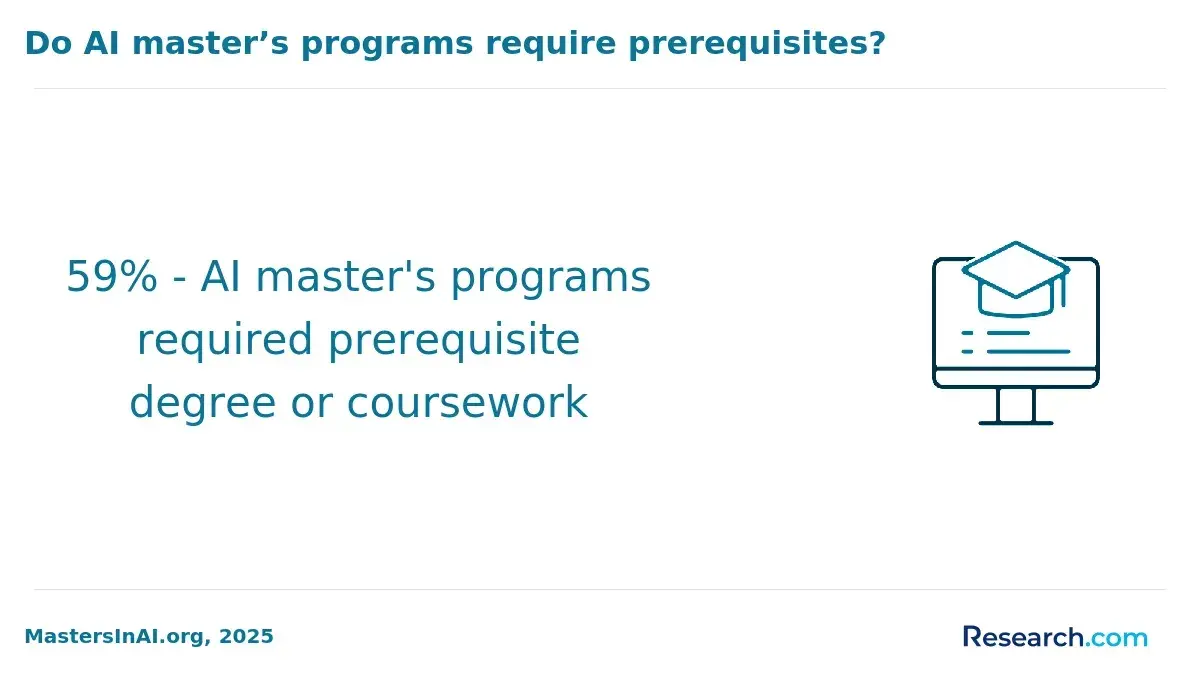
Technical prerequisites vary, with programs sometimes requiring knowledge in programming languages such as Python or R and courses in machine learning or database management. Work experience in data-related roles can strengthen an application, especially for part-time or executive tracks.
Additional application materials might include coding samples, project portfolios, or evidence of certifications. For instance, MIT's MITx MicroMasters in Data, Economics, and Development Policy requires demonstrated quantitative skills.
U.S. students preparing for retail analytics-centered AI degrees should focus on holistic evaluations that combine academic records, test scores (if necessary), and practical experience. Early preparation of documents showcasing technical and analytical competencies significantly enhances admission prospects.
How long do AI degrees take, and what do they typically cost?
AI degree programs commonly range from two to four years, depending on the credential and institution. An associate degree focused on AI or related fields usually takes about two years to complete. A bachelor's degree in AI, data science, or computer science with an AI specialization typically spans four years. Graduate studies, such as master's degrees in AI or machine learning, generally require one to two years beyond the bachelor's level. Some accelerated options are available but tend to be rare.
Tuition costs vary widely based on institution type and residency. At public four-year colleges, in-state tuition averages around $11,260 annually. Private colleges often charge above $40,000 per year. Out-of-state and international students usually pay higher tuition at public universities. Beyond tuition, students should budget for books, materials, and living expenses, which can add several thousand dollars annually.
Students interested in retail analytics might combine AI coursework with business or marketing classes, potentially affecting program length and cost. Online and part-time formats offer flexibility but may extend degree completion time. Financial aid, scholarships, and employer tuition reimbursement are important tools to reduce out-of-pocket expenses.
What salaries can AI retail analytics graduates expect in the United States?
Graduates in AI retail analytics command competitive salaries in the U.S., driven by the high demand for data-driven retail insights. The U.S. Bureau of Labor Statistics reports a median annual wage of $108,020 for data scientists, a closely related role. Entry-level professionals typically earn between $70,000 and $85,000, influenced by factors such as location, company size, and education.
With experience, salaries increase notably. Mid-career analysts with three to five years of experience generally earn $95,000 to $120,000. Senior positions, including AI specialists or retail data strategy managers, often surpass $130,000 annually-especially in metropolitan hubs like New York, San Francisco, and Chicago.
Specialized skills boost earning potential. Candidates adept at machine learning model development, big data platforms, and predictive analytics see higher wages. Combining retail domain expertise with proficiency in tools such as Python, R, SQL, and cloud computing provides a distinct market advantage.
Consulting firms and technology providers offering retail services tend to provide better pay and bonuses than traditional retailers. Freelance and contract roles can supplement income but require robust portfolios and networking efforts.
Prospective students and professionals should consider these salary trends when planning education and career paths in AI retail analytics.
Which certifications help AI retail analytics students stand out to employers?
Certifications in generative AI, machine learning (ML), and data science play a crucial role for students aiming to stand out in retail analytics careers. Job postings emphasizing generative AI skills have surged dramatically, underlining the demand for verified credentials in these areas.
Key certifications include the Google Professional Machine Learning Engineer and AWS Certified Machine Learning - Specialty, which focus on practical ML deployment for retail applications such as demand forecasting and customer segmentation. Additionally, generative AI courses from platforms like Coursera and edX cover essential topics like natural language processing and generative adversarial networks (GANs), preferred by employers using AI-driven personalization tools.
Foundational data science certificates, like the IBM Data Science Professional Certificate, and technical certifications in Python, SQL, and data engineering from DataCamp and Microsoft, support strong analytical skills needed to interpret retail data effectively.
Employers highly regard candidates who combine domain expertise with certifications that involve hands-on projects tackling real retail challenges such as inventory optimization and sentiment analysis. Credentials validating experience with AI frameworks and cloud technologies prepare students for complex retail environments.
Focusing on certifications offered by reputable platforms enhances competitiveness and meets the growing employer preference for generative AI and ML expertise.
Other Things You Should Know About Artificial Intelligence
Artificial intelligence can be challenging for beginners because it involves complex concepts like machine learning, data processing, and programming. However, many degree programs start with foundational courses in math, statistics, and computer science to build necessary skills gradually. With consistent study and practical projects, beginners can develop a solid understanding of AI principles over time.
Yes, degrees in artificial intelligence are highly versatile and can lead to careers in various sectors beyond traditional tech companies. Industries such as retail, healthcare, finance, and manufacturing increasingly rely on AI to improve decision-making and operational efficiency. Graduates can apply AI skills to solve problems and optimize processes in many organizational contexts.
Python is the most widely used programming language in artificial intelligence due to its extensive libraries and frameworks for machine learning and data analysis. Other important languages include R for statistical analysis, Java for large-scale applications, and C++ for performance-critical AI systems. Learning these languages helps students implement AI algorithms effectively.
Interdisciplinary skills such as data analysis, consumer behavior understanding, and programming are crucial for an AI degree in retail analytics. Proficiency in machine learning and statistical modeling, coupled with business acumen, empowers students to derive meaningful insights that drive strategic retail decisions.
References
- What is the Best Degree for an AI Career? | SNHU https://www.snhu.edu/about-us/newsroom/stem/best-degree-for-an-artificial-intelligence-career
- Retail AI Specialist Career Guide 2025 | AI Career Finder https://aicareerfinder.com/careers/retail-ai-specialist
- Best AI Certifications to Boost Your Career in 2026 – Dataquest https://www.dataquest.io/blog/best-ai-certifications/
- How Long Does It Take to Learn AI? - MMC Learning https://mmclearning.com/ai-course/how-long-does-it-take-to-learn-ai/
- From theory to practice: AI in retail with the CRISP-DM framework | AI Campus https://ki-campus.org/en/collection/ai-in-retail-use-cases
- Swift Tech Co. | Digital Solutions Across 35+ Industries https://swifttechco.com/blog/retail/top-5-skills-taught-in-retail-analytics-courses
- Artificial Intelligence Degree Requirements: What Do You Need to Apply? https://aifwd.com/education/artificial-intelligence-degree-requirements/
- What are the Best Degrees in AI in 2025? – 365 Data Science https://365datascience.com/trending/best-degrees-in-ai/
- Top Artificial Intelligence Courses: Fees and Duration https://collegevidya.com/blog/artificial-intelligence-course-fees-structure-duration/
- Best AI Courses for Non-Tech Students in 2026 https://www.masaischool.com/blog/best-ai-courses-for-non-tech-students-in-2026/