2027 AI Associate Degrees With Guided Pathways Into Bachelor's Programs

Co-Founder and Chief Data Scientist
Many professionals with unrelated undergraduate degrees face challenges entering the artificial intelligence field due to a lack of targeted education and clear advancement routes. Without structured programs, they risk investing time and resources in courses that do not align with industry requirements or pathways to advanced qualifications. This uncertainty can stall career transitions, especially amid evolving AI technologies demanding specialized skills.
Guided associate degrees provide a focused curriculum paired with planned transfers into bachelor's programs, ensuring efficient progression and skill acquisition. This article explores these associate degree options and their seamless pathways, helping readers strategically navigate education to enter the AI industry.
Key Things You Should Know
- Many U.S. community colleges offer AI associate degrees with structured pathways, enabling seamless transfer to bachelor's programs, reducing time and costs by up to 40% compared to starting a four-year degree.
- Curricula increasingly align with industry needs in machine learning, data analytics, and ethical AI, improving graduates' job placement rates, which reached 76% within six months in 2024.
- Federal and state funding initiatives launched in 2025 support AI education expansion, aiming to double enrollment in AI associate degree programs by 2028, addressing growing workforce demand.
What is an AI associate degree, and what careers can it prepare you for?
An AI associate degree is a two-year credential focused on foundational knowledge and practical skills in artificial intelligence technologies. Curriculum often covers programming, data science, neural networks, and AI ethics, combining hands-on experience with AI tools. This degree prepares students to develop machine learning models, analyze data, and implement AI solutions across various fields.
Graduates with an AI associate degree have access to a range of career opportunities, including:
- Data analyst roles supporting AI-driven decision-making
- Junior machine learning technicians assisting in model development
- AI software testers ensuring system reliability
- Automation specialists implementing AI in business processes
- Technical support for AI-enabled products
The surge in jobs requiring AI skills is notable, with U.S. employers posting about 2.3 million job ads seeking AI capabilities, up from 1.7 million several years ago. This demand emphasizes the value of skilled technicians and analysts who can bridge AI theory and practice.
Many students use guided pathways for AI bachelor's programs to smoothly transfer credits and build on their associate studies. These pathways accelerate advancement into more specialized AI or computer science roles. Prospective students should also consider programs offering internships, industry collaboration, and certification prep, which enhance employability and provide real-world experience.
An associate degree in AI positions learners for entry-level work and further education. Those interested in expanding their studies might explore a computer science degree online to deepen expertise and career options.
Which AI associate degrees offer guided transfer pathways into bachelor's programs?
Several AI associate degrees offer structured transfer pathways into bachelor's programs, promoting smooth academic progression and credit recognition. Community colleges design these AI associate of science (AS) or associate of applied science (AAS) degrees with articulation agreements that ensure admission into partner universities' bachelor's programs. For instance, many California community colleges with AI or data science associate degrees maintain formal transfer agreements with the California State University and University of California systems. These agreements typically allow students to enter four-year AI or computer science bachelor's programs as juniors.
Common guided transfer options include:
- AI associate of science degrees focused on machine learning and programming fundamentals, transferring into bachelor's in computer science or AI-specific degrees
- Data analytics or AI-related AAS degrees designed with clear course equivalencies for bachelor's in information technology or cognitive science
- AI and robotics technical associate degrees paired with engineering bachelor's programs through dual-admission agreements
Research shows that 42% of community college students who began in 2020 transferred to four-year institutions within five years, highlighting the demand and effectiveness of these guided transfer programs. Students exploring artificial intelligence associate degree pathways to bachelor's should verify articulation agreements at their chosen colleges to ensure seamless transfer and maximize credit acceptance.
Challenges such as mismatched course content or limited transfer slots can occur. Early academic advising and completing required general education and core AI courses improve transfer success. Prospective students can also explore colleges that publish clear transfer guides or participate in statewide transfer systems like Transfer Admission Guarantee (TAG) programs for added planning security.
For those considering continued education, consulting the data science master degree ranking may provide valuable insights into affordable advanced degree options.
How do you choose an accredited AI associate program with strong transfer outcomes?
Choosing accredited AI associate degree programs with bachelor's transfer pathways requires verifying accreditation by recognized agencies to ensure credits transfer smoothly to four-year institutions. Without such accreditation, students risk losing credits when moving onto bachelor's degrees. Programs with formal articulation agreements or guaranteed transfer pathways to reputable universities reduce excess coursework and shorten time to degree completion. For example, community colleges partnered with state university AI departments often offer seamless transfer options.
Prospective students seeking the best transfer outcomes for AI associate degrees in the United States should examine transfer completion rates carefully. Only 16% of community college transfer students earn bachelor's degrees within six years, so programs reporting higher rates indicate stronger advising and support. Additional factors to consider include curriculum alignment with current AI industry standards, faculty expertise, and access to internships or research opportunities that build practical skills.
Advising quality plays a crucial role. Dedicated transfer advisors who understand AI degree pathways help students navigate credit requirements, financial aid, and course sequencing to avoid delays. Confirming course equivalencies with four-year schools early is essential to prevent credit loss.
For students exploring technical programs, it's helpful to compare options broadly, including fields like game design where related associate degrees and transfer options are available; resources about game design schools online can offer useful insights into affordable, transferable pathways as well.
What prerequisites and admissions requirements do AI associate programs typically have?
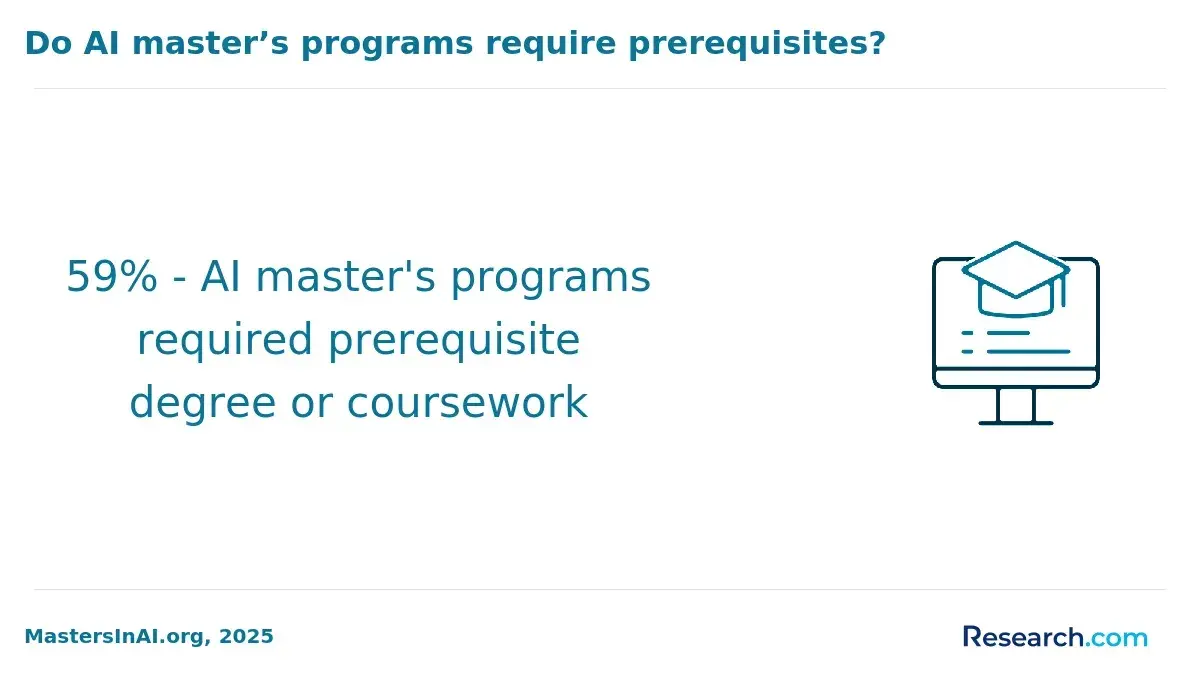
AI associate degree admission requirements generally include a high school diploma or equivalent. Many colleges require placement tests or submission of past transcripts to evaluate readiness, especially in math and English. Up to 59% of first-time community college students enroll in developmental courses, mostly in math, before progressing to standard classes.
Prerequisites for AI associate programs in the US often demand proficiency in algebra and basic computer skills. Some programs recommend introductory programming courses like Python or JavaScript to prepare students for AI-focused curriculum. Placement exams may also determine if remedial math or English classes are needed prior to starting AI coursework.
Admissions policies vary widely. Certain community colleges have open enrollment, whereas others require a minimum GPA around 2.0 or completion of prerequisites such as statistics and discrete math to align with guided pathways toward bachelor's degrees. Early placement testing helps identify academic gaps and facilitates more tailored support.
Students should confirm individual college requirements and seek advising early. Understanding these factors can improve transfer chances and academic success. For those interested, exploring options like online cybersecurity degree programs may also complement skills in this growing field.
What courses and skills are covered in an AI associate degree curriculum?
AI associate degree programs build essential programming and math skills needed for artificial intelligence careers. Core courses focus on Python programming, data structures, and algorithms, reflecting Python's role as the most sought-after language in U.S. job markets. Mathematical foundations such as linear algebra, calculus, and discrete mathematics help students grasp the underlying principles of AI models.
Coursework covers machine learning basics including supervised and unsupervised methods like decision trees, clustering, and neural networks. Practical labs using AI frameworks like TensorFlow or PyTorch enhance hands-on experience. Data science plays a vital role with classes on data collection, cleaning, visualization, and interpretation, equipping students to manage and analyze datasets effectively.
Additional subjects may include database management, ethics in AI, and introductory natural language processing, broadening understanding of AI's applications and societal impacts. Technical writing and communication courses help students express complex concepts clearly.
For those transferring to bachelor's degrees, guided pathways coordinate credits in programming, statistics, and AI fundamentals with four-year programs, streamlining academic progress. The curriculum blends theory and practice to prepare graduates for a fast-evolving industry.
- Python programming
- Machine learning fundamentals
- Data science and analytics
- AI ethics and applications
- Communication and technical writing
How do online AI associate degrees compare with campus programs for labs and support?
Campus AI associate degree programs typically provide direct access to physical labs, equipped with the latest hardware and software, allowing students to work hands-on with robotics, machine learning algorithms, and real-time data. This hands-on environment is supported by immediate instructor supervision, fostering an immersive and collaborative learning experience. In contrast, online AI associate degrees offer flexibility through virtual labs, simulation software, and cloud-based platforms, which may limit tactile interaction but increasingly include remote lab access to bridge the gap.
Many online programs enable students to run AI projects on cloud servers or remotely connect to on-campus systems, delivering practical experience with programming frameworks and AI models. While these solutions enhance accessibility, they might not fully replicate the benefits of physical labs.
Academic support differs as well. Campus students benefit from in-person office hours, tutoring centers, and study groups. Online learners often rely on video conferencing, discussion forums, and 24/7 online tutoring. With nearly half of U.S. undergraduates taking at least one online course (National Center for Education Statistics, 2024), digital support systems are improving rapidly.
How long does an AI associate degree take, and what does it cost?
An AI associate degree usually takes about two years of full-time study at a U.S. public two-year college. This timeline can extend to three years for part-time students or those balancing work and other commitments. Many colleges offer guided pathways programs that align the associate degree curriculum with bachelor's degree prerequisites, making transfer smoother and more efficient.
The average in-district tuition and fees for public two-year colleges hover around $4,050, according to the College Board's Trends in College Pricing 2024. Beyond tuition, students should budget for additional expenses such as:
- Textbooks and software licenses specific to AI programming and data analysis
- Exam and certification fees for industry-recognized credentials that complement the degree
- Lab or equipment fees associated with hands-on AI training
Many community colleges have transfer agreements with four-year universities that allow credits earned to apply toward bachelor's degrees in computer science or data science. These articulation agreements reduce redundancy, saving both time and money. Students should confirm their institution's participation in such programs to ensure a streamlined transfer and avoid extra semesters.
Careful planning of coursework and costs, along with leveraging transfer options, can help students efficiently build a strong foundation in artificial intelligence while managing financial investment.
What math and programming foundations are most important before starting AI studies?
Strong foundations in mathematics and programming are vital before pursuing ai associate degrees. Key math topics include statistics, probability, linear algebra, and calculus. Statistics and probability are crucial since 58% of U.S. job postings requesting machine learning also require these skills (Lightcast). Knowledge of data distributions, Bayesian inference, and hypothesis testing helps in evaluating model performance and handling training data.
Linear algebra enables understanding data representations through vectors, matrices, eigenvalues, and eigenvectors, essential for neural networks and dimensionality reduction. Calculus, particularly derivatives and integrals, supports grasping optimization methods like gradient descent used in model training.
Proficiency in Python is standard due to libraries such as NumPy, Pandas, Scikit-learn, and TensorFlow. Writing clean, modular code and familiarity with basic data structures like arrays, lists, and dictionaries are important. Experience with scripting, version control tools like Git, and debugging enhances programming skills.
Algorithm knowledge, including recursion, sorting, and searching, prepares students for computational challenges in ai work. Practical tips include:
- Strengthen statistical knowledge through focused courses on probability distributions and inferential statistics.
- Use interactive tools to visualize linear algebra concepts, such as matrix operations.
- Practice Python with projects that involve data manipulation and simple machine learning tasks.
- Build calculus familiarity applied to loss functions and model optimization.
These preparations improve success chances in ai associate programs and facilitate transfer into bachelor's degree paths.
Which certifications pair best with an AI associate degree for entry-level jobs?
Certifications that complement an AI associate degree for entry-level roles emphasize foundational IT skills, programming, and data management. Leading certifications include CompTIA's A+ for broad IT support knowledge and Network+ for networking basics. These credentials boost technical expertise and align with over 2.5 million IT certifications globally issued by CompTIA.
Other valuable certifications include:
- Microsoft Certified: Azure AI Fundamentals, covering cloud-based AI services.
- Google Associate Cloud Engineer, important for AI deployment on cloud platforms.
- IBM Data Science Professional Certificate, which focuses on data handling and introductory machine learning.
Programming skill validation is essential; certifications like Python Institute's PCEP or PCAP confirm proficiency for data preprocessing and model development.
Specialized certifications, such as Certified Analytics Professional (CAP) or SAS Certified Specialist: AI and Machine Learning, demonstrate expertise in analytics and algorithms, often increasing competitiveness for data-centric roles.
Practical experience combined with certifications enhances employability for positions like AI technician, data analyst, or AI support specialist. Moreover, industry- or state-specific certifications can play a role depending on local job markets or specialized sectors.
Choosing certifications aligned with career goals ensures transferable skills that support progression into bachelor's programs and advanced AI careers.
What jobs, salaries, and job outlook can AI associate graduates expect?
Graduates with an associate degree in artificial intelligence often secure positions such as AI technician, data analyst, machine learning assistant, or junior data scientist. Entry-level salaries typically range from $50,000 to $70,000 annually, varying by location and employer. Specialized roles like AI software developers or automation specialists can offer higher starting pay. The outlook for these jobs is strong, fueled by increasing technology adoption across sectors like healthcare, finance, manufacturing, and autonomous systems.
Employment of data scientists, a closely related occupation, is projected to grow 35% from 2022 to 2032 according to the U.S. Bureau of Labor Statistics, highlighting expanding opportunities for those with an associate degree in artificial intelligence. Guided pathways that transition into bachelor's degrees enhance technical skills and improve job prospects.
Career advancement often requires further education, with bachelor's programs focusing on areas such as natural language processing, computer vision, and robotics. Graduates with deeper expertise can pursue roles like AI engineers or data scientists, with average salaries exceeding $100,000. Emerging fields including AI ethics, data governance, and model validation also present growing opportunities for associate degree holders who supplement their education with certifications and practical experience.
Gaining hands-on experience through internships or projects during an associate program is strongly recommended to increase employability and earning potential.
Other Things You Should Know About Artificial Intelligence
Many universities limit transfer credits to between 60 and 70 semester hours, which commonly covers most or all of the credits earned in an associate degree. For AI associate degrees, this means students can usually transfer their entire two-year curriculum toward a bachelor's degree in a related field. It is important to verify with the receiving institution how technical and elective courses will transfer to ensure a smooth pathway.
Yes, graduates with an AI associate degree typically have options to pursue bachelor's degrees in computer science, data science, or specialized artificial intelligence programs. Some institutions offer direct entry into AI-focused bachelor's degrees, while others may require additional prerequisite courses. Students should understand the alignment of their associate coursework with the bachelor's program's requirements.
Many AI associate degree programs incorporate or provide opportunities for internships, co-ops, or hands-on projects that are essential in this applied field. These experiences help students build relevant skills and improve job readiness. Students should inquire whether their program has partnerships with industry or research organizations that support such practical training.
Graduates can initially pursue entry-level roles like data analyst or AI technician. Upon completing the bachelor’s, opportunities expand to positions like AI engineer, research analyst, or consultant in sectors like finance, where a master’s in machine learning and finance might also be beneficial.
References
- How Long Do AI Courses Take? https://www.nobledesktop.com/learn/ai/how-long-do-ai-courses-take
- What Skills Will You Gain from an Artificial Intelligence Certified Course? https://dev.to/alexa143/what-skills-will-you-gain-from-an-artificial-intelligence-certified-course-3dho
- Ultimate Guide: How to Choose the Right AI Training Course to Boost Your Career - ONLC https://www.onlc.com/blog/how-to-choose-ai-training-courses/
- Salesforce AI Associate Certification Guide & Tips | Salesforce Ben https://www.salesforceben.com/salesforce-ai-associate-certification-guide-tips/
- Certification https://trailhead.salesforce.com/credentials/aiassociate
- AI Certificate vs. Degree: Which One Is Right for You - IABAC https://iabac.org/blog/ai-certificate-vs-degree-which-one-is-right-for-you
- What is the best AI certification for beginners https://www.digitalcrestinstitute.com/blog/What%20is%20the%20best%20AI%20certification%20for%20beginners
- Online vs On-Campus Artificial Intelligence Degrees: Which Is Better? https://hakia.com/degrees/artificial-intelligence/online-vs-campus/
- 16 Artificial Intelligence Career Paths https://www.calmu.edu/news/artificial-intelligence-career-paths
- Artificial Intelligence Course Syllabus: Topics and Modules https://futurense.com/blog/artificial-intelligence-course-syllabus