2027 Most Affordable AI Bachelor's Degrees in the U.S.

Co-Founder and Chief Data Scientist
Many prospective students face rising tuition costs while seeking quality education in artificial intelligence programs. This can create a significant barrier for those aiming to enter the AI field without accumulating substantial debt. Additionally, individuals with unrelated undergraduate degrees often struggle to find affordable programs that offer the necessary flexibility to pivot careers efficiently.
Navigating these challenges requires clear, reliable information on cost-effective options. This article highlights the most affordable AI bachelor's degrees available in the U.S. for 2027, providing practical guidance to help readers identify economical and accredited pathways into the artificial intelligence industry.
Key Things You Should Know
- In 2026, affordable AI bachelor's degrees in the U.S. predominantly come from public universities, with average annual tuition costs below $12,000 for in-state students.
- Programs often combine AI fundamentals with computer science, offering hands-on experience in machine learning, robotics, and data analysis, aligning with growing industry demands.
- Graduates can expect strong job placement rates, with entry-level AI-related positions averaging over $85,000 annually, reflecting the sector's rapid expansion and competitive salaries.
Which accredited universities in the U.S. offer the most affordable AI bachelor's degrees?
Public universities are among the best options for pursuing affordable AI bachelor's degree programs in the U.S. The average in-state tuition at public four-year institutions is about $9,750, significantly lower than the $38,070 typical at private nonprofit universities. Prospective students should consider accredited public universities that offer dedicated AI or computer science tracks emphasizing AI coursework, ensuring a quality education aligned with industry requirements.
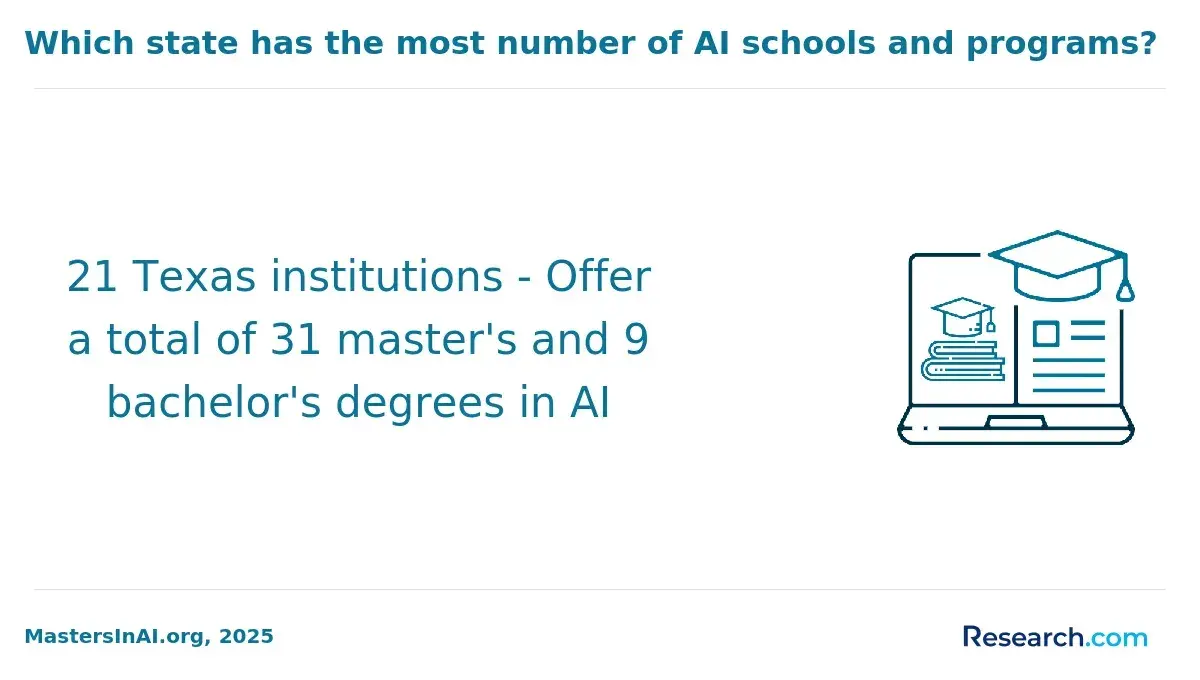
Top accredited universities offering low-cost AI bachelor's degrees in the United States include the University of Florida, which integrates AI and machine learning in its computer science curriculum. Its in-state tuition is near the public school average, making it highly cost-effective. The University of Texas at Dallas also has competitive in-state tuition around $13,000 and features AI specializations within its bachelor's computer science degree.
For greater flexibility or out-of-state learners, some public universities provide lower online tuition rates. Arizona State University, for instance, offers AI-focused courses online priced below many private institutions. Washington State University similarly provides an affordable AI curriculum combined with various financial aid options. Students can explore the fastest way to get a computer science degree through such programs.
Ensuring program accreditation by organizations like ABET is crucial to maintain education quality. Choosing in-state public universities or reputable online programs reduces costs substantially without sacrificing academic rigor or career prospects.
What is the typical total cost of an AI bachelor's degree, and how do tuition rates compare across public, private, and online institutions?
The typical total cost of an AI bachelor's degree in the U.S. varies depending on the type of institution. Public four-year universities report an average total cost of attendance, including tuition, fees, room, and board, of about $28,240 annually. Over four years, this totals roughly $112,960 for in-state students, while out-of-state tuition can be 1.5 to 2 times higher. Tuition rates comparison for AI bachelor's programs across public, private, and online institutions shows private colleges generally charge between $40,000 and $60,000 per year, resulting in a four-year cost of $160,000 to $240,000. Many private schools offer financial aid reducing net costs by 30% or more.
Online bachelor's degree programs in AI offer a more affordable path, averaging $15,000 to $20,000 annually. These programs, which often exclude room and board expenses, make the total cost $60,000 to $80,000 over four years. They suit students balancing work or family commitments. Hidden costs like technology fees, textbooks, and specialized software licenses should also be considered, especially as some AI curricula require access to expensive computing platforms.
Prospective students exploring affordable options might find value in online mechanical engineering degrees, which offer similar educational benefits at competitive prices. Comparing total costs, including living expenses, is crucial for making an informed decision about an AI bachelor's degree in the U.S.
What core coursework and technical skills are taught in an affordable AI bachelor's degree program?
Affordable artificial intelligence bachelor's degree curriculum in the U.S. emphasizes core technical skills such as machine learning, statistics, linear algebra, and programming languages, especially Python. These programs equip students to design, optimize, and deploy AI models effectively, while also focusing on data structures and algorithms to enhance problem-solving capabilities essential for AI development.
Hands-on experience is integral, with labs and projects covering data analysis, neural networks, and natural language processing. Students learn to prepare large datasets, apply both supervised and unsupervised learning techniques, and use prominent frameworks like TensorFlow or PyTorch. Software engineering fundamentals such as version control and testing ensure students can maintain and improve complex AI systems.
The technical skills learned in U.S. affordable AI bachelor's programs often include electives on ethics and AI policy, preparing graduates to navigate responsible AI development. Specialized coursework in areas like robotics, computer vision, or reinforcement learning allows customization aligned with individual career goals.
Programs increasingly integrate emerging technologies such as cloud computing and big data tools like Hadoop to meet evolving industry demands. Fluency in Python programming and data analysis remains crucial, supported by a 74% growth in demand for these skills in AI-related job postings according to the Bureau of Labor Statistics. Prospective students should explore degrees in AI online to find programs balancing theory and applied skills for careers in data science, software development, or research.
Are online AI bachelor's degrees more affordable than campus-based programs, and do employers recognize them equally?
Online AI bachelor's degrees in the U.S. often provide a more affordable path compared to traditional campus-based programs. Lower costs result from savings on housing, transportation, and campus fees, with tuition for online options typically 20% to 40% less than campus rates. Public universities sometimes offer in-state tuition to all online students, removing the higher out-of-state fees that on-campus students might face. This affordability, combined with the flexibility to balance part-time or full-time work, helps students manage educational expenses more effectively.
Employer recognition of online AI bachelor's programs in the U.S. has improved significantly. A 2024 survey by Coursera found that 68% of hiring managers view online bachelor's degrees as equally valuable to traditional ones for technical roles. This growing acceptance reflects increased confidence in accredited online programs, especially those aligning curricula with industry needs. Still, some employers prefer candidates from well-known, campus-based schools in competitive areas or roles needing collaborative skills.
Prospective students should carefully assess program accreditation, faculty qualifications, and industry partnerships when choosing an affordable online AI bachelor's degree in the U.S. Beyond credentials, gaining internships, projects, or certifications is crucial to enhance employment opportunities. For those considering further education, resources like MS data science online programs offer useful pathways building on AI bachelor's credentials.
What are the admission requirements and prerequisites for enrolling in an affordable AI bachelor's degree program?
Admission to affordable artificial intelligence bachelor's degree programs in the U.S. generally requires a high school diploma or equivalent with standardized test scores. The average composite ACT score at public universities is around 24, while the SAT average is approximately 1060, based on ACT data. Many programs accept either test, though some public institutions have adopted test-optional policies to enhance accessibility.
A solid foundation in mathematics-including algebra and geometry-is essential. Most programs expect students to have completed or to complete calculus or statistics courses early in their studies. High school computer science or programming experience, particularly with languages like Python or Java, is recommended but not always mandatory. Admissions committees often prioritize analytical and problem-solving skills.
Applicants typically submit letters of recommendation and personal statements, sometimes highlighting extracurricular activities related to technology or engineering. Transfer students benefit from prior STEM coursework, particularly in math and computer science. Some universities use placement exams or offer bridge courses for students who lack certain prerequisites, while working professionals may qualify through relevant experience or by completing prerequisites at community colleges.
International students must meet English proficiency standards with tests like TOEFL or IELTS. Prospective students should also track financial aid application deadlines and FAFSA submissions, as these can impact their enrollment timeline.
How long does an AI bachelor's degree typically take to complete, and can students accelerate their timeline through transfer credits or prior learning?
An AI bachelor's degree usually takes about four years of full-time study to complete. However, many students can shorten this timeline significantly by transferring credits or using prior learning assessments. Data from the National Student Clearinghouse Research Center shows that 56% of bachelor's degree students transfer credits from community colleges, which can reduce graduation time by about one year.
Students who completed relevant courses at accredited community colleges or other institutions can often transfer up to 60 credits toward their AI bachelor's degree. This accounts for nearly half of the degree requirements, allowing students to begin upper-division courses sooner. For example, someone with an associate degree in computer science might complete an AI degree in as little as two to three years.
Besides transfer credits, some universities offer credits through prior learning assessments, such as exams, portfolios, or recognized certifications in programming, data science, or machine learning fundamentals. These options help decrease required credit hours, saving students both time and money.
Part-time and online study formats may affect graduation timelines, but transfer credits remain among the quickest ways to reduce total semesters. Prospective students should check transfer policies early and work with academic advisors to ensure maximum credit acceptance and avoid redundant classes or unmet prerequisites.
What entry-level and mid-career job titles and roles are available to graduates of affordable AI bachelor's degree programs?
Graduates holding affordable AI bachelor's degrees can pursue a variety of entry-level and mid-career roles in technology and data-centric industries. Popular entry-level positions include Machine Learning Engineer, AI Data Analyst, and Prompt Engineer. According to LinkedIn's 2024 Jobs Report, these roles are among the fastest-growing in the AI sector, showing year-over-year growth rates between 45% and 62%. These jobs require foundational skills in AI models, data interpretation, and prompt construction for generative AI tools.
Mid-career roles such as AI Research Scientist, Data Scientist, AI Product Manager, and AI Software Developer demand advanced expertise in algorithm design, model optimization, and project leadership. For example, AI Research Scientists innovate machine learning methods, while AI Product Managers blend technical knowledge with strategic skills to integrate AI into commercial products.
Specialized careers like Natural Language Processing Engineer and Computer Vision Specialist focus on language-based AI systems and image analysis, respectively. Expanding regulatory frameworks are creating new roles in AI ethics compliance and system auditing as well.
Gaining practical experience with programming languages such as Python, frameworks like TensorFlow or PyTorch, and data visualization tools significantly enhances employability. Professionals often advance by earning certifications or building portfolios showcasing AI projects, enabling smooth transitions across diverse roles in this dynamic field.
What is the average salary for AI bachelor's degree graduates, and how does salary growth compare across different industries and regions?
Entry-level AI bachelor's degree graduates in the U.S. typically earn an average annual salary of $85,000, with mid-level professionals reaching around $120,000 and senior roles often exceeding $160,000, according to Glassdoor's 2024 salary data. Salary growth depends heavily on industry and location, driven by the complexity of AI applications and demand for advanced skills.
Technology, finance, and healthcare sectors offer the highest salary potential. For instance, AI specialists in Silicon Valley earn 15-20% more than peers in other U.S. regions due to the concentration of tech companies and startups. In contrast, AI roles in manufacturing and education start lower and experience slower growth, reflecting different industry investment levels.
Location plays a crucial role. Graduates in metropolitan areas like San Francisco, New York, and Boston benefit from faster salary growth and higher starting wages compared to those in rural or less tech-centered states. This partly reflects cost of living differences and local company funding.
Fields such as autonomous vehicles and cybersecurity require advanced AI expertise, with mid-career salaries often topping $150,000. Meanwhile, government and non-profit AI positions tend to offer steadier but modest increases. Prospective students and career changers should consider these factors to align education and job markets with industry growth and salary prospects.
What professional certifications or credentials should AI bachelor's degree graduates pursue to enhance their employability and earning potential?
Graduates holding a bachelor's degree in artificial intelligence enhance their career prospects and salary potential by obtaining professional certifications in cloud computing, machine learning, and data science. According to a 2024 Indeed survey, candidates certified in cloud platforms like AWS, Google Cloud, and Microsoft Azure earn 18-23% more than their non-certified peers working in AI and machine learning roles. Certifications such as AWS Certified Machine Learning - Specialty or Google Professional Machine Learning Engineer showcase expertise in managing AI workloads on cloud environments, an increasingly vital skill in the tech industry.
Machine learning certifications offered by recognized organizations, including the TensorFlow Developer Certificate, validate practical skills and improve employability by demonstrating the ability to build and deploy AI models. Data science credentials such as the Certified Analytics Professional (CAP) complement AI expertise by focusing on data handling and statistical analysis.
Certifications in AI ethics and governance, like those from CertNexus, address growing employer needs for responsible AI use. Programming language credentials in Python and R further strengthen a candidate's resume.
Choosing the right certification depends on specific career goals; cloud-focused roles benefit most from cloud provider certificates, while research and development positions prioritize machine learning and data science certifications. Combining multiple relevant certifications can broaden job opportunities and boost earning potential as employers value versatile skills.
What is the job outlook for AI professionals over the next decade, and which industries are hiring the most AI bachelor's degree graduates?
The job outlook for AI professionals is highly promising, with the U.S. Bureau of Labor Statistics projecting a 23% growth in employment for computer and information research scientists between 2023 and 2033. This growth rate surpasses the average for all occupations, reflecting strong demand for graduates with a bachelor's degree in artificial intelligence. Key industries driving this demand include technology, healthcare, finance, automotive, and manufacturing.
Technology companies hire AI specialists to build machine learning models, natural language processing tools, and computer vision systems. Healthcare organizations utilize AI talent to improve diagnostics, personalize medicine, and advance predictive analytics. Financial firms apply AI techniques in fraud detection, risk assessment, and automated trading.
Automotive sectors seek AI graduates to develop autonomous vehicles and advanced driver assistance technologies, while manufacturing uses AI to enhance supply chain efficiency, quality control, and robotics integration. Government and defense agencies also increasingly recruit AI experts for cybersecurity, surveillance, and decision support.
Combining AI expertise with knowledge in data science, software engineering, and specialized domains can boost employability. Skills in programming languages like Python and experience with platforms such as TensorFlow or PyTorch are often crucial. Networking through internships and partnerships further improves job placement chances in a competitive market.
With extensive applications across industries and strong employment growth, a bachelor's degree in artificial intelligence offers diverse and secure career paths.
Other Things You Should Know About Artificial Intelligence
In 2027, some universities offering the most affordable AI bachelor's degrees include the University of Florida, Arizona State University, and the University of Central Florida. These institutions provide competitive tuition rates while maintaining robust academic programs in artificial intelligence.
Yes, students often can transfer into artificial intelligence bachelor's programs from related fields like computer science or engineering. However, they may need to complete prerequisite courses in mathematics and programming if those were not part of their previous studies. Academic advisors typically guide transfer students on the specific requirements and ensure a smooth transition.
Most AI bachelor’s programs require calculus, discrete mathematics, statistics, programming in Python or Java, data structures, and introductory machine learning. Many schools also expect a GPA of 2.5 to 3.0 for admission into the major and completion of 60 to 90 lower-division credits before advanced AI coursework.
Financial aid for affordable AI bachelor's programs in 2027 typically includes federal grants like Pell Grants, scholarships from specific universities, and state-level grants. Many programs also offer work-study opportunities. Eligibility often depends on FAFSA results and financial need.
References
- Despite AI Cutting Entry-Level Roles, These Graduate Careers Remain in High Demand https://www.investopedia.com/despite-ai-cutting-entry-level-roles-these-graduate-careers-remain-in-high-demand-11913594
- Bachelor in Management and Artificial Intelligence https://www.kozminski.edu.pl/en/programs/undergraduate-programs-bachelor/bachelor-management-and-artificial-intelligence
- Artificial Intelligence Salary and Jobs in 2026 – Is It Still in High Demand? https://certempire.com/artificial-intelligence-salary-and-jobs/
- Best Colleges for Artificial Intelligence (AI) Majors — Lantern College Counseling https://www.lanterncollegecounseling.com/insights/artificial-intelligence-ai-as-an-undergraduate-major-what-you-need-to-know
- 2025 Artificial Intelligence Tuition https://www.collegetuitioncompare.com/majors/11.0102/artificial-intelligence/
- Average Cost of College [2025]: Yearly Tuition + Expenses https://educationdata.org/average-cost-of-college
- Best AI Certifications in 2025 https://cpoclub.com/career/best-ai-certifications/
- Most Affordable Artificial Intelligence Degree Programs 2026 https://hakia.com/degrees/artificial-intelligence/most-affordable-programs/
- AI, Tuition, and the Cost of Knowledge https://wallyboston.com/chatgpt-cost-of-knowledge/
- Cost to Study Artificial Intelligence in 2026 https://checkmateittech.com/cost-to-study-artificial-intelligence-usa/