2027 Do Employers Respect Artificial Intelligence Degrees?

Co-Founder and Chief Data Scientist
Many prospective graduate students with unrelated undergraduate degrees wonder if employers truly value a degree in artificial intelligence in 2026. Doubts arise about the legitimacy of new programs and how they compare to traditional computer science degrees. This uncertainty complicates decisions for professionals seeking flexible, accredited pathways to pivot their careers. Employers often weigh skills, experience, and the reputation of educational institutions when hiring. This article examines current employer attitudes toward artificial intelligence degrees and offers insights to help readers choose credible programs and confidently navigate their career transitions into the AI industry.
Key Things You Should Know
- Approximately 70% of U.S. employers in tech sectors recognize degrees explicitly labeled as artificial intelligence, reflecting growing confidence in specialized AI education as of 2025.
- Employers prioritize interdisciplinary skills combining AI knowledge with data science, programming, and ethics over just the degree title itself for hiring decisions.
- Graduates with AI degrees from accredited institutions report a 20% higher employment rate within six months compared to general computer science graduates with AI coursework.
Do employers actually value artificial intelligence degrees in 2027?
Employers place strong emphasis on artificial intelligence degrees for roles centered on AI specialties. LinkedIn's 2024 Jobs Report highlights a 74% year-over-year increase in hiring for AI specialist positions, with 68% of these postings favoring candidates who hold formal AI degree credentials. This demonstrates the employer perception of artificial intelligence degrees as a key factor boosting competitiveness in the job market.
Industries such as technology, finance, healthcare, and automotive often seek candidates skilled in machine learning, data analysis, and algorithm development. As a result, companies require bachelor's or master's degrees in artificial intelligence, computer science with AI focus, or similar fields to verify essential knowledge and practical expertise. This reflects the high value of artificial intelligence education in the job market, especially among top employers.
While some roles prioritize hands-on skills and experience along with degrees, specialized positions in research or development frequently demand advanced degrees or PhDs. Candidates who complement their degrees with certifications, projects, or internships tend to stand out. Students should look for accredited programs offering thorough curricula in AI fundamentals, programming, and ethics when considering a degree in AI.
Staying informed about specific employer expectations and industry trends will help prospective students and professionals select appropriate pathways-whether undergraduate, graduate, or certificate programs-to maximize career opportunities in this rapidly expanding field.
What skills and competencies do employers expect from AI degree holders?
Employers in 2026 expect AI degree holders to possess strong technical skills coupled with applied problem-solving abilities. A 2024 Coursera and World Economic Forum survey found that 89% of employers prioritize expertise in machine learning and Python programming. These competencies are essential for effectively developing and deploying AI models across industries such as finance, healthcare, and technology. For example, Python proficiency enables candidates to manipulate data sets and create scalable algorithms, critical for real-world AI applications. This emphasis on AI degree holder technical skills reflects the growing complexity of AI roles.
Data analysis is another highly sought-after skill, with 76% of employers valuing graduates who can interpret complex data accurately. This ability helps professionals convert raw data into actionable insights, crucial for roles extending beyond coding like business intelligence and AI strategy consulting. Additionally, 62% of employers highlighted the importance of understanding neural networks, underlining the need for deep knowledge of both theory and practical application in deep learning projects.
Beyond technical expertise, employers look for graduates capable of integrating AI solutions within broader business or operational frameworks. Skills in cloud computing, data engineering, model deployment, and effective communication with non-technical stakeholders are critical in industries such as marketing and product management. Candidates focusing on hands-on projects related to machine learning pipelines, Python scripting, and neural networks are best prepared.
Prospective students can explore institutions highly ranked for affordability and program quality in AI-related fields through the data science major ranking, helping them align educational choices with employer expectations for artificial intelligence graduates.
How do AI degrees from accredited universities compare to bootcamps and certifications in the job market?
AI degrees from accredited universities provide a significant advantage in career advancement over bootcamps and certifications. Data from Burning Glass Technologies shows that candidates with bachelor's degrees in AI or machine learning landed job offers 2.3 times faster than those from bootcamp programs. Additionally, these degree holders earned starting salaries about 31% higher on average. This reflects employer preference for formal education, associating degrees with a stronger foundation in theory, mathematics, and computer science principles.
Bootcamps and certifications often emphasize practical skills and enable faster entry into the field but usually focus on specific tools rather than comprehensive AI concepts. For roles requiring development of new algorithms or research, a university degree is commonly a baseline requirement. Hiring managers may consider bootcamp credentials as supplementary, especially for junior or programming-focused positions. This distinction highlights the value of accredited AI university programs in employment decisions.
Employers also weigh the reputation and accreditation of the granting institution. Graduates from well-known programs are more likely to have completed rigorous coursework and research, increasing their employability. Certifications can show ongoing learning but rarely replace a degree's broad curriculum. Prospective students should align their education path with career goals, as degrees offer wider career flexibility and higher initial pay, while bootcamps accelerate skill acquisition for immediate transition. For exploring options, see AI degrees online.
What are the typical career paths and job titles for AI degree graduates?
Graduates with degrees in artificial intelligence often move into roles closely tied to their expertise. According to the U.S. Bureau of Labor Statistics 2024 update, the primary job titles include Machine Learning Engineers (28%), Data Scientists (24%), AI Research Scientists (18%), and AI Product Managers (15%). Together, these positions represent 85% of initial employment for AI graduates across the United States.
Machine Learning Engineers focus on designing and optimizing algorithms that enable systems to learn autonomously. This role requires strong programming skills in Python and familiarity with frameworks like TensorFlow or PyTorch. These professionals commonly work in sectors such as technology, finance, and healthcare.
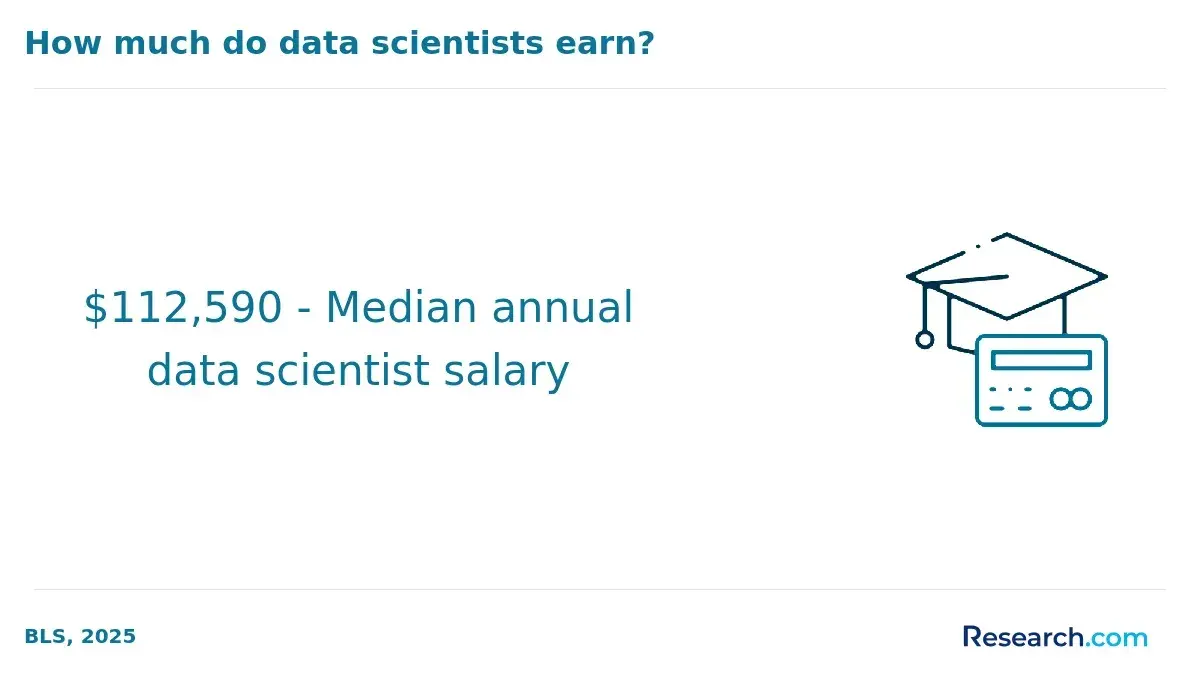
Data Scientists interpret complex datasets to deliver actionable insights, often using statistical analysis and visualization tools. This path suits those interested in converting data into strategic business decisions or research outputs, with opportunities in marketing, e-commerce, and government agencies. For those seeking to enhance their qualifications, various online data science programs offer flexible options.
AI Research Scientists develop advanced models and explore new AI architectures, typically in universities, government labs, or private research divisions. Their work demands strong mathematical and algorithmic expertise. Meanwhile, AI Product Managers manage AI product lifecycles, requiring both technical knowledge and business communication skills, especially within startups and innovative tech firms.
Other less common career paths include AI Ethics Specialists, AI Consultants, and Robotics Engineers, each requiring specialized training in ethics, client interaction, or integrated hardware systems. These AI degree career opportunities in the United States demonstrate the diverse roles available to graduates.
How much do artificial intelligence degree holders earn compared to other tech professionals?
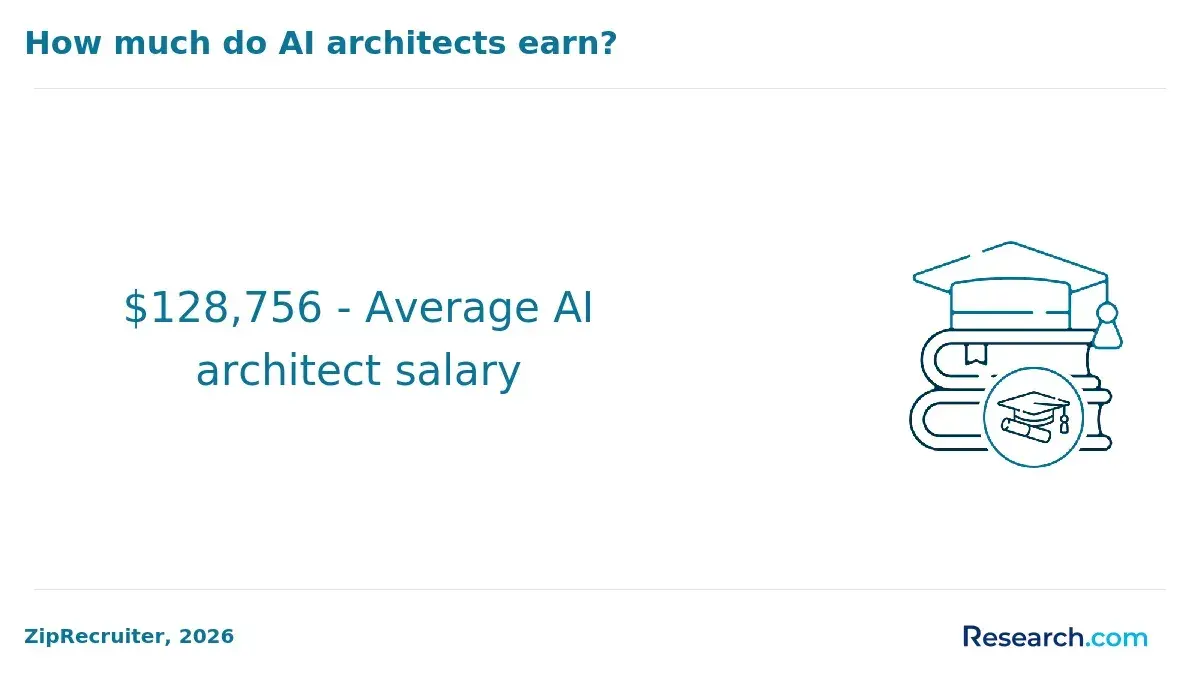
Artificial intelligence degree holders earn significantly more than many other tech professionals. According to Glassdoor's 2024 Tech Salary Report, AI specialists with bachelor's degrees have a median base salary of $127,500, compared to $98,400 for general software engineers and $102,300 for data analysts. This salary premium reflects the advanced skills and specialized knowledge required in AI roles.
Salary variation within AI depends on factors such as industry, location, and experience level. AI specialists working in finance or healthcare often command higher salaries due to the complexity and impact of their work. Entry-level AI graduates may start near $100,000, while those with 3 to 5 years of experience frequently earn over $140,000. In contrast, software engineers with similar backgrounds typically see salaries below $120,000.
Demand for AI professionals outpaces supply, prompting companies to prioritize candidates with formal AI education and expertise in machine learning algorithms, neural networks, and data modeling. This specialization distinguishes AI degree holders from data analysts, who generally require less technical depth.
Focusing on AI opens pathways to roles such as machine learning engineer, AI researcher, or computer vision specialist, all offering higher compensation than many traditional tech jobs. Graduates with AI degrees are positioned to negotiate better pay offers, reflecting their expertise in a critical growth area of technology.
What is the job outlook and hiring demand for AI professionals through 2030?
The job outlook for AI professionals is remarkably strong, with the U.S. Bureau of Labor Statistics projecting a 23% growth for AI and machine learning specialists through 2032. This rate far exceeds the average 5% growth expected across all occupations, highlighting the demand for expertise in developing, optimizing, and implementing AI solutions to drive efficiency and data analysis in various industries.
Key sectors fueling this demand include healthcare, finance, automotive, and technology. Healthcare organizations rely on AI for diagnostic tools and personalized medicine, while financial firms use it for fraud detection and algorithmic trading. Employers prefer candidates with degrees focused on AI, machine learning, or data science for their specialized skills.
Hiring extends beyond software engineering roles to include AI research, data engineering, natural language processing, and ethical AI governance. Practical skills in programming languages like Python, familiarity with AI frameworks such as TensorFlow, and experience managing large-scale data systems are highly valued.
Graduates with AI degrees enjoy access to growing job openings and competitive salaries, though continuous learning is crucial due to rapid technological advances. Industry preference often favors candidates demonstrating applied project work or internships in addition to formal education, making real-world experience a key component of career preparation.
Which accreditations and certifications matter most for AI degree programs?
ABET accreditation remains a highly regarded credential for artificial intelligence degree programs, particularly within computer science. A survey by LinkedIn Talent Solutions found that 43% of employers favor candidates with degrees from ABET-accredited programs specializing in AI. This accreditation ensures strict academic standards, thorough curriculum evaluation, and proven educational outcomes. Conversely, programs without ABET accreditation may face employer skepticism regarding program quality and relevance.
Industry certifications are valuable complements to academic degrees, highlighting practical AI skills. AWS certifications, recognized by 31% of employers, emphasize cloud-based machine learning and AI services used extensively in business settings. Google Cloud certifications, preferred by 28%, validate expertise in deploying scalable AI solutions on cloud platforms. These certifications often demand hands-on experience and passing challenging exams, giving certified graduates a competitive edge.
Combining an ABET-accredited degree with recognized cloud certifications offers a strong market appeal. For instance, a graduate with an ABET-accredited computer science degree and an AWS Certified Machine Learning Specialty certification signals both theoretical knowledge and real-world AI application skills. Employers also appreciate certifications in AI ethics, data science, and frameworks such as TensorFlow, though these have lower recognition.
Prospective students should prioritize programs with ABET accreditation and consider supplementing their education with cloud certifications to enhance employability in artificial intelligence careers.
What is the difference between online and on-campus AI degree programs for employer recognition?
Employer recognition of online versus on-campus artificial intelligence degrees depends largely on the institution's reputation, not the delivery method. A recent survey shows 76% of hiring managers view online AI degrees from leading universities such as Carnegie Mellon, Stanford, and MIT as equally credible compared to their on-campus counterparts, a considerable rise from past years. This illustrates a growing acceptance of online education when it comes from prestigious schools.
Employers focus more on the university's brand, curriculum strength, and acquired skills rather than how the degree was earned. For instance, an online degree from a less accredited or unknown institution often carries less weight than a traditional degree from a research-intensive university. Online programs may offer alternatives to campus-based experiential learning like labs or internships, but prospective students should verify if these opportunities are comparable in quality and industry connections.
Graduates' job placement and salaries tend to be similar regardless of format when coming from top programs. In interviews, candidates might need to highlight specific projects or teamwork experiences to demonstrate academic rigor and networking efforts. Overall, employers prioritize deep AI training and institutional prestige over whether a degree was completed online or in person.
How long does it take to complete an AI degree, and what are typical program costs?
Completing an artificial intelligence degree usually takes between 1.5 and 3 years for master's programs, depending on full-time or part-time enrollment. Full-time students often finish in about two years, while those balancing work or part-time study may take closer to three years. A bachelor's degree in related fields generally requires four years, though accelerated tracks or combined bachelor's/master's programs can shorten this timeline.
Tuition costs vary widely based on the institution and delivery method. According to National Center for Education Statistics 2024 data, total tuition for AI master's programs in the U.S. ranges from $45,000 to $80,000. Public universities tend to be more affordable, especially for in-state students, while private schools typically charge more. Online programs may reduce expenses by cutting fees related to campus facilities.
Financial aid, employer tuition reimbursement, and scholarships are important considerations that can significantly offset expenses. Additionally, programs with strong industry ties, offering internships and job placement support, can enhance return on investment by accelerating career growth and salary gains.
Program length and cost may also depend on AI specializations such as machine learning, robotics, or natural language processing. Researching curriculum details and graduation timelines will help align choices with personal career goals and budgets. For further detailed information, consult the relevant sources from the National Center for Education Statistics.
What admission requirements and prerequisites do top-tier AI degree programs require?
Top-tier artificial intelligence degree programs at institutions like Stanford, MIT, and Carnegie Mellon require strong quantitative and programming backgrounds. Data shows 94% of admitted students completed prior coursework in linear algebra, calculus, and programming, emphasizing the need for solid math and coding skills. Advanced undergraduate courses in these areas are often essential.
Competitive GRE scores also play a significant role. The average admitted student ranks in the 85th percentile, reflecting a need for high performance in both quantitative and verbal sections. Applicants should aim to exceed national averages to enhance their admission prospects.
Research experience or relevant project work strengthens applications. Carnegie Mellon, for example, values hands-on experience with programming languages like Python, C++, or Java, plus familiarity with AI frameworks. Knowledge of data structures, algorithms, and probability theory further supports a deeper understanding of AI concepts and practical problem solving.
Prospective students missing prerequisites can benefit from online courses or post-baccalaureate programs to meet these requirements. Building a strong foundation increases competitiveness when applying to leading artificial intelligence programs.
Other Things You Should Know About Artificial Intelligence
It is possible to enter the artificial intelligence field without a formal degree, especially through self-study, coding bootcamps, and certifications. However, many employers prefer candidates with degrees because of the complex theoretical and technical skills required. Practical experience, strong programming skills, and a robust portfolio can help candidates without degrees secure roles in AI.
Artificial intelligence remains a promising career with sustained growth expected over the next decade. Demand for professionals skilled in AI research, development, and implementation is increasing across industries such as healthcare, finance, and technology. This field offers innovation opportunities, strong salaries, and career stability for those with relevant expertise.
Yes, artificial intelligence jobs are in high demand due to rapid adoption of AI technologies and digital transformation initiatives. Employers seek experts in machine learning, natural language processing, and data analysis to solve complex problems. This demand spans startups, established tech companies, and various sectors integrating AI into their operations.
In 2027, many employers increasingly value artificial intelligence degrees from reputable online programs, recognizing their rigorous curricula and adaptability to real-world applications. Degrees focused on niche areas, such as a master’s in healthcare AI, hold particular significance in specialized fields.
References
- Four ways AI and talent trends could reshape jobs by 2030 https://www.weforum.org/stories/2026/01/four-ways-ai-impact-job-markets/
- AI Course Duration: How Long Does It Take to Become AI-Ready? https://rcm.ac.in/ai-course-duration-how-long-does-it-take-to-become-ai-ready/
- Top AI Certifications for 2026: A Guide to Advancing Your Tech Career | DataCamp https://www.datacamp.com/blog/top-ai-certifications
- Looking to the future: 4 AI and talent trends expected to redefine jobs by 2030 https://www.humanresourcesonline.net/looking-to-the-future-4-ai-and-talent-trends-expected-to-redefine-jobs-by-2030
- AI Bootcamp vs University Degree: Which Is Better in 2025? https://codeleap.ai/en/blog/bootcamp-vs-university-for-ai
- Top 10 AI certifications and courses for 2025 https://www.techtarget.com/whatis/feature/10-top-artificial-intelligence-certifications-and-courses
- Are AI-Powered Degrees Worth It in the Job Market? https://www.scholaro.com/db/News/are-ai-powered-degrees-worth-it-252
- The Top Skills You Need for AI Jobs in 2025 — Multiverse https://www.multiverse.io/en-GB/blog/top-ai-skills
- How will Artificial Intelligence Affect Jobs 2025-2030 | Nexford University https://www.nexford.edu/insights/how-will-ai-affect-jobs
- Artificial Intelligence Degree Requirements: What Do You Need to Apply? https://aifwd.com/education/artificial-intelligence-degree-requirements/