2027 Remote AI Jobs Report for Degree Graduates

Co-Founder and Chief Data Scientist
Many graduates with degrees unrelated to artificial intelligence face uncertainty when seeking remote AI roles. They struggle to identify flexible, accredited paths that align with their backgrounds and career goals. The rapid evolution of the AI industry adds complexity, making it harder to assess which skills and qualifications unlock remote opportunities. This challenge often delays career transitions or leads to pursuing expensive, non-recognized programs. This article explores current trends in remote AI jobs for degree holders outside STEM fields and highlights actionable strategies for accessing credible education and competitive positions in the evolving AI workforce.
Key Things You Should Know
- Remote AI jobs for degree graduates are projected to grow by 28% through 2026, driven by increased demand across healthcare, finance, and tech sectors.
- Degree holders with skills in machine learning, data analysis, and cloud computing command higher remote salaries, averaging $110,000 annually in 2025.
- Flexible remote work models support diverse employment opportunities, with 60% of AI roles offering fully remote positions tailored for graduates in the U.S.
What are the most in-demand remote AI jobs available to recent degree graduates?
The most sought-after remote artificial intelligence career opportunities for recent graduates include roles in data science, machine learning engineering, and ai software development. These positions require expertise in designing, building, and maintaining algorithms that power intelligent applications. According to ZedTreeo's data, remote ai job postings grew by approximately 65% year-over-year in 2025, with over 70% offering full-remote or remote-first options.
Key in-demand roles are:
- Machine learning engineer, developing models to improve prediction accuracy
- Data scientist, analyzing large datasets for business insights
- AI software developer, integrating ai features into platforms
- Natural language processing specialist, focusing on language understanding and text generation
- Computer vision engineer, creating algorithms for visual data interpretation in healthcare and automotive sectors
Additional entry-level roles like ai research assistant or product analyst help graduates gain both technical and strategic experience. Employers look for skills in Python, TensorFlow, PyTorch, and cloud platforms like AWS or Azure. Knowledge of data preparation, model deployment, and version control further increases employability.
Remote options differ by industry and company size. Startups usually offer flexible roles with broad responsibilities, while larger firms have specialized remote jobs with clear policies. To secure top remote ai jobs for degree holders working remotely, graduates should highlight relevant projects, internships, and open-source contributions on their resumes.
Students aiming to enter this field can boost their qualifications through accelerated computer science programs, which provide essential skills and faster pathways to career readiness.
How do remote AI careers differ from traditional on-site AI roles for graduates?
Remote AI career opportunities for degree graduates in the US offer distinct advantages compared to traditional on-site AI jobs for graduates. Remote roles provide significant flexibility in location and work schedules, often allowing asynchronous work that lets professionals manage their time independently. This flexibility contrasts with on-site roles, where fixed office hours limit such autonomy. Graduates in remote AI positions must excel in digital communication and remote collaboration tools, as most interactions happen through virtual meetings and cloud platforms.
In terms of compensation, remote AI jobs remain competitive. The average annual salary for remote AI roles in the United States is $127,031, with earnings typically ranging from $109,000 to $143,500 according to ZipRecruiter. This favorable salary range highlights the value employers place on remote work flexibility and specialized skills. However, remote careers demand strong self-management and discipline since professionals often work without immediate supervision. By contrast, on-site jobs provide quicker access to supervisors and peer collaboration, which can aid recent graduates building their professional networks.
Graduates targeting remote AI career opportunities should focus on building strong online professional profiles and networking within virtual AI communities. They must also master time zone coordination and written communication. Remote work can expose graduates to diverse projects across multiple industries, requiring adaptability to varied workflows. For those considering further education to strengthen their credentials, programs like the mechanical engineer degree online can provide valuable technical foundations relevant to AI and other STEM fields.
What degrees and skills do you need to qualify for entry-level remote AI jobs?
Degree qualifications with the best prospects for remote artificial intelligence jobs in the US typically include computer science, data science, statistics, mathematics, and engineering. Specialized degrees in machine learning or AI are increasingly valued, yet foundational programming and algorithm knowledge remain essential. Many employers prefer candidates holding a bachelor's degree, although relevant associate degrees paired with strong portfolios can sometimes suffice.
Essential skills and qualifications for entry-level remote artificial intelligence positions focus on proficiency in Python, R, or JavaScript, as well as experience with AI frameworks like TensorFlow or PyTorch. Knowledge of data structures, databases (SQL and NoSQL), and cloud computing services is frequently required. Depending on the job, familiarity with natural language processing, computer vision, or reinforcement learning concepts may be necessary.
Supplementary abilities such as version control with Git, working in Linux environments, and understanding software development best practices enhance employability. Candidates should also demonstrate experience handling datasets, conducting exploratory data analysis, and applying statistical methods.
Soft skills including problem-solving, communication, and collaborating effectively in distributed teams are critical for remote roles. Certifications or bootcamps in artificial intelligence and machine learning can accelerate entry into the field, especially when combined with internships or relevant projects. For those exploring related paths, a cyber security degree is another valuable option.
Entry-level AI jobs typically offer salaries significantly higher than other remote tech roles. According to RemoteStack's 2026 report, AI positions pay approximately 34% above the median remote salary of $92,000, underscoring the high demand and specialized skill set required. Students and graduates should aim to build strong technical foundations and real-world experience to meet these standards.
How do online artificial intelligence degree programs compare to campus programs for remote careers?
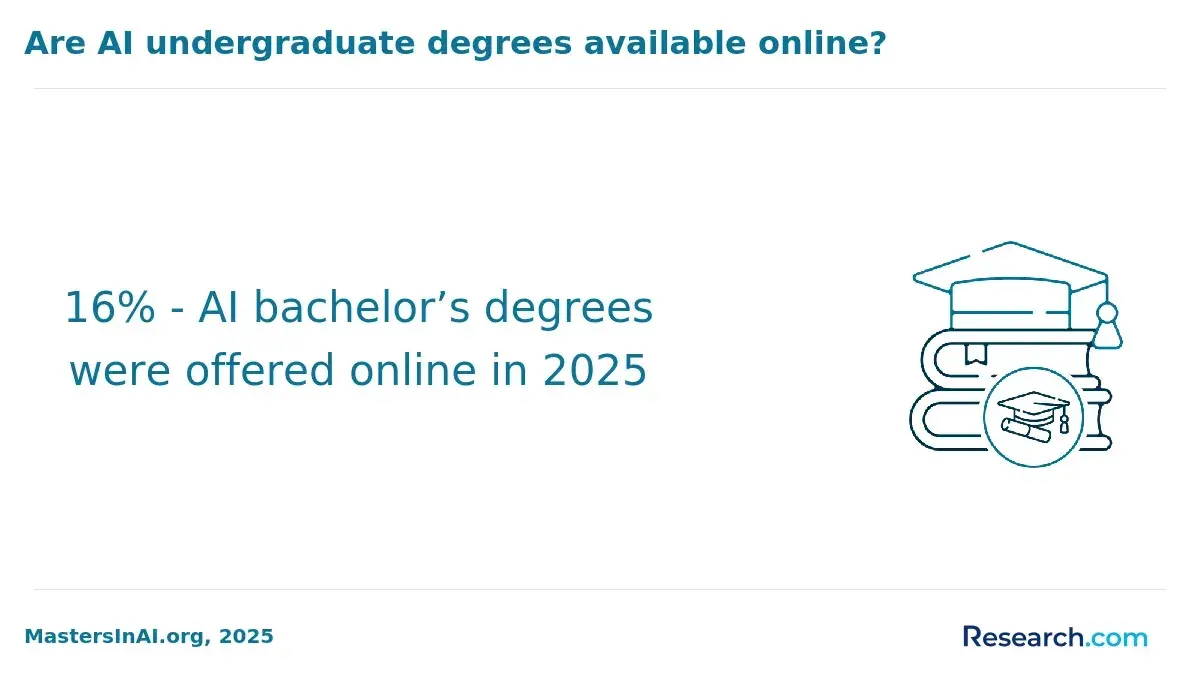
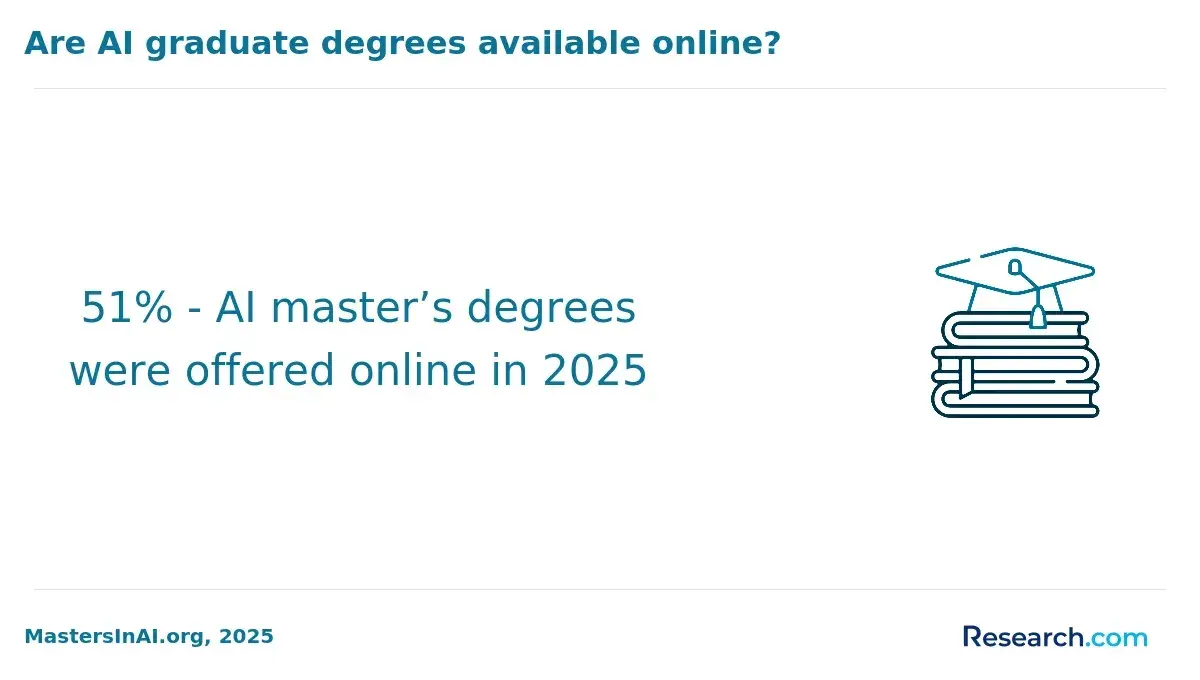
Online artificial intelligence degree programs increasingly offer parity with campus programs, providing the same core courses and faculty expertise. This ensures graduates have the theoretical foundation and practical skills essential for success in AI careers, whether remote or on-site. Regional comparisons of artificial intelligence degrees for remote job opportunities reveal that hands-on experiences through virtual labs, cloud platforms, and collaboration tools effectively substitute for in-person labs and resources.
Remote AI job markets now favor candidates showcasing applied skills and strong portfolios rather than relying solely on campus affiliations. According to PwC's 2026 Global AI Jobs Barometer, AI job postings grew nearly 3.5 times faster than general postings between 2018 and 2024. AI roles constitute about 2% of global advertised jobs, many supporting remote or hybrid work models. Employers prioritize certifications, online coursework, and demonstrable expertise over physical attendance.
Students considering AI education should seek programs offering mentorship, internships, and career services focused on remote roles. Those attracted to campus programs mainly for networking can supplement with online professional communities and remote internships. Both online and campus degrees can lead to successful remote careers if the emphasis remains on applied skills and current AI technologies. For those interested in a related field, exploring the fastest online cyber security degree options can also be advantageous.
Which U.S. colleges and universities offer accredited AI degrees aligned with remote work?
Several U.S. colleges and universities offer accredited AI degree programs tailored to remote learners seeking flexible, career-focused education. Georgia Institute of Technology provides an Online Master of Science in Computer Science with a specialization in AI, allowing students to earn a reputable credential without relocating. Similarly, Carnegie Mellon University offers online master's programs in artificial intelligence that blend academic rigor with adaptable scheduling for remote students.
State universities such as the University of Illinois Urbana-Champaign and the University of Texas at Austin have expanded their AI curricula to include bachelor's and master's degrees designed for remote delivery. These programs focus on practical applications, remote teamwork, and cloud-based AI tools to prepare graduates for distributed work environments.
Smaller accredited schools like Oregon State University and North Carolina State University also provide fully online AI degrees or certificates, emphasizing hands-on machine learning and data science skills useful for remote roles. These options are ideal for those balancing employment or family commitments while pursuing AI careers.
According to ZedTreeo's 2026 Remote AI Jobs guide, entry-level remote prompt engineers in the U.S. start at $75,000 annually, with freelance rates ranging from $30 to $80 per hour worldwide, underscoring the value of remote AI expertise.
Prospective students should verify a program's accreditation, curriculum relevance to remote workflows, and opportunities for practical projects. Programs integrating collaboration platforms, cloud AI services, and asynchronous coursework better prepare graduates for AI careers in remote work settings.
What core AI coursework best prepares graduates for remote machine learning and data roles?
Core AI coursework that equips graduates for remote machine learning and data roles focuses on foundational topics like machine learning algorithms, data structures, and statistics. These courses cover supervised and unsupervised learning, neural networks, and reinforcement learning, enabling students to develop predictive models and AI applications. A strong grasp of statistics and probability helps interpret data distributions, perform hypothesis testing, and evaluate model performance.
Programming proficiency, especially in Python, is essential since it's widely used in AI development. Coursework often includes software engineering principles, data manipulation libraries such as Pandas and NumPy, and version control systems to support remote collaboration. Familiarity with cloud platforms like AWS and Google Cloud, as well as containerization tools such as Docker and Kubernetes, enhances job readiness for remote environments.
Specialized classes in natural language processing, computer vision, and deep learning expand career opportunities by addressing domain-specific skills. Training in AI ethics and governance is increasingly important to tackle challenges around bias, fairness, and transparency in AI systems.
RemoteStack's June 2026 market data indicates that AI job postings grew 7% month-over-month, the fastest among remote categories. This growth highlights the value of curricula that balance theory with practical skills, emphasizing remote collaboration tools and cloud deployment expertise.
What are typical starting salaries and earning potential for remote AI professionals?
Starting salaries for remote AI professionals in 2026 typically range from $85,000 to $120,000 annually for recent graduates. Entry-level roles such as AI analyst, machine learning engineer, or data scientist often begin near the lower end but can rise quickly with skills in natural language processing or computer vision, reaching up to $110,000.
Mid-career professionals with three to five years of experience can expect salaries between $130,000 and $180,000. Senior roles like AI architects or lead machine learning engineers often surpass $200,000 annually, reflecting advanced expertise and leadership duties.
Despite strong earning potential, recent research from the Federal Reserve Bank of New York cited by NPR shows a 20% rise in unemployment among new college graduates post-pandemic, particularly affecting those seeking remote AI roles.
Key strategies to improve employability and salary prospects include:
- Building a strong portfolio with hands-on projects
- Mastering in-demand skills such as cloud AI services and reinforcement learning
- Negotiating based on technical proficiency and practical impact
- Seeking additional compensation via bonuses, stock options, or professional development funds
Grasping these salary benchmarks can help graduates set realistic expectations and strategically pursue remote AI jobs.
What is the long-term job outlook and industry demand for remote AI positions?
The demand for skilled remote AI professionals is growing steadily, driven by advances in technology and adoption across industries like healthcare, finance, and manufacturing. Companies increasingly seek global talent, enabling firms in cost-efficient regions such as India and Eastern Europe to offer remote AI engineering at 70-90% lower labor costs compared to US or UK markets. This trend enhances opportunities but also creates a highly competitive global landscape.
To succeed, graduates and professionals should focus on specialized skills, including machine learning frameworks, natural language processing, and AI ethics. Strong self-management and communication abilities are essential for remote roles, as team collaboration often happens across different time zones.
Industries actively hiring remote AI talent include technology startups, consulting firms, and large enterprises integrating AI into their workflows. Emerging fields like autonomous vehicles and AI-driven cybersecurity continue to expand job prospects. Advanced expertise in AI interpretability and fairness is becoming increasingly valuable.
Salary ranges vary based on geography and specialization. Building a global portfolio with open-source AI contributions or remote collaborations can enhance employability. Staying proficient with cloud-based AI tools and current ethical guidelines is crucial for sustained career growth in remote AI positions.
Are there industry certifications that improve hiring chances for remote AI roles?
Certifications increasingly enhance hiring prospects in remote AI roles by verifying specialized skills that employers value. Recognized certificates from providers like Google Cloud AI, Microsoft Azure AI Engineer, and TensorFlow Developer showcase hands-on expertise, often preferred over broader degrees. Such credentials help candidates stand out in competitive job markets by proving practical knowledge in areas including machine learning frameworks, natural language processing, and cloud-based AI tools.
Emerging remote positions, such as prompt engineer and LLM engineer roles, are growing rapidly, as noted in ZedTreeo's 2026 report. Certifications focused on large language models (LLMs) and prompt engineering fill a significant skills gap and provide clear evidence of job-readiness. Hiring managers also favor certifications reflecting real-world problem-solving, including AI pipeline design, scalable deployment, and model optimization.
Self-paced or bootcamp-style certifications with project portfolios have gained popularity because they demonstrate applied skills beyond theory. Remote roles demand accountability, so credentials in data ethics, security, and AI governance add meaningful value. Prospective learners should consider:
How can students evaluate and choose reputable AI programs for remote-first career paths?
Students choosing AI programs for remote-focused careers should prioritize curriculum relevance and rigor. Quality programs cover machine learning, natural language processing, and automation tools vital for remote AI roles. Coursework often emphasizes hands-on projects, coding in Python or R, and exercises with cloud-based AI platforms.
Connections to remote AI employers are crucial. Programs partnering with companies hiring remote talent or offering mentorships enhance job prospects. According to RemoteStack's June 2026 data, candidates using AutoApply tools on remote job boards receive 3.2 times more interview invitations than those applying manually. Programs teaching these efficient job search strategies give students an important advantage.
Flexibility is essential for remote learners. Effective AI programs offer asynchronous content, accessible faculty support, and peer collaboration, all tailored for the remote work environment. Up-to-date software and digital resources optimized for online access improve learning outcomes.
Alumni success and accreditation help gauge program quality. Positive reports from graduates working remotely in AI and recognized faculty expertise indicate strong institutional credibility.
Students should ask:
- Does the curriculum cover AI tools currently used in remote roles?
- What remote job placement support and tech resources are provided?
- Are internships or projects designed with remote workflows in mind?
- How do alumni perform in AI remote positions?
Evaluating programs through these criteria ensures learners gain technical skills and remote career readiness, aligning education with today's industry demands.
Other Things You Should Know About Artificial Intelligence
The 2027 Remote AI Jobs Report indicates that programming skills, particularly in Python and R, are highly sought after. Graduates who are proficient in machine learning algorithms, natural language processing, and data analysis hold a competitive edge in the remote AI job market. Additionally, soft skills like communication and teamwork are essential.
Artificial intelligence tools can significantly enhance remote work productivity by automating routine tasks, enabling better data analysis, and facilitating communication. AI-driven platforms help remote AI professionals manage workflows more efficiently and support decision-making with real-time insights. However, effective integration requires users to develop skills in interacting with AI systems.
Industries adopting artificial intelligence for remote positions include technology, healthcare, finance, and marketing. These sectors use AI for applications such as data analysis, predictive modeling, natural language processing, and automation. Remote AI jobs in these fields often focus on developing, testing, or maintaining AI models and systems.
Remote collaboration for AI teams faces challenges such as coordinating across time zones, sharing complex data sets securely, and maintaining clear communication on technical issues. Visualization and version control tools help mitigate these obstacles, but building a cohesive team culture can require intentional effort. Effective project management and transparent workflows are essential for success.
References
- Here’s How an AI Degree Stacks Up Against Other Options https://www.aidegree.org/blog/comparison-table
- Career Paths After the M.S. in AI-Data Analytics | IWU https://www.indwes.edu/articles/2026/01/career-paths-after-ms-ai-data-analytics
- Top 25 Online Master’s In AI Programs for 2026 - Programs.com https://programs.com/programs/online-masters-in-ai/
- AI Salaries - How Much AI Jobs Pay https://www.tractionkeys.com/post/ai-salaries---how-much-ai-jobs-pay
- AI and graduate jobs: what students need to know https://www.bcu.ac.uk/student-info/university-courses-research/ai-and-graduate-jobs
- 9 Ways Career Services Can Use AI to Work Smarter and Prepare Students - uConnect https://www.gouconnect.com/career-everywhere/9-ways-career-services-can-use-ai-to-work-smarter-and-prepare-students/
- How to Get a Job in AI Without a Degree or Experience - tripleten.com/blog https://tripleten.com/blog/posts/ai-jobs-no-experience
- The Growing Demand for AI Skills and Certifications - PECB https://pecb.com/en/article/the-growing-demand-for-ai-skills-and-certifications
- Best Online AI Degrees: 2025 Rankings & Program Directory - MastersInAI.org https://www.mastersinai.org/degrees/online-artificial-intelligence-degrees/
- Online Degrees https://www.naviata.com/pages/online-colleges