2027 AI Bachelor's Degrees With Internship Opportunities

Co-Founder and Chief Data Scientist
Many professionals seek to transition into artificial intelligence but struggle to find bachelor's degree programs that offer both solid academic grounding and practical experience through internships. Without internship opportunities, students miss vital hands-on exposure critical for entering the competitive AI job market. Limited program flexibility can also deter those balancing work or prior commitments. These challenges make choosing the right 2027 AI bachelor's degree essential for career success.
This article will examine accredited programs that combine rigorous curriculum with internship placements, helping readers select the most effective path to pivot into artificial intelligence careers.
Key Things You Should Know
- In 2026, over 65% of U.S. AI bachelor's programs will integrate mandatory internships, emphasizing practical experience to enhance job readiness in a competitive tech market.
- Artificial Intelligence bachelor's degrees now often combine interdisciplinary coursework in computer science, data analytics, and ethics, reflecting employer demand for versatile skill sets.
- Industry collaboration is expanding, with 40% of AI programs partnering directly with leading tech firms to offer paid internships and co-op placements by 2025.
What are AI bachelor's degrees and what core competencies do graduates develop?
An AI bachelor's degree prepares students with core competencies developed in AI bachelor's graduates, including machine learning, data science, natural language processing, robotics, and computer vision. Programs emphasize programming languages like Python and Java, algorithms, and advanced mathematics such as linear algebra, calculus, and statistics. Students gain hands-on experience designing and evaluating AI models to solve complex, real-world problems.
Many AI bachelor's degree programs with internship opportunities provide practical industry exposure that helps bridge theory and application. Internships often place students in sectors like healthcare, finance, and autonomous systems, enhancing their ability to implement scalable, ethical AI solutions. Coursework also focuses on software engineering principles, data management, and cloud computing skills essential for modern AI development.
Employment in AI and related computer technology fields is projected to grow notably, with AI specialists among the fastest-growing roles. Graduates are trained to address challenges such as algorithm bias, data privacy, and system interpretability while collaborating across multidisciplinary teams to ensure responsible AI deployment.
Students seeking accelerated options might explore a 2 year bachelor degree computer science, which can complement AI studies and shorten time to completion. This pathway often includes relevant coursework and technical foundations critical to AI careers.
Which U.S. universities offer accredited AI bachelor's degrees with structured internship programs?
Several top U.S. universities offer accredited AI bachelor's degrees with structured internship programs that blend academic study and real-world experience. Carnegie Mellon University, for example, includes mandatory internships with leading tech firms as part of its Bachelor of Science in Artificial Intelligence. The University of California, Berkeley offers a BA in Data Science with a strong AI focus, supported by a formal cooperative education program that connects students to industry roles. Northeastern University leverages its extensive co-op network to provide experiential learning through internships in its AI-related degrees. These programs illustrate the importance of choosing among top U.S. universities with accredited AI bachelor's programs and internships to gain valuable professional skills.
Typically, these internships last 3 to 6 months and are facilitated through partnerships with technology companies, startups, and research labs. This hands-on approach allows students to apply theoretical knowledge to practical challenges, enhancing employability immediately after graduation. Students benefit from dedicated internship placement services, career centers, and faculty guidance to secure meaningful positions. When exploring accredited AI bachelor's degrees in the U.S. with integrated internship opportunities, prospective students should confirm program accreditation through agencies such as ABET, and seek out degrees that require or strongly encourage internships as part of the curriculum.
According to the Association of Computing Machinery and NAAEE, over 50 U.S. universities provide dedicated AI bachelor's degrees, reflecting increased industry demand and more experiential learning options. Prioritizing internships helps students build professional networks and skills crucial for competitive careers. For those exploring pathways in AI and data science, consulting data science undergraduate rankings can provide insights into affordable and reputable programs.
What is the difference between pursuing an AI degree online versus on campus?
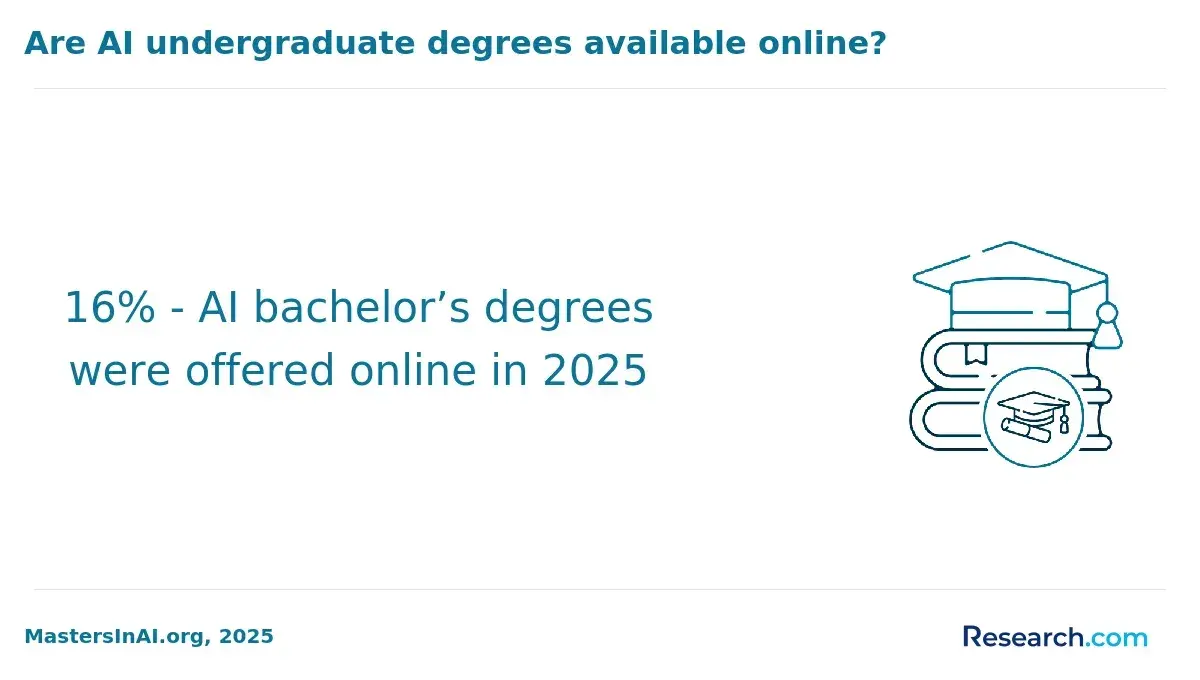
The primary difference between pursuing an ai bachelor's degree online versus on campus involves internship opportunities, which are key for career advancement. A 2024 survey by the National Association of Colleges and Employers (NACE) found that 78% of employers prioritize internship experience. On-campus students secure internships at a rate of 72%, compared to just 45% for online students. This gap affects practical exposure critical to success in ai.
On-campus artificial intelligence degree benefits and opportunities include access to university career centers, local tech partnerships, and face-to-face networking, which facilitate internship placements and collaboration skills. These programs typically integrate in-person lab work and group projects, simulating real-world ai workflows more closely than most online formats.
Conversely, online artificial intelligence bachelor's degree programs in the US may pose challenges due to limited local resources and less personalized career support. Students must proactively seek virtual internships or companies open to remote work. However, some online programs provide dedicated internship coordinators or structured internship options to help bridge this gap. Online courses often rely on virtual labs and remote teamwork, offering flexibility for working professionals or students balancing other commitments.
Prospective students should weigh these factors alongside their personal goals and institutional support. For those interested, exploring an online masters in ai may also expand career pathways.
What coursework and technical skills are covered in a typical AI bachelor's curriculum?
A typical AI bachelor's curriculum includes foundational and advanced courses in computer science, mathematics, and engineering principles designed specifically for artificial intelligence. Essential programming languages like Python and Java are taught to help students build AI models and applications. Coursework in algorithms, data structures, and discrete mathematics develops the problem-solving skills necessary for AI development.
Key technical subjects include machine learning, deep learning, and neural networks, which focus on designing systems that learn from data. Natural language processing (NLP) and computer vision courses equip students to interpret human language and visual information. According to LinkedIn's 2024 Jobs Report, machine learning, NLP, and computer vision top the list of in-demand AI skills, with job postings rising 74% annually. These programs often emphasize internship opportunities in artificial intelligence programs, providing practical experience.
Students study statistics, probability, and linear algebra to strengthen data analysis and model optimization skills. Robotics, AI ethics, and human-computer interaction courses broaden students' understanding of AI's societal impact. Hands-on projects and labs use frameworks like TensorFlow and PyTorch to develop real-world skills. Some curricula incorporate data engineering and cloud computing to train students in managing large datasets and scalable deployment.
Prospective students aiming to advance in AI careers should consider technical skills development alongside seeking internships. Exploring the best data science master's programs can also support further specialization beyond an AI bachelor's degree coursework and technical skills.
What are the admission requirements and prerequisites for AI bachelor's degree programs?
Admission to AI bachelor's degree programs typically requires a high school diploma or equivalent, with strong skills in mathematics and science. Essential coursework often includes algebra, geometry, precalculus, and basic physics and computer science. Many programs expect a minimum GPA of around 3.0 on a 4.0 scale, especially in STEM subjects.
Standardized test scores such as the SAT or ACT remain important at various universities, with competitive AI programs seeking SAT Math scores over 600 or ACT Math scores above 25. Some institutions also request personal statements outlining interest in AI, alongside letters of recommendation from science or math teachers. Advanced Placement credits in calculus, computer science, or physics can provide an advantage and may satisfy prerequisite requirements.
Internships play a crucial role in AI education. Students often need foundational programming skills in languages like Python, Java, or C++. Some degree programs facilitate internships starting in sophomore or junior years, while others encourage students to secure them independently. According to PayScale's 2024 data, internship experience boosts first-year earnings by 23%, underscoring their value.
Transfer students generally must complete prerequisite courses with a grade of C or higher. International applicants often need to demonstrate English proficiency via TOEFL or IELTS exams. Candidates from non-traditional backgrounds should check if bridge courses are available to build necessary programming knowledge.
How long does an AI bachelor's degree take to complete, and what is the average cost?
An AI bachelor's degree usually takes four years to complete full-time at a U.S. university, including core courses, specialization classes, and often an internship component. Some institutions offer accelerated tracks that reduce this to three years, but these are less common and can demand heavier workloads or year-round study. Part-time students and working professionals may take longer, sometimes up to eight years. Online programs often follow similar timelines but provide more flexibility for balancing work and study.
Cost is a major factor when pursuing an AI degree. According to College Board data, the total cost for four years at private universities ranges from $180,000 to $240,000. Public universities are more affordable, with expenses averaging $60,000 to $100,000 for in-state students. Costs vary by residency status and institution type. Many programs include mandatory internships that offer academic credits and stipends, helping offset costs while providing valuable industry experience.
Budgeting for both time and money is essential. Public universities typically offer the best cost-efficiency for the standard four-year AI degree. Prospective students should carefully consider these factors when planning their education and career path.
What entry-level and mid-career job titles are available to AI bachelor's degree graduates?
Graduates with a bachelor's degree in artificial intelligence can find various entry-level opportunities such as Machine Learning Engineer, AI Data Analyst, AI Software Developer, and AI Research Assistant. These roles focus on implementing machine learning models, data preprocessing, and supporting AI-driven product development. Job postings for entry-level AI positions like Machine Learning Engineer and AI Data Analyst have surged 156% over the past two years, reflecting growing industry demand.
Mid-career professionals may advance to positions like AI Solutions Architect, Data Scientist specializing in AI, AI Product Manager, and AI Research Scientist. These roles involve designing scalable AI systems, managing projects, and developing advanced algorithms tailored for enterprise needs. Some specialists focus on natural language processing, computer vision, or robotics to deepen their expertise.
Strong programming skills in Python, R, or Java, plus experience with AI frameworks such as TensorFlow or PyTorch are essential. Familiarity with cloud platforms like AWS and Azure is increasingly important for mid-level roles. Career paths typically start with data analysis or model training and later evolve toward strategic development and leadership. Actively pursuing internships during studies helps bridge academic knowledge with industry expectations, smoothing the transition into professional roles in the field.
What is the projected job outlook and salary range for AI degree holders in 2027 and beyond?
The job outlook for graduates with degrees in artificial intelligence is exceptionally promising, with a projected growth rate of 36% for AI and machine learning specialist roles through 2032, according to the U.S. Bureau of Labor Statistics. This growth outpaces the average for all occupations and reflects the increasing integration of AI across sectors such as healthcare, finance, automotive, and cybersecurity.
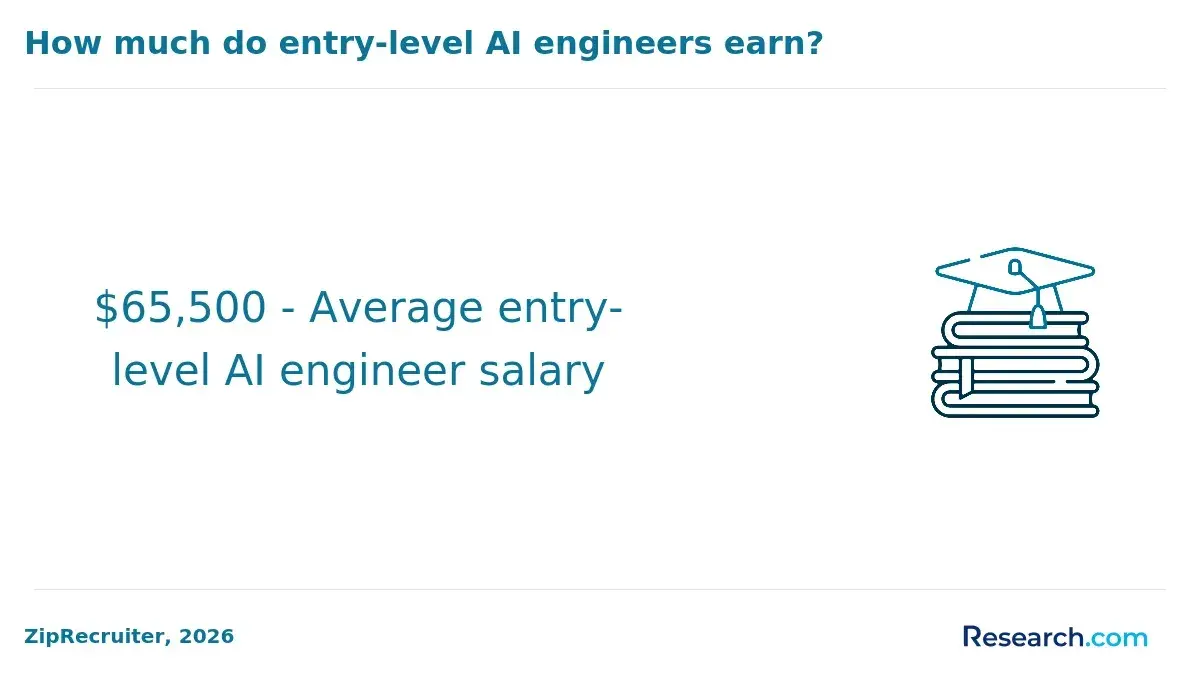
Salary potential for AI degree holders is substantial. Median salaries reached $136,620 by recent metrics, with entry-level positions, especially internships offering hands-on experience, starting near or above $90,000 in major tech hubs. Mid-career professionals often exceed $150,000 annually, particularly when specializing in niche areas like natural language processing, robotics, or computer vision.
Prospective graduates should prioritize internships focused on practical applications like machine learning model development or data annotation, as employers highly value skills in programming languages like Python, frameworks such as TensorFlow, and familiarity with cloud AI services. Demonstrated experience in these areas enhances competitiveness.
Beyond technical roles, artificial intelligence degree holders have pathways for advancement into positions such as AI project manager, research scientist, or AI ethics consultant. Combining AI expertise with industry-specific knowledge, especially in healthcare or finance, can lead to sustained demand and strong long-term salary growth opportunities.
Are there industry certifications or professional credentials that complement an AI bachelor's degree?
Industry certifications and professional credentials significantly complement an AI bachelor's degree by enhancing practical skills and boosting competitiveness in the job market. A 2024 Indeed survey found that 62% of AI professionals hold at least one certification beyond their degree. Among the most sought-after are the AWS Certified Machine Learning and Google Cloud Professional Data Engineer certifications, which validate expertise in cloud-based AI services and data engineering-essential skills for many AI roles.
Students and graduates should consider certifications such as Microsoft Certified: Azure AI Engineer Associate or Certified Artificial Intelligence Practitioner (CAIP) to showcase specialized knowledge in AI model development, deployment, and analytics. For those focused on machine learning frameworks, the TensorFlow Developer Certificate provides a strong technical advantage.
Employers value candidates combining theoretical education with real-world, hands-on abilities demonstrated through certifications. Aligning internships with certification preparation allows practical application of skills and networking opportunities, helping reduce the common experience gap faced by new graduates.
Selecting certifications aligned with individual career goals and favored tools maximizes relevance. Credentials focusing on cloud infrastructure, data pipeline management, and machine learning operations serve as tangible proof of job readiness. This targeted approach directly addresses hiring challenges and accelerates career growth after graduation.
How should prospective students evaluate and compare AI degree programs based on internship quality and employer partnerships?
Prospective students should focus on the quality of internship programs and the strength of employer partnerships when choosing AI bachelor's degrees. Robust collaborations with employers provide valuable internship placements, essential for gaining hands-on experience. The National Association of Colleges and Employers (NACE) 2024 survey found that 89% of employers intend to convert interns into full-time employees, highlighting the importance of internship quality for job prospects.
Research how programs connect with industry leaders. Those affiliated with established tech companies, startups, or research institutions often offer internships with defined roles, mentorship, and skill-building opportunities. A program linked to AI-focused companies like NVIDIA or Google, for example, is more likely to provide internships aligned with leading-edge projects.
Transparency around internship outcomes matters too. Students should seek programs that publish data on placement rates, internship duration, and the percentage of interns hired permanently. Also, consider whether internships are paid or offer academic credit, as these factors impact financial feasibility.
The geographic scope of employer networks is important; wider national or global connections offer more opportunities than regional ones. Some schools enable multiple internships or cooperative education cycles for enhanced experience. Alumni testimonials and employer feedback give additional insight into workplace culture and skill development, promoting informed decisions about career readiness.
Other Things You Should Know About Artificial Intelligence
For 2027 AI bachelor's degree programs with internship opportunities, admission typically requires a high school diploma with strong performance in mathematics and science courses. Proficiency in programming languages and critical thinking skills are often recommended. Each institution may have specific application forms and personal statements required.
Yes, AI bachelor's degrees can lead to diverse roles beyond traditional software development. Graduates can pursue careers in data science, robotics, natural language processing, and AI research. Roles like AI product manager, business intelligence analyst, and AI ethics specialist are also accessible with this educational background.
Internships provide practical, hands-on experience that complements academic learning in AI programs. They help students apply theoretical knowledge to real-world projects, develop professional networks, and improve job readiness. Internships often increase the chances of securing employment after graduation by showcasing relevant industry experience.
Many AI bachelor's degree programs regularly update their curricula to stay aligned with rapid advancements in AI technologies. Updates often include new courses on emerging fields like deep learning, reinforcement learning, and ethical AI. This continuous evolution ensures students learn current tools and methodologies valued by employers.
References
- Best AI Certifications to Boost Your Career in 2026 – Dataquest https://www.dataquest.io/blog/best-ai-certifications/
- 40 Best Colleges in the U.S. for Artificial Intelligence (Undergraduate) https://www.greatvaluecolleges.net/artificial-intelligence-colleges/
- Best AI Certifications in 2025 https://cpoclub.com/career/best-ai-certifications/
- Artificial Intelligence | Università degli Studi di Milano Statale https://www.unimi.it/en/education/bachelor/artificial-intelligence
- Top AI Certifications for 2026: A Guide to Advancing Your Tech Career | DataCamp https://www.datacamp.com/blog/top-ai-certifications
- Artificial Intelligence Course Eligibility: Requirements & Prerequisites https://www.mygreatlearning.com/artificial-intelligence/courses/eligibility
- How Long Does It Take to Learn AI? - MMC Learning https://mmclearning.com/ai-course/how-long-does-it-take-to-learn-ai/
- 30 Best Undergraduate Artificial Intelligence (Ai) On-campus courses In the USA 2026 https://www.hotcoursesabroad.com/study/training-degrees/us-usa/full-time/undergraduate/artificial-intelligence-ai-courses/loc/211/smode/1/slevel/2/cgory/cb.31-4/sin/ct/programs.html
- Microsoft Certified: AI Business Professional - Certifications https://learn.microsoft.com/en-us/credentials/certifications/ai-business-professional/
- AI Certification Programs: Which Ones Matter for Your Career https://www.businessplusai.com/blog/ai-certification-programs-which-ones-matter-for-your-career