2027 How Colleges Are Responding to AI Job Demand

Co-Founder and Chief Data Scientist
Many colleges face the challenge of aligning programs with the fast-growing demand for artificial intelligence skills. Traditional curricula often lag behind industry needs, leaving students unprepared for AI roles. This creates uncertainty for graduate students and professionals seeking to enter AI without direct backgrounds in technology. Institutions must adapt swiftly to offer flexible, accredited pathways that equip learners with relevant knowledge and hands-on experience. This article examines how colleges are transforming their offerings and enhancing accessibility, helping readers identify effective education routes to successfully pivot into the AI field.
Key Things You Should Know
- Colleges increased AI-focused degree offerings by 45% in 2025 to meet a projected 30% rise in AI-related U.S. jobs through 2030, reflecting industry demand for specialized skills.
- Curricula now emphasize practical AI applications, integrating ethics and data privacy, responding to the 62% of employers valuing interdisciplinary AI training.
- Partnerships with tech firms expanded by 38%, providing real-world AI project experience and internships, crucial for graduate employability in competitive AI job markets.
How are U.S. colleges redesigning AI degree programs to meet new workforce demand?
U.S. colleges are redesigning artificial intelligence degree programs to align with evolving workforce demands, integrating practical skills such as machine learning, data analysis, natural language processing, and ethical AI deployment. Programs often adopt interdisciplinary approaches that blend computer science with fields like healthcare, finance, and robotics, diversifying student expertise.
Hands-on experience is emphasized through lab work, internships, and real-world projects supported by partnerships with industry leaders. This approach equips students with both technical proficiency and domain-specific knowledge vital for today's AI roles. Core courses frequently include cloud computing platforms and AI toolkits reflecting employer priorities. To meet growing demand, institutions expand access by offering online and hybrid degrees, catering to working professionals seeking upskilling without compromising current jobs.
Foundational math and statistics receive greater focus, meeting expectations for quantitative reasoning. Universities also offer tailored specializations, including computer vision, speech recognition, and AI ethics, helping students target niche careers. Career centers provide AI-specific guidance and networking to navigate competitive hiring markets.
Job postings requiring at least one AI skill have surpassed 628,000, more than tripling their share since 2010, according to the Federal Reserve Bank of Atlanta. This data pushes colleges to rapidly scale while balancing foundational theory with applied learning. For those exploring paths in artificial intelligence, resources on applied artificial intelligence offer valuable career insights.
What AI-related majors and specializations best align with emerging tech and data careers?
Majors and specializations that align with emerging technology careers prioritize practical skills in machine learning, data science, and software engineering with AI applications. Popular paths include computer science programs featuring dedicated tracks in artificial intelligence, machine learning, and robotics. Data science majors focusing on big data analytics and predictive modeling closely reflect industry demands for handling and interpreting complex datasets. Specialized AI degrees often incorporate interdisciplinary studies such as AI ethics, natural language processing, and computer vision to prepare students for responsible and innovative solution development.
The best AI specializations aligned with data science jobs frequently involve hands-on experience with AI frameworks and programming languages like Python, along with tools including TensorFlow and PyTorch. For example, software engineering programs embedding AI principles equip students to build intelligent systems and scalable applications. Business analytics combined with AI coursework forms another growing path, designed to enhance data-driven decision-making in technology-driven markets.
According to Revelio Labs and Stanford University, between 2022 and 2025, entry-level postings in AI-exposed fields such as software engineering and customer service declined by only 16%, compared to an overall drop of around 35% since January 2023. This highlights the resilience and sustained demand for AI-related roles, emphasizing the advantage of skills aligned with AI technologies.
Students evaluating AI-related majors for emerging technology careers should look for programs offering updated curricula on AI safety, model interpretability, and automation to future-proof their careers. Combining technical expertise with domain knowledge in healthcare, finance, or cybersecurity can provide a competitive edge. For those interested in cost-effective options, the cheapest online master's in artificial intelligence provides accessible pathways for advanced education.
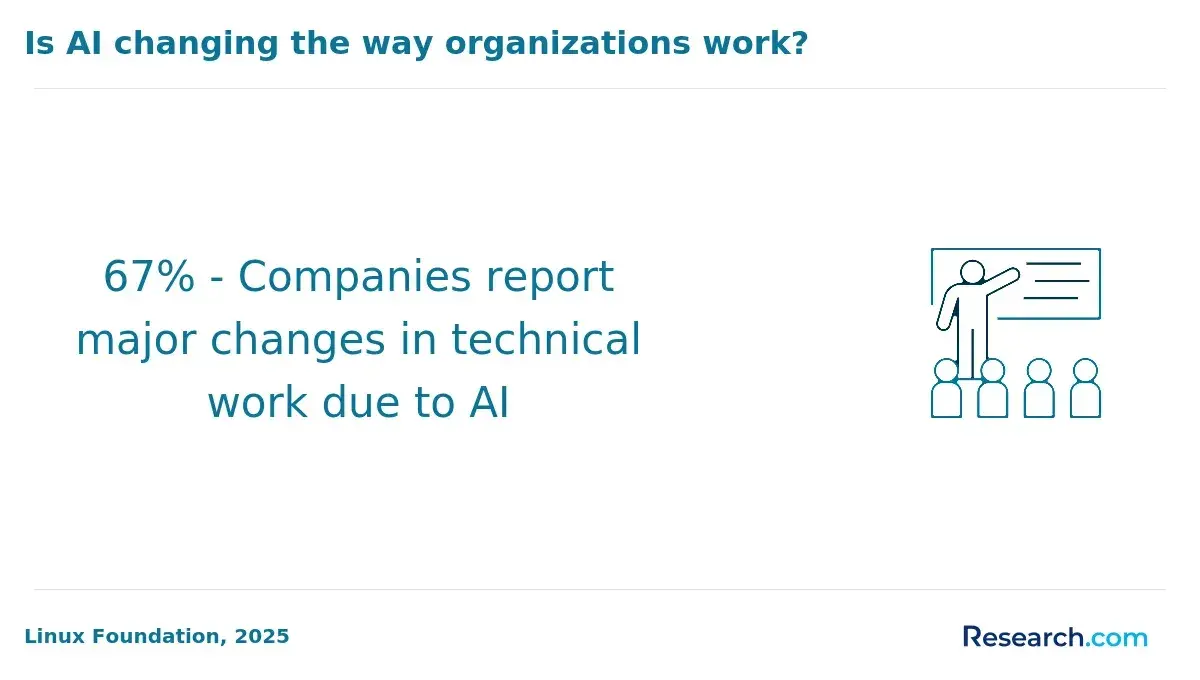
How are colleges partnering with employers to create AI internships, apprenticeships, and pipelines?
Colleges partnering with employers for AI internships have become a strategic way to bridge academic learning with industry demands. Institutions such as Carnegie Mellon University and Georgia Tech offer programs where students engage directly with AI projects at tech companies, combining theoretical knowledge with practical experience.
US higher education AI apprenticeship programs often blend coursework with paid work placements. Northeastern University, for instance, integrates co-op programs with healthcare and finance firms, enabling students to alternate between classroom and real-world environments. This framework helps address employer needs for graduates ready to contribute immediately and allows students to build impactful portfolios.
Some universities establish AI talent pipelines by designing specialized tracks with industry leaders. The University of California system recently launched a consortium with Silicon Valley firms to co-create curricula and fast-track candidates into summer internships and full-time roles, streamlining recruitment and enhancing career prospects.
Employers participating in these partnerships provide up-to-date insights on emerging AI tools and skills, ensuring education stays relevant to evolving market requirements. This collaboration prepares students for roles involving machine learning, natural language processing, and data ethics.
According to the National University's analysis, 30% of current U.S. jobs are projected to be automatable by 2030, and 60% will have tasks significantly modified by AI. These shifts underscore the importance of employer-aligned AI experiential learning for talent to remain competitive.
Students interested in roles as a video game designer also benefit from these evolving AI pathways that emphasize hands-on experience and industry collaboration.
What is the difference between computer science, data science, and dedicated AI degrees?
Computer science, data science, and dedicated AI degrees each have distinct focuses, curricula, and career outcomes. Computer science offers broad foundational knowledge in programming, algorithms, system architecture, and software engineering. It covers core principles applicable across many technology fields, making it versatile for various tech careers. Data science centers on extracting insights from large datasets through statistics, machine learning, data visualization, and data management. It emphasizes practical data analysis over developing new AI algorithms and supports data-driven decision-making in industries like finance and healthcare.
Dedicated AI degrees delve deeply into artificial intelligence theory and applications, covering neural networks, deep learning, natural language processing, robotics, and computer vision. Students gain specialized skills in AI model design, optimization, and deployment, often requiring strong programming and math backgrounds. The differences between AI, data science, and computer science programs become evident in their career paths, with AI geared toward cutting-edge innovation and research.
Enrollment trends reflect rising interest: standalone AI majors at leading U.S. universities have seen growth much faster than traditional computer science programs, according to The New York Times. This highlights a growing demand for specialized AI expertise beyond generalist tech skills. Students considering these fields should align their choice with career goals-broad technical foundation, applied analytics, or advanced AI innovation.
Prospective students seeking an affordable online computer science degree will find a pathway that suits their budget and aspirations.
How do online AI programs compare to campus-based options in quality and outcomes?
Online AI programs and campus-based options generally match in quality, but outcomes vary depending on student goals and program design. Online AI programs offer flexibility with asynchronous coursework and remote collaboration, ideal for working professionals or those balancing other commitments. This format suits learners wanting to upskill without relocating or pausing their careers. Conversely, campus programs often focus on hands-on labs, research, and direct interaction with faculty and peers, which can enhance practical skills and networking opportunities.
Both modalities depend on curriculum rigor and instructor expertise. Accredited online bachelor's and master's degrees usually cover core AI topics like machine learning, data science, and ethics, mirroring on-campus offerings. Differences emerge in employment outcomes: campus programs may provide stronger internship placements and job fairs, while online learners access broader geographic job markets and tend to build stronger self-directed learning abilities.
Employers increasingly prioritize demonstrated skills over program format. According to the Federal Reserve Bank of Atlanta, AI skill demand in associate degree and higher job postings rose from 0.4% in 2010 to 1.4%, extending beyond traditional tech roles. This growth highlights how online AI credentials support diverse fields emphasizing practical skill mastery.
Prospective students should assess specific program features like mentorship, project work, and employer engagement. Those aiming for immersive research may prefer campus programs, while career changers or remote learners often find online options better aligned with their schedules and goals.
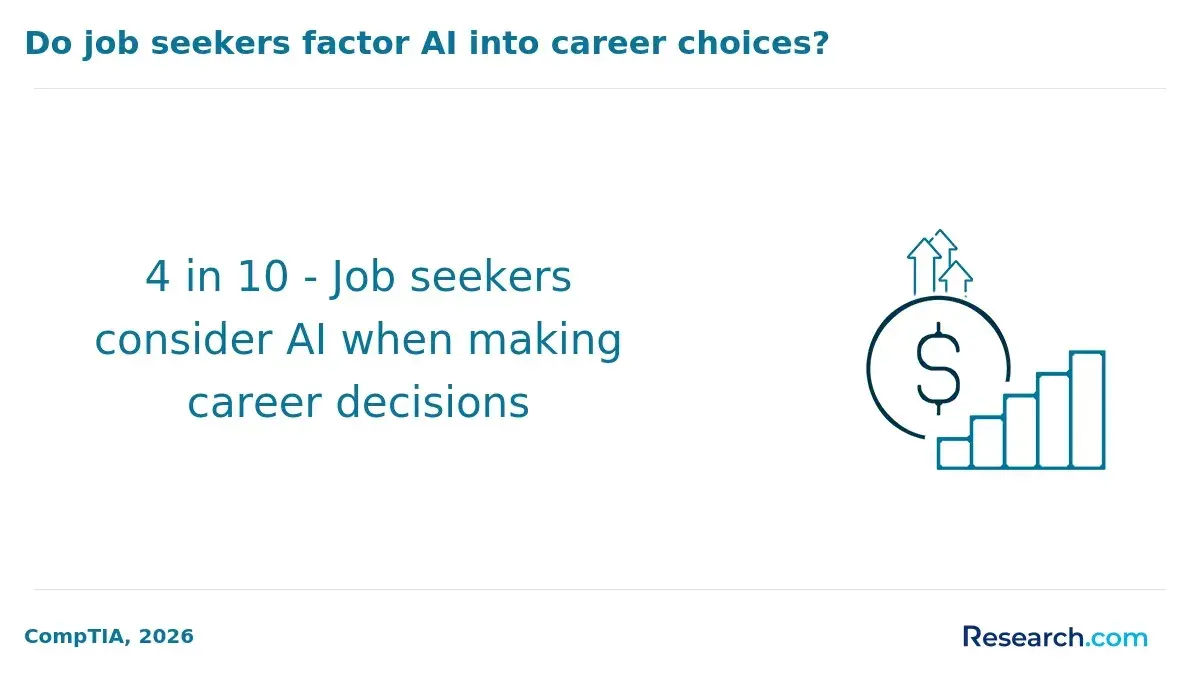
Which accreditation and quality standards should AI and machine learning programs meet?
Programs in artificial intelligence and machine learning must meet strict accreditation and quality standards to ensure graduates gain industry-ready skills. Accreditation from regional bodies recognized by the U.S. Department of Education or the Council for Higher Education Accreditation (CHEA) confirms that curriculum, faculty, and institutional resources meet established benchmarks.
For computing programs, ABET accreditation is particularly valuable. This accreditation shows the program meets rigorous criteria, including curriculum depth, hands-on lab experiences, and ongoing quality improvements. Without ABET or equivalent credentials, programs often receive less recognition from employers.
Curriculum alignment with professional organizations like the Association for Computing Machinery (ACM) and the IEEE Computer Society helps ensure coverage of core competencies such as machine learning algorithms, data ethics, and applied AI systems.
Microcredentials and bootcamps benefit from partnerships with leading tech companies and the inclusion of real-world projects or internships. A 2025 MSN analysis reported that participants in AI upskilling programs linked to major tech firms experienced a 50% higher employability rate compared to comparable graduates who did not participate.
Prospective students should look for clear disclosures on outcomes data, including employment rates, certification success, and internship access, to verify a program's quality beyond promotional claims.
What coursework and skills do students learn in modern AI and machine learning curricula?
Artificial intelligence and machine learning programs emphasize foundational programming skills, including Python and R, which are vital for creating and deploying machine learning models. Students gain expertise in supervised and unsupervised learning algorithms, deep learning frameworks such as TensorFlow or PyTorch, and essential data preprocessing techniques tailored to real-world applications.
Mathematics remains a crucial component, focusing on linear algebra, statistics, probability, and calculus to support algorithm design and evaluation. Curricula often include hands-on projects featuring natural language processing, computer vision, and reinforcement learning, which help develop practical AI solutions across diverse sectors.
A 2025 review by MSN reveals that only about 20% of U.S. colleges mandate courses on AI ethics or responsible AI tool usage, leaving many graduates without key knowledge on bias, fairness, privacy, and societal impact. Top programs are integrating modules on ethical considerations, legal frameworks, and human-centered AI design to better prepare students for these challenges.
Students should seek programs that combine technical skills with critical thinking and real-world problem-solving through capstone projects and internships. This approach fosters collaboration and adaptability in the fast-evolving AI landscape, aligning educational outcomes with employer and societal needs.
How much do AI-related degrees cost, and what financial aid options are available?
Costs for AI-related degrees at U.S. colleges vary widely, typically ranging from $10,000 to over $50,000 annually depending on whether the institution is public or private and whether the student is in-state or out-of-state. For instance, a bachelor's degree in AI or a related field like computer science with an AI focus at a public university may cost about $15,000 per year for in-state students, while private institutions often charge upward of $45,000. Graduate programs emphasizing AI usually fall within similar or higher cost ranges. Additional expenses such as textbooks, supplies, and technology fees can add several thousand dollars annually.
Financial aid is essential for many pursuing AI degrees. Students should explore options such as federal Pell Grants and Stafford Loans, which are available for AI studies. Many universities provide scholarships targeted at STEM or AI-related majors, and private scholarships from tech companies and nonprofit organizations are often accessible. Graduate students may benefit from work-study programs and assistantships that help offset tuition costs.
Demand for AI skills remains robust; early-career job listings and internships explicitly mentioning AI tools or skills account for a notable share of opportunities. Prospective students should consult financial aid offices early, investigate merit- and need-based awards, and consider co-op or internship programs to manage expenses while boosting employability in the AI-driven job market.
What entry-level and advanced careers can AI graduates pursue in the U.S. job market?
Graduates with skills in artificial intelligence can find diverse career opportunities across industries in the U.S. Entry-level positions commonly involve data collection, model training, and algorithm testing, with roles such as AI/ML engineer, data analyst, AI software developer, and business intelligence analyst. These jobs require proficiency in programming languages like Python, familiarity with AI frameworks, and a good grasp of data preprocessing.
Advanced careers often emphasize leadership, innovation, and highly technical expertise. Positions like senior AI engineers, research scientists, machine learning architects, and AI product managers focus on designing complex AI systems or creating AI-driven business strategies. Expertise in deep learning, neural networks, natural language processing, and computer vision is essential, along with project management and effective interdisciplinary communication skills.
The growing importance of AI literacy is clear: by spring 2026, 35% of entry-level roles surveyed by the National Association of Colleges and Employers required AI-related skills, nearly tripling the numbers from fall 2025. This underscores the increasing demand for graduates to combine AI competence with traditional soft skills.
To stay competitive, job seekers should align roles with their training and update technical capabilities regularly. Fields such as healthcare analytics, autonomous systems, finance, and cybersecurity offer promising paths. Emerging opportunities also exist in ethical AI, AI interpretability, and AI policy as organizations prioritize responsible AI adoption.
What are current salary ranges and job outlook projections for AI and machine learning roles?
Salary ranges for AI and machine learning roles vary widely depending on experience and specialization. Entry-level data scientists typically start at $90,000, with junior AI specialists earning between $90,000 and $120,000. Mid-level professionals tend to make $130,000 to $160,000, while senior machine learning engineers and experts in areas like natural language processing or computer vision can earn upwards of $170,000.
The job growth outlook is strong, with the Bureau of Labor Statistics projecting a 23% increase in AI and machine learning roles by 2030-much faster than the average for all jobs. However, this growth mainly applies to advanced and interdisciplinary roles. Automation and AI-driven screening tools have led to a 15-25% decline in demand for junior positions. In 2025, only about 65% of graduates from top AI programs secured employment within six months.
To improve job prospects, students should prioritize internships or co-op opportunities and consider specializing in high-demand subfields such as AI ethics, reinforcement learning, or AI infrastructure. Employers increasingly value candidates who combine AI skills with domain expertise in fields like healthcare and finance.
Other Things You Should Know About Artificial Intelligence
Success in AI requires a strong foundation in programming languages such as Python and R, as well as knowledge of statistics, linear algebra, and calculus. Additionally, skills in machine learning frameworks, data analysis, and problem-solving are essential. Communication abilities and domain-specific knowledge also enhance effectiveness in AI roles.
In 2027, colleges are expanding AI curricula, including practical projects, interdisciplinary courses, and partnerships with tech firms to offer internships. They focus on blending technical skills with ethics and real-world applications to meet industry demands for well-rounded AI professionals.
Ethics play a crucial role in AI development and deployment, focusing on issues such as bias, privacy, transparency, and accountability. Students should understand how to design fair algorithms, protect user data, and consider societal impacts. Many programs now include ethics coursework to prepare graduates for responsible AI practice.
Certifications from recognized organizations like the IEEE, Google, Microsoft, and IBM can enhance an AI professional's credentials. These certifications often focus on specialized skills such as machine learning, deep learning, and cloud-based AI services. They provide practical, up-to-date knowledge that complements academic degrees and can improve job prospects.
References
- University Degree vs AI Bootcamp: Which is Best Career Path? https://agilefever.com/university-degree-vs-ai-bootcamp-which-is-best/
- AI Apprenticeships - Apprenti https://apprenticareers.org/employers/ai-apprenticeships/
- Colleges face a choice: Try to shape AI’s impact on learning, or be redefined by it https://theconversation.com/colleges-face-a-choice-try-to-shape-ais-impact-on-learning-or-be-redefined-by-it-275653
- Paying for a Computer Science Degree | Scholarships, Grants, Loans https://www.computerscience.org/resources/how-to-pay-for-a-degree/
- AI Device Standards You Must Know - ISO 13485, 14971, 62304 https://www.hardianhealth.com/insights/regulatory-ai-medical-device-standards
- Inside the AI Curriculum: The Skills You'll Use on the Job | IWU https://www.indwes.edu/articles/2025/12/inside-ai-curriculum-skills-youll-use-job
- How to Build Strong Employer Partnerships to Support Student Success - UPCEA https://upcea.edu/how-to-build-strong-employer-partnerships-student-success/
- Board of Governors of the Federal Reserve System https://www.federalreserve.gov/econres/notes/feds-notes/educational-exposure-to-generative-artificial-intelligence-20250226.html
- Financial Aid for DeepLearning.AI's course https://community.deeplearning.ai/t/financial-aid-for-deeplearning-ais-course/789918
- Horizon University College, UAE https://www.hu.ac.ae/it-hub/artificial-intelligence/universities-ai-driven-workforce