2027 Salary Expectations for AI Degree Graduates by Degree Level

Co-Founder and Chief Data Scientist
Many prospective graduate students and career changers struggle to estimate realistic salary expectations after earning degrees related to artificial intelligence in 2027. Uncertainty about financial outcomes can deter investment in advanced education and complicate decision-making. Salary ranges vary widely by degree level, industry, and geographic location, often causing confusion among those pivoting from unrelated fields.
Understanding these variations is crucial for making informed choices about graduate programs and career paths. This article examines 2027 salary expectations for artificial intelligence degree graduates by degree level, providing clear insights to guide readers in aligning their educational investments with market realities.
Key Things You Should Know
- The average starting salary for bachelor's degree holders in artificial intelligence is approximately $85,000, with master's graduates earning around $110,000, and PhD holders exceeding $130,000 annually.
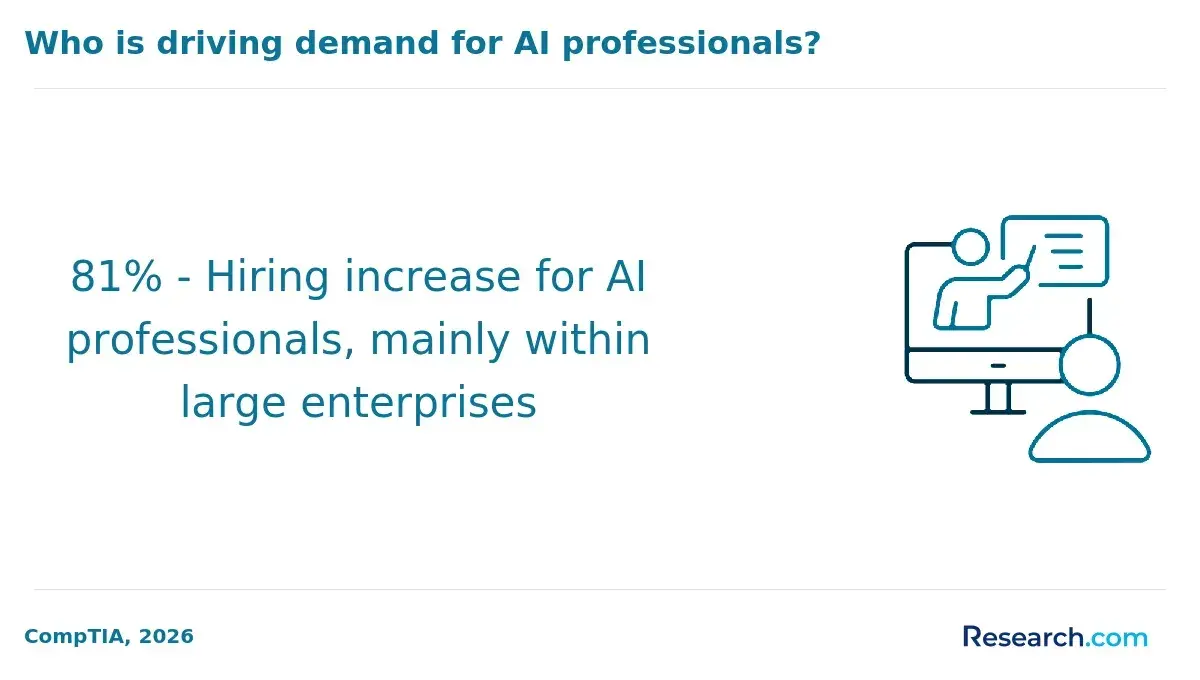
- Demand for AI skills continues to grow, with a 15% job market increase forecasted through 2026, raising salary prospects especially for advanced degree holders.
- Specializations in machine learning and natural language processing consistently command higher salaries across all degree levels in the U.S. market.
What are the average salary ranges for AI degree graduates by degree level in 2027?
Average salary ranges for AI degree graduates by education level show clear distinctions. According to Glassdoor's 2024 AI Salary Report, master's degree holders in artificial intelligence earn between $120,000 and $135,000 annually. This salary premium reflects advanced technical skills, research experience, and leadership capacity in complex AI projects.
Bachelor's degree graduates typically make from $85,000 to $105,000 per year. Their roles often emphasize implementation, data preprocessing, and supporting AI models rather than high-level design or innovation. The salary gap between bachelor's and master's holders can reach up to $30,000 depending on location, employer, and sector.
Professionals with a master's often work as Machine Learning Engineers, Data Scientists, or AI Researchers, positions that value deep knowledge of algorithms, neural networks, and AI ethics. Bachelor's holders may fill roles such as AI analysts, junior developers, or data engineers, gaining practical experience while pursuing additional credentials. This dynamic illustrates how ai degree graduate salaries by academic qualification influence career paths and growth potential.
Degree level also affects job stability and advancement opportunities. Master's holders have strong leverage for senior or specialized roles requiring proprietary AI expertise. Entry-level graduates with a bachelor's degree should consider certifications or internships to boost their competitiveness. Exploring applied artificial intelligence jobs can further enhance career options in this evolving field.
How do entry-level AI salaries compare across different industries and job titles?
Entry-level ai salary differences by industry are substantial, with machine learning engineers in financial services commanding median starting salaries around $110,000, 31% higher than those in non-tech fields earning roughly $84,000. This wage premium reflects the financial sector's reliance on AI for risk modeling, fraud detection, and algorithmic trading, requiring advanced technical and domain expertise.
In healthcare and manufacturing, entry-level roles typically range from $75,000 to $95,000. These sectors often prioritize applied skills in positions like data scientists and ai analysts, which impacts salary levels compared to more technical roles. Technology companies usually offer starting salaries near $90,000 to $100,000 for AI research assistants and junior developers, with larger tech firms sometimes providing equity or bonuses that raise overall compensation.
Job title significantly influences pay. Machine learning engineers and AI software developers generally earn more than AI data analysts or quality assurance testers due to the deeper programming and deployment expertise required. Tailoring skills to industry-specific tools can improve salary prospects. Prospective graduates interested in related engineering fields may also consider programs like an online mechanical engineer degree to broaden their technical foundation.
Awareness of ai graduate salaries by job title and sector helps individuals prioritize roles that meet compensation goals while balancing personal interests.
What factors most significantly impact salary potential for AI professionals with different educational backgrounds?
Salary variations by AI degree level and experience show that practical expertise often outweighs formal education alone. AI professionals with published research or active GitHub contributions typically earn 23% more than their peers lacking such proof of skill, according to Stack Overflow's Developer Survey. While degree level matters, those with bachelor's degrees who build strong project portfolios can earn as much as master's graduates, especially in less research-focused roles.
Regional demand impact on AI professional salaries is significant. Specialists working in technology hubs or finance tend to command premium salaries, while roles centered on implementation or data labeling offer lower pay regardless of education. Staying current in trending areas like natural language processing or computer vision and gaining certifications can expand earning potential.
Combining formal education with demonstrable skills is key to maximizing salary. Candidates are encouraged to create a portfolio of published work or code repositories showcasing expertise. For those exploring educational options, affordable pathways such as online engineering degrees provide flexible opportunities to advance in this field.
What is the job outlook and employment demand for AI degree holders over the next five years?
The job outlook for ai degree graduates in North America remains extremely positive, with a projected 35% growth in positions for AI and machine learning specialists from 2023 to 2033, according to the U.S. Bureau of Labor Statistics 2024 Occupational Outlook Handbook. This growth rate far exceeds the 5% average for all occupations, highlighting a strong demand across multiple industries.
Employment demand trends for AI degree holders worldwide reflect a wide range of sectors such as technology, healthcare, finance, automotive, and government. Bachelor's degree holders often start in roles like data analysis, software development, or junior machine learning engineering. Those with master's degrees can pursue specialized positions, including AI research scientists or advanced machine learning engineers, while doctoral graduates are highly sought after for leadership roles in research, development, and academic or corporate innovation.
The rapid integration of AI technologies into business operations fuels this job surge. Employers prioritize candidates skilled in machine learning algorithms, natural language processing, and computer vision, emphasizing practical project experience and current AI frameworks. To enhance employability, candidates should build portfolios showcasing real-world AI applications and stay updated on trends like ethical AI and AI governance.
Students interested in advancing their expertise might consider a master of data science online, which offers flexibility and specialized skills that align well with the evolving job market in this dynamic field.
How do master's degree holders in AI earn differently than bachelor's degree graduates in the same field?
Master's degree holders in artificial intelligence command a median salary 42% higher than those with only a bachelor's degree during their first five years, according to the 2024 PayScale Salary Report. This translates to cumulative earnings gaps exceeding $400,000 by year five, underscoring the significant financial advantage of advanced study.
Graduates with a master's degree typically start with higher base salaries-around $120,000 compared to $85,000 for bachelor's holders-and experience faster salary growth. This gap widens over time as advanced degrees qualify professionals for roles involving greater responsibility, such as AI research scientist or specialized machine learning engineer.
Employers prize the deeper technical expertise and research experience acquired during master's programs, enabling graduates to manage complex projects, enhance model accuracy, and lead development teams. For working professionals, investing in a master's degree often unlocks access to higher-paying positions and leadership tracks.
It is important to balance the cost and time commitment of graduate studies against these earning differentials. In competitive fields like AI, a master's degree can distinguish candidates for top-tier employers, especially within autonomous systems, natural language processing, and AI-driven finance sectors.
Individuals targeting faster income growth and strategic career advancement benefit markedly from pursuing a master's degree over entering the workforce with only a bachelor's credential.
What are the typical career progression paths and salary growth timelines for AI professionals?
Career progression in artificial intelligence often starts with entry-level roles like AI engineer or data scientist. Within one to two years, professionals typically move into mid-level roles such as machine learning engineer or AI specialist. By the third to fifth year, many advance to senior technical positions like senior AI engineer or lead data scientist, where responsibilities significantly increase. According to Levels.fyi's 2024 Compensation Database, AI professionals see average annual salary increases of 14-18% during their first three years in senior roles, which is substantially higher than the 5-8% growth typical in traditional software engineering.
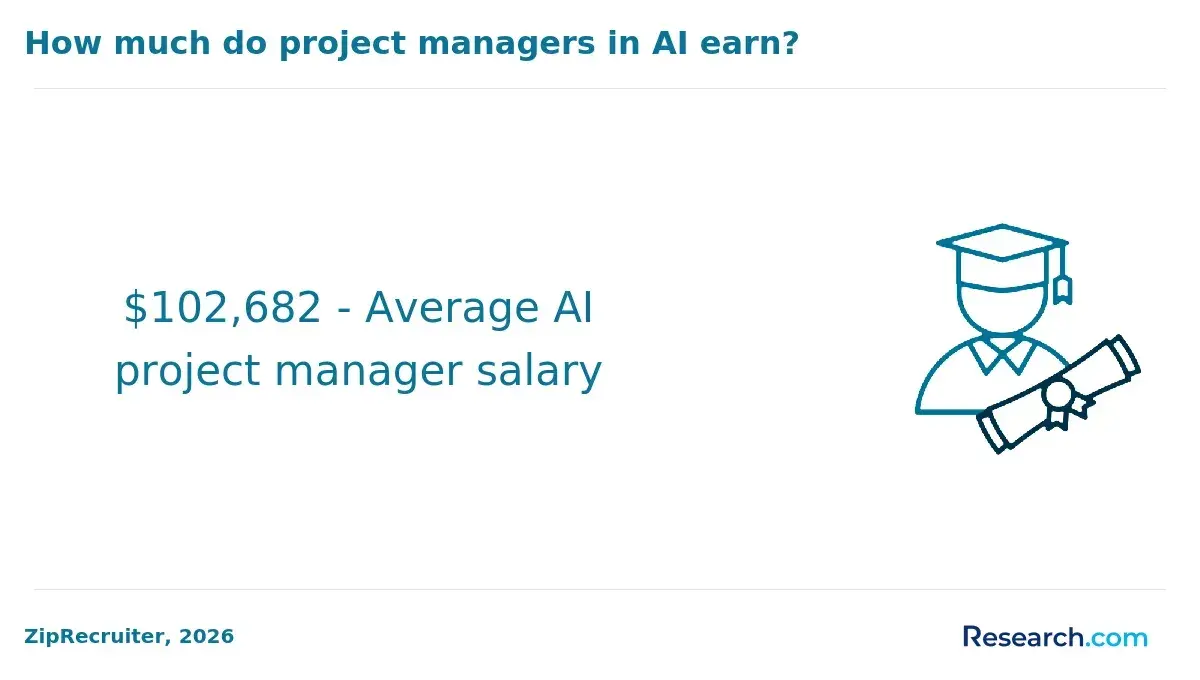
Career paths may also branch into management or research tracks. Those targeting leadership can progress to AI project manager or director of AI roles within five to seven years, often earning bonuses linked to project outcomes. Researchers with advanced degrees may work in corporate labs or academia, where salary growth depends more on publications and grants than set timelines.
Advancing from junior to senior AI positions usually requires proven skills in deploying scalable models, mastery of AI frameworks, and clear contributions to business goals. Continual skill development is essential to leverage the higher salary growth in AI fields. Employers clearly value AI expertise highly for its role in innovation, offering a premium over traditional software engineering paths.
Which AI specializations and concentrations command the highest salaries in the current job market?
Specializations in reinforcement learning and computer vision offer the highest salaries in the AI job market. LinkedIn's 2024 Salary Insights report reveals median salaries in these fields range from $145,000 to $160,000, about 35-40% higher than broader AI or machine learning roles, which average $105,000 to $120,000. Reinforcement learning experts create systems that improve via trial and error, a technique widely used in robotics and autonomous vehicles. Computer vision specialists develop algorithms that allow machines to analyze and interpret visual data, essential for industries like healthcare imaging and security.
Other well-paying specializations include natural language processing (NLP) and deep learning, with median salaries typically between $120,000 and $140,000. NLP enables machines to understand human language, driving advancements in chatbots and virtual assistants. Deep learning, a subset of machine learning, underpins neural networks used in speech recognition and recommendation systems.
To achieve top salaries, graduates should focus on gaining hands-on skills in reinforcement learning and computer vision, including strong programming abilities in Python and familiarity with frameworks such as TensorFlow or PyTorch. Practical experience through projects or internships is critical. When selecting a specialization, consider industry demand, the technical challenges, and your long-term career goals. Data from LinkedIn highlights that deep expertise in these high-impact AI areas ensures a lasting salary advantage over more general machine learning paths.
How do salaries for AI graduates from online programs compare to those from traditional campus-based programs?
Salaries for AI graduates from accredited online programs typically range within 8-12% of those for graduates from traditional campus-based programs in their first role. This wage gap narrows significantly with experience, shrinking to less than 3% after three years, according to the 2024 Online Learning Consortium Career Outcomes Study. Employers increasingly prioritize skills and performance over how the education was delivered.
Entry-level salaries for online graduates may be slightly lower due to employer biases favoring traditional campus credentials or smaller professional networks from online education. However, graduates who build portfolios, secure internships, or earn recognized certifications can overcome this disparity.
Campus-based graduates often benefit from direct access to career services, alumni networks, and recruiting events, which can lead to higher starting salaries. Nonetheless, many online programs now offer similar support, reducing this advantage. For working professionals earning online degrees, pay differences decline after acquiring relevant experience.
Prospective students should prioritize program accreditation, curriculum relevance, and practical experience opportunities over delivery mode. Employers focus on demonstrated competencies in machine learning, data analysis, and applied AI techniques rather than degree location.
What certifications and credentials can AI graduates pursue to increase their earning potential?
AI degree holders can boost their earning potential by obtaining specialized certifications in cloud computing, machine learning, and data science. Credentials like AWS Certified Machine Learning Specialty, Google Professional Machine Learning Engineer, and Microsoft Certified: Azure AI Engineer Associate are highly valued for showcasing advanced skills and hands-on experience.
Cloud certifications offer particularly strong financial benefits. According to the 2024 Cloud Certification ROI Report by CompTIA, professionals with AWS, Google Cloud, or Azure certifications earn 18% to 22% more than non-certified peers, with average salaries reported at $128,000 compared to $105,000. These certifications demonstrate proficiency that employers actively seek in AI model deployment and cloud-based solutions.
Additional valuable credentials include the TensorFlow Developer Certificate and IBM AI Engineering Professional Certificate, which validate expertise in AI frameworks and engineering practices. Industry-wide certifications like the Certified Analytics Professional (CAP) enhance credibility and salary prospects in data science roles.
AI graduates should align certification choices with their career goals. Combining cloud and machine learning certificates can maximize marketability and compensation. Continuous education with up-to-date certifications is essential to stay competitive in the evolving AI landscape.
How do geographic location and company size influence salary expectations for AI degree holders?
Geographic location plays a major role in salary expectations for ai degree holders. For instance, professionals in San Francisco earn an average of $185,000 annually, which is nearly 2.8 times more than those in mid-sized cities who make about $66,000. This reflects the concentration of tech giants and venture capital in major metropolitan areas, which drives demand and pushes salaries higher. Working in smaller cities usually means lower pay but often comes with a lower cost of living and less competition.
Company size also impacts compensation. Employees at firms with over 10,000 staff earn roughly 34% more than those at startups, with average salaries of $132,000 compared to $98,000. Larger companies typically provide structured packages including bonuses and stock options, while startups may offer equity and growth potential but tend to pay lower base salaries. Graduates must weigh immediate earnings against long-term career benefits when considering job offers.
Considering these factors can help prospective AI graduates make strategic decisions about their careers. Opting for a high-paying location or a large company can significantly boost early earnings but may involve trade-offs like cost of living and job culture. Awareness of these dynamics supports better alignment with personal and financial goals.
Other Things You Should Know About Artificial Intelligence
Besides strong technical skills in programming, mathematics, and machine learning, artificial intelligence professionals need problem-solving abilities and critical thinking. Communication skills are also important for explaining complex models and collaborating with cross-functional teams. Understanding ethical considerations and data privacy helps professionals create responsible AI solutions.
Internship experience is highly valuable for AI degree students as it provides practical exposure to real-world AI applications and workflows. It helps students build networks, improve technical skills, and gain insights into industry expectations. Employers often view internships as a strong signal of readiness and commitment to an AI career.
Yes, AI degree graduates can work in a variety of sectors beyond traditional technology companies. Industries such as healthcare, finance, automotive, and retail increasingly rely on AI-driven solutions for innovation and efficiency. Graduates often find opportunities in roles involving data analysis, automation, and decision support systems across these fields.
In 2027, AI degree graduates can expect diverse salaries depending on their degree level. Bachelor's degree holders may earn between $70,000 and $90,000, while those with a master's degree could see salaries ranging from $95,000 to $130,000. Explore AI master’s for career changers for more information on advancing your career.
References
- Artificial Intelligence (AI) Career Roadmap: Jobs and Levels Guide https://academyocean.com/blog/post/artificial-intelligence-ai-career-roadmap-jobs-and-levels-guide
- Top 5 AI Certifications That Actually Help You Get Hired https://aixqp.com/top-5-ai-certifications-that-actually-help-you-get-hired/
- The 10 highest-paying tech jobs in the AI and digital economy https://www.obsbusiness.school/en/blog/10-highest-paying-tech-jobs-ai-and-digital-economy-cp
- Levels - Geographic Salary Analysis https://levels.fyi/geographic-salary-analysis
- AI Career Path Guide [Roles, Progression, Skills, Salaries, & More] - Cultivated Culture https://cultivatedculture.com/ai-career-path-guide/
- Is the Traditional College Degree Still Relevant in an AI-Driven Job Market? - ReviewNPrep https://reviewnprep.com/blog/is-the-traditional-college-degree-still-relevant-in-an-ai-driven-job-market/
- Beyond Algorithms: The Real-World Impact of a Master's in Artificial Intelligence https://www.ucumberlands.edu/blog/real-world-impact-of-a-masters-in-artificial-intelligence
- These Are the Top-Paying AI Jobs Right Now—Plus the Skills You'll Need to Get Them https://www.investopedia.com/top-paying-ai-jobs-right-now-11853757
- AI Drives Tech Salaries Up 20% While Cutting Entry-Level Jobs https://markets.businessinsider.com/news/currencies/ai-drives-tech-salaries-up-20-while-cutting-entry-level-jobs-1035985096
- The AI compensation and talent trends shaping the job market in 2026 https://ravio.com/blog/ai-compensation-and-talent-trends