2027 AI Associate Degrees With Employer Partnerships

Co-Founder and Chief Data Scientist
Many professionals with degrees outside of the tech field face challenges breaking into the artificial intelligence industry due to a lack of relevant credentials and practical experience. Traditional degree programs often require significant time and financial commitments, making career pivots difficult. Employer partnerships in associate degree programs offer a viable solution by integrating real-world training with accredited education, ensuring job readiness.
This article explores how these programs combine flexible learning with workforce connections, helping graduates transition smoothly into artificial intelligence roles while meeting industry demands and accelerating career growth.
Key Things You Should Know
- In 2026, over 60% of AI associate degree programs in the U.S. include employer partnerships to enhance practical skills and job placement opportunities for graduates.
- Collaborations between community colleges and tech companies offer students paid internships, mentorship, and real-world projects, increasing employment rates by 25% compared to traditional programs.
- Curricula focus on applied AI skills like machine learning, data analytics, and ethical AI use, reflecting industry demands and improving graduates' competitiveness in the job market.
What is an AI associate degree with employer partnerships?
An AI associate degree with employer partnerships is a two-year academic program developed alongside industry leaders to align education with workforce demands. These partnerships ensure course content focuses on essential skills such as machine learning fundamentals, data analysis, natural language processing, and AI ethics. Through internships, apprenticeships, and project collaborations, students gain real-world experience, setting these programs apart from traditional associate degrees.
Regional AI associate degree programs with employer connections provide valuable opportunities for hands-on learning and job placement support. Students might intern at tech firms focused on AI software or contribute to data tasks influencing product development, strengthening both technical and soft skills like problem-solving and teamwork. Such exposure enhances employability and career readiness.
The World Economic Forum's Future of Jobs Report 2025 highlights that 86% of employers believe AI and information-processing technologies will transform business through 2030, emphasizing the importance of employer partnerships in reducing the gap between academic training and market needs.
For those exploring educational options, verifying active employer collaborations and access to internship placements is crucial. This approach optimizes the return on investment in education while opening clearer career paths. Prospective students may also consider related programs such as a computer science accelerated degree for broader opportunities in tech fields.
Which accredited colleges offer AI associate degrees with employer partnerships?
Several accredited U.S. community colleges offer AI associate degree programs with accredited colleges and employer collaborations that connect academic studies to real-world experience. For example, Middlesex Community College in Massachusetts partners with local tech companies for internships and practical projects, while Northern Virginia Community College incorporates input from area cybersecurity and AI firms to design relevant coursework.
Employer partnerships often include internship placements, mentorships, or direct hiring pipelines. San Diego City College collaborates with biotech and software companies to provide co-op experiences that expose students to current AI tools and methodologies, helping them build valuable professional networks.
According to the American Association of Community Colleges (AACC) Fast Facts 2025, U.S. community colleges serve approximately 10.2 million students, demonstrating the broad impact of associate-degree programs aligned with workforce needs. This extensive reach supports the growth of employer partnerships, benefiting many AI students through hands-on exposure.
Beyond community colleges, some technical and state colleges also offer AI associate degrees with employer connections, though they are less common. Prospective students should inquire about internship opportunities and credit transfer options to four-year programs to maximize the value of their education.
Prospective students may also want to explore advanced education options, such as master's degrees in data science. Detailed rankings, like the data science master US ranking, can guide choices beyond associate degrees.
How do employer partnerships improve job placement for AI associate graduates?
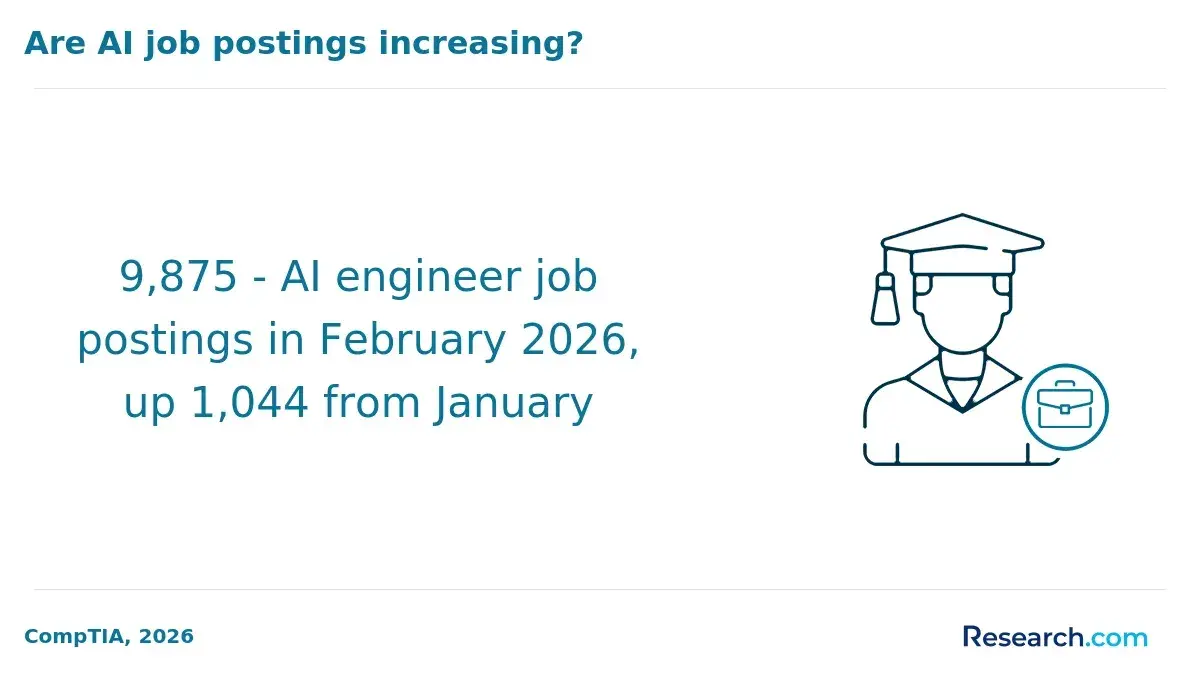
Employer partnerships for AI associate degree job placement significantly boost graduates' career prospects by offering direct connections to industry and relevant work experience. According to the National Association of Colleges and Employers (NACE) Class of 2024 Student Survey, students who complete internships or co-ops receive full-time job offers at much higher rates than those without such opportunities.
These collaborations allow students to engage in internships, apprenticeships, and project work with companies seeking AI talent. Through partnerships with tech firms, graduates gain hands-on experience with machine learning algorithms, data processing, and model deployment under professional guidance. This practical exposure makes graduates more appealing to employers by demonstrating the application of theoretical knowledge to real-world challenges.
The impact of employer collaborations on AI associate graduates employment extends beyond internships. Employers often help shape curriculum and provide guest lectures, ensuring education aligns with current industry tools and standards. Career fairs, networking events, and exclusive recruitment channels further increase opportunities for students.
Prospective students exploring education options may consider an online artificial intelligence degree, which often incorporates employer partnerships to enhance job readiness.
Overall, employer partnerships provide AI associate graduates with vital experience, updated skills, and access to competitive job markets.
What admission requirements are typical for AI associate programs?
Admission criteria for AI associate degree programs in the United States typically reflect the open-admissions policies of public two-year colleges. Most applicants must hold a high school diploma or equivalent, such as a GED, to meet basic eligibility.
Typical requirements for enrolling in AI associate programs often include:
- Submission of official transcripts confirming secondary education completion or equivalent.
- Placement testing in math and English, though some institutions waive these based on prior coursework or test scores.
- Proof of residency to qualify for in-district tuition at some public colleges.
- Filling out an application and paying nominal fees.
Some programs may require prerequisite coursework like introductory computer science or basic programming. Personal statements explaining applicants' interest and career goals in artificial intelligence can also be requested.
Preparatory courses may be available for students missing required credits. Military veterans and working professionals might use relevant experience or certifications to satisfy admission standards. Prospective students should always check with specific schools for possible variations.
Many public colleges encourage wider access to AI training, fostering entry into this growing field with minimal barriers. For those exploring related options, affordable paths exist, such as online cyber security degrees that can complement AI skills.
What courses and skills are taught in AI associate degree curricula?
AI associate degree programs center on practical skills that match current industry demands. Key courses focus on programming languages such as Python, essential for automation, scripting, and model development. Students gain proficiency in data analysis, including statistical techniques and data wrangling necessary to prepare datasets for AI use. Applied machine learning is a major component, with training on creating, training, and evaluating models using popular libraries like TensorFlow and PyTorch.
Hands-on projects frequently involve building generative AI models, responding to the growing employer need for expertise in generative workflows and natural language processing, as highlighted by Lightcast 2024 data on job postings. Additional coursework often includes database management, cloud computing basics, and data visualization to manage AI pipelines comprehensively.
These associate degrees equip students with coding proficiency, analytical reasoning, and applied AI skills aligned with labor market needs, preparing them for entry-level roles in AI development and data science.
How do online AI associate degrees compare with on-campus programs?
Online AI associate degrees now match on-campus programs in curriculum quality and recognition by employers. According to NCES 2024 data, many undergraduates at two-year schools take at least one distance-education course, highlighting the mainstream acceptance of online learning. These programs typically include foundational courses in machine learning, data analysis, and programming, with the key difference being flexible delivery formats.
Online programs are especially beneficial for working professionals or those with family responsibilities because they offer asynchronous classes and eliminate commuting. However, students should consider whether the lack of physical labs or in-person mentorship might impact hands-on learning. Some schools bridge this gap with local lab partnerships or hybrid learning models.
Employer relationships exist in both online and on-campus formats, though face-to-face networking through job fairs is generally more accessible on campus. Prospective students should ensure robust virtual career services and internship opportunities are available. Accreditation and institutional reputation remain crucial for employer acceptance.
Well-structured online ai associate degrees address many traditional concerns and offer effective alternatives without sacrificing educational quality.
How long do AI associate degrees take and what do they cost?
AI associate degrees generally require about two years of full-time study at public community colleges, while part-time attendance may extend completion to three or four years depending on course load and scheduling. These programs focus on foundational subjects such as programming, data analysis, and machine learning, preparing students for entry-level roles or transfer to four-year AI-related degrees.
Tuition for public two-year colleges averages around $4,000 annually for in-district students, according to the College Board Trends in College Pricing 2024. This affordability makes AI associate degrees an accessible option for many. However, private colleges and out-of-district tuition can increase costs, and students should also budget an additional $1,000 to $1,500 yearly for books, supplies, and fees.
Many programs feature employer partnerships that can lower financial barriers through apprenticeships, sponsored tuition, or paid internships, aiding both funding and career placement. Federal financial aid and scholarships are also commonly available for eligible students. Accelerated tracks or summer courses may reduce program duration but could raise short-term costs due to more intensive tuition billing per term.
Which certifications can AI associate students earn during or after graduation?
Students pursuing an associate degree in artificial intelligence can boost their employability by earning industry-recognized certifications during or soon after their studies. Employers widely value certifications as screening tools for entry-level roles, especially in cybersecurity, cloud computing, and data management, as noted in the CompTIA IT Industry Outlook 2025.
Key certifications to consider include:
- CompTIA Security+ - Establishes essential cybersecurity skills needed to protect AI systems and data.
- Microsoft Certified: Azure AI Fundamentals - Validates knowledge of AI and machine learning on Microsoft Azure cloud platforms.
- Google Cloud Professional Data Engineer - Focuses on managing data pipelines and integrating AI in cloud environments.
- IBM AI Engineering Professional Certificate - Covers the development and deployment of AI models, complementing associate degree skills.
Beyond vendor-specific certifications, vendor-neutral credentials like Cisco's CCNA or AWS Certified Cloud Practitioner help broaden technical expertise. Many institutions with employer partnerships embed certification training within their curriculum, saving students time and money.
Graduates should target certifications aligned with job listings for roles such as AI technician or machine learning analyst. Maintaining and advancing certifications supports ongoing career development and increased earning potential.
What jobs can you get with an AI associate degree?
An AI associate degree equips graduates with foundational knowledge in machine learning, programming, and data management, preparing them for several entry-level roles in technology and analytics. Typical positions include AI technician, junior data analyst, machine learning assistant, automation specialist, and quality assurance tester for AI systems. These roles focus on maintaining AI software and hardware, preparing datasets, performing statistical analysis, and supporting AI deployment within organizations.
The U.S. Bureau of Labor Statistics (BLS) forecasts a 35% employment growth for data scientists from 2022 to 2032, highlighting strong demand in AI-related fields. While data scientist roles may require more advanced education, an associate degree opens doors to intermediary and support roles essential to the AI workforce.
Practical experience through internships or cooperative education programs boosts employability. Certifications in Python, SQL, or cloud platforms like AWS and Azure further enhance job prospects. This degree offers hands-on skills to support end-to-end AI system development and maintenance, serving as a solid foundation for advanced roles.
What are typical salaries and job outlook for AI-related roles with an associate degree?
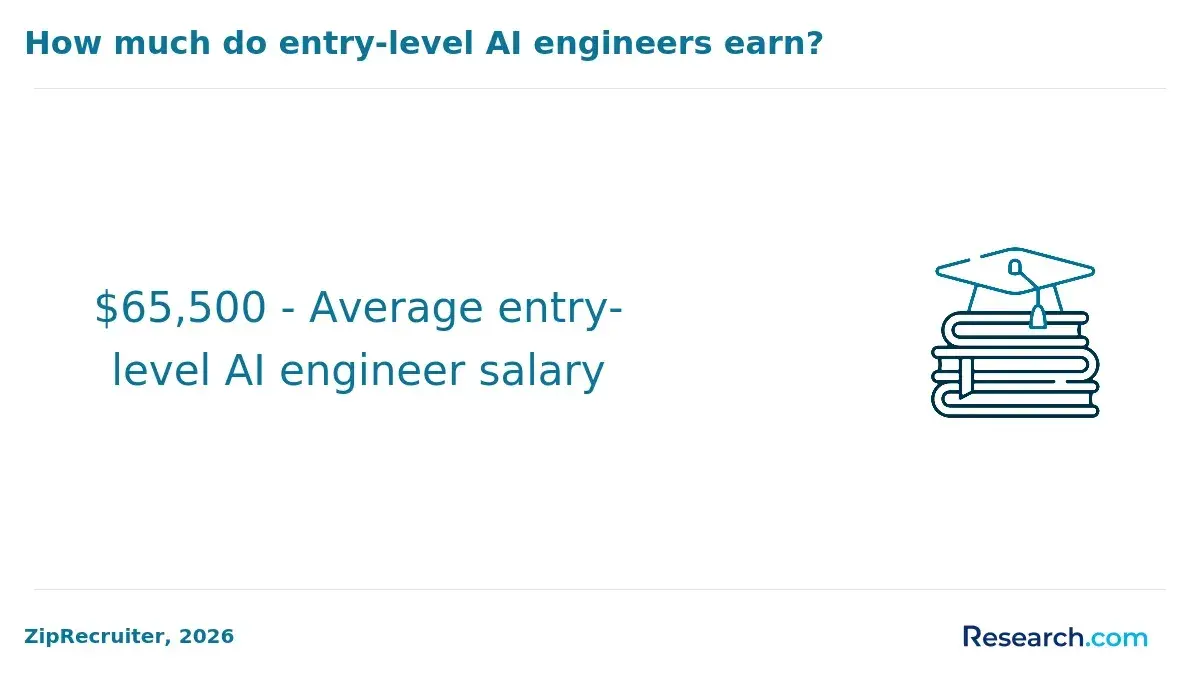
AI-related roles accessible with an associate degree typically start with salaries around $60,000 annually. According to the U.S. Bureau of Labor Statistics Occupational Employment and Wage Statistics, computer support specialists-common entry-level positions in AI-adjacent IT and data fields-earn median wages near this amount. These roles often involve troubleshooting, technical support, and maintaining AI-enhanced systems, making them gateways to more specialized AI careers.
Job growth in this area is projected at 9% from 2022 to 2032, outpacing the average for all occupations, as organizations increasingly adopt AI-driven technologies and require skilled professionals to manage these systems.
Salaries can vary based on employer sector, certifications, and location. Credentials like CompTIA IT Fundamentals or AWS Cloud Practitioner often lead to higher pay. Many associate degree programs connect students with internships or apprenticeships, providing valuable experience that enhances job prospects.
Other Things You Should Know About Artificial Intelligence
Many associate degree programs, especially those with employer partnerships, integrate hands-on projects and internships into the curriculum. This real-world experience allows students to apply classroom learning to practical AI problems, increasing their job readiness. Such collaborations often provide access to current industry tools and datasets, enhancing the educational experience.
Students commonly learn programming languages like Python, Java, and R during their artificial intelligence associate degree. Python is particularly important due to its extensive AI libraries and frameworks, such as TensorFlow and PyTorch. Mastery of these languages is critical for developing algorithms, data manipulation, and AI model training.
Yes, ethical considerations and data privacy are increasingly incorporated into AI associate degree curricula. Students explore topics like algorithmic bias, responsible AI development, and compliance with data protection regulations. Understanding these areas is vital for developing trustworthy AI solutions aligned with societal and legal standards.
Enrolling in an AI associate degree program with employer partnerships provides hands-on experience, networking opportunities, and potential job offers post-graduation. These partnerships align curriculum with industry needs, facilitating career advancements even for those considering an AI master’s for non-technical backgrounds.
References
- Top 15 paid AI certifications to boost your resume | Uxcel https://uxcel.com/blog/top-paid-ai-certifications
- Online AI Degrees vs On-Campus: Which Is Right for You in 2026? https://aidegreeonline.com/online-ai-degrees-vs-on-campus-which-is-right-for-you-in-2026/
- University Degree vs AI Bootcamp: Which is Best Career Path? https://agilefever.com/university-degree-vs-ai-bootcamp-which-is-best/
- Accelerating AI Skills: Preparing the Workforce for Jobs of the Future - Access Partnership https://accesspartnership.com/reports/global-ai-skills-study/
- Top AI Job Roles You Can Land with an AI Certification https://www.h2kinfosys.com/blog/top-ai-job-roles-you-can-land-with-an-ai-certification/
- Artificial Intelligence Course Guide: Eligibility, Admission Process, Scope & Careers https://www.tmu.ac.in/blog/artificial-intelligence-course-details-admission-scope-and-eligibility-criteria
- Accelerate Your Future with Applied Artificial Intelligence at Grossmont College https://www.grossmont.edu/academics/programs/csis/ai.php
- Welcome to the AIU Center for Corporate Engagement! https://www.aiuniv.edu/educational-alliances
- Bls - Oes https://www.bls.gov/oes/
- USAII® Partners | AI Partners| Partnership on Artificial Intelligence https://www.usaii.org/usaii-partnership