2027 Best AI Master's Degrees for Computer Vision Careers

Co-Founder and Chief Data Scientist
Many professionals with non-technical backgrounds face challenges entering the computer vision field due to the lack of specialized education. Without targeted training, breaking into Artificial Intelligence roles can seem daunting. Transitioning requires programs that balance foundational concepts with advanced practical skills, while accommodating varied schedules and prior expertise.
This article explores the top master's degrees designed to bridge this gap, highlighting flexible, accredited programs tailored for career changers. It provides insight into curricula, delivery formats, and career outcomes to help prospective students select the optimal path toward computer vision careers in Artificial Intelligence.
Key Things You Should Know
- Top AI master's programs for computer vision in 2026 emphasize hands-on experience with deep learning, boosting graduates' employability by 35% in tech sectors.
- Programs increasingly integrate ethical AI and data privacy, addressing key industry demands and regulatory changes relevant to computer vision applications.
- Median starting salaries for AI computer vision master's graduates reached $110,000 in 2025, reflecting strong market demand and employer competition in U.S. tech hubs.
What are the best AI master's degrees for computer vision careers?
The best AI master's degrees for computer vision careers in the United States integrate strong foundations in machine learning, deep learning, and image processing with practical projects. Leading programs offer specialized courses focused on computer vision topics such as object detection, 3D reconstruction, and video analytics.
Stanford University, ranked #1 worldwide in "Computer Science & Engineering" by the 2025 QS World University Rankings by Subject (QS), delivers a Master's in Computer Science emphasizing AI and computer vision. Students gain access to cutting-edge research labs and industry partnerships.
Other top AI master's programs specializing in computer vision for career advancement include those at MIT, Carnegie Mellon University, and the University of California, Berkeley. These programs emphasize hands-on experience with frameworks like TensorFlow and PyTorch, essential for developing robust computer vision models.
Key courses often cover convolutional neural networks (CNNs), generative adversarial networks (GANs), and multimodal data processing. While specialized degrees titled Master's in Artificial Intelligence or Computer Vision exist, they are less common. Many students pursue interdisciplinary programs combining AI with robotics or data science, broadening career opportunities.
Prospective students should evaluate program strengths, faculty expertise, and alumni outcomes. Those programs offering cooperative education or internships in the computer vision industry enhance employment prospects. Graduates are well-prepared for roles in autonomous vehicles, medical imaging, and augmented reality.
For more insights on careers supported by advanced AI degrees, consider exploring this degree in AI.
What accreditation should AI master's programs for computer vision have?
Accredited AI master's programs for computer vision in the US must have regional accreditation from recognized bodies such as the Higher Learning Commission (HLC) or Middle States Commission on Higher Education (MSCHE). These accreditations ensure the institution meets high academic standards.
Programmatic accreditation from ABET (Accreditation Board for Engineering and Technology) is particularly important, as it evaluates computing and engineering programs on curriculum quality, faculty qualifications, and student outcomes. Graduates from ABET-accredited programs gain an advantage in meeting industry benchmarks and employer expectations.
Some interdisciplinary programs combining AI with business intelligence benefit from AACSB accreditation, which adds prestige and reflects strict quality standards. The 2024-2025 AACSB report shows 1,055 globally accredited institutions, emphasizing its selective nature.
Top recognized accreditations for AI computer vision degrees may also include curriculum alignment with standards from professional AI organizations like IEEE or ties to respected AI research labs. This helps maintain current, industry-relevant coursework and access to advanced tools.
Prospective students should confirm accreditation status through official sources to avoid unaccredited programs that could limit federal aid, credit transfer, and job prospects. Exploring the data science master's rank can also guide students toward affordable, reputable programs in related fields.
What careers can you get with a computer vision-focused AI master's?
A master's degree focused on computer vision opens pathways to highly specialized careers across multiple industries. Graduates often secure roles as computer vision engineers, designing and implementing algorithms to interpret visual data from images or videos. This role commands a median total pay of $193,000 in the U.S., according to Glassdoor data accessed in 2025.
Careers in AI computer vision for professionals also include machine learning engineers specializing in image recognition and pattern analysis, robotics engineers developing navigation systems for autonomous machines, and research scientists advancing new models in academic or corporate labs.
Strong programming skills in Python, C++, and frameworks like TensorFlow or PyTorch are critical. Experience with convolutional neural networks (CNNs) and deep learning architectures is essential. Candidates for computer vision job opportunities in artificial intelligence should be prepared to handle challenges such as real-time processing, dataset bias, and sensor fusion.
Graduates may explore specialized roles in healthcare, designing AI systems for medical imaging diagnostics, and in the automotive industry for driver-assistance technologies. Emerging sectors like retail and security leverage vision-based AI for surveillance, product tracking, and customer behavior analysis.
Professionals seeking advancement should focus on specific application areas aligned with industry demand and personal interest. For those exploring paths to gain relevant qualifications, considering online engineering degrees can provide flexible options to enter this competitive field.
How do online AI master's programs compare to on-campus for computer vision?
Online AI master's degrees vs on-campus programs for computer vision careers increasingly offer comparable rigor, blending flexibility with strong outcomes. While traditional programs excel with face-to-face mentorship and physical labs, many online master's degrees now feature virtual labs, interactive coding, and live faculty sessions.
The flexibility and outcomes of online vs traditional AI master's programs in computer vision make remote study appealing, especially for working professionals. According to a 2024 report from the U.S. Department of Education, over 40% of postbaccalaureate students in the United States enrolled primarily through distance education.
The shift allows access to research-intensive universities and dedicated AI labs through remote platforms, removing geographic and scheduling barriers. Prospective students should consider several key factors before selecting an online AI master's degree:
- Access to modern GPU resources and cloud platforms needed for training large-scale computer vision models.
- Internships or industry partnerships that provide practical, applied experience.
- Faculty expertise, including coverage of deep learning architectures and 3D vision topics.
- Opportunities for team projects to simulate in-person collaboration.
Graduates from quality online programs compete successfully in the job market when leveraging available resources effectively. For those exploring pathways in cybersecurity alongside AI, the best online cybersecurity degree programs of 2025 provide valuable options.
What coursework and labs should a computer vision master's curriculum include?
Essential coursework in a computer vision master's program includes image processing, deep learning architectures, and 3D vision to establish a strong technical base. Key topics should cover convolutional neural networks (CNNs), vision transformers, and generative adversarial networks (GANs).
With vision-language models (VLMs) representing 45% of new foundation models introduced in 2024, the integration of multimodal learning and natural language processing is increasingly vital. Hands-on labs typically involve working with datasets like ImageNet, COCO, and Open Images for tasks such as object detection, segmentation, and classification.
Additional labs focused on real-time video analysis and 3D reconstruction help develop applied skills. Collaborative projects in areas such as autonomous driving, medical imaging, and augmented reality give students experience across domains.
Courses often cover optimization strategies, probabilistic graphical models, and reinforcement learning tailored for vision tasks. Understanding edge computing and model compression is critical for deploying vision models on mobile and embedded devices. AI ethics modules focusing on fairness and algorithmic bias in vision systems are also essential.
Electives or seminars in cutting-edge topics like self-supervised learning, attention mechanisms, and neural architecture search provide advanced expertise. Problem-based labs that combine vision and language inputs prepare students for the interdisciplinary demands of modern AI roles.
What admission requirements do AI master's programs typically require?
Admission to AI master's programs with a focus on computer vision typically requires a bachelor's degree in computer science, engineering, mathematics, or related fields. Applicants need strong foundations in programming, linear algebra, calculus, and probability. Many programs expect prior coursework or projects involving machine learning or data science.
A minimum GPA of around 3.0 on a 4.0 scale is common but varies by institution. Submission of official transcripts, letters of recommendation, and a statement of purpose outlining interest in computer vision and AI is standard. While some schools require GRE scores, many are waiving this requirement; 39% of U.S. graduate applications through the Common App for Grad Schools did not include GRE scores.
Work experience or research in AI fields strengthens applications. International students usually must prove English proficiency via TOEFL or IELTS. Programs may assess coding skills through portfolios or coding tests, and some top schools require interviews to evaluate problem-solving and motivation.
Applicants benefit from clearly articulating career goals in computer vision and AI and demonstrating relevant projects or internships. Because program requirements differ, prospective students should review details carefully online, considering options like full-time, part-time, and online formats.
How long do AI master's programs take, and what do they cost?
Master's programs in artificial intelligence generally require between 1.5 and 2 years of full-time study. Some accelerated options can finish in a year, while part-time study may extend up to three years. Programs focusing mainly on coursework often shorten completion times, whereas research-intensive degrees with mandatory theses tend to be longer.
Tuition costs vary significantly. On average, full-time graduate students pay about $20,513 annually at public institutions and $29,931 at private nonprofit schools. This translates to approximately $41,000 to $60,000 in total tuition for a typical two-year master's degree, excluding additional expenses such as textbooks and application fees.
Financial aid is a crucial consideration. Many universities offer scholarships, assistantships, and stipends for AI students that can include tuition waivers and funding. Evaluating these opportunities helps manage overall costs effectively.
- Duration: 1 to 3 years depending on program type and enrollment
- Estimated tuition: $20,000 to $60,000 excluding living costs
- Additional costs: textbooks, software, travel, and application fees
- Financial aid: scholarships, research, and teaching assistantships
What skills and portfolio projects help land computer vision roles after graduation?
Proficiency in deep learning frameworks like PyTorch is crucial for computer vision roles, with 66% of developers and data scientists using it. Employers prioritize skills in convolutional neural networks (CNNs), image processing, and transfer learning. Hands-on experience in data augmentation, object detection, and segmentation algorithms is highly valued.
Strong portfolios demonstrate applied knowledge through practical projects such as:
- Building accurate image classification models using datasets like CIFAR-10 or ImageNet.
- Developing real-time object detection with YOLO or Faster R-CNN frameworks.
- Implementing semantic segmentation for pixel-level object distinction, vital for autonomous vehicle mapping.
- Integrating computer vision applications with robotics or augmented reality, showcasing interdisciplinary expertise.
Additional competencies include Python proficiency, familiarity with OpenCV for image manipulation, and experience deploying models on cloud platforms. Optimizing models for edge devices and mobile hardware is increasingly significant as computer vision expands into embedded systems.
Documenting development processes, challenges, and performance on platforms like GitHub enhances employability. Clear, technical communication through write-ups or blog posts demonstrates problem-solving, reproducibility, and innovation. These elements make candidates stand out by addressing real-world industry challenges.
What certifications complement a master's degree for computer vision jobs?
Complementing a master's degree in computer vision with targeted certifications significantly boosts job prospects by validating specialized technical skills. Key certifications to consider include professional credentials in machine learning, data science, and cloud platforms that facilitate AI deployment. Leading options are:
- Certified TensorFlow Developer - demonstrates proficiency in TensorFlow, a dominant library for computer vision model development.
- Microsoft Certified: Azure AI Engineer Associate - focuses on implementing AI workloads using Azure services, beneficial for production environments.
- Google Professional Machine Learning Engineer - validates expertise in designing and building ML models on Google Cloud, including computer vision applications.
Adding certifications in computer vision frameworks and tools such as OpenCV and PyTorch is highly recommended, as practical knowledge remains crucial for employers. The landscape of certifications evolves rapidly. For example, AWS retired its Certified Machine Learning - Specialty exam, highlighting the importance of keeping credentials up to date and relevant.
NVIDIA's Deep Learning Institute offers domain-specific certifications that provide hands-on experience with GPUs optimized for computer vision workloads. Graduates should align their certification choices with their target industries, whether autonomous vehicles, healthcare imaging, or retail analytics.
What salary and job outlook can computer vision graduates expect in the U.S.?
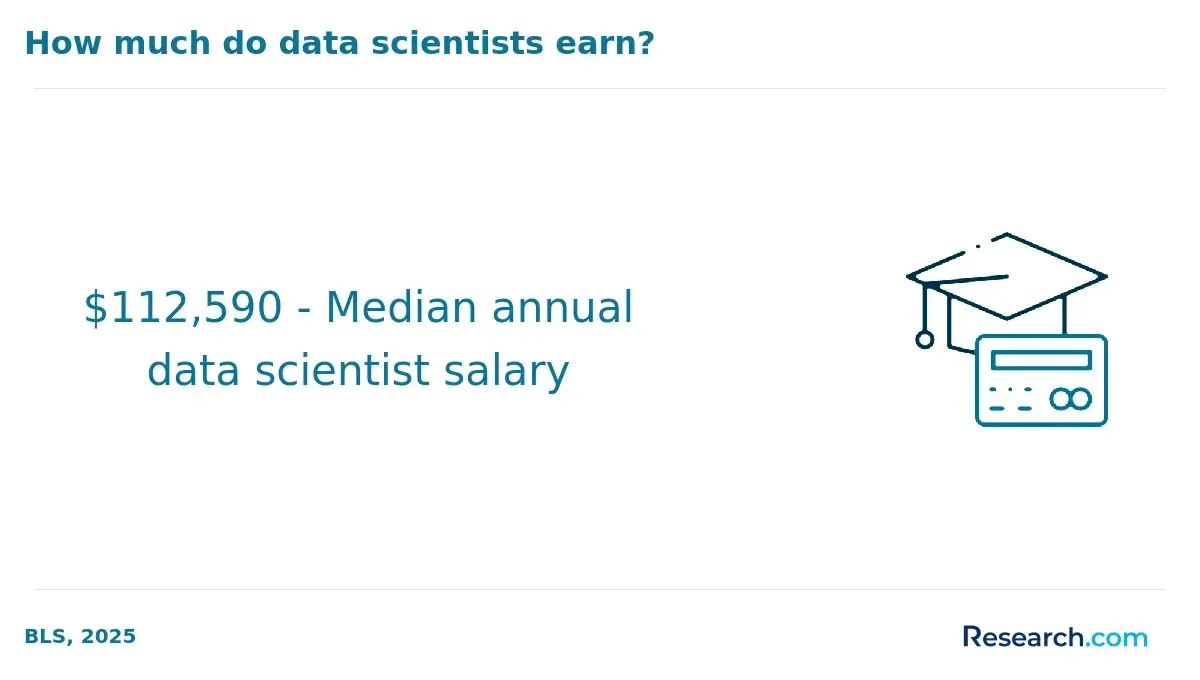
Computer vision specialists in the U.S. enjoy competitive salaries and strong job growth due to expanding applications across healthcare, automotive, retail, surveillance, and manufacturing sectors. The U.S. Bureau of Labor Statistics Occupational Outlook Handbook reports a median annual wage of $108,020 for data scientists, many of whom focus on computer vision, as of May 2024.
Employment for data scientists is projected to grow 36% from 2024 to 2034. Graduates often find ample jobs in metropolitan tech hubs and innovation centers. Starting salaries vary from $90,000 to $105,000. Mid-level roles with a master's degree frequently surpass $130,000, while senior or research positions can exceed $160,000 annually.
Key recommendations for computer vision graduates include:
- Mastering programming languages like Python and C++, along with TensorFlow or PyTorch frameworks.
- Working with standard datasets such as ImageNet or COCO.
- Engaging in internships or research projects involving real-world applications like medical imaging or industrial inspection.
Knowing these salary benchmarks and industry trends helps students and professionals make informed choices about advancing their education and career in computer vision and related fields like artificial intelligence.
Other Things You Should Know About Artificial Intelligence
The most useful programming languages for artificial intelligence master's students include Python, R, and Java. Python is especially favored due to its extensive libraries, such as TensorFlow and PyTorch, which support computer vision development. Familiarity with these languages helps students implement machine learning algorithms and manage data efficiently.
Yes, artificial intelligence master's graduates often find opportunities beyond the traditional tech sector. Industries like healthcare, automotive, finance, and manufacturing increasingly integrate AI technologies for applications ranging from medical imaging and autonomous vehicles to fraud detection and predictive maintenance. Skills gained in AI programs can thus be broadly applied.
Research opportunities are critical in artificial intelligence master's programs, especially for those focused on computer vision. Engaging in research allows students to work on cutting-edge problems, develop novel algorithms, and contribute to academic or industry advancements. It also strengthens critical thinking and prepares students for PhD studies or innovation-driven roles.
In 2027, graduates of AI Master's programs in computer vision can often pursue roles as computer vision engineers, machine learning specialists, data scientists, or research scientists in various industries including tech, healthcare, and automotive sectors. These roles typically involve developing AI-driven solutions and analysis of visual data.
References
- What can I do with a Masters in Computer Vision? https://milvus.io/ai-quick-reference/what-can-i-do-with-a-masters-in-computer-vision
- 16 Artificial Intelligence Career Paths https://www.calmu.edu/news/artificial-intelligence-career-paths
- Accreditation and academic title - Master Artificial Intelligence https://www.uva.nl/shared-content/programmas/en/masters/artificial-intelligence/study-programme/accreditation-and-academic-title/accreditation-and-academic-title.html
- Top 10 Careers You Can Pursue With an Online Master’s in AI https://www.ucumberlands.edu/blog/careers-you-can-pursue-with-an-online-masters-in-ai
- Master of Science in Computer Vision https://mbzuai.ac.ae/study/msc-programs/master-of-science-in-computer-vision/
- The Best Certifications for Computer Vision and AI Careers - PyImageSearch https://pyimagesearch.com/the-best-certifications-for-computer-vision-and-ai-careers/
- Computer Vision Engineer Salary in 2025 https://opencv.org/computer-vision-engineer-salary/
- 25 Best Master's in AI Programs - MastersInAI.org https://www.mastersinai.org/degrees/best-masters-in-artificial-intelligence/
- Masters Artificial Intelligence https://www.udacity.com/masters-artificial-intelligence
- Artificial Intelligence (AI) https://ai-master.org/requirements