2027 Math Skills You Need for an AI Bachelor's Degree

Co-Founder and Chief Data Scientist
Moving into a bachelor's degree focused on artificial intelligence in 2027 requires strong math skills, yet many students face challenges adapting after unrelated undergraduate studies. Without a clear grasp of key mathematical concepts, progressing through AI coursework can become overwhelming, slowing career advancement. This gap often hinders understanding of algorithms, data structures, and machine learning models essential to the field. Identifying which math skills to prioritize allows students to build a solid foundation efficiently.
This article outlines the crucial math competencies needed for an AI bachelor's degree and offers guidance to help prospective students succeed in this competitive and evolving discipline.
Key Things You Should Know
- Mastery of linear algebra and calculus is essential, as over 70% of AI bachelor programs emphasize these areas to understand algorithms and model training.
- Probability and statistics underpin machine learning, with 65% of AI curricula in 2025 incorporating advanced statistical methods for data interpretation and decision-making.
- Proficiency in discrete mathematics develops logical reasoning and algorithm design skills, crucial for programming AI systems and optimizing performance.
What math skills are required to succeed in an AI bachelor's degree program?
To excel in a 2027 AI bachelor's degree, students must develop strong mathematical foundations for artificial intelligence bachelor's degree studies. Mathematical reasoning is vital, as it supports logical problem-solving and algorithm design. The 2024 LinkedIn Skills Index highlights mathematical reasoning and statistical analysis as top technical skills needed in AI roles.
Statistical analysis helps students understand data distributions, conduct hypothesis testing, and predict outcomes from datasets. Proficiency in probability theory is essential to model uncertainty, a key aspect of machine learning and AI decision-making. These essential math topics for succeeding in an AI undergraduate program also include linear algebra, which underlies neural networks and computer graphics. Mastery of matrix operations, vector spaces, and eigenvalues enables efficient data manipulation and algorithm optimization.
Calculus, especially multivariable calculus, is critical to grasping changes in optimization functions and gradient-based learning methods applied in AI model training. Discrete mathematics, including set theory, combinatorics, and graph theory, enhances algorithm design and understanding of complex data structures like trees and networks.
Practical application of these math skills in real AI challenges, such as regression models or classification algorithms, bridges theory and practice. Employers expect graduates to show strong quantitative reasoning and statistical skills to perform effectively. Prospective students seeking programs that blend rigorous math training with applied AI may consider an accelerated cs degree as a pathway to fast-track their education and career advancement.
Which mathematics courses are typically included in an AI degree curriculum?
Mathematics courses in AI bachelor programs commonly cover linear algebra, calculus, probability and statistics, discrete mathematics, and optimization. Linear algebra is fundamental for machine learning algorithms and computer vision, yet 68% of entry-level AI practitioners show proficiency gaps in this area, leading to frequent remediation in corporate training. Emphasizing linear algebra and calculus for artificial intelligence degree students provides essential skills for understanding neural networks and gradient-based optimization methods.
Calculus instruction often includes multivariable calculus and differential equations, helping students grasp concepts like gradient descent. Probability and statistics courses explore Bayesian reasoning, distributions, hypothesis testing, and statistical inference, all critical for data analysis and uncertainty quantification in AI systems. These probability and statistics courses in AI bachelor programs prepare students to handle real-world data challenges effectively.
Discrete mathematics topics such as graph theory, logic, combinatorics, and set theory support understanding algorithms and data structures vital for AI programming. Optimization studies focus on convex optimization and numerical methods to improve model performance and resource allocation. Some programs offer electives like information theory or stochastic processes to deepen mathematical knowledge.
Students aiming to advance in AI careers should prioritize strengthening linear algebra and probability skills, as these are the areas where most face challenges academically and professionally. Prospective students can review program details carefully and also consult resources like the data science master degree ranking to find affordable and comprehensive options that meet these educational needs.
How do algebra, calculus, and linear algebra apply to artificial intelligence studies?
Algebra is central to expressing relationships and functions that underpin artificial intelligence algorithms. It enables the manipulation of variables and equations vital for designing AI logic and representing feature transformations. The role of linear algebra concepts in artificial intelligence degree programs is critical, as linear algebra provides tools for processing data in vectors and matrices. Neural networks rely heavily on matrix operations, such as multiplication and eigenvector calculations, to perform pattern recognition and dimensionality reduction.
Calculus is indispensable in optimizing AI models through gradient-based methods. About 94% of production AI systems in Fortune 500 firms use calculus-based gradient descent techniques to minimize loss functions and enhance accuracy, reflecting calculus's importance in iterative training via derivatives and partial derivatives. Mastery of multivariable calculus aids in navigating complex cost landscapes, especially in deep learning.
Students pursuing AI should develop strong skills in algebraic manipulation to support logic and representation, linear algebra for data transformation and model structures, and calculus for optimization and learning processes. Practical coursework often includes solving systems of linear equations, matrix decompositions, and differentiation of multi-parameter functions. To explore affordable options in related fields, prospective students may consider researching video game programs that incorporate these mathematical foundations.
The application of algebra and calculus in artificial intelligence studies is fundamental to effective algorithm design and innovation in AI research and development.
What is the typical math prerequisite level for admission to AI bachelor's programs?
The typical math prerequisites for admission to AI bachelor's programs include proficiency in precalculus, covering functions, algebraic manipulation, trigonometry, and basic analytic geometry. Many programs require applicants to have completed at least a high school precalculus course, while some expect college-level calculus or concurrent enrollment. These required math skills for AI bachelor's degree admission create the foundation needed for courses in linear algebra, discrete mathematics, probability, and statistics.
Universities enrolling students lacking precalculus proficiency observe a 42% higher dropout rate in foundational AI coursework, highlighting the importance of strong math preparation. AI curricula demand comfort with abstract concepts like matrix operations, algorithmic complexity, and mathematical modeling, which often challenge students without adequate mathematical backgrounds.
Some colleges offer bridge courses to assist students who are less prepared in math, though this can delay degree progress and increase the overall cost. Early mastery of precalculus topics combined with logical reasoning and problem-solving practice is the most effective strategy to meet admissions requirements and thrive in AI studies.
Students uncertain about their readiness should examine program syllabi and consider math placement tests. Strong performance at the precalculus level helps ensure smoother transitions into advanced AI coursework and decreases risks of academic difficulties. For those seeking advanced education paths, exploring options like a data science master online can also be valuable.
How can students strengthen weak math foundations before starting an AI degree?
Students aiming to pursue a bachelor's degree in Artificial Intelligence can benefit greatly from targeted math remediation paired with adaptive learning platforms. Research in Computers & Education finds that such methods improve calculus performance by nearly two letter grades compared to traditional tutoring. These adaptive tools customize practice problems to address gaps in algebra, trigonometry, and pre-calculus, providing personalized support where it's needed most.
Mastery of essential concepts like functions, logarithms, and exponential growth is crucial-for these topics frequently appear in AI algorithms and machine learning. For those with challenges in linear algebra, interactive tools offering step-by-step matrix and vector visualizations help to develop intuition. Diagnostic assessments before enrollment can pinpoint specific weaknesses, allowing for focused study efforts.
Many students also find success using online resources such as Khan Academy or joining math bootcamps designed to strengthen foundations. Consistent, spaced practice over time builds mathematical reasoning necessary for coding AI models better than last-minute cramming. Supplementing learning with study groups or tutors familiar with AI-related math offers additional clarity on complex topics.
Institutions increasingly provide pre-semester refresher courses tailored for STEM and AI majors, addressing foundational gaps early. Combining adaptive learning, diagnostic testing, and sustained practice creates an efficient pathway to improve math readiness aligned with AI degree requirements.
Are there online AI bachelor's programs that offer flexible math coursework?
Many online AI bachelor's programs now offer flexible math coursework designed for diverse learning needs. Asynchronous math modules are common, allowing students to complete foundational and advanced courses on their own schedules. This flexibility is especially valuable for working professionals, caregivers, and others balancing commitments.
Courses often include calculus, linear algebra, probability, and statistics-core areas essential to AI studies. Some programs provide self-paced or accelerated tracks, enabling learners to advance quickly or spend additional time on challenging topics. Students can start with algebra and move toward discrete mathematics or machine learning-focused statistics at a personalized pace.
Support services like tutoring, virtual office hours, and interactive platforms play a crucial role in helping students succeed in remote math coursework. Additionally, some schools recognize prior learning or offer competency-based assessments, which can reduce credit requirements and shorten time to degree completion.
Enrollment in online AI degrees has surged significantly, with a 156% year-over-year increase reported by the Online Learning Consortium's 2024 Digital Learning Report. Notably, 73% of graduates from flexible programs completed asynchronous math modules, reflecting the growing popularity of these options. Prospective students should review program curricula and delivery methods carefully to ensure alignment with their flexibility needs and career goals in AI.
What is the job outlook for AI graduates with strong quantitative skills?
The job outlook for AI graduates with strong quantitative skills is highly favorable. Positions requiring expertise in advanced mathematics are expected to grow at 38% annually through 2026, according to the U.S. Bureau of Labor Statistics 2024 Occupational Outlook Handbook. This growth is more than five times the average across all occupations, highlighting a significant demand for professionals proficient in fields like linear algebra, calculus, probability, and statistics.
Careers such as machine learning engineers, data scientists, and research analysts depend heavily on these mathematical skills to create and refine AI algorithms. For instance, neural network design involves matrix manipulations and gradient descent techniques, while Bayesian inference methods rely on probability theory.
Graduates are likely to find opportunities in diverse industries including healthcare, finance, autonomous vehicles, and natural language processing. In these sectors, strong quantitative problem-solving capabilities drive efficient automation and innovation. Those without a solid math foundation may face challenges in tasks like tuning hyperparameters or validating model assumptions, which could restrict career progression.
To enhance employability, students should deepen their knowledge in mathematical computing and algorithm design. Gaining practical experience through internships or projects that apply statistics to real-world AI challenges strengthens job prospects. With the rapid expansion of the AI field, strong quantitative skills are closely linked to higher salaries, faster advancement, and greater job security.
How do accredited universities structure math requirements across different AI degree formats?
ABET-accredited programs for artificial intelligence bachelor's degrees require an average of 48 credit hours in math and related quantitative courses. Most-about 89%-mandate core classes in linear algebra, multivariable calculus, and probability theory, which are essential for grasping AI algorithms, optimization processes, and statistical models. These foundational courses often include matrix operations, vector spaces, multidimensional modeling, and Bayesian inference, all vital for AI applications like neural networks and decision-making systems.
Degree formats differ by institution. Traditional on-campus programs usually spread math requirements over three years, mixing them with introductory AI subjects. Online and hybrid programs may accelerate these courses within the first two years to fit flexible schedules. Some universities provide specialized tracks focusing on discrete mathematics or statistical inference to address specific AI subfields such as machine learning or robotics.
While coding skills are valuable, they do not replace the rigorous math foundation demanded by AI programs. Many degrees supplement core math with applied statistics or numerical methods to boost practical knowledge. Prospective students should check if programs are ABET accredited to confirm curriculum quality and maximize career or academic opportunities. This accreditation is crucial for recognition in the tech industry and graduate studies eligibility.
What average salary do AI professionals with advanced math credentials earn?
AI professionals holding advanced mathematics credentials, such as a master's degree or higher, have a median annual salary around $156,000, reflecting a 22% premium over those with only a bachelor's degree in math or related fields, according to Glassdoor's 2024 AI Compensation Report. This wage difference highlights how much employers value deep mathematical expertise in the AI industry.
Such advanced training covers critical subjects including linear algebra, calculus, probability, statistics, and optimization techniques-fundamental for designing effective machine learning models and neural networks. For instance, understanding stochastic processes and Bayesian inference enables AI engineers to develop more sophisticated algorithms than those with basic statistics knowledge.
Graduate-level coursework often involves numerical methods and advanced data analysis, preparing professionals to manage complex AI projects in sectors like healthcare, finance, and autonomous systems. Employers, especially in tech hubs and R&D, reward this expertise with higher salaries due to the innovation it drives.
Higher math credentials not only increase starting salaries but also accelerate career growth into specialized roles such as research scientist or algorithm developer. Advanced degrees frequently lead to leadership positions demanding a strong grasp of both theoretical and applied mathematics underpinning AI systems, enhancing employability and earning potential.
Which certifications or supplemental qualifications complement math skills in AI career advancement?
Certifications in advanced mathematics provide a significant advantage for career growth in artificial intelligence (AI). Supplemental qualifications in areas such as advanced statistics, numerical methods, optimization theory, and linear algebra build on core math skills essential for AI roles. These certifications enhance problem-solving abilities, allowing professionals to tackle complex algorithms and data modeling challenges more effectively. For instance, programs from organizations like the Society for Industrial and Applied Mathematics (SIAM) certify expertise in numerical methods widely used in AI applications.
AI professionals with supplemental math certifications typically reach senior technical positions 2.3 years earlier than their non-certified peers and earn about 18% higher salaries, based on an analysis by the IEEE Computer Society. This underscores the clear career benefits of adding formal credentials alongside academic degrees.
Qualifications in probability theory and stochastic processes further improve skills needed for machine learning and data science, supporting the implementation of probabilistic models central to modern AI. Additionally, certifications in discrete mathematics boost reasoning for graph algorithms and cryptography, which are important in AI security and network applications.
Practical credentials include the Certified Analytics Professional (CAP) and verified courses on platforms like Coursera or edX, which offer applied mathematics certificates for AI. Employers increasingly value these credentials as evidence of specialized expertise, helping candidates stand out in a competitive AI job market.
Other Things You Should Know About Artificial Intelligence
Ethical considerations in artificial intelligence include bias mitigation, data privacy, and the societal impact of AI systems. Students learn to evaluate algorithmic transparency, fairness, and accountability to develop responsible AI technologies. These topics prepare graduates to address the moral challenges that accompany AI deployment in real-world scenarios.
Data science is essential for artificial intelligence because AI models rely heavily on large datasets for training. Understanding data collection, cleaning, processing, and visualization enables students to handle diverse data effectively. Proficiency in data science tools and concepts is critical for designing accurate and reliable AI algorithms.
Yes, practical projects and research are integral parts of most artificial intelligence bachelor's programs. These experiences allow students to apply theoretical knowledge to real-world problems, often involving programming, model training, and data analysis. Hands-on projects foster critical thinking and technical skills needed for AI careers.
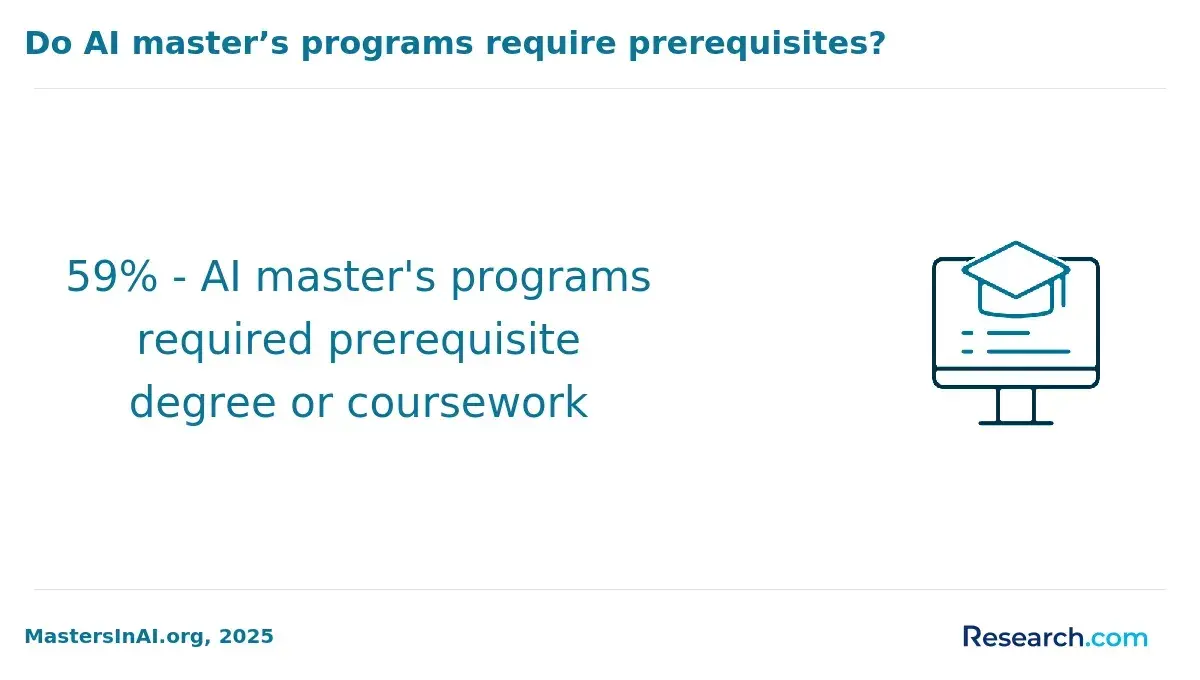
Prerequisites typically include calculus, linear algebra, and probability. These foundational courses equip students with essential skills needed for AI studies. If you're transitioning from a non-computer science background, explore beginner-friendly artificial intelligence master’s programs to bridge knowledge gaps.
References
- AI not all 'doom and gloom' for graduates, say businesses https://www.bbc.com/news/articles/cvg33nwy9llo
- AI Engineer Job Outlook 2025: Trends, Salaries, and Skills – 365 Data Science https://365datascience.com/career-advice/career-guides/ai-engineer-job-outlook-2025/
- Using explainable AI to align pre-university profiles with bachelor’s degree success - Scientific Reports https://www.nature.com/articles/s41598-025-28179-z
- Best Online AI Degrees: 2025 Rankings & Program Directory - MastersInAI.org https://www.mastersinai.org/degrees/online-artificial-intelligence-degrees/
- 23 Top AI Certifications to Know | Built In https://builtin.com/articles/ai-certification
- Top 10 AI certifications and courses for 2025 https://www.techtarget.com/whatis/feature/10-top-artificial-intelligence-certifications-and-courses
- AI’s Impact on Job Growth | J.P. Morgan Global Research https://www.jpmorgan.com/insights/global-research/artificial-intelligence/ai-impact-job-growth
- AI's Impact on Graduate Jobs: A 2025 Data Analysis | IntuitionLabs https://intuitionlabs.ai/articles/ai-impact-graduate-jobs-2025
- The Role of Linear Algebra in Artificial Intelligence — Understand The Math https://www.understandthemath.com/blog/linear-algebra-artificial-intelligence
- Top AI Certifications to Advance Your Career https://whitefiretechnologies.com/top-ai-certifications-to-advance-your-career/