2027 Highest-Paying Jobs You Can Get With an AI Master's Degree

Co-Founder and Chief Data Scientist
Transitioning into a lucrative career with an AI master's degree can feel overwhelming, especially for those without a technical background. Many prospective students worry whether their investment will lead to high-paying roles or if their credentials will be competitive in the fast-evolving AI job market.
Identifying which jobs offer the most financial reward while matching a flexible educational pathway is crucial. This article explores the highest-paying jobs available in 2027 for graduates with a master's in artificial intelligence, providing a clear roadmap to help readers strategically advance into well-compensated positions in the AI field.
Key Things You Should Know
- AI master's degree holders in the U.S. earn a median salary exceeding $120,000 annually, with top roles in machine learning engineering, data science, and AI research commanding salaries above $160,000.
- The demand for AI specialists is projected to grow over 35% by 2030, driven by advances in automation, healthcare, and autonomous systems, creating robust career opportunities.
- Advanced skills in deep learning, natural language processing, and AI ethics enhance job prospects, with 70% of employers prioritizing candidates who combine technical expertise with strategic problem-solving abilities.
What are the highest-paying jobs available to AI master's degree holders in 2027?
In 2026, the highest-paying roles for artificial intelligence master's graduates include machine learning engineer, AI research scientist, data scientist, and AI product manager. Machine learning engineers remain the top earners, with median annual salaries ranging from $165,000 to $180,000.
In major tech hubs such as Silicon Valley and Seattle, total compensation-factoring bonuses and stock options-can surpass $250,000, according to the U.S. Bureau of Labor Statistics and Levels.fyi 2024 data.
Top AI careers with advanced degrees also feature AI research scientists, whose salaries typically range between $140,000 and $190,000. These professionals focus on developing new AI models and algorithms, requiring both deep technical skills and research expertise.
Data scientists specializing in AI-related tasks earn between $120,000 and $160,000, applying AI to analyze large datasets and inform business decisions.
Product managers with AI expertise, especially those managing AI-driven products, earn $130,000 to $180,000 annually. Their roles combine AI knowledge with business strategy, demanding strong communication and cross-functional leadership skills.
Graduates should aim for companies heavily invested in AI, including cloud computing firms, tech giants, and startups in automation or autonomous systems. Expertise in deep learning frameworks, natural language processing, or computer vision can increase earning potential.
For more detailed career insights, explore this AI degree.
What is the average salary range for AI master's graduates across different industries and roles?
The average salary range for AI master's graduates by industry varies widely, typically from $90,000 to over $160,000 annually. Entry-level roles in finance and fintech offer the highest starting salaries, ranging between $110,000 and $140,000.
According to graduate employment data, AI master's graduates entering fintech command starting salaries about 23% higher than those in healthcare or government sectors. For example, a fintech data scientist or machine learning engineer may start at $120,000, while similar roles in healthcare or government typically average $97,000 to $100,000.
Technology firms developing software and AI products pay between $100,000 and $130,000 to early-career hires. Positions like AI research scientist or computer vision engineer often earn more in major tech hubs due to greater funding and demand.
Graduates interested in academia or non-profit government labs usually see starting salaries closer to $85,000 to $105,000, reflecting sector budget restrictions.
Typical earnings for AI master's degree holders in different roles can also depend on specialization. Areas like natural language processing or reinforcement learning often attract premium salaries within the stated ranges. Graduates who continually update their skills to align with market demands will enhance their earning potential across sectors.
Those evaluating career paths should understand these industry salary differentials, which can guide effective job offer negotiations. For more details on affordability and rankings, see the data science ranking.
What are the job outlook and demand projections for AI professionals over the next five years?
The AI job market growth in North America is remarkable, with AI specialist roles expected to increase by 35% from 2024 to 2029. This far exceeds the 3.5% average growth across all jobs, according to the U.S. Bureau of Labor Statistics Occupational Outlook Handbook 2024.
Industries such as healthcare, finance, automotive, and technology services are driving demand through rapid adoption of machine learning, data analytics, and automation technologies.
Employers often require candidates to hold a master's degree in artificial intelligence, as advanced technical expertise is essential for designing and implementing complex AI models. Positions including machine learning engineers, data scientists, and AI researchers offer strong salaries and job stability, given the limited pool of qualified experts.
Emerging sectors like natural language processing and computer vision are also generating specialized career paths.
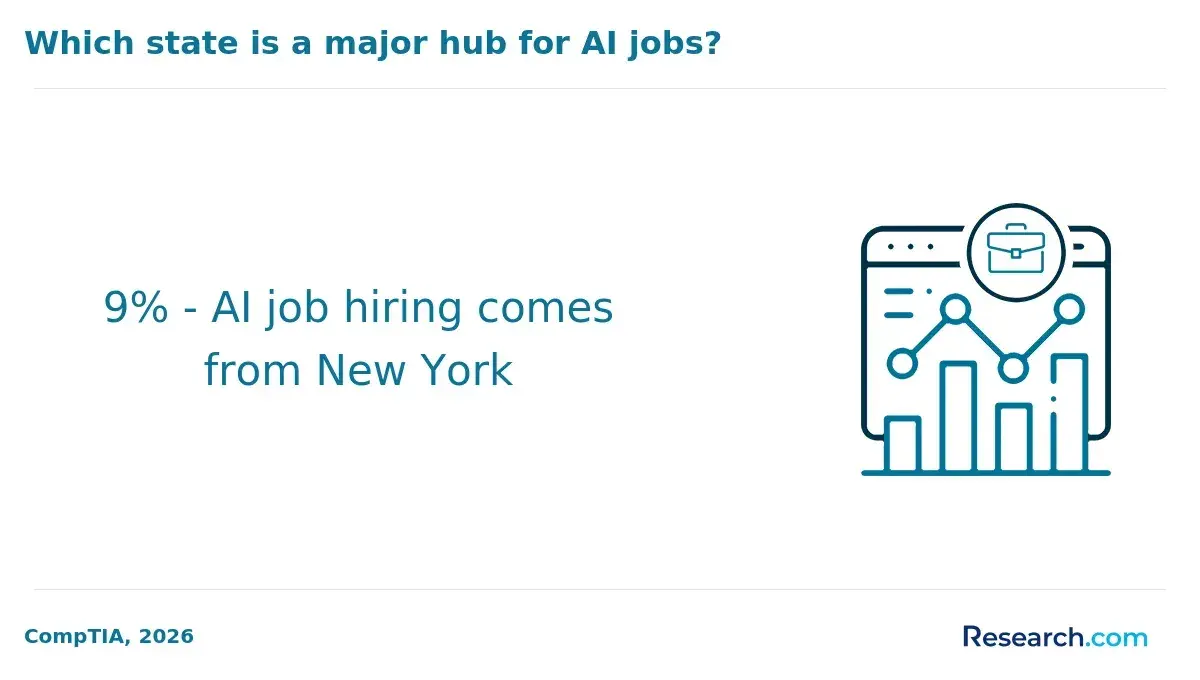
The demand projections for AI professionals in the US highlight tech hubs such as Silicon Valley, Seattle, New York, and Boston as primary job centers. However, increased remote and hybrid work options are broadening opportunities nationwide.
Professionals who combine AI expertise with skills in business or cybersecurity will have a competitive edge in applying AI in practical contexts.
Graduates should pursue ongoing learning, certifications in cloud AI platforms, and advanced programming languages to enhance employability. Those interested in affordable education options may explore online degrees in AI, which can provide flexible pathways into this rapidly evolving field.
What are the core admission requirements and prerequisites for entering a master's program in artificial intelligence?
Admission to AI master's programs demands strong technical and mathematical foundations. About 78% of top programs require proficiency in linear algebra and statistics, essential for understanding machine learning and data analysis. Applicants must often demonstrate this through coursework, test scores, or placement exams.
Additionally, 65% of programs expect prior programming experience, commonly in Python or similar languages like Java or C++, to manage algorithms and AI frameworks. These core admission requirements for a master's in artificial intelligence ensure students can handle the program's rigorous content.
A completed bachelor's degree in fields like computer science, engineering, mathematics, or physics is typically required. Some programs accept degrees in economics or psychology if quantitative skills are evident. Admissions committees prioritize academic performance in related courses, usually with a minimum GPA around 3.0.
Letters of recommendation should highlight analytical skills, research potential, and programming ability.
Statement of purpose submissions are common and focus on applicants' AI interests and career goals. GRE scores may still be requested, but this is becoming less frequent. Practical experience, including internships or research in machine learning or data science, enhances applications. Understanding prerequisites for enrolling in artificial intelligence master's programs helps applicants prepare adequately and improve their chances.
Applicants are advised to verify specific requirements on program websites and prepare early. Lack of necessary skills in math or programming often results in rejection or conditional acceptance.
For those exploring related fields, cyber security schools online offer alternative pathways that may complement AI career goals.
How do online and campus-based AI master's programs compare in terms of curriculum, flexibility, and outcomes?
Online and campus-based AI master's programs closely align in curriculum, covering machine learning, deep learning, natural language processing, and data ethics. Campus programs often offer more hands-on lab work and in-person research, while online programs focus on flexible project-based learning and remote collaboration, making them ideal for working professionals balancing study with other commitments.
Flexibility stands out as a major advantage of online programs. Students can manage schedules across time zones and benefit from a reported 91% employment placement within six months of graduation, compared to 88% for campus programs.
Online graduates often negotiate higher salaries through geographic arbitrage, as they are not limited by local job markets.
Outcomes depend on individual goals. Campus programs provide stronger networking via events and direct faculty contact, which benefits those aiming for local tech hubs or academia. Online graduates tap into global networks and diverse job markets, fitting roles like remote AI engineering or data science consultancy. Employers increasingly accept both credentials as credible.
Career timing and lifestyle factors are key considerations. Those wanting flexible study and faster workforce entry may prefer online options, while candidates seeking immersive research and campus culture might lean toward traditional programs with face-to-face mentorship. Evaluating program strengths, alumni success, and industry partnerships helps inform the choice.
What is the typical cost and duration of an AI master's degree program in the United States?
A master's degree in artificial intelligence in the United States typically takes two years of full-time study, though some programs offer accelerated tracks lasting 12 to 18 months or part-time options extending up to three years. Tuition fees vary widely: public universities usually charge between $40,000 and $80,000 in total, while private schools often range from $60,000 to $120,000.
These figures are consistent with data from the College Board and the Graduate Management Admission Council.
Considering return on investment (ROI) is important when assessing program costs. Graduates in artificial intelligence typically recoup their tuition through higher salaries within about 2.3 years. Though initial tuition may seem expensive, the financial gains from advanced skills often offset these costs quickly.
Costs can also fluctuate based on factors like program specialization, location, and additional fees such as technology or lab expenses. Public institutions often provide in-state tuition reductions, significantly lowering expenses for residents.
Many schools also offer financial aid, scholarships, or employer tuition reimbursement plans to help manage costs.
Prospective students should carefully evaluate tuition ranges, time frames, and expected salary outcomes as they select programs aligned with their budget and career goals.
What specialized coursework and technical skills are covered in AI master's degree curricula?
Master's degree programs in artificial intelligence blend theoretical foundations with advanced practical skills. Core courses typically cover machine learning, statistical methods, and algorithm design, equipping students with strong problem-solving abilities. In 2026, 94% of accredited programs require deep learning and neural networks, up from 67% in 2021. This reflects growing demand for expertise in large language models and generative AI.
Students often study natural language processing, computer vision, and robotics to develop real-world solutions. Electives in reinforcement learning and unsupervised learning expand adaptability across AI applications. Programming proficiency in Python, TensorFlow, and PyTorch remains crucial for practical implementation.
Ethics and data privacy regulations are increasingly integrated to prepare graduates for responsible AI deployment. Hands-on projects and capstone experiences allow students to apply their knowledge on large datasets, creating portfolio-ready work.
Prospective students should verify programs offer electives in emerging areas like explainable AI or AI for healthcare, which can provide specialized career pathways.
Employers prioritize candidates who combine deep learning expertise with an understanding of AI governance and deployment challenges. Selecting a program with comprehensive theoretical and technical coursework ensures graduates meet evolving industry expectations and workforce needs.
Which accrediting bodies and professional certifications validate AI master's programs and graduates?
Accreditation plays a vital role in validating AI master's programs by ensuring they maintain academic rigor and align with industry needs. In the United States, ABET is the leading accrediting body for computing and engineering programs, including those focused on AI and machine learning. ABET accreditation confirms that curricula meet rigorous technical standards and effectively prepare students for professional success.
Data from the ABET Program Outcomes Analysis 2024 shows that graduates from ABET-accredited AI programs are 3.2 times more likely to obtain respected industry certifications like AWS Certified Machine Learning Specialty or Google Cloud Professional Data Engineer within two years of graduation.
Professional certifications enhance academic qualifications by proving expertise in specialized areas highly valued by employers. Key credentials include the Certified Artificial Intelligence Practitioner (CAIP) and vendor-specific certifications such as AWS Certified Machine Learning Specialty and Google Cloud Professional Data Engineer.
These certifications validate mastery of both theoretical knowledge and practical applications, improving graduates' competitiveness in the job market.
Students should verify their program's ABET or equivalent regional accreditation to ensure high-quality education and a smoother certification process. For working professionals, pursuing these certifications after graduation is critical for career advancement and increased earning potential. Programs with strong industry collaborations and hands-on training produce graduates better equipped to pass certification exams and meet real-world job demands.
The combination of ABET accreditation and professional certification signals a validated skill set recognized by employers, positively influencing employability, salary prospects, and career progression in the competitive AI field.
How should prospective students evaluate and select a reputable AI master's program?
Prospective students seeking a master's degree in artificial intelligence should prioritize programs with strong industry partnerships, as graduates from these programs earn average salaries 18% higher than those without formal collaborations. Evaluating program reputation involves analyzing alumni salary data, employer recruitment activity, and the level of corporate engagement.
Programs offering internships, hands-on projects, and connections with leading tech companies often provide a critical advantage for job placement and salary prospects.
Accreditation from recognized agencies guarantees curriculum quality and credit transferability, which is essential for future career or educational moves. Assessing curriculum relevance and available specializations-such as machine learning, natural language processing, or robotics-helps students align their studies with in-demand fields. Additionally, faculty expertise, research productivity, and funding often reflect program strength.
Flexibility in program delivery, including part-time, online, or hybrid formats, supports working professionals while maintaining academic rigor. Considering alumni outcomes in various industries-ranging from academic research to finance, healthcare, and autonomous systems-provides insight into program focus.
Although cost and financial aid remain considerations, program quality and employment outcomes are more important.
Verifying employer feedback and hiring trends through career services or independent data ensures alignment with the job market. A data-driven approach centered on measurable outcomes and verified salary premiums offers the most reliable path to success in AI careers.
What career transition pathways and professional roles are available after completing an AI master's degree?
Career transition opportunities after completing a master's degree in artificial intelligence include machine learning engineer, data scientist, AI product manager, and robotics specialist roles. Many graduates enter software development focused on AI-driven applications such as natural language processing or computer vision. Others pursue AI research or algorithm development within technology companies or academia. Fields like business analytics and cybersecurity also benefit from AI expertise, especially in data interpretation and threat detection.
Technical project management positions requiring deep AI knowledge are additional viable paths.
The versatility of an AI master's degree enables career changers from engineering, mathematics, or even humanities backgrounds to access technical roles. According to Career Services Network Data Analysis 2024, career switchers secure technical positions 12% more frequently than traditional computer science graduates, with 64% landing roles aligned with their AI skills within four months of graduation.
Professionals transitioning should focus on roles involving AI model deployment, automation, or decision support systems, emphasizing applied projects and domain expertise to attract employers. For instance, graduates with healthcare experience may work in AI-driven medical imaging, while those from finance might specialize in algorithmic trading or fraud detection.
Staying competitive requires adapting to emerging AI fields like ethical AI, explainability, and edge AI. Practical experience-gained through internships, open source contributions, or certifications-and involvement in the full AI product lifecycle enhance job prospects.
The AI master's degree opens diverse career pathways across research, development, management, and applied AI solutions in multiple industries.
Other Things You Should Know About Artificial Intelligence
In 2027, artificial intelligence profoundly impacts industries like healthcare, finance, and manufacturing by automating processes, enhancing data analysis, and driving innovations. AI expertise is crucial in reshaping these sectors, significantly increasing efficiency and creating new opportunities for growth and development.
Graduates with a master's degree in artificial intelligence are sought after by a diverse range of companies, including technology giants like Google, Microsoft, and Amazon. Other employers include startups, finance firms, healthcare organizations, and automotive manufacturers investing in AI research and development. These companies typically offer roles in machine learning, data science, robotics, and AI product design.
The most commonly used programming languages in artificial intelligence include Python, R, and Java. Python is preferred for its extensive libraries and ease of use in machine learning and data analysis. R is popular for statistical computing, while Java is often used for large-scale AI applications and enterprise-level solutions.
In 2027, emerging roles like AI ethics consultant, autonomous systems engineer, and AI-driven healthcare specialist are gaining traction. These positions require specialized AI knowledge and skills. Consider exploring healthcare AI master’s programs online for focused expertise.
References
- Best AI Masters Online & On-Campus - AIDegreePrograms.org https://aidegreeprograms.org/rankings/best-ai-masters-programs/
- What to Look for in a Master’s in AI Program | University of Bridgeport https://www.bridgeport.edu/news/masters-in-artificial-intelligence-program-what-to-look-for/
- ARTiBA Accreditation Program | Elevate Your AI Education Standards https://www.artiba.org/artiba-accreditation-program
- How an Online Master’s in AI Can Prepare You for the Future of Tech https://www.ucumberlands.edu/blog/how-online-masters-ai-can-prepare-you-future-tech
- Blogs https://www.leoglobaloverseas.com/blogdetails/ai-career-pathways-from-msc-to-industry-roles
- Artificial Intelligence Certificate Programs - MastersInAI.org https://www.mastersinai.org/degrees/ai-certificate-programs/
- Application and admission - Master Artificial Intelligence https://www.uva.nl/shared-content/programmas/en/masters/artificial-intelligence/application-and-admission/international-prior-education/international-prior-education-foldout-menu.html
- AI Certifications: Accredited Programs, Vendor Credentials, and Emerging Standards - Total Seminars https://totalsem.com/ai-certifications-accredited-programs-vendor-credentials-and-emerging-standards/
- 16 Artificial Intelligence Career Paths https://www.calmu.edu/news/artificial-intelligence-career-paths
- How will Artificial Intelligence Affect Jobs 2025-2030 | Nexford University https://www.nexford.edu/insights/how-will-ai-affect-jobs