2027 AI Bachelor's Degree Programs With the Best Employer Recognition

Co-Founder and Chief Data Scientist
Many professionals with unrelated undergraduate degrees face challenges when attempting to enter the artificial intelligence industry. Finding a bachelor's program that offers both credibility and recognized value among employers is critical for a successful career pivot. Programs lacking accreditation or industry ties often result in limited job prospects despite rigorous coursework. Identifying bachelor's degrees that combine academic rigor with strong employer recognition can smooth this transition.
This article outlines key AI bachelor's degree programs reputed by employers, providing insights into their strengths and how they can enhance career opportunities for individuals seeking to break into the AI field.
Key Things You Should Know
- AI bachelor’s degree programs with strong employer recognition are typically offered by accredited institutions with established computer science or engineering departments, which signals academic quality and industry relevance to hiring managers.
- These programs often emphasize practical experience through internships, capstone projects, and industry partnerships, helping students build portfolios that demonstrate real-world AI and data science competencies.
- Employer recognition is also influenced by curriculum alignment with current industry tools and frameworks, such as Python programming, machine learning libraries, and cloud-based AI platforms widely used in professional environments.
Which AI bachelor's programs have the strongest employer recognition in the U.S.?
Harvard University, Massachusetts Institute of Technology (MIT), and Stanford University lead in employer recognition for AI bachelor's degree programs in the U.S. These schools top the 2025 Times Higher Education World Reputation Rankings, a trusted benchmark for many employers. Graduates from these programs often enjoy a hiring advantage, with starting salaries 15-30% higher than peers from less recognized institutions and more frequent job offers at national tech career fairs.
Employers in technology, finance, and advanced manufacturing highly value degrees from institutions with top academic reputations. The best recognized U.S. artificial intelligence undergraduate programs by employers provide rigorous curriculums, cutting-edge research opportunities, and extensive alumni networks that attract leading industry recruiters.
Other universities gaining employer recognition include Carnegie Mellon University and the University of California, Berkeley. These programs focus on practical AI applications and strong industry ties, boosting graduate placements in major tech hubs.
Prospective students should seek programs that incorporate internships or co-op experiences, which markedly improve real-world skills and job prospects.
Choosing well-regarded AI bachelor's degree programs with top employer recognition in the U.S. influences not only starting offers but also long-term career growth in AI-driven fields. For detailed insights into salary expectations, students can research artificial intelligence degree salary.
What accreditation should an AI bachelor's program have to be reputable?
The most reputable AI bachelor's degree programs meet strict accreditation standards for AI bachelor's degree programs, ensuring high academic and professional quality. ABET accreditation is the foremost recognized credential, particularly for computing and engineering disciplines.
This accreditation, confirmed by rigorous criteria in curriculum, faculty expertise, and student outcomes, is highly valued by employers in technical fields focused on artificial intelligence development and research.
Regional bodies like the Middle States Commission on Higher Education (MSCHE) or the Higher Learning Commission (HLC) provide overall institutional accreditation but carry less influence on specific program rigor. Prospective students should seek programs where the computing or software engineering departments have specialized accreditation rather than relying solely on institutional credentials.
Without ABET or similar accreditation, programs often lack standardized, industry-vetted curricula, potentially limiting graduates' employment opportunities and eligibility for certifications.
Key considerations include:
- ABET accreditation for computing or engineering programs
- Verification of accreditation at the program level, not just university-wide
- Alignment of curriculum with skills demanded by employers in the AI field
- Faculty qualifications and institutional commitment to AI research and laboratories
Given the importance of cost in educational decisions, prospective students can research detailed pricing and affordability insights, such as mechanical engineering degree cost, which often parallels expenses in AI-focused engineering disciplines.
What can you do with an AI bachelor's degree in entry-level roles?
An AI bachelor's degree prepares graduates for a range of entry-level roles requiring foundational skills in machine learning, data analysis, and algorithm development. Careers with an AI bachelor's degree often include positions like AI data analyst, machine learning engineer assistant, AI software developer, and business intelligence analyst. Employers seek candidates who can implement basic models, assist in training datasets, and contribute to AI-based applications.
Lightcast's 2024 analysis indicates AI-related skills are increasingly embedded across diverse job titles beyond traditional data scientist roles. This broadens opportunities for individuals with an AI bachelor's degree in sectors such as healthcare technology, finance, marketing analytics, and robotics.
Typical tasks in entry-level roles include:
- Data preprocessing and cleaning for machine learning inputs
- Developing and testing AI algorithms under supervision
- Using programming languages like Python and R to automate workflows
- Contributing to AI software integration within business systems
- Assisting in documentation, user training, and evaluating performance
Graduates should be ready to apply AI solutions that improve business efficiency or customer experiences, such as customer segmentation in marketing or predictive diagnostics in healthcare. Job seekers benefit from emphasizing internships, hands-on projects, and familiarity with cloud AI services.
Continual skill development in emerging frameworks and ethical AI use is key to career growth. For those exploring interdisciplinary options, an online game development degree may offer complementary skills in programming and AI integration.
How do online AI bachelor's programs compare with on-campus programs?
Online AI bachelor's degree programs increasingly match or exceed their on-campus counterparts in curriculum quality and employer recognition. Accreditation standards ensure that students complete comprehensive coursework, including machine learning, data structures, and ethics, providing an education equivalent to campus programs.
Employers are becoming more receptive to online degrees, especially from regionally accredited institutions with reputable faculty and strong industry partnerships. Universities such as Arizona State and the University of Florida deliver online AI degrees with identical professors, projects, and assessments as their on-campus options.
The flexibility of online programs benefits working students and those outside major tech hubs, broadening access to specialized AI training. Hands-on learning is replicated through virtual labs and capstone projects, but online students must proactively seek internships and networking to gain comparable industry exposure.
Employer surveys increasingly validate online credentials, particularly when combined with robust portfolios or real-world experience. Some fields value demonstrated skills and certifications over the mode of study, though certain competitive roles may still favor traditional degrees.
Enrollment data highlights growing acceptance: the National Student Clearinghouse Research Center reports sustained growth in undergraduate online enrollment, reflecting rising legitimacy among employers. Prospective students should weigh program faculty expertise, applied learning opportunities, and alumni success, alongside personal scheduling and location needs, to decide between on-campus and online AI bachelor's programs.
For those exploring related fields, the best online cybersecurity degree programs of 2025 offer additional flexible options.
What prerequisites and admission requirements do AI bachelor's programs typically require?
Successful admission to ai bachelor's programs hinges on a solid background in mathematics and programming. Applicants are generally expected to have completed high school-level calculus and at least one programming language course, commonly Python or Java.
Those without this foundation may face conditional acceptance or need to finish bridge courses to meet the technical demands of the curriculum.
Typical prerequisites include:
- High school calculus or college-level equivalent
- Introductory programming classes
- Strong achievement in STEM subjects
- Proficiency in logic or discrete mathematics, in some cases
Low participation in computer science AP courses relative to other STEM fields contributes to admission challenges, prompting many programs to require proof of calculus or programming readiness through coursework or preparatory classes. Some institutions accept coding bootcamp certificates or industry certifications as alternatives.
Admissions reviews often incorporate portfolios or coding samples when traditional prerequisites are absent. Other standard requirements include standardized test results, recommendation letters, and personal essays emphasizing problem-solving and analytical skills.
Transfer students can meet prerequisites by providing transcripts of relevant college courses. Because requirements vary widely-especially between research universities and technical colleges-prospective students should verify details early.
Preparing this foundation equips students for advanced areas like machine learning algorithms and data structures within ai degree programs.
What core courses and skills are covered in an AI bachelor's curriculum?
Core courses in a bachelor's curriculum for artificial intelligence develop essential skills for modern AI roles. Students begin with programming languages like Python, Java, or C++ to build and implement algorithms effectively.
Mathematics classes in linear algebra, probability, statistics, and calculus form the backbone for understanding machine learning models and data analysis.
Core AI subjects include machine learning, deep learning, natural language processing (NLP), computer vision, robotics, and knowledge representation. Leading programs now incorporate training on large language models (LLMs) and generative AI, reflecting the fastest-growing skills identified by LinkedIn.
Cloud computing, data engineering, and model optimization are also emphasized to prepare students for deploying scalable AI systems in real-world environments.
Ethics, algorithmic fairness, and data privacy are vital supplementary topics, focusing on AI's societal impact and compliance with regulations. Hands-on projects help students master end-to-end AI development, including software design, data preprocessing, and model evaluation.
Typical curriculum topics:
- Introduction to Artificial Intelligence and Problem Solving
- Machine Learning and Deep Learning
- Natural Language Processing and Large Language Models
- Data Structures and Algorithms
- Probability, Statistics, and Linear Algebra
- AI Ethics and Responsible Computing
- Cloud Platforms and AI Deployment
Graduates with expertise in these areas are well-positioned for evolving AI careers, leveraging skills in generative AI and LLMs.
How long does an AI bachelor's degree take, and what does it cost?
An AI bachelor's degree generally requires four years of full-time study, though duration varies by institution and program type. Accelerated tracks may shorten this to three years, while combined BS/MS programs can extend beyond four years.
Part-time enrollment and cooperative education options also influence completion time.
Tuition costs differ widely depending on the school's type and location. According to College Board data, average annual tuition and fees are about $11,000 for in-state public universities, $31,000 for out-of-state public schools, and $43,000 for private nonprofit institutions.
These estimates exclude living expenses, books, and other personal costs, which can add around $10,000 yearly.
Over four years, estimated tuition totals are:
- In-state public: $44,000
- Out-of-state public: $124,000
- Private nonprofit: $172,000
Financial aid, scholarships, and employer tuition assistance are key factors that can significantly reduce these expenses. Many students also benefit from community college credits and online courses to lower costs and complete programs more efficiently.
Choosing an AI program recognized by employers is important, as graduates tend to earn competitive starting salaries. Researching accreditation and industry partnerships ensures the degree aligns with career goals and maximizes return on investment.
Which schools offer AI bachelor's degrees versus CS degrees with AI concentrations?
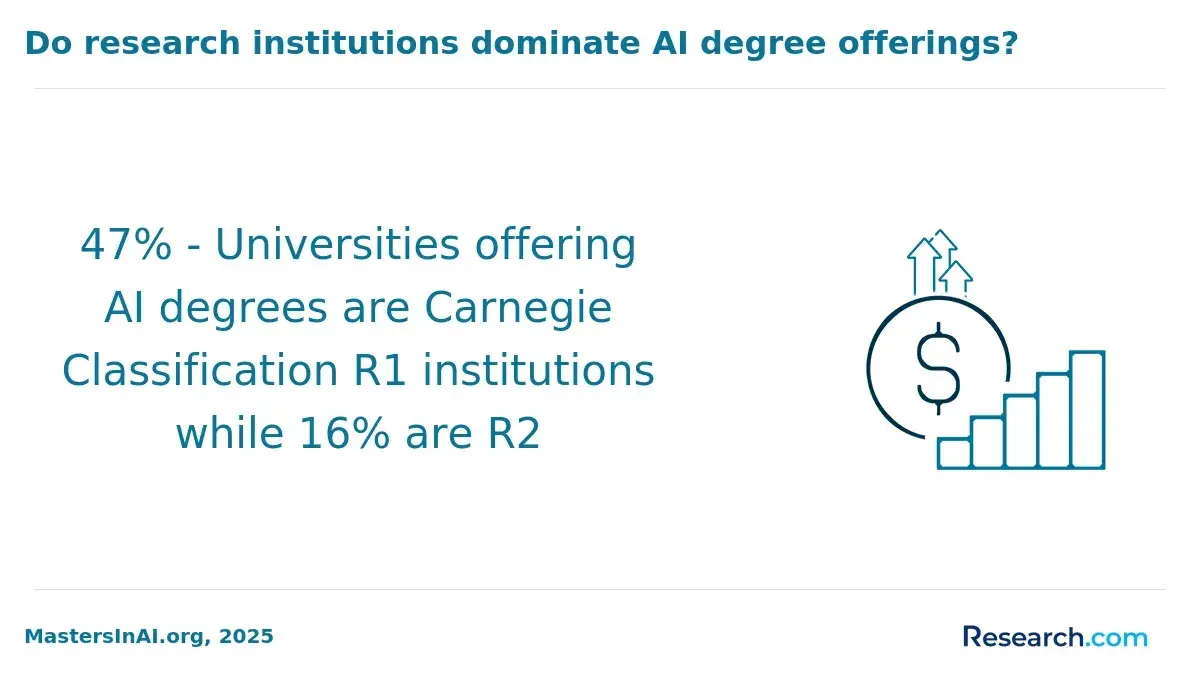
Most U.S. universities embed artificial intelligence within computer science (CS) degrees as a concentration or specialization rather than offering it as a stand-alone bachelor's program. A 2024 IEEE Spectrum review highlights that "most U.S. universities still house AI primarily within computer science departments as tracks/specializations rather than standalone AI majors".
This approach reflects the importance of foundational CS knowledge like algorithms, data structures, and systems programming for understanding AI.
A few institutions provide dedicated AI bachelor's degrees, including Carnegie Mellon University and Northeastern University. These programs focus intensively on machine learning, robotics, and cognitive systems, and usually have higher admission selectivity and specialized curricula.
In comparison, schools such as Stanford University, University of California Berkeley, and Massachusetts Institute of Technology typically offer CS degrees with AI concentrations. These programs combine core CS coursework with AI-focused electives, offering flexibility for students to customize their studies without fully committing to a niche AI track.
Prospective students should assess their career objectives when choosing between these paths. A CS degree with an AI concentration is versatile and widely recognized by employers, suited for those seeking broad computing skills with AI expertise.
Conversely, those aiming for research or highly specialized AI roles may find a distinct AI bachelor's degree more beneficial.
What certifications best complement an AI bachelor's degree for employability?
Certifications that complement an AI bachelor's degree greatly enhance employability by focusing on cloud computing and data expertise, skills highly sought by employers. Cloud certifications such as AWS Certified Solutions Architect, Microsoft Azure AI Engineer Associate, and Google Cloud Professional Data Engineer correlate with increased job posting demand for applied AI roles.
These credentials indicate proficiency in managing cloud infrastructure that supports AI systems, vital as about 85% of AI applications operate on cloud platforms.
Data-centric certifications also boost a graduate's job prospects. Credentials like the Certified Data Scientist from the Data Science Council of America (DASCA) and Microsoft Certified: Data Analyst Associate validate skills in handling extensive datasets, essential for AI development and integration with data pipelines. Employers highly value candidates who excel in this area.
Specialized AI certifications include the TensorFlow Developer Certificate, which focuses on deep learning frameworks, and the Certified Artificial Intelligence Practitioner from the Global Association for Quality Management. For those interested in the ethical and governance aspects of AI, the IEEE Certified AI Ethics Professional provides an important credential.
Students and professionals should match certifications to their AI career goals, whether in cloud engineering, data analysis, or machine learning engineering. Combining an AI degree with targeted certifications aligns with employer needs and delivers significant advantages in competitive job markets.
What salaries and job outlook can AI bachelor's graduates expect in the U.S.?
Graduates holding a bachelor's degree in artificial intelligence can anticipate strong salary prospects and a growing job market, especially in fields like data science and machine learning. According to the U.S. Bureau of Labor Statistics (BLS), data scientist roles are expected to grow by about 35% from 2024 to 2034, which is significantly faster than average job growth.
This makes data scientist salaries a useful benchmark for AI bachelor's graduates aiming for careers as machine learning engineers, AI specialists, or data analysts.
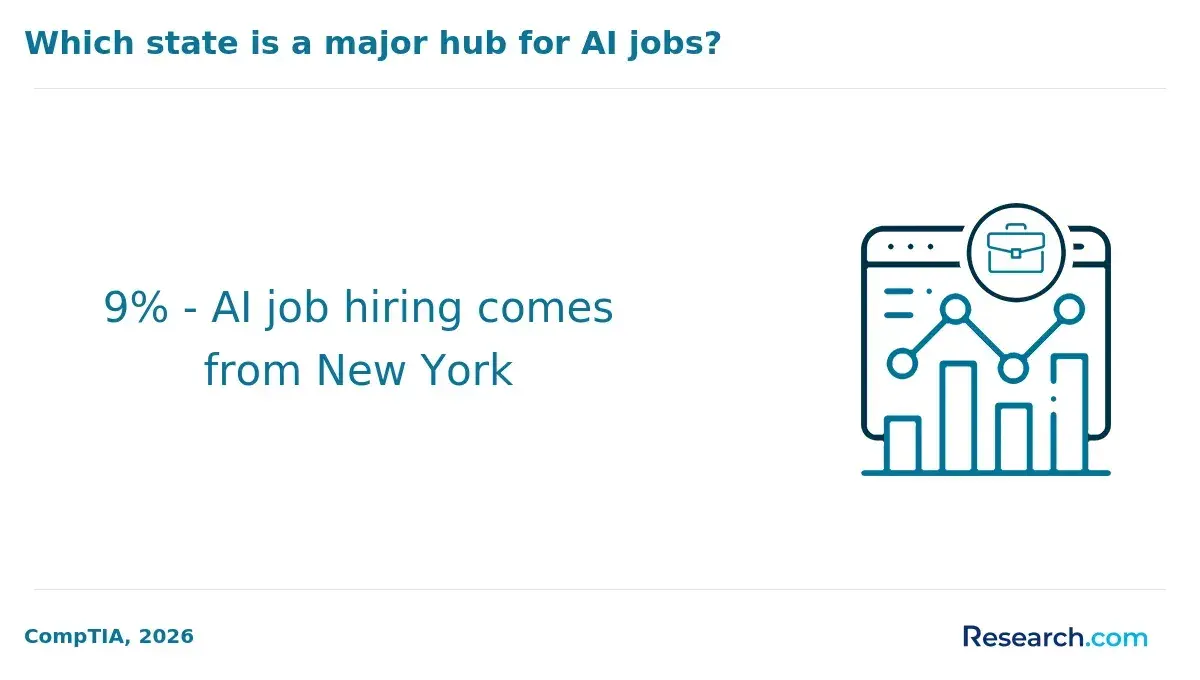
The median annual wage for data scientists is around $108,000, suggesting entry-level AI graduates may start with salaries in the upper five-figure to low six-figure range, depending on factors such as location and employer size. Notably, salaries tend to be higher in major tech hubs like San Francisco and New York.
Career paths for AI bachelor's holders often include software development, data analysis, robotics, and automation. Specialized areas such as natural language processing or computer vision can offer faster salary growth.
Employers highly value hands-on skills with coding, data management, and AI frameworks, which may enhance initial compensation offers.
- Strong projected growth near 35% for data science-related occupations
- Median base salary around $108,000 as a benchmark
- Higher pay in major technology and finance centers
- Varied roles including AI engineering and research with diverse salary scales
Opportunities also differ by industry-private tech firms, finance, healthcare, and government sectors are increasingly investing in AI applications. Internships and portfolio projects are key for strengthening job prospects.
These insights are based on data from the U.S. Bureau of Labor Statistics, Occupational Outlook Handbook, updated 2025.
Other Things You Should Know About Artificial Intelligence
AI graduates often pursue careers beyond hands-on technical positions such as data scientist or machine learning engineer. Many find roles in product management, AI ethics, strategy consulting, and AI policy development. These careers focus on applying AI knowledge to business decisions, ethical frameworks, or regulatory environments.
Programming is a critical component of AI bachelor's degrees, with most curricula requiring proficiency in languages like Python, Java, or C++. Developing strong coding skills enables students to implement AI algorithms, conduct experiments, and work with data effectively. While not all AI careers require intensive programming, foundational skills are essential for most technical and research roles.
Internships and co-op programs are highly valuable for AI students, providing practical experience and industry exposure. They help bridge the gap between academic theory and real-world applications, enhancing employability. Many employers consider internships a key factor when recruiting AI graduates.
Industry partnerships play a crucial role in 2027 AI bachelor's degree programs with the best employer recognition by providing students with hands-on experience and direct exposure to real-world challenges. These collaborations enhance academic curricula and align them with current industry needs, thereby increasing employability and employer trust in graduates.
References
- AI skills are in demand, but is it enough for new grads? | The Reynolds Center https://businessjournalism.org/2mintip/ai-and-grads/
- Number of Universities Offering AI Programs in the US - Programs.com https://programs.com/resources/universities-offering-ai-programs/
- Rewiring the Job Market, Part Two: What AI Means for Careers That Require a Bachelor’s Degree https://heartlandforward.org/pulse/rewiring-the-job-market-part-two/
- These 14 colleges offer bachelor's degrees in AI—including one Ivy League school https://www.cnbc.com/2025/01/22/colleges-that-offer-bachelors-degrees-in-ai.html
- Artificial Intelligence Degree Requirements: What Do You Need to Apply? https://aifwd.com/education/artificial-intelligence-degree-requirements/
- Online vs On-Campus Artificial Intelligence Degrees: Which Is Better? https://hakia.com/degrees/artificial-intelligence/online-vs-campus/
- How to Get into a BSc in AI Program | Admission Guide 2025 https://futurense.com/blog/bsc-ai-program
- AI-Proof College Majors: 10 Highest-Paying Degrees (2026) | Extern https://www.extern.com/post/best-paying-ai-proof-majors-us-2025
- What level of education is required for artificial intelligence? https://www.outrightcrm.com/blog/what-level-of-education-is-required-for-artificial-intelligence/
- AI Degrees: All Schools with Artificial Intelligence Bachelor’s Degrees - MastersInAI.org https://www.mastersinai.org/degrees/artificial-intelligence-degrees/