2027 Best AI Degrees for Students Interested in FinTech

Co-Founder and Chief Data Scientist
Students aiming to enter the fintech sector often struggle to find degree programs that combine specialized artificial intelligence skills with financial technology applications. Many existing courses lack updated curricula or fail to address practical industry challenges, leaving students ill-prepared for real-world demands. This gap complicates career transitions for those with unrelated undergraduate backgrounds seeking relevant, flexible education paths.
Identifying the right program is crucial for acquiring competencies that align with fintech innovations such as algorithmic trading, risk assessment, and fraud detection. This article explores top ai degrees tailored for fintech careers and offers guidance to help prospective students choose programs that enhance their employability and technical expertise.
Key Things You Should Know
- Degrees combining AI and finance prepare students for jobs in algorithmic trading, risk management, and fraud detection, with 45% annual growth projected in FinTech AI roles through 2030.
- Top programs emphasize machine learning, data analytics, and blockchain technology, offering hands-on experience using financial datasets to solve real-world problems.
- Employers prioritize graduates skilled in programming languages like Python and R alongside a strong understanding of financial regulations and ethical AI deployment in FinTech.
What are the best AI degrees for FinTech-focused students?
The best AI degrees for fintech students blend foundational skills in artificial intelligence with focused training in finance and technology. A bachelor's degree in computer science or data science, enhanced by electives in financial technology and machine learning, provides a solid base. For students seeking accelerated options, an accelerated bachelor's degree computer science can fast-track entry into this growing field. Industry demand for advanced qualifications is rising, with 23% of U.S. FinTech-related jobs now requiring a master's degree, according to the ADP Research Institute.
Master's programs in AI, data science, or financial engineering focus on predictive analytics, algorithmic trading, fraud detection, and blockchain. Coursework in natural language processing, reinforcement learning, and cybersecurity is especially valuable. These top artificial intelligence programs for fintech careers prepare students to develop intelligent trading bots or automate credit risk assessments effectively.
PhD degrees are less common but preferable for research and development roles that push the boundaries of fintech innovation. Research topics often include explainable AI or high-frequency trading algorithms, targeting challenges related to performance and regulation.
Choosing the right degree depends on career goals: bachelor's degrees fit entry-level roles, master's degrees align with specialized positions, and PhDs suit research-intensive careers. Practical experience, such as internships at AI-driven financial startups, also greatly improves employability.
Which AI degree level fits FinTech careers: bachelor's, master's, or PhD?
For careers in fintech, a master's degree in artificial intelligence offers the best balance of depth and practical expertise, especially when compared with a bachelor's level education. Bachelor's programs cover fundamental knowledge in algorithms, data structures, and machine learning, which are essential for entry-level roles like AI software developer or data analyst. However, they rarely delve deeply into fintech-specific applications such as fraud detection, credit scoring models, or real-time trading systems.
A master's degree emphasizes applied AI techniques, risk management, and governance frameworks relevant to fintech challenges. With generative AI recognized as an emerging risk by global banks, mastering model risk management and regulatory compliance is critical. Master's curricula integrate these themes to prepare graduates to design AI systems that comply with financial regulations and effectively mitigate model risks. This focus makes it a top choice for those seeking the best AI degree for fintech careers.
PhD programs focus more on theoretical advances and novel AI architectures, which suit research-intensive roles but may delay practical fintech career entry. Students aiming for such paths should have a clear fintech research focus to maximize impact.
When comparing AI degree levels for fintech jobs, consider these points:
- For immediate employment in fintech AI product development or compliance, pursue a master's with AI governance and financial applications.
- A bachelor's is sufficient for internships and junior roles but requires further specialization for growth.
- PhD candidates need aligned research goals to influence fintech innovations.
Prospective students can explore data science undergraduate rankings to identify accessible bachelor programs that lay the foundation for future specialization in fintech AI roles.
How do you choose an accredited AI program for FinTech careers?
Choosing accredited artificial intelligence degrees for fintech careers involves several essential considerations. Begin by verifying institutional accreditation from recognized bodies such as the U.S. Department of Education or the Council for Higher Education Accreditation (CHEA). Regional accreditors like the Higher Learning Commission are strong indicators of program quality. The curriculum should include core AI topics-machine learning, data analytics, and natural language processing-along with their applications in financial technology areas like blockchain, fraud detection, and algorithmic trading.
Look for the best AI programs focused on financial technology, ideally housed within business schools or technology departments with strong ties to FinTech industries. Practical experience through internships or capstone projects with financial firms significantly enhances career readiness. Admission criteria give insight into program accessibility; for example, many MBA programs now accept the GRE and offer test waivers, and prospective AI students should check if similar policies apply. Faculty expertise in the intersection of AI and finance, employment outcomes in FinTech, and any certified credentials offered alongside degrees also matter.
Financial investment and return should be weighed carefully. Comparing tuition and scholarship options can help gauge value. Additionally, students seeking cost-efficient paths might explore online artificial intelligence degree programs known for affordability and flexibility. Selecting a program balancing accreditation, specialized content, practical exposure, and career support optimizes success in FinTech roles.
What AI curriculum prepares you for fraud detection, trading, and credit models?
An AI curriculum focusing on fraud detection techniques, trading, and credit risk modeling emphasizes practical machine learning, data analysis, and statistical modeling skills. Core coursework covers supervised and unsupervised learning, anomaly detection, natural language processing, and time-series forecasting. Specializations in financial data science or computational finance help address specific industry challenges.
Key courses typically include:
- Machine learning algorithms for classifying transactions and identifying fraudulent patterns.
- Reinforcement learning to develop adaptive automated trading strategies.
- Credit risk modeling with logistic regression, decision trees, and neural networks to predict default probabilities.
Proficiency in programming languages like Python or R and frameworks such as TensorFlow or PyTorch is essential. Additionally, knowledge of big data technologies and database management supports handling large financial datasets. Programs often provide practical experience through capstone projects or internships focused on fraud prevention systems and trading automation. These opportunities build skills in feature engineering, model validation, and deployment, which are critical for careers in fintech. Curriculum for AI-driven trading and credit risk modeling prepares students to meet industry demands.
Most bachelor's or master's degrees in AI or data science take two to four years to complete. For cost-conscious students, exploring the cheapest online data science masters programs can offer a more affordable path. The average tuition at U.S. private nonprofit four-year colleges was $43,350, but this investment can lead to competitive salaries in the growing fintech sector.
Which programming, math, and finance prerequisites matter for AI in FinTech?
Key programming languages for AI in FinTech include Python, R, and SQL. Python leads due to powerful libraries like TensorFlow and PyTorch that support machine learning. R offers advanced statistical tools, while SQL is essential for managing financial databases. Developing strong skills in data structures and algorithms enhances the efficiency of models processing large financial datasets.
Mathematics knowledge is critical, especially in linear algebra, calculus, probability, and statistics. Linear algebra forms the foundation for neural networks and quantitative finance models. Calculus aids in optimization techniques such as gradient descent, a core part of training AI models. Probability and statistics are indispensable for tasks like risk assessment, fraud detection, and predictive analytics within FinTech solutions.
Understanding core finance concepts such as corporate finance, financial markets, investment analysis, and risk management equips professionals to contextualize AI outputs effectively. Familiarity with derivatives, portfolio theory, and credit risk enhances the development of solutions that tackle real-world financial problems.
Certifications significantly boost career opportunities. Research shows that 75% of employers value professional credentials. Relevant certifications include CFA (Chartered Financial Analyst), FRM (Financial Risk Manager), and AI-focused credentials like the TensorFlow Developer Certificate. These provide credibility and domain expertise essential in this competitive sector.
Success in AI-driven FinTech requires a blend of programming expertise, mathematical rigor, finance knowledge, and targeted certifications to meet industry standards.
What are the admission requirements for AI programs aligned with FinTech?
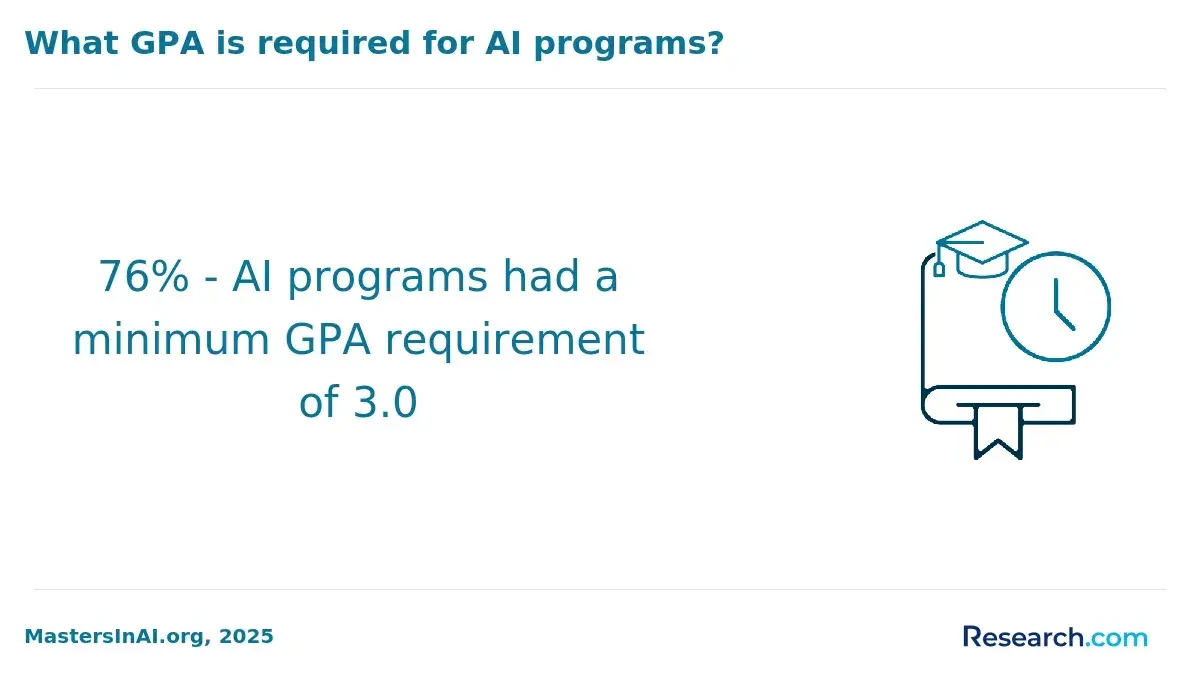
Admission to AI programs focused on FinTech requires a solid background in quantitative and technical skills. Typically, applicants must hold a bachelor's degree in computer science, mathematics, engineering, finance, or related fields. Candidates with strong professional experience in FinTech or programming may also be considered, even if their degree is unrelated. Most programs require a minimum GPA of 3.0; highly competitive ones may expect 3.5 or higher.
Standardized test scores such as GRE or GMAT are often requested, with top schools seeking a quantitative score in the 80th percentile or above. Key prerequisites include proficiency in programming languages like Python, R, or Java, as well as knowledge of statistics, machine learning, and data structures. For example, Carnegie Mellon University's Master of Science in AI explicitly demands coding and quantitative analysis skills.
Strong letters of recommendation from academic or industry professionals who understand the applicant's analytical strength are typically required. Personal statements should highlight interest in AI's application to finance and relevant experiences.
International applicants must demonstrate English proficiency through tests like TOEFL or IELTS, with common minimum scores of 90 (TOEFL iBT) or 7.0 (IELTS).
According to the National Center for Education Statistics, 65% of graduate programs in AI and FinTech report rising expectations in technical prerequisites since 2020, reflecting greater demand for applicants skilled in AI methodologies and finance-specific applications.
How do online AI degrees compare with on-campus programs for FinTech outcomes?
Online AI degrees are becoming increasingly comparable to on-campus programs in delivering strong FinTech outcomes, especially in terms of flexibility and accessibility. Data from the National Center for Education Statistics indicates that 58% of students enrolled in online STEM-related graduate programs, including AI, complete their studies within four years-a completion rate close to that of traditional campuses.
Curriculums generally cover machine learning, data analytics, and financial algorithms tailored for FinTech in both formats. However, online students often encounter limitations in networking and hands-on collaboration, which campus environments support through direct interactions and lab work. Networking remains essential in FinTech, often leading to internships and employment.
Employers find technical skills comparable among graduates from both delivery modes. On-campus students may have an edge in applied project experience due to access to research centers, but top online programs now incorporate virtual labs, live case studies, and remote internship opportunities with FinTech companies.
Working professionals benefit from online degrees by balancing employment, immediately applying AI tools at work, and saving on commuting and housing costs. Traditional students gain from immersive, multidisciplinary collaboration vital for FinTech innovation.
When choosing programs, accreditation, industry connections, and internship availability are key factors-often more important than delivery format. Well-designed online AI degrees can perform equally well if they include strong experiential learning and networking support systems.
How long do AI degrees take, and what do they typically cost?
AI degree programs vary in length, generally ranging from two to four years based on the study level and institution. Bachelor's degrees typically require four years of full-time study, while master's degrees can take 18 months to two years. Doctoral programs often extend beyond three years due to research and dissertation demands. Part-time and online formats allow students balancing work and study to extend these timelines.
The cost of AI education depends on factors such as school type, residency status, and program format. Public universities usually charge between $10,000 and $30,000 annually for in-state bachelor's students, whereas out-of-state and private institutions can surpass $40,000 per year. Master's programs generally cost $20,000 to $50,000 in total, with elite schools potentially charging more.
Financial aid options, scholarships, and employer tuition assistance can reduce expenses significantly. The National Center for Education Statistics reports an average undergraduate tuition and fees cost of about $11,490 at public schools, reflecting wide variability.
For quicker skill acquisition, short-term certificates in AI or specialties like FinTech-related AI take 6 to 12 months and typically cost between $2,000 and $15,000. These pathways suit professionals focusing on targeted skills rather than full degrees.
Prospective students should weigh total investment against career objectives. AI education in FinTech often combines strong technical knowledge with finance expertise, affecting degree choice and study duration.
- Bachelor's degree: ~4 years full-time
- Master's degree: 18 months to 2 years
- Doctorate: 3+ years with research
- Certificate programs: 6-12 months
What FinTech jobs can you get with an AI degree, and what do they do?
Graduates with an AI degree can enter diverse FinTech roles that harness artificial intelligence to transform financial services. Positions include machine learning engineer, quantitative analyst, risk analyst, fraud detection specialist, and algorithmic trader.
Machine learning engineers build predictive models analyzing large financial datasets to optimize credit scoring, tailor banking products, and enhance customer experience. Quantitative analysts create statistical models for trading strategies, market risk assessment, and pricing complex financial instruments.
Risk analysts use AI to monitor operational, credit, and market risks by processing real-time data for anomalies. Fraud detection specialists deploy AI-powered pattern recognition to spot unusual transactions, crucial as financial fraud costs companies approximately 5% of global annual revenues, according to the Association of Certified Fraud Examiners.
Algorithmic traders develop AI systems that execute trades automatically with millisecond precision, capitalizing on rapid market changes. Other roles include AI product managers managing AI-enabled FinTech solutions and compliance analysts ensuring regulatory adherence with AI tools.
AI expertise also benefits consulting and advisory careers in FinTech by providing knowledge in automation and AI ethics. According to U.S. Bureau of Labor Statistics, machine learning engineers in finance earn median salaries above $120,000 annually, reflecting high demand.
Students aiming for these careers should focus on strong programming skills, financial market knowledge, and proficiency with AI frameworks.
Which certifications complement an AI degree for FinTech roles?
Certifications that complement an AI degree are increasingly important in FinTech roles, highlighting expertise in data analytics, finance, and cybersecurity. These credentials enhance technical skills while addressing specific challenges in the evolving digital finance sector.
Key certifications include the Certified Financial Risk Manager (FRM), focusing on financial risk assessment crucial for AI-driven trading and credit scoring models, and the Chartered Financial Analyst (CFA), which adds value in asset management and investment analysis relevant to algorithmic decision-making.
Data science certificates, such as those from the Data Science Council of America (DASCA) and Microsoft Certified: Azure Data Scientist Associate, train professionals in machine learning techniques tailored to financial data. Blockchain knowledge is also vital, with certifications like Certified Blockchain Professional supporting secure transactions and smart contract technologies.
Cybersecurity credentials play a critical role in protecting financial AI systems. Certifications such as Certified Information Systems Security Professional (CISSP) and Certified Ethical Hacker (CEH) ensure data integrity and fraud prevention, addressing AI vulnerabilities in finance.
This blend of AI expertise with finance, risk management, and security skills aligns with a reported 30% growth in demand for hybrid skill sets in FinTech by the World Economic Forum.
Other Things You Should Know About Artificial Intelligence
Strong analytical thinking and problem-solving skills are essential for AI professionals in FinTech. In addition to coding and mathematical expertise, effective communication abilities help in interpreting AI outputs for business stakeholders. Understanding regulatory environments and ethical considerations is also important due to the financial industry's oversight requirements.
Yes, hands-on experience through internships or practical projects is highly beneficial in AI for FinTech. These opportunities provide exposure to real-world data, financial systems, and compliance requirements. Practical work helps students apply theoretical knowledge and builds skills valued by employers in this specialized field.
AI professionals in FinTech often encounter challenges such as handling biased or incomplete data, ensuring model transparency, and meeting strict regulatory compliance. They also face the complexity of integrating AI systems with legacy financial infrastructure. Maintaining cybersecurity and protecting sensitive customer data remain ongoing priorities.
Students should consider the program's curriculum relevance to financial technologies, availability of industry partnerships, faculty expertise, and post-graduation employment rates. Exploring specialized courses in a reputable AI for finance graduate program can also give an edge in this rapidly evolving field.
References
- Best AI & ML Courses for Banking & Finance (2026) - Bankers By Day https://www.bankersbyday.com/courses-artificial-intelligence-machine-learning/
- AI in Fintech Explained | How Artificial Intelligence Transforms Finance https://www.wpi.edu/news/explainers/financial-technology-ai-fintech
- Best Courses of AI in Finance for Professionals - CFTE https://blog.cfte.education/best-ai-in-finance-courses/
- Best College Degrees for High-Paying Jobs in Fintech Explained https://www.investopedia.com/best-college-degrees-forjobs-in-fintech-11885532
- AI Courses for Finance Professionals [2026] https://www.datarails.com/top-ai-courses-for-finance-leaders/
- FinTech Prerequisites https://www.nobledesktop.com/learn/fintech/prerequisites
- Students Using AI for Finance: Complete Guide | NKU https://onlinedegrees.nku.edu/programs/business/information-systems/msis-business-analytics/ai-finance-guide-students/
- 5 must-know AI concepts for fighting fraud https://www.alloy.com/blog/5-must-know-ai-concepts-for-fraud
- Top 7 Programming Languages for Finance and Fintech https://kms-technology.com/blog/most-in-demand-programming-languages-for-finance-and-fintech/
- Do you need a master’s or PhD for AI careers? | edX https://www.edx.org/resources/do-you-need-a-masters-or-phd-to-work-in-ai