2027 AI Bachelor's Degrees for Software Engineering Careers

Co-Founder and Chief Data Scientist
Many individuals with non-technical undergraduate degrees face significant challenges when seeking to enter the software engineering field, especially as demand for expertise in artificial intelligence (AI) grows rapidly. Traditional paths often require extensive retraining or advanced degrees in computer science, which can be costly and time-consuming.
For those balancing work, family, or other commitments, finding a flexible, accredited program that bridges this gap is crucial. This article explores 2027 AI bachelor's degrees tailored for software engineering careers, highlighting programs that support career pivots and equip students with the technical skills required to thrive in the AI industry.
Key Things You Should Know
- AI bachelor's degrees in 2026 emphasize practical skills, with 72% of programs including software engineering-focused AI courses tailored for industry demands.
- Graduates with AI-centered software engineering degrees see a median starting salary of $95,000, reflecting rapid market growth and high employer demand.
- Top U.S. universities integrate AI ethics and machine learning frameworks, preparing students for responsible software engineering roles amid evolving technological challenges.
What is an AI bachelor's degree designed for software engineering, and how does it differ from traditional computer science programs?
An ai bachelor's degree for software engineering careers focuses on blending core software development skills with specialized knowledge in machine learning, neural networks, natural language processing, and data analytics. This contrasts with traditional computer science degrees that cover a broad range of topics like algorithms, systems, and theory but offer limited exposure to AI-specific tools or frameworks.
Students pursuing an AI-focused curriculum learn to build intelligent applications and adaptive software using AI techniques, aligning education closely with industry demands.
One key difference between an ai degree and computer science degree is the depth of AI content. AI programs often include courses in algorithm optimization for machine learning, AI ethics, and programming languages like Python that are prevalent in AI frameworks.
Traditional programs might treat these topics as electives or omit them entirely. This specialization prepares graduates for careers developing autonomous systems, AI-driven predictive models, and other intelligent software solutions, giving them an edge in emerging tech fields.
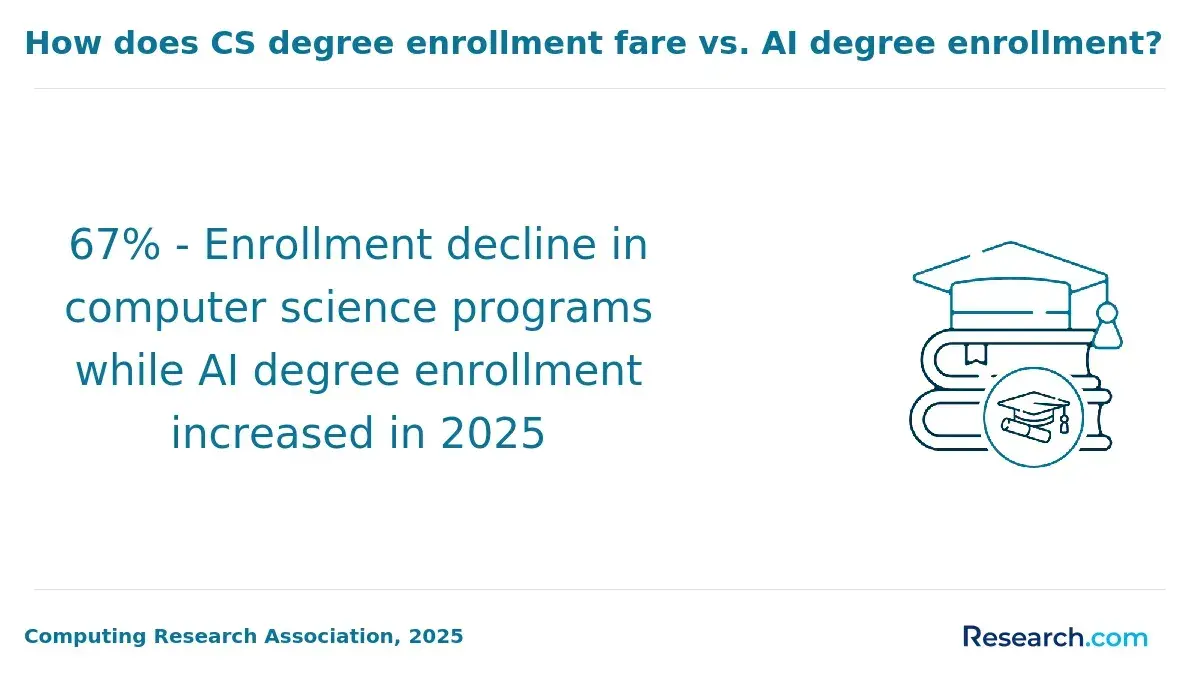
Enrollment data from the Computing Research Association's Taulbee Survey show a 74% increase in AI-focused computer science enrollments since 2020, far exceeding growth in conventional programs. This trend reflects growing employer demand for software engineers skilled in AI integration.
Prospective students should carefully consider whether their career goals require deep AI expertise embedded within software engineering or a broader computer science education.
For those exploring accelerated educational paths, options like a 2 year bachelor degree computer science provide opportunities to fast-track their studies while focusing on essential skills. Choosing the right program impacts both academic experience and job prospects in the evolving tech landscape.
What are the key admission requirements and prerequisites for AI bachelor's degree programs?
Strong foundations in mathematics and computer science are fundamental prerequisites for artificial intelligence bachelor's degree programs. About 89% of these programs require applicants to have completed calculus and linear algebra, essential for mastering machine learning algorithms, data structures, and AI modeling.
Additionally, 76% demand proficiency in programming languages such as Python, Java, or C++, crucial for software engineering careers related to AI.
Many programs also expect knowledge in subjects like statistics, discrete mathematics, or physics to build analytical and problem-solving skills. Applicants lacking experience in these areas might receive conditional admission or need to complete preparatory courses; some universities offer bridge programs or foundational classes in the first semester to help meet these requirements.
Standardized tests like the SAT or ACT remain important, particularly the math sections, while letters of recommendation often highlight strengths in STEM disciplines. Personal statements generally need to show genuine interest or experience in software development or AI-related projects.
Some selective programs review portfolios showcasing coding samples, research involvement, or personal AI initiatives. International students must demonstrate English proficiency through exams such as TOEFL or IELTS alongside meeting technical prerequisites.
According to data from the National Association for College Admission Counseling, adherence to these requirements is a baseline for 85% of reputable AI bachelor's programs. Prospective students interested in a cheapest online mechanical engineering degree may find some curricula overlap, aiding interdisciplinary study options.
Which universities offer accredited AI bachelor's degrees with strong software engineering specializations?
Several U.S. universities offer accredited artificial intelligence bachelor's programs for software engineering that equip students with skills in software development, systems architecture, and AI integration. Carnegie Mellon University is notable for its School of Computer Science's AI program, which includes a specialized software engineering track focused on machine learning systems design.
The University of California, Berkeley provides a Bachelor of Arts in Computer Science with an AI focus, featuring foundational software engineering courses such as algorithms and software project management.
Other top accredited AI degrees with software engineering specialization in US universities include the Georgia Institute of Technology, offering a Bachelor of Science in Computer Science with concentrations in AI and software engineering. The University of Illinois Urbana-Champaign also blends AI coursework with software engineering, targeting development for AI-driven and autonomous technologies.
These programs combine core computer science classes with AI topics like natural language processing and computer vision, alongside practical labs and internships to enhance real-world experience. With over 250 accredited U.S. universities offering dedicated AI bachelor's degrees or AI-focused computer science majors-a 156% rise since 2020-prospective students should verify ABET or regional accreditation to ensure program quality.
Reviewing curriculum details helps identify schools balancing AI theory and software engineering practice, crucial for careers in AI-centered software engineering.
For a broader range of options, exploring online engineering degrees can also benefit students seeking flexible learning pathways.
What is the typical curriculum and coursework structure in an AI bachelor's degree for software engineers?
The typical curriculum for ai bachelor's degree software engineering programs focuses heavily on machine learning, deep learning, and software engineering courses. Analysis of ACM Computing Curricula recommendations shows that 94% of these programs include courses covering algorithm design, neural networks, natural language processing, and reinforcement learning, highlighting their foundational role.
Alongside this, 87% of programs integrate software engineering and systems design courses to build practical skills in software development life cycles, version control, testing, and large-scale system architecture, essential for engineering AI applications.
This coursework structure in ai degree programs for software engineers emphasizes project-based learning, where students design AI-driven software systems, bridging theory and hands-on experience.
Foundational classes typically begin with programming languages such as Python, Java, or C++, combined with mathematics courses like linear algebra, calculus, probability, and statistics. Mid-level courses include data structures, algorithms, and computer organization, laying the groundwork for advanced AI topics.
Electives often cover areas like computer vision, robotics, and ethical AI, providing specialization. Hands-on labs and capstone projects simulate real-world AI software engineering challenges. Prospective students interested in related fields might also explore online cyber security degrees, which share some overlapping skills and knowledge.
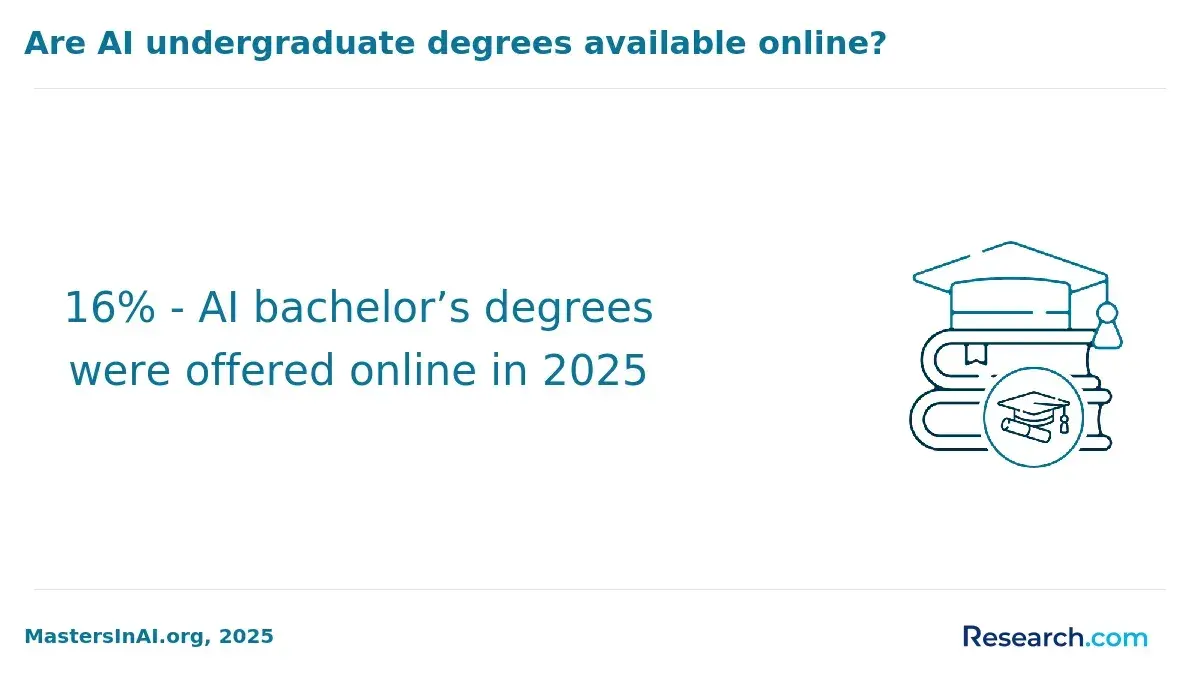
How do online AI bachelor's degrees compare to on-campus programs in terms of quality, flexibility, and employer recognition?
Online AI bachelor's degrees have reached parity with traditional on-campus programs in terms of quality, flexibility, and employer recognition. A survey by the Society for Human Resource Management (SHRM) found 68% of employers rate online AI degrees equally or higher for hiring software engineers.
Many accredited online programs, such as those from Arizona State University and the University of Florida, mirror the curricula and faculty of their on-campus counterparts. These programs often include rigorous coursework and practical projects to maintain academic standards.
Flexibility remains a key advantage, with asynchronous classes and recorded lectures allowing students to balance studies alongside work or personal commitments. This accessibility opens doors for working professionals and parents without compromising learning outcomes.
Employer acceptance is evolving, boosted by the rise of remote work and digital training. Over two-thirds of employers see online AI qualifications as favorable or equivalent for software engineering roles.
Prospective students should prioritize accredited programs with strong industry connections, real-world projects, and internship opportunities to enhance career prospects and bridge the gap between theory and practice.
What is the average cost, duration, and financial aid availability for AI bachelor's degree programs?
The typical duration for a bachelor's degree in Artificial Intelligence is around four years of full-time study, encompassing core courses in computer science, mathematics, and AI-specific subjects. Some institutions offer accelerated programs that reduce this timeframe to three years.
Tuition costs vary widely between private and public universities. Private institutions generally charge between $120,000 and $180,000 for the full program, whereas public universities range from $40,000 to $80,000 depending on residency status, as reported by the College Board's 2024 Trends in College Pricing.
About 73% of students receive financial aid, which comes in forms such as federal grants, loans, scholarships, and unique institutional awards. Applying early for FAFSA is essential to maximize federal funding. Additionally, scholarships tailored for STEM and Artificial Intelligence studies are available through professional bodies and tech companies. In-state tuition rates at public universities combined with financial aid can significantly lower the cost of attendance.
Prospective students should also plan for indirect expenses, including living costs, textbooks, and technology fees. Comparing total costs and aid packages across different schools is important.
Many programs offer part-time or online options that allow students to work while studying, helping offset expenses. It is advisable to contact financial aid offices early for tailored advice and to develop effective funding strategies.
What are the primary career paths and job titles available to graduates with an AI bachelor's degree in software engineering?
Graduates with a bachelor's degree in artificial intelligence concentrating on software engineering frequently enter careers such as AI software engineer, machine learning engineer, and AI systems architect. These three roles make up 58% of job postings targeting AI bachelor's graduates, based on LinkedIn's 2024 Jobs on the Rise report.
Entry-level positions generally require zero to two years of experience, making them ideal for recent graduates seeking to start their careers.
AI software engineers develop algorithms that enable machines to perform tasks like natural language processing and computer vision. Proficiency in programming languages such as Python, Java, or C++ and familiarity with AI frameworks like TensorFlow or PyTorch are essential.
Machine learning engineers focus on building and optimizing models, often collaborating with data scientists to transform insights into scalable AI systems.
AI systems architects design the overall architecture of AI applications, integrating hardware and software to ensure system reliability and efficiency. They manage data pipelines and ensure performance requirements are met across platforms.
Other roles accessible include data engineer, AI research analyst, and robotics software developer, each leveraging AI programming skills. Building portfolios with real-world projects or internships and gaining domain-specific knowledge-such as healthcare AI or autonomous vehicles-can enhance job prospects.
Developing strong coding abilities alongside industry expertise significantly boosts career opportunities for AI bachelor's degree holders.
What is the job outlook, salary range, and labor market demand for AI software engineers?
AI software engineer roles are expanding rapidly, with employment expected to grow by 35% annually through 2028. This pace far exceeds the 13% average for all software engineering jobs, driven by the widespread integration of AI technologies such as machine learning, natural language processing, and computer vision.
These advances help businesses enhance automation, decision-making, and customer engagement.
Starting salaries for AI software engineers typically range from $95,000 to $110,000, according to the U.S. Bureau of Labor Statistics 2024 Occupational Outlook Handbook. This compensation surpasses general software engineering roles, reflecting the high value placed on AI-specific skills. Skilled professionals with experience in deep learning frameworks and big data frequently earn even higher wages.
To stand out in the labor market, candidates should build strong expertise in software engineering and AI fundamentals, including proficiency in Python, TensorFlow, and cloud platforms. Practical experience from projects or internships focused on AI applications also provides a competitive advantage.
Employers look for individuals capable of designing and deploying scalable AI models.
Since the field evolves quickly, ongoing education is essential. Pursuing certifications and staying current with emerging AI techniques can enhance both employability and earning potential.
Are there professional certifications or industry credentials that complement or enhance an AI bachelor's degree?
Professional certifications play a crucial role in enhancing an AI bachelor's degree for software engineering careers. According to the 2024 Stack Overflow Developer Survey, 72% of employers prefer or require at least one industry certification alongside a bachelor's degree for AI software engineering roles.
These certifications demonstrate practical skills beyond academic theory, confirming a candidate's ability to apply AI concepts effectively in real-world settings.
Highly regarded certifications include AWS Certified Machine Learning, Google Cloud Professional ML Engineer, and Azure AI Engineer. They emphasize cloud environments and applied machine learning, essential areas in many AI software engineering positions.
Earning these credentials shows competence in deploying scalable AI models, managing data workflows, and utilizing cloud-based AI tools-a distinct advantage in the competitive job market.
Graduates gain targeted expertise in areas like model optimization, ethical AI, and data engineering, which may be underrepresented in bachelor's programs. Employers value these certifications to minimize training and ensure project readiness. Professionals can align certifications to their career paths, choosing options like AWS Certified Machine Learning for cloud roles or Google's ML Engineer for comprehensive pipeline skills.
Some certifications focus on AI subfields such as natural language processing and computer vision. Pairing these with an AI degree addresses evolving industry demands and improves career flexibility.
Additionally, professional certifications foster valuable networking opportunities and access to continued learning, helping professionals stay updated in a rapidly evolving field.
How should prospective students evaluate and compare AI bachelor's programs to find the best fit for their goals?
Prospective students should verify that AI-focused software engineering programs hold ABET accreditation. According to ABET's 2024 Impact Study, graduates from accredited programs achieve an 18% higher employment rate and earn $12,000 to $15,000 more in starting salaries than those from non-accredited schools.
This accreditation guarantees a curriculum aligned with industry needs, essential for building a strong foundation in software engineering with an AI emphasis.
Program curricula should offer a balanced mix of foundational computer science, mathematics, and specialized AI topics such as machine learning, natural language processing, and AI ethics. Hands-on experiences, including projects, internships, or co-op opportunities, are vital for developing practical skills and improving job prospects.
Comparing course offerings across programs helps students find the best fit for their interests and career goals.
Faculty expertise in AI research or industry practice enhances learning and provides valuable mentorship opportunities. Access to specialized AI labs and up-to-date software tools further enriches practical training.
Flexibility in program delivery, like online or hybrid formats with asynchronous classes, supports working professionals and nontraditional learners.
Evaluating graduate outcomes, including job placement rates and employer relationships, helps confirm a program's effectiveness in preparing students for AI careers in software engineering.
Other Things You Should Know About Artificial Intelligence
Applicants should complete algebra, precalculus, and introductory calculus, plus one or more programming courses in Python, Java, or C++. Many programs also expect data structures, discrete mathematics, and basic statistics. Strong transcripts in these subjects help students meet admission standards and handle the first-year AI and software engineering coursework.
To enroll in a 2027 AI bachelor's degree focused on software engineering, students typically need a high school diploma with strong foundations in mathematics and computer science. Some programs require standardized test scores like the SAT or ACT, and prior programming experience is beneficial.
Students pursuing AI bachelor's degrees in 2027 should be aware of emerging technologies such as quantum computing, blockchain for AI, edge computing, and AI-driven cybersecurity advancements. Familiarity with these areas can significantly enhance their software engineering career opportunities.
References
- How to Choose Between BS Artificial Intelligence vs Traditional Computer Science https://giu.edu.pk/blog-detail/how-to-choose-between-bs-artificial-intelligence-vs-traditional-computer-science
- Software engineering skills, jobs and careers in the AI era https://www.thoughtworks.com/insights/articles/software-engineering-skills-jobs-careers-ai-era
- AI Certifications: Accredited Programs, Vendor Credentials, and Emerging Standards - Total Seminars https://totalsem.com/ai-certifications-accredited-programs-vendor-credentials-and-emerging-standards/
- Sorting Out AI Job Titles, Skills, and Career Paths | TDWI https://tdwi.org/articles/2020/08/11/adv-all-sorting-out-ai-job-titles-skills-career-paths.aspx
- 11 Best AI Certifications in 2025 to Deepen Your Technical Knowledge | DigitalOcean https://www.digitalocean.com/resources/articles/ai-certifications
- Best AI Certifications in 2025 https://cpoclub.com/career/best-ai-certifications/
- Career Advice | AI Career Tips & Job Search Strategy https://www.sundeepteki.org/advice/impact-of-ai-on-the-2025-software-engineering-job-market
- Cost to Study Artificial Intelligence in 2026 https://checkmateittech.com/cost-to-study-artificial-intelligence-usa/
- Software & AI Engineer Course â Build Practical Skills https://www.turingcollege.com/software-and-ai-engineering