2027 Best AI Degrees at Technical Universities

Co-Founder and Chief Data Scientist
Transitioning into the artificial intelligence field can be daunting for professionals holding degrees in unrelated disciplines. The complexity of AI demands a solid technical foundation combined with flexible learning options to accommodate career pivots. Many face challenges identifying accredited programs that balance depth with accessibility.
Technical universities often lead in offering rigorous AI degrees tailored for such candidates, providing essential skills while respecting diverse academic backgrounds. This article analyzes top AI degree programs at technical universities, guiding prospective students through accredited, adaptable paths that facilitate successful entry into the AI industry.
Key Things You Should Know
- AI degrees at technical universities typically emphasize rigorous training in mathematics, programming, and engineering principles, preparing students to design, test, and deploy complex artificial intelligence systems in industry settings.
- These institutions often maintain strong partnerships with technology companies and research laboratories, providing students with access to internships, cooperative education programs, and applied research opportunities.
- Graduates from technical universities are frequently competitive in high-demand fields such as robotics, data science, and machine learning engineering, as employers often value the hands-on, laboratory-based experience embedded in technical education models.
What are the best AI degrees at technical universities in the U.S.?
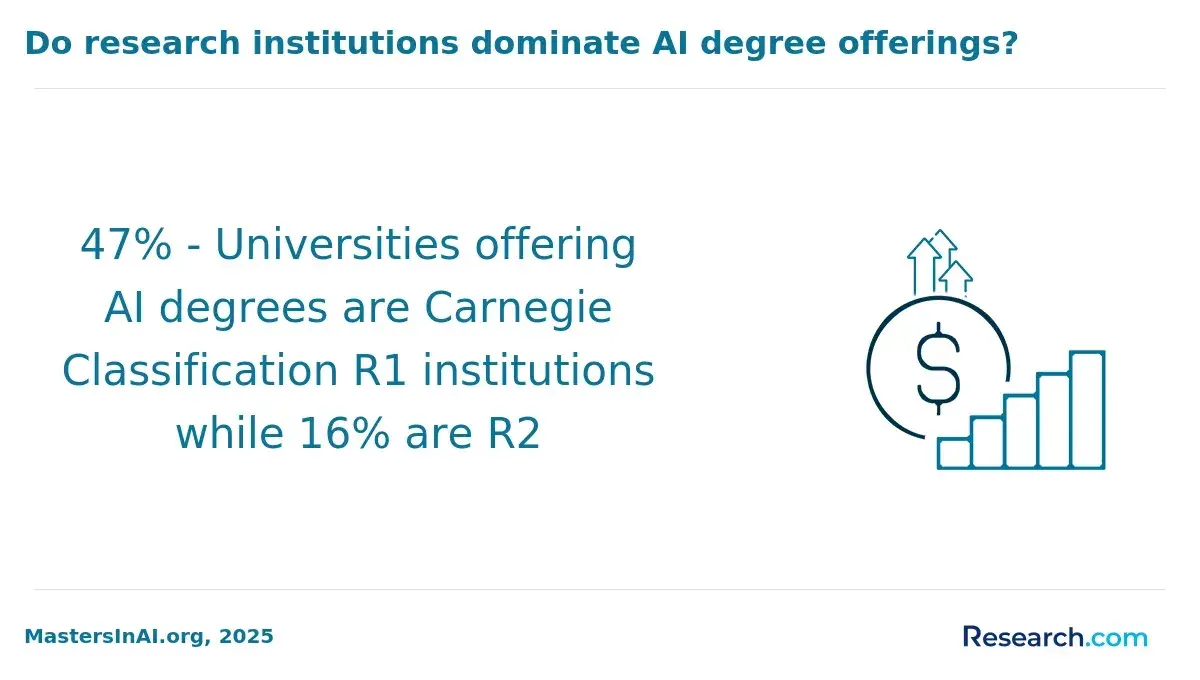
The best artificial intelligence degrees at technical universities in the U.S. are found within top-ranked computer science programs that emphasize AI specializations. Carnegie Mellon University, MIT, and Stanford share the #1 ranking in Computer Science according to the Best Graduate Schools, making them premier choices for AI education.
Carnegie Mellon's School of Computer Science offers focused AI tracks including machine learning, robotics, and natural language processing. Their Master of Science in Artificial Intelligence and PhD programs provide both deep technical knowledge and extensive research opportunities.
MIT's Computer Science and Artificial Intelligence Laboratory (CSAIL) integrates AI theory and applications with degrees like the Master of Engineering in Computer Science focused on AI.
Stanford's AI degrees combine computer science, statistics, and cognitive science with specializations in computer vision, deep learning, and autonomous systems. The program is strengthened by strong industry ties in Silicon Valley.
Prospective students aiming for top-ranking AI programs at U.S. technical universities should evaluate program curriculum, research facilities, and faculty expertise.
Other notable universities include University of California-Berkeley, Georgia Tech, and University of Washington, all offering specialized master's and doctoral AI and machine learning programs. Access to large-scale computing resources, collaboration with AI labs, and internships with leading tech companies enhance career prospects.
For those seeking a faster route, a 2 year computer science degree online can provide foundational skills efficiently.
What types of AI degrees can you earn at technical universities?
Technical universities offer diverse AI engineering degrees at top technical universities, including bachelor's, master's, and PhD programs focused on artificial intelligence and machine learning. These degrees emphasize core competencies such as algorithms, data structures, neural networks, robotics, natural language processing, and computer vision.
For example, a bachelor's in computer science with an AI concentration integrates foundational programming with AI-specific courses, while master's programs delve into advanced topics like deep learning, reinforcement learning, and ethical AI deployment.
Many institutions also provide interdisciplinary AI degrees combining computer science with electrical engineering, cognitive science, or data analytics for broader perspectives. Specialized AI graduate programs in Europe and the U.S. increasingly target working professionals through professional master's degrees or certificates, allowing upskilling without full thesis commitments.
When selecting a program, students should consider curriculum quality, research opportunities, and industry partnerships. Universities with AI labs or collaborations with tech companies often offer hands-on experience and internships critical for career readiness. In fact, "Computer and Information Sciences and Support Services" remains the leading field for U.S. international graduate students, including AI and machine learning-focused studies (IIE Open Doors 2024 Report).
Prospective students interested in advanced AI education can refer to the data science master US ranking for insights on affordable and reputable programs.
How do you choose an accredited, reputable AI program at a technical university?
Selecting an accredited AI degree program at top technical universities involves verifying accreditation from recognized bodies like ABET, which accredits thousands of programs globally. This ensures the curriculum aligns with industry standards and graduates have skills valued by employers.
When exploring reputable AI engineering programs in leading technical schools, consider the balance between core computer science fundamentals and specialized AI topics such as machine learning, natural language processing, and robotics.
Strong programs emphasize hands-on labs, research projects, and internships to provide practical experience. Faculty expertise is another key factor; professors engaged in active research or affiliated with prominent AI labs indicate program quality.
Access to specialized AI centers and industry partnerships can enhance learning and career opportunities.
Evaluate outcomes like graduate employment rates in AI roles, starting salaries, and alumni network effectiveness. Flexibility is important for working professionals, so look for programs offering part-time or online formats that maintain rigorous content standards.
Technical universities with collaborations in the AI industry often facilitate internships and real-world projects.
Admission prerequisites typically include solid foundations in mathematics, statistics, and programming, with some programs requiring GRE scores or prior experience. For those seeking affordable options, explore AI degree programs that combine quality with accessibility.
What's the difference between AI, computer science, data science, and machine learning degrees?
AI degrees focus on designing intelligent systems by emphasizing programming, algorithm design, mathematics, and model deployment. In contrast, computer science degrees at technical universities cover a broader scope that includes software engineering, systems architecture, and computational theory, providing diverse career flexibility.
When comparing AI degrees vs computer science degrees at technical universities, it's clear that AI programs delve deeply into machine intelligence, while computer science offers a well-rounded computing foundation.
Data science and machine learning degree differences in technical education highlight distinct yet overlapping skills. Data science emphasizes extracting insights from large datasets using statistics, data visualization, and tools like SQL and Python.
Machine learning degrees, a subset of AI education, concentrate on training and optimizing predictive models through statistical learning methods.
Lightcast's analysis shows that Python, SQL, and machine learning skills are highly demanded in AI/ML jobs. Practical guidance includes:
- Choose AI degrees to develop advanced algorithms and AI technologies.
- Select computer science for a broad technical foundation adaptable to many roles.
- Opt for data science to focus on data analysis and decision support.
- Consider machine learning degrees for deep expertise in predictive modeling.
Programs vary widely; some computer science degrees offer AI or machine learning specializations, while some data science programs include AI modules. Students should align their choices with target skills such as advanced math, programming, or statistical proficiency.
For those exploring further, earning a cybersecurity degree online can complement these fields with essential information security knowledge.
What coursework and labs are typical in an AI degree at a technical university?
Core coursework in an ai degree at technical universities covers foundational topics such as algorithms, data structures, linear algebra, probability theory, and statistics, which are essential for AI development. Specialized classes often include machine learning, deep learning, computer vision, natural language processing, and robotics.
Ethical issues and human-AI interaction are increasingly emphasized due to AI's societal impact.
Laboratory work is a key component, with students engaging in hands-on projects using popular frameworks like TensorFlow and PyTorch. These labs focus on designing neural networks, training models on real data, and evaluating their performance.
Common project themes include image recognition, autonomous navigation, and speech synthesis.
Course offerings vary by institution; some provide advanced topics such as reinforcement learning or probabilistic graphical models. Interdisciplinary collaboration with fields like computer engineering or cognitive science is also common.
MIT's open online courseware, which has surpassed 500 million views, highlights the widespread standardization of AI coursework across leading programs, facilitating skill benchmarking and transferability.
Students often face challenging mathematical concepts and complex code debugging. To succeed, focused study in linear algebra and probability combined with extensive Python programming is advised.
Participating in group projects and competitions like Kaggle enhances practical experience valuable for AI careers.
What admission requirements do technical universities have for AI degree programs?
Technical universities have strict admission requirements for AI degree programs, focusing on strong backgrounds in math, science, and computer science. Applicants usually need a high school diploma or undergraduate degree with coursework in calculus, linear algebra, programming, and statistics.
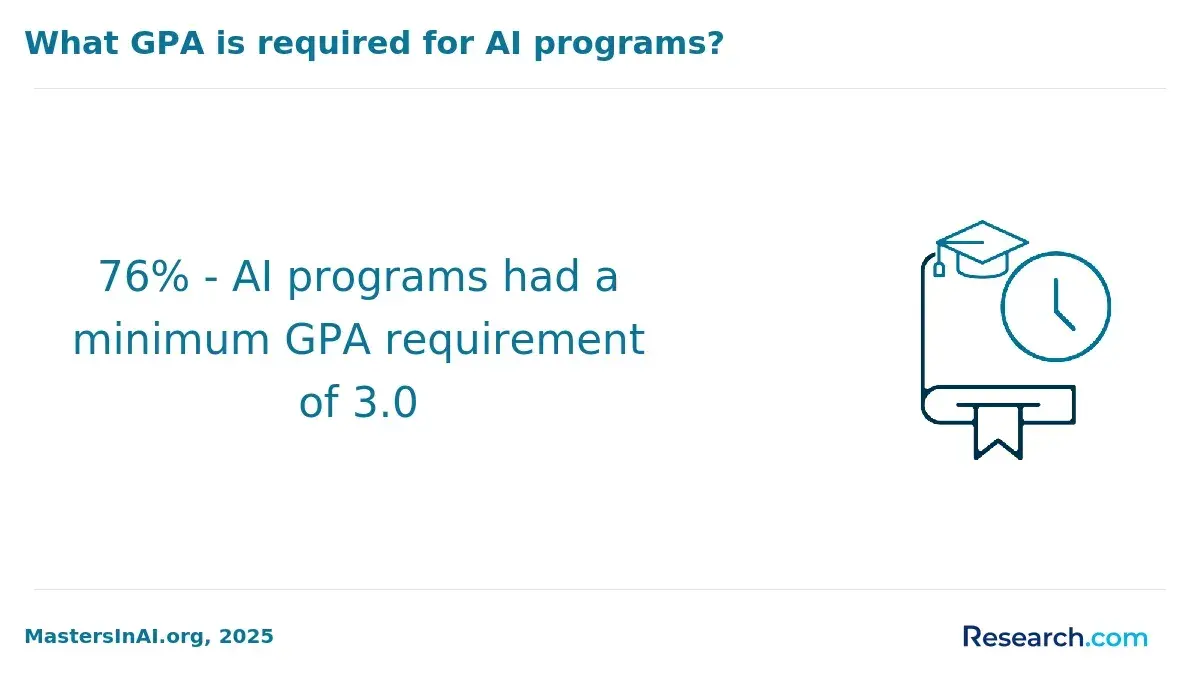
Many programs require a minimum GPA of around 3.0 on a 4.0 scale. International students must demonstrate English proficiency, often with TOEFL iBT scores between 90 and 100. ETS's TOEFL score data from 2024 shows a 50th-percentile score of 94 for test-takers in Computer Science, a common benchmark for admissions.
Standardized tests like the SAT or GRE are commonly required in the US, emphasizing math and quantitative sections. GRE quantitative scores above the 75th percentile improve applicants' chances. Universities typically request letters of recommendation that highlight analytical abilities and relevant research or projects.
Personal statements should express genuine motivation for AI study and describe prior hands-on experience such as internships or programming projects.
Additional requirements may include interviews or coding assessments to evaluate problem-solving skills and proficiency in programming languages like Python or Java. Submitting academic writing samples or publications can also strengthen applications, especially for graduate programs.
Since criteria vary, prospective students are advised to check each university's specific admissions page for detailed information.
How do online AI degrees at technical universities compare with on-campus options?
Technical universities now offer online artificial intelligence degrees that match on-campus programs in curriculum quality, faculty expertise, and career services. Technology-driven learning platforms support interactive coursework, real-time coding labs, and virtual teamwork, narrowing the gap between remote and traditional education.
More than 6 million U.S. students enrolled in distance education courses, highlighting the growing acceptance of online learning.
Key differences include delivery method and networking options. On-campus students have direct access to labs, research groups, and face-to-face interaction with professors, which is valuable for hands-on AI experimentation.
Online students benefit from flexible schedules through a mix of asynchronous lectures and live discussions, making programs suitable for working professionals or those in remote locations.
When choosing a program, evaluate specialization options-such as machine learning, robotics, or data science-and availability of mentorship or internships. Some online degrees collaborate with industry leaders for virtual internships comparable to traditional career fairs.
Accreditation and faculty credentials remain essential quality markers.
Consider your learning style and work commitments: structured settings often favor on-campus study, while motivated learners balancing jobs might prefer online paths. Both formats emphasize project-based learning and problem-solving to prepare graduates for careers requiring adaptability and ongoing skill development.
How long do AI degrees take, and what do they typically cost?
AI degrees at technical universities generally take four years for a bachelor's program and one to two years for a master's degree. Bachelor's programs often target full-time students but may offer part-time or accelerated options.
Master's degrees emphasize advanced coursework and research, with some schools providing online or hybrid formats to support working professionals.
Tuition costs vary widely by residency and institution type. Average published tuition for 2024-25 was $11,610 at in-state public universities, $30,780 for out-of-state public, and $43,350 at private nonprofit institutions.
Students should budget for additional expenses such as textbooks, specialized software, and hardware needed for AI coursework.
Financial aid, scholarships, and employer tuition assistance can help offset costs. Some technical universities partner with industry to offer reduced tuition through internships or cooperative education programs.
Prospective students may also benefit from flexible program lengths like accelerated master's tracks or combined bachelor's/master's options to reduce time and expenses.
- Full-time, part-time, and accelerated bachelor's options available
- Master's degrees focus on research with some online formats
- Tuition varies by residency and school type
- Additional costs include textbooks, software, and hardware
- Financial aid and employer assistance can reduce expenses
- Industry partnerships may offer tuition discounts through internships
What jobs can you get with an AI degree from a technical university?
An AI degree from a technical university opens career paths that go beyond traditional software roles. Graduates often become AI engineers, machine learning engineers, data scientists, or robotics engineers, focusing on designing and deploying AI models across industries.
For example, AI engineers develop algorithms for autonomous vehicles and personalized recommendation systems.
Emerging specialties like natural language processing (NLP) and computer vision enable work on speech recognition, language translation, and image analysis. Roles such as AI research scientist attract those interested in advancing AI theory and creating new architectures.
AI degree holders find opportunities in sectors including healthcare, finance, and cybersecurity. In healthcare, AI specialists build predictive models for disease diagnosis; in finance, they design automated trading systems.
Cybersecurity professionals use AI to detect and respond to cyber threats in real-time.
AI Engineer and Machine Learning Engineer remain among the fastest growing jobs in the U.S., reflecting broad demand for AI skills reported by LinkedIn Jobs on the Rise 2024.
Job seekers should focus on proficiency in machine learning frameworks, Python programming, and cloud platforms. Certifications in AI subfields and hands-on experience through internships or research projects strengthen employability.
Graduates gain versatility for technical, research, or applied careers addressing challenges in automation, data analytics, and intelligent system design.
What are typical AI salaries and job outlook for AI degree graduates?
Graduates holding degrees in artificial intelligence from technical universities can anticipate strong job growth and competitive salaries. According to the U.S. Bureau of Labor Statistics, employment for data scientists-a closely related field-is projected to grow 35% from 2022 to 2032, much faster than the average for all occupations.
The median annual wage for data scientists is $108,020, serving as a useful benchmark for AI-adjacent roles.
Entry-level salaries for AI graduates typically range from $90,000 to $110,000, with roles such as machine learning engineer or AI research scientist often exceeding $120,000 within three to five years of experience. Expertise in areas like natural language processing, computer vision, and reinforcement learning can further boost earning potential.
Key industry sectors driving demand include healthcare, finance, automotive, and technology. Specializations in autonomous vehicle development or medical imaging often yield higher compensation due to urgent innovation needs.
Strong programming skills in Python, familiarity with popular AI frameworks, and experience managing large datasets enhance job prospects and initial salary offers.
Continuous learning remains essential, as AI technologies evolve rapidly. Networking, internships, and certifications complement formal education to improve employment outcomes. AI degree holders benefit from expanding career opportunities and robust financial rewards aligned with technological advancements.
Other Things You Should Know About Artificial Intelligence
In 2027, top technical universities often require a solid foundation in mathematics, computer science, and programming for AI degree admissions. Prospective students should have proficiency in calculus, linear algebra, statistics, and coding languages like Python. Some programs may also require prior experience or coursework in machine learning.
Yes, artificial intelligence is widely recognized as a rapidly expanding field with strong future job growth prospects. Demand is increasing across various industries such as healthcare, automotive, finance, and technology for professionals skilled in AI development, deployment, and maintenance. As AI technologies evolve, experts in this area are expected to remain highly sought after for years to come.
Artificial intelligence degrees often incorporate interdisciplinary studies, blending computer science, mathematics, statistics, and cognitive science. Many programs also integrate elements from fields like robotics, ethics, and data science to provide a comprehensive understanding of AI applications. This interdisciplinary approach helps students tackle complex real-world problems from multiple perspectives.
Ethics is increasingly becoming a critical component of artificial intelligence education, emphasizing responsible AI development and use. Courses commonly cover topics such as fairness, transparency, privacy, and the societal impacts of AI technologies. Preparing students to consider ethical challenges ensures future AI professionals contribute to technology that benefits society while minimizing harm.
References
- What are the Best Degrees in AI in 2025? – 365 Data Science https://365datascience.com/trending/best-degrees-in-ai/
- Data Science vs Machine Learning and Artificial Intelligence: The Difference Explained https://www.mygreatlearning.com/blog/difference-data-science-machine-learning-ai/
- Top Universities for Studying AI and Technology (2025) https://studycare.ge/blogs/top-universities-ai-technology-2025
- Ultimate Guide: How to Choose the Right AI Training Course to Boost Your Career - ONLC https://www.onlc.com/blog/how-to-choose-ai-training-courses/
- Do AI Degree Programs Worth It?Cost,Time, Career Alternative https://agilefever.com/artificial-intelligence-degree-programs/
- AI Program Rankings on AIDegreePrograms.org https://aidegreeprograms.org/rankings/
- Top 5 Universities in the USA To Pursue Artificial Intelligence Course https://www.avanse.com/blog/top-ai-universities-in-usa
- Are online electives different from on-campus options? https://online.seas.upenn.edu/faqs/are-online-electives-different-from-on-campus-options/
- Top 10 Careers in Artificial Intelligence and Machine Learning https://apollouniversity.edu.in/blog/building-a-high-flying-career-in-artificial-intelligence-and-machine-learning/