2027 BCBA Career Guide for Human Services Majors

Co-Founder and Chief Data Scientist
Moving from human services into Board Certified Behavior Analyst (BCBA) work is a realistic path, but it requires careful planning. The credential is not earned through experience alone: candidates must complete graduate-level education, behavior-analytic coursework, supervised fieldwork, and the BCBA examination process. For human services majors, the key decision is usually whether to pursue a full ABA-focused graduate degree, add a verified course sequence to an existing graduate program, or use a post-master's option to close eligibility gaps.
This guide explains what BCBAs do, which degrees and coursework matter, how online and campus programs differ, what admissions committees typically expect, and how to evaluate cost, fieldwork support, jobs, salary, and accreditation. It is designed for students, career changers, and working human services professionals who want a practical route into applied behavior analysis without wasting time on programs that do not meet certification or licensing requirements.
Key Things You Should Know
- Becoming a BCBA requires a master's degree in human services or related fields, plus supervised experience totaling at least 1,500 hours, aligning education with rigorous credentialing standards updated in 2025.
- The demand for BCBAs is expected to grow 20% through 2030, driven by increasing awareness and funding for behavioral interventions in autism spectrum disorder and other developmental conditions.
- Competitive salaries average $70,000 to $90,000 annually, with variations based on geography and credentials; continuous professional development is essential to maintain certification and advance career opportunities.
What is a BCBA and its role in human services?
A Board Certified Behavior Analyst (BCBA) is a graduate-level professional trained to assess behavior, identify why behavior occurs, and design evidence-based interventions that improve socially significant outcomes. In human services, BCBAs often support people with autism spectrum disorder, developmental disabilities, communication challenges, severe behavior concerns, and skill deficits that affect daily living, learning, safety, and independence.
The role is both clinical and collaborative. A BCBA may conduct functional behavior assessments, develop behavior intervention plans, train caregivers or staff, supervise direct-service providers, and monitor progress through data. The goal is not simply to reduce challenging behavior; effective ABA practice also teaches replacement skills, communication, self-management, social skills, and adaptive behaviors that improve quality of life.
BCBAs work across schools, clinics, homes, hospitals, residential programs, early intervention agencies, community organizations, and private practices. In a school, a BCBA might help a team design a communication-based intervention for a child with autism. In a residential or community program, the same professional may train staff to use consistent reinforcement, safety procedures, and data collection methods across shifts.
Demand is a major reason human services majors consider this path. Reports indicate there were 132,307 job postings for BCBAs in 2025, compared to only 83,586 certified professionals nationwide. That gap creates opportunities, but it also makes program choice important: employers need practitioners who can meet certification, supervision, documentation, and funding requirements tied to evidence-based intervention.
BCBA certification requires graduate education, supervised fieldwork, and a passing score on the BACB exam. Students who need a flexible route can compare online BCBA masters programs, but they should verify that any program aligns with current BACB coursework rules and supports supervised experience in the student’s state or service setting.
How to become a BCBA certification requirements?
To become a BCBA, candidates must meet the Behavior Analyst Certification Board (BACB) requirements for education, behavior-analytic coursework, supervised fieldwork, and examination. For human services majors, the most important first step is confirming whether their graduate degree and coursework will satisfy BACB eligibility rules before enrolling or paying for additional credits.
Applicants need at least a master's degree in behavior analysis, psychology, education, or a related field with verified BACB-approved coursework covering ethics, research methods, behavioral assessment, and intervention strategies. A human services background can be useful, especially for client advocacy, case coordination, and service delivery, but the BCBA credential depends on specific behavior-analytic preparation rather than the undergraduate major alone.
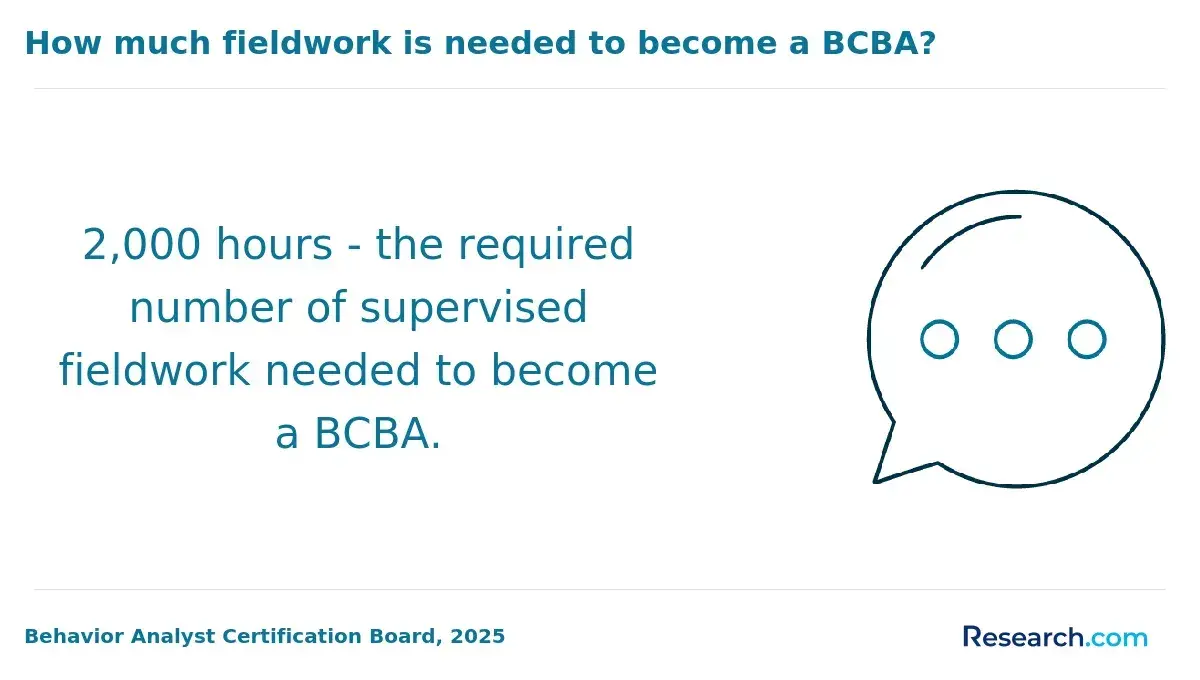
Supervised experience is also required. Practical experience can be obtained through the Experience Option requiring 2,000 hours of supervised independent fieldwork, or the Practicum Option with 1,500 supervised hours. Supervision must follow BACB rules and be provided by a qualified BCBA or otherwise eligible supervisor. Candidates should confirm the supervision arrangement in writing, including hour tracking, meeting frequency, documentation, and whether the placement exposes them to assessment, intervention, caregiver training, ethics, and data-based decision-making.
After education and fieldwork are complete, candidates apply for and pass the BCBA certification exam. The exam evaluates behavior-analytic concepts, measurement, assessment, intervention design, supervision, ethical practice, and professional responsibilities. Strong programs do more than cover terms; they teach students how to interpret data, write defensible treatment plans, select appropriate interventions, and explain clinical decisions to families, schools, agencies, and payers.
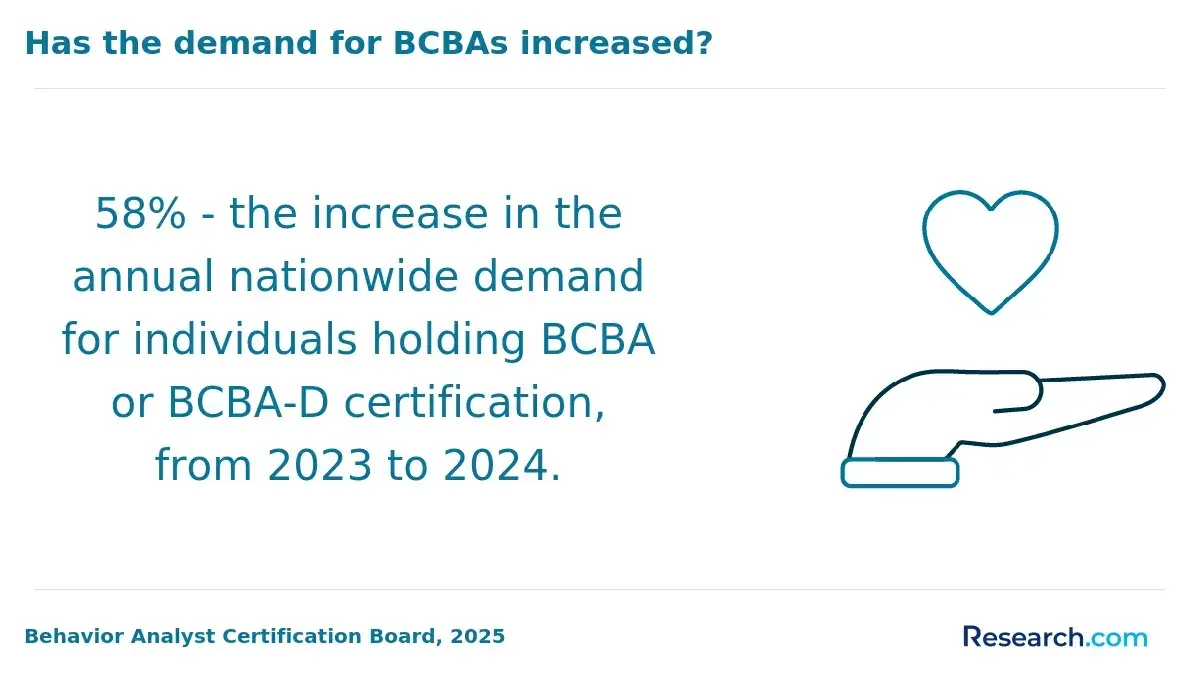
Career demand has increased sharply, with job postings increasing 28% to 132,307. That demand can make certification valuable in healthcare, education, autism services, early intervention, residential care, and social services. Before applying, prospective students should compare BCBA programs for verified coursework, faculty credentials, fieldwork support, exam preparation, and state licensure alignment.
What degree do human services majors need for BCBA?
Human services majors need graduate-level preparation to qualify for BCBA certification. A bachelor's degree in human services can be a strong foundation, but it is not enough by itself. Candidates must earn at least a master's degree in a field related to behavior analysis and complete the behavior-analytic coursework required by the BACB.
Acceptable graduate degrees commonly include human services, psychology, education, speech-language pathology, or social work, provided they include BACB-approved courses. The degree title matters less than eligibility: students should ask whether the program’s curriculum meets current BACB coursework requirements and whether graduates are prepared to apply for the BCBA exam after completing supervised fieldwork.
Many human services graduate programs do not automatically include the required ABA content. In that case, students may need one of three routes:
- ABA-focused master's degree: Best for students who know they want BCBA certification and need coursework, faculty guidance, and fieldwork planning built into the degree.
- Master's degree plus verified coursework: Useful for students already enrolled in a related graduate program that does not fully cover behavior analysis.
- Post-master's certificate: Appropriate for professionals who already hold a qualifying graduate degree but still need the required ABA course sequence.
For example, a standard master's in human services may need supplemental BACB coursework through accredited online courses or targeted graduate classes. Students comparing flexible options can review affordable online ABA master's programs, but speed should not be the only factor. A faster program that does not help students secure supervision or prepare for the exam may cost more in the long run.
The human services degree pathway to BCBA certification also requires supervised practical experience hours, typically between 1,500 and 2,000, depending on the BACB supervision model. These hours are often completed in schools, clinics, home-based ABA agencies, community organizations, residential programs, or other settings where behavior-analytic services are delivered and supervised properly.
Salary prospects can help justify the investment when the program fits the student’s career goals. According to the Economic Research Institute, the average BCBA salary is expected to reach $88,573 by 2030, but actual earnings depend on experience, location, setting, supervision responsibilities, licensure, and specialization.
Online and campus BCBA programs can both lead to certification eligibility when they meet BACB coursework requirements and provide a realistic plan for supervised fieldwork. The better choice depends on how you learn, where you live, whether you are working, and how easily you can access qualified supervision.
Online BCBA programs are often the most practical option for working professionals, parents, rural students, and career changers who cannot relocate. Courses may be asynchronous, synchronous, or hybrid, allowing students to balance graduate study with employment. The trade-off is that online students usually need more self-discipline and may have to be more proactive about finding local fieldwork sites and supervisors.
Campus BCBA programs can offer more structured schedules, direct faculty access, peer interaction, and established local practicum relationships. This can be valuable for students who want in-person mentoring or who plan to work in the region after graduation. Regional networks matter in high-demand markets; California accounts for 15% of the national BCBA job demand, so programs with local agency relationships may help students connect with employers and supervision opportunities.
Practical experience is required in both formats. A common mistake is assuming that an online program automatically arranges fieldwork or that a campus program guarantees a placement. Before enrolling, ask who is responsible for securing supervision, whether the program maintains approved placement partners, how supervision hours are documented, and whether your employment site can count toward required experience.
Key differences to compare include:
- Flexibility: Online formats usually work better for employed students; campus formats may provide more routine and accountability.
- Fieldwork access: Campus programs may have local placement pipelines; online students often need to identify qualified supervisors nearby.
- Learning style: Independent learners may do well online; students who benefit from live discussion and immediate feedback may prefer campus or hybrid study.
- Cost structure: Online programs may reduce commuting and housing costs but can include technology fees; campus programs may carry additional transportation or relocation costs.
- Networking: Campus programs can offer local professional connections, while online programs may connect students to a broader national cohort.
Both pathways can be valid if the program is transparent about BACB alignment, faculty credentials, fieldwork expectations, exam preparation, and state licensure considerations. Students comparing distance-based options can review the best online BCBA programs and then confirm details directly with each institution.
BCBA programs focus on the science and practice of applied behavior analysis. A strong curriculum teaches students to define behavior objectively, measure it accurately, assess environmental variables, design interventions, evaluate outcomes, and practice ethically across client populations and service settings.
Core coursework usually covers behavior assessment, behavior-change procedures, measurement, data display, research design, ethics, supervision, consultation, and intervention planning. Students learn how to conduct functional behavior assessments, identify maintaining variables, select function-based strategies, and adjust treatment based on data rather than assumptions.
Research methods are especially important. BCBA students often study experimental design and single-case research methodologies so they can evaluate whether an intervention is producing meaningful change for an individual client. This skill matters in schools, clinics, and community programs where decisions must be defensible, measurable, and individualized.
Advanced topics may include verbal behavior, behavioral skills training, caregiver training, staff supervision, organizational behavior management, severe behavior intervention, autism services, school consultation, and service delivery for underserved communities. Because BCBAs often supervise others, programs should also teach feedback, performance monitoring, ethical delegation, and documentation.
Curriculum quality matters beyond exam preparation. With 46% of US counties lacking any BCBA presence, future practitioners may serve communities with limited access to specialized behavioral care. Programs that address cultural responsiveness, rural service delivery, telehealth considerations, interdisciplinary collaboration, and family-centered practice can better prepare graduates for real-world human services settings.
Prospective students should verify that the curriculum meets Behavior Analyst Certification Board coursework requirements and fits their intended practice setting. A student aiming for school consultation may need different electives and fieldwork than someone planning to work in early intervention, residential care, research, or clinical leadership.
Admission requirements vary by institution, but most BCBA-oriented graduate programs expect applicants to hold a bachelor's degree from an accredited institution. Common undergraduate backgrounds include human services, psychology, education, social work, child development, communication sciences, and related fields. Some programs accept unrelated majors, but those students may need prerequisite coursework or evidence that they understand the demands of ABA practice.
Many programs request official transcripts and a minimum GPA of around 3.0. Applicants may also need letters of recommendation, a resume, a personal statement, and, in some cases, GRE scores. The strongest personal statements explain why the applicant wants to become a BCBA, what populations or settings they hope to serve, and how they plan to complete supervised fieldwork.
The Behavior Analyst Certification Board (BACB) requires candidates to complete coursework that meets its standards, often through a verified course sequence or a qualifying graduate program. Applicants should not assume that admission to a graduate program automatically guarantees BCBA exam eligibility. Before enrolling, ask the program to explain exactly how its degree or certificate maps to current BACB requirements.
Professional experience in human services, autism services, education, direct support, case management, or behavioral health can strengthen an application, especially when it shows readiness for ethical client work. However, prior ABA employment is not always required. Programs may be more interested in evidence of maturity, reliability, data-oriented thinking, communication skills, and commitment to supervised practice.
Applicants should also evaluate whether they can realistically complete fieldwork after admission. This is not a minor add-on; it is central to certification preparation. The demand for qualified BCBAs far exceeds supply, with only about 30,000 certified behavior analysts providing clinical services versus an estimated need of 100,000 nationwide. Meeting academic and supervised experience requirements efficiently can help students enter a profession with significant service need.
BCBA program length depends on the credential path, enrollment pace, fieldwork plan, and whether the student is completing a full master's degree or adding ABA coursework to an existing graduate degree. Many BCBA programs typically require 1 to 2 years following a relevant bachelor's degree. Full-time students often complete coursework and supervised fieldwork in 12 to 18 months, while part-time options can extend beyond 24 months.
Time to certification is not determined by coursework alone. Candidates must also complete supervised fieldwork and then prepare for the BCBA exam. Programs include between 1,000 and 2,000 supervised fieldwork hours, meeting BACB requirements necessary to qualify for the BCBA exam. Students who work in an eligible ABA setting may be able to accrue hours while enrolled, while others may need additional time after coursework ends.
Tuition costs vary widely, generally ranging from $10,000 to over $30,000. Online programs tend to cost between $15,000 and $25,000, whereas accelerated or on-campus formats may exceed $30,000. Students should also budget for application fees, books, technology fees, supervision costs, exam preparation materials, background checks, possible travel to fieldwork sites, and state licensure expenses where applicable.
Cost should be judged against outcomes. A lower-tuition program may be a poor value if it offers limited advising, weak exam preparation, or no support for fieldwork. Recent BACB exam data highlight increased exam difficulty, with the first-time pass rate declining from 66% to 51%. That makes academic rigor, practice exams, faculty access, and high-quality supervised experience especially important.
Before enrolling, candidates should:
- Confirm that the program’s coursework aligns with BACB requirements in effect for their certification timeline.
- Ask whether supervision is embedded, employer-based, separately billed, or entirely student-arranged.
- Compare total cost, not just tuition, including fees, supervision, books, and exam preparation.
- Review first-time exam pass-rate information when available and ask how the program supports students who need remediation.
- Explore financial aid, scholarships, payment plans, and employer tuition assistance opportunities.
BCBAs work in a wide range of human services, healthcare, education, and behavioral health roles. Most positions involve assessment, intervention planning, supervision, caregiver or staff training, and data-based decision-making. The right career path depends on the population you want to serve, your preferred work setting, and whether you want direct clinical work, leadership, consultation, research, or program development.
Common BCBA career paths include:
- Clinical BCBA: Provides assessment and treatment planning for children, adolescents, or adults receiving ABA services, often in clinics, homes, or community settings.
- School-based BCBA: Supports students with behavioral, developmental, or learning needs by consulting with teachers, special education teams, and families.
- Autism services supervisor: Designs treatment plans, monitors client progress, and supervises direct-service staff such as Registered Behavior Technicians (RBTs).
- Early intervention specialist: Works with young children and families to build communication, social, play, and adaptive skills.
- Residential or community program consultant: Helps agencies serving people with developmental disabilities improve behavior support plans and staff consistency.
- Clinical director or program manager: Oversees teams, quality assurance, supervision systems, compliance, and program outcomes.
- Organizational behavior management practitioner: Applies behavioral principles to workplace performance, training, safety, and employee systems.
- Research or academic professional: Contributes to behavior-analytic research, teaches, or develops evidence-based practices.
In many entry and mid-level roles, BCBAs supervise Registered Behavior Technicians (RBTs), review treatment data, update goals, train caregivers, and coordinate with speech-language pathologists, occupational therapists, teachers, physicians, or social workers. In leadership roles, they may manage caseload distribution, staff performance, ethical compliance, payer documentation, and clinical quality.
Human services majors often bring strengths that transfer well into BCBA work: client advocacy, knowledge of service systems, family engagement, crisis awareness, and interdisciplinary collaboration. To be competitive, they should build strong skills in data analysis, functional assessment, treatment writing, supervision, and ethical decision-making.
BCBA salaries vary by setting, region, experience, caseload complexity, supervision duties, licensure requirements, and specialization. Entry-level roles generally offer between $50,000 and $70,000 annually. BCBAs who move into clinical director or leadership positions earn between $85,000 and $100,000, reflecting broader responsibility for staff, compliance, supervision, and program effectiveness.
Traveling analyst BCBAs constitute a growing area, with salaries ranging from $75,000 up to $125,000 depending on travel demands and client diversity. These roles may pay more because they require flexibility, temporary assignments, high-need coverage, or work in areas with limited provider availability. Candidates should weigh compensation against travel burden, schedule instability, licensure requirements, and burnout risk.
The job outlook remains strong because applied behavior analysis is widely used in autism services, developmental disability supports, special education, early intervention, behavioral health, and human services. However, demand does not remove the need for careful job evaluation. A high salary may come with large caseloads, limited supervision support, heavy documentation expectations, or productivity requirements that affect service quality.
Prospective graduates should consider:
- State licensure: Licensure requirements vary by state and can affect eligibility, job mobility, and salary.
- Setting: Clinics, schools, home-based agencies, hospitals, and residential programs may differ in schedule, caseload, and supervision demands.
- Location: Urban jobs typically pay more but involve higher living costs.
- Specialization: Pediatric treatment, school consultation, severe behavior, staff training, or leadership experience can affect earning potential.
- Career development: Networking with established BCBAs and joining professional groups can improve access to better roles.
Long-term advancement depends on more than certification. Employers value BCBAs who communicate clearly, supervise ethically, use data well, collaborate across disciplines, and continue learning as ABA standards and service models evolve.
How choose accredited BCBA programs?
Choosing a BCBA program starts with eligibility verification. Do not rely only on promotional language such as “ABA-focused” or “BCBA track.” Confirm that the program’s coursework aligns with Behavior Analyst Certification Board (BACB) requirements and that the institution can explain how graduates move from coursework to fieldwork, exam application, and, where required, state licensure.
Students should check the BACB website for current guidance on recognized coursework and certification pathways. Program requirements can change, so use the most current BACB information rather than outdated catalog pages or third-party summaries. If a program cannot clearly document how its courses support certification eligibility, treat that as a warning sign.
Institutional accreditation also matters. Look for accreditation from recognized regional bodies such as the Higher Learning Commission (HLC), because institutional quality affects credit transfer, financial aid access, employer recognition, and graduate school credibility. Faculty qualifications are equally important: programs should have instructors with BCBA certification, applied experience, and familiarity with current ethical and supervision standards.
For online programs, ask specifically how fieldwork is handled. Some programs provide placement support or employer partnerships; others expect students to find their own supervisors. For campus programs, ask whether placements are guaranteed, competitive, paid, unpaid, or limited by geography. In either format, the program should explain supervision documentation, hour tracking, client-contact opportunities, and what happens if a placement falls through.
When comparing programs, review:
- Alignment with current BACB coursework requirements
- Institutional accreditation and faculty BCBA credentials
- Fieldwork placement support and supervision structure
- BCBA exam preparation and first-time pass-rate transparency
- Total cost, including tuition, fees, books, supervision, and exam preparation
- Program length and whether full-time or part-time pacing is realistic
- Graduate employment outcomes in human services, schools, clinics, or healthcare
- State licensure alignment for the state where you plan to practice
Graduate outcomes are crucial: programs with BCBA exam pass rates above 70% and strong employment results in human services indicate effectiveness. The demand for BCBA professionals is projected to grow 22% over the next decade, far surpassing average job growth rates. A well-chosen program should prepare you not only to meet credentialing requirements but also to practice competently in the settings where clients and agencies need qualified behavior analysts most.
Other Things You Should Know About Applied Behavior Analysis
To qualify for the BCBA exam through the standard route, candidates need 2,000 supervised fieldwork hours or 1,500 concentrated hours, documented under BACB rules. Human services majors must complete those hours with an approved supervisor before submitting exam eligibility through the BACB.
Supervision for BCBA candidates requires a set number of hours under a certified BCBA's guidance, focusing on practical application of behavior-analytic skills. This supervised experience must follow the Behavior Analyst Certification Board's standards, ensuring candidates gain hands-on training in assessment, intervention, and data collection.
To verify a BCBA's credentials in 2027, visit the Behavior Analyst Certification Board (BACB) online directory. The directory provides up-to-date information on the certification status of all practitioners, ensuring they meet current professional standards and requirements.
To be eligible for the BCBA exam in 2027, you need a graduate degree in behavior analysis or a related field, completion of specific coursework, and supervised fieldwork. The Behavior Analyst Certification Board (BACB) outlines these requirements in detail on their official website.
- The Ultimate Guide to Becoming a BCBA - Blog https://www.powerbackpediatrics.com/blog-posts/the-ultimate-guide-to-becoming-a-bcba
- BCBA Jobs & Board Certified Behavior Analyst Careers - LEARN Behavioral https://learnbehavioral.com/careers/advance-your-career
- Master of Science in Applied Behavior Analysis (ABA) https://tsengcollege.csun.edu/programs/ABA/curriculum
- 10 Best BCBA Programs & Schools (In-Person and Online) - Blog | Arms Wide Open ABA https://www.armswideopenaba.com/blog/10-best-bcba-programs-schools-in-person-and-online
- Applied Behavior Analysis Careers in Social Assistance and Community Health https://www.appliedbehavioranalysisedu.org/social-assistance/
- BCBA Job Outlook 2025 Shows Strong Growth and Demand https://blossomabatherapy.com/blog/bcba-job-outlook
- BCBA Career Options: Exploring Diverse Career Paths for BCBAs https://www.abaresourcecenter.com/post/bcba-career-options
- Best BCBA Career Path To Take: Ultimate Guide https://www.crossrivertherapy.com/behavioral-analysts/best-bcba-career-path
- BCBA Programs & Schools | Sunray ABA https://www.sunrayaba.com/post/bcba-programs-schools-203c1
- A Day in The Life of a BCBA | Behavioral Innovations https://behavioral-innovations.com/blog/day-in-the-life-bcba/