2027 Entry Requirements for ABA Graduate Programs Explained

Co-Founder and Chief Data Scientist
Choosing an ABA graduate program is not just a question of finding a master’s degree that accepts your bachelor’s major. Applicants also need to confirm that the program can support their path to BCBA eligibility, supervised fieldwork, state licensure if required, and long-term employment in behavior analysis. This is especially important for students whose undergraduate degree is outside psychology, education, or behavior analysis.
Admission rules differ by school. Some programs prioritize GPA and prerequisite coursework, while others place more weight on professional experience, recommendations, interviews, or a strong statement of purpose. A program may be flexible about your undergraduate major but strict about accreditation, verified coursework, fieldwork planning, or English proficiency requirements.
This guide explains what ABA graduate programs commonly require, how to evaluate accreditation and online options, what coursework and timelines to expect, and how costs, certifications, careers, and salary outlook should factor into your decision. The goal is to help you apply to programs that fit your background and lead to the credential pathway you actually need.
Key Things You Should Know
- Applicants to ABA graduate programs in 2026 must complete a verified coursework sequence aligned with BACB standards to qualify for certification eligibility.
- Most programs require a minimum GPA of 3.0 and passing the GRE, with increased competition boosting average admitted GPAs to 3.5 in recent years.
- Supervised fieldwork of at least 1,500 hours is mandatory pre-certification, reflecting a 10% increase in required practicum hours since 2024.
What are ABA graduate program entry requirements?
ABA graduate program entry requirements usually start with a bachelor’s degree from an accredited institution and a minimum GPA, often around 3.0. Programs may accept students from many undergraduate majors, but they typically look for evidence that applicants can handle graduate-level work in behavior analysis, research, ethics, and data-based decision-making.
Common admission requirements include:
- A completed bachelor’s degree from an accredited college or university.
- A minimum GPA, commonly around 3.0.
- Official transcripts from all postsecondary institutions attended.
- Prerequisite or recommended coursework in areas such as introductory psychology, statistics, research methods, or behavior analysis fundamentals.
- Letters of recommendation from faculty, supervisors, or professionals who can speak to academic ability and professional judgment.
- A statement of purpose explaining career goals, interest in ABA, and readiness for graduate study.
- GRE scores where required, although some programs have made the GRE optional.
- Relevant experience, such as work, volunteering, research, or internships with individuals with autism, developmental disabilities, students, clients, or behavioral health populations.
Some programs also require interviews, background checks, technical standards reviews, or proof that applicants understand the ethical and professional responsibilities of ABA practice. These requirements are not just administrative hurdles; they help schools assess whether students are prepared for a field that often involves vulnerable clients, family systems, schools, healthcare providers, and data-driven intervention plans.
California State University, Northridge's ABA program, which achieved a 100% BCBA exam pass rate among 13 candidates, illustrates how selective academic standards such as a 3.0 GPA minimum can align with strong certification outcomes (Action Behavior, 2025). That does not mean every applicant needs a perfect record, but it does mean weak academic preparation should be addressed before applying.
Applicants with unrelated bachelor’s degrees should compare programs carefully. A flexible admissions policy is useful only if the curriculum, accreditation status, and fieldwork structure still support the certification or licensure goal. Students seeking accessible routes may want to review board certified behavior analyst programs online while confirming each school’s exact admission and certification requirements.
Which accreditation is essential for ABA master's programs?
The most important quality checks for ABA master’s programs are alignment with the Behavior Analyst Certification Board (BACB) certification requirements and recognition through the Association for Behavior Analysis International (ABAI), where applicable. ABAI accreditation and BACB-approved or verified coursework help students avoid programs that may not meet the academic requirements needed for BCBA exam eligibility.
Students should understand the distinction. ABAI accreditation signals that a program has been reviewed against discipline-specific standards. BACB-approved or verified coursework is tied to whether the curriculum meets educational content requirements for certification. A program can sound relevant to behavior analysis but still fail to provide the coursework sequence a student needs for certification.
Before enrolling, applicants should verify:
- Whether the program is ABAI-accredited or otherwise recognized in a way that supports the intended credential pathway.
- Whether the coursework meets BACB requirements for BCBA eligibility.
- Whether supervised fieldwork is built into the program, arranged separately, or left to the student to secure.
- Whether the degree satisfies licensing requirements in the state where the student plans to practice.
- Whether online delivery is authorized for the student’s state of residence.
Many reputable programs, including Florida Institute of Technology, Marquette University, and the University of Pittsburgh, report 100% BCBA exam pass rates. These examples show that students from diverse academic backgrounds can succeed when the graduate curriculum is properly aligned with certification standards and supported by strong instruction.
The risk of choosing a nonaccredited or misaligned program is significant. Graduates may discover that they need additional coursework, extra supervision, or a different degree pathway before they can sit for the BCBA exam or qualify for state licensure. That can add cost, delay employment, and complicate career planning.
Students comparing options should prioritize verified quality over convenience alone. Online, hybrid, and campus programs can all be valid choices, but only if the program’s accreditation, coursework, and fieldwork structure match the student’s credential goal. For examples of recognized options, review BCBA accredited programs.
What bachelor's degree is needed for ABA grad admission?
Most ABA graduate programs prefer applicants with a bachelor’s degree in psychology, education, behavior analysis, special education, social work, or a closely related field. However, a specific undergraduate major is not always required. Many programs accept applicants from unrelated majors if they can show academic readiness, relevant experience, and a clear reason for entering ABA.
Applicants with behavioral science coursework have an advantage because ABA master’s programs rely heavily on concepts such as learning theory, measurement, research design, ethics, and intervention planning. Courses in statistics, research methods, developmental psychology, abnormal psychology, special education, or behavior analysis can strengthen an application.
Students from non-behavioral backgrounds may need to complete prerequisites before or during the early part of the graduate program. These may include behavior assessment, experimental design, introductory psychology, ethics, or applied behavior analysis fundamentals. For example, a biology, business, communications, or social work graduate may still be admissible if they complete supplemental coursework or demonstrate relevant supervised experience.
A strong application should explain the connection between the applicant’s prior education and ABA goals. Admissions committees often want to know why the applicant is moving into behavior analysis, what populations or settings they hope to serve, and whether they understand the responsibilities of data-based behavioral intervention.
Documentation also matters. According to Action Behavior (2025), universities like the University of British Columbia and University of Kent that require letters of recommendation and detailed documentation achieve 100% pass rates. Strong references can help show that an applicant has the academic discipline, communication skills, ethical judgment, and practical maturity needed for graduate-level ABA training.
Applicants should also check whether each school requires background checks, GRE scores, interviews, personal statements, or proof of relevant experience. Those seeking a faster path should compare whether an applied behavior analysis masters program accepts their bachelor’s background without adding so many prerequisites that the accelerated timeline becomes unrealistic.
ABA graduate programs typically take 1 to 2 years for full-time students, although the exact timeline depends on course load, delivery format, fieldwork requirements, and whether the student enters with all prerequisites completed. Accelerated programs may take 12-18 months, while part-time formats for working adults may take 3 years or more.
The classroom portion is only one part of the timeline. Students pursuing BCBA eligibility must also plan for supervised fieldwork. Many programs require extensive practicum hours, often 1,000 or more, and these hours can determine how quickly a student is ready for certification steps after graduation. A student who completes coursework quickly but delays fieldwork may still face a long path to credentialing.
| Program format | Typical timeline | Best fit | Potential trade-off |
| Accelerated full-time | 12-18 months | Students who can prioritize school and fieldwork | Heavy workload and less flexibility |
| Traditional full-time | About 2 years | Students seeking a balanced graduate pace | May require careful planning around practicum hours |
| Part-time | 3 years or more | Working professionals and caregivers | Longer time to completion and certification readiness |
Program fit affects completion time as much as the published schedule. Online programs may be convenient, but students still need access to appropriate supervision and client-facing experience. Campus programs may offer stronger local placement networks, but they can be less flexible for students who are employed full time.
Institutions like California State University, Northridge stress the importance of a focused statement of purpose that aligns career goals with program objectives. This alignment correlates with higher success rates, including perfect certification exam pass rates (Action Behavior, 2025). Applicants should treat the statement of purpose as a planning tool, not just an admissions essay: it should show that they understand the time, fieldwork, and credentialing expectations ahead.
Before applying, ask each program how coursework and fieldwork are sequenced, whether practicum placements are guaranteed or self-arranged, and whether students commonly work while enrolled. To compare flexible options, review the best online ABA master's programs.
The cost of ABA master’s degrees generally ranges from $20,000 to $60,000 for the full program. Public universities often fall between $20,000 and $35,000 for in-state students, while private institutions and specialized programs often charge $40,000 to $60,000. The published tuition price is only the starting point, so applicants should calculate total attendance and certification-related costs before enrolling.
Common expenses include:
- Tuition and mandatory university fees.
- Textbooks, course materials, and technology fees.
- Practicum or supervision-related costs, if not included in tuition.
- Background checks, immunization documentation, or site clearance requirements.
- Certification exam fees and application fees.
- Travel costs for on-campus intensives, practicum sites, or required meetings.
Online programs may reduce commuting and relocation costs, but they are not automatically cheaper. Some online programs charge the same tuition regardless of residency, while others include technology fees or require students to secure local supervision independently. Accreditation and state authorization can also affect whether a student is eligible for financial aid or able to complete requirements from their state.
International students may face additional costs and documentation requirements. Universities such as CSUN Tseng College require English proficiency tests such as TOEFL with a score of 80 internet-based or IELTS with a 6.5. If a student needs test preparation, credential evaluations, visa documentation, or additional English coursework, the true cost can rise.
Financial aid varies widely. Students should ask about federal aid eligibility, scholarships, assistantships, employer tuition benefits, payment plans, and whether fieldwork placements are paid or unpaid. The best-value program is not always the lowest-priced program; it is the one that is affordable, properly aligned with certification requirements, and realistic to complete without unnecessary extra coursework.
Yes. Fully online ABA graduate programs are available, and they can be a practical option for students who work full time, live far from campus, care for family members, or need a program that does not require relocation. Many online programs use asynchronous coursework, allowing students to complete weekly assignments around their schedules while still meeting deadlines and fieldwork expectations.
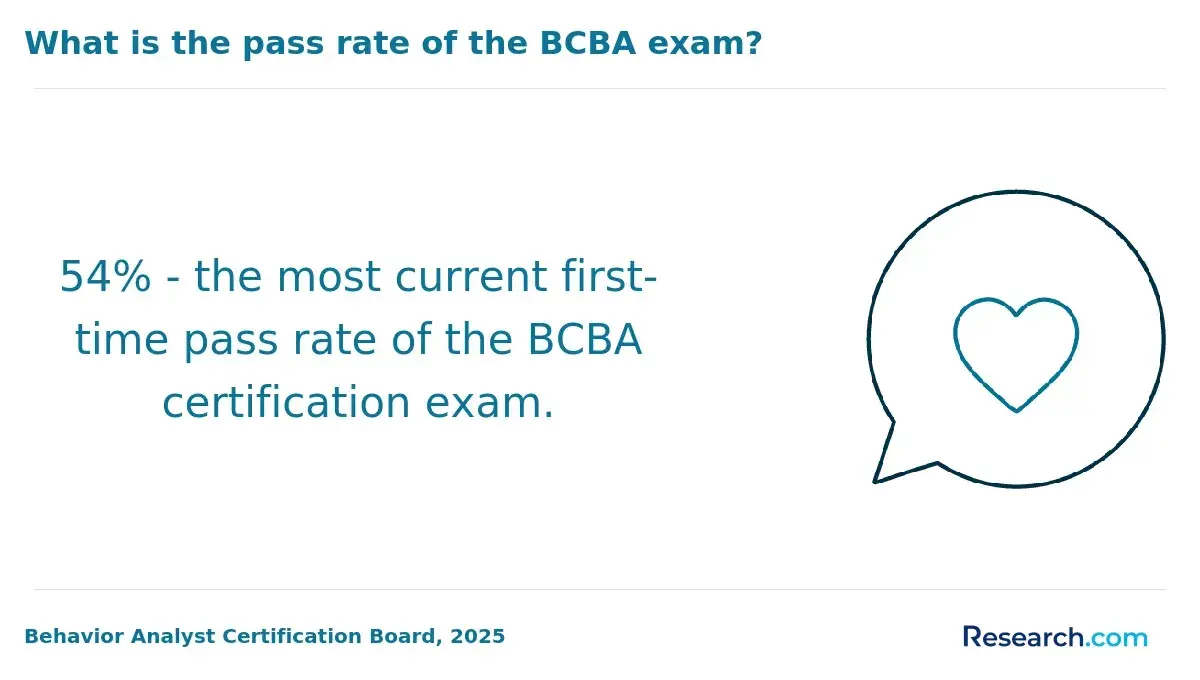
Reputable universities such as the University of Cincinnati and California State University, Northridge now offer fully online ABA graduate degrees without requiring the GRE. Despite this removal, both institutions report a 100% pass rate on the BCBA exam, confirming that eliminating standardized testing does not compromise educational quality (Ambitions ABA, 2026).
However, “fully online” usually refers to coursework, not necessarily the entire credentialing process. Students pursuing BCBA eligibility still need supervised fieldwork that meets professional standards. Some programs help arrange placements, some approve local sites, and others expect students to find qualified supervision on their own.
When comparing online ABA programs, confirm the following before applying:
- The curriculum meets Behavior Analyst Certification Board (BACB) course sequence requirements.
- The program is accredited or otherwise recognized in a way that supports certification goals.
- Supervised fieldwork can be completed in the student’s location.
- The school is authorized to enroll students from the applicant’s state.
- Faculty have relevant ABA expertise and provide meaningful academic support.
- The program offers advising for certification, licensure, and exam preparation.
Online delivery can be excellent for disciplined students who can manage deadlines, communicate proactively, and coordinate fieldwork locally. It may be less ideal for students who need frequent in-person coaching, guaranteed placement support, or a structured campus environment. The right choice depends on how the online model handles supervision, advising, and credential planning—not just whether lectures are remote.
ABA graduate curricula are built around the knowledge and skills needed to assess behavior, design interventions, evaluate outcomes, and practice ethically. Programs aligned with Behavior Analyst Certification Board (BACB) expectations typically combine theory, research methods, applied intervention coursework, ethics, and supervised practical experience.
Common graduate courses include:
- Foundations and principles of behavior analysis.
- Measurement, data collection, and visual analysis.
- Behavioral assessment and functional assessment.
- Behavior-change procedures and intervention planning.
- Experimental analysis of behavior.
- Single-subject research designs.
- Ethics and professional standards in ABA.
- Verbal behavior and communication.
- Supervision, consultation, and leadership in behavior analysis.
Course sequencing matters. Students usually begin with behavior principles and measurement before moving into assessment, intervention design, ethics, and advanced applications. This progression is important because ABA practice depends on using data to select and adjust interventions, not simply applying a preset strategy.
Programs may also offer emphasis areas. Some focus heavily on autism spectrum disorder interventions and early intensive behavioral intervention. Others include organizational behavior management, school-based consultation, developmental disabilities, severe behavior, pediatric applications, or research preparation. Applicants should choose a curriculum that matches their intended work setting.
Practicum and supervised experiences are often where students learn to apply coursework with real clients or organizations. Strong programs connect assignments to practical skills such as writing behavior intervention plans, collecting reliable data, training caregivers or staff, and evaluating whether interventions are working.
Graduates are academically and practically prepared to pass the BCBA exam when curriculum content, faculty support, and fieldwork align well. Increasingly, online ABA programs, such as those from Florida Institute of Technology, demonstrate 100% BCBA exam pass rates comparable to traditional formats. The format matters less than whether the program maintains rigorous standards, qualified instruction, and effective supervision pathways.
An ABA graduate degree can lead to careers in clinical services, schools, healthcare, community agencies, research, and organizational settings. The most common pathway is becoming a Board Certified Behavior Analyst (BCBA), but the degree can also support roles in supervision, consultation, program management, staff training, and applied research.
Common career paths include:
- Board Certified Behavior Analyst: Assesses behavior, designs intervention plans, supervises implementation, and monitors client progress.
- Behavioral consultant: Advises schools, families, agencies, or organizations on behavior support strategies.
- Clinical supervisor or program supervisor: Oversees ABA service delivery, trains staff, reviews data, and ensures treatment quality.
- School-based behavior specialist: Supports students, teachers, and individualized behavior plans in educational settings.
- Autism services clinician: Works with children, adolescents, or adults receiving autism-related behavioral services.
- Organizational behavior management specialist: Applies ABA principles to workplace training, performance improvement, and systems change.
- Research analyst or program evaluator: Studies behavioral interventions, outcomes, and evidence-based practices.
Work settings vary widely. ABA graduates may work in private clinics, schools, early intervention programs, hospitals, home-based service agencies, residential programs, universities, nonprofits, or corporate environments. Each setting has different expectations for schedule, caseload, supervision, documentation, and collaboration with families or other professionals.
Many ABA graduate programs incorporate conditional admission pathways with GPA requirements to ensure student competency and professional readiness (CSUN Tseng College, 2026). This structure can help students who show promise but need to prove readiness through early graduate performance.
Applicants should connect career goals to program selection. A student who wants to work in schools may need a program with school-based practicum options. A student aiming for clinical supervision should look for strong training in ethics, staff supervision, assessment, and treatment planning. A student interested in organizational behavior management should verify that the curriculum includes workplace applications rather than only autism-focused coursework.
ABA graduates have a favorable salary outlook because demand exists across healthcare, education, autism services, developmental disability support, and behavioral health. Earnings vary by credential, experience, location, employer type, caseload responsibility, and supervisory duties.
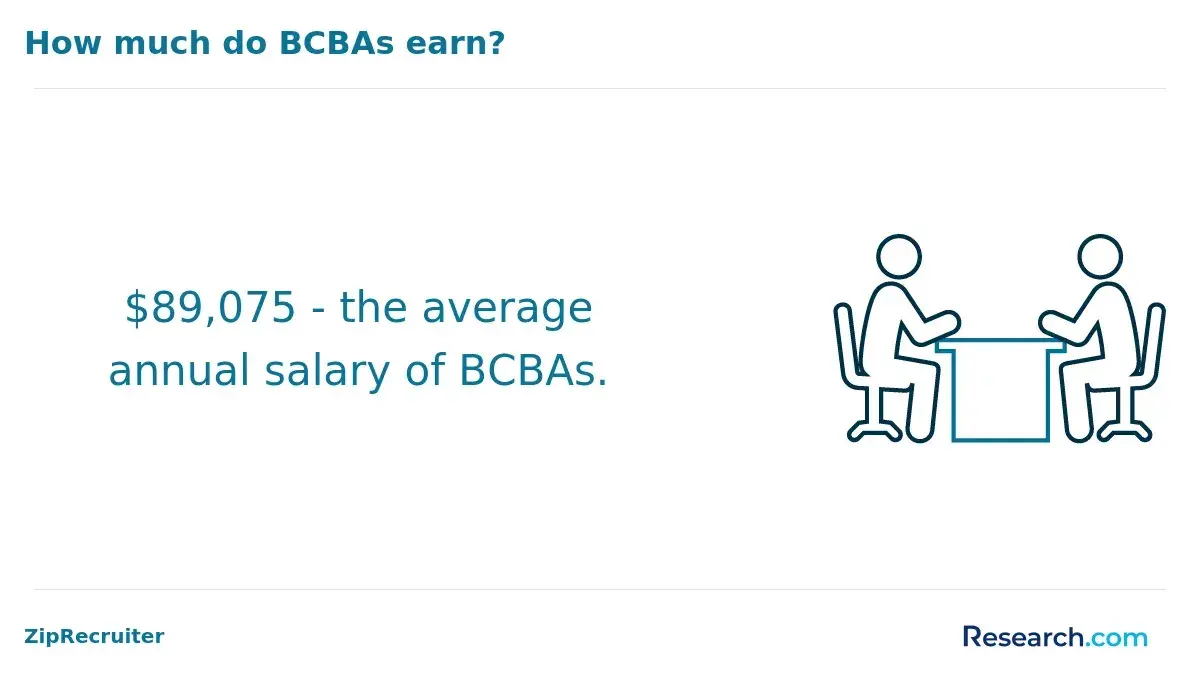
Entry-level analysts typically earn between $45,000 and $60,000 per year. Salaries can rise to $75,000-$90,000 within five years as certification and experience accumulate. Board Certified Behavior Analysts (BCBAs) earn even higher wages, with median salaries around $85,000 to $95,000 nationwide, reflecting their specialized credentials and supervisory responsibilities.
Location has a major effect on pay. Urban markets, areas with strong behavioral health funding, and states with higher demand for autism and developmental disability services often offer stronger compensation. Employer type also matters: school districts, healthcare clinics, private agencies, hospitals, and consulting organizations may differ in salary, benefits, caseload expectations, billable-hour requirements, and advancement opportunities.
Students should compare salary potential with program cost. Online ABA programs typically charge between $500 and $705 per credit. Simmons University offers courses at $500-$700 per credit, St. Cloud State University charges $705 per credit, and Florida Institute of Technology stands out with a 100% credential pass rate at $510 per credit, making it a valuable choice according to Action Behavior (2025).
Return on investment depends on more than tuition. A lower-cost program that delays certification because of weak fieldwork support may be less valuable than a moderately priced program with strong advising and exam outcomes. Conversely, a high-cost program should be justified by accreditation alignment, placement support, faculty expertise, and career outcomes that match the student’s goals.
ABA graduates can also increase income over time by pursuing supervisory roles, developing expertise in severe behavior or early intervention, moving into program leadership, consulting, or applying ABA principles in organizational behavior management. Credential maintenance, ethical practice, and ongoing professional development remain important for long-term career growth.
What certifications require ABA graduate degrees?
The main certification that requires a graduate degree is the Board Certified Behavior Analyst (BCBA) credential. To qualify, candidates must complete graduate-level education in applied behavior analysis or a related field with coursework that meets Behavior Analyst Certification Board (BACB) requirements. The graduate degree is only one component; candidates must also satisfy supervised fieldwork and examination requirements.
The Board Certified Assistant Behavior Analyst (BCaBA) credential requires only a bachelor’s degree, but students who want independent practice authority, supervisory responsibilities, broader career mobility, or state licensure often need the graduate-level BCBA pathway. Many advanced behavior analysis roles are built around BCBA certification.
ABA graduate degrees may also support specialized practice areas in autism spectrum disorders, clinical behavior analysis, organizational behavior management, and supervision. These may not always be separate universal credentials, but employers and licensing boards often look for graduate coursework, supervised experience, and documented competence in the relevant area.
State licensure is another key consideration. Many states in the U.S. require behavior analysts to meet education and certification standards that closely mirror BACB requirements. Students should check the rules in the state where they plan to practice before choosing a program, especially if they are enrolling online or may move after graduation.
Program quality can affect certification readiness. Programs with strong mentorship and low student-to-faculty ratios tend to improve certification outcomes. For example, the University of North Carolina Wilmington maintains an 18:1 ratio and has achieved 100% BCBA exam pass rates, showcasing the value of quality graduate education in preparing candidates effectively (Advanced Autism, 2026).
In practical terms, an ABA graduate degree is most important for students who want to:
- Obtain BCBA certification.
- Meet state licensure requirements for behavior analysts.
- Qualify for supervisory and clinical leadership roles.
- Build eligibility for specialized ABA-related practice areas.
- Access structured mentorship and exam preparation through a recognized graduate program.
Other Things You Should Know About Applied Behavior Analysis
Many ABA graduate programs do not require the GRE in 2027. Instead, admissions often focus on a bachelor’s degree, minimum GPA, transcripts, recommendation letters, and a personal statement. Some programs still ask for GRE scores, so applicants must check each school’s published admission rules.
Whether a thesis is required varies by program. Some ABA master's programs include a thesis as a graduation requirement, while others offer a non-thesis option involving additional coursework or practical projects. Prospective students should check specific program details to understand research requirements.
Prerequisites typically include completing an accredited graduate program covering the BACB's coursework requirements and supervised fieldwork hours. In addition, applicants must pass the Behavior Analyst Certification Board's examination to become a board-certified behavior analyst.
Supervised fieldwork is critical in ABA training as it provides hands-on experience applying behavior analysis principles in real-world settings. Most programs require a specified number of supervised hours to ensure competency before certification eligibility.
- Association for Behavior Analysis International Accreditation Board https://accreditation.abainternational.org/accredited-programs.aspx
- 5 Courses in an Applied Behavior Analysis Graduate Certificate Program https://www.appliedbehavioranalysisprograms.com/lists/5-courses-in-an-aba-graduate-certificate-program/
- Master of Science in Applied Behavior Analysis (ABA) https://tsengcollege.csun.edu/programs/ABA/admission-requirements
- ABA Therapy Certification Requirements https://www.aprilaba.com/resources/aba-therapy-certification-requirements
- Applied Behavior Analysis Graduate Programs | Advanced Autism Services https://www.advancedautism.com/post/applied-behavior-analysis-graduate-programs
- Exploring ABA Therapist Job Outlook | True Progress Therapy https://trueprogresstherapy.com/blog/aba-therapist-job-outlook/
- BCBA Career Outlook: Essential Guide to Salary and Growth Trends https://www.hiddenlightaba.com/bcba-career-outlook-essential-guide-to-salary-and-growth-trends/
- How Long Does It Take to Become a BCBA? | Timeline Guide https://www.appliedbehavioranalysisedu.org/2026/04/how-long-does-it-take-to-become-a-bcba/
- 6 ABA career paths with M.S. Applied Behavior Analysis - Insight Digital Magazine https://www.thechicagoschool.edu/insight/psychology/applied-behavior-analysis-career-paths/
- ABA Masters Programs | Apex ABA https://www.apexaba.com/blog/aba-masters-programs