2027 Online BCBA Programs Without Campus Visits: What to Expect

Co-Founder and Chief Data Scientist
Choosing a BCBA program is not just a question of convenience. If you need a route that does not require campus travel, you must confirm that the program can deliver the required coursework online, support your supervised fieldwork plan, and keep you eligible for the BCBA exam and any state licensure requirements that apply where you plan to practice.
Fully online BCBA programs can be a practical option for working teachers, behavior technicians, healthcare staff, career changers, and graduate students who cannot relocate or attend weekend residencies. The main trade-off is that online coursework does not remove the need for supervised applied experience with clients. You may be able to complete classes remotely, but you still need a compliant fieldwork setting and qualified supervision.
This guide explains how no-campus-visit BCBA programs work, what to verify before enrolling, how accreditation and fieldwork affect eligibility, what online curricula typically include, and how to compare cost, timeline, career outcomes, and job outlook.
Key Things You Should Know
- Fully online BCBA programs in 2026 offer flexible schedules, enabling 65% of students to complete coursework without any campus visits, accommodating working professionals and remote learners.
- Most programs require practicum hours to be completed in local settings under approved supervisors, ensuring hands-on Applied Behavior Analysis experience despite the distance format.
- Graduates of online BCBA programs maintain pass rates on the BCBA exam comparable to traditional programs, averaging around 70% as of 2024 data.
What are online BCBA programs without campus visits?
Online BCBA programs without campus visits are graduate-level applied behavior analysis pathways that deliver required coursework remotely and do not require students to attend classes, orientations, labs, or residencies on campus. They are designed for students who need to keep working, live far from a university, or cannot relocate for a traditional program.
The “without campus visits” part usually applies to academic delivery. Students complete lectures, assignments, exams, discussion boards, case analyses, and faculty meetings through a learning platform. However, BCBA preparation also includes supervised fieldwork. That fieldwork is typically completed in a local school, clinic, agency, home-based service setting, or other approved environment while supervision and documentation may be coordinated digitally.
Enrollment in fully online BCBA programs grew by 28% compared to the previous year, reflecting increased demand from working professionals and students who need location-flexible graduate study. The appeal is clear: students can avoid commuting and travel costs while still following a structured certification pathway.
What “fully online” should mean before you enroll
Before choosing a program, ask the school to confirm in writing whether the program has any required in-person components. Some programs are mostly online but still require short residencies, campus intensives, or in-person orientation. A true no-campus-visit option should allow you to complete the academic portion remotely from start to finish.
- Coursework: Delivered through asynchronous modules, live online classes, or a mix of both.
- Faculty access: Provided through video meetings, office hours, email, discussion forums, or online advising.
- Fieldwork: Completed locally with qualified supervision and proper documentation.
- Exam preparation: Often supported through practice questions, review modules, case-based assignments, and data-analysis exercises.
The best fit depends on your learning style. Cohort-based programs provide more structure and peer interaction. Self-paced or asynchronous programs offer more schedule control but require stronger discipline. In either format, success depends on reliable internet access, consistent weekly study time, early fieldwork planning, and proactive communication with instructors and supervisors.
Students comparing affordable and accredited remote options can use BCBA online resources as a starting point, but they should still verify current eligibility rules directly with the program and the certification board.
How do fully online BCBA programs work?
Fully online BCBA programs move the classroom portion of applied behavior analysis training into a digital format. Students learn through recorded lectures, live video sessions, readings, data-analysis assignments, case studies, quizzes, exams, discussion boards, and instructor feedback. The goal is to teach the same core competencies expected in campus-based programs while giving students more control over where they study.
Coursework typically covers behavior assessment, intervention planning, ethics, measurement, experimental design, supervision, and data-based decision-making. Assignments often require students to interpret behavioral data, design behavior intervention plans, evaluate case scenarios, and explain how they would apply ethical and professional standards.
How online delivery is usually structured
| Program element | How it works online | What students should check |
| Lectures | Recorded modules, live classes, or both | Whether attendance is required at set times |
| Assignments | Case analyses, quizzes, projects, papers, and data exercises submitted online | How much weekly time the program expects |
| Faculty interaction | Virtual office hours, email, discussion forums, and synchronous sessions | How quickly instructors respond and how feedback is delivered |
| Exams | Online testing, sometimes with proctoring | Technology requirements and exam policies |
| Fieldwork | Completed locally with qualified supervision and digital documentation | Whether the school helps students find or verify supervisors |
Fieldwork remains the most important planning issue. A student may complete supervised hours in a neighborhood clinic, school district, or service agency while meeting remotely with a qualified supervisor for review, feedback, and documentation. The program may provide fieldwork coordination, or it may expect students to identify an appropriate local site independently.
Online programs may also use virtual simulations, mock supervision meetings, recorded role-plays, and case-based tools to help students practice professional judgment. These tools can strengthen preparation, but they do not replace the need for approved supervised experience.
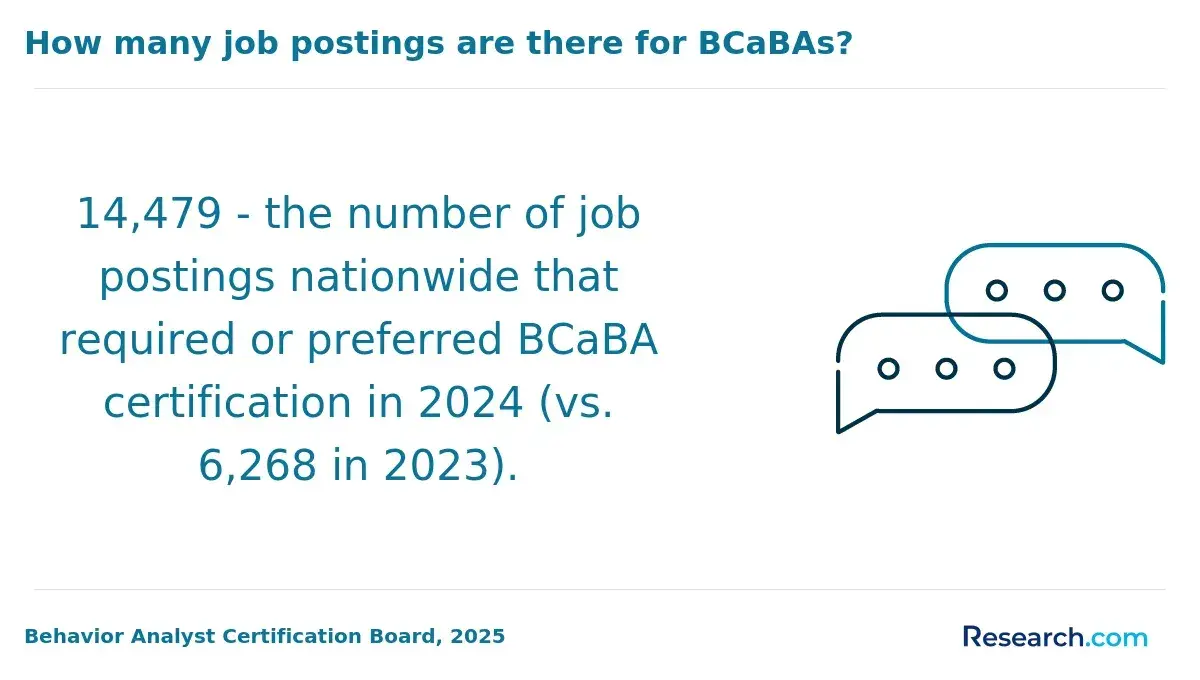
The ABA job market is expanding rapidly, with a 45% increase in postings projected from 2024 to 2025 and over 15,000 new positions requiring BCBA certification, according to the U.S. Bureau of Labor Statistics Occupational Outlook 2025. For students who cannot relocate, online study can provide a realistic route into this market while maintaining employment and family responsibilities. Readers comparing formats and institutions can review BCBA schools for broader program context.
The key advantage of a fully online BCBA program is access. The key risk is assuming that online coursework automatically solves the fieldwork requirement. It does not. Strong applicants plan coursework and supervision together from the beginning.
Which accredited schools offer online BCBA programs without visits?
Several universities offer online BCBA-aligned study options for students seeking no-campus-visit coursework. Schools named in this guide include Florida Institute of Technology, Ball State University, University of Cincinnati, Simmons University, and Arizona State University. Because policies can change, students should confirm whether each program currently has any campus, residency, internship, or orientation requirement before applying.
The most important question is not only whether a school is well known. It is whether the specific program meets current BCBA coursework expectations and whether its delivery model fits your fieldwork plan. Some online programs provide only the academic course sequence, while others offer a full graduate degree with advising, exam preparation, and fieldwork guidance.
How to compare schools with no-visit options
- Confirm the program format: Ask whether the program is 100% online or whether any short-term in-person requirement applies.
- Verify certification alignment: Make sure the coursework is accepted for BCBA eligibility under the standards that apply to your application timeline.
- Ask about fieldwork support: Determine whether the school helps identify supervisors or expects you to arrange supervision independently.
- Review scheduling: Check whether classes are synchronous, asynchronous, accelerated, cohort-based, or self-paced.
- Check state rules: If your state licenses behavior analysts, confirm that the program’s degree and coursework satisfy state-level requirements.
- Understand total cost: Ask whether tuition includes supervision support, technology fees, textbooks, exam preparation, or other required expenses.
Florida Institute of Technology, Ball State University, and University of Cincinnati are commonly considered by students researching online BCBA pathways. Simmons University and Arizona State University also feature online BCBA coursework combined with flexible internship options, allowing fully remote academic completion when paired with appropriate local supervision.
Students should be cautious with marketing language. A program may advertise online coursework but still require in-person field activities, local practicum placement, or separately arranged supervision. That does not necessarily make the program unsuitable, but it affects planning, cost, and eligibility.
The field's growth is reflected in a 12% median salary increase to $98,500 and top salaries exceeding $130,000 in high-demand states according to BACB Certificant Registry Data 2025. These outcomes make careful school selection more important: the right program should prepare students for certification requirements, not simply offer convenient online classes. For a curated starting point, review BCBA masters programs online.
For BCBA certification, students must complete graduate-level coursework that meets Behavior Analyst Certification Board requirements. The practical takeaway is simple: do not enroll in an online BCBA program until you have verified that its coursework is accepted for the certification pathway you plan to use.
Programs often refer to a verified course sequence, or VCS, to show that their ABA coursework has been reviewed for alignment with required content areas. This matters because a graduate degree alone may not be enough. The coursework must cover required competencies such as ethics, behavior assessment, intervention design, measurement, data analysis, and professional practice.
What to verify before paying a deposit
- Current VCS status: Confirm the program’s standing through the official certification-board source, not only the university website.
- Degree level: Check whether the program awards a graduate degree or only provides coursework.
- Catalog year: Make sure the curriculum applies to the certification rules in effect for your expected application date.
- Fieldwork separation: Ask whether supervised fieldwork is included, supported, or entirely your responsibility.
- State licensure fit: If your state requires licensure, verify whether the degree and coursework satisfy that state’s rules.
Online BCBA program accreditation standards are especially important for no-campus-visit programs because students may never meet administrators in person. You need clear documentation showing what the program does and does not provide. A program can be convenient, affordable, and respected but still be the wrong choice if it does not align with your certification timeline.
Tuition affordability is also part of the decision. The average cost for no-campus-visit online BCBA master's programs has decreased to $650 per credit, about 22% less than hybrid programs, according to the ABAI Verified Course Sequence Report 2025. Lower cost can improve access, but it should not outweigh eligibility, supervision quality, faculty support, or state licensure compatibility.
Students should also understand that supervised fieldwork cannot be replaced by online coursework. Coursework may be completed fully online, but the applied experience requirement involves real professional practice, qualified supervision, and accurate documentation. Before enrolling, ask how the program helps students understand and track those requirements.
Prospective students comparing accredited online ABA options can review the best online ABA masters programs, then confirm all certification details directly with the program.
BCBA certification and licensure are related but not identical. Certification is the professional credential issued through the Behavior Analyst Certification Board. Licensure is permission from a state to practice legally as a behavior analyst, when that state requires it. A student may need both.
BCBA certification and licensure require completing an accredited course sequence aligned with the BACB 5th edition task list, accumulating at least 1,500 hours of supervised experience, and passing the Behavior Analyst Certification Board (BACB) exam. This supervised experience can be completed through practicum placements or independent fieldwork under qualified professionals.
Typical sequence from student to practicing BCBA
- Complete the required graduate coursework: Enroll in a program that aligns with current BACB requirements.
- Accumulate supervised experience: Complete at least 1,500 hours of supervised experience with proper documentation.
- Apply for exam eligibility: Submit required records, transcripts, and documentation to BACB.
- Pass the BCBA exam: Demonstrate competency in ethics, assessment, intervention, measurement, supervision, and data-based decision-making.
- Apply for state licensure if required: Submit a separate application to the appropriate state board when applicable.
- Maintain the credential: Complete continuing education and meet renewal requirements.
The BACB exam covers ethics, behavioral assessment, intervention design, and data analysis. Data from the BACB Examination Results Summary 2025 show that online BCBA programs have a 71% first-time pass rate, outperforming in-person programs by 4 percentage points, confirming that accredited online pathways can be academically rigorous when properly designed.
Licensure rules vary by state. Some states require a separate license or registration before a BCBA can provide services independently, bill for services, supervise staff, or use certain professional titles. Requirements may include proof of certification, background checks, fees, jurisprudence exams, or continuing education.
The safest approach is to check state rules before choosing a program, not after graduation. If you plan to move, compare requirements in both your current state and the state where you may practice. Processing times can vary, so students should keep copies of transcripts, supervision logs, exam results, and program documentation in an organized file.
The BCBA curriculum in online programs is designed to prepare students to assess behavior, design evidence-based interventions, evaluate progress with data, and practice ethically across client populations and service settings. The online format changes how students access instruction, but it should not weaken the academic expectations.
Most programs begin with the principles of behavior analysis, including reinforcement, punishment, stimulus control, motivating operations, generalization, and maintenance. Students then apply these principles to assessment, intervention planning, staff training, supervision, and client-centered service delivery.
Common curriculum areas
- Behavioral principles: Core concepts that explain how behavior is learned, maintained, and changed.
- Measurement and data analysis: Methods for collecting, graphing, interpreting, and using behavioral data.
- Functional behavior assessment: Procedures for identifying variables that contribute to challenging behavior.
- Behavior intervention planning: Development of behavior intervention plans, often called BIPs, based on assessment findings.
- Ethics and professional conduct: Decision-making responsibilities related to clients, families, supervisees, colleagues, documentation, and scope of competence.
- Research methods: Single-subject research designs and evaluation of intervention effectiveness.
- Supervision and training: Strategies for training staff, caregivers, educators, and other service providers.
- Specialized applications: Topics such as verbal behavior, behavior skills training, challenging behavior, education, clinical practice, and organizational settings.
Functional behavior assessment is usually a central part of the curriculum. Students learn to define behavior clearly, collect direct and indirect data, identify functional relationships, and translate findings into intervention plans that are ethical, measurable, and practical for real environments.
Online programs often use case studies, interactive modules, virtual simulations, data sets, recorded observations, and discussion-based problem solving. These tools help students practice decision-making before entering or advancing in supervised fieldwork. Digital platforms may also support logging supervised hours, reviewing supervisor feedback, and organizing documentation.
Advanced coursework may address collaboration with families, educators, healthcare professionals, and multidisciplinary teams. This is important because BCBAs rarely work in isolation. They must communicate findings clearly, adapt recommendations to service settings, and monitor whether interventions are producing meaningful outcomes.
Financially, graduates benefit significantly; according to the National University ROI Study on ABA Programs 2025, BCBA graduates from fully online programs recoup tuition in under 18 months and achieve a 250% return on investment within five years. Students should interpret ROI alongside program cost, debt, employer support, local salary levels, and whether the program helps them complete certification requirements efficiently.
Admission requirements for online BCBA programs vary by institution, but most programs look for evidence that applicants can handle graduate-level study and have a clear reason for entering applied behavior analysis. Requirements may differ depending on whether the program is a master’s degree, certificate, or post-master’s coursework sequence.
Applicants typically need a bachelor's or master's degree from an accredited institution. Programs often prefer or require academic preparation in psychology, education, special education, human services, healthcare, behavior analysis, or a related field. Foundational coursework in statistics, research methods, learning theory, or developmental psychology may strengthen an application.
Common application materials
- Official transcripts: Used to verify degree completion, GPA, prerequisites, and academic preparation.
- Letters of recommendation: Often requested from professors, supervisors, or professionals who can speak to readiness for graduate study.
- Statement of purpose: A written explanation of career goals, interest in behavior analysis, and fit with the program.
- Resume or CV: Helpful for showing experience in schools, clinics, behavioral health, autism services, or related settings.
- Prerequisite documentation: Some programs require prior coursework in statistics, research, psychology, or education.
- International documents: International applicants may need credential evaluations and proof of English proficiency through tests such as TOEFL or IELTS.
Some programs admit bachelor's degree holders directly into master's-level BCBA tracks. Others are designed for students who already hold or are pursuing a graduate degree. Certificate-only options may be appropriate for students who already meet the degree requirement but still need the required behavior-analytic coursework.
Prior field experience is not always mandatory, but it can be valuable. Applicants who have worked as registered behavior technicians, teachers, paraprofessionals, case managers, counselors, or clinic staff may be better prepared to understand the applied demands of the profession. Some programs may request documented supervised fieldwork hours or experience in clinical or educational settings.
Online BCBA programs primarily serve working adults. According to the ABAI Online Education Survey 2025, 85% of enrollees were full-time professionals, and 92% reported improved work-life balance after program completion. That flexibility is useful, but applicants should still confirm weekly workload, synchronous meeting times, and fieldwork expectations before enrolling.
Online BCBA programs typically require 9 months to 2 years to complete, depending on program type, course load, fieldwork pace, and whether the student is enrolled full time or part time. Accelerated programs can move quickly, but speed only helps if the student can also manage assignments, supervision, and documentation without falling behind.
Part-time options often extend to 18-24 months and may be more realistic for full-time employees, parents, and students who need to build supervised fieldwork gradually. The required coursework timeline and the fieldwork timeline do not always match. A student may finish classes before completing all supervised hours.
What affects completion time?
- Course load: Taking more courses per term shortens the academic timeline but increases weekly workload.
- Program format: Cohort programs follow a set sequence, while flexible programs may allow faster or slower progress.
- Fieldwork access: Students with an approved work setting may accumulate hours more efficiently than those still seeking a placement.
- Supervisor availability: Delays can occur if qualified supervisors are limited in the student’s area.
- Documentation habits: Poor tracking can slow certification even when the hours have been completed.
A key factor influencing timeline is the availability of supervised fieldwork hours, which are mandatory for BACB certification. Notably, 68% of online BCBA students secured local supervised fieldwork independently in 2025, up from 52% in 2024, highlighting improved accessibility for remote learners, according to the BACB Fieldwork Supervision Report 2025.
Costs vary substantially among programs. Typical tuition ranges from $7,000 to $15,000 for accredited online BCBA courses. Some programs bundle supervision and fieldwork coordination fees, while others charge these separately. Additional expenses may include textbooks, materials, technology fees, and BACB exam fees.
Cost questions to ask before enrolling
- Does tuition cover all required courses, or are there separate fees?
- Are textbooks, software, proctoring, or technology costs included?
- Does the program provide fieldwork coordination or supervision support?
- If supervision is separate, what will it cost and who is responsible for arranging it?
- Are payment plans, employer tuition assistance, scholarships, or financial aid available?
- What happens financially if you need to pause or retake a course?
Programs with included fieldwork support may cost more but reduce administrative burden. Lower-cost programs may be a better fit for students who already have a qualified supervisor and an approved employment setting. The best value is not necessarily the cheapest tuition; it is the program that gets you through coursework and fieldwork with the least avoidable delay.
BCBA certification can lead to roles in healthcare, autism services, schools, behavioral health agencies, social services, consulting, research, and organizational behavior management. The credential is especially relevant for professionals who want to design behavior intervention plans, supervise service delivery, train staff, and use data to evaluate client progress.
Board Certified Behavior Analysts build careers across healthcare, education, and organizational management, with salaries tied to experience, employer type, location, and specialization. Entry-level positions typically offer annual salaries between $60,000 and $70,000. As professionals gain experience or enter advanced roles, earnings often surpass $90,000, with specialized clinical or corporate roles reaching $120,000 or more.
Common BCBA career paths
- Clinical behavior analyst: Provides assessment and intervention services for individuals with autism spectrum disorder, developmental disabilities, or behavioral support needs.
- School-based consultant: Supports behavior management plans, staff training, student interventions, and collaboration with educators and families.
- Organizational behavior manager: Applies behavior-analytic principles to employee performance, systems improvement, training, and workplace culture.
- Research analyst: Evaluates behavioral interventions, outcomes, data trends, and program effectiveness.
- Supervisor or clinical director: Oversees behavior technicians, treatment quality, documentation, caregiver training, and service delivery standards.
Salary varies widely. Metropolitan areas and private healthcare employers generally offer higher pay, while school-based roles may provide different advantages such as predictable schedules, public-sector benefits, or alignment with the academic calendar. Experience with supervision, severe behavior, early intervention, insurance-based services, telehealth, or organizational consulting can also affect compensation.
Certification as a BCBA can improve job security and advancement opportunities as demand for evidence-based behavioral intervention continues to expand. Innovations like virtual reality simulations in online BCBA programs have increased practical skill acquisition by 35% compared to traditional video methods, enhancing career readiness and potential long-term salary growth (Journal of Applied Behavior Analysis Tech Review 2025).
Students should be realistic about early-career expectations. Certification opens doors, but salary growth often depends on supervised experience quality, clinical judgment, leadership ability, communication skills, and willingness to work in high-need settings. Continuing education and skill development remain important for moving into senior clinical, supervisory, consulting, or administrative roles.
What is the job outlook for BCBAs?
The job outlook for BCBAs is strong because demand for behavior-analytic services continues across healthcare, education, autism services, developmental disability supports, mental health, and organizational consulting. The demand for board certified behavior analysts is expected to grow by 32% through 2030, significantly outpacing average job growth across all occupations.
This growth is driven by several forces: broader use of evidence-based behavioral interventions, continued demand for autism and developmental disability services, school-based behavioral support needs, and greater recognition of applied behavior analysis in clinical and organizational settings.
Online BCBA programs have become important in meeting workforce demand. They are projected to supply around 60% of new certificants by 2030 because they make graduate preparation more accessible to working adults, students outside major metro areas, and people who cannot relocate for campus-based programs.
Where demand is likely to remain strong
- Schools: Behavior intervention planning, staff training, student support, and consultation with educators.
- Clinics and healthcare organizations: Assessment, treatment planning, caregiver training, and supervision of behavior technicians.
- Home- and community-based services: Intervention support in natural environments and family-centered care.
- Private practice: Independent or group-based behavior-analytic services where state rules allow.
- Organizational consulting: Performance improvement, training systems, safety, and workplace behavior change.
Career opportunities are varied, but employability depends on more than earning the credential. Employers often look for strong fieldwork experience, ethical judgment, documentation skills, cultural responsiveness, ability to supervise others, and competence with data-based decisions. Program quality and supervised experience can therefore affect readiness for leadership roles.
Salary prospects are competitive, with earnings increasing alongside experience and specialization. Geographic location, employer type, reimbursement environment, and state licensure requirements can all influence opportunities. Labor market data from the U.S. Department of Labor underscores the BCBA profession as a strong, lucrative career path in applied behavior analysis education.
Other Things You Should Know About Applied Behavior Analysis
The program should be regionally accredited and, for BACB eligibility, aligned with the 2027 BCBA coursework requirements approved by the Behavior Analyst Certification Board. Check that the degree, verified course sequence, and fieldwork structure all match current BACB standards before enrolling.
In 2027, online BCBA students completing their practicum hours remotely can expect to collaborate with local agencies or clinics via online supervision. This involves video conferencing with a Board Certified Behavior Analyst, submitting video observations, and receiving timely feedback to ensure proper application of behavioral analysis techniques.
Students in online BCBA programs typically need reliable internet access, a computer with video capabilities, and software for virtual meetings and coursework submission. Programs may also require access to specific learning management systems and data collection tools used in behavior analysis practice. Meeting these technical requirements is crucial to successful participation and timely completion of the program.
Online BCBA programs maintain quality by following BACB curriculum guidelines and incorporating standardized assessments and supervised fieldwork. Many programs use experienced faculty and structured online platforms to deliver interactive lessons, discussions, and applied assignments. Accreditation and regular program reviews help guarantee that students receive comprehensive and consistent training equivalent to on-campus programs.
- Strategies for Increasing BCBA Salary | Level Ahead ABA https://www.levelaheadaba.com/bcba-salary
- BCBA CEUs Online Courses & Information https://www.thebehavioracademy.com/blog/bcba-ceus-online-courses-information
- 25+ Affordable ABA/BCBA Online Programs (Masters & Certs) https://abamastersprograms.org/affordable-online-aba-masters-programs/
- Pros and Cons of Online ABA Courses and Certifications | Links https://linksaba.com/pros-and-cons-of-online-aba-courses-and-certifications/
- How Long Does It Take to Become a BCBA® and Keep Learning? https://dobettercollective.com/how-long-does-it-take-to-become-a-bcba-and-keep-learning/
- A Guide to BCBA Certification Requirements | Blossom ABA https://blossomabatherapy.com/blog/bcba-certification-requirements
- Choosing Excellence: Discover the Best BCBA Programs Online | Brighter Strides ABA https://www.brighterstridesaba.com/blog/bcba-programs-online/
- How to Become a Behavior Analyst https://onlinecounselingprograms.com/mental-health-careers/how-to-become-behavior-analyst-bcba/
- BCBA master's programs | edX https://www.edx.org/masters/psychology/online-aba-programs/bcba-programs-online
- BCBA Salary by State | Flywheel Centers https://flywheelcenters.com/bcba-salary-breakdown/