2027 Do You Need ABA Experience Before Applying to a BCBA Program

Co-Founder and Chief Data Scientist
Applying to a BCBA program is not only a graduate school decision; it is a certification, fieldwork, and career-planning decision. Many applicants worry that they need years of applied behavior analysis experience before they can be admitted. In most cases, they do not. However, the amount of ABA exposure you have can affect how prepared you feel in coursework, how quickly you complete supervised fieldwork, and how competitive you are for early career roles.
This guide explains when prior ABA experience matters, what BCBA certification requires in the United States, which undergraduate backgrounds usually qualify, how long programs take, what they cost, and how to compare accredited online and in-person options. It is especially useful for career changers, psychology and education graduates, RBTs considering advancement, and working professionals trying to choose a practical route to BCBA certification.
Key Things You Should Know
- Most BCBA programs do not require prior ABA experience for admission but recommend foundational knowledge to enhance preparation and success.
- Accredited programs often provide prerequisite courses to build necessary ABA skills within the curriculum, supporting students without direct fieldwork.
- Data from 2024 shows 48% of admitted BCBA candidates had some ABA experience, indicating it is common but not mandatory for entry.
Do You Need ABA Experience Before Applying to BCBA Programs?
You usually do not need formal ABA work experience before applying to a BCBA program in the United States. Most programs focus first on whether you meet graduate admission standards, hold or are pursuing the required academic background, and can complete behavior-analytic coursework that aligns with certification expectations. Direct experience as an RBT, behavior therapist, classroom aide, or intervention support worker is helpful, but it is not always a formal admissions requirement.
The better question is not whether ABA experience is mandatory, but whether you are ready for the intensity and applied nature of BCBA training. Students who have observed behavior intervention plans, collected behavior data, worked with clients, or participated in supervised service settings often understand course concepts faster because they can connect theory to real cases.
Relevant experience can help you in several ways:
- Admissions readiness: It gives you stronger examples for statements of purpose, interviews, and recommendation letters.
- Academic preparation: You enter with a clearer understanding of reinforcement, behavior assessment, data collection, and ethics.
- Fieldwork planning: You may already have access to a setting where supervised experience can be completed.
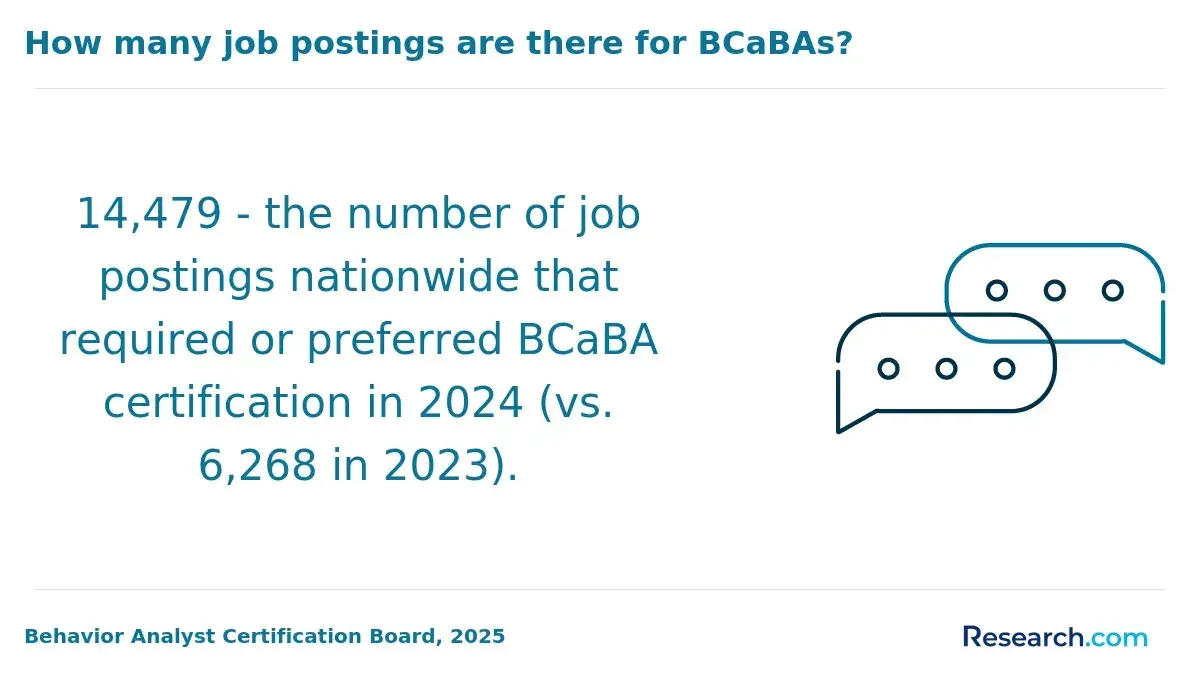
- Career positioning: Employers often prefer candidates who can show practical ABA skills, especially as BCBA job postings recently rose by 28% year-over-year.
If you do not have ABA experience, you can still apply strategically. Look for programs that support new entrants, offer strong advising, and help students locate supervised fieldwork. Before applying, consider volunteering, shadowing a BCBA, working in developmental services, or pursuing an entry-level role in behavior intervention. These steps are not always required, but they reduce uncertainty and make the transition into graduate training easier.
Requirements vary by school, so review each program’s prerequisites instead of assuming all BCBA pathways are the same. If cost is also a factor, this guide to BCBA certification options can help you compare affordable routes.
What Are BCBA Certification Requirements in the US?
BCBA certification in the United States generally requires a graduate-level academic pathway, behavior-analytic coursework that meets BACB standards, supervised fieldwork, and successful completion of the BCBA exam. Prior extensive ABA work experience before graduate enrollment is not the central requirement. The key requirement is completing the approved education and supervised experience needed to qualify for certification.
At a high level, candidates should expect three major components:
- Graduate education: Candidates must hold a master's degree or higher in a relevant field.
- Verified coursework: Coursework must address behavior analysis principles, ethics, assessment, intervention, measurement, and related professional competencies.
- Supervised fieldwork: Candidates complete documented supervised fieldwork, ranging from 1,500 to 2,000 hours depending on supervision type, under qualified supervision.
Many students complete supervised fieldwork during their BCBA program rather than before admission. This is why applicants without earlier ABA employment can still be viable candidates if the program has clear fieldwork support and the student is prepared to meet documentation requirements.
Data from the BACB Certificant Registry Analysis indicates that only 42% of BCBA exam applicants had prior fieldwork experience, yet 88% still became eligible for certification after graduation. The practical takeaway is important: entering a BCBA program without extensive prior ABA exposure is common, but students must be organized about completing fieldwork once enrolled.
When comparing programs, ask whether the school provides placement assistance, has partnerships with clinical or educational sites, and offers advising on fieldwork documentation. A program may meet coursework expectations but still leave students responsible for finding supervision independently. For more information on suitable BCABA accredited programs, review these BCABA-accredited programs.
The strongest BCBA candidates focus less on accumulating unrelated hours before admission and more on choosing a program that integrates coursework, ethical practice, fieldwork planning, and exam preparation.
Can You Get into a BCBA Program Without Prior ABA Experience?
Yes. You can get into a BCBA program without prior ABA experience, especially if you meet academic prerequisites and can explain your career goals clearly. Many programs admit students from psychology, education, counseling, social work, special education, and related human services backgrounds. Some also consider applicants from less direct fields if they show strong motivation and readiness for graduate-level behavior analysis.
That said, lack of experience can create a steeper learning curve. Students who have never worked in ABA may need more time to understand real-world intervention settings, caregiver collaboration, behavior data systems, and ethical decision-making under supervision.
Experience also appears to be linked with exam readiness. According to the BACB Exam Performance Report, 2025, candidates with at least 500 hours of pre-program ABA experience pass the BCBA exam on their first try at a rate of 78%, compared to 62% for those lacking it. This does not mean applicants without experience should wait years to apply. It means they should build practical exposure as early as possible.
If you are applying without ABA experience, strengthen your application by showing evidence of readiness in other ways:
- Connect your background to ABA: Explain how prior work in education, psychology, disability services, healthcare, or social services prepared you for behavior-analytic training.
- Get short-term exposure: Volunteer, shadow, or work part-time in a setting that uses behavior intervention or developmental supports.
- Consider RBT training: An RBT certification pathway can introduce core terminology, ethics, and client-service expectations.
- Seek mentorship: Speaking with BCBAs can help you understand the profession before committing to a graduate program.
- Choose a supportive program: Look for advising, practicum coordination, and clear guidance on supervised fieldwork.
Applicants without prior ABA experience should avoid presenting the degree as a quick credential. Admissions committees and future supervisors want to see that you understand the responsibility of the role. If you need a flexible graduate pathway while building experience, a behavior analysis master's online may help you combine coursework with supervised practice.
BCBA graduate programs commonly accept applicants with bachelor’s degrees in fields connected to behavior, learning, development, education, or human services. Typical qualifying undergraduate degrees include psychology, education, social work, special education, and communication disorders. Nursing, speech pathology, and counseling degrees may also be accepted if the applicant has relevant preparation or can complete missing prerequisites.
Program expectations vary. Some schools admit students from a broad range of majors, while others prefer applicants who have completed foundational coursework in behavior analysis, research methods, child development, special education, or psychology. If your degree is not directly related, you may still qualify, but you may need prerequisite courses or a stronger explanation of your career transition.
Common undergraduate backgrounds compare this way:
- Psychology: Often a strong fit because students may already understand learning theory, research methods, and human behavior.
- Education or special education: Useful for applicants who want to work in schools, early intervention, or developmental services.
- Social work or counseling: Helpful for understanding client needs, families, ethics, and service systems, though additional ABA coursework may be needed.
- Communication disorders, speech pathology, or nursing: May fit well for applicants interested in interdisciplinary clinical settings.
- Unrelated majors: Business administration or other fields may be considered, but applicants often need supplemental coursework or relevant experience.
Many programs expect prerequisite exposure to topics such as principles of behavior, experimental analysis of behavior, ethics, and research or measurement methods. Do not assume your bachelor’s degree alone is enough; check each program’s admissions page and ask whether prerequisites can be completed before or during enrollment.
Data from the BACB Fieldwork Data Summary, 2024, shows BCBA candidates without prior ABA exposure complete an average of 22% more supervised fieldwork hours after their master's degree to earn certification. A relevant undergraduate background can therefore reduce friction, but it is not the only path. Exploring an ABA program can help you identify coursework that aligns with graduate admissions and certification planning.
BCBA programs generally take 1.5 to 3 years to complete, depending on enrollment pace, program design, fieldwork access, and how quickly a student can meet supervised experience requirements. Coursework alone may be shorter than the full certification timeline because candidates must also complete fieldwork, prepare for the exam, and finish administrative steps.
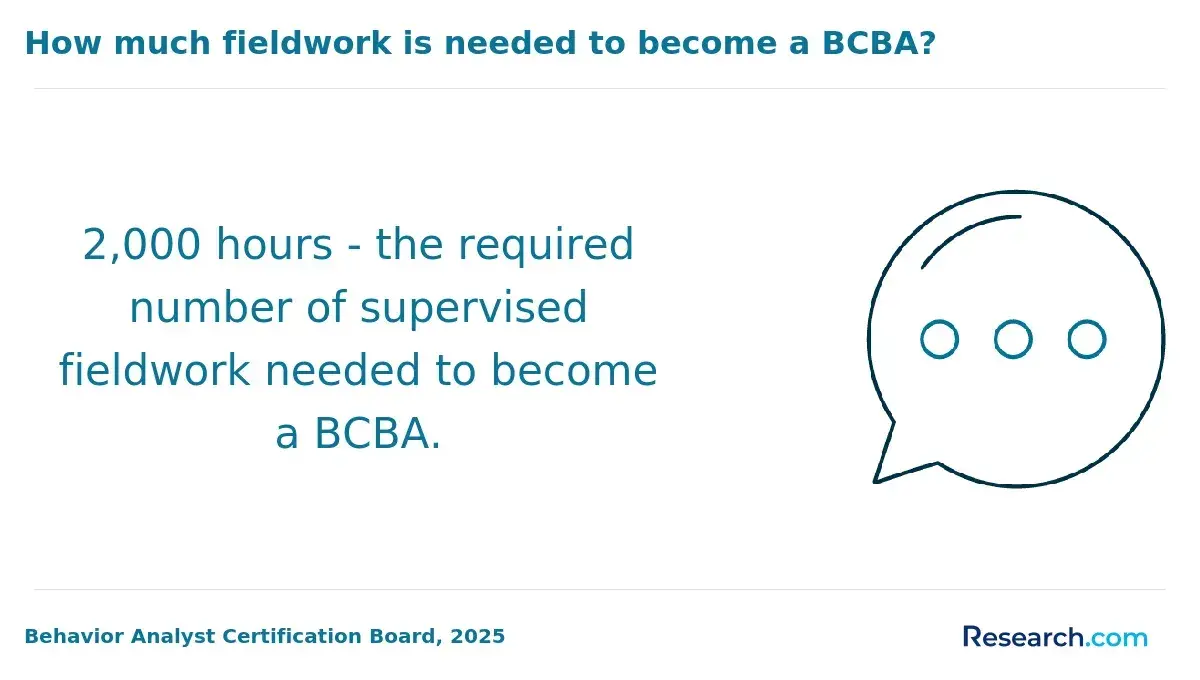
Candidates must complete 2,000 hours of supervised fieldwork, which historically required about 24 months. As of 2025, this average has dropped to around 17 months due to expanded practicum options that allow for more intensive and flexible scheduling (BACB Annual Fieldwork Trends, 2025). The reduced average can benefit students who already work in an approved service setting or who choose programs with well-structured practicum support.
Typical timelines vary by format:
- Full-time, on-campus master’s programs: Often take 18 to 24 months and may provide a more structured schedule for coursework, supervision, and applied training.
- Online or part-time programs: Often take 2-3 years and may be better for working professionals, parents, or students who need flexibility.
- Accelerated programs: May take 12 to 15 months, but they require strong time management and may be difficult for students who also need to secure fieldwork from scratch.
Your academic background and ABA experience can affect the timeline. Students with prior exposure may adapt faster to fieldwork expectations, while those new to ABA may need more time to develop practical competence. However, prior experience does not automatically shorten certification unless it meets program and BACB documentation requirements.
When planning your timeline, ask each program these questions: Does the program help locate supervisors? Can fieldwork begin during the first term? Are evening, weekend, or workplace-based options available? How long do students typically take from enrollment to exam eligibility? These answers often matter more than the advertised program length.
A BCBA program curriculum is designed to prepare students to assess behavior, design evidence-based interventions, evaluate outcomes, and practice ethically under professional standards. The coursework is not just theoretical. It trains students to make decisions using behavior data, supervision, client context, and ethical obligations.
Most BCBA curricula cover these core areas:
- Principles of behavior analysis: Reinforcement, punishment, extinction, stimulus control, motivating operations, and other foundational concepts.
- Assessment: Functional behavior assessments, preference assessments, skills assessments, and interpretation of behavior patterns.
- Intervention design: Behavior-change strategies, skill acquisition plans, behavior reduction procedures, and generalization planning.
- Measurement and data analysis: Data collection, graphing, single-subject research design, and evaluation of treatment effectiveness.
- Ethics and professional conduct: Client dignity, informed consent, scope of competence, confidentiality, supervision, and responsible service delivery.
- Supervision and leadership: Training technicians, monitoring implementation quality, and managing clinical responsibilities.
Programs may also include specialized content in autism services, verbal behavior, self-management, organizational behavior management, cultural competence, legal regulations, and professional development. Strong programs use case studies, role-play, practicum activities, and behavior-tracking tools so students can practice applying concepts before they work independently.
The curriculum should prepare graduates for real decisions, such as when to modify an intervention, how to train caregivers, how to evaluate data trends, and when to consult another professional. These applied skills are important because BCBA work affects clients, families, schools, clinics, and service teams.
Rising demand for BCBAs is reflected in salaries, with entry-level positions reaching a median of $78,500 in 2025, a 12% increase linked to shortages in autism service areas. A strong curriculum should therefore balance exam preparation with practical readiness for high-responsibility roles.
Yes. Accredited online BCBA programs are available, and they can be a practical option for students who need flexibility because of work, family responsibilities, location, or fieldwork arrangements. The key is to confirm that the program’s coursework meets Behavior Analyst Certification Board expectations, including BACB Verified Course Sequence (VCS) standards where applicable.
Online delivery does not automatically mean lower quality. A well-designed online BCBA program can provide rigorous coursework, exam preparation, faculty interaction, and structured assignments. However, supervised fieldwork usually still requires real-world practice with clients or service systems, often completed locally under qualified supervision.
Common online BCBA program formats include:
- Fully online coursework with local supervision: Best for students who already work in an ABA, school, clinic, or human services setting.
- Hybrid programs: Combine online classes with limited campus visits, residencies, or intensive training sessions.
- Part-time tracks: Useful for working professionals who need a manageable pace.
- Accelerated tracks: Better for students who can commit significant weekly time to coursework and fieldwork.
Before enrolling, verify whether the school helps students identify supervisors, whether supervision is included or separate, and whether the program meets requirements in the state where you plan to practice. Some states have licensure requirements beyond BACB certification, so program approval alone may not be enough.
The Return on Investment (ROI) for BCBA certification is strong. According to the Georgetown University Center on Education and the Workforce ROI report, BCBA master's graduates achieved a 245% ROI within five years post-certification, outperforming 78% of other psychology-related master's degrees. For students choosing online study, the strongest ROI usually comes from selecting a program that minimizes delays in fieldwork and exam eligibility.
BCBA programs generally cost between $15,000 and $30,000 for the full curriculum, but the actual amount depends on the institution, degree level, program format, residency status, and whether supervision is included. Online programs typically range from $15,000 to $25,000, while traditional on-campus programs, especially at private universities, can exceed $30,000.
Tuition is only part of the cost. Students should also budget for textbooks, technology fees, supervision fees, certification exam materials, application costs, and possible travel for practicum or campus requirements. Additional expenses such as textbooks, supervision fees, and certification exam materials may add $1,000 to $3,000 more.
The largest cost difference often comes from fieldwork. Some programs include practicum support or have employer partnerships, while others require students to arrange and pay for supervision separately. A lower-tuition program may become more expensive if it does not help you complete the supervised hours needed for certification.
State requirements can also affect total cost and timeline. By 2025, 38 U.S. states required BCBA licensure with verified pre-certification experience, up from 32 states previously. If you plan to work in a licensed state, make sure your program and supervision plan align with both certification and state practice requirements.
To estimate the true cost of a BCBA program, compare:
- Tuition and mandatory university fees
- Whether you qualify for in-state, out-of-state, or international tuition
- Supervision costs and whether fieldwork placement is included
- Books, exam preparation, and certification-related fees
- Financial aid, scholarships, grants, or employer tuition assistance
- Lost income if you reduce work hours to complete fieldwork
In-state students at public universities usually pay less, while out-of-state and international students should expect higher tuition. The best-value program is not always the cheapest; it is the one that helps you meet certification and licensure requirements without avoidable delays.
BCBAs can expect a strong employment outlook, but earnings vary by location, setting, experience, specialization, and supervisory responsibility. Median annual salaries range from $60,000 to $85,000 across the United States. BCBAs in healthcare facilities, specialized educational programs, leadership roles, or high-demand regions may earn above $90,000.
Demand is supported by the growing use of ABA in autism services, schools, developmental disability programs, behavioral health, and organizational settings. The U.S. Bureau of Labor Statistics projects about 20% growth in behavior specialist jobs over the next decade. While job titles and classification systems vary, the broader trend points to continued need for professionals trained in behavioral assessment and intervention.
Prior ABA experience can influence how quickly a new BCBA advances. According to a 2025 ABAI Professional Development Survey, 91% of BCBAs with prior ABA experience were promoted to supervisory roles within two years. Promotions often come with broader clinical responsibility, staff oversight, caseload management, and higher compensation potential.
Common BCBA work settings include:
- Schools: Supporting behavior intervention plans, special education teams, and student behavior systems.
- Clinics and autism service providers: Conducting assessments, supervising technicians, and managing treatment plans.
- Private practice: Offering direct services, consultation, supervision, and sometimes performance-based bonuses tied to client outcomes.
- Government and community agencies: Providing stable employment, benefits, and service coordination roles.
- Healthcare facilities: Working with interdisciplinary teams and specialized behavioral needs.
Entry-level BCBAs without substantial prior experience may start lower on the salary range, but earnings often increase with supervision experience, specialty expertise, and leadership responsibilities. For many candidates, early ABA experience is valuable because it can accelerate confidence, promotion readiness, and access to roles paying above $90,000.
How to Choose an Accredited BCBA Program?
Choosing an accredited BCBA program starts with verification. Confirm that the program is approved by the Behavior Analyst Certification Board (BACB) and that its coursework aligns with the requirements for BCBA exam eligibility. Do not rely only on marketing language such as “ABA-focused” or “behavioral studies.” If the coursework does not meet certification standards, you may have to complete additional classes later.
Use these factors to compare programs carefully:
- Certification alignment: Verify BACB approval, coursework sequence, and whether the program prepares students for BCBA exam requirements.
- Fieldwork support: Ask whether the school provides placements, supervisor matching, documentation guidance, or partnerships with clinical and educational sites.
- Format: Decide whether online, hybrid, full-time, or part-time study fits your schedule, learning style, and fieldwork access.
- Faculty expertise: Review faculty credentials, practice areas, research interests, and availability for advising.
- Student outcomes: Look for BCBA exam pass rates, graduation rates, fieldwork completion support, and alumni employment outcomes when available.
- State licensure fit: Confirm whether the program supports requirements in the state where you plan to practice.
- Total cost: Compare tuition, fees, supervision costs, books, exam preparation, and financial aid options.
Cost should be evaluated alongside completion support. Tuition varies, with BCBA-approved master's programs averaging around $42,000, according to the National Center for Education Statistics Graduate Cost Report. Graduates often recover this cost within 18 months due to strong salary prospects. Still, individual outcomes depend on location, employment setting, debt level, and how quickly certification is completed.
Before committing, speak with admissions staff, current students, alumni, and, if possible, local BCBAs who know the program’s reputation. Ask direct questions: How are fieldwork problems handled? How often do students delay graduation because of supervision issues? What support is available for exam preparation? A strong program should provide clear answers, not vague assurances.
The best BCBA program is the one that matches your background, schedule, budget, state requirements, and career goals while giving you a realistic path to coursework completion, supervised fieldwork, exam eligibility, and professional practice.
Other Things You Should Know About Applied Behavior Analysis
In 2027, gaining some experience in Applied Behavior Analysis (ABA) before applying to a BCBA program can be beneficial. While not all programs require it, having experience may enhance your application and help you grasp course material more effectively, providing practical insight into the field.
No. Most BCBA programs require supervised fieldwork completed during the program, not before admission. The Behavior Analyst Certification Board requires 2,000 restricted or 1,500 concentrated supervised fieldwork hours for certification, usually under a qualified supervisor, and programs set their own admission rules.
During BCBA certification, candidates must complete supervised fieldwork under a qualified BCBA supervisor. This supervision ensures that trainees apply behavioral principles correctly and ethically while gaining practical experience. The supervisor provides guidance, feedback, and evaluation throughout the practicum hours.
Experience in related fields like psychology, education, or speech therapy may count toward applied behavior analysis fieldwork if it includes direct implementation of ABA techniques. However, the experience must meet the specific supervision and documentation standards set by the Behavior Analyst Certification Board to be eligible.
- BCBA Programs & Schools | Sunray ABA https://www.sunrayaba.com/post/bcba-programs-schools
- How Do I Get a BCBA Without a Degree? | Level Ahead ABA https://www.levelaheadaba.com/blog/how-do-i-get-a-bcba-without-a-degree
- ABA Program Curriculum: What You Will Study - ABA Masters Programs https://abamastersprograms.org/curriculum/
- Can You Become a BCBA Without a Master’s? | Kids N Heart ABA https://kidsnheartaba.com/blog/bcba-without-masters-degree/
- How Long Does It Take to Become a BCBA? | Timeline Guide https://www.appliedbehavioranalysisedu.org/2026/04/how-long-does-it-take-to-become-a-bcba/
- Behavior Analyst Certification Board® - Certification - Working With Health Insurance - CalABA - California Association For Behavior Analysis https://calaba.org/working-with-health-insurance/certification/behavior-analyst-board
- How to Become a BCBA | Complete Career Guide 2026 https://special-learning.com/guides/become-a-bcba/
- The Rate of Job Growth for BCBAs | Grateful Care ABA https://www.gratefulcareaba.com/blog/the-rate-of-job-growth-for-bcbas
- Is Becoming a BCBA a Good Career in 2026? Salary, Growth, and What to Expect https://mindfulsproutsaba.com/blog/is-becoming-a-bcba-a-good-career-in-2026-salary-growth-and-what-to-expect/
- BCBA® Certification and Licensure by State https://www.thebehavioracademy.com/blog/bcba-certification-and-licensure-by-state