2027 Best Online Data Science Degrees for Artificial Intelligence Careers

Co-Founder and Chief Data Scientist
Choosing an online data science degree now means judging more than convenience; it means deciding whether the curriculum can keep up with AI hiring. The U. S. Bureau of Labor Statistics reports a May 2024 median annual wage of $112,590 for data scientists, showing why many students are comparing degree options carefully. This guide is for career changers, bachelor's graduates, and working professionals who want AI-ready training. You'll learn how programs differ, what they cost, which skills matter, and how to choose a credible path without overpaying.
Key Things You Should Know
- AI-focused data science degrees are strongest when they combine statistics, machine learning, programming, cloud computing, model deployment, ethics, and a portfolio-based capstone rather than only broad analytics coursework.
- Online master's programs can range from about $10,000 at some large public online programs to more than $70,000 at selective private universities, so total cost and employer recognition should be compared together.
- The strongest labor-market signal is still favorable but not automatic: BLS data lists data scientists at a May 2024 median wage of $112,590, while individual outcomes depend on skills, industry, location, internships, and prior technical experience.
What is an online data science degree and how does it prepare you for artificial intelligence careers?
An online data science degree is a college program delivered primarily through virtual coursework that teaches students how to collect, manage, analyze, model, and communicate data. For artificial intelligence careers, the most relevant programs go beyond dashboards and reporting. They teach students how to build predictive models, evaluate algorithms, work with large datasets, and understand the risks of automated decision-making.
At the bachelor's level, the degree usually builds a foundation in programming, calculus, statistics, databases, and applied analytics. At the master's level, it is more likely to emphasize machine learning, deep learning, natural language processing, data engineering, cloud platforms, and applied AI projects. Students comparing a master of data science online should look for evidence that the program includes hands-on work with real datasets, not just theoretical lectures.
The table below summarizes how common online data science degree levels align with AI career preparation. Use it to decide whether you need a first technical credential, an advanced specialization, or a shorter upskilling route.
| Program type | Typical student profile | AI career preparation | Best fit |
| Bachelor's in data science | New undergraduates or transfer students | Builds core skills in coding, statistics, databases, and applied analytics | Students seeking entry-level analyst, junior data scientist, or data engineering assistant roles |
| Master's in data science | Graduates with quantitative, computing, business, science, or engineering backgrounds | Adds machine learning, modeling, AI systems, scalable computing, and capstone experience | Professionals targeting data scientist, machine learning, AI product, or advanced analytics roles |
| Graduate certificate | Working professionals who already have a degree | Provides focused training in analytics, machine learning, or data engineering | Students who need targeted skills but may not need a full degree |
| Bootcamp or nondegree program | Career changers seeking fast skill exposure | Can teach tools quickly but may lack depth in statistics, theory, or research methods | Learners who need a portfolio boost and can verify employer acceptance |
A degree is most useful for AI careers when it produces job-ready evidence: code repositories, model documentation, deployed projects, written explanations, and collaboration experience. Employers often want to see that applicants can translate messy business or scientific problems into responsible data products, not simply run a model in a notebook.
Which accredited U.S. universities offer the best online data science programs for artificial intelligence?
The best online data science program is not the same for every student. A working software engineer may prefer a rigorous computer science-based program, while a business analyst may need a curriculum with analytics strategy, machine learning, and applied projects. The most reliable shortlist begins with accredited U.S. universities that publish curriculum details, tuition, faculty credentials, student support, and outcomes information.
The following examples are widely recognized U.S. online or largely online programs that can support AI-focused study. This is not a universal ranking; it is a decision-oriented comparison of program characteristics that matter when evaluating AI preparation.
| University | Online data science or analytics program | Credential level | AI-related strengths to review | Good fit for |
| University of Texas at Austin | Online MS in Data Science | Master's | Machine learning, statistical modeling, scalable systems, and strong public-university value | Cost-conscious students with quantitative preparation |
| Georgia Institute of Technology | Online MS in Analytics | Master's | Computing, analytics, operations research, business applications, and technical electives | Students who want a rigorous analytics pathway with technical depth |
| University of Illinois Urbana-Champaign | Online Master of Computer Science in Data Science | Master's | Computer science foundation, data mining, machine learning, and scalable computing | Applicants seeking a CS-oriented data science credential |
| University of California, Berkeley | Online Master of Information and Data Science | Master's | Applied machine learning, data engineering, ethics, communication, and live online coursework | Students who value cohort interaction and a strong information school brand |
| University of Michigan | Master of Applied Data Science | Master's | Applied projects, Python, machine learning, visualization, and real-world data workflows | Professionals who want applied AI and analytics training |
| Indiana University | Online MS in Data Science | Master's | Data engineering, analytics, machine learning, and flexible elective options | Students seeking flexible specialization within a public university system |
| Penn State World Campus | Master of Professional Studies in Data Analytics | Master's | Business intelligence, predictive analytics, databases, and applied decision support | Professionals pursuing analytics leadership or applied data roles |
| Syracuse University | Online MS in Applied Data Science | Master's | Applied analytics, information systems, data management, and project-based learning | Students who want a professional, application-focused program |
When reviewing any "best" list, verify whether the methodology matches your goals. A program ranked highly for affordability may not have the AI electives you need, while a selective program with a strong brand may be too expensive if your target role does not require that premium.
How do online data science degrees compare to campus-based programs for AI-focused study?
Online and campus-based data science degrees can cover the same academic content, but they differ in learning format, networking style, scheduling, and access to in-person research or lab opportunities. For AI-focused study, the key question is not whether the program is online. The key question is whether the program offers enough technical depth, feedback, collaboration, and project work to build credible AI skills.
The comparison below highlights practical differences that affect students' day-to-day experience and long-term outcomes. Use it to decide whether flexibility or immersion matters more for your situation.
| Factor | Online data science degree | Campus-based data science degree | Decision point |
| Schedule | Often asynchronous or evening-based, with part-time options | Usually follows set class times and campus calendars | Online is stronger for working adults; campus may suit full-time students |
| AI labs and research | May provide virtual projects, cloud labs, and remote faculty interaction | May provide easier access to physical labs, research groups, and campus seminars | Campus can be better for research-intensive AI paths |
| Networking | Depends on cohort design, live sessions, discussion boards, and alumni access | Benefits from informal campus interaction, events, and local recruiting | Online students should confirm structured networking support |
| Cost | Can reduce relocation and commuting costs; tuition varies widely | May include campus fees, housing, transportation, or opportunity cost | Total cost matters more than tuition alone |
| Employer perception | Often accepted when issued by an accredited university and transcript does not signal lower standards | Still valued, especially for selective research universities | Accreditation, school reputation, and portfolio quality drive credibility |
Online study is often the better option if you need to keep working, live far from a strong data science department, or want to apply new AI skills immediately in your current job. Campus study may be better if you want doctoral study, faculty research mentorship, in-person recruiting, or a highly immersive technical environment.
The main mistake is assuming "online" automatically means easier or less respected. A rigorous online program may require substantial programming, math, and weekly project work. Conversely, a campus program may be a poor fit if it lacks modern AI electives or practical deployment experience.
What admission requirements and prerequisites do online data science programs typically have?
Admission requirements vary by school and degree level, but online data science programs usually look for evidence that applicants can handle quantitative and technical coursework. Bachelor's programs focus on high school preparation or transfer credits, while master's programs often evaluate prior coursework, professional experience, and readiness for graduate-level programming and statistics.
Most applicants should prepare for a combination of academic, technical, and professional requirements. The items below are common because they help schools determine whether students are likely to succeed in demanding AI-related courses.
- Bachelor's applicants typically need a high school diploma or equivalent, transcripts, math preparation, and sometimes placement testing or transfer-credit evaluation.
- Master's applicants usually need an accredited bachelor's degree, official transcripts, a statement of purpose, resume, and letters of recommendation.
- Common prerequisites include statistics, calculus or linear algebra, programming experience, and familiarity with databases or data structures.
- Some programs require GRE scores, but many online data science master's programs have made standardized tests optional or do not require them.
- International or multilingual applicants may need English proficiency documentation if prior education was not completed in English.
Career changers should pay special attention to prerequisite gaps. If you have a business, healthcare, social science, or humanities background, you may still be admissible, but you may need bridge courses in Python, statistics, or discrete math before taking machine learning.
Students comparing technical degrees with other online career pathways should avoid treating admissions flexibility as the only measure of fit. For example, online medical assistant programs may be structured around faster clinical workforce preparation, while data science programs usually require deeper math, coding, and project-based technical work.
What core courses and specializations in online data science degrees support AI career pathways?
AI career preparation depends heavily on curriculum design. A strong online data science degree should help students understand not only how to train models but also how to frame problems, clean data, evaluate performance, deploy tools, communicate results, and manage ethical risks.
The courses below are especially important for AI-focused roles because they connect theory with practical systems. If a program lacks several of these areas, ask how it prepares students for current employer expectations.
- Programming for data science, usually using Python and sometimes R, SQL, Java, or Scala.
- Probability, statistics, and experimental design for interpreting uncertainty and evaluating model performance.
- Machine learning, including supervised learning, unsupervised learning, feature engineering, model validation, and bias detection.
- Deep learning or neural networks for students interested in computer vision, natural language processing, generative AI, or advanced AI systems.
- Data engineering, databases, distributed computing, and cloud platforms for building scalable data pipelines.
- Data visualization and communication for explaining models to technical and nontechnical audiences.
- AI ethics, privacy, governance, and responsible innovation for managing risk in automated decision-making.
- Capstone or practicum projects that require students to solve open-ended problems with real or realistic datasets.
Specializations matter because "AI career" can mean very different things. A student who wants to build models needs different training from someone who wants to manage analytics products or lead data strategy. Students comparing an MS in data analytics with a data science degree should read course descriptions carefully; analytics programs may emphasize decision support and business intelligence, while data science programs may go deeper into modeling and computation.
The table below shows common specializations and the roles they tend to support. It can help you avoid choosing a program with attractive branding but weak alignment with your target job.
| Specialization | Key skills developed | AI-related roles it may support |
| Machine learning | Model selection, validation, feature engineering, supervised and unsupervised learning | Data scientist, machine learning analyst, AI solutions analyst |
| Data engineering | ETL pipelines, databases, distributed systems, cloud infrastructure | Data engineer, analytics engineer, machine learning operations associate |
| Natural language processing | Text mining, language models, classification, semantic analysis | NLP analyst, AI product analyst, computational linguistics support roles |
| Business analytics | Decision modeling, forecasting, visualization, stakeholder communication | Business intelligence analyst, analytics manager, AI strategy analyst |
| Responsible AI and governance | Privacy, fairness, explainability, compliance, model risk management | AI governance analyst, model risk analyst, responsible AI specialist |
How long do online data science degrees take and what do they cost for U.S. students?
Program length depends on degree level, enrollment intensity, transfer credits, and whether students take prerequisite courses before starting the core curriculum. Many online bachelor's programs take about four years for first-time students, while transfer students may finish faster. Online master's programs commonly take one to three years, with part-time formats designed for working professionals.
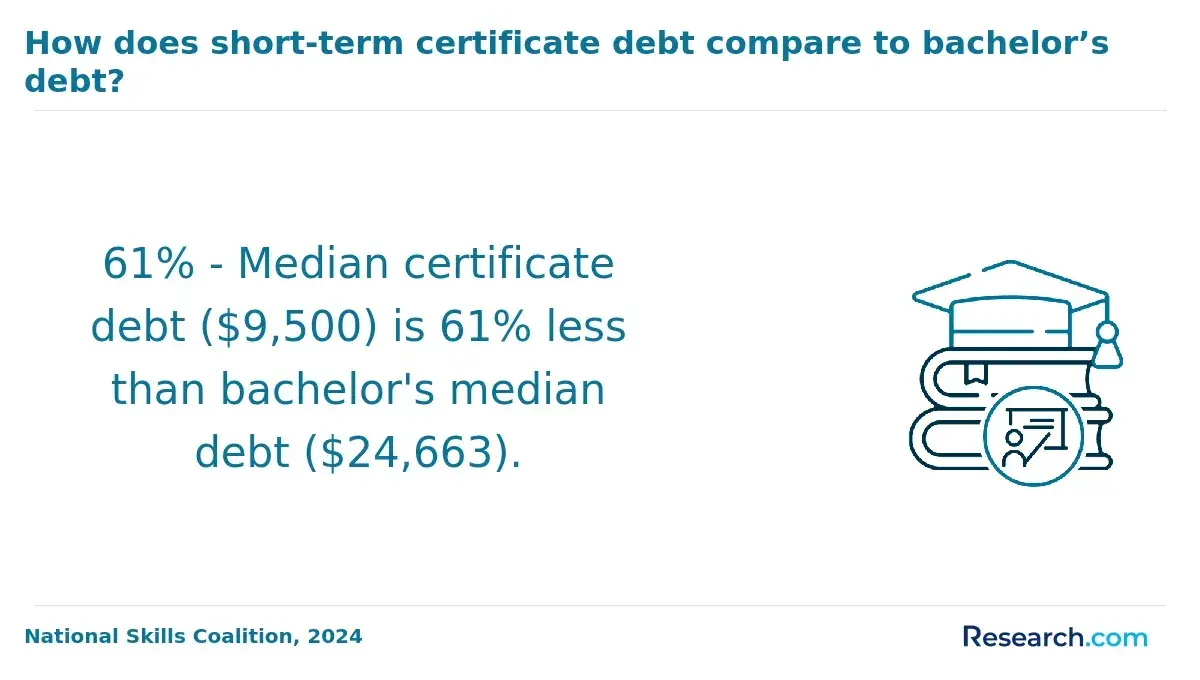
Cost varies more than duration. Published tuition can change by residency status, course load, technology fees, student fees, books, software, and whether the university charges online students a different rate. Federal Student Aid currently allows graduate students to borrow up to $20,500 per academic year in Direct Unsubsidized Loans, which is useful context but should not be treated as a target amount to borrow.
To compare cost realistically, look beyond the headline tuition number. These are the main cost categories prospective students should request from each school.
- Tuition per credit or total program tuition
- Required university, technology, online learning, or graduation fees
- Books, cloud computing resources, software, and proctoring costs
- Prerequisite or bridge-course costs if you lack programming or math preparation
- Travel costs for any required campus immersion, residency, or orientation
- Opportunity cost if the program requires reducing work hours
Students often compare online data science degrees using recognizable price bands. The examples below are approximate public-facing tuition categories, not a substitute for checking the latest school billing page.
- Lower-cost public online master's options: about $10,000 to $25,000 in tuition before fees
- Midrange public or private nonprofit online master's options: about $25,000 to $50,000 before fees
- Higher-cost selective private or professionally focused online master's options: more than $50,000 before fees
The cheapest program is not always the best investment, but a higher price needs a clear reason. Strong reasons may include specialized AI electives, employer partnerships, intensive career support, strong alumni networks, live faculty access, or a brand that matters in your target market. Weak reasons include vague promises, limited curriculum transparency, or rankings that do not measure outcomes relevant to AI careers.
What accreditation standards should online data science programs meet for credible AI training?
Accreditation is one of the first credibility checks for any online data science degree. In the United States, institutional accreditation is the baseline. It means the college or university has been reviewed by an accreditor recognized by the U.S. Department of Education or the Council for Higher Education Accreditation. Without recognized institutional accreditation, students may face problems with federal financial aid, transfer credits, graduate admissions, and employer recognition.
Data science does not have a single required programmatic accreditor in the way nursing, teaching, or some engineering programs do. However, related programs may sit in colleges of engineering, computing, business, information, or statistics, each with different quality signals. For bachelor's programs in computing-related areas, ABET accreditation may be relevant when available, but many credible data science programs do not carry specialized ABET accreditation.
Use accreditation as a filter, then evaluate academic substance. A credible AI-oriented program should be able to document the following quality markers.
- Institutional accreditation from a recognized U.S. accrediting body
- Clear degree title, credit requirements, and transcript language
- Faculty with relevant expertise in statistics, computer science, machine learning, data systems, or applied AI
- Transparent curriculum with course descriptions, prerequisites, and learning outcomes
- Student access to academic advising, technical support, library resources, and career services
- Clear policies for transfer credits, withdrawals, leaves of absence, and satisfactory academic progress
Students interested in data stewardship, knowledge organization, or AI applications in archives and information systems may also explore adjacent fields such as library science degrees online. That path is different from data science, but it can be relevant for careers involving metadata, information retrieval, digital repositories, and responsible access to information.
Red flags include unclear accreditation language, pressure to enroll immediately, missing faculty information, no sample courses, unrealistic job claims, and tuition pages that hide required fees. If an admissions representative cannot explain whether the institution is recognized by an approved accreditor, pause before applying.
What artificial intelligence and data science jobs can graduates pursue and in which industries?
Graduates of online data science programs can pursue roles across analytics, machine learning, data engineering, AI governance, and applied decision support. The exact role depends on prior experience, portfolio quality, technical depth, and industry knowledge. A new graduate with no technical work history may begin in analytics, while a software engineer who earns a data science master's may move more directly into machine learning or AI engineering support.
The table below connects common job titles with typical responsibilities and hiring industries. Use it to map your target role to the curriculum and projects you should prioritize.
| Role | Typical responsibilities | Industries hiring |
| Data scientist | Build predictive models, analyze complex datasets, test hypotheses, and communicate findings | Technology, finance, healthcare, retail, government, manufacturing |
| Machine learning engineer | Develop, test, deploy, and monitor machine learning systems in production environments | Software, cloud services, autonomous systems, fintech, health technology |
| Data analyst or analytics specialist | Create reports, dashboards, forecasts, and business recommendations from structured data | Business services, insurance, education, logistics, marketing |
| Data engineer | Design data pipelines, manage databases, support data platforms, and prepare data for modeling | Technology, financial services, e-commerce, healthcare, media |
| AI product analyst | Evaluate AI-enabled products, define metrics, analyze user behavior, and support product decisions | Software, consumer technology, digital platforms, enterprise SaaS |
| AI governance or model risk analyst | Assess model fairness, documentation, validation, privacy, and compliance risks | Banking, insurance, healthcare, consulting, regulated technology firms |
AI hiring is also changing the way employers evaluate candidates. Many teams now expect applicants to understand model limitations, data privacy, explainability, and deployment constraints. A portfolio that includes only classroom prediction exercises may be weaker than one that shows documentation, error analysis, stakeholder communication, and responsible AI decisions.
Industry fit matters. Healthcare AI roles may value domain knowledge and privacy awareness, finance roles may emphasize model risk and regulatory controls, and technology roles may require stronger software engineering. Students should choose electives and projects that match the industry they want, not just the broad job title.
What salary ranges and job outlook can data science graduates expect in AI-related roles?
Salary outcomes vary by job title, region, experience, degree level, industry, and technical specialization. The most reliable way to use salary data is to treat it as a labor-market benchmark, not a promise. According to the U.S. Bureau of Labor Statistics, data scientists had a May 2024 median annual wage of $112,590, which indicates strong earning potential for qualified workers but does not guarantee that a new graduate will enter at that level.
The table below summarizes U.S. wage and outlook context for roles commonly connected to data science and AI. These national figures are useful for comparison, but local job postings and employer requirements should drive your final decision.
| Occupation category | May 2024 median annual wage | How it relates to AI careers | Important limitation |
| Data scientists | $112,590 | Directly aligned with modeling, analytics, experimentation, and applied machine learning | Entry-level pay may be lower, especially without internships or prior technical experience |
| Computer and information research scientists | $140,910 | Relevant for advanced AI research, algorithm development, and experimental computing roles | Many roles prefer or require a PhD or significant research experience |
| Software developers | $133,080 | Relevant for AI product development, model integration, tools, and production systems | Data science coursework alone may not satisfy software engineering requirements |
| Operations research analysts | $91,290 | Relevant for optimization, simulation, decision science, and AI-assisted planning | Roles may emphasize applied mathematics and business operations more than deep learning |
The outlook is also favorable for students with strong technical skills. BLS projections released for the 2024 to 2034 period list data scientists among faster-growing occupations, reflecting the continued use of data-heavy systems across industries. For readers, the practical takeaway is that demand is real, but competition is also rising for the most desirable AI roles.
To improve employment prospects, students should graduate with evidence of ability. That usually means a public or shareable portfolio, strong SQL and Python skills, model evaluation experience, cloud or deployment exposure, and projects tied to a business, scientific, or operational problem. A degree can open doors, but the work samples help employers judge readiness.
How can prospective students evaluate and choose a reputable online data science program for AI?
Choosing a reputable online data science program requires more than comparing rankings. The right program should match your background, budget, target role, learning style, and risk tolerance. Before applying, define the job you want, the skills you lack, and the evidence you need to show employers.
A practical evaluation process can prevent costly mistakes. Use the following steps to compare programs in a structured way.
- Verify institutional accreditation through a recognized U.S. accreditor before considering tuition, rankings, or marketing claims.
- Match the curriculum to your target AI role by checking for machine learning, statistics, programming, data engineering, ethics, and capstone requirements.
- Review prerequisites honestly and plan bridge coursework if you lack Python, statistics, calculus, linear algebra, or database experience.
- Calculate total cost, including fees, prerequisite courses, software, cloud computing, and any required campus visits.
- Ask whether online students receive the same faculty access, tutoring, career services, library resources, and alumni support as campus students.
- Request details about capstones, portfolio projects, internship support, employer partnerships, and career outcomes.
- Compare pacing options and withdrawal policies in case work, caregiving, or military responsibilities affect enrollment.
- Speak with current students or alumni when possible to learn how responsive faculty and support teams are after enrollment.
Common mistakes can make an otherwise good degree a poor investment. Watch for these red flags before signing an enrollment agreement.
- Choosing a program based only on a low tuition number without checking required fees or prerequisite costs.
- Assuming all "AI" or "data science" degrees teach deep learning, cloud deployment, or production machine learning.
- Ignoring transfer-credit rules, especially if you already have graduate credits or professional certificates.
- Relying only on rankings instead of reading actual course descriptions and faculty profiles.
- Assuming salary data applies equally to new graduates, career changers, and experienced engineers.
- Enrolling in a program that offers little career support, no capstone, or no way to build a portfolio.
Some students should consider alternatives. If you already have a technical degree and need only one skill, a graduate certificate may be enough. If your goal is business reporting rather than model building, analytics or business intelligence may be a better fit. If you are exploring broader online education options across fields, comparing formats, support services, and outcomes across unrelated programs can also sharpen your decision-making; however, the standards for a data science degree should remain much more technical than many nontechnical online credentials.
Other Things You Should Know About Data Science
While an online data science degree offers foundational skills, lack of prior tech experience can pose challenges, such as unfamiliarity with industry-specific tools or slower adaptation to fast-paced problem-solving. Supplementing education with practical projects or internships can help bridge the gap for aspiring AI professionals in 2027.
It depends on the role. Data science is often stronger for modeling, statistics, experimentation, and applied analytics. Computer science may be stronger for software engineering, systems, algorithms, and production AI infrastructure. Many AI teams value a blend of both.
Usually not. Many programs use cloud platforms, virtual labs, or standard laptops with common programming tools. Students should still ask about hardware specifications, cloud-computing fees, and software access before enrolling.
Most programs require college algebra, statistics, and calculus, with some also expecting linear algebra or discrete mathematics. For AI-focused study, these courses support machine learning, optimization, and model evaluation. Applicants without them usually must complete prerequisites before upper-level data science classes or admission to the major.
References
- Best Universities for AI and Data Science Degrees in 2026 - AI Degrees Online https://aidegreesonline.com/degrees/best-universities-for-ai-data-science/
- What are salary prospects in Data Science & AI https://discuss.boardinfinity.com/t/what-are-salary-prospects-in-data-science-ai/15182
- Data Science Institute Accredited AI & Data Science Courses https://www.datascienceinstitute.net/
- Top 15 Data Science Programs for High School Students (2026 Guide) https://pioneeracademics.com/news/top-15-data-science-programs-for-high-school-students-guide/
- Guidance on the Responsible Use of Artificial Intelligence (AI) in Accredited Continuing Education (CE) - ACCME https://accme.org/resource/guidance-on-ai/
- About DASCA Accreditation https://www.dasca.org/data-science-accreditation-program/about-dasca-accreditation
- The Future of Data Science: Job Market Trends 2025 – 365 Data Science https://365datascience.com/career-advice/the-future-of-data-science/
- Master’s in Data Science: Everything You Need to Know - The Red Pen https://theredpen.in/study-abroad-article-masters-in-data-science-everything-you-need-to-know/
- Jobs in Data Science: A Guide for Future Graduates https://vinuni.edu.vn/jobs-in-data-science/
- 16 Artificial Intelligence Career Paths https://www.calmu.edu/news/artificial-intelligence-career-paths