
2027 Is a Computer Science Master's Degree Worth It? ROI, Salary & Career Impact

Co-Founder and Chief Data Scientist
A computer science master's degree can be a strong investment, but it is not automatically the right move for every software developer, analyst, engineer, or career changer. The decision depends on what you want the degree to do: raise your salary, qualify you for specialized roles, support a move into AI or cybersecurity, strengthen research credentials, or help you compete for senior technical leadership positions.
The financial case is meaningful but not simple. Recent data shows that individuals with this advanced degree earn a median salary 25% higher than those with only a bachelor's. At the same time, tuition, opportunity cost, program reputation, and employer expectations vary widely. In some career paths, a master's degree can accelerate advancement. In others, targeted work experience, a portfolio, or certifications may deliver a faster return.
This guide breaks down the costs, financial aid options, salary outcomes, ROI factors, admission requirements, online versus in-person value, employer perceptions, and career paths connected to computer science master's programs. Use it as a decision framework, not a blanket recommendation.
Key Things to Know About the Value of Computer Science Master's Degree
- Programs typically require a bachelor's degree in computer science or related fields, featuring core coursework and electives that emphasize programming, algorithms, and systems, often completed in 1-2 years full-time.
- Graduates report median salaries ranging from $90,000 to $130,000 annually, with variations depending on geographic location, industry, and prior experience.
- Long-term benefits include accelerated career growth and higher earning potential; students should compare programs based on cost, flexibility, reputation, and alignment with career goals to maximize ROI.
How Much Does a Computer Science Master's Degree Cost?
The cost of a computer science master's degree depends heavily on the school type, residency status, delivery format, program length, and whether you study full time or while working. Tuition is only one part of the calculation. Students should also account for fees, books, technology expenses, housing, transportation, and the income they may give up if they reduce work hours or leave a job to study.
With the Bureau of Labor Statistics projecting a 15% growth in computer and information technology jobs through 2031, many students see graduate study as a way to move into higher-demand technical roles. Still, a higher salary does not guarantee a good ROI if the program is expensive or poorly aligned with your target job.
- Public university tuition: In-state tuition generally ranges from $10,000 to $25,000 per year. Out-of-state students often pay between $20,000 and $45,000 annually. The difference can be large enough to change the ROI calculation entirely, so residency rules matter.
- Private university tuition: Private universities typically charge from $30,000 up to $60,000 per year. These programs may offer strong networks or brand recognition, but students should compare that value against the added debt.
- Online program costs: Online master's programs vary widely, with tuition fees between $15,000 and $40,000 yearly. Some online formats are designed for working professionals and may reduce relocation and commuting costs. Students comparing flexible options may also want to review a computer science degree online to understand how online pricing can differ across degree levels.
- Ancillary fees: Textbooks can cost $500 to $1,200 annually. Technology fees, software access, and lab-related charges can also increase the total cost.
- Housing and living expenses: On-campus or local students generally encounter $12,000 to $20,000 per year for rent, food, transportation, and personal needs. This is often the largest non-tuition expense.
- Program length and delivery format: Most computer science master's programs last from 1.5 to 3 years. Accelerated and online formats may lower total costs by shortening the time to completion or allowing students to keep working.
- Total investment range: Factoring all expenses, students typically invest from approximately $40,000 at lower-cost public institutions to upwards of $120,000 at private universities. The best value is not always the cheapest option, but every program should be judged against expected career outcomes.
A practical cost comparison should include at least three scenarios: a low-cost public option, a private or highly ranked option, and an online or part-time option. For broader context on how graduate tuition varies by field and format, reviewing an affordable online MBA program can help students think through cost trade-offs across professional degrees.
What Financial Aid and Scholarships Are Available for Computer Science Master's Students?
Financial aid can meaningfully change the value of a computer science master's degree. Nearly 58% of graduate students use some form of financial aid, which means most applicants should not evaluate sticker price alone. The strongest funding strategy usually combines institutional aid, external scholarships, employer support, and careful borrowing.
- Federal graduate loans: Graduate students may use federal loan options to cover eligible education costs. Aid discussions often distinguish subsidized loans, which cover interest during enrollment and deferment, from unsubsidized loans, where interest accrues immediately. Repayment usually begins six months after graduation or after dropping below half-time status, so students should verify current loan terms before borrowing.
- Institutional grants and fellowships: Many universities provide merit-based or need-based grants that do not require repayment. Some awards are tied to GPA, research interests, teaching assistantships, or faculty-funded projects within the computer science department.
- External scholarships: Organizations such as the National Science Foundation offer scholarships targeting underrepresented groups in technology or specializations like AI and cybersecurity. Deadlines can come months before program start dates, so applicants should search early.
- Discipline-specific awards: Databases such as Fastweb or the ACM Scholarship Program can help identify awards tailored to computer science students. Strong applications usually connect technical achievements, leadership, research goals, and a clear career plan.
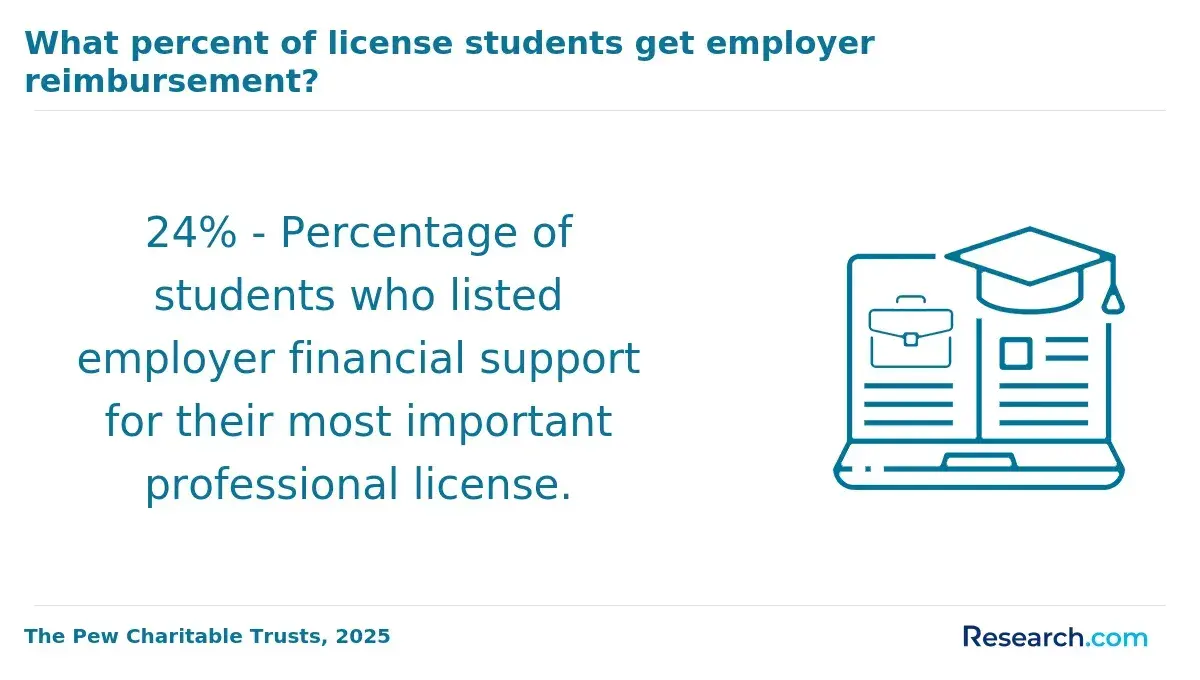
- Employer tuition assistance: Some technology companies, government agencies, and large employers provide tuition reimbursement for employees whose graduate studies relate to their roles. These programs may require continued employment after graduation, so students should read repayment or service obligations carefully.
Before accepting admission, ask the program for a full financial aid estimate, not just the tuition figure. Compare the net cost after scholarships, the borrowing required, and whether part-time enrollment would let you keep your income. Students who are weighing workload and affordability across different academic paths may also review the easiest degree to get as a reminder that time commitment and degree difficulty affect total cost as much as tuition does.
What Is the Average Salary for Computer Science Master's Degree Holders?
Salary is one of the main reasons professionals consider a computer science master's degree, but the degree itself is only part of the compensation story. Pay also depends on experience, job function, location, company size, technical specialization, and whether the role includes bonuses or equity.
- Salary differentials by experience: Data from LinkedIn Salary in 2023 indicate entry-level master's holders average about $90,000 annually, mid-level professionals reach near $120,000, and senior-level earners often top $150,000. These salaries typically surpass those with just a bachelor's degree by 15-30%, especially when the graduate degree supports specialized technical work.
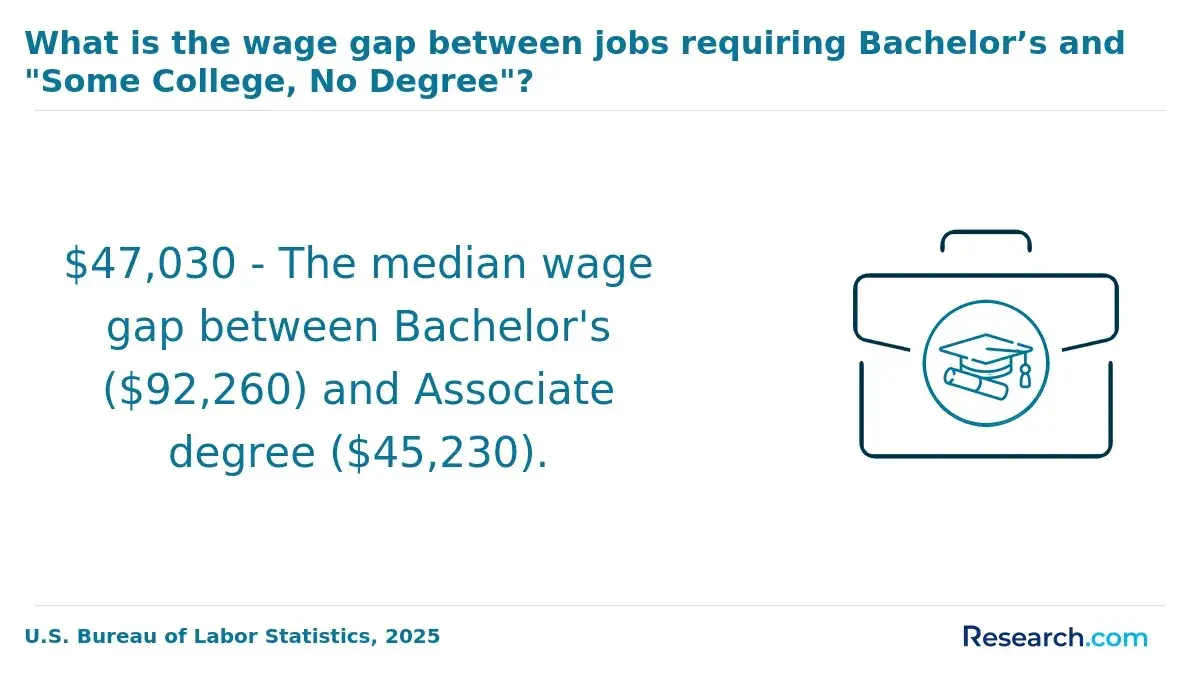
- Comparison to bachelor's degree income: According to the U.S. Bureau of Labor Statistics, a median salary of approximately $85,000 applies to computer science roles held by bachelor's graduates. Master's graduates may receive higher starting pay or move faster into advanced roles, but the advantage is strongest when paired with relevant skills and experience.
- Impact of sector: Compensation often peaks in private technology firms, where competitive wages, bonuses, and stock-based compensation may be part of the package. Public sector and nonprofit roles generally offer lower salaries but may provide stronger benefits, job stability, or work-life balance.
- Geographic variations: Salaries in major tech hubs such as San Francisco, Seattle, and New York can be 20-40% above the national average. Those higher salaries may come with higher living costs, so students should compare take-home value rather than salary alone.
One graduate of a computer science master's degree program described the experience as demanding but financially useful. Balancing coursework with full-time employment required late nights and careful planning, but the program expanded both technical confidence and negotiating power. "Though it meant late nights and juggling priorities, completing the program felt like an investment that truly paid off," he reflected.
How Does a Computer Science Master's Degree Impact Long-Term Career Advancement?
A computer science master's degree can affect more than first-year salary. Its long-term value often appears in promotion opportunities, access to specialized teams, credibility for technical leadership, and preparation for roles that require deeper theory or research ability. The degree is most valuable when it supports a clear career direction rather than serving as a general credential.
- Promotion and leadership opportunities: A master's degree can help professionals compete for technical lead, project leadership, engineering management, or architecture roles. Employers may view graduate training as evidence that a candidate can handle complex systems and higher-level problem solving.
- Professional credibility and employer preference: The degree signals advanced technical preparation and sustained commitment to the field. Larger companies, research-oriented employers, and teams working on complex infrastructure may give the credential more weight.
- Expanded professional network: Graduate programs connect students with faculty, peers, alumni, and industry partners. These relationships can lead to referrals, mentorship, research collaboration, and job leads, especially in specialized areas.
- Industry-specific value: In artificial intelligence, cybersecurity, data science, and research-focused computing, a master's degree can be important for senior or specialized roles. In startups or smaller companies, demonstrated execution and product impact may matter more than the credential.
- Continuing education opportunities: A master's degree can prepare students for doctoral study, research careers, or advanced certifications. It can also make later career shifts easier by grounding professionals in theory as well as tools.
The career value of the degree depends on fit. A professional aiming for machine learning engineering may benefit more than someone already thriving in a software role where promotion is based mainly on shipped products. Students comparing executive-friendly graduate formats can also examine online executive MBA programs to see how working professionals balance credential value, schedule flexibility, and career outcomes.
What Is the Return on Investment (ROI) of a Computer Science Master's Degree?
The ROI of a computer science master's degree is the relationship between what you spend and what you gain financially and professionally. A positive ROI is more likely when tuition is controlled, the student keeps working, the program teaches marketable skills, and the graduate moves into a higher-paying or more senior role soon after completion.
- Total program cost: ROI starts with the full price, including tuition, fees, living expenses, and supplies. Public programs may cost around $20,000, while private institutions can exceed $70,000. The same salary increase can look excellent at one price point and weak at another.
- Salary premium: Graduates typically see annual salary increases between $15,000 and $30,000 compared to bachelor's degree holders, though this varies by employer, role, location, and specialization.
- Payback period: On average, the time to recoup educational expenses ranges from 2 to 4 years in optimal cases but can stretch beyond 7 years if starting salaries are lower or program costs are higher.
- Opportunity cost: Full-time study may require students to pause or reduce employment. Foregone income can add tens of thousands of dollars to the real cost and delay the break-even point.
- Career path and institution type: Graduates from prestigious programs or those specializing in high-demand fields like artificial intelligence often enjoy faster returns. Students entering lower-paying sectors or less specialized roles may see a more modest financial payoff.
- Use of ROI calculators: Online tools that factor in tuition, salary expectations, debt, interest, and personal circumstances can help create a more realistic estimate than relying on averages.
A useful ROI test is to ask: What job do I expect after graduation, what salary range is realistic, and how many years will it take to recover the full cost? One graduate I spoke with said the program became worthwhile because hands-on projects helped them move into a specialized role faster than expected. "I was worried about the cost and time, but getting hands-on experience through projects helped me secure a job with a meaningful salary bump much sooner than I thought," they said.
What Are the Admission Requirements for a Computer Science Master's Program?
Computer science master's admissions committees look for evidence that applicants can handle advanced technical coursework. Requirements vary, but most programs evaluate academic performance, prerequisite knowledge, recommendations, goals, test scores when required, and relevant professional or research experience.
- Undergraduate GPA benchmarks: A minimum GPA around 3.0 on a 4.0 scale is typically expected, while more competitive schools may require a GPA above 3.5. Strong grades in math, programming, algorithms, and systems courses matter more than the overall GPA alone.
- Standardized test requirements: Many programs still request GRE scores, especially in the United States, although some have recently made them optional. GMAT scores are generally not accepted for computer science. Strong GRE quantitative results, above 160, can strengthen an application but may not be mandatory at every school.
- Prerequisite coursework: Programs commonly expect algorithms, data structures, programming, calculus, and linear algebra. Applicants without a computer science background may need bridge courses, placement exams, or proof of equivalent professional experience.
- Statement of purpose: This essay should explain why the applicant wants graduate training, what specialization or research area fits their goals, and why the specific program is a good match. Generic statements are a common mistake.
- Letters of recommendation: Most programs require two or three letters from academic or professional referees. The best letters give specific evidence of technical ability, persistence, collaboration, and readiness for graduate-level work.
- Relevant work or research experience: Internships, software projects, publications, open-source contributions, or professional engineering work can strengthen an application. This is especially important for career changers or applicants with uneven academic records.
- Differences between programs: Top-tier institutions usually demand higher academic achievement and may emphasize research potential. Less selective or professionally oriented programs may value work experience and flexible prerequisites more heavily. International candidates should also review TOEFL or IELTS requirements.
Applicants should create a requirement checklist for each program before applying. Missing a prerequisite, recommendation deadline, or test policy can weaken an otherwise competitive application.
What Is the Minimum GPA Requirement for a Computer Science Master's Program?
Most computer science master's programs expect a minimum GPA of approximately 3.0 on a 4.0 scale. More competitive schools may prefer applicants with stronger academic records, while some programs may accept students with GPAs as low as 2.7. The minimum is not the same as the admitted-student average, so applicants should treat it as a threshold, not a target.
Admissions review is often holistic. A lower GPA does not automatically end an applicant's chances, but it usually requires stronger evidence of readiness in other areas.
- Typical GPA requirements: Most computer science master's programs expect a minimum GPA of approximately 3.0, especially those at top-tier universities. Programs with lower selectivity may admit students with GPAs closer to 2.7, depending on the rest of the application.
- Impact of work experience: Relevant professional experience can partially compensate for a lower undergraduate GPA. Admissions committees may value evidence that the applicant has built software, solved technical problems, led projects, or worked in a computing role.
- Role of personal statements and GRE scores: A focused personal statement can explain academic weaknesses without making excuses. Strong GRE scores, especially in quantitative sections, can also help offset a weaker GPA where the GRE is accepted or required.
- Conditional admission and probation: Some schools offer conditional or probationary acceptance to students who fall slightly below GPA thresholds. These students may need to earn satisfactory grades in initial coursework to continue.
- Strategies for low-GPA applicants: Applicants can take post-baccalaureate or continuing education courses in algorithms, data structures, programming, calculus, or linear algebra to show current academic readiness. Strong recommendation letters and recent technical achievements can also help.
Students should also consider cost before applying broadly. Application fees, prerequisite courses, and test preparation can add up. For perspective on how graduate costs differ by field and credential level, readers may compare with doctorate in education cost information when thinking through long-term funding strategies.
Is an Online Computer Science Master's Degree as Valuable as an In-Person Degree?
An online computer science master's degree can be as valuable as an in-person degree when it comes from an accredited institution, teaches a rigorous curriculum, and aligns with the student's career goals. Employers generally care more about school quality, skills, projects, and experience than whether the courses were completed online or on campus.
- Changing employer acceptance: Since remote learning became widespread during the COVID-19 pandemic, employer comfort with online credentials has increased. Recent surveys suggest about 70% of hiring managers regard online computer science degrees as equally valid if other qualifications align.
- Accreditation matters most: Employers focus primarily on whether the degree comes from an accredited program. Accreditation is a quality signal for both online and in-person options and should be verified before enrollment.
- Consistency in academic standards: Accredited online programs generally offer curricula and assessments comparable to residential programs. However, students interested in intensive research, specialized labs, or in-person collaboration should confirm whether online students receive equal access.
- Networking and career support differences: On-campus programs may offer more spontaneous networking through events, labs, research groups, and career fairs. Online programs increasingly provide virtual recruiting, alumni groups, and project collaboration, but students may need to be more intentional about building connections.
- Online degrees suit flexibility needs: Online enrollment can be a strong fit for working professionals, caregivers, military students, international learners, and students who cannot relocate. The ability to keep working can also improve ROI.
- In-person attendance offers immersive advantages: Students who want research mentorship, campus recruiting, assistantships, lab access, or deeper peer interaction may benefit from an in-person program. This format can be especially useful for students trying to enter a new field without an existing technical network.
The right format depends on constraints and goals. Choose online if flexibility and continued employment are essential. Choose in person if the program's research access, campus hiring pipeline, or faculty mentorship clearly improves your target outcome.
What Jobs Can You Get With a Computer Science Master's Degree?
A computer science master's degree can prepare graduates for advanced technical, analytical, research, and leadership roles. Some positions explicitly prefer or require graduate education, while others value the degree when it is paired with strong projects, internships, certifications, or prior engineering experience.
- Data scientist: Data scientists analyze large datasets and build models that support business, research, or product decisions. A master's degree is often useful because the role requires statistics, machine learning, programming, and domain understanding.
- Machine learning engineer: Machine learning engineers design, train, deploy, and maintain AI systems. Graduate coursework can help develop the mathematical and algorithmic depth needed for these roles, especially in tech and finance.
- Software architect: Software architects design complex systems and make high-level technical decisions. A master's degree can provide theoretical grounding, but employers also expect substantial engineering experience.
- Cybersecurity manager: Cybersecurity managers protect systems, data, and infrastructure while leading security teams or programs. A master's in computer science or cybersecurity can improve prospects, especially when paired with certifications like CISSP.
- Research scientist (computing): Research scientists work in academia, innovation labs, or advanced development teams. These roles often require at least a master's degree and may favor candidates with publications, research projects, or specialized expertise.
- Cloud solutions architect: Cloud solutions architects design scalable infrastructure and services. A master's degree can strengthen systems knowledge, while AWS or Azure certifications may help demonstrate platform-specific capability.
- Quantitative analyst (quant): Quantitative analysts use math, programming, and models in finance and trading. Master's-educated candidates with strong math skills are preferred, and additional credentials in quantitative finance or economics may be useful.
The degree is strongest when it matches a specific role. For example, a student targeting machine learning should prioritize programs with AI, optimization, statistics, and applied projects rather than choosing a general curriculum with limited specialization.
How Do Employers and Industries Value a Computer Science Master's Degree?
Employers value a computer science master's degree differently depending on the role, industry, and company culture. The credential is rarely a substitute for skill, but it can be a strong signal of advanced preparation, especially in specialized or research-heavy work.
- Large corporations value specialized skills: Major technology firms may view the degree as evidence of advanced technical depth and readiness for complex projects. It can support hiring or promotion in research, development, architecture, data, AI, and leadership tracks.
- Government agencies prefer practical experience: Government employers recognize the value of graduate education for roles such as cybersecurity, data analysis, and systems work. However, they often weigh relevant hands-on experience, clearance eligibility, and role-specific qualifications heavily.
- Startups prioritize flexibility and innovation: Startups usually care most about execution, adaptability, product sense, and cultural fit. A master's degree can help a candidate stand out, but it rarely replaces evidence that the person can build, ship, and solve problems quickly.
- Nonprofits emphasize mission-aligned expertise: In nonprofit technology roles, a master's degree can add credibility. Still, employers may prioritize demonstrated impact, budget-conscious problem solving, and alignment with the organization's mission.
- Disciplinary variation matters: In many applied computer science fields, the master's degree is regarded as the standard professional terminal qualification. Research-intensive tracks may favor doctorates, while some management tracks may value MBAs.
- Communicating degree value: Candidates should connect the degree to employer needs. Instead of simply listing coursework, highlight projects, systems built, models deployed, security problems solved, research completed, or measurable business impact.
Students should evaluate how much the degree is valued in their target industry before enrolling. Cost is part of that decision; comparing other affordable professional pathways, such as the cheapest construction management degree programs, can help frame how different fields balance tuition, credential value, and career outcomes.
Is a Computer Science Master's Degree Worth It?
A computer science master's degree is worth it for students who have a clear career goal, can manage the cost, and choose a program that builds skills employers actually reward. It is most likely to pay off for professionals moving into artificial intelligence, data science, cybersecurity, research, advanced software engineering, systems architecture, or senior technical leadership.
It may be less worthwhile for students who already have strong job prospects, can reach the same role through experience or certifications, or would need to take on high debt without a realistic salary increase. The degree should be evaluated as an investment, not as a guarantee.
- Best-fit candidates: The degree is a strong option for students seeking specialized technical roles, research preparation, career advancement, or a structured way to move into higher-level computing work.
- Higher-risk candidates: Students without a clear target role, students choosing an expensive program mainly for prestige, or students expecting the degree alone to replace experience may see weaker returns.
- Employer type differences: Large corporations often prize a master's degree for specialized roles and career growth opportunities. Government agencies value it for technical expertise and qualification standards in certain positions. Startups may prioritize hands-on skills and relevant experience, while nonprofits often emphasize demonstrated impact.
- Industry perceptions: Many employers believe a master's can enhance technical proficiency and problem-solving capacity. However, its importance varies by sector, role, and specialization.
- Disciplinary nuances: In applied areas such as software engineering, the master's often serves as the top professional credential. Roles that blend research or business, such as technology management, may favor doctoral degrees or MBAs instead.
- How to make the degree pay off: Choose a program with strong coursework in your target area, complete practical projects, build relationships with faculty and peers, use career services early, and keep a portfolio of work that demonstrates job-ready skills.
The clearest answer is this: a computer science master's degree is worth it when it helps you reach a specific career outcome faster or more effectively than lower-cost alternatives. If the program does not improve your skills, network, or access to target roles, the return may not justify the cost.
What Graduates Say About Their Computer Science Master's Degree
- : "Applying for admission to the computer science master's program was initially overwhelming, but carefully reviewing official academic catalogs helped me understand the prerequisites and course load expectations. Once enrolled, I appreciated how federal education resources provided clarity on managing degree requirements, which kept me on track. Navigating the job landscape afterward was exciting, especially seeing the wide range of industries eager for graduates with this skill set. — Benny"
- : "Reflecting on my journey through the computer science master's program, I found that relying on accrediting agencies' guidelines ensured the quality of my education from start to finish. The admission process was straightforward, thanks to clear information about what was expected. Entering the workforce, I quickly realized that my degree opened doors across many sectors, which broadened my career opportunities more than I imagined. — Gina"
- : "As someone who values precision, I found that using official academic catalogs was crucial in understanding the demanding requirements of the computer science master's program. Applying to the program felt competitive but fair, and the structure prepared me well. After graduation, leveraging federal education resources helped me map out potential employers, making it easier to transition smoothly into relevant industries. — Cooper"
Other Things You Should Know About Computer Science Degrees
In 2027, the main drawbacks include high tuition costs, potential student loan debt, and rapidly evolving tech trends that may render specific knowledge obsolete. Balancing academic demands with personal commitments can also be challenging for many students.
To enroll in a 2027 Computer Science master’s program, you typically need a bachelor's degree in a related field, a minimum GPA of 3.0, and GRE scores. Specific prerequisites vary by institution, but many require programming experience or coursework in computer science fundamentals.
The expected ROI for a Computer Science master's degree in 2027 varies by industry but generally ranges from 10% to 20% annual return. Factors like tuition costs, your field, and job market conditions can influence this, substantially impacting financial benefits over time.
In 2027, a master's degree in Computer Science can significantly boost career opportunities and salary. Graduates often secure top positions in tech companies and enjoy higher salaries compared to those with bachelor's degrees. The demand for advanced skills in AI, data science, and cybersecurity makes this degree highly valuable in the evolving job market.
References
- Fully Funded Master's Programs in Computer Science | ProFellow https://www.profellow.com/fellowships/fully-funded-masters-programs-in-computer-science/
- 38 master Scholarships in computer science https://www.applykite.com/search/scholarships/master/all/computer-science
- Discover Scholarships for Computer Science Majors https://www.computerscience.org/scholarships-overview/
- Computer science salary | academics.com https://www.academics.com/guide/computer-science-salaries
- Is Getting A Master's Degree in Computer Science Worth It? https://sumnerevans.com/posts/school/is-getting-a-masters-in-cs-worth-it/
- Scholarships and grants for graduate students https://psl.eu/en/education/scholarships-and-grants-graduate-students
- Learn what you can do with a master's in computer science | edX https://www.edx.org/resources/what-can-you-do-with-a-masters-in-computer-science
- Tuition Fee in Poland - Study in Poland | Best Destination https://studyinpoland.biz/tuition-fee-in-poland/
- Polish Graduate tracking system - articles https://ela.nauka.gov.pl/en/labor-market/are_all_computer_scientists_equally_successful
- What Can You Do With a Master of Computer Science? | MCS@Rice https://csweb.rice.edu/academics/graduate-programs/online-mcs/careers


