2027 Online Data Science Degrees for Students Who Want Data Engineering Careers

Co-Founder and Chief Data Scientist
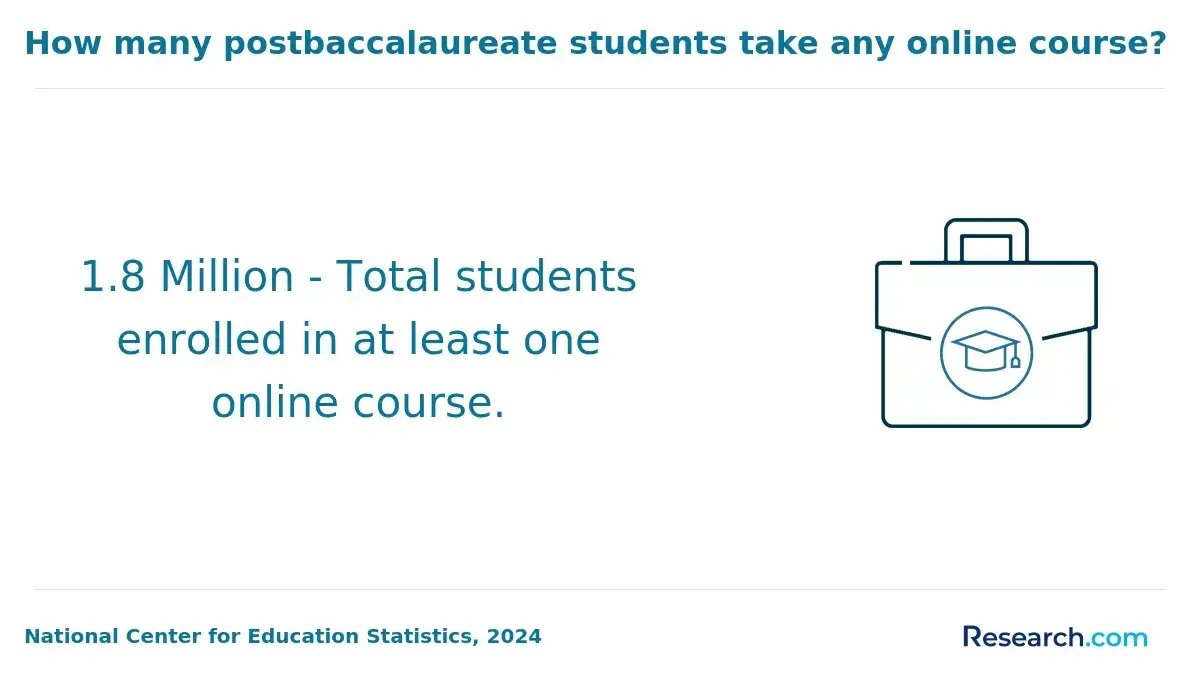
Choosing an online data science degree for a data engineering career means balancing cost, technical depth, flexibility, and employer value. The timing matters: NCES reported in 2024 that 53% of U. S. undergraduates took at least one distance education course in fall 2022, showing that online study is now mainstream rather than unusual. This guide is for students, working adults, and career changers who want to build data pipelines, cloud systems, and analytics infrastructure. You will learn how degree types, courses, costs, admissions, salaries, and certifications compare so you can choose a smarter path.
Key Things You Should Know
- An online data science degree can support data engineering careers, but the best programs include databases, distributed systems, cloud computing, Python, SQL, data warehousing, and software engineering-not only statistics and machine learning.
- Cost varies widely; the College Board's 2024-2025 national averages show published tuition and fees of $11,610 for in-state public four-year colleges and $43,350 for private nonprofit four-year colleges, so the total price should be compared carefully before enrolling.
- Data engineering salary potential is strong but not guaranteed; the BLS reported a May 2024 median wage of $123,100 for database administrators and architects, a category that overlaps with many data infrastructure roles.
What is an online data science degree and how does it prepare you for data engineering?
An online data science degree is a remote academic program that teaches students how to collect, clean, analyze, model, and communicate data. For students targeting data engineering, the most valuable version of this degree goes beyond analytics dashboards and predictive models. It builds the technical foundation needed to move data reliably from source systems into databases, data warehouses, data lakes, machine learning platforms, and business intelligence tools.
Data science and data engineering overlap, but they are not the same. Data scientists often focus on modeling, experimentation, and interpretation. Data engineers focus on infrastructure: pipelines, storage, transformation logic, orchestration, data quality, governance, and performance. A strong online data science program can prepare you for both, but only if it includes enough computing depth.
Students should look for programs that treat data as a production system rather than only a subject for analysis. That usually means coursework and projects that require code, version control, cloud platforms, database design, and reproducible workflows. If a curriculum is mostly statistics, business analytics, and visualization, it may still be useful, but you may need additional technical preparation before applying for data engineering roles.
The table below shows how common data-focused degree paths differ for students who specifically want data engineering careers. Use it to identify whether a program's emphasis matches the work you want to do after graduation.
| Program focus | Best fit | Data engineering relevance | Potential limitation |
| Data science | Students who want analytics, modeling, and data infrastructure exposure | Strong if the curriculum includes SQL, Python, databases, cloud, and pipelines | Some programs lean heavily toward statistics and may underemphasize systems |
| Computer science | Students who want deep programming, algorithms, systems, and software foundations | Very strong for engineering-heavy roles, especially with database and cloud electives | May require students to add analytics or machine learning electives separately |
| Business analytics | Students who want data-driven decision-making roles in business settings | Moderate if technical coursework is included | Often less focused on backend architecture and software development |
| Information systems | Students interested in enterprise technology, databases, and operations | Strong for database, BI engineering, and data platform roles | May be less math-intensive than some data science programs |
If you want the most engineering-oriented path, compare data science programs with a computer science online degree, especially if you are deciding between building analytical models and building production-grade data systems.
How do online data science programs compare with campus-based options for aspiring data engineers?
Online and campus-based data science programs can both lead to data engineering careers, but they create different trade-offs. The right format depends on your work schedule, learning style, need for networking, access to internships, and ability to stay motivated without a physical classroom.
For many aspiring data engineers, the online format is practical because the work itself is tool-based and remote-friendly: coding, database querying, cloud labs, GitHub collaboration, and pipeline projects can all be taught effectively online. The risk is that online programs vary widely in structure. Some offer live classes, cohort support, and strong faculty access, while others rely heavily on self-paced modules with limited feedback.
The comparison below summarizes the decision factors that matter most for future data engineers. It is not about which format is universally better; it is about which environment will help you build evidence of skill.
| Factor | Online data science degree | Campus-based data science degree | What to consider |
| Flexibility | Often better for working adults and students with family obligations | Usually requires set class times and commuting or relocation | Choose online if schedule control is essential |
| Technical labs | Can be strong when cloud sandboxes, coding platforms, and project reviews are included | May provide easier access to physical labs and in-person tutoring | Ask how databases, cloud tools, and pipeline projects are delivered |
| Networking | Depends on cohort design, Slack or Discord communities, live sessions, and alumni access | Often easier through student clubs, career fairs, and faculty relationships | Online students should intentionally build peer and employer connections |
| Career support | Can be effective if remote career coaching, portfolio reviews, and employer events are available | May offer stronger local employer pipelines | Ask for career outcome data specific to online students when available |
| Self-management | Requires strong discipline and consistent weekly practice | Provides more built-in structure | Online is best for students who can follow a project schedule independently |
Online programs make the most sense if you need flexibility and can document your technical work through projects. Campus programs may be better if you want in-person research opportunities, structured networking, or easier access to local internships. Either way, the credential alone is rarely enough; employers usually want proof that you can build, test, and maintain data systems.
Which types of accredited online data science degrees lead to data engineering careers?
Accredited online data science degrees are available at several academic levels. The best choice depends on where you are starting, how technical your target role is, and whether you already have college credits or professional experience.
Accreditation matters because it affects credit transfer, federal financial aid eligibility, graduate school options, and employer confidence. In the U.S., students should first confirm that the institution is accredited by an agency recognized by the U.S. Department of Education or the Council for Higher Education Accreditation. Program-specific accreditation is less common for data science than for fields such as engineering, nursing, or business, so institutional accreditation is usually the baseline requirement.
The table below compares common online degree levels for students aiming at data engineering. Use it to match your current education level with the shortest credible route to your goal.
| Degree type | Typical audience | How it can support data engineering | When it may not be enough |
| Associate degree in data science, computer science, or information technology | Students starting college or seeking a lower-cost entry point | Can build foundations in programming, databases, and math before transfer | Most data engineering roles prefer a bachelor's degree or equivalent experience |
| Bachelor's degree in data science | First-time degree seekers and career changers who need a full undergraduate credential | Can prepare students for junior data engineer, BI engineer, analytics engineer, or database roles | Needs strong technical electives to compete with computer science graduates |
| Master's degree in data science | Professionals with a bachelor's degree who want advanced skills or a career pivot | Can strengthen cloud, machine learning operations, big data, and data architecture preparation | May be too advanced if you lack programming or database fundamentals |
| Graduate certificate in data science or data engineering | Working professionals who already have a degree | Can fill targeted gaps in SQL, cloud, pipelines, or analytics engineering | Usually does not replace a bachelor's degree for roles that require one |
A bachelor's degree is often the most balanced option for students who do not already have a degree. A master's degree can be valuable for career changers with technical or quantitative backgrounds, but it can be frustrating if the program assumes programming experience you do not yet have. Certificates are best when you already meet degree expectations and need targeted skills.
Students interested in the AI side of data systems may also compare data science curricula with the best online AI degree programs, especially if they want to work on machine learning pipelines, model deployment, or AI data infrastructure.
What core courses and technical skills do online data science programs teach for data engineering?
The strongest online data science programs for data engineering combine analytics, computing, and production workflow skills. A useful curriculum should help you understand not only what data means, but how it is collected, transformed, stored, secured, and delivered to users or applications.
When you review a curriculum, look for courses that map directly to real data engineering tasks. The following skill areas are especially important because they appear in job descriptions and day-to-day work:
- Programming: Python is the most common starting point, while Scala, Java, or another JVM language may be useful for distributed data processing environments.
- SQL and relational databases: Students should learn joins, indexing concepts, query optimization, normalization, transactions, and data modeling.
- Data warehousing and analytics engineering: Useful topics include dimensional modeling, ELT workflows, dbt-style transformations, semantic layers, and BI-ready datasets.
- Cloud computing: Programs should expose students to at least one major cloud ecosystem and explain storage, compute, permissions, networking basics, and cost awareness.
- Big data systems: Coursework may include Spark, distributed processing, streaming data, partitioning, and scalable file formats.
- Data pipelines and orchestration: Students should practice scheduling, monitoring, testing, and recovering data workflows rather than only running one-time scripts.
- Software engineering practices: Git, automated testing, documentation, APIs, containers, and code review help separate job-ready candidates from students who have only completed notebooks.
- Data governance and security: Important topics include access control, privacy, lineage, retention, and quality checks.
AI tools are changing how data engineers work, but they do not remove the need for fundamentals. Code assistants can help draft SQL, Python, or infrastructure templates, but a data engineer still needs to know whether the output is correct, secure, efficient, and maintainable. Programs that teach debugging, testing, and system design are more valuable than programs that only teach tool operation.
Strong student projects should look like simplified versions of workplace systems. For example, a portfolio project might ingest raw data, validate it, transform it into a warehouse schema, orchestrate the workflow, document assumptions, and present a dashboard or API endpoint. That kind of project shows employers that you understand the full data lifecycle.
What admission requirements do online data science programs typically have for future data engineers?
Admission requirements vary by school and degree level, but most online data science programs evaluate academic readiness, quantitative preparation, and sometimes programming experience. Future data engineers should pay special attention to prerequisites because a program that moves too quickly into advanced analytics can be difficult if you have not built a technical base.
Typical requirements differ for undergraduate, graduate, and certificate programs. Before applying, review the admissions page and ask whether prerequisites can be completed through transfer credit, placement tests, bridge courses, or noncredit preparation.
| Program level | Common admission requirements | Preparation that helps data engineering students |
| Associate degree | High school diploma or GED, placement testing, transcripts | Algebra readiness, basic computer literacy, willingness to practice coding |
| Bachelor's degree | High school transcripts or transfer credits, minimum GPA, sometimes SAT or ACT depending on school policy | Precalculus or calculus, introductory programming, statistics, and strong writing skills |
| Master's degree | Bachelor's degree, transcripts, resume, statement of purpose, letters of recommendation, sometimes prerequisite courses | Python, SQL, statistics, linear algebra basics, and prior technical or analytical experience |
| Graduate certificate | Bachelor's degree or professional experience, depending on the institution | Clear goal, existing degree foundation, and targeted skill gaps |
If you are missing prerequisites, do not automatically rule out the degree. Many online programs offer bridge courses in programming, statistics, calculus, or data fundamentals. However, be realistic about time. A student new to coding may need several months of consistent practice before feeling comfortable in a data engineering-oriented curriculum.
Admissions questions should focus on fit, not just acceptance. Ask whether online students receive access to tutoring, faculty office hours, technical support, career coaching, and project feedback. These services can matter as much as the course list, especially if you are learning complex tools remotely.
How long do online data science degrees take and what do they cost?
Program length depends on degree level, transfer credits, course load, and calendar structure. Cost depends on tuition, fees, books, software, hardware, residency status, and how long you stay enrolled. For online students, the smartest comparison is total program cost, not only price per credit.
College Board's 2024-2025 data shows how broad the national tuition range can be: average published tuition and fees were $11,610 for in-state students at public four-year institutions and $43,350 at private nonprofit four-year institutions. Online programs may price differently from campus programs, but this benchmark helps students understand why public, transfer-friendly, and employer-supported options can significantly affect affordability.
The table below gives typical completion timelines and cost factors by credential type. Exact prices vary by institution, so use this as a planning framework rather than a quote.
| Credential | Typical time to complete | Cost factors to compare | Best affordability strategy |
| Associate degree | About 2 years full time; longer part time | Community college tuition, online fees, transferability | Complete transferable general education and computing courses before a bachelor's program |
| Bachelor's degree | About 4 years full time; 2 years or less for some transfer students | Per-credit tuition, residency rules, transfer credit limits, technology fees | Maximize accepted transfer credits and compare total credits required for graduation |
| Master's degree | About 1 to 3 years depending on pace | Graduate tuition, prerequisite courses, employer tuition benefits | Choose a program aligned with your current skill level to avoid paying for unnecessary remediation |
| Graduate certificate | Often several months to 1 year | Number of credits, stackability into a degree, included software access | Use it to fill specific gaps if you already have a degree |
To estimate real cost, build a simple budget before you apply. Include the expenses that schools sometimes separate from headline tuition:
- Tuition for all required credits, including prerequisites and capstone courses.
- Mandatory online, technology, graduation, lab, or student service fees.
- Books, cloud platform charges, proctoring, and software subscriptions not included in tuition.
- Computer upgrades, reliable internet, external storage, or webcam equipment.
- Opportunity cost if you reduce work hours to study full time.
- Interest costs if you use loans and cannot pay while enrolled.
Affordability does not always mean choosing the lowest tuition. A slightly more expensive program may be a better value if it accepts more transfer credits, includes cloud labs, offers strong career support, or can be completed faster without sacrificing learning. Conversely, an accelerated program can cost more in stress and weaker retention if you are new to programming.
What data engineering roles can graduates of online data science programs pursue?
Graduates of online data science programs can pursue several data infrastructure and analytics engineering roles, especially when they have strong SQL, Python, cloud, and project experience. Titles vary by employer, and smaller companies may combine data engineering, analytics, and business intelligence into one role.
BLS does not have one perfect category for data engineer, but its software and database categories help show related demand. For example, BLS reported that software developer, quality assurance analyst, and tester employment is projected to grow 15% from 2024 to 2034, which suggests continued demand for people who can build reliable technical systems. Data engineering candidates should still evaluate local job markets and industry-specific hiring because growth is not evenly distributed.
The table below outlines common roles, what they usually do, and how an online data science degree can support entry. Use it to decide which job title best matches your preferred daily work.
| Role | Typical responsibilities | Best preparation within a data science degree | Common next step |
| Junior data engineer | Build and maintain data pipelines, write SQL, assist with ETL or ELT workflows | Database systems, Python, cloud storage, orchestration projects | Data engineer or platform-focused engineer |
| Analytics engineer | Transform raw data into reliable models for reporting and analysis | SQL, data warehousing, dimensional modeling, testing, documentation | Senior analytics engineer or data architect |
| Business intelligence engineer | Create data models, dashboards, reporting pipelines, and performance metrics | SQL, BI tools, data visualization, warehouse design | Data engineer, analytics lead, or BI architect |
| Database developer | Design queries, stored procedures, database schemas, and performance improvements | Relational databases, indexing, normalization, query optimization | Database architect or data platform engineer |
| Machine learning data engineer | Prepare data pipelines for model training, feature stores, and deployment workflows | Machine learning, data pipelines, cloud computing, software engineering | ML engineer, MLOps engineer, or data platform lead |
Students who are still deciding between data careers and other science-related paths should compare the day-to-day work carefully. A guide to high-paying jobs with environmental science degree options, for example, can help clarify whether you prefer field, policy, and sustainability work or technology-centered data systems work.
Entry-level candidates should not rely only on the degree name. A hiring manager is likely to look for evidence that you can solve practical data problems. A strong portfolio might include a batch pipeline, a streaming project, a warehouse model, data quality tests, documentation, and a short explanation of trade-offs you made. Internships, co-ops, freelance projects, research assistantships, and open-source contributions can also help demonstrate readiness.
What salary ranges and earning potential do data engineers with data science degrees have?
Data engineering salaries vary by role, industry, region, company size, seniority, cloud expertise, and prior software experience. A data science degree can help qualify you for relevant roles, but it does not guarantee a specific salary. Employers usually evaluate the combination of education, skills, portfolio evidence, and work experience.
Because data engineer is not always isolated as a single federal occupational category, related BLS wage categories are useful context. BLS reported a May 2024 median annual wage of $123,100 for database administrators and architects. This does not mean every data engineer earns that amount, but it signals that roles involving data infrastructure, databases, and architecture can sit in a relatively high-paying segment of the U.S. technology labor market.
The table below provides a practical way to think about earning potential by career stage. The ranges are described qualitatively because salary outcomes differ sharply across metropolitan areas and employers.
| Career stage | Common titles | What usually affects compensation | How to strengthen earning potential |
| Entry level | Junior data engineer, BI developer, analytics engineer associate | Internships, SQL skill, Python projects, degree level, local market | Build production-style projects and practice technical interviews |
| Mid career | Data engineer, analytics engineer, database developer | Cloud experience, pipeline ownership, warehouse modeling, reliability work | Own end-to-end systems and document measurable business impact |
| Senior level | Senior data engineer, data architect, platform engineer | System design, mentorship, governance, scalability, cross-team influence | Lead architecture decisions and improve performance, cost, or data quality |
| Specialized track | MLOps engineer, streaming data engineer, cloud data architect | Specialized tools, distributed systems, security, regulated-industry knowledge | Add advanced cloud, machine learning operations, or data governance credentials |
When estimating return on investment, compare realistic local job postings with the full cost of the degree. Look at required skills, years of experience, degree preferences, and whether the employer expects software engineering depth. If most target jobs require tools your program does not teach, you may need to budget extra time for certifications, projects, or a technical certificate.
What industry certifications complement an online data science degree for data engineering?
Certifications can complement an online data science degree by validating specific tools or platforms. They are most useful when they match your target employers' technology stack and when you can pair them with hands-on projects. A certification alone is rarely a substitute for a degree, portfolio, or experience, but it can help signal job readiness in cloud and data platform roles.
Before paying for an exam, review job postings in your target region and industry. If local employers repeatedly mention AWS, Azure, Google Cloud, Snowflake, Databricks, or dbt, a related credential may be worth considering.
| Certification area | Examples of focus | Best for | How it complements a degree |
| Cloud fundamentals | Basic cloud architecture, storage, compute, identity, and pricing concepts | Students new to cloud platforms | Adds practical context to database and pipeline coursework |
| Cloud data engineering | Managed data warehouses, orchestration, streaming, security, and monitoring | Students targeting cloud data engineer roles | Shows familiarity with production data tools beyond classroom assignments |
| Database or data warehouse platforms | SQL optimization, warehouse design, permissions, and performance | Future analytics engineers and database-focused candidates | Strengthens credibility for BI, warehouse, and data modeling jobs |
| Data transformation and analytics engineering | Version-controlled transformations, testing, documentation, and lineage | Students who enjoy SQL-heavy modeling work | Connects data science analysis to governed reporting workflows |
| Security and governance | Access control, privacy, compliance, and risk management | Students targeting healthcare, finance, government, or regulated industries | Supports roles where trusted data handling is essential |
A practical certification plan should be staged rather than rushed. Students can use this sequence to avoid spending money on credentials before they are useful:
- Build a foundation in Python, SQL, databases, and basic cloud concepts through degree coursework.
- Choose one cloud ecosystem or data platform based on target job postings rather than popularity alone.
- Complete one project that uses the platform before registering for the exam.
- Take an entry-level or associate-level certification if it validates skills you can explain in an interview.
- Add specialized certifications only after you know which data engineering niche you want to pursue.
The common mistake is collecting certificates without building systems. Employers are more likely to value a credential when you can discuss a real pipeline, warehouse model, or cloud deployment that required the same skills.
How can you evaluate and choose a reputable, accredited online data science program?
Choosing a reputable online data science program requires more than comparing rankings or tuition. For a data engineering career, the central question is whether the program will help you build credible technical ability at a price and pace that makes sense for your situation.
Start with accreditation, then move to curriculum, student support, cost, and career fit. A program can be accredited and still be a poor match if it lacks databases, cloud work, or serious coding projects. Conversely, a lesser-known accredited public program may be a strong choice if it has rigorous coursework, good transfer policies, and transparent student support.
Use the following checklist when comparing programs. It focuses on questions that directly affect learning quality, employability, and financial risk:
- Confirm institutional accreditation through a recognized accreditor before applying.
- Review the full course list for SQL, Python, databases, cloud computing, data engineering, software engineering, and capstone work.
- Ask whether online students complete hands-on projects using real tools rather than only quizzes or discussion posts.
- Check whether transfer credits, prior learning credit, or community college pathways can reduce total cost.
- Ask for total program cost, including fees, prerequisites, books, software, and graduation charges.
- Verify whether career services support online students with resume reviews, mock interviews, employer events, and portfolio guidance.
- Look for faculty or instructors with relevant data systems, analytics engineering, software, or cloud experience.
- Ask how often the curriculum is updated to reflect changing tools such as cloud warehouses, orchestration platforms, and AI-assisted workflows.
- Review withdrawal, refund, and course-repeat policies before enrolling.
- Talk to current students or alumni if possible, especially those who studied online while working.
Red flags include vague curriculum descriptions, no clear accreditation information, aggressive enrollment pressure, unclear tuition and fee pages, limited faculty access, and career claims that sound guaranteed. Be cautious with any program that promises a specific job title or salary without explaining the conditions that affect outcomes.
Your final choice should match your goal. Choose a lower-cost transfer pathway if affordability is the priority. Choose an accelerated program only if you already have the technical foundation to keep up. Choose a master's program if you already hold a bachelor's degree and need advanced specialization. If you are still comparing online study across fields, resources on how to study exercise science online can also help you think through program speed, flexibility, and career alignment in a different applied science area.
Other Things You Should Know About Data Science
Yes, if the program includes enough technical depth and you build relevant projects. Employers usually care more about your ability to write SQL, program in Python, work with databases, understand cloud tools, and explain data pipelines than the exact wording of the degree title.
In 2027, online data science students will need a computer capable of running data analytics software efficiently. This typically requires at least an Intel i7 processor, 16GB of RAM, and a solid-state drive to handle large datasets and complex computations effectively.
Many 2027 online data science programs require a capstone built around an ETL pipeline, data warehouse, or streaming dashboard. Students usually need to show SQL, Python, data modeling, and cloud tools such as AWS, Azure, or GCP, with a final project often worth 3 to 6 credits.
Most programs require comfort with algebra, statistics, and sometimes calculus or linear algebra. Data engineering roles are often less modeling-heavy than data scientist roles, but math still helps with optimization, probability, experimentation, and understanding data quality issues.
References
- Top Data Science Certifications to Boost Your Career https://blogs.lawrence.edu/careercenter/2024/11/top-data-science-certifications-to-boost-your-career.html
- Best Online Data Science Masters Programs (2026 Guide) https://skillifysolutions.com/blogs/data-science/best-online-data-science-masters/
- Careers in Data Science | ComputerScience.org https://www.computerscience.org/careers/data-science/how-to-become/
- How to Choose the Right Data Science Course? https://henryharvin.ae/blog/how-to-choose-the-right-data-science-course/
- How to become a data engineer: Skills, steps, and salary | edX https://www.edx.org/become/how-to-become-a-data-engineer
- Online BSc in Data Science & AI vs Engineering: Which Is Right? https://bitspilani-digital.edu.in/blogs/online-bsc-degree-in-data-science-ai-vs-traditional-engineering-which-path-is-right-for-you
- Group https://www.datacamp.com/category/data-engineering
- Building Your Data Engineering Career: Certifications & Degrees to Pursue | Data Engineering Jobs https://dataengineeringjobs.co.uk/career-advice/building-your-data-engineering-career-certifications-degrees-to-pursue
- What jobs are there in data? - ECE https://www.ece.fr/en/what-jobs-are-there-in-data/
- Data Science Course vs. University – Which path is better in 2026? https://www.wbscodingschool.com/blog/data-science-course-vs-university/