2027 Data Science Roles That Often Lead to Leadership Positions

Co-Founder and Chief Data Scientist
Choosing a data science role is not just about landing a technical job; it is about deciding whether the path can grow into influence, budget ownership, and executive decision-making. The U. S. Bureau of Labor Statistics reports that data scientist employment is projected to grow 36% from 2023 to 2033, far faster than average. This guide is for students, career changers, and working analysts who want to understand which roles most often lead to leadership, what education helps, and how to choose a path with strong long-term potential.
Key Things You Should Know
- Data scientist, machine learning engineer, analytics manager, data engineering manager, and AI product leadership roles are among the strongest launch points for senior data science management.
- BLS May 2024 wage data places the median annual wage for data scientists at $112,590, while computer and information systems managers had a median annual wage of $171,200.
- The fastest path to leadership usually combines technical depth, business judgment, communication skills, people management, and experience turning data products into measurable organizational outcomes.
Which data science roles most commonly lead to management and executive leadership?
The data science roles that most often lead to leadership are the ones closest to business decisions, product strategy, data infrastructure, AI deployment, and cross-functional influence. A data scientist can become a leader, but the transition usually happens when the role expands beyond model building into roadmap ownership, stakeholder management, and measurable business impact.
The table below compares common data science roles by their leadership potential and the type of management track they most often support. Use it to distinguish between roles that build technical authority and roles that naturally create opportunities to manage people, platforms, or strategy.
| Role | Why it can lead to leadership | Typical next leadership step | Best fit for |
| Data Scientist | Connects statistical modeling, experimentation, and business problem-solving | Senior data scientist, lead data scientist, data science manager | People who enjoy translating messy data into decisions |
| Machine Learning Engineer | Owns production AI systems, model deployment, and performance reliability | ML engineering manager, head of machine learning | Technically strong candidates who want to lead AI systems |
| Analytics Manager | Manages reporting, KPI strategy, dashboards, and analyst teams | Director of analytics, VP of analytics | Professionals who like business operations and team leadership |
| Data Engineering Manager | Controls data pipelines, cloud platforms, data quality, and governance | Director of data engineering, chief data officer track | Builders who want to lead infrastructure and enterprise data strategy |
| AI Product Manager | Defines AI product goals, user needs, risk trade-offs, and launch priorities | Director of AI product, VP of product | Professionals who combine technical fluency with customer and market insight |
| Decision Science or Strategy Analytics Lead | Guides executive choices through forecasting, experimentation, and scenario analysis | Director of strategy analytics, chief analytics officer track | Analytical thinkers who want direct exposure to senior executives |
The best role depends on the kind of leadership you want. If you want to manage researchers and advanced models, machine learning leadership may fit. If you want to influence company strategy, analytics, decision science, or AI product roles may create a clearer path to the executive table.
What skills and responsibilities distinguish senior and director-level data science positions?
Senior and director-level data science positions differ from individual contributor roles because the work shifts from completing analyses to setting direction. At this level, leaders decide which problems are worth solving, which teams should be involved, which risks must be controlled, and how success should be measured.
Technical competence still matters, but it is no longer enough. Employers increasingly expect data science leaders to understand AI governance, privacy, model risk, cloud architecture, and the financial impact of analytics investments. BLS May 2024 wage data shows a median annual wage of $171,200 for computer and information systems managers, which reflects the premium employers place on people who can lead technology teams and align them with organizational goals.
The responsibilities below show how the role changes as professionals move from senior technical work to director-level ownership.
- Senior data scientist: Leads complex modeling projects, mentors junior staff, improves methodology, and presents findings to nontechnical stakeholders.
- Lead data scientist: Coordinates project scope, sets analytical standards, reviews technical work, and helps prioritize the team's backlog.
- Data science manager: Manages people, hiring, performance reviews, project delivery, stakeholder expectations, and team capacity.
- Director of data science: Owns a portfolio of initiatives, sets the analytics roadmap, manages managers or senior leads, and ties data science work to business performance.
- VP or head of data science: Shapes enterprise AI strategy, funding priorities, governance standards, organizational design, and executive reporting.
A common mistake is assuming that the strongest coder will automatically become the strongest leader. In practice, promotions often depend on whether a professional can define high-value problems, communicate trade-offs clearly, and help teams deliver reliable results under real business constraints.
How do data science career paths typically progress from entry-level to C-suite?
Data science career paths are not perfectly linear, but many follow a predictable pattern: technical execution, project leadership, team management, departmental leadership, and enterprise strategy. The jump from senior contributor to manager is often the most important decision point because it changes how performance is measured.
The table below outlines a typical progression. Timelines vary by employer, industry, graduate education, project visibility, and whether the professional moves between companies for advancement.
| Career stage | Common titles | Primary focus | Leadership signal employers look for |
| Entry level | Data analyst, junior data scientist, BI analyst | Cleaning data, reporting, basic modeling, dashboard support | Accuracy, curiosity, communication, and reliable delivery |
| Early career | Data scientist, product analyst, ML engineer | Modeling, experimentation, automation, business analysis | Ability to connect analysis to decisions |
| Senior individual contributor | Senior data scientist, senior ML engineer, staff data scientist | Complex projects, technical design, mentoring, methodology | Technical judgment and influence without formal authority |
| First-line management | Data science manager, analytics manager, ML manager | Team planning, hiring, coaching, delivery, stakeholder management | Ability to build team capacity and protect quality |
| Department leadership | Director of data science, director of analytics, head of data | Roadmaps, budgets, governance, cross-functional strategy | Portfolio thinking and measurable business impact |
| Executive leadership | VP of data, chief data officer, chief analytics officer, chief AI officer | Enterprise strategy, risk, investment, operating model, executive alignment | Business ownership, ethical judgment, and organizational influence |
Career changers can enter this path from adjacent fields such as software engineering, business intelligence, statistics, economics, operations research, or product management. Some AI-related roles also provide early exposure to model evaluation and human feedback systems; for example, people exploring how to become an AI trainer with no experience may use that work as a stepping stone into broader AI operations, data quality, or model evaluation roles.
To move toward leadership, focus on a sequence of practical milestones rather than job titles alone.
- Build a portfolio of projects that show business impact, not just technical methods.
- Volunteer to present findings to stakeholders outside the data team.
- Mentor junior analysts or interns before applying for formal management roles.
- Learn how budgets, hiring plans, vendor contracts, and compliance requirements affect data work.
- Choose roles where data science is connected to revenue, risk reduction, patient outcomes, product growth, or operational efficiency.
Which degrees and academic programs best prepare you for data science leadership?
The best degree for data science leadership depends on your starting point. Entry-level candidates often need a quantitative bachelor's degree, while professionals targeting director or executive roles may benefit from a master's degree, MBA, doctorate, or specialized graduate certificate.
A degree is most valuable when it fills a real gap. If you already have strong technical experience, a business or management-focused program may help more than another programming-heavy credential. If you are strong in management but weak in statistics, machine learning, or data engineering, a technical graduate program may be the better investment.
The table below compares academic options based on career stage and leadership relevance. It is designed to help you avoid overpaying for a credential that does not match your target role.
| Program type | Typical fit | Leadership value | Trade-off to consider |
| Bachelor's in data science, statistics, computer science, or mathematics | Students and early-career professionals | Builds the technical foundation for analyst and data scientist roles | May not be enough for advanced leadership without experience or graduate study |
| Master's in data science or analytics | Working professionals seeking advancement | Strengthens modeling, analytics strategy, and applied project work | Quality varies widely by curriculum, faculty, and employer recognition |
| Master's in computer science or AI | Professionals targeting ML engineering or AI systems leadership | Supports deeper work in algorithms, scalable systems, and AI deployment | Can be too technical if the goal is general analytics management |
| MBA with analytics concentration | Professionals moving toward product, strategy, or executive roles | Builds finance, leadership, operations, and executive communication skills | May lack technical depth unless paired with prior data experience |
| Doctorate in data science, statistics, computer science, or a related field | Professionals targeting research leadership, advanced AI, or academic roles | Signals deep expertise and supports high-level research credibility | Requires significant time and should match a role that values doctoral training |
Doctoral study is not required for most data science management jobs, but it can be useful for research-heavy AI leadership, advanced modeling teams, or university-industry research roles. If that path fits your goals, compare flexible options such as an online PhD in data science with campus-based doctoral programs, paying close attention to dissertation support, faculty research areas, and expected time to completion.
Admissions requirements vary, but many graduate programs expect transcripts, a quantitative background, programming experience, recommendation letters, a statement of purpose, and sometimes test scores. Before enrolling, ask whether bridge courses are available if you lack prerequisites in calculus, statistics, Python, databases, or linear algebra.
What data science leadership roles exist across industries like tech, finance, and healthcare?
Data science leadership looks different by industry because the business problems, regulations, risks, and data types differ. A director of data science in a technology company may focus on product personalization, while a healthcare analytics leader may focus on quality measures, patient risk, or compliance-sensitive data use.
The table below summarizes how leadership roles vary across major U.S. industries. It can help you choose coursework, internships, and projects that match the sector where you want to build influence.
| Industry | Common leadership roles | Typical priorities | Important domain knowledge |
| Technology | Head of machine learning, director of AI product, VP of data | Personalization, recommendation systems, experimentation, automation | Product metrics, software development, responsible AI, cloud systems |
| Finance and insurance | Director of risk analytics, head of model governance, chief analytics officer | Fraud detection, credit risk, forecasting, compliance, portfolio analytics | Model risk management, regulatory expectations, auditability |
| Healthcare | Director of clinical analytics, chief data officer, population health analytics leader | Patient outcomes, utilization, quality reporting, operational efficiency | HIPAA, clinical workflows, health equity, data interoperability |
| Retail and e-commerce | Director of customer analytics, pricing analytics leader, marketing science lead | Demand forecasting, customer segmentation, pricing, inventory optimization | Consumer behavior, attribution, supply chain data |
| Manufacturing and logistics | Director of operations analytics, supply chain data leader, industrial AI lead | Predictive maintenance, routing, quality control, process optimization | Operations management, IoT data, safety and reliability |
| Government and public sector | Chief data officer, analytics program manager, data governance director | Public service delivery, transparency, data standards, risk control | Procurement, privacy, accessibility, public accountability |
AI adoption is changing these roles quickly. Leaders now need enough technical fluency to evaluate generative AI systems, vendor claims, data rights, bias risks, and security concerns. Professionals comparing broader degrees in AI should look for programs that teach not only algorithms but also deployment, ethics, governance, and organizational implementation.
How do salaries and total compensation compare for advanced data science leadership jobs?
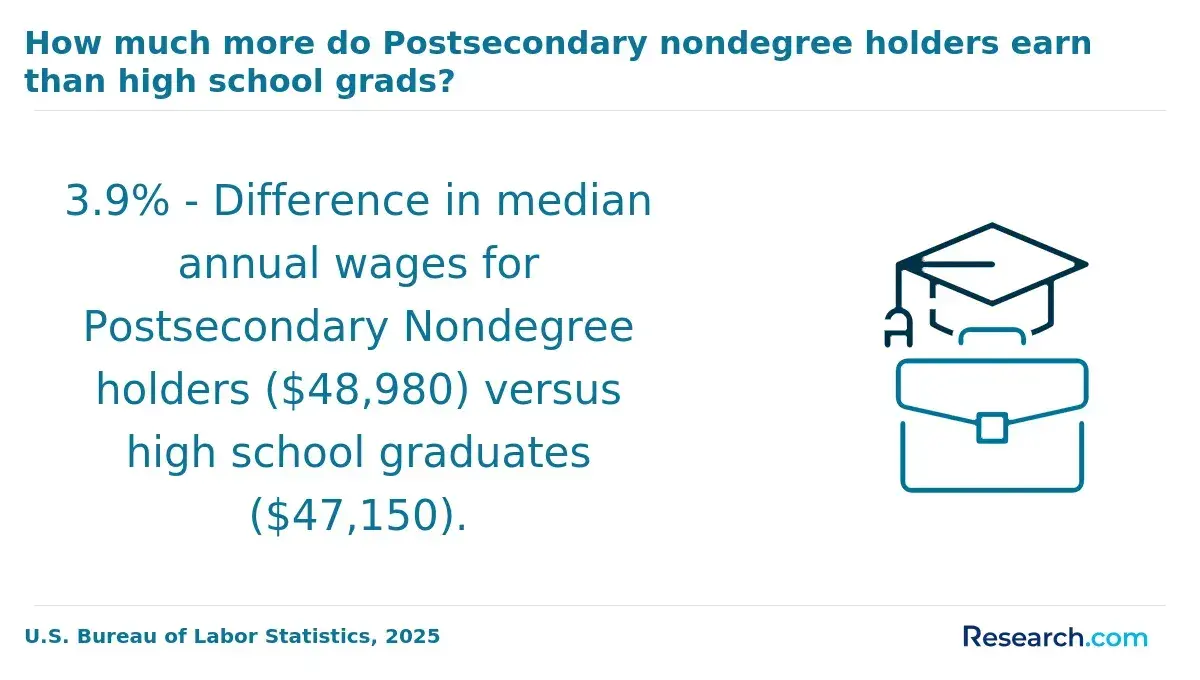
Advanced data science leadership roles generally pay more than individual contributor roles because they involve people management, budget ownership, strategic accountability, and higher organizational risk. However, compensation varies widely by industry, region, company size, equity eligibility, and whether the role is tied to revenue-generating products.
BLS May 2024 wage data provides a useful national baseline: data scientists had a median annual wage of $112,590, while computer and information systems managers had a median annual wage of $171,200. The gap shows why leadership can be financially attractive, but it should not be read as a guaranteed outcome for every data professional.
The table below explains common compensation components for advanced roles. It can help you compare job offers beyond base salary.
| Compensation component | Where it is common | Why it matters | What to evaluate |
| Base salary | Nearly all roles | Provides predictable income and is often the basis for raises | Compare against role scope, location, and management responsibility |
| Annual bonus | Finance, technology, consulting, large healthcare systems | Rewards team, company, or individual performance | Ask whether the target bonus is typical or rarely achieved |
| Equity or stock awards | Technology companies, startups, some public companies | Can be valuable but depends on vesting and company performance | Review vesting schedule, liquidity, and risk |
| Long-term incentives | Director, VP, and executive roles | Aligns leaders with multi-year business goals | Understand performance conditions and forfeiture rules |
| Benefits and flexibility | Most employers | Can materially affect total value and work-life fit | Compare retirement match, healthcare, tuition support, remote flexibility, and leave |
When evaluating compensation, avoid focusing only on the headline number. A lower base salary with strong tuition reimbursement, internal mobility, and exposure to executive projects may be better for leadership development than a higher-paying role with narrow technical scope.
What is the job outlook and demand for high-level data science leaders in the U.S.?
The U.S. outlook for data science leadership is strong because organizations are expanding AI, automation, cloud data platforms, and analytics-driven decision-making. Demand is not limited to technology companies; healthcare systems, banks, insurers, manufacturers, retailers, government agencies, and consulting firms all need leaders who can turn data assets into reliable decisions.
BLS projections released in 2024 estimate 36% employment growth for data scientists from 2023 to 2033. That figure applies to the occupation overall, not specifically to executives, but it signals a growing talent base and a larger need for managers who can supervise technical teams and connect their work to organizational goals.
Several trends are shaping demand for high-level data science leaders.
- Generative AI implementation: Employers need leaders who can move beyond experimentation and decide where AI is useful, safe, and cost-effective.
- Model governance: More organizations are formalizing controls around bias, explainability, privacy, monitoring, and documentation.
- Data infrastructure modernization: Cloud platforms, real-time data, and data quality programs require leaders who understand both technology and operations.
- Executive pressure for measurable ROI: Data leaders are increasingly expected to show how analytics affects revenue, risk, customer experience, or efficiency.
- Cross-functional adoption: Data science now supports product, marketing, finance, HR, legal, operations, and cybersecurity, which increases the need for leaders who can coordinate across departments.
The outlook is strongest for professionals who combine technical judgment with business credibility. Candidates who can only describe algorithms may struggle at senior levels, while candidates who can explain when a model should not be used often earn more trust from executives.
How do online and campus-based data science programs differ for leadership preparation?
Online and campus-based data science programs can both prepare students for leadership, but they support different learning styles and career situations. The right choice depends on your schedule, need for networking, access to local employers, and the amount of structure you need to finish.
The table below compares online and campus-based formats specifically through a leadership-preparation lens. Use it to think beyond convenience and focus on career outcomes.
| Factor | Online programs | Campus-based programs | Decision point |
| Flexibility | Often better for working professionals and caregivers | Usually requires more fixed scheduling | Choose online if you need to keep working while studying |
| Networking | Can be strong if the program has live sessions, cohorts, and employer events | Often stronger for local networking and in-person faculty access | Choose campus if relationship-building is a major goal |
| Leadership practice | May include virtual team projects and asynchronous collaboration | May include labs, seminars, research groups, and in-person presentations | Look for real team-based projects in either format |
| Cost structure | May reduce relocation and commuting costs | May involve housing, transportation, or reduced work hours | Compare total cost, not just tuition |
| Employer perception | Generally strongest when offered by an accredited, reputable institution | May benefit from established local employer pipelines | Focus on accreditation, curriculum, and outcomes rather than format alone |
Online education is not automatically easier or less rigorous. Strong online programs require structured collaboration, applied projects, faculty feedback, and clear assessment standards. When comparing formats, borrow the same discipline you would use when evaluating other online degrees, even in unrelated fields such as animal science degrees online: verify accreditation, total cost, support services, and whether the program's outcomes match your goal.
Common red flags include programs that promise unrealistic career outcomes, do not publish curriculum details, lack qualified faculty, provide little career support, or rely heavily on generic video content without applied projects. Leadership preparation requires practice making decisions, explaining trade-offs, and working with others, not just passing technical quizzes.
Which certifications and professional credentials strengthen your path to data science leadership?
Certifications can strengthen a data science leadership path when they prove a specific skill that employers need. They are usually most useful as complements to experience and education, not replacements for a strong portfolio or degree.
The table below groups credentials by the leadership problem they help solve. This approach is more useful than collecting certificates at random.
| Credential area | Examples of what it validates | Best for | Leadership value |
| Cloud data and AI platforms | Ability to use cloud-based data, ML, and analytics tools | ML engineers, data engineers, platform leaders | Helps leaders evaluate architecture, vendor options, and deployment trade-offs |
| Project and product management | Planning, agile delivery, roadmap management, stakeholder coordination | Aspiring managers, analytics leads, AI product managers | Supports delivery discipline and cross-functional leadership |
| Data governance and privacy | Data stewardship, compliance awareness, privacy controls, responsible use | Healthcare, finance, public sector, enterprise data leaders | Builds credibility in regulated environments |
| Security and risk | Awareness of cybersecurity, access control, and operational risk | Data leaders handling sensitive or mission-critical systems | Improves decision-making around AI and data infrastructure risk |
| Advanced analytics or vendor tools | Skill with specific analytics, BI, or ML platforms | Analysts moving into technical leadership | Can support team standards but should not replace broader strategy skills |
Choose certifications strategically. Before paying for one, review job postings for your target role and identify which credentials appear repeatedly. Then decide whether the credential fills a clear gap in your profile.
A practical certification plan might look like this.
- Pick one cloud or data platform credential if your target roles mention production systems or enterprise data platforms.
- Add a project, product, or agile credential if you are moving from technical execution into delivery leadership.
- Prioritize governance, privacy, or risk training if you want to work in healthcare, finance, insurance, or public sector roles.
- Stop collecting credentials once you can demonstrate the skill through projects, management experience, or measurable business outcomes.
How can you evaluate and choose accredited data science programs aligned with leadership goals?
Choosing a data science program for leadership goals requires more than comparing rankings. You need to evaluate accreditation, curriculum, faculty, cost, applied learning, employer connections, flexibility, and whether the program builds both technical and managerial capability.
In the U.S., institutional accreditation is a key quality signal because it affects federal financial aid eligibility and credit transfer. Programmatic accreditation is less standardized for data science than for fields such as nursing or engineering, so students should look closely at institutional accreditation and the academic unit offering the degree.
The table below highlights the program features most relevant to future leaders. Use it as a screening tool before speaking with admissions advisors.
| Feature to evaluate | Why it matters for leadership | What to look for |
| Accreditation | Protects transferability, aid eligibility, and baseline academic credibility | Institutional accreditation recognized by the U.S. Department of Education or CHEA |
| Curriculum balance | Leaders need technical, business, and ethical judgment | Statistics, ML, data engineering, visualization, governance, communication, and strategy |
| Applied projects | Leadership requires solving ambiguous problems with constraints | Capstone, practicum, employer-sponsored projects, or research labs |
| Faculty expertise | Faculty shape the program's rigor and industry relevance | Research, professional experience, publications, or industry partnerships |
| Career support | Leadership paths depend on networks and role progression | Career coaching, alumni access, employer events, internship support, interview preparation |
| Total cost | ROI depends on full financial commitment | Tuition, fees, books, software, travel, lost wages, and financing terms |
| Flexibility | Working professionals need realistic pacing | Part-time options, asynchronous content, live sessions, leave policies, and completion limits |
Before enrolling, ask targeted questions that reveal whether the program can support your leadership goals.
- What percentage of coursework involves team-based projects, stakeholder presentations, or applied decision-making?
- Which courses cover AI governance, data ethics, privacy, model monitoring, or responsible deployment?
- What career outcomes are reported, and how are those outcomes collected?
- Can working professionals complete the program part time without losing access to core courses or faculty support?
- Are capstone projects connected to real organizations, research groups, or industry partners?
- What technical prerequisites are expected, and are bridge courses available?
- How does the program help students build leadership evidence, such as presentations, portfolios, publications, or management-oriented projects?
Avoid choosing a program solely because it is affordable, accelerated, highly ranked, or heavily advertised. The best choice is the one that fits your current skill gaps, target role, schedule, and financial limits while giving you credible evidence of technical and leadership growth.
Other Things You Should Know About Data Science
Many data science leaders code less than individual contributors, but they still need enough technical fluency to review methods, question assumptions, evaluate trade-offs, and communicate with engineering teams. The higher the role, the more important judgment becomes compared with daily coding output.
An MBA is not required, but it can help professionals who need stronger finance, strategy, operations, or executive communication skills. For technically strong candidates, an MBA may be useful if the goal is VP, product, general management, or C-suite leadership.
Data governance skills signal readiness for leadership because managers must protect data quality, privacy, and access. In 2027, useful skills include data cataloging, stewardship workflows, metadata management, and policy enforcement under GDPR or CCPA. Experience with master data management and audit controls is especially valued in larger organizations.
References
- Data Science Course vs. University – Which path is better in 2026? https://www.wbscodingschool.com/blog/data-science-course-vs-university/
- Job Outlook for Data Scientists — Data Science https://blog.nobledesktop.com/data-scientist-job-outlook
- Choose the Right Data Science Program for Career | Learnbay https://www.learnbay.co/blogs/how-to-choose-the-right-data-science-program-for-your-career-goals
- Director of Data Science Certifications: Best Credentials to Advance Your Career | Teal https://www.tealhq.com/career-paths/director-of-data-science-certifications
- How To Choose The Right Data Science Course For Your Career Goals https://www.leanwisdom.com/blog/how-to-choose-the-right-data-science-course/
- Top Certifications for Data Scientists https://shecancode.io/top-certifications-for-data-scientists/
- LIVE IT Training & Certification – 500+ Courses | Readynez https://www.readynez.com/en/blog/how-much-do-data-scientists-earn-in-2026-across-the-us-uk-and-europe/
- Assess Your Data Science and Machine Learning Capa... https://www.infotech.com/research/ss/assess-your-data-science-and-machine-learning-capabilities
- CFG Career Pathways: How To Get A Career In Data Science https://codefirstgirls.com/blog/how-to-become-a-data-scientist/
- What is your job description? https://datascienceleadership.com/docs/technical-leadership/staff-job-description