2027 Best Online Bachelor's in Data Science for Career Changers

Co-Founder and Chief Data Scientist
Switching into data science can be confusing because employers want technical skill, business judgment, and proof that you can work with real data. The field is expanding quickly: the U. S. Bureau of Labor Statistics projects data scientist employment to grow 34% from 2024 to 2034, far faster than average. This guide is for adults changing careers who need a practical way to compare online bachelor's programs, costs, timelines, admissions requirements, accreditation, and job outcomes before committing time and money.
Key Things You Should Know
- The strongest online bachelor's in data science programs combine statistics, programming, databases, machine learning, ethics, and portfolio-based projects rather than teaching tools in isolation.
- For cost planning, the College Board reported 2024-25 average published tuition and fees of $11,610 for in-state public four-year colleges, $30,780 for out-of-state public colleges, and $43,350 for private nonprofit four-year colleges.
- Career outcomes vary by industry and experience, but the BLS reported a May 2024 median annual wage of $112,590 for data scientists, making program quality, internships, projects, and transfer credit especially important for ROI.
What is an online bachelor's in data science and who is it best suited for?
An online bachelor's in data science is an undergraduate degree that teaches students how to collect, clean, analyze, model, visualize, and communicate data. Most programs sit at the intersection of computer science, statistics, mathematics, analytics, and business problem-solving. For career changers, the online format matters because it can make it possible to keep working while building a new technical foundation.
This degree is best suited for adults who want a structured pathway into analytics, data engineering support roles, business intelligence, or junior data science positions. It is especially useful if your previous career gave you domain knowledge in areas such as healthcare, finance, logistics, marketing, education, retail, or public service, because employers often value people who can connect data work to real operational decisions.
It may not be the fastest route for everyone. If you already have a bachelor's degree in a quantitative field, a graduate certificate, bootcamp, or master's degree may be more efficient. If your interest is more software-heavy than statistics-heavy, an accelerated bachelor's degree computer science online may be a better fit because it typically places more emphasis on programming, systems, and software development.
The best fit depends on your starting point. The table below summarizes how different career changers should think about the degree.
| Career changer profile | Why data science may fit | Potential concern |
| Working adult without a bachelor's degree | Provides a recognized credential and broad technical foundation | May take several years unless transfer credits apply |
| Professional with domain expertise but limited coding experience | Connects existing industry knowledge with analytics tools | Requires consistent practice in math, Python, SQL, and statistics |
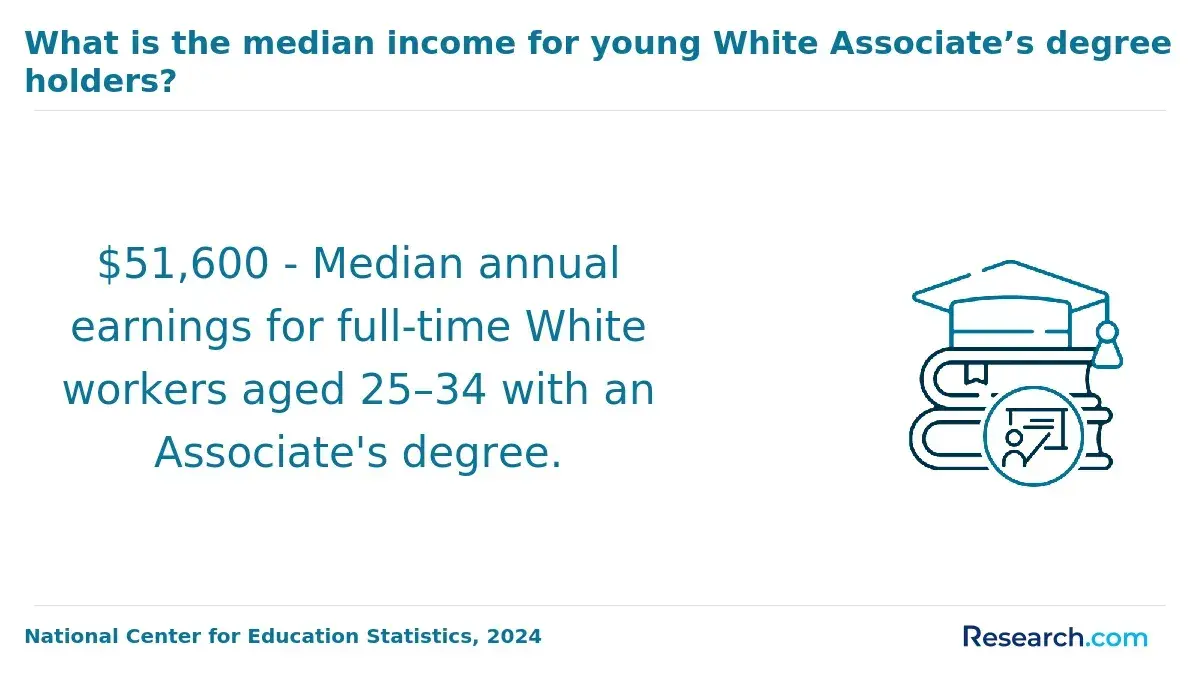
| Associate degree holder | Transfer credits may shorten time to graduation | Not all technical or general education credits transfer equally |
| Current bachelor's degree holder | Can support a complete field change if prior degree is unrelated | A second bachelor's may be less efficient than a certificate or master's |
How can career changers use an online data science degree to transition fields?
Career changers can use an online data science degree as both a credential and a transition plan. The degree alone is rarely enough; the stronger strategy is to combine coursework with portfolio projects, domain-specific examples, internships or experiential learning, and a clear story about how your prior experience helps you solve data problems.
A practical transition usually happens in stages. The steps below can help you avoid treating the degree as a passive credential and instead use it as a career-building system.
- Map your current experience to data problems, such as forecasting demand, reducing customer churn, improving patient scheduling, tracking financial risk, or analyzing student outcomes.
- Choose electives and projects that match a target industry rather than building a random portfolio of disconnected assignments.
- Build a public or shareable portfolio with SQL queries, Python notebooks, dashboards, written explanations, and at least one end-to-end project using messy real-world data.
- Look for internships, apprenticeships, employer-sponsored analytics projects, or volunteer data work before graduation.
- Apply first to hybrid roles such as data analyst, business intelligence analyst, reporting analyst, or operations analyst if full data scientist roles require more experience.
One common mistake is trying to erase your previous career. In many hiring conversations, your old field can be an advantage if you can explain the business context behind the numbers. For example, a retail manager who learns SQL and forecasting may be more credible for supply chain analytics than a new graduate with no operational exposure.
If your career change is driven by a broader interest in health, wellness, and human performance rather than analytics itself, compare the data science route with an online exercise science degree. That path may fit better if you want roles connected to fitness, rehabilitation support, coaching, or health promotion instead of programming-intensive analytics work.
What are the key criteria for choosing a reputable online data science program?
A reputable online data science program should be evaluated on more than name recognition. The best choice is the program that matches your background, budget, transfer credits, learning style, and target job market while providing enough technical depth to be credible with employers.
Use the following criteria when comparing schools, especially if you are balancing work, family, and a career transition.
- Accreditation: Confirm institutional accreditation first, then look for any program-level indicators such as ABET accreditation for computing-related programs where available.
- Curriculum depth: Look for required courses in statistics, Python or R, SQL, databases, machine learning, data visualization, cloud or big data tools, ethics, and a capstone.
- Portfolio support: Prioritize programs that require applied projects, case studies, labs, or employer-connected work instead of only quizzes and exams.
- Transfer credit policy: Ask how many credits can transfer, whether prior learning assessment is available, and whether technical credits expire.
- Student support: Evaluate tutoring, career coaching, internship support, faculty access, and online advising hours for working adults.
- Transparent cost: Compare total program cost, fees, books, software, technology requirements, and the cost of credits that do not transfer.
- Career alignment: Review graduate outcomes, employer partnerships, capstone examples, and whether the program prepares students for analyst roles as well as data science roles.
The table below can help you identify red flags before enrolling. These issues do not always mean a program is poor, but they should trigger follow-up questions.
| Red flag | Why it matters | Better alternative |
| Unclear accreditation status | Credits, financial aid, and employer recognition may be affected | Choose a school with recognized institutional accreditation |
| Curriculum focused mostly on business software | Tool-only training may not build enough statistical or programming depth | Look for math, coding, databases, and machine learning foundations |
| No capstone or portfolio requirement | Career changers need evidence of applied ability | Choose a program with projects that can be discussed in interviews |
| Tuition shown without fees | Total cost may be higher than expected | Request a full cost estimate through graduation |
| No career services for online students | Remote learners may receive less support | Confirm online access to coaching, job boards, and employer events |
How do online and on-campus bachelor's in data science programs compare?
Online and on-campus data science bachelor's programs can lead to similar academic credentials when they are offered by accredited institutions and use comparable curricula. The main differences are not usually the diploma name; they are scheduling, access to faculty, networking style, lab structure, and how much self-direction the student needs.
The comparison below is useful for career changers because the best format depends on your constraints, not just your preference.
| Factor | Online bachelor's in data science | On-campus bachelor's in data science |
| Schedule | Often more flexible, with asynchronous or evening options | Usually more fixed, with scheduled classes and labs |
| Work compatibility | Better for students keeping a full-time or part-time job | Better for students who can study on a traditional schedule |
| Networking | Requires intentional use of virtual events, project teams, and online communities | More built-in access to clubs, campus recruiting, and faculty offices |
| Learning style | Works well for self-motivated students who can manage deadlines independently | Works well for students who benefit from face-to-face structure |
| Hands-on work | Usually completed through cloud labs, notebooks, remote datasets, and virtual capstones | May include in-person labs, research groups, and campus-based projects |
| Relocation needs | Usually no relocation required | May require living near campus or commuting |
Choose online if you need flexibility, already have professional discipline, and can create networking opportunities intentionally. Choose on-campus if you need more structure, want a traditional college environment, or plan to use campus recruiting heavily. Hybrid programs can be a strong middle ground, especially when they include occasional residencies, employer projects, or local internship access.
A current trend affecting both formats is the rise of AI-assisted learning and coding tools. Good programs now teach students how to use AI responsibly for exploration, debugging, and productivity while still requiring them to understand statistics, data quality, model limitations, and ethical risk. This matters because employers are less impressed by tool use alone and more interested in whether graduates can validate results and explain decisions.
What accreditation should online data science programs have for strong career outcomes?
Accreditation is one of the most important quality checks for an online bachelor's degree. At minimum, the institution should hold accreditation from an accreditor recognized by the U.S. Department of Education or the Council for Higher Education Accreditation. This can affect federal financial aid eligibility, graduate school admission, credit transfer, and employer confidence.
For data science specifically, programmatic accreditation is less universal than in fields such as nursing or engineering. Some computing-related programs may hold ABET accreditation, which can be a positive signal of curriculum quality, faculty standards, and continuous improvement. However, many legitimate data science programs do not have ABET accreditation because the field is interdisciplinary and still evolving across departments.
Before enrolling, take these practical accreditation steps.
- Search the school in the U.S. Department of Education's Database of Accredited Postsecondary Institutions and Programs or CHEA's directory.
- Confirm that the online campus, if listed separately, is included under the institution's accreditation status.
- Ask whether the data science major, concentration, or degree title appears on the official catalog and transcript.
- Check whether credits are likely to transfer to public universities or graduate programs you may consider later.
- Ask employers or professional contacts in your target industry whether they recognize the institution.
Do not assume that a short-term certificate, bootcamp, or vendor badge is equivalent to an accredited bachelor's degree. Those options can be useful, but they usually serve a different purpose: adding a targeted skill rather than providing a broad undergraduate credential.
What courses and skills are typically included in an online data science curriculum?
An online bachelor's in data science should build both technical competence and decision-making judgment. Career changers should look for a curriculum that starts with foundations and gradually moves toward applied modeling, communication, and ethical use of data.
Most programs include a mix of the following courses and skill areas.
- Programming: Python is common, while some programs also use R, Java, or other languages for data analysis and software foundations.
- Statistics and probability: Students learn inference, distributions, hypothesis testing, regression, uncertainty, and experimental thinking.
- Databases and SQL: Coursework usually covers relational databases, querying, data modeling, and data management.
- Data wrangling: Students practice cleaning, transforming, joining, and validating imperfect datasets.
- Machine learning: Courses may cover supervised learning, unsupervised learning, model evaluation, feature engineering, and bias.
- Data visualization: Students learn to create charts, dashboards, and visual explanations for technical and nontechnical audiences.
- Cloud and big data tools: Some programs introduce distributed computing, cloud platforms, or modern data pipelines.
- Ethics and governance: Strong programs cover privacy, fairness, transparency, security, and responsible AI use.
- Capstone or practicum: Students complete a project that integrates data collection, analysis, modeling, interpretation, and communication.
AI is changing the field, but it is not eliminating the need for fundamentals. Students who understand data quality, sampling, model evaluation, and business context are better positioned than students who only know how to prompt a tool. If you are comparing data science with a more AI-focused pathway, an AI degree may offer a stronger fit for roles centered on machine learning systems, automation, robotics, or intelligent applications.
A strong curriculum should also help you communicate findings. Many entry-level candidates can run code; fewer can explain what the model means, when it should not be used, and what decision a business leader should make next. For career changers, that communication skill is often where prior professional experience becomes valuable.
What are typical admission requirements for online bachelor's in data science programs?
Admission requirements vary by institution, but most online bachelor's in data science programs use standard undergraduate admissions criteria. Some are designed for first-time college students, while others are degree-completion programs intended for transfer students or working adults.
Applicants commonly need the following materials. Requirements can differ, so verify each school's policy before applying.
- High school diploma, GED, or equivalent credential
- Official high school transcripts and any college transcripts
- Minimum GPA, which may be higher for competitive programs or transfer pathways
- College-level math readiness or prerequisite coursework in algebra, precalculus, calculus, or statistics
- Application form and fee, although some online programs waive the fee
- Personal statement, resume, or work history for adult-focused programs
- English language proficiency documentation for applicants whose prior education was not in English
- Optional or test-free SAT or ACT policies, depending on the school
Career changers should pay close attention to math placement. If you have been away from school for years, you may need a refresher before taking calculus, statistics, or programming-heavy courses. This is not a reason to avoid the degree, but it can affect your first-year schedule and total timeline.
Ask admissions advisors direct questions before applying. Useful questions include how many credits will transfer, whether prior learning credit is available, whether online students can access internships, and what happens if you need to pause enrollment for work or family reasons. A school that answers these questions clearly is usually easier to work with after you enroll.
How long do online data science bachelor's programs take and what do they cost?
Most bachelor's degrees require about 120 credits. A first-time student studying full time typically needs four years, while part-time online students may take longer. Transfer students, associate degree holders, and students in accelerated formats may finish sooner, depending on how many credits apply to the major and general education requirements.
Cost varies widely by institution, residency status, credit load, transfer policy, and fees. The College Board's 2024 pricing data offers a useful national benchmark: average published tuition and fees for 2024-25 were $11,610 for in-state public four-year colleges, $30,780 for out-of-state public four-year colleges, and $43,350 for private nonprofit four-year colleges. Online students should use those figures as a starting point, not a final estimate, because online programs may price by credit and may add technology or course fees.
The table below summarizes the major time and cost variables that affect career changers.
| Factor | How it affects timeline or cost | What to ask the school |
| Transfer credits | Can reduce both time and tuition if credits apply to degree requirements | Which credits apply to the major, general education, or electives? |
| Full-time vs. part-time enrollment | Full-time study may shorten completion time but reduce work flexibility | What is the recommended course load for working adults? |
| Residency pricing | Public universities may charge different rates for in-state and out-of-state students | Is online tuition the same for all students? |
| Fees and materials | Technology fees, proctoring fees, software, and books can raise total cost | What is the estimated total cost through graduation? |
| Course availability | Limited course rotations can delay graduation | Are upper-level data science courses offered every term? |
| Prior learning credit | Workplace training or certifications may count at some schools | Does the program evaluate professional learning for credit? |
To reduce cost, start with a transfer evaluation before enrolling, compare public in-state and online flat-rate options, complete the FAFSA if eligible, and ask whether employer tuition assistance can be used. Avoid choosing the cheapest program automatically; a low tuition rate can lose value if poor transfer policies, weak advising, or limited course availability delay graduation.
What entry-level and mid-career jobs can graduates pursue in data science?
Graduates of online bachelor's in data science programs often begin in analyst-oriented roles before moving into more specialized data science, machine learning, or analytics leadership positions. This is especially common for career changers because employers may want to see applied experience before assigning model-building or production-level responsibilities.
The table below outlines common roles and how they differ. Job titles vary by employer, so focus on responsibilities and required skills rather than title alone.
| Role | Typical responsibilities | Good fit for |
| Data analyst | Clean data, write SQL queries, build reports, analyze trends, and explain findings | New graduates building experience with business data |
| Business intelligence analyst | Create dashboards, define metrics, support reporting systems, and help teams track performance | Career changers with business, operations, or finance experience |
| Junior data scientist | Build predictive models, test hypotheses, evaluate results, and communicate limitations | Graduates with strong statistics, Python, and portfolio projects |
| Marketing analyst | Analyze campaigns, customer behavior, conversion funnels, and segmentation | Students with marketing, sales, or customer experience backgrounds |
| Operations analyst | Improve processes, forecast demand, analyze costs, and support logistics decisions | Students with supply chain, retail, manufacturing, or service backgrounds |
| Data quality analyst | Validate datasets, identify errors, document rules, and improve data reliability | Detail-oriented graduates entering data governance or analytics teams |
| Machine learning associate | Support model testing, feature preparation, documentation, and monitoring | Graduates with stronger coding and machine learning coursework |
Mid-career paths may include senior data analyst, analytics manager, data engineer, machine learning engineer, product analyst, data science manager, or analytics consultant. Advancement usually depends on stronger project ownership, business impact, software skills, and the ability to translate ambiguous questions into measurable data work.
AI has also created related roles in model evaluation, data labeling strategy, prompt evaluation, and human-in-the-loop quality control. If you are considering these roles, reviewing AI trainer salary information can help you compare whether AI-focused work fits your income expectations and skill interests better than traditional analyst roles.
What salary ranges and job outlook can data science graduates expect?
Salary expectations should be treated as ranges, not promises. Pay depends on job title, industry, region, employer size, technical depth, portfolio quality, internships, and prior work experience. A bachelor's degree can help qualify you for many roles, but it does not replace the need for demonstrated skill.
The BLS reported a May 2024 median annual wage of $112,590 for data scientists. That figure is useful because it reflects the broader occupational category, but many career changers start in analyst roles that may pay less than experienced data scientist positions. The key takeaway is that the field has strong earning potential, but early outcomes depend heavily on the first role you can realistically secure.
The job outlook is also favorable. BLS projections show data scientist employment growing 34% from 2024 to 2034. For readers, this indicates strong national demand, but it does not mean every applicant will find a job quickly. Competition can still be high for entry-level data science roles, especially when postings ask for internships, advanced degrees, cloud experience, or industry-specific knowledge.
The table below provides a practical way to interpret salary and outlook information by career stage.
| Career stage | Likely job focus | Salary interpretation |
| Entry level | Reporting, SQL, dashboards, data cleaning, basic analysis, and stakeholder support | Often below experienced data scientist medians, especially without internships or prior technical experience |
| Early career | Independent analysis, business recommendations, model support, and recurring analytics ownership | Can improve as the worker demonstrates measurable impact and stronger technical range |
| Mid-career | Advanced modeling, analytics strategy, team leadership, data products, or specialized industry analytics | More likely to approach or exceed broad occupational medians when skills and responsibilities align |
To evaluate ROI, compare total program cost with your target role, local job market, current income, and the time you can spend building a portfolio. A lower-cost program with strong transfer credit, credible accreditation, and applied projects may offer better value than a higher-priced program with limited career support. At the same time, a more expensive program may be worthwhile if it provides stronger employer connections, internships, or a curriculum that clearly matches your target jobs.
Other Things You Should Know About Data Science
A bachelor's degree is usually better if you need an accredited undergraduate credential, a broad foundation, or access to roles that list a degree as a requirement. A bootcamp may be better if you already have a degree and need targeted skills quickly. Some career changers use both: a degree for credibility and a short course for a specific tool.
You do not need to master advanced math before enrolling, but you should be ready to build skills in algebra, statistics, probability, and possibly calculus. If you have been away from math for a long time, take a refresher before your first quantitative course to reduce stress and avoid delays.
Yes. Most regionally accredited online bachelor’s programs accept transfer credits from accredited colleges, often up to 90 of the 120 credits required. Schools usually review official transcripts and may limit how many major-specific data science courses can be transferred.
A useful portfolio should include SQL work, at least one Python or R analysis, a dashboard or visualization project, and a written explanation of your process and conclusions. Stronger portfolios show messy data cleaning, clear assumptions, model evaluation, and a business recommendation rather than only polished charts.
References
- Choose the Right Data Science Program for Career | Learnbay https://www.learnbay.co/blogs/how-to-choose-the-right-data-science-program-for-your-career-goals
- Best Data Science Bachelor's Degrees Online https://www.computerscience.org/degrees/best-online-bachelors-data-science/
- Bachelor's in Data Science https://www.mastersindatascience.org/data-science/bachelors/
- Data Science Courses & Tutorials | Codecademy https://www.codecademy.com/catalog/subject/data-science
- Data Science Course vs. University – Which path is better in 2026? https://www.wbscodingschool.com/blog/data-science-course-vs-university/
- Online Data Science Degree – Bachelor’s Program | University of Phoenix https://www.phoenix.edu/online-information-technology-degrees/data-science-bachelors-degree.html
- How to Choose the Right Data Science Course? https://henryharvin.ae/blog/how-to-choose-the-right-data-science-course/
- Data science bachelor’s programs | edX https://www.edx.org/bachelors/computer-data-sciences
- 2026 Best Online Data Science Degrees https://www.onlineu.com/degrees/data-science
- Online Bachelor's Degree: Data Science https://www.umgc.edu/online-degrees/bachelors/data-science