Research.com is an editorially independent organization with a carefully engineered commission system that’s both transparent and fair. Our primary source of income stems from collaborating with affiliates who compensate us for advertising their services on our site, and we earn a referral fee when prospective clients decided to use those services. We ensure that no affiliates can influence our content or school rankings with their compensations. We also work together with Google AdSense which provides us with a base of revenue that runs independently from our affiliate partnerships. It’s important to us that you understand which content is sponsored and which isn’t, so we’ve implemented clear advertising disclosures throughout our site. Our intention is to make sure you never feel misled, and always know exactly what you’re viewing on our platform. We also maintain a steadfast editorial independence despite operating as a for-profit website. Our core objective is to provide accurate, unbiased, and comprehensive guides and resources to assist our readers in making informed decisions.
2026 How to Become a Speech Language Pathologist in North Carolina: Requirements & Certification
If you want to become a speech-language pathologist in North Carolina, the biggest decision is not simply choosing a graduate school. You need to understand the full pathway: graduate education, clinical training, Praxis testing, temporary licensure, supervised practice, full state licensure, and ongoing professional development. This guide explains how the process works, what SLPs do, how much they may earn, where jobs are available, and how to compare speech-language pathology with related education and healthcare careers.
This article is designed for prospective students, career changers, bachelor’s degree holders, and education or healthcare professionals who are considering speech-language pathology in North Carolina. It will help you decide whether the SLP path fits your goals, budget, timeline, and preferred work setting.
Quick answer: How do you become a speech-language pathologist in North Carolina?
To become a speech-language pathologist in North Carolina, you generally need a master’s degree in speech-language pathology from an accredited program, supervised clinical experience, a passing Praxis score, and licensure from the North Carolina Board of Examiners for Speech-Language Pathologists and Audiologists. Most candidates complete a bachelor’s degree, a graduate SLP program, a temporary license period, and a Supervised Experience Year before applying for full licensure.

Key things to know before choosing the SLP path in North Carolina
Speech-language pathology is a regulated clinical profession. You should not choose a program until you have checked accreditation, clinical placement support, and North Carolina licensure alignment.
National employment growth for SLPs has been reported at 25% from 2021 to 2031, and North Carolina reflects similar demand pressures because of an aging population, school-based service needs, and broader recognition of communication disorders.
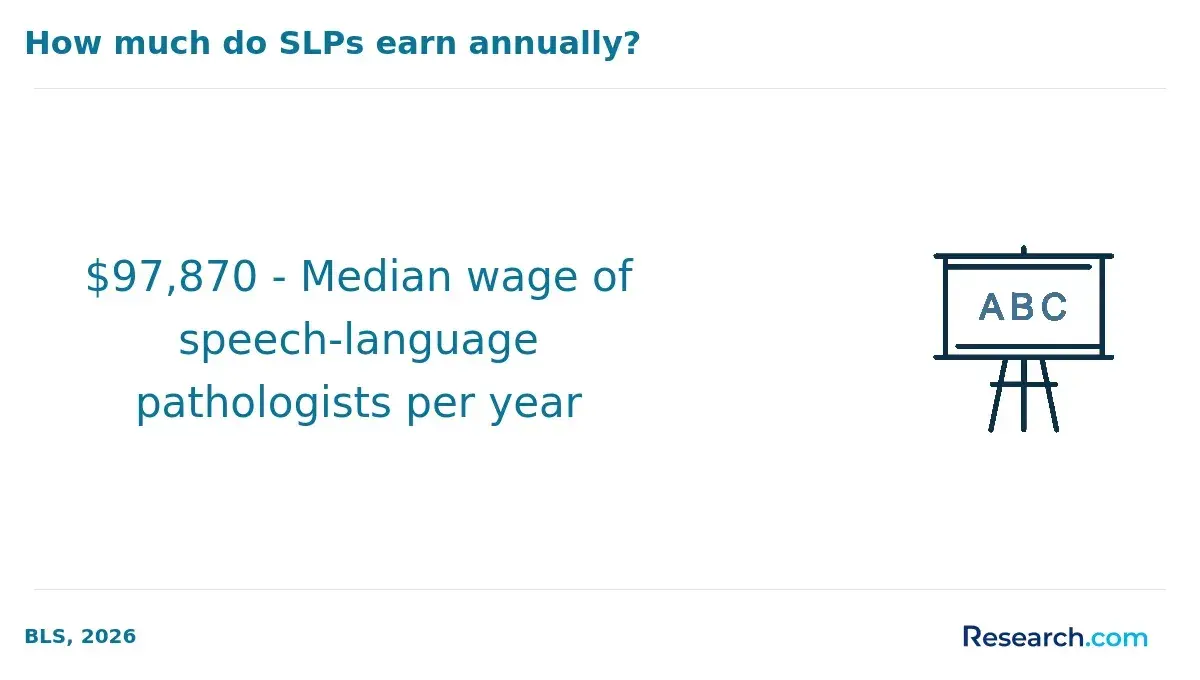
Salary estimates vary by source, year, employer, and setting. One 2023 estimate places the average salary for a speech-language pathologist in North Carolina at approximately $80,000 per year, while another estimate places the state average near $70,000 with a median around $68,000. Nationally, SLP averages are about $83,000, with a median salary around $80,000.
North Carolina can be attractive for SLPs because the cost of living is relatively moderate compared with the national average. Housing costs in cities such as Charlotte and Raleigh are lower than in many other metropolitan areas, though local affordability still depends on your salary, debt, and lifestyle.
Bilingual SLPs may have stronger opportunities in some communities. North Carolina’s growing Spanish-speaking population increases the need for professionals who can provide culturally responsive and bilingual services.
How can you become a speech language pathologist in North Carolina?
The North Carolina SLP pathway combines graduate education, clinical training, examination, supervised practice, and state licensure. The process is structured because SLPs assess and treat disorders that can affect communication, learning, swallowing, employment, and quality of life.
Step
What you need to do
Decision point for students
1. Complete prerequisite education
Earn a bachelor’s degree and complete any prerequisite coursework required for SLP graduate admission.
If your undergraduate degree is not in communication sciences and disorders, ask graduate programs whether you need leveling courses before admission.
2. Earn an accredited master’s degree
Complete a master’s degree in speech-language pathology from an accredited institution. North Carolina options include the University of North Carolina at Chapel Hill and East Carolina University.
Compare clinical placement support, Praxis preparation, faculty expertise, tuition, and licensure outcomes. You may also review affordable speech pathology graduate programs when cost is a major factor.
3. Pass the Praxis examination
Take the Praxis Examination in Speech-Language Pathology to demonstrate entry-level professional knowledge.
Ask each program how it prepares students for the exam and whether Praxis support is built into the curriculum.
4. Apply for temporary licensure
Use the temporary license to begin supervised professional experience after completing graduate requirements.
Confirm that your temporary license and supervision plan meet North Carolina speech language pathologist requirements.
5. Complete supervised experience
Finish the required supervised experience period under a licensed SLP.
Look for placements that match your preferred setting, such as schools, hospitals, rehabilitation centers, or private practice.
6. Apply for full licensure
Submit documentation to the North Carolina Board of Examiners for Speech-Language Pathologists and Audiologists.
Keep records of transcripts, practicum hours, Praxis scores, supervision documentation, and required forms.
7. Begin your job search
Prepare a resume that highlights clinical experience, populations served, assessment tools, therapy approaches, and certifications.
Target settings that fit your goals: school schedules, medical complexity, early intervention, private practice, or bilingual services.
Notable programs in North Carolina, such as the University of North Carolina at Chapel Hill and East Carolina University, provide graduate-level preparation in communicative sciences and disorders. Admission commonly requires a bachelor’s degree, relevant coursework, and a strong academic record. Because requirements vary, applicants should verify prerequisites directly with each school rather than assuming that all SLP master’s programs evaluate applicants the same way.
What is the minimum educational requirement to become a speech language pathologist in in North Carolina?
The minimum educational requirement for clinical practice as a speech-language pathologist in North Carolina is a master’s degree in speech-language pathology from an accredited institution. A bachelor’s degree is required before graduate study, but it does not always have to be in speech-language pathology if the applicant completes required prerequisite coursework.
Degree level: A master’s degree is the standard entry point for clinical SLP practice. A PhD may support research, university teaching, or advanced academic roles, but it is not required for most clinical positions.
Typical coursework: Graduate students study topics such as anatomy and physiology of speech and hearing, language development, speech sound disorders, fluency, voice, swallowing, assessment, and intervention planning.
Expected timeline: Many students complete a four-year bachelor’s degree followed by a two-year master’s program, for a total of approximately six years of higher education.
Program cost: Tuition for a master’s degree in speech-language pathology can vary widely, with costs ranging from $20,000 to $50,000 depending on the institution and whether it is public or private.
Clinical preparation: Most programs include supervised clinical experiences so students can practice assessment, diagnosis, treatment planning, documentation, and family collaboration in real service settings.
Accreditation: Prospective students should select a program accredited by the American Speech-Language-Hearing Association (ASHA) or verify accreditation status through official channels before enrolling.
North Carolina example: The University of North Carolina at Chapel Hill offers a master’s degree pathway in speech-language pathology and is known for graduate preparation and clinical training opportunities.
Question to ask before applying
Why it matters
Is the program accredited and accepted for North Carolina licensure?
Licensure depends on meeting educational standards. A nonaligned program can delay or block your ability to practice.
How are clinical placements arranged?
You need supervised experience with appropriate populations. Some programs place students directly; others expect students to help secure sites.
Does the program serve children, adults, or both?
Exposure to multiple populations can strengthen your licensure preparation and career flexibility.
What are the full costs beyond tuition?
Fees, books, travel to placements, background checks, exam fees, and unpaid clinical hours can affect affordability.
How does the program support Praxis preparation?
A passing exam score is a key step toward licensure.
What does a speech language pathologist do?
A speech-language pathologist evaluates, diagnoses, and treats communication and swallowing disorders. SLPs work with infants, children, adolescents, adults, and older adults. Their clients may have speech delays, language impairments, stuttering, voice disorders, cognitive-communication difficulties, social communication challenges, or swallowing problems.
Daily work depends heavily on the setting. A school-based SLP may spend much of the day supporting students with individualized education plans, collaborating with teachers, documenting progress, and conducting therapy sessions. A hospital-based SLP may assess swallowing safety, support patients after stroke or injury, and coordinate care with physicians, nurses, occupational therapists, and physical therapists. Private practice SLPs may serve a mix of children and adults and often handle scheduling, billing, and family communication.
Core skills successful SLPs need
Clear communication: SLPs must explain findings, therapy plans, and progress in ways that clients, families, teachers, and medical teams can understand.
Empathy and patience: Progress may be slow, and clients may feel frustrated or anxious about communication difficulties.
Clinical reasoning: SLPs interpret assessments, observations, and client history to choose appropriate interventions.
Adaptability: No two clients present exactly the same way, so therapy often requires creative adjustment.
Collaboration: SLPs frequently work with families, educators, physicians, psychologists, occupational therapists, and other professionals.
Documentation accuracy: Records, progress notes, treatment plans, and compliance paperwork are central parts of the job.
: "
“I graduated from the University of North Carolina at Greensboro, and one of my earliest cases involved a child who had difficulty producing certain sounds. Watching him become more confident as he learned to express himself showed me why this profession matters. Small gains can change how a person participates at school, at home, and in the community.”
"
What is the certification and licensing process for a speech language pathologist in North Carolina?
North Carolina licensure requires candidates to document their education, clinical training, supervised experience, examination results, and professional readiness. The sequence matters, so applicants should track deadlines and paperwork carefully.
Temporary license: After completing the required graduate education, candidates apply for a temporary license so they can begin practical training.
Supervised Experience Year: The Supervised Experience Year typically lasts a minimum of nine months in a clinical setting. During this period, candidates work under a licensed SLP and apply graduate training to real clients.
Practicum expectations: The process includes at least 400 hours of supervised practicum, including 80 hours with adults and 80 hours with children who have speech disorders.
National examination: Candidates must pass the National Examination in Speech-Language Pathology. The exam includes 132 questions, is scored from 100 to 200, and has a passing score of 162.
Licensure application: Applicants submit materials to the North Carolina Board of Examiners for Speech-Language Pathologists and Audiologists. Required items include an official graduate transcript, a $90 application fee, Praxis score verification, a supervisor-signed SEY report, and completion of an open-book quiz on the North Carolina practice act.
Background check: Applicants must complete a background check, which may include fingerprinting. Related costs can vary.
Optional professional certification: After licensure, many SLPs pursue the Certificate of Clinical Competence in Speech-Language Pathology, or CCC SLP, from ASHA. It is not required for North Carolina licensure, but it may improve professional mobility and credibility, especially for independent practice or certain employers.
If you are still comparing graduate options, reviewing SLP graduate programs can help you evaluate academic structure, clinical training, and program fit before committing to a school.
Maintaining licensure also requires continuing education. North Carolina requires 30 hours of approved professional development every three years, helping practitioners remain current with clinical standards, legal obligations, and emerging practice methods.
Workforce distribution varies significantly by state. In 2023, American Speech-Language-Hearing Association data indicated that California had 30,000 licensed SLPs, followed by Texas with 20,000, New York with 15,000, Florida with 13,000, and Illinois with 10,000.
What ethical and legal guidelines should you observe as a speech language pathologist in North Carolina ?
Speech-language pathologists in North Carolina must practice within state law, federal law, and professional ethical standards. These rules protect clients, define what SLPs may do, and guide decisions when clinical judgment, family preferences, and institutional requirements conflict.
Legal responsibilities
Licensure: SLPs must hold the appropriate license from the North Carolina Board of Examiners for Speech and Language Pathologists and Audiologists. The process includes graduate education, supervised clinical experience, and Praxis examination requirements.
Scope of practice: SLPs must limit services to assessment, diagnosis, treatment, consultation, and related activities permitted by state regulation and their own competence.
Confidentiality: SLPs must protect client information under state requirements and federal privacy rules, including HIPAA where applicable.
Mandatory reporting: Confidentiality may have legal limits when state law requires reporting of suspected abuse, neglect, or other safety concerns.
Federal compliance: In schools and public service settings, SLPs may need to comply with the Individuals with Disabilities Education Act and the Americans with Disabilities Act.
Common ethical pressure points
Client autonomy versus clinical recommendations: Clients or families may decline services or disagree with treatment plans. SLPs must respect informed choice while clearly explaining risks, benefits, and alternatives.
Caseload and service quality: Heavy workloads can create pressure to shorten sessions, delay documentation, or rely on less individualized plans. Ethical practice requires realistic service planning and documentation.
Competence: SLPs should not provide specialized services without appropriate training, supervision, or referral support.
Conflicts of interest: Recommendations should be based on client need, not employer convenience, financial incentive, or personal preference.
Professional organizations such as the North Carolina Speech-Language-Hearing Association can help students and licensed SLPs stay informed about state practice issues, continuing education, advocacy, and professional standards.
How much can you earn as a speech language pathologist in North Carolina ?
Speech-language pathologist pay in North Carolina depends on setting, geography, experience, schedule, specialization, and whether the role is school-based, medical, private practice, or contract-based. Reported salary figures differ by source and year. One estimate lists the average salary for an SLP in North Carolina at approximately $70,000 per year, with a median around $68,000. Another 2023 estimate places the average at approximately $80,000 per year. Nationally, reported averages are about $83,000, with a median around $80,000.
Because graduate school can be expensive, salary should be evaluated against debt, unpaid clinical time, living costs, and the type of job you want. If affordability is central to your decision, compare budget-friendly speech pathology programs, but verify that any program you consider supports North Carolina licensure requirements.
Higher-paying work settings reported for SLPs
Industry or setting
Reported average salary
What to consider
Nursing and residential care facilities
$105,030
May involve medically complex cases, swallowing disorders, older adult care, and interdisciplinary healthcare teams.
Hospitals, including state, local, and private hospitals
$100,130
Often requires comfort with acute care, rehabilitation, documentation, and fast-changing patient needs.
Offices of physical, occupational, and speech therapists and audiologists
$94,990
May offer outpatient therapy, private practice exposure, and a mix of pediatric and adult clients.
Educational services at state, local, and private levels
$79,960
Often provides school schedules and steady demand, but caseloads and paperwork can be significant.
North Carolina locations commonly associated with SLP opportunities
Charlotte: The state’s largest city offers opportunities across healthcare, schools, clinics, and private practice.
Raleigh: The state capital has universities, healthcare systems, schools, and professional networks that can support SLP employment.
Greensboro: Demand for speech-language services continues to support employment options and compensation packages.
Salary should not be the only measure of career value. A school role may offer a schedule that fits family needs, while a hospital role may provide higher medical complexity and stronger pay in some cases. Private practice may offer autonomy but can require business, billing, and marketing responsibilities.
What is the job market like for a speech language pathologist in North Carolina?
The SLP job market in North Carolina is generally favorable, but it is not identical across settings or cities. Demand is supported by school-based service needs, aging-related communication and swallowing issues, rehabilitation services, early intervention, and increased awareness of speech and language disorders.
National outlook: The U.S. Bureau of Labor Statistics projected employment for SLPs to grow by 25% from 2019 to 2029, which is much faster than the average for all occupations.
North Carolina demand: The state has opportunities in schools, hospitals, rehabilitation centers, outpatient clinics, early intervention programs, and private practices.
Competition: Urban areas such as Charlotte and Raleigh may offer more openings but also stronger applicant competition.
Experience advantage: Internships, practicum placements, bilingual ability, medical experience, school-based documentation familiarity, and strong references can help new graduates stand out.
Benefits: Many roles may include health insurance, retirement plans, and continuing education support, though packages vary by employer.
In 2023, the largest employers of speech-language pathologists were educational services at 40%, offices of physical, occupational, and speech therapists and audiologists at 24%, hospitals at 15%, nursing and residential care facilities at 4%, and self-employed SLPs at 3%.
Work setting
Best fit for SLPs who want
Potential trade-offs
Schools
Work with children, IEP teams, educators, and long-term student progress.
Caseload size, documentation, meetings, and school calendar constraints can be challenging.
Hospitals
Medical complexity, acute care, swallowing assessment, and interdisciplinary healthcare collaboration.
Cases may be high pressure, and schedules can vary by facility.
Rehabilitation centers
Support for recovery after injury, illness, stroke, or neurological change.
Documentation and care coordination demands can be heavy.
Private practice
Autonomy, specialized services, and client population focus.
May require billing knowledge, business operations, marketing, and variable income.
Early intervention
Family-centered services for young children and developmental support.
Travel, home-based service delivery, and coordination with caregivers may be required.
: "
“I studied at the University of North Carolina at Greensboro and stayed in the state because the demand was clear. Charlotte can be competitive, but the professional community, cost of living, and growth opportunities made North Carolina a practical choice.”
"
What alternatives are there for individuals who want to work in education but do not want to become a speech-language pathologist in North Carolina?
If you are drawn to education but unsure about the clinical SLP route, consider roles that still support student development without requiring speech-language pathology licensure. Teaching is one major alternative. Understanding the types of teaching certificates in North Carolina can help you compare certification paths, costs, grade levels, and subject areas.
Alternative path
Why it may fit
How it differs from SLP work
Classroom teacher
Best for people who want to lead instruction and manage a classroom community.
Focuses on academic instruction rather than clinical assessment and treatment of communication disorders.
Special education teacher
Best for people who want to support students with disabilities through individualized instruction.
Overlaps with SLPs in schools but centers on educational programming instead of speech-language diagnosis and therapy.
School counselor
Best for people interested in student well-being, academic planning, and socio-emotional support.
Focuses on counseling and student support rather than communication and swallowing disorders.
School psychologist
Best for people interested in assessment, behavior, learning, and mental health in school settings.
Uses psychological evaluation and intervention frameworks rather than speech-language treatment.
What career and advancement opportunities are available for a speech language pathologist in North Carolina?
Speech-language pathology offers several advancement routes in North Carolina. Growth may come from clinical specialization, supervisory responsibility, leadership roles, consulting, research, university teaching, or private practice. Job openings have been projected to increase by 29% from 2020 to 2030, reflecting continued demand for communication and swallowing services.
Career stages for SLPs
Career stage
Common responsibilities
Ways to advance
Entry-level SLP
Assess clients, write therapy plans, deliver treatment, document progress, and collaborate with families or educators.
Build strong supervision relationships, seek varied clinical experiences, and develop expertise with specific populations.
Experienced clinician
Handle more complex cases, mentor newer staff, contribute to program planning, and coordinate with interdisciplinary teams.
Pursue advanced certifications, deepen medical or school-based specialization, and present at professional events.
Lead SLP or manager
Supervise staff, manage services, ensure regulatory compliance, and improve care delivery systems.
Develop leadership, budgeting, compliance, and quality-improvement skills.
Senior leader, consultant, researcher, or educator
Oversee departments, advise schools or healthcare providers, conduct research, or teach future SLPs.
Consider doctoral study, specialized credentials, publication, or administrative experience.
SLPs who want to expand into related clinical fields may also compare audiology and speech pathology pathways. Reviewing the best master’s in audiology can help students understand adjacent graduate options before choosing a long-term specialization.
Are accelerated speech pathology programs online a reliable alternative?
Accelerated online pathways can be useful for students who need flexibility, but they require careful review. Programs such as accelerated speech pathology programs online may combine condensed coursework with online delivery, but speed should never come at the expense of accreditation, clinical placement quality, faculty access, or licensure preparation.
Before enrolling in an accelerated or online SLP program, ask whether the program is accredited, how supervised clinical experiences are arranged, whether placements are available in North Carolina, how Praxis preparation is handled, and whether graduates meet state licensure requirements. Online format can reduce relocation barriers, but clinical training still requires real supervised practice.
What challenges should you consider as a speech language pathologist in North Carolina ?
Speech-language pathology can be meaningful, but it is also demanding. Students should understand the workplace realities before committing to graduate school and licensure.

High caseloads: Some SLPs in North Carolina manage caseloads that can exceed 40 clients per month. Heavy caseloads can increase burnout risk and make individualized planning harder.
Administrative workload: SLPs spend substantial time on evaluations, reports, treatment plans, progress notes, compliance documentation, and multidisciplinary meetings.
Limited resources: Public school settings and some clinical environments may have constrained budgets for materials, technology, or specialized therapy tools.
Service quality concerns: Unqualified providers offering speech services can confuse families and weaken public understanding of licensed SLP expertise.
Cultural and linguistic diversity: SLPs must be prepared to serve clients from varied backgrounds and should continue developing cultural responsiveness and, when relevant, bilingual clinical skills.
Workforce age distribution: The profession needs a younger workforce, with the current average age of an SLP at 42.6 years old.
Common mistake
Better approach
Choosing a program based only on tuition
Compare accreditation, clinical placement support, Praxis preparation, licensure fit, total costs, and graduation outcomes.
Assuming all online programs meet North Carolina requirements
Confirm licensure alignment directly with the program and the North Carolina Board before enrolling.
Ignoring unpaid clinical time
Plan financially for practicum, supervised experience, travel, background checks, exam fees, and reduced work hours.
Choosing a setting without understanding the workload
Shadow SLPs in schools, hospitals, clinics, and private practices before deciding where you want to work.
These challenges should not discourage qualified candidates. Instead, they should help you choose the right program, ask better questions, and prepare for the professional realities of SLP work in North Carolina.
What specific communication disorders do SLPs treat?
Speech-language pathologists treat a wide range of communication and swallowing disorders. These may include articulation difficulties, language impairments affecting comprehension or expression, fluency disorders such as stuttering, voice disorders, cognitive-communication deficits, social communication challenges, and swallowing disorders. For a broader overview, see this guide to communication disorders treated by SLPs.
How does working as a speech language pathologist compare to similar careers in North Carolina?
SLPs often work alongside occupational therapists, physical therapists, special education teachers, school psychologists, and counselors. These careers share a service-oriented mission, but they differ in training, licensure, daily responsibilities, and client goals.
Career
Main focus
How it compares with SLP
Speech-language pathologist
Communication, speech, language, cognition, voice, fluency, and swallowing.
Best for people who want a clinical role focused specifically on communication and swallowing disorders.
Occupational therapist
Daily living skills, fine-motor function, sensory needs, and independence.
Broader functional focus; may overlap with SLPs in pediatric, rehabilitation, and school settings.
Physical therapist
Mobility, strength, movement, rehabilitation, and physical function.
More focused on gross motor recovery and movement than communication.
Special education teacher
Instructional support and individualized education for students with disabilities.
Works closely with SLPs in schools but focuses on teaching and educational programming.
School psychologist
Learning, behavior, assessment, mental health, and school-based intervention.
Complements SLP work when communication challenges interact with academic or behavioral needs.
If you are considering school-based careers, it may help to compare SLP work with resources on how to become a special education teacher in North Carolina. Both roles support students with learning and communication needs, but they use different professional frameworks.
How does academic research drive advancements in speech language pathology practice?
Research helps SLPs refine assessment tools, test intervention methods, and apply evidence-based strategies in schools, hospitals, clinics, and private practice. Academic partnerships can also connect clinicians with studies on language development, neurocognitive processes, swallowing, assistive technology, and treatment outcomes.
SLPs who are interested in research-informed practice may benefit from interdisciplinary learning in psychology, education, neuroscience, and rehabilitation. Exploring institutions such as the best psychology schools in North Carolina can provide useful context for students interested in the research side of communication and behavior.
How can collaboration with educators enhance clinical outcomes?
Collaboration with educators can make SLP interventions more practical and effective, especially in schools. Teachers see how students communicate during reading, writing, group work, classroom discussion, and peer interaction. SLPs bring expertise in language, articulation, fluency, cognition, and communication access. Together, they can align therapy goals with classroom demands.
Use classroom observations to identify communication barriers in real academic tasks.
Write therapy goals that support curriculum participation, not just isolated speech skills.
Train teachers on strategies that reinforce therapy goals throughout the school day.
Coordinate IEP goals, accommodations, and progress monitoring.
How is technology reshaping speech language pathology practice in North Carolina?
Technology is changing how SLPs assess, document, deliver, and monitor therapy. Telepractice can expand access for clients who have transportation barriers or limited local provider options. Digital assessment tools, therapy platforms, and data-tracking systems can also support progress monitoring and communication with families or care teams.
However, technology does not replace clinical judgment. SLPs must still follow state telepractice requirements, protect confidentiality, document services appropriately, and choose tools that match the client’s needs. Digital skills are becoming more important across many information-based professions; those interested in broader technology and information service roles may also explore how to become a librarian in North Carolina.
How can collaboration with mental health professionals and school psychologists improve intervention strategies?
Communication challenges can overlap with attention, anxiety, behavior, learning disabilities, trauma, social development, and emotional regulation. Collaboration with mental health professionals and school psychologists helps SLPs understand the broader context behind a client’s communication profile.
In schools, this collaboration can strengthen evaluations, IEP planning, behavior supports, family communication, and intervention design. If you want to compare allied school-based roles, review how to become a school psychologist in North Carolina.
Can integrating school counseling enhance my career trajectory?
School counseling knowledge can help SLPs better understand student motivation, social-emotional barriers, peer relationships, and family-school communication. It does not replace SLP licensure, but it can strengthen interdisciplinary practice in educational settings.
SLPs who want broader student support expertise may examine how to become a school counselor in North Carolina. This path may be especially relevant for professionals interested in student well-being, prevention, academic planning, and coordinated school support systems.
How can professional mentorship and networking support career advancement?
Mentorship can shorten the learning curve for new SLPs. Experienced clinicians can help with caseload management, difficult evaluations, documentation habits, ethical questions, career moves, and specialization decisions. Networking can also lead to job leads, continuing education, supervision opportunities, and interdisciplinary partnerships.
Join local and state professional associations.
Seek mentors in your preferred setting, such as schools, hospitals, private practice, or early intervention.
Attend continuing education events and ask practical questions about real caseloads.
Build relationships with educators, psychologists, occupational therapists, physicians, and administrators.
Keep a record of specialized training, clinical populations served, and measurable outcomes.
Networking may also introduce you to other education careers. For example, some professionals compare SLP work with pathways such as how to become an English teacher in North Carolina when evaluating long-term options in language, literacy, and instruction.
How can obtaining cross-disciplinary certifications expand your career opportunities?
Additional credentials can help SLPs deepen expertise or collaborate more effectively with allied professionals. Cross-disciplinary learning may be useful in areas such as autism support, literacy, assistive technology, feeding and swallowing, bilingual services, counseling-informed care, family systems, or behavioral support.
SLPs should be careful not to confuse supplementary training with separate licensure. If a credential leads into another regulated profession, you must meet that profession’s requirements. For example, professionals interested in family systems and counseling-oriented work may compare requirements by reviewing how to become a MFT in North Carolina.
Why should speech-language pathologists consider mental health counseling certifications?
Mental health knowledge can improve an SLP’s understanding of socio-emotional factors that affect communication, participation, and therapy engagement. This can be valuable when working with students, adults recovering from medical events, clients with social communication difficulties, or families navigating long-term therapy.
Still, SLPs should stay within their scope of practice. Counseling-related training may improve collaboration and referral decisions, but providing mental health counseling requires the appropriate credentials. Reviewing mental health counselor requirements in North Carolina can help clarify where SLP practice ends and licensed counseling practice begins.
What do speech language pathologists say about their careers in North Carolina ?
: "
“Working as a speech language pathologist in North Carolina has been deeply meaningful. I serve children from many backgrounds, and each child brings a different communication profile. Helping them express themselves more clearly can change their school participation and social confidence.”Kin
"
: "
“North Carolina has given me strong opportunities to collaborate with educators, psychologists, and healthcare professionals. That teamwork helps us build more complete intervention plans and gives clients better support.”Jake
"
: "
“After more than a decade in practice, I still see strong demand for speech-language pathology services in schools and rehabilitation centers. The career offers growth, and North Carolina is a welcoming place to live and work.”Susie
"
Key Insights
North Carolina SLPs need graduate education, supervised clinical experience, Praxis testing, temporary licensure, and full state licensure before independent practice.
The minimum clinical education requirement is a master’s degree in speech-language pathology from an accredited program; many students spend approximately six years in higher education before entering the profession.
Salary estimates vary. Reported North Carolina figures include approximately $70,000 average pay with a median around $68,000, while another 2023 estimate places the average near $80,000 per year.
Setting matters. Nursing and residential care facilities, hospitals, outpatient therapy offices, and educational services show different salary patterns, workloads, schedules, and client populations.
Schools employ a large share of SLPs. In 2023, educational services accounted for 40% of SLP employment, followed by therapy and audiology offices at 24% and hospitals at 15%.
Cost and accreditation should drive program selection. The cost of an SLP degree varies, with median tuition in 2022 reported at $7,716 for in-state students and $34,678 for out-of-state students.
Common risks include choosing a program without checking licensure alignment, underestimating clinical placement demands, focusing only on tuition, and assuming salary outcomes are guaranteed.
The profession needs new entrants. The current average age of an SLP is 42.6 years old, pointing to the importance of preparing the next generation of clinicians.
Career growth is possible through specialization, mentorship, leadership, consulting, research, private practice, and interdisciplinary collaboration.
American Speech-Language-Hearing Association. (n.d.). North Carolina licensing requirements for audiology and speech-language pathology. American Speech-Language-Hearing Association.
American Speech-Language-Hearing Association. (n.d.). North Carolina telepractice requirements for audiologists and speech-language pathologists. American Speech-Language-Hearing Association.
U.S. Bureau of Labor Statistics. (n.d.). Speech-language pathologists - Career outlook in NC. U.S. Bureau of Labor Statistics.
Other Things You Should Know About Speech-language Pathologist Degrees
How long does it typically take to become a speech-language pathologist in North Carolina?
In 2026, becoming a speech-language pathologist in North Carolina usually takes about seven years. This includes earning a bachelor's degree (4 years), completing a master's program (2 years), and fulfilling the clinical fellowship requirement (1 year).
How long does it take to become a speech language pathologist?
Becoming a speech-language pathologist (SLP) in North Carolina is a rewarding journey that typically spans several years, combining education, examination, licensing, and certification. Here’s a breakdown of the estimated timeline:
Education (6-7 years)
A bachelor’s degree (4 years) in communication sciences or a related field is the first step.
Following this, a master’s degree in speech-language pathology (2-3 years) is required. This advanced education equips you with the theoretical knowledge and practical skills necessary for the profession.
Exam (1-2 months)
After completing your master’s program, you must pass the Praxis Examination in Speech-Language Pathology. Preparing for this exam can take a few months, depending on your study habits and familiarity with the material.
Licensing (1-2 months)
Once you pass the exam, you’ll need to apply for a state license through the North Carolina Board of Examiners for Speech-Language Pathologists and Audiologists. This process typically takes a couple of months.
Certification (optional, 1-2 months)
While not mandatory, obtaining the Certificate of Clinical Competence in Speech-Language Pathology (CCC-SLP) from the American Speech-Language-Hearing Association can enhance your credentials. This involves submitting documentation of your clinical experience and passing the exam.
In total, aspiring SLPs can expect to invest approximately 7-10 years before fully entering the field. This journey, while lengthy, is filled with opportunities for personal and professional growth, ultimately leading to a fulfilling career dedicated to helping individuals communicate effectively.
Do you need a license to become a speech language pathologist?
To become a speech-language pathologist in North Carolina, obtaining a license is not just advisable; it is legally required. Practicing without a license can lead to serious legal ramifications, including fines, civil penalties, and potential criminal charges. For instance, imagine a dedicated professional providing therapy to children with speech delays, only to discover that their efforts are undermined by the absence of proper licensure. This scenario not only jeopardizes their career but also the well-being of the clients they aim to help.
To navigate the licensure process effectively, consider the following steps:
Educational Requirements: Complete a master’s degree in speech-language pathology from an accredited program.
Clinical Fellowship: Engage in a supervised clinical fellowship, which provides hands-on experience.
Examination: Pass the Praxis Examination in Speech-Language Pathology, demonstrating your knowledge and skills.
Application: Submit an application for licensure to the North Carolina Board of Examiners for Speech and Language Pathologists and Audiologists.
Reflecting on the journey to licensure, it becomes clear that each step is not merely a hurdle but a vital component of professional development. The commitment to ethical practice and ongoing education ensures that speech-language pathologists can provide the highest standard of care to their clients, fostering a positive impact on their communities.
How long does it take to become a speech-language pathologist?
It typically takes seven to eight years to become a speech-language pathologist. This includes completing a bachelor’s degree (4 years), a graduate program in speech-language pathology (2 years), and a clinical fellowship (1 year). Afterward, you must pass the Praxis exam and obtain state licensure.