
2027 Best Psychology Schools in North Carolina – Accredited Colleges & Programs

Co-Founder and Chief Data Scientist
Choosing a psychology school in North Carolina is not just a question of which campus looks best. It is a licensing, cost, timeline, and career decision. The state has a clear need for mental health professionals: 24.9% of adults reported symptoms of depression and/or anxiety, and 18.3% of adults with those symptoms said they did not immediately receive the counseling or therapy they needed (KFF, n.d.). For students, that need creates meaningful career possibilities—but only if they choose the right academic path for the role they want.
This guide explains how psychology education works in North Carolina, what it takes to become licensed, how long the process can take, what programs may cost, and how to compare schools. It also covers related pathways such as counseling, school psychology, marriage and family therapy, behavior analysis, forensic psychology, and industrial-organizational psychology. If you are comparing a campus-based program with an online bachelor’s degree in psychology, this guide will help you understand which option fits your goals.
Best Psychology Schools in North Carolina Table of Contents
- Is North Carolina a good place for a psychologist?
- What are the steps to becoming a psychologist in North Carolina?
- Psychology Program Length in North Carolina
- Tuition and Costs of Attending Psychology Schools in North Carolina
- What to Look For in a Psychology Program in North Carolina
- Psychology Schools in North Carolina Offering the Best Psychology Programs
- How does North Carolina support aspiring marriage and family therapists?
- What are the career prospects for psychology graduates in North Carolina?
- What additional training or certifications can enhance my psychology career in North Carolina?
- Should I pursue BCBA certification in North Carolina?
- Can I specialize in criminal psychology in North Carolina?
- What are the specific licensure requirements for school psychologists in North Carolina?
- Are online PsyD programs a viable option in North Carolina?
- What are the challenges in meeting North Carolina psychology license requirements?
- What is the fastest way to become a counselor in North Carolina?
- How does industrial-organizational psychology shape career opportunities in North Carolina?
- How can I pursue a career in substance abuse counseling in North Carolina?
- What qualifications do I need for a career in forensic science in North Carolina?
- How can I become a mental health counselor in North Carolina?
- How can I become a marriage and family therapist in North Carolina?
Quick Answer: What is the best psychology path in North Carolina?
The best psychology path in North Carolina depends on the job you want. A bachelor’s degree can prepare you for entry-level roles in human services, research support, business, case management, or graduate study. To become a licensed psychologist, you generally need a doctoral degree in an eligible psychology specialty, licensing exams, and supervised professional experience. Students who want to provide counseling sooner may consider licensed counseling, marriage and family therapy, school counseling, or substance abuse counseling pathways instead of the full psychologist route.
| Goal | Typical education direction | Best fit for |
| Become a licensed psychologist | Bachelor’s degree, doctoral degree, exams, supervised experience | Students committed to clinical, counseling, school, or research-intensive psychology careers |
| Work in counseling | Graduate counseling-related degree plus state licensure steps | Students who want direct client work but may not need psychologist licensure |
| Enter the workforce after a bachelor’s | BA or BS in psychology with internships, research, or human services experience | Students targeting case support, HR, behavioral health support, or graduate school preparation |
| Specialize in schools | Advanced school psychology preparation and state credentialing | Students who want to work with children, assessments, and school-based interventions |
| Work in organizations | Psychology degree with industrial-organizational training | Students interested in workforce analytics, employee selection, training, and organizational development |
Is North Carolina a good place for a psychologist?
North Carolina can be a strong state for psychology students and future practitioners because it combines population growth, mental health access needs, universities with psychology programs, and multiple career settings. The state had an estimated 10,844,000 residents as of 2024 (U.S. Census Bureau, 2024), which means psychology professionals may find opportunities in hospitals, schools, universities, community agencies, private practices, correctional settings, research organizations, and employers that need workforce behavior expertise.
Psychology careers in North Carolina are not limited to one type of job. Graduates may pursue clinical psychology, school psychology, counseling psychology, industrial-organizational psychology, forensic psychology, health psychology, research, human services, or related counseling professions. The right route depends heavily on licensure rules, degree level, supervised experience, and specialization.
Demand indicators are also positive in several psychology areas. Employment for clinical, counseling, and school psychologists is projected to grow 4.4% from 2024 to 2034 (BLS, 2025). Employment for industrial psychologists is expected to increase by 5%, while employment for all other psychologists is projected to rise by 9% during the same 10-year period.
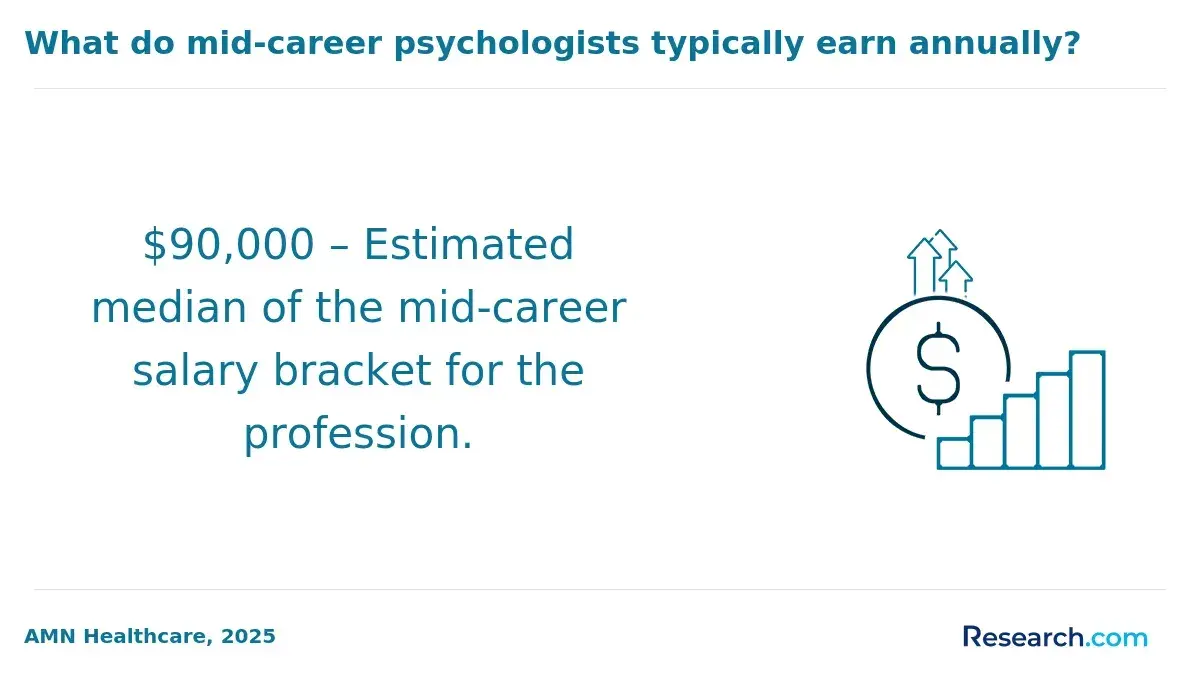
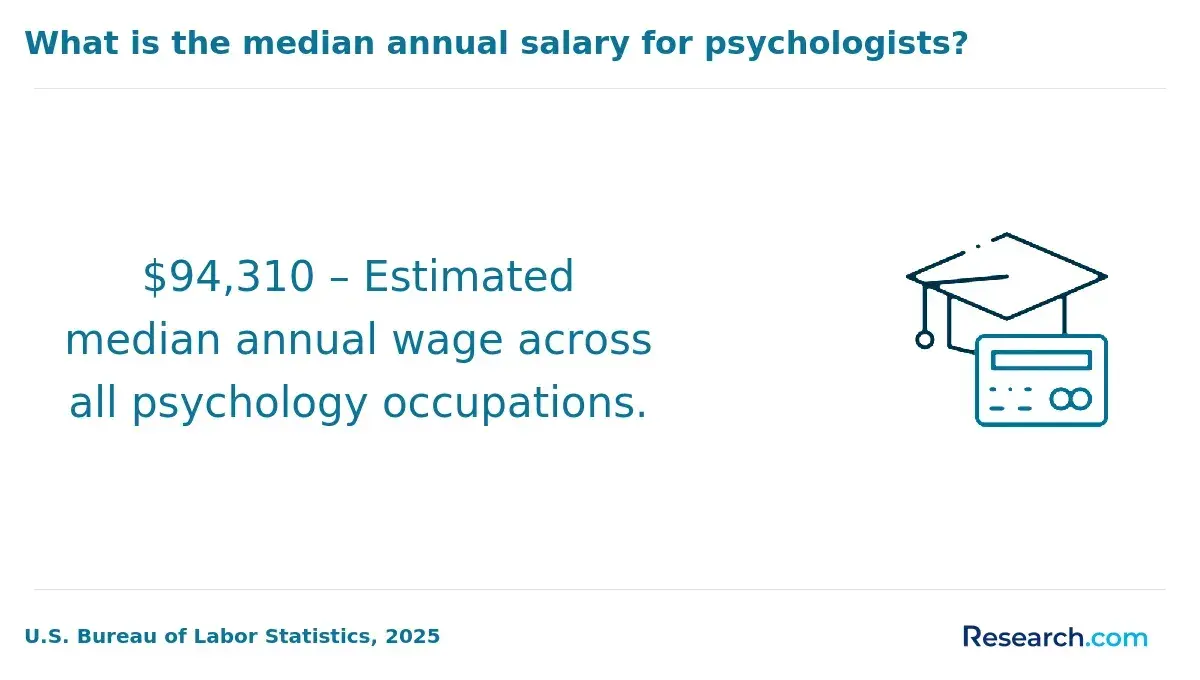
Salary outcomes vary by role, employer, location, credentials, and experience. The mean annual wage for clinical and counseling psychologists is $96,100 (BLS, 2025). Industrial-organizational psychologists earn an average of $73,260, school psychologists earn an average of $64,060, and other psychologists earn an average of $93,970. Another figure cited for clinical and counseling psychologists in North Carolina is $93,010 annually, so students should review the latest wage tables before using salary data for financial planning.
| Psychology role in North Carolina | Average or mean annual wage cited | Employment outlook cited |
| Clinical and counseling psychologists | $96,100; also cited as $93,010 | 4.4% projected growth from 2024 to 2034 for clinical, counseling, and school psychologists |
| School psychologists | $64,060 | Included in the 4.4% projected growth category |
| Industrial-organizational psychologists | $73,260 | 5% projected growth from 2024 to 2034 |
| Other psychologists | $93,970 | 9% projected growth from 2024 to 2034 |
North Carolina can be a good place to study psychology if your program choice aligns with your target credential. However, students should avoid assuming that any psychology degree automatically leads to independent clinical practice. Licensure rules matter from the beginning.
What are the steps to becoming a psychologist in North Carolina?
A bachelor’s degree in psychology can open doors to many graduate and non-licensed roles, but it is not enough to practice independently as a licensed psychologist in North Carolina. Students who want psychologist licensure should plan for a long sequence: undergraduate study, doctoral training, examinations, supervised professional experience, licensure approval, and continuing education.
Step 1: Earn an undergraduate psychology degree or a related degree
Most students begin with a bachelor’s degree in psychology, although some doctoral programs may admit students from closely related fields if they have completed required prerequisites. At this stage, students should build a strong record in statistics, research methods, abnormal psychology, developmental psychology, assessment-related coursework, and writing. Research experience and internships can also help when applying to graduate school.
Step 2: Decide whether you need a master’s degree
A stand-alone master’s degree is not always required before a doctoral program. Some students enter doctoral study after the bachelor’s degree and earn a master’s degree along the way. Others complete a separate master’s program first to strengthen their academic record, clarify their specialization, or pursue a related license.
North Carolina also has a licensed psychological associate pathway for candidates with a master’s degree in psychology. To qualify for that route, the master’s program must include at least 45 semester credit hours and 500 hours of supervised experience.
Step 3: Complete an eligible doctoral psychology program
Students who want to become licensed psychologists usually pursue either a Doctor of Psychology (PsyD) or a Doctor of Philosophy (Ph.D.) in psychology. In general, Ph.D. programs tend to place more emphasis on research, while PsyD programs are commonly designed around applied clinical training. The best choice depends on whether you want a research-heavy, practice-heavy, academic, or mixed career.
For licensure in North Carolina, the doctoral program should be accredited by the American Psychological Association (APA). North Carolina eligibility is also tied to specific doctoral areas. Graduates of counseling psychology, school psychology, combined professional-scientific psychology, and clinical psychology degree programs are eligible for psychologist licensure in the state.
Step 4: Complete supervised professional experience
Supervised experience is a major part of the licensing process. Students may complete up to 1,500 hours of supervised professional experience during the doctoral internship. North Carolina requires 3,000 total hours of supervised experience, so many candidates need at least 1,500 additional post-doctoral hours after completing the doctoral program.
Step 5: Apply through the North Carolina Psychology Board
After finishing the doctoral degree, candidates apply through the North Carolina Psychology Board. The Board reviews the application and determines whether the applicant is eligible to sit for the required examinations.
Step 6: Pass the required licensing exams
Candidates take the Examination for Professional Practice in Psychology (EPPP), administered through the Association of State and Provincial Psychology Boards (ASPPB). The EPPP measures broad professional knowledge in psychology, and candidates need a score of at least 500 to pass.
North Carolina also requires the North Carolina State Examination, which tests knowledge of professional ethics, state law, and national legal standards related to psychology practice. A passing score is at least 78%.
Step 7: Practice under a provisional license while completing remaining hours
After passing the required exams and receiving Board approval, candidates may receive a provisional license. During the supervised period, at least 25% of the required hours should involve direct patient-related work, such as therapy or psychological assessment. Candidates must also meet with a licensed psychologist for at least two hours of supervision each week while completing these hours.
Step 8: Convert to a permanent license and maintain it
After completing the required supervised experience, candidates may apply to convert a provisional license or psychological associate license into a permanent license. The Board notifies applicants when the permanent license has been approved.
North Carolina psychology licenses must be renewed every two years. Renewal requires at least 18 hours of continuing education (CE) during that two-year cycle. At least half of the continuing education hours must come from approved online courses or formally organized events, and three hours must focus on legal and ethical issues.
The Board provides a continuing education resource list that can help licensees identify eligible CE activities and understand renewal expectations.
How do psychology students in North Carolina benefit from research opportunities?
Research experience is one of the strongest ways to prepare for graduate psychology programs, doctoral training, and evidence-based practice. Students who participate in faculty-led projects learn how psychological knowledge is created, tested, interpreted, and applied.
- Practical skill development: Research labs can help students practice data collection, literature review, assessment support, statistical analysis, and ethical research procedures.
- Faculty mentorship: Working with professors gives students guidance on graduate school applications, research design, professional writing, and specialization choices.
- Conference and publication preparation: Students who contribute to strong research projects may have opportunities to present findings or support publishable work, which can strengthen graduate applications.
- Career clarity: Exposure to clinical, cognitive, developmental, social, school, or organizational research can help students decide which psychology path fits them best.
- Graduate school readiness: Ph.D. and PsyD admissions committees often value applicants who can demonstrate research maturity, methodological training, and sustained academic engagement.
Psychology Program Length in North Carolina
The full path to becoming a licensed psychologist in North Carolina can take about 10 years or longer, especially for students who study part-time, change specialties, or need additional supervised experience. A common route includes four years for a bachelor’s degree and about six years of graduate-level psychology training. Graduate study may include two years in a master’s program and four to seven years in a doctoral program, although some doctoral programs include master’s-level training within the doctoral curriculum. The supervised practice phase may add about two years, depending on how the student completes internship and post-doctoral hours.
| Stage | Typical time described | What students should focus on |
| Bachelor’s degree | Four years | Psychology foundations, statistics, research methods, internships, graduate school preparation |
| Master’s degree | Two years | Advanced coursework, supervised experience, specialization planning, possible licensed psychological associate preparation |
| Doctoral degree | Four to seven years | Clinical or school training, research, practicum, dissertation or applied doctoral project, internship |
| Supervised professional experience | About two years | Post-doctoral practice, weekly supervision, direct client work, documentation for licensure |
Students should choose specializations based on career goals, not only course titles. North Carolina students may find pathways in forensic psychology, clinical psychology, developmental psychology, child psychology, counseling psychology, health psychology, industrial-organizational psychology, and school psychology. Each specialization can lead to different training requirements and job settings.
Tuition and Costs of Attending Psychology Schools in North Carolina
The cost of a psychology degree in North Carolina depends on degree level, residency, public or private status, enrollment format, course load, housing, transportation, books, fees, and how many credits transfer. A low tuition rate does not always mean a low total cost, especially if the program requires relocation, unpaid clinical hours, or additional semesters.
At Appalachian State University, tuition and fees for undergraduate students are $8,081 for in-state residents and $25,077 for out-of-state residents. Graduate tuition and fees are $5,740 for in-state students and $16,247 for out-of-state students. These amounts do not include books and supplies, miscellaneous fees, food and housing, transportation, or possible program-specific charges.
At Duke University, undergraduate tuition and fees are $63,450, and the total estimated cost of attendance can approach almost $90,000 when additional costs are included.
| Cost factor | Why it matters | Question to ask before enrolling |
| Residency status | Public universities often charge different rates for in-state and out-of-state students. | Do I qualify for in-state tuition, and what documentation is required? |
| Program length | Extra semesters can increase tuition, fees, rent, and opportunity cost. | What is the average time to completion for students in this program? |
| Transfer credits | Accepted credits can reduce cost and completion time. | How many prior credits will count toward the psychology major? |
| Clinical or internship requirements | Fieldwork can affect work schedules, transportation, and location flexibility. | Where are placements located, and are they paid or unpaid? |
| Financial aid | Scholarships, assistantships, and grants can change affordability substantially. | Which psychology scholarships and grants are available, and when are deadlines? |
Students should compare net price, not just tuition. Psychology scholarships and grants in North Carolina universities may reduce total cost, but eligibility, renewal rules, and award amounts vary by institution.
What to Look For in a Psychology Program in North Carolina
The best psychology program is the one that fits your career target, licensing needs, budget, learning format, and academic preparation. Before applying, students should evaluate each program with a practical checklist rather than relying only on reputation or rankings.
Accreditation and licensure alignment
Accreditation is especially important for students who plan to become licensed psychologists. Confirm whether the doctoral program is accredited by the APA and whether it supports the specific North Carolina licensure route you intend to pursue. Students should also ask whether the program’s specialty area is accepted for North Carolina psychologist licensure.
Curriculum quality
A strong psychology curriculum should include research methods, statistics, ethics, biological bases of behavior, social psychology, cognitive psychology, developmental psychology, assessment, abnormal psychology, and applied or specialty coursework. Students who want a deeper conceptual foundation can also explore the goals of psychology to understand how psychological science explains, predicts, and influences behavior.
Faculty expertise and research fit
Research fit matters most for graduate students, but it can also benefit undergraduates who want lab experience. Review faculty profiles and look for active research in your area of interest, such as anxiety, ADHD, school mental health, decision-making, women’s health, relationships, perception, media effects, or organizational behavior.
Fieldwork and supervised experience support
Ask how the program helps students secure internships, practica, school placements, clinical sites, or supervised post-degree experience. Strong placement support can make a major difference in licensure readiness and job competitiveness.
Cost and financial aid
Look beyond sticker price. Include fees, housing, commuting, technology, books, exam costs, unpaid fieldwork, and lost income from reducing work hours. Ask whether graduate assistantships, scholarships, tuition discounts, or employer partnerships are available.
Online versus campus format
Online coursework can be convenient, but psychology training often requires in-person clinical, practicum, internship, or research components. Students considering online programs should verify that the program meets state licensing requirements and provides realistic placement options in North Carolina.
| Program feature | Good sign | Warning sign |
| Accreditation | Clear accreditation status and licensure disclosures | Vague claims about eligibility or no clear APA information for doctoral study |
| Career fit | Courses and placements match your intended role | Program is general but marketed as preparation for every psychology career |
| Supervision support | Documented practicum, internship, and advising processes | Students must find all placements without meaningful support |
| Cost transparency | Full cost of attendance, fees, and aid options are easy to compare | Only tuition is shown, with little information on additional expenses |
| Student outcomes | Graduation, placement, licensure, or internship data are available | No evidence of student progression or career outcomes |
Psychology Schools in North Carolina Offering the Best Psychology Programs
The following North Carolina psychology schools offer undergraduate psychology programs, graduate psychology programs, or both. Students should use this list as a starting point, then verify accreditation, admission requirements, current tuition, research fit, licensure alignment, and financial aid directly with each institution.
1. Appalachian State University
Appalachian State University offers a wide selection of psychology options through its Department of Psychology. Its undergraduate structure is useful for students who want to connect psychology with business, education, health, human services, natural science, social science, or sustainability.
Bachelor of Science options:
- Psychology Business Concentration
- Psychology Education Studies Concentration
- Psychology Health Studies Concentration
- Psychology Human Services Concentration
- Psychology Natural Science Concentration
- Psychology Social Science Concentration
- Psychology Sustainability Concentration
Bachelor of Arts option:
- Psychology
Graduate and professional options:
- PsyD in Clinical Psychology
- Master of Arts in Psychology
- Industrial-Organizational Psychology and Human Resource Management (IOHRM)
- Psychology Clinical Psychology Concentration
- Psychology Psychological Science Concentration
- School Psychology (MA) and Specialist Degree
Students interested in research can explore labs related to anxiety, adult Attention-Deficit/Hyperactivity Disorder (ADHD), applicant decision-making, women’s health, school mental health, personality and romantic relationships, perception action, and video game, media, and bullying research.
- Location: Boone, NC
- Type: Public
- Programs: Bachelor’s, PsyD, Master’s, Dual Degree
- Accreditation: APA
- Tuition and Fees: Undergraduate: $8,081 for in-state residents and $25,077 for out-of-state residents. Graduate: $5,740 for in-state residents and $16,247 for out-of-state residents.
2. Duke University
Duke University is a private research university suited for students who want a highly flexible academic environment. Students can combine majors, minors, and certificates, which may appeal to psychology students interested in neuroscience, public policy, pre-medical study, education, business, or interdisciplinary research.
Duke’s Program II individualized degree option allows students to design a custom curriculum when their academic goals do not fit a standard major structure.
- Location: Durham, NC
- Type: Private
- Programs: BA/BS, Graduate
- Accreditation: APA
- Tuition and Fees: $63,450, excluding other costs
3. University of North Carolina at Chapel Hill
The University of North Carolina at Chapel Hill offers psychology and neuroscience pathways that can prepare students for graduate psychology study, related professional programs, research, or work in fields that value behavioral science training.
- Bachelor of Science in Psychology
- Bachelor of Arts in Psychology
- Master of Arts in Psychology
- Doctor of Philosophy in Psychology
The BA and BS programs can serve students planning graduate study in psychology, medicine, law, education, business, or other fields where understanding behavior, cognition, development, and research methods is valuable.
- Location: Chapel Hill, NC
- Type: Public
- Programs: Bachelor’s, Master’s, Ph.D.
- Accreditation: APA
- Tuition & Fees: Undergraduate: $292.46 per credit hour for NC residents and $1,556.67 per credit hour for Non-NC residents. Graduate: $586.23 per credit hour for NC residents and $1,602 for non-residents.
4. North Carolina State University
North Carolina State University is a public land-grant research university with psychology options at the undergraduate and graduate levels.
- Bachelor of Arts in Psychology
- Master of Science in Psychology
- Doctor of Philosophy in Psychology
NC State can be a strong fit for students who want experiential learning, faculty research collaboration, and exposure to psychology as both a scientific and applied discipline.
- Location: Raleigh, NC
- Type: Public
- Programs: BA, Master’s, PhD
- Accreditation: APA
- Tuition and Fees: Undergraduate: $379.38 per credit hour for residents and $1,332.38 per credit hour for non-residents. Graduate: $668.95 per credit hour for residents and $1,778.62 per credit hour for non-residents.
5. Wake Forest University
Wake Forest University offers a BA in Psychology with coursework such as Psychopharmacology, Learning Theory and Research, Parent-Child Relationships, Clinical Neuroscience, and Perception. The program emphasizes theory, research, laboratory methods, and statistical skills.
Wake Forest students can pursue directed study and honors opportunities that involve close work with faculty. The university also offers more than 250 student organizations, an 11:1 student-to-faculty ratio, and academic study-abroad experiences for more than 60% of its students.
The Department of Psychology also offers an MA in Psychology.
- Location: Winston-Salem, NC
- Type: Private
- Programs: BA, MA
- Accreditation: APA
- Tuition and Fees: $64,758
How does North Carolina support aspiring marriage and family therapists?
Marriage and family therapy is a separate professional route from psychologist licensure, but it can be a strong option for students who want to work with couples, families, and individuals through a relational and systems-based lens. North Carolina supports this path through graduate-level training options, supervised practice requirements, state licensure processes, and continuing education expectations.
Students interested in this route should review the MFT licensing requirements in North Carolina before choosing a program. The pathway generally includes a relevant master’s or doctoral degree, supervised clinical experience, and required licensing examinations. Licensed MFTs may work in private practice, community mental health, family service agencies, healthcare systems, and nonprofit settings.
When comparing MFT programs, students should ask whether the curriculum meets North Carolina requirements, how practicum placements are arranged, what supervision documentation is required, and whether graduates commonly secure associate or full licensure in the state.
What are the career prospects for psychology graduates in North Carolina?
Psychology graduates in North Carolina can pursue several career directions, but the available roles depend on degree level. Bachelor’s graduates often enter support, administrative, research assistant, human services, sales, HR, or case management roles. Master’s graduates may qualify for certain associate, counseling, school, organizational, or supervised roles depending on the program and credential. Doctoral graduates who meet state requirements can pursue psychologist licensure.
Common psychology career directions
- Clinical and counseling psychology: Work may involve assessment, diagnosis, therapy, treatment planning, consultation, and supervision in healthcare, community, or private practice settings.
- School psychology: Professionals support students through assessment, intervention, behavioral consultation, and collaboration with educators and families.
- Industrial-organizational psychology: Specialists apply psychological science to hiring, training, employee engagement, performance, leadership, and organizational change.
- Forensic and criminal psychology: These paths connect psychology with courts, corrections, law enforcement, evaluation, and criminal behavior analysis.
- Health and community psychology: Graduates may work in public health, behavioral health programs, prevention, wellness, and community-based services.
How to evaluate whether the degree is worth it
A psychology degree can be worthwhile if it leads to a clear next step: graduate school, licensure, research training, HR, counseling, behavioral health, or another defined career goal. It can be less efficient for students who choose the major without understanding that many psychology careers require graduate education. Students weighing benefits, trade-offs, and career outcomes can review this guide to whether a psychology degree is worth it.
| Degree level | Possible outcomes | Important limitation |
| Bachelor’s degree | Entry-level human services, research support, HR, case support, graduate school preparation | Does not qualify graduates for independent psychologist practice |
| Master’s degree | Counseling-related pathways, psychological associate route, school or organizational roles depending on program | Licensure rules vary by profession and credential |
| Doctoral degree | Psychologist licensure pathway, advanced clinical practice, research, teaching, supervision | Requires exams, supervised hours, and Board approval |
What additional training or certifications can enhance my psychology career in North Carolina?
Additional credentials can help psychology graduates move into more specialized work, but they should be chosen strategically. A certificate is most useful when it connects directly to a license, employer requirement, client population, or advanced skill area.
- Licensed Professional Counselor pathway: Students who want a counseling career may pursue a qualifying graduate counseling or related degree, supervised clinical experience, and required examinations.
- Certified Alcohol and Drug Counselor (CADC): This credential may fit students interested in addiction treatment, recovery services, and behavioral health programs.
- School counselor certification: Psychology graduates who want K-12 counseling roles should review North Carolina education and certification rules before selecting a graduate program.
- Forensic psychology training: Coursework, internships, or certificates related to legal systems, assessment, criminal behavior, and expert testimony can support forensic career goals.
- Behavior analysis certification: Students interested in autism services, developmental disabilities, behavioral intervention, and applied behavior analysis may consider BCBA preparation.
Students who want broader community-facing roles may also compare psychology with human services degree careers, especially if their interests include advocacy, social services, case coordination, prevention, or nonprofit work.
Find the Ideal Psychology School and Program in North Carolina
The right psychology school should match your intended career path, not just your preferred campus. Before applying, decide whether you want to become a licensed psychologist, counselor, school psychologist, MFT, BCBA, forensic specialist, I-O psychologist, or another behavioral science professional. Then check whether each program’s accreditation, curriculum, supervised experience structure, and outcomes support that goal.
Students who want clinical training should compare both campus and online clinical psychology programs carefully. Online study can improve flexibility, but clinical psychology training still requires supervised practice, assessment preparation, ethical training, and licensure alignment.
Should I pursue BCBA certification in North Carolina?
BCBA certification may be a good fit if you want to specialize in applied behavior analysis, behavioral intervention, autism services, developmental disabilities, or data-driven behavior change. It is not the same as becoming a licensed psychologist, but it can complement psychology training and create a more focused clinical or educational skill set.
Before pursuing this route, review degree requirements, supervised fieldwork expectations, exam preparation, and North Carolina practice rules. Students can start with this guide on how to become a BCBA in North Carolina.
Can I specialize in criminal psychology in North Carolina?
Yes, students can build a criminal psychology focus in North Carolina by combining psychology education with coursework or experience in forensic assessment, criminal behavior, law, ethics, corrections, victimology, and the court system. This specialization may lead to work connected to criminal justice, law enforcement consultation, forensic evaluation support, correctional services, or graduate study.
Because job titles and licensure rules differ across forensic, clinical, and criminal justice settings, students should clarify whether their goal requires psychologist licensure, forensic psychology graduate training, or a criminal justice credential. For a more detailed pathway, review how to become a criminal psychologist in North Carolina.
What are the specific licensure requirements for school psychologists in North Carolina?
School psychology is a specialized route focused on student learning, behavioral assessment, intervention, consultation, and school-based mental health support. Candidates typically need advanced preparation in school psychology, supervised experience in educational settings, and the required state credentialing steps.
Students should choose programs that include child development, psychoeducational assessment, intervention design, consultation, behavioral supports, ethics, and school-based practicum or internship experiences. For a step-by-step overview, review school psychologist requirements in North Carolina.
Are online PsyD programs a viable option in North Carolina?
Online PsyD programs may be viable for some North Carolina students, but only if the program meets licensing expectations and provides appropriate clinical training. Students should verify accreditation, residency requirements, practicum placement support, internship eligibility, assessment training, faculty supervision, and whether North Carolina accepts the program for the intended licensure path.
Affordability is important, but the cheapest option is not automatically the best option if it creates licensure barriers. Students comparing tuition should also review affordable PsyD programs and ask each program how it supports North Carolina students through supervised clinical requirements.
What are the challenges in meeting North Carolina psychology license requirements?
The hardest parts of the North Carolina psychology licensing process are usually planning, documentation, and timing. Candidates must complete the right degree, confirm specialty eligibility, track supervised hours, prepare for exams, maintain weekly supervision records, and meet continuing education requirements after licensure.
| Common challenge | Why it causes problems | Better approach |
| Choosing a doctoral program without checking licensure alignment | A program may be academically strong but not match North Carolina’s licensure expectations. | Confirm APA status and specialty eligibility before enrolling. |
| Weak supervised-hour documentation | Missing records can delay licensure approval. | Track hours, supervision meetings, direct client work, and supervisor signatures from the start. |
| Underestimating exam preparation | The EPPP and state exam require focused study. | Build an exam timeline before graduation or during the post-doctoral period. |
| Ignoring continuing education rules | Renewal problems can affect license status. | Plan CE activities across the two-year cycle instead of waiting until the deadline. |
For more detailed licensing guidance, review North Carolina psychology license requirements.
What is the fastest way to become a counselor in North Carolina?
The fastest counseling route depends on your current education. A student with a bachelor’s degree will usually need a qualifying graduate program, supervised clinical experience, examination steps, and state approval. A student who already has a related graduate degree may be able to move faster if prior coursework meets North Carolina requirements.
Students should be cautious with “fast” programs. A shorter timeline is only helpful if the program meets licensure rules, includes required supervised training, and is recognized by the appropriate state board. To compare time-saving routes, review the fastest way to become a counselor in North Carolina.
How does industrial-organizational psychology shape career opportunities in North Carolina?
Industrial-organizational psychology applies behavioral science to the workplace. In North Carolina, this specialization may fit students interested in employee selection, training, performance management, leadership development, organizational culture, workforce analytics, and employee well-being.
I-O psychology can appeal to students who like psychology but do not want a therapy-centered career. Graduate training is often important for higher-level roles, especially those involving assessment design, data analysis, consulting, or organizational strategy. To explore options, review what you can do with a master’s in industrial-organizational psychology.
How can I pursue a career in substance abuse counseling in North Carolina?
Substance abuse counseling can be a strong path for students who want to work in addiction treatment, recovery support, community behavioral health, rehabilitation centers, or prevention programs. Psychology, social work, counseling, and human services coursework can all provide useful preparation, but certification or licensure requirements should guide program selection.
Students should look for programs with addiction counseling coursework, supervised fieldwork, ethics training, crisis intervention preparation, and exposure to evidence-based treatment models. For North Carolina-specific steps, review how to become a substance abuse counselor in North Carolina.
What qualifications do I need for a career in forensic science in North Carolina?
Forensic science is different from forensic psychology. It usually requires scientific training in evidence analysis, laboratory methods, investigation, biology, chemistry, criminal justice, or related technical areas. Students interested in forensic work should identify whether they want a laboratory science role, a crime scene role, a legal psychology role, or a clinical forensic assessment role.
Programs with lab work, evidence handling, applied research, internships, and legal coursework can strengthen preparation. To compare education options, review the degrees needed to work in forensic science in North Carolina.
How can I become a mental health counselor in North Carolina?
Mental health counseling is a separate route from psychologist licensure, although both involve behavioral health work. Aspiring counselors typically complete an accredited counseling or closely related graduate program, finish supervised clinical training, pass required examinations, and apply for state licensure.
Before enrolling, students should verify that the program meets North Carolina counselor licensing requirements and includes appropriate practicum and internship experiences. For a complete pathway, review how to become a mental health counselor in North Carolina.
How can I become a marriage and family therapist in North Carolina?
To become a marriage and family therapist in North Carolina, students generally need graduate training focused on couples, families, relational systems, ethics, diagnosis, treatment planning, and supervised therapy practice. After graduation, candidates complete required supervised clinical experience and licensing examinations before independent practice.
Students should choose an MFT program that clearly supports North Carolina licensure and provides field placement guidance. For details on required steps and documentation, review the North Carolina MFT license requirements.
Common Mistakes to Avoid When Choosing a Psychology Program in North Carolina
- Assuming every psychology degree leads to licensure: Bachelor’s and many master’s programs do not qualify graduates for independent psychologist practice.
- Choosing a doctoral program without checking APA accreditation: Accreditation and specialty eligibility are central for students pursuing psychologist licensure.
- Comparing only tuition: Fees, housing, transportation, clinical placements, books, exam costs, and time away from work can change the real cost.
- Ignoring supervised experience logistics: A program may look strong academically but offer limited help securing practicum, internship, or post-degree supervision.
- Relying only on rankings: Rankings can be useful, but licensure alignment, faculty fit, placement support, cost, and outcomes matter more for most students.
- Assuming online programs automatically meet North Carolina requirements: Online students must verify accreditation, clinical placement rules, and state licensure acceptance.
- Waiting too long to specialize: Students who want school psychology, forensic psychology, MFT, counseling, or BCBA preparation should plan prerequisites early.
Questions to Ask Before Applying
- Is the program accredited by the appropriate organization for my career goal?
- Does this program meet North Carolina licensing requirements for the role I want?
- What percentage of students complete the program on time?
- How does the program help students find practicum, internship, or supervised experience placements?
- What is the total cost of attendance after tuition, fees, housing, books, and transportation?
- Are assistantships, scholarships, grants, or tuition discounts available?
- Can I transfer previous credits, and how many will count toward the degree?
- What research labs, faculty mentors, or specialization tracks are available?
- What jobs or graduate programs do recent graduates enter?
- If the program is online, what in-person requirements must I complete in North Carolina?
Key Insights
- North Carolina has a real mental health access need: 24.9% of adults reported symptoms of depression and/or anxiety, and 18.3% of adults with those symptoms did not immediately receive needed counseling or therapy.
- Psychologist licensure requires long-term planning: A bachelor’s degree is only the beginning; licensed psychologist candidates generally need doctoral training, exams, supervised experience, and continuing education.
- Career paths differ by credential: Psychology, counseling, school psychology, MFT, BCBA, forensic science, and I-O psychology each have different education and licensing expectations.
- Job outlook indicators are positive but role-specific: Clinical, counseling, and school psychologist employment is projected to grow 4.4% from 2024 to 2034, while industrial psychologists and other psychologists have cited projected growth of 5% and 9%.
- Salary depends on specialization and setting: Cited North Carolina averages include $96,100 for clinical and counseling psychologists, $73,260 for industrial-organizational psychologists, $64,060 for school psychologists, and $93,970 for other psychologists.
- Accreditation is non-negotiable for licensure-minded students: Students pursuing psychologist licensure should verify APA accreditation and North Carolina eligibility before enrolling.
- The best school is the best fit, not always the most famous option: Compare programs by licensure alignment, cost, research opportunities, supervised placement support, faculty expertise, and graduate outcomes.
Related Articles for Nearby States
- 2027 Best Psychology Schools in South Carolina – Accredited Colleges & Programs
- 2027 Best Psychology Schools in Virginia – Accredited Colleges & Programs
- 2027 Best Psychology Schools in Georgia – Accredited Colleges & Programs
- 2027 Best Psychology Schools in West Virginia – Accredited Colleges & Programs
- 2027 Best Psychology Schools in Kentucky – Accredited Colleges & Programs
- 2027 Best Psychology Schools in Florida – Accredited Colleges & Programs
- 2027 Best Psychology Schools in Maryland – Accredited Colleges & Programs
- 2027 Best Psychology Schools in Alabama – Accredited Colleges & Programs
- 2027 Best Psychology Schools in Pennsylvania – Accredited Colleges & Programs
- 2027 Best Psychology Schools in Ohio – Accredited Colleges & Programs
References:
- KFF (The Henry J. Kaiser Family Foundation). (n.d.). Mental Health in North Carolina. KFF.
- O*NET OnLine. (n.d.). North Carolina Employment Trends | 19-3033.00 Clinical and Counseling Psychologists. O*NET.
- United States Bureau of Labor Statistics. (2025). May 2025 State Occupational Employment and Wage Estimates: North Carolina. BLS.
- United States Bureau of Labor Statistics. (2025). Occupational Employment and Wages | 19-3032 Industrial-Organizational Psychologists. BLS.
Other Things You Should Know About Psychology Schools in North Carolina
Admission requirements typically include a high school diploma or equivalent, standardized test scores like the SAT or ACT, and letters of recommendation. Some schools may also require a personal statement or interview to assess a candidate’s fit for the program.
Many accredited psychology programs in North Carolina include an internship, practicum, or supervised fieldwork before graduation. Licensure-track doctoral programs must also provide supervised hours approved by the North Carolina Psychology Board, with postdoctoral supervised experience required for clinical psychologist licensure.


