2027 Online BCBA Degree Myths That Mislead Prospective Students

Co-Founder and Chief Data Scientist
Choosing an online BCBA degree is not just a question of convenience. The real decision is whether a program will help you meet certification rules, complete supervised fieldwork, pass the BCBA exam, and qualify for the kind of behavior analysis role you want. Online study can be a legitimate route into applied behavior analysis, but only when the program, coursework, supervision plan, and state licensing requirements align.
This guide separates common assumptions from what prospective students should actually verify. It explains what a BCBA degree and certification involve, which online programs can support certification eligibility, how long the process may take, what the curriculum covers, and how salary, debt, licensure, and job settings should factor into your decision.
Key Things You Should Know
- Online BCBA degrees in 2026 require rigorous fieldwork and supervision hours, dispelling myths that these programs are less demanding or less credible than in-person options.
- Recent studies show over 60% of employers prioritize BACB certification and supervised experience over the delivery format of the degree itself.
- Many online programs have updated curricula to align with the 2025 BACB task list, ensuring quality and relevance in training across all modalities.
What is a BCBA degree and certification?
A BCBA degree is usually a graduate-level program in applied behavior analysis, psychology, education, or a closely related field that includes coursework aligned with Behavior Analyst Certification Board requirements. The degree provides academic training in behavior assessment, intervention planning, ethics, research methods, data-based decision-making, and supervision.
BCBA certification is separate from earning the degree. A master’s program may provide the required academic foundation, but candidates must also complete supervised fieldwork and pass the BCBA certification exam before they can use the credential. In practice, students should evaluate a program by asking not only “Can I earn the degree online?” but also “Will this program support every step toward certification?”
A typical BCBA pathway includes:
- Completing a BACB-approved master’s degree or higher with behavior analysis coursework
- Finishing supervised practical experience that meets certification standards
- Applying for and passing the BCBA certification exam
The fieldwork requirement is substantial. Candidates commonly complete 1,500 to 2,000 supervised fieldwork hours before exam eligibility. This is one reason the quality of advising, supervisor access, and practicum planning matters as much as the online classroom format.
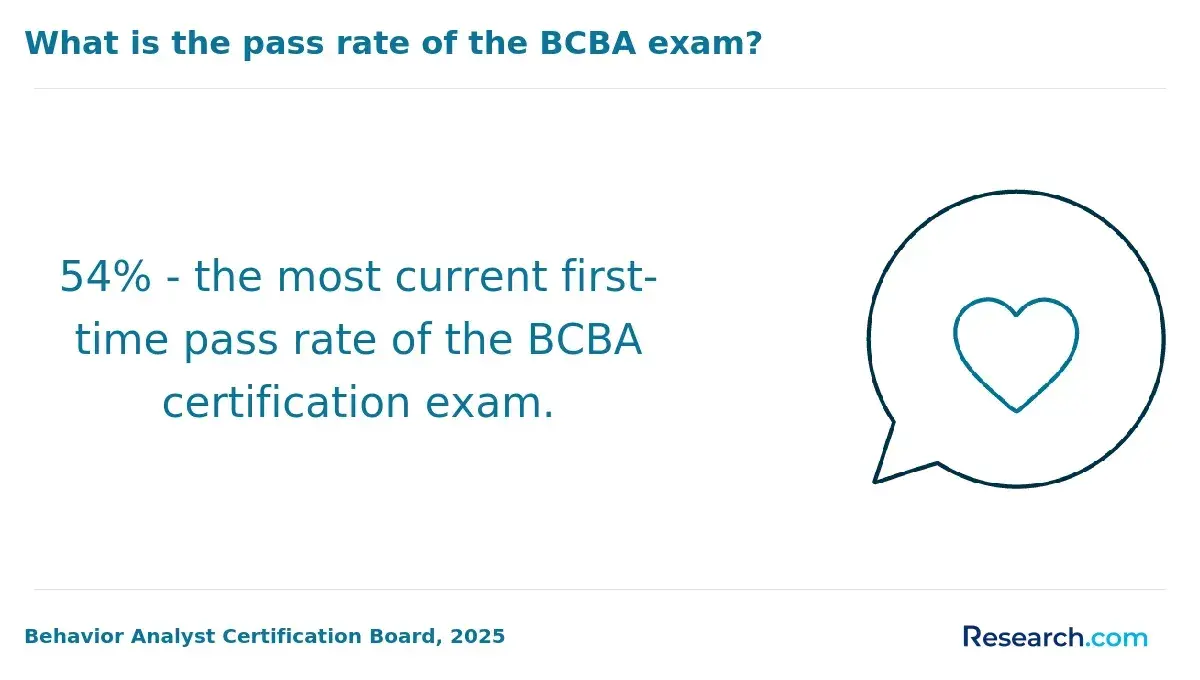
The BCBA exam is also a serious benchmark. Data from Pepperdine University ABA Program shows a 48% first-time pass rate, which is below the national average of 51%. Prospective students should therefore look for programs with strong exam preparation, experienced faculty, and transparent outcomes where available.
For students comparing BCBA accredited programs, the key is to confirm that the program’s coursework and supervision structure match certification expectations before enrolling.
What are common myths about online BCBA degrees?
Online BCBA degrees are often misunderstood in two opposite ways. Some students assume an online program is automatically less rigorous than an in-person program. Others assume every online ABA program leads smoothly to certification. Both assumptions can be wrong.
Myth 1: Every online BCBA program has the same quality
Program quality varies widely. Delivery format alone does not determine whether a program prepares students well for certification. Curriculum alignment, faculty expertise, fieldwork support, student services, and exam preparation all matter. For example, one online ABA master’s program reported a 42% first-time BCBA exam pass rate, below the national average of 54%, as noted by Psychology.org rankings. That difference shows why students should look beyond marketing claims and ask for outcome data when possible.
Myth 2: Online programs cannot provide meaningful hands-on training
Online coursework does not eliminate the supervised experience requirement. Many online programs allow students to complete fieldwork locally under a qualified supervisor. The risk is not the online format itself; the risk is enrolling in a program that gives limited help finding, documenting, or coordinating supervision. Before committing, ask how the school supports fieldwork, what students must arrange independently, and what happens if a placement falls through.
Myth 3: Accelerated programs are always the best choice
Shorter timelines can help working adults move faster, but speed can create trade-offs. Applied behavior analysis requires technical fluency, ethical judgment, and careful data use. If an accelerated format compresses difficult material without adequate advising or exam preparation, students may save time upfront but face delays later through weak preparation or exam retakes.
Myth 4: Employers reject online BCBA degrees
Employers are generally more concerned with valid certification, competence, supervised experience, and fit for the setting than whether every class was taken online. An online degree from a reputable program can be a credible route when it meets certification requirements and helps students build practical skills. Students should prioritize accreditation, verified coursework, fieldwork quality, and exam readiness over format alone.
Students who want to compare reputable options can review BCBA accredited programs and use the information as a starting point for deeper program verification.
Can you become a BCBA with an online degree?
Yes, you can become a BCBA with an online degree if the program satisfies the education requirements for certification and you also complete the required supervised fieldwork and pass the BCBA exam. The online format does not automatically disqualify a degree. What matters is whether the coursework, supervision plan, and credentialing pathway meet Behavior Analyst Certification Board requirements.
Students should verify that the program is registered as an approved course sequence or otherwise meets current BACB coursework expectations. The curriculum should cover core areas such as behavior assessment, intervention design, ethics, measurement, research methods, and supervision. If coursework is not accepted for certification eligibility, graduates may have to take additional courses later.
Fieldwork is the other major piece. Many online students complete supervised experience in their own communities, but they must work with an appropriate supervisor and document hours correctly. This requires planning early, especially for students in rural areas, students changing careers, or students who are not already employed in a setting where ABA services are provided.
Salary data indicates average BCBA earnings after completing top online programs range between $32,000 and $44,000, according to Intelligent.com 2025 rankings. These figures should be interpreted carefully because earnings can vary by role, location, experience, certification status, and employer type. The degree may open the pathway, but certification and practical experience strongly influence employment options.
Online programs can be especially useful for working professionals, career changers, and students who do not live near an in-person ABA graduate program. They also require self-discipline, proactive communication, and careful tracking of certification requirements. Students comparing options can review ABA master's programs online to understand how program structures differ.
For BCBA preparation, students should look at two levels of quality assurance: the university’s institutional accreditation and the program’s alignment with behavior analysis certification requirements. A school may be institutionally accredited, but that alone does not guarantee that its ABA coursework will qualify a student for BCBA exam eligibility.
The most important question is whether the program’s coursework meets Behavior Analyst Certification Board standards, often through a verified or approved course sequence. This alignment helps ensure that students study the required areas of behavior analysis, ethics, assessment, intervention, research design, and professional practice. Students should confirm the exact track they plan to enroll in, because universities may offer several related psychology, education, or ABA options with different certification outcomes.
Fieldwork arrangements also need close review. An online program can meet coursework expectations while leaving students largely responsible for finding supervision. Before enrolling, ask whether the school helps identify supervisors, whether supervision is built into the program, and whether the fieldwork model fits your state and work situation.
Cost makes verification especially important. Psychology.org and Intelligent.com report average in-state tuition of about $11,712 annually and $15,912 for out-of-state students, with some charging over $1,400 per credit hour. Enrolling in a program that does not support certification eligibility can lead to extra coursework, additional tuition, and delayed entry into the field.
When reviewing top applied behavior analysis graduate programs, do not rely only on the program title. Confirm the exact certification pathway, coursework status, fieldwork expectations, and state licensing implications before applying.
BCBA certification requires more than completing an ABA-related degree. Candidates must meet education, supervised fieldwork, examination, and ongoing renewal requirements. In many states, they may also need a separate professional license before practicing independently or billing for services.
The education requirement generally involves a graduate degree in behavior analysis, education, psychology, or a related field that includes coursework meeting Behavior Analyst Certification Board standards. Students should confirm that their specific program track satisfies current coursework rules, not just that the university offers an ABA-related degree.
The supervised experience requirement is one of the most time-intensive parts of the process. Candidates must complete 1,500 to 2,000 hours of supervised fieldwork, depending on the training pathway. These hours must be supervised by a qualified BCBA and documented according to certification rules. Poor recordkeeping can create delays even when the clinical work itself has been completed.
The BCBA examination evaluates applied behavior analysis principles, measurement, assessment, intervention, supervision, and ethical decision-making. Over 8,000 people gained certification recently, reflecting growth driven by increased autism diagnoses.
Licensing is separate from board certification. State rules may include additional applications, background checks, jurisprudence exams, continuing education, or other requirements. Because state rules vary, students should check licensing requirements in the state where they plan to work before choosing a program or fieldwork site.
Core requirements typically include:
- A graduate degree meeting BACB standards
- 1,500 to 2,000 hours of supervised experience
- A passing score on the BCBA exam
- Compliance with state-specific licensing rules where applicable
- Mandatory continuing education every two years
Certification maintenance also matters. BCBAs must complete continuing education units focused on ethics and professional practice every two years. Missing renewal requirements can cause a lapse in certification and affect job eligibility.
An online BCBA degree typically takes between 1.5 and 3 years to complete, depending on whether the student enrolls full time, part time, or in an accelerated format. That timeline covers coursework, not the entire path to becoming credentialed.
After coursework, candidates must complete 2,000 hours of supervised fieldwork, which usually takes 1 to 2 years. Students who already work in an ABA setting may be able to build hours into their employment more efficiently, while career changers may need extra time to secure an appropriate placement.
Exam preparation can also affect the total timeline. Data shows only about 23% of those who fail on their first try pass on subsequent attempts, so students should treat exam readiness as a major factor when evaluating program quality. A program that offers structured review, practice exams, advising, and strong faculty support may reduce avoidable delays.
The overall sequence usually looks like this:
- 1.5 to 3 years for online graduate coursework
- 1 to 2 years for supervised fieldwork
- Additional months for exam preparation, application processing, and possible retakes
Accelerated programs can shorten the classroom portion, but they may not shorten fieldwork by the same amount. Students should compare total time to certification, not just time to graduation. Before enrolling, ask how many courses students take at once, whether fieldwork can begin during the program, and how the school supports exam preparation.
For additional information on program structures and bcba exam preparation, visit the research.com resource center.
A BCBA program curriculum is designed to teach students how to assess behavior, design interventions, evaluate outcomes, and practice ethically across clinical, school, community, and organizational settings. Strong programs combine theory with repeated application, because behavior analysts must make decisions from data rather than intuition alone.
Common curriculum areas include:
- Principles of behavior analysis, including reinforcement, punishment, stimulus control, and motivating operations
- Behavior assessment, including functional behavior assessment and interpretation of behavioral data
- Intervention design, implementation, monitoring, and revision
- Single-subject research design and applied research methods
- Ethics, professional conduct, documentation, and client rights
- Supervision, staff training, and treatment fidelity
- Applications for populations such as children with autism or adults in organizational roles
Programs are designed to fulfill Board Certified Behavior Analyst (BACB) exam eligibility criteria, specifically requiring graduate-level ABAI-verified course sequences. Per KU Online ABA Certificate and BACB guidelines, only graduate-level ABAI-verified sequences satisfy Pathway 2 requirements for BCBA exam eligibility, meaning undergraduate or non-accredited courses typically do not qualify.
Students should pay close attention to whether the program emphasizes practical decision-making. For example, a course on behavior-change procedures should not only define reinforcement and punishment; it should teach students how to select interventions, monitor side effects, adjust plans, and document outcomes ethically.
Supervised fieldwork connects the curriculum to practice. During fieldwork, students apply assessment tools, collect data, participate in treatment planning, and receive feedback from experienced BCBAs. This is where many students develop the professional judgment needed for independent practice.
Before enrolling, ask for the course sequence, confirm that credits match current requirements, and verify that the program’s curriculum prepares students for the BCBA exam content. A program that sounds similar to an ABA curriculum but lacks verified coursework can delay or invalidate a student’s certification plan.
BCBAs work in roles that involve assessing behavior, designing interventions, supervising implementation, and evaluating whether services are effective. The most common settings include schools, autism service providers, healthcare organizations, private clinics, community agencies, and consulting practices.
Common job roles include:
- Behavior analyst
- Clinical supervisor
- Program coordinator
- ABA consultant
- School-based behavior specialist
- Researcher or research coordinator
- Staff trainer or quality assurance specialist
In clinical and healthcare settings, BCBAs often create individualized behavior intervention plans, supervise Registered Behavior Technicians, monitor treatment fidelity, and communicate with families or interdisciplinary teams. In schools, they may support students with developmental disabilities or behavioral challenges by helping educators implement evidence-based strategies.
Some BCBAs move into organizational behavior management, staff training, program evaluation, or leadership roles. These paths may require strong supervision skills, experience managing teams, and the ability to translate behavior analytic principles into policies and systems.
Financial planning is important. Average student debt for online BCBA master’s graduates ranges from $20,000 to $22,000, with starting salaries as low as $32,000, based on data from Intelligent.com 2025 programs. Students should compare expected debt with realistic earnings in their state, intended work setting, and stage of certification.
Career advancement often depends on certification, documented experience, supervision skills, and the ability to demonstrate outcomes. Students who want leadership roles should look for programs that include training in supervision, ethics, program evaluation, and collaboration, not only direct intervention.
BCBA salaries vary by location, certification status, experience, employer type, and specialization. According to the Behavior Analyst Certification Board, median annual pay ranges from $60,000 to $75,000 in the U.S., with entry-level positions starting near $50,000. Experienced BCBAs or those with specialized skills can earn over $90,000 annually.
Higher-paying opportunities are often tied to experience, supervisory responsibility, high-demand locations, private practice, or specialized clinical expertise. Students should be careful when comparing salary claims because some figures may describe certified BCBAs, while others may reflect graduates who are not yet certified or who are working in assistant-level roles.
The job outlook is positive. Behavior analysts are part of growing healthcare, education, and mental health service systems. The Bureau of Labor Statistics projects employment growth above average due to increased autism spectrum disorder diagnoses and expanded insurance coverage of ABA therapy.
Students should also understand the timing of employability. Completing an online ABA master’s program does not automatically make someone a BCBA. Graduates must complete supervised fieldwork, pass the BCBA exam, and meet any state licensing requirements before qualifying for many independent or higher-level roles.
Some U.S. online ABA master’s programs do not accept international students due to certification rules, according to Psychology.org rankings. International applicants should verify eligibility, fieldwork options, visa limitations, and whether the credential will apply in the country where they plan to work.
Before enrolling, prospective students should:
- Research state-specific demand and average salaries before choosing a program.
- Confirm certification requirements beyond the degree, including fieldwork and exam eligibility.
- Compare employment settings such as schools, healthcare organizations, private clinics, and community agencies.
- Estimate total cost, expected debt, and likely early-career earnings.
How to choose a reputable online BCBA program?
Choosing a reputable online BCBA program starts with certification alignment. Do not rely on the program title alone. A master’s in psychology, special education, or applied behavior analysis may sound relevant, but students need to confirm that the exact track meets Behavior Analyst Certification Board coursework expectations and supports the fieldwork path they intend to use.
Use the following criteria when comparing programs:
- Coursework alignment: Verify that the curriculum covers required behavior analysis content and is designed for BCBA exam eligibility.
- Institutional credibility: Confirm that the university is properly accredited and that the ABA track has the appropriate verified or approved coursework status.
- Fieldwork support: Ask whether the school helps students secure qualified supervisors, track hours, and resolve placement problems.
- Faculty credentials: Look for instructors with BCBA certification and relevant clinical, educational, or research experience.
- Exam preparation: Review whether the program offers practice exams, review sessions, advising, and data on student outcomes where available.
- Flexibility: Compare asynchronous coursework, live sessions, part-time options, and deadlines against your work schedule.
- Cost and transfer rules: Calculate tuition, fees, books, supervision-related costs, and the effect of transfer credit limits.
Transfer policies deserve close attention. Most online ABA programs limit transfers to 4.5 credits and do not grant equivalency for prior life experience, as noted by Psychology.org rankings. This can affect both cost and graduation timeline, especially for students who already completed related graduate coursework.
Students should also ask direct questions before applying: What percentage of graduates pass the BCBA exam on the first attempt? When can fieldwork begin? Are supervisors provided or must students find their own? Does the program meet requirements in my state? What support is available if I move, change jobs, or lose a placement?
The best online BCBA program is not always the fastest or cheapest option. It is the one that fits your schedule while protecting your certification pathway, providing credible supervision support, and preparing you for ethical, competent practice.
Other Things You Should Know About Applied Behavior Analysis
In 2027, online BCBA degree programs can be as credible as in-person ones if they are accredited and meet BACB requirements. Prospective students should research program accreditation and ensure coursework fulfills certification and licensure needs.
Not all online ABA programs qualify for Behavior Analyst Certification Board (BACB) supervision hours. Only those affiliated with verified coursework meeting BACB standards allow students to earn supervised experience required for certification. Prospective students should verify the program's BACB verification status before enrollment to ensure their hours count toward BCBA eligibility.
Yes. BCBA training requires supervised fieldwork under BACB rules, and online coursework alone is not enough. Most candidates complete 1,500 to 2,000 supervised hours, with some pathways requiring specific supervised and concentrated fieldwork structures approved by the Behavior Analyst Certification Board.
Yes, applied behavior analysis principles are effectively used in organizational behavior management to improve employee performance, safety, and workplace culture. ABA techniques can analyze and modify behaviors in business environments, leading to increased productivity and better compliance with company policies.
- Online Degree Programs Myths and Facts https://pwskills.com/blog/online-degree-program/online-degree-programs-myths-and-facts
- 10 Common Misconceptions About ABA - Autism Learning Partners https://autismlearningpartners.com/misconceptions-about-aba/
- What does a Board Certified Behavior Analyst (BCBA) do? Career Overview, Roles, Jobs | APOS https://careers.apos-society.org/career/board-certified-behavior-analyst-bcba
- Top 5 Myths About Applied Behavior Analysis | Applied Behavioral Analysis https://www.appliedbehavioranalysisedu.org/2018/04/top-5-myths-about-applied-behavior-analysis/
- 29+ ABAI Accredited Programs: B.A. and Master’s Degrees https://abamastersprograms.org/abai-accredited-bcba-programs/
- BCBA® Certification and Licensure by State https://www.thebehavioracademy.com/blog/bcba-certification-and-licensure-by-state
- What Jobs Can a BCBA Do - What are the Roles? https://www.biermanautism.com/resources/blog/what-jobs-can-a-bcba-do/
- BCBA Career Options: Exploring Diverse Career Paths for BCBAs https://www.abaresourcecenter.com/post/bcba-career-options
- Debunking 8 Common Myths About Online Degrees - University of the Potomac https://potomac.edu/debunking-common-myths-about-online-degrees/
- Common ABA Myths https://www.childandfamilydevelopment.com/blog/common-aba-myths/