2027 How to Pick a BCBA Specialty Based on Your Career Goals

Co-Founder and Chief Data Scientist
Selecting a BCBA specialty is not just a question of interest; it affects the clients you serve, the settings you work in, the supervision you need, and the career paths available after certification. A professional moving into applied behavior analysis from education, psychology, healthcare, business, or another field may find that “becoming a BCBA” is only the first decision. The next one is choosing where to build deep, marketable expertise.
This guide explains how BCBA specialties differ, which career goals each one tends to support, and what to look for in programs, curriculum, fieldwork, admissions, salary potential, and job outlook. Use it to compare options carefully before committing time, tuition, and supervised experience to a path that may or may not fit your long-term goals.
Key Things You Should Know
- Specializing in pediatric, organizational, or clinical BCBA roles can align your work with different populations and settings, impacting long-term career satisfaction and advancement.
- In 2025, demand for BCBAs in autism therapy remains high, with over 45% of practitioners working in pediatric intervention, highlighting a stable job market in this specialty.
- Choosing a specialty based on your preferred work environment and client interaction can facilitate better skill development and networking opportunities critical for career growth.
What Is a BCBA Specialty?
A BCBA specialty is a focused area of practice within behavior analysis. It usually centers on a specific population, setting, service model, or behavioral need. Instead of applying general ABA skills in every possible context, a specialist develops deeper competence in areas such as autism services, school-based intervention, organizational behavior management, gerontology, health and wellness, or support for developmental disabilities beyond autism.
Autism remains the most common specialty. According to the University of Cincinnati, 82% of BCBAs concentrate in this area. That does not mean every BCBA should choose autism services by default. It does mean the field has a large employment base, well-established service models, and significant demand for clinicians who can deliver ethical, individualized interventions.
Choosing a specialty works best when you connect three factors: the people you want to serve, the environment where you want to work, and the type of professional role you want over time. A BCBA who enjoys family coaching may choose home-based pediatric services. Someone interested in systems, staff performance, and measurable business outcomes may prefer organizational behavior management. A practitioner who wants predictable school-year rhythms and collaboration with educators may focus on school-based behavior analysis.
Key factors to compare before choosing a specialty
- Client population: children, adults, older adults, neurodiverse clients, employees, caregivers, or students.
- Primary setting: schools, clinics, homes, hospitals, residential programs, community agencies, or workplaces.
- Daily responsibilities: direct assessment, treatment planning, parent training, staff supervision, consulting, research, or program administration.
- Required experience: some specialties require substantial supervised practice with a specific population before you can work independently and ethically.
- Career growth: consider whether the specialty leads toward clinical leadership, private practice, consulting, research, or operations management.
- Continuing education: niche areas may require additional training after certification to stay competent and competitive.
Prospective students should align coursework, fieldwork, and mentorship with the specialty they are considering. If you are comparing advanced or flexible study routes, reviewing online BCBA program options can help you identify programs that support your intended practice area.
How Do You Become a BCBA?
To become a BCBA in the United States, candidates generally need a graduate-level education, qualifying behavior-analytic coursework, supervised fieldwork, and a passing score on the BCBA certification exam. The process is structured because BCBAs design and oversee interventions that can significantly affect clients, families, schools, and organizations.
Most candidates earn a master's degree or higher in behavior analysis, psychology, education, or a related field with BACB-approved coursework. They then complete supervised practical experience. This typically involves 1,500 hours of independent fieldwork or 2,000 hours in practicum settings, depending on the pathway used by the candidate and program.
After meeting education and experience requirements, candidates take the BCBA certification exam. The exam evaluates knowledge of ethics, assessment, intervention design, behavior change procedures, measurement, supervision, and professional practice. Passing the exam qualifies professionals to use the BCBA credential, subject to current certification and any applicable state licensing requirements.
Typical steps on the BCBA path
- Confirm eligibility requirements: review current BACB standards and any state licensure rules where you plan to practice.
- Complete a qualifying graduate program: choose coursework that supports both certification and your intended specialty.
- Secure supervised fieldwork: prioritize placements that expose you to the population and setting you want to serve.
- Prepare for the certification exam: use coursework, supervision, mock exams, and applied case experience to strengthen readiness.
- Maintain certification: complete required continuing education every two years and follow ethical practice standards.
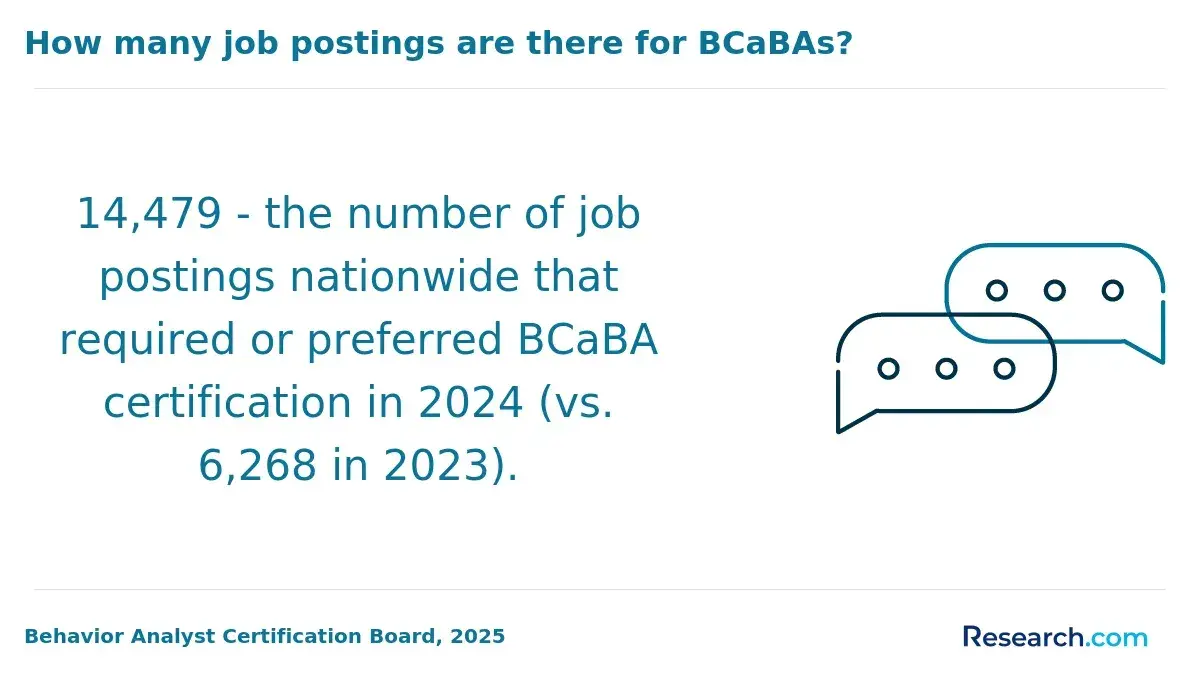
Some candidates enter the field after earning the BCaBA credential, and some experience hours may transfer depending on the current rules and supervision documentation. A doctoral degree can support research, university teaching, senior leadership, or highly specialized work, but it is not required for BCBA certification.
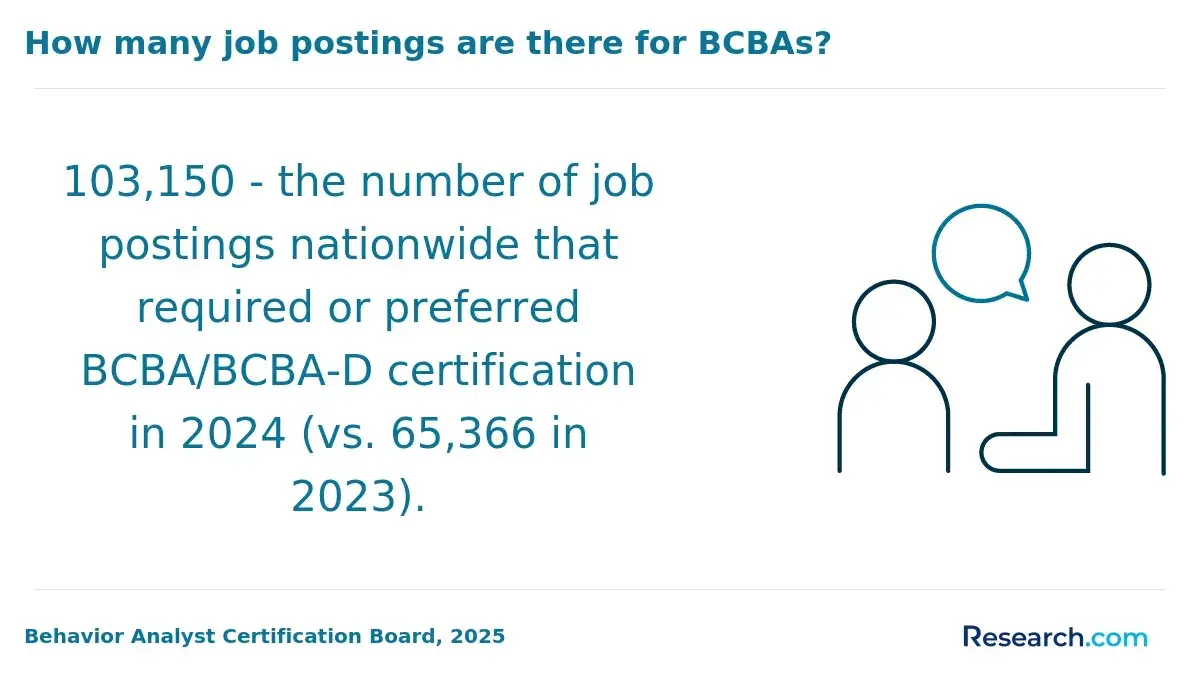
Demand is especially strong for advanced and supervisory roles. From 2023 to 2024, supervisor positions posted for BCBAs rose by 58%, which underscores the value of building strong clinical judgment, supervision skills, and specialty expertise early. Prospective students can compare BCBA programs based on format, coursework, fieldwork support, and career alignment.
What Career Goals Match Each BCBA Specialty?
The right BCBA specialty depends on what you want your career to look like day to day. Some specialties involve direct clinical care and family coaching. Others emphasize systems change, staff training, research, consultation, or leadership. Matching your specialty to your goals reduces the risk of choosing a path that looks appealing in theory but does not fit your preferred work style.
If you want to work directly with children and families
Autism intervention, early intervention, and developmental disability services often fit professionals who want intensive client contact, family collaboration, and measurable skill-building goals. These roles commonly take place in clinics, homes, schools, or community programs. They may involve communication training, adaptive skills instruction, social skills programming, and plans to reduce challenging behavior.
If you want to work in education
School-based BCBAs support students, teachers, and multidisciplinary teams. Their work may include functional behavior assessments, behavior intervention plans, classroom supports, staff coaching, and collaboration on individualized education goals. This route is a strong fit for professionals who understand school systems and want their work tied to academic, social, and behavioral success.
If you want a research or university career
Research and academia suit BCBAs who want to teach, publish, design studies, train future practitioners, or shape evidence-based practice. These roles often require advanced graduate training, research mentorship, and a record of scholarly work. They may be less direct-service focused but can influence the field at a broader level.
If you want healthcare or interdisciplinary practice
Healthcare and hospital-based BCBAs work with clients who may have complex medical, developmental, or behavioral needs. These roles require collaboration with physicians, nurses, therapists, social workers, and caregivers. They can be a good fit for professionals who are comfortable in clinical systems and can communicate behavior-analytic recommendations to non-ABA teams.
If you want business, consulting, or systems improvement
Organizational behavior management, or OBM, applies behavior analysis to workplace performance, safety, training, leadership, and productivity. This specialty is often attractive to professionals with business, human resources, operations, healthcare administration, or consulting experience. It typically involves fewer traditional therapy sessions and more analysis of performance systems.
Before choosing a path, ask whether you want to spend most of your time with clients, caregivers, teachers, employees, executives, students, or research participants. Also consider whether you prefer structured clinical protocols, complex case consultation, program leadership, or independent consulting. Many prospective BCBAs use a master's degree in applied behavior analysis to build the coursework and fieldwork base needed for these different career directions.
Common BCBA specialties include autism spectrum disorder services, early intervention, developmental disabilities, school-based behavior analysis, organizational behavior management, gerontology, substance abuse treatment, and health-related behavior change. Each area uses ABA principles, but the clients, goals, documentation, funding sources, and daily responsibilities can differ substantially.
Autism spectrum disorder
Autism spectrum disorder is the largest and most recognized BCBA specialty. Many BCBAs in this area work in clinics, homes, schools, or community settings. Their responsibilities may include assessment, treatment planning, communication programs, social skills instruction, caregiver training, and behavior reduction plans. This specialty offers a large employment base, but it also requires strong ethical judgment, cultural responsiveness, and the ability to individualize services rather than rely on one-size-fits-all programming.
Early intervention
Early intervention focuses on infants, toddlers, and young children. BCBAs in this area often collaborate with speech-language pathologists, occupational therapists, pediatric providers, and families. The work is highly developmental and family-centered, with goals tied to communication, play, adaptive skills, and early learning. It can be rewarding for professionals who enjoy coaching caregivers and shaping skills during critical developmental periods.
Developmental disabilities beyond autism
Some BCBAs work with individuals who have intellectual disabilities, Down syndrome, cerebral palsy, or other developmental conditions. Settings may include residential programs, day programs, schools, vocational services, and community agencies. The focus often includes independence, safety, communication, social participation, and quality of life.
Substance abuse disorders
Substance abuse disorders are a rapidly growing specialty, projected to grow by 18% by 2032 according to the University of Cincinnati. BCBAs in this area may contribute to programs focused on addiction-related behavior, relapse prevention, contingency management, treatment adherence, and recovery support. This specialty requires sensitivity, interdisciplinary collaboration, and familiarity with behavioral health systems.
Organizational behavior management
OBM applies behavior analysis to workplace performance. BCBAs may help organizations improve training, employee engagement, safety practices, productivity, quality control, or management systems. This specialty fits professionals who prefer data-driven consulting and systems-level change over traditional clinical caseloads.
Gerontology and older adult services
Gerontology-focused BCBAs may support older adults, caregivers, assisted living staff, or dementia care teams. The work can involve routines, safety, communication supports, caregiver training, and reduction of distress-related behavior. It is a developing area that may appeal to practitioners interested in aging services and healthcare collaboration.
Choosing among these specialties should involve more than projected demand. Consider whether you can access relevant fieldwork, whether the work environment fits your temperament, and whether you want your career to stay clinical, move into leadership, or shift toward consulting. Many students pursue a master's in behavior analysis online to build the academic foundation while continuing to work in a related setting.
Online and campus BCBA programs can both prepare students for certification, but they serve different learners. The better choice depends on your schedule, location, learning style, access to fieldwork, and need for in-person support. Do not choose based on convenience alone; choose the format that helps you complete coursework, supervision, and exam preparation successfully.
When an online BCBA program may fit
Online BCBA programs are often practical for working adults, career changers, caregivers, and students who do not live near a campus-based ABA program. Many offer asynchronous coursework, which can make it easier to balance employment and study. Online learning may also help students pursue specialty interests that are not available locally. For example, organizational behavior management, highlighted by Connect N Care ABA as a high-demand niche, may be easier to explore through an online program while remaining employed.
The main trade-off is that online students must be highly organized. They also need a clear plan for supervised fieldwork because the school may not provide local placements in every region. Before enrolling, ask exactly how the program helps students find qualified supervisors and whether your intended fieldwork site supports your specialty goals.
When a campus BCBA program may fit
Campus programs provide face-to-face instruction, direct access to faculty, peer networking, and sometimes on-site labs or clinics. This structure can help students who are new to applied behavior analysis and want more guided practice. Campus programs may also have stronger local employer relationships, which can be valuable for fieldwork and job placement.
The trade-off is less flexibility. Commuting, relocation, fixed class schedules, and reduced work availability can increase the total cost of attendance. For some students, however, the structure and live feedback are worth it.
Questions to ask before choosing a format
- Can you complete supervised fieldwork in the specialty and setting you want?
- Does the program provide placement support, or must you arrange supervision independently?
- Are courses synchronous, asynchronous, or a mix of both?
- How accessible are faculty, advisors, and exam preparation resources?
- Are specialized tracks, such as organizational behavior management, available?
- How do tuition, fees, commuting, relocation, and lost work hours compare?
- Will the program meet certification and state requirements where you plan to practice?
For many students, the best format is the one that removes barriers without weakening training quality. Flexibility matters, but so do supervision, mentorship, ethical preparation, and specialty-relevant experience.
To choose a strong BCBA program, verify that it supports current certification requirements, offers credible academic preparation, and provides a realistic path to supervised experience. Accreditation, verified coursework, faculty qualifications, and fieldwork support all matter because a program that looks convenient may still leave gaps in eligibility or readiness.
Start by confirming whether the program’s coursework aligns with Behavior Analyst Certification Board requirements. Do not rely only on promotional language. Ask the admissions office for the exact coursework sequence, whether it is designed for BCBA eligibility, and how the program keeps its curriculum aligned with current standards.
Match the program to your target setting
If you want to work in schools, pediatric clinics, or developmental disability services, look for programs with coursework and practicum opportunities in those areas. Professionals aiming to work in schools or pediatric settings, areas with significant BCBA job growth as reported by Blossom ABA Therapy, 2025, should look for training that includes educational systems, developmental assessment, family collaboration, and intervention planning for children and adolescents.
If you are interested in OBM, adult services, healthcare, gerontology, or telehealth, ask whether the program offers relevant electives, faculty expertise, research opportunities, or fieldwork connections. A general ABA curriculum may meet baseline requirements, but it may not provide enough depth for a niche specialty unless you plan carefully.
Evaluate fieldwork before you enroll
Fieldwork is where many students discover whether a specialty truly fits. Ask programs how students secure supervisors, what types of sites are commonly available, and whether supervision meets BACB criteria. If you already have an employer, confirm that your site can support appropriate experience hours and qualified supervision.
Review cost and outcomes
- Tuition and fees: compare the full cost, not just per-credit tuition.
- Scholarships or assistantships: ask whether funding is available and whether it affects your work or fieldwork schedule.
- Practicum-related costs: consider travel, background checks, technology, liability insurance, or placement fees if applicable.
- Faculty expertise: look for instructors with practical and research experience in your intended specialty.
- Student outcomes: review graduation rates and first-time BCBA exam pass rates when available.
The strongest program is not automatically the most expensive, fastest, or most flexible. It is the one that gives you a clear route to eligibility, competent supervision, ethical practice, and the specialty experience needed for your next job.
BCBA specialty training usually builds on a core applied behavior analysis curriculum. The core prepares students in concepts, ethics, measurement, assessment, intervention, supervision, and research methods. Specialty preparation then comes through electives, practicum placements, certificate options, faculty mentorship, casework, and post-certification continuing education.
Programs focused on autism spectrum disorders may include advanced assessment, communication programming, caregiver training, early intervention, and support for developmental disabilities. Programs with an organizational behavior management focus may emphasize performance diagnostics, staff training, feedback systems, leadership, safety, productivity, and data-based decision-making in organizations.
Other specialty areas may appear through electives or applied experiences in education, gerontology, clinical mental health, health and wellness, residential services, or community programs. Because not every program offers every specialty, students should compare course catalogs and ask direct questions before enrolling.
Telehealth and emerging delivery models
Telehealth specialization is increasingly common as remote service delivery expands. Training in this area may address remote assessment, caregiver coaching, technology-supported intervention, privacy, documentation, and ethical considerations. According to Steady Strides ABA (2026), telehealth specialization represents a growing niche for BCBAs with advanced expertise, which makes updated training especially important for students who expect to provide remote or hybrid services.
What to look for in the curriculum
- Core BACB-aligned coursework that supports certification eligibility.
- Electives or certificates connected to your intended specialty.
- Supervised practicum experiences with the population or setting you want to serve.
- Training in assessment and intervention methods used in your target specialty.
- Ethics content that addresses real practice issues, including supervision, consent, data privacy, and scope of competence.
- Coverage of newer service models, including telehealth where relevant.
- Opportunities to review cases, analyze data, and receive feedback from experienced behavior analysts.
Some universities embed specialty preparation inside the degree. Others expect students to complete a general ABA sequence and pursue specialization through fieldwork or post-certification training. Before committing, ask advisors how students in your intended specialty usually build competence and what placements or mentors are available.
Admission requirements for BCBA programs vary by institution, but most programs look for evidence that applicants can handle graduate-level work and are prepared for ethical practice in behavior analysis. A bachelor’s degree is typically required, often in behavior analysis, psychology, education, human services, or a related field. Applicants from unrelated majors may still be considered, but they may need additional foundational coursework.
Programs commonly request official transcripts, a minimum GPA, letters of recommendation, a personal statement, and sometimes a resume or interview. A minimum GPA requirement is often around 3.0 on a 4.0 scale, although individual programs may set different thresholds or review applicants holistically.
Common application components
- Bachelor’s degree: usually required before starting graduate-level BCBA coursework.
- Transcripts: used to evaluate academic readiness and prerequisite completion.
- Prerequisite coursework: may include behavior analysis, psychology, research methods, education, ethics, or related subjects.
- Letters of recommendation: strongest when written by supervisors, faculty, or professionals who can address judgment, reliability, and readiness for graduate study.
- Personal statement: should explain why you are pursuing behavior analysis, which populations or settings interest you, and how the program fits your goals.
- Relevant experience: work or volunteer experience in education, autism services, mental health, human services, healthcare, or organizational settings can strengthen an application.
- GRE scores: some universities require them, but this is becoming less common.
Applicants aiming for selective programs should make their specialty interests specific without sounding inflexible. For example, it is stronger to say you want supervised experience in school-based behavior assessment or early intervention than to say only that you “want to help people.” Admissions committees often look for applicants who understand the field, can reflect on ethical responsibility, and have realistic expectations about supervised practice.
Professionals targeting leadership roles, such as clinical director, benefit from entering rigorous BCBA programs early and building supervision, documentation, and team-management skills throughout training. Skilled BCBAs in leadership positions manage teams and often receive higher salaries with proven experience (Steady Strides ABA, 2026).
BCBA salaries vary by specialty, work setting, region, funding source, experience, and level of responsibility. A specialty can influence earning potential, but it is not the only factor. Supervisory duties, caseload complexity, private practice ownership, corporate consulting, and local demand can all affect compensation.
Clinical and school-based BCBAs generally earn between $60,000 and $75,000 annually, with differences based on location, employer budgets, caseloads, and whether the role includes supervision. Early intervention and intensive behavioral therapy roles typically range from $55,000 to $70,000 based on caseload and funding. Autism spectrum disorder intervention can provide stable employment, though salary growth may be slower in some settings if reimbursement rates or school budgets limit compensation.
Organizational behavior management often offers higher earning potential. BCBAs in OBM often earn more than $90,000 because their work may directly support workplace efficiency, safety, productivity, and management outcomes in corporate or healthcare environments. These roles may require additional business fluency, consulting skills, and comfort presenting behavior-analytic recommendations to nonclinical leaders.
Entrepreneurial BCBAs who open private practices may exceed $100,000 depending on client volume and specialty. However, private practice also carries business risks, including billing, staffing, compliance, liability, marketing, and administrative costs. The BACB Lightcast Report, 2025, notes a 28% nationwide demand growth since 2010, which supports opportunity in the field but does not guarantee high income for every practitioner.
Research and university faculty positions may start lower than some clinical or consulting roles, but they can offer other advantages, including tenure pathways, grant opportunities, academic calendars, and influence over training and research. For some BCBAs, those benefits matter as much as salary.
How to think about salary by specialty
- Choose clinical specialties if direct client impact, supervision, and service delivery are your priority.
- Consider OBM if you want consulting, systems work, and potentially higher corporate compensation.
- Consider private practice if you want autonomy and earning upside, but are prepared for business responsibility.
- Consider academia or research if you want scholarship, teaching, and long-term influence over the field.
The best-paying option is not always the best career fit. A sustainable specialty should match your strengths, tolerance for risk, preferred population, and desired work environment.
BCBA Job Outlook by Specialty?
The BCBA job outlook in 2026 remains strongest in specialties tied to persistent service demand, including pediatric autism intervention, early intervention, school-based behavior support, supervisory roles, organizational behavior management, gerontology, and telehealth-enabled services. Demand varies by region, employer type, funding model, and state licensing rules, so candidates should evaluate both national trends and local job markets.
Pediatric autism intervention continues to be a major employment area because of early intervention initiatives, clinic-based services, insurance-funded treatment, and school-based supports. BCBAs with strong assessment, caregiver training, supervision, and interdisciplinary collaboration skills are likely to remain competitive in this specialty.
School-based behavior analysis also has steady relevance as districts seek support for students with challenging behavior, disability-related needs, and inclusive education goals. These roles may appeal to professionals who want to collaborate with teachers, administrators, families, and related service providers.
Organizational behavior management is gaining traction in corporate, healthcare, and operational settings. OBM roles may include training design, performance improvement, leadership consultation, safety initiatives, and workforce systems. This path can be attractive for BCBAs who want to move beyond traditional clinical service models.
Geriatric behavior analysis is another developing specialty, particularly for professionals addressing dementia-related behaviors, caregiver training, and support in assisted living or home health environments. As demand grows, BCBAs who understand aging services and interdisciplinary care may find new opportunities.
Specialization can also affect compensation. According to Blossom ABA Therapy (2025), BCBAs with targeted expertise can increase their salaries by 15% to 30%, which highlights the value of building skills that employers can clearly connect to client outcomes, supervision quality, or organizational performance.
Factors to evaluate before committing to a specialty
- Regional demand and the number of employers hiring in that specialty.
- State licensing requirements and how they interact with BCBA certification.
- Availability of qualified supervision during training.
- Long-term fit with your preferred population and work environment.
- Opportunities for advancement into supervision, leadership, consulting, or private practice.
- Compatibility with emerging models such as telehealth or hybrid service delivery.
The strongest job outlook usually belongs to BCBAs who combine certification with focused experience, ethical practice, strong supervision skills, and adaptability. Rather than chasing a specialty only because it appears high demand, choose one where you can build durable competence and provide measurable value.
Other Things You Should Know About Applied Behavior Analysis
BCBAs often work in a variety of settings beyond traditional clinical environments. These can include schools, residential treatment facilities, home-based programs, and organizational consulting in businesses focused on behavior management and training. Understanding the diversity of practice environments can help shape career decisions and specialty choice.
Consider your strengths, career goals, and preferred work settings. Assess market demand and salary trends specific to your specialty, and contemplate how much you align with the populations you wish to serve, whether in education, healthcare, or other sectors.
BCBA certification is issued by the Behavior Analyst Certification Board, but state licensing laws vary. Some states require a separate license to practice, while others accept BACB certification alone. In 2027, applicants should check their state board before choosing a specialty that may need additional supervised experience or documentation.
Yes, BCBAs are required to complete continuing education units (CEUs) periodically to maintain their certification. This ensures they remain current with advances in behavior analysis research, methodologies, and ethical standards. Staying updated through CEUs supports professional growth and quality service delivery.
- Association for Behavior Analysis International Accreditation Board https://accreditation.abainternational.org/accredited-programs.aspx
- Guide to Becoming a BCBA - Bluesprig Autism https://www.bluesprigautism.com/blog/guide-to-becoming-a-bcba/
- Is Becoming a BCBA a Good Career in 2026? Salary, Growth, and What to Expect https://mindfulsproutsaba.com/blog/is-becoming-a-bcba-a-good-career-in-2026-salary-growth-and-what-to-expect/
- Discovering Average BCBA Salaries | Achieve Better ABA https://achievebetteraba.com/blog/average-bcba-salaries/
- Unprecedented Growth in the Behavior Analysis Field - apricott ABA https://www.apricott.com/resources/the-rate-of-job-growth-for-bcbas-ac438
- Behavior Analyst Salary: Your Guide to Negotiation https://americanbss.com/behavior-analyst-salary-your-guide-to-negotiation-certification-and-career-growth/
- LBA vs. BCBA – What’s the Difference? https://onlinecounselingprograms.com/mental-health-careers/how-to-become-behavior-analyst-bcba/lba-vs-bcba/
- What to Look for When Searching for Your Next BCBA Job https://brightpathwaysaba.com/what-to-look-for-when-searching-for-your-next-bcba-job/
- BCBA Programs & Schools | Sunray ABA https://www.sunrayaba.com/post/bcba-programs-schools
- BCBA Salary in New York 2026: Averages, Ranges & Factors https://abcachieve.com/bcba-salary-in-new-york/