2027 Best Online ABA Master’s Programs for BCBA Eligibility

Co-Founder and Chief Data Scientist
Choosing an online ABA master’s program is not just a graduate-school decision; it is a certification-pathway decision. If your goal is to become a Board Certified Behavior Analyst, the program you choose must support the academic requirements for BCBA eligibility, fit your schedule, and help you plan supervised fieldwork without delaying your exam timeline.
The stakes are practical. The Behavior Analyst Certification Board (BACB) reported a 111% increase in demand for BCBAs between 2010 and 2021, and employers continue to look for professionals who can apply behavior-analytic principles in clinical, school, community, and organizational settings. But not every online master’s program is equally useful for BCBA preparation.
This guide explains how online ABA master’s programs work, what to verify before enrolling, how coursework and fieldwork connect to BCBA eligibility, and which factors matter most when comparing programs in 2027.
Key Things You Should Know About BCBA Eligibility
- Completing a masters degree in applied behavior analysis or a master’s program with a Verified Course Sequence is required to meet BCBA eligibility criteria.
- BCBA-certified behavior analysts earn competitive salaries, generally ranging from $75,000 to $90,000 annually depending on experience and location.
- Online ABA master’s programs often provide fieldwork supervision and practicum support, enabling students to meet the 1,500–2,000 required fieldwork hours while working remotely.
What is a master’s degree in ABA and why is it essential for BCBA eligibility?
A master’s degree in Applied Behavior Analysis is a graduate credential focused on the science of behavior and the ethical use of behavior-change procedures. Students study how to assess behavior, design interventions, collect and interpret data, evaluate outcomes, and work with clients, families, schools, and care teams.
For aspiring BCBAs, the degree matters because BCBA eligibility requires a qualifying graduate degree or higher from an accredited institution, along with approved behavior-analytic coursework, supervised fieldwork, and a passing score on the certification exam. In other words, the master’s degree is one part of the pathway, not the entire requirement by itself.
A strong ABA master’s program should do more than award credits. It should help students understand which courses count toward BACB requirements, how fieldwork hours are documented, what supervision must include, and how program timelines align with exam readiness. Students comparing ABA masters programs should look for clear BCBA pathway advising, transparent coursework information, and support for supervised experience planning.
This degree is especially useful for professionals pursuing work in autism services, developmental disability support, school-based behavior intervention, behavioral health programs, research support, and clinical leadership. The best fit depends on whether the program prepares you for the population, setting, and supervision model you plan to use after graduation.
How does BCBA certification work?
BCBA certification is administered by the Behavior Analyst Certification Board, the organization that sets the requirements for coursework, supervised experience, examination, ethics, and ongoing certification maintenance. The process is designed to confirm that candidates have both graduate-level knowledge and practical experience applying behavior analysis responsibly.
The certification pathway generally has four major parts:
- Graduate education: Candidates must hold a qualifying master’s degree or higher from an accredited institution.
- Behavior-analytic coursework: Candidates must complete coursework that meets BACB requirements, often through a Verified Course Sequence.
- Supervised fieldwork: Candidates must complete documented experience under qualified supervision.
- BCBA examination: Candidates must pass the exam based on the BACB’s required content areas, including measurement, assessment, intervention, ethics, and professional responsibilities.
Certification does not end after passing the exam. BCBAs must follow ethics standards, complete continuing education, and renew certification every two years. Some states and employers may also require separate licensure, registration, background checks, or setting-specific credentials, so students should review requirements for the state and workplace where they plan to practice.
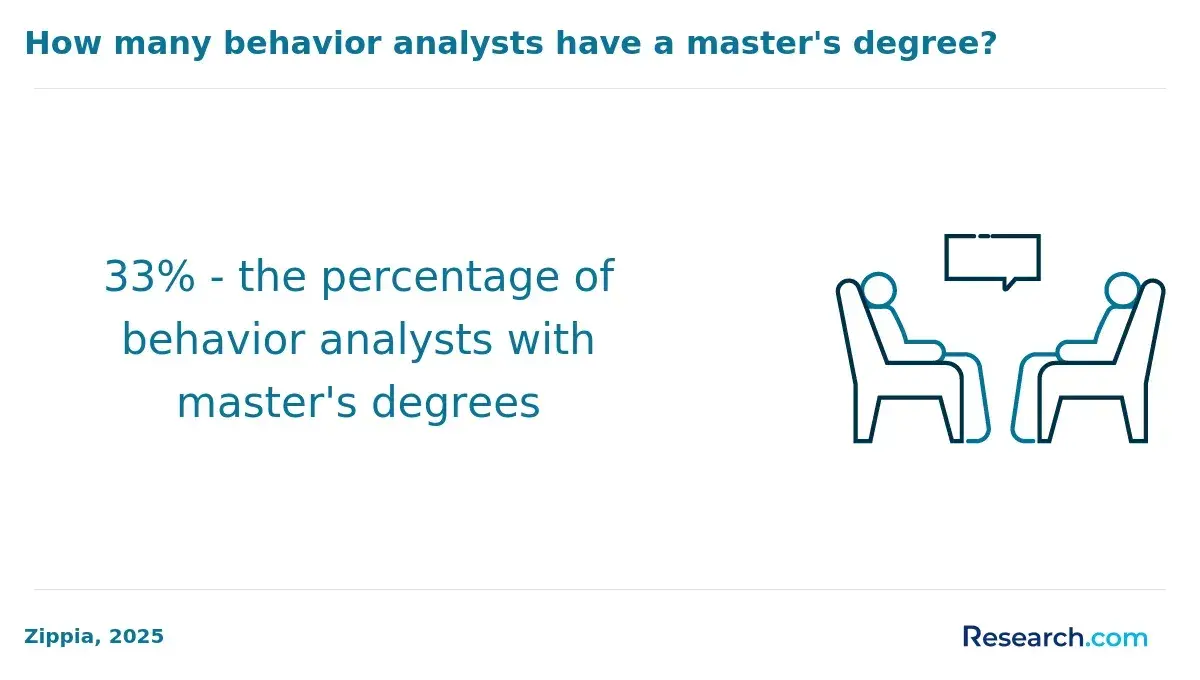
Which coursework and verified course sequences must master’s students complete to qualify for the BCBA exam?
Master’s students pursuing BCBA eligibility must complete graduate-level behavior-analytic coursework that satisfies BACB content requirements. Many programs organize this coursework as a Verified Course Sequence, or VCS, which means the sequence has been reviewed for alignment with BACB coursework standards.
A VCS is important because it helps reduce uncertainty. Instead of trying to determine whether individual courses satisfy the certification pathway, students can follow a preapproved sequence built into the degree plan. However, VCS completion is only the coursework component; students still need to meet all other eligibility requirements, including supervised fieldwork and the BCBA exam.
Common coursework areas in an ABA master’s program
- Concepts and principles of behavior analysis: Foundational behavioral science, terminology, and learning processes.
- Measurement and data analysis: Data collection, graphing, interpretation, and decision-making based on behavioral data.
- Assessment: Functional behavior assessment, skills assessment, and environmental analysis.
- Behavior-change procedures: Intervention planning, reinforcement systems, skill acquisition, and behavior reduction strategies.
- Experimental design: Single-case research methods and evaluation of intervention effects.
- Ethics and professional conduct: Client rights, consent, supervision, documentation, scope of competence, and responsible service delivery.
Before enrolling, students should confirm that the program’s VCS status is current and that the school clearly explains how completed courses will appear on transcripts or documentation used for BACB applications. A common mistake is assuming that a master’s degree with “ABA” in the title automatically satisfies the coursework requirement. The safer approach is to verify the exact sequence, catalog year, and eligibility pathway before committing tuition dollars.
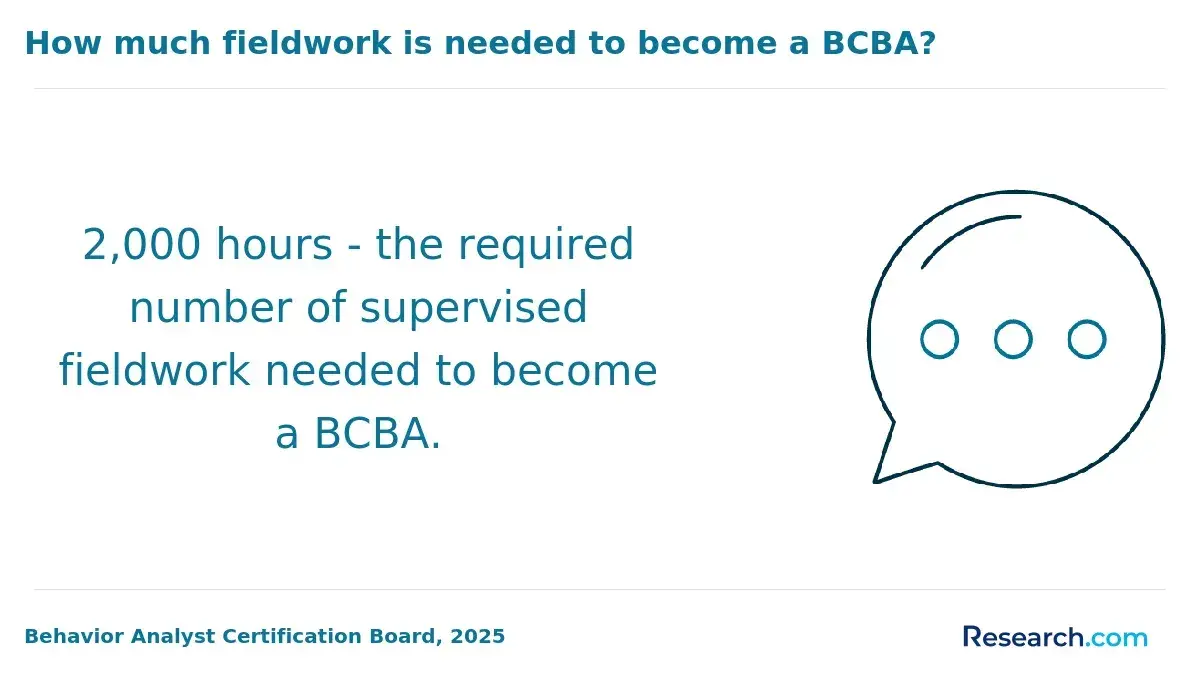
BCBA candidates must complete 1,500–2,000 hours of supervised fieldwork, depending on the fieldwork model. The two primary options are standard supervised fieldwork, which requires 2,000 hours, and concentrated supervised fieldwork, which requires 1,500 hours with more intensive supervision. Both models must be completed under a qualified supervisor, typically a BCBA or BCBA-D.
Fieldwork is where students learn to apply graduate coursework with real clients, teams, and service systems. Appropriate activities may include assessment, behavior plan development, data analysis, caregiver or staff training, treatment evaluation, and ethical decision-making. Programs usually distinguish between restricted activities, such as direct implementation, and unrestricted activities, such as assessment, program design, and supervision-related tasks.
Students may complete hours in clinical, school, home-based, community, or organizational settings, but the setting must allow appropriate behavior-analytic work and qualified supervision. Online students often complete fieldwork near where they live or work, while the university provides advising, documentation guidance, and academic expectations.
Planning matters. Candidates commonly track between 20–130 hours per month, and delays often happen when students start a job or placement before confirming whether the supervisor, client population, documentation process, and activities meet BACB standards. Before counting hours, students should have a clear supervision agreement, a reliable tracking system, and a schedule that leaves room for both coursework and fieldwork responsibilities.
Online ABA master’s programs usually separate academic instruction from local supervised experience. The coursework is delivered online, while students complete fieldwork in an approved real-world setting. This model can work well for working adults, but it requires careful coordination among the student, supervisor, employer or placement site, and university.
In many programs, students are responsible for identifying a qualified BCBA supervisor in their community. Some schools provide placement assistance, supervisor directories, practicum partnerships, or faculty advising, but students should not assume that the university will automatically place them. This is one of the most important questions to ask before enrollment.
How remote supervision is typically supported
- Video meetings: Supervisors and students may use live video sessions for feedback, case discussion, and performance review.
- Recorded sessions: With proper consent and privacy safeguards, students may record sessions for later supervisor review.
- Digital fieldwork logs: Students track hours, activities, supervision contacts, and documentation requirements electronically.
- University check-ins: Faculty or program staff may review progress, clarify requirements, and help students avoid documentation errors.
- Practicum expectations: Some programs require specific assignments that connect coursework to fieldwork, such as assessment reports, intervention plans, or data-based case reviews.
The strongest online programs make fieldwork expectations visible early. They explain when students may begin accruing hours, who qualifies as a supervisor, what documentation is required, and how to handle changes in employment or placement. Students should also ask how the program protects client confidentiality during remote observation and recorded supervision.
Online ABA master’s programs recognized for BCBA preparation are those that clearly align their graduate coursework with BACB requirements and, where applicable, include a Verified Course Sequence. Examples of institutions offering online pathways with BACB-verified coursework have included The Chicago School, Florida Institute of Technology, University of Cincinnati, and Arizona State University.
Recognition should be verified at the program level, not assumed from the institution’s reputation. A university may offer multiple ABA-related degrees, certificates, concentrations, or catalog versions, and not all of them necessarily follow the same BCBA pathway. Students should confirm the exact program name, degree level, delivery format, catalog year, and VCS information before applying.
When comparing programs, look for clear answers to these questions:
- Does the program state that its coursework supports BCBA eligibility?
- Is the Verified Course Sequence embedded in the degree or offered as a separate certificate?
- Will the school provide documentation needed for the BACB application?
- Does the program explain how students should complete supervised fieldwork?
- Are faculty members BCBAs, BCBA-Ds, researchers, or practicing behavior analysts?
- Does the curriculum include exam preparation, ethics training, and applied casework?
Prospective students who want a broader comparison can review BCBA degree programs and schools to evaluate online and in-person options across institutions.
The best online ABA master’s program is the one that fits your certification pathway, budget, schedule, supervision access, and career goal. A low tuition price is helpful, but it should not outweigh BCBA alignment, accreditation, faculty quality, and fieldwork support.
Key comparison factors
- Institutional accreditation: Confirm that the institution holds appropriate accreditation and that the degree can be used for the BCBA pathway you plan to follow.
- VCS status and coursework clarity: The program should clearly identify the courses that meet BACB coursework requirements and explain how completion is documented.
- Fieldwork support: Ask whether the school helps locate supervisors, approves placements, offers practicum coordination, or only provides general guidance.
- Faculty expertise: Programs are stronger when instructors include BCBA-Ds and experienced BCBAs engaged in research, clinical practice, supervision, or teaching.
- Program format: Compare synchronous and asynchronous coursework, full-time and part-time options, accelerated tracks, residency requirements, and assignment pacing.
- Cost and financial support: Review tuition, fees, textbooks, technology costs, fieldwork expenses, and financial aid options. Students may compare the cheapest BCBA online masters program options, but affordability should not come at the expense of certification alignment.
- Exam preparation: Strong programs connect coursework to the BCBA exam blueprint through cumulative review, mock assessments, applied case examples, and data-based feedback.
- Student support: Look for advising, technical support, writing support, career services, disability accommodations, and access to faculty.
- Licensure considerations: If your state regulates behavior analysts separately, confirm whether the program helps you understand state-specific requirements.
A practical way to compare programs is to request the degree plan, VCS information, fieldwork policy, total cost estimate, and student handbook before applying. If a program cannot clearly explain how its curriculum connects to BCBA eligibility, treat that as a warning sign.
A master’s in ABA can strengthen BCBA exam preparation because the curriculum is designed around the concepts, principles, ethics, assessment methods, and intervention procedures that appear in professional practice. When the program includes a Verified Course Sequence, students receive structured exposure to the required coursework areas instead of assembling courses on their own.
Exam readiness depends on more than completing classes. Students also need repeated practice applying concepts to cases, interpreting data, choosing appropriate interventions, and recognizing ethical risks. The most useful programs build these skills through assignments, case studies, research reviews, supervision-linked projects, and cumulative exam preparation.
How the degree builds career readiness
- Clinical judgment: Students learn to select assessments and interventions based on client needs, not generic templates.
- Data-based decision-making: Graduates are trained to evaluate progress and adjust plans when interventions are not working.
- Ethical practice: Coursework and supervision reinforce consent, dignity, confidentiality, scope of competence, and responsible supervision.
- Collaboration: ABA professionals often work with families, teachers, therapists, physicians, and support staff, so communication skills matter.
- Leadership preparation: A master’s program can prepare students for roles involving case oversight, staff training, program evaluation, and supervision.
The degree is most valuable when coursework and fieldwork reinforce each other. Students who intentionally connect what they learn in class to supervised practice are usually better prepared for both the BCBA exam and the realities of independent professional responsibility.
Graduates who complete an online ABA master’s program and become eligible for BCBA certification may qualify for roles with competitive pay, especially in areas with strong demand for behavior-analytic services. According to July 2025 data, entry-level BCBAs earn approximately $65,000 annually, while experienced professionals can exceed $90,000.
Demand is not evenly distributed across the country. States such as California, Massachusetts, Texas, New Jersey, and Florida account for roughly 40% of openings nationwide. Students who live in high-demand markets, are willing to relocate, or can work for multi-state providers may find more opportunities, but local licensure rules, employer requirements, and service funding models can affect hiring.
Common specialty areas include autism spectrum disorders (74.7%), education (11.8%), and intellectual/developmental disabilities (4.6%). These areas can lead to roles in clinics, schools, early intervention programs, residential services, community agencies, and multidisciplinary treatment teams.
Career growth may also come through specialization. Experienced BCBAs may move into clinical director roles, supervision, staff training, program evaluation, research support, school consultation, or organizational behavior management. Salary and advancement depend on experience, location, setting, caseload complexity, employer type, and whether the professional holds additional credentials or state licensure.
Should you enroll in an online ABA master’s program now, given current job market demand, career growth, and BCBA requirements
Enrolling now can be a strong choice if you are committed to becoming a BCBA, have access to appropriate supervised fieldwork, and choose a program that clearly supports the current certification pathway. Online study can be especially practical for working professionals who need to keep earning income while completing graduate coursework.
The decision should still be made carefully. Before applying, confirm that the program is accredited, that the coursework aligns with BACB expectations, that fieldwork requirements are realistic for your location and schedule, and that the total cost is manageable. Students comparing affordable online ABA masters programs should weigh tuition against supervision support, faculty access, documentation quality, and exam preparation.
You may be ready to enroll if you can answer “yes” to these questions:
- Do you understand the difference between earning the degree and becoming certified?
- Have you verified the program’s coursework pathway for BCBA eligibility?
- Do you know where and how you will complete supervised fieldwork?
- Can you balance graduate coursework, fieldwork hours, employment, and personal obligations?
- Have you reviewed state licensure or employment requirements where you plan to practice?
If those pieces are in place, an online ABA master’s program can be a practical route toward BCBA eligibility, career mobility, and long-term work in a growing behavior-analysis field.
Other Things You Should Know About Online ABA Master’s Programs
In 2027, top universities offering the best online ABA master’s programs for BCBA eligibility include the University of Cincinnati, Ball State University, and Arizona State University. These institutions provide flexible schedules, high-quality faculty, and comprehensive coursework designed to meet the BACB’s requirements.
Most online ABA master's programs for BCBA eligibility in 2027 require around 45 credit hours. These programs must align with the Behavior Analyst Certification Board (BACB) standards, ensuring graduates meet the eligibility requirements for the BCBA examination.
An online ABA master’s program should meet Behavior Analyst Certification Board, or BACB, coursework standards. Many strong programs are also aligned with ABAI accreditation or verified course sequence requirements, which helps confirm the curriculum covers the content needed for BCBA eligibility and exam preparation.
Admission requirements typically include a bachelor's degree in a related field, a minimum GPA of 3.0, letters of recommendation, and a statement of purpose. Some programs may require GRE scores. Always check specific program requirements as they can vary significantly.
- Behavior Analyst Certification Board. (2025). US employment demand for behavior analysts: 2010–2024 [Lightcast report]. https://www.bacb.com/wp-content/uploads/2025/02/Lightcast2025_250204-a.pdf Behavior Analyst Certification Board+1
- The Chicago School. (n.d.). Career development: BCBA certification exam guide. https://www.thechicagoschool.edu/insight/career-development/bcba-guide-bcba-certification-exam/ Behavior Analyst Certification Board+1
- Psychology.org. (n.d.). What is a BCBA? Meaning, career overview. https://www.psychology.org/resources/bcba-meaning-career-overview/ BH Business
- PayScale. (2025). Board Certified Behavior Analyst salary. https://www.payscale.com/research/US/Job%3DBoard_Certified_Behavior_Analyst/Salary
- McDonald, S. (2025, January 13). What is a Board‑Certified Behavioral Analyst (BCBA)? Indeed. https://www.indeed.com/career-advice/finding-a-job/what-is-a-bcba
- Dream Big Children. (2023, September 26). ABA vs BCBA: Unpacking the key differences. http://dreambigchildren.com/blog/aba-vs-bcba-unpacking-the-key-differences/
- Autism Speaks. (n.d.). Applied Behavior Analysis (ABA). https://www.autismspeaks.org/applied-behavior-analysis