2027 BCBA Application Deadlines: When to Apply to Online Programs

Co-Founder and Chief Data Scientist
Choosing an online BCBA pathway is not just a program decision; it is a timing decision. Application deadlines determine when you can begin coursework, when you can start or document supervised fieldwork, and when you may become eligible to sit for the BCBA exam. For working professionals, teachers, psychology graduates, and career changers, missing a deadline can push certification plans back by an entire term.
This guide explains how online BCBA application timelines usually work, what materials applicants should prepare, how to compare certification pathways, and what to check before committing to a program. It also covers accreditation, admissions requirements, program length, curriculum, cost, careers, salary outlook, and job demand so you can plan with fewer surprises.
Key Things You Should Know
- BCBA application deadlines for 2026 online programs typically fall between January and March, aligning with BACB exam testing windows and allowing optimal scheduling for supervised experience completion.
- Many accredited programs require applications 6 months before course start dates; missing deadlines can delay certification by a year, so early preparation is essential.
- For 2026, demand for BCBA online programs has risen 15%, intensifying competition and emphasizing the need to submit complete materials promptly to secure admission.
What are BCBA application deadlines for online programs?
BCBA application deadlines for online programs vary by school, but most follow one of two models: fixed term-based deadlines or rolling admissions. Fixed-deadline programs usually accept applications for spring, summer, or fall starts, with common deadline windows in early spring (January-March), late spring (May-June), and late summer or early fall (August-September). Rolling-admission programs may accept applications throughout the year, but applicants still need to submit transcripts, recommendations, and other documents early enough to be reviewed before the next start date.
The most important point is that a program deadline is not the only deadline that matters. Applicants also need enough time to request transcripts, confirm prerequisites, verify that coursework aligns with BACB standards, and plan supervised fieldwork. A late transcript or missing recommendation can delay enrollment even if the application form itself was submitted on time.
| Deadline type | How it works | Best for | Planning risk |
| Fixed application deadline | The school reviews applications after a published date for a specific cohort or term. | Applicants who can prepare materials well in advance and want a clear start date. | Missing the date may delay enrollment by several months. |
| Rolling admissions | The school reviews applications as they are received until seats are filled or a term closes. | Applicants who need flexibility or are comparing multiple start dates. | Programs can still fill early, and document review may take longer than expected. |
| Priority deadline | Applicants who submit by the early date may receive earlier review or stronger consideration. | Applicants seeking competitive cohorts, advising access, or financial aid planning time. | Waiting for the final deadline can reduce scheduling options. |
Most applicants should start preparing at least one term before they hope to enroll. That gives time to compare programs, request official transcripts, ask for letters of recommendation, review tuition and aid options, and confirm whether the program supports the certification timeline they want.
Before applying, create a simple deadline tracker with the following items:
- Program application deadline and preferred start term
- Official transcript request date and expected delivery time
- Recommendation letter deadlines
- Personal statement or essay requirements
- Prerequisite coursework review, if required
- Fieldwork or supervision planning requirements
- Financial aid, scholarship, or employer reimbursement deadlines
If you are comparing lower-cost options, review affordable accredited online BCBA programs and confirm each school’s current deadline directly with the admissions office.
Which online programs offer BCBA certification pathways?
Online BCBA certification pathways are typically offered through graduate applied behavior analysis programs, psychology or education departments, or post-master’s certificate programs. The right option depends on your current degree level, whether you need a full master’s program or only certification coursework, and how you plan to complete supervised fieldwork.
The University of Washington's online ABA program is one example of an online pathway with a coursework sequence verified by the Behavior Analyst Certification Board (BACB) and a 74% first-time BCBA exam pass rate for recent candidates. Other institutions such as Florida Institute of Technology, Endicott College, and Arizona State University also offer BACB-approved curricula that are designed to meet exam eligibility requirements.
Program format matters as much as the school name. Some online BCBA pathways are fully asynchronous, which can work well for students who need maximum scheduling flexibility. Others include scheduled live sessions, cohort discussions, or synchronous supervision-related activities, which can be better for students who want structure and regular faculty interaction.
| Program type | Who it is usually for | What to check before applying |
| Master’s in applied behavior analysis | Students who need a graduate degree and BCBA-aligned coursework. | Curriculum sequence, fieldwork support, faculty qualifications, and total cost. |
| Graduate certificate or post-master’s pathway | Applicants who already hold a qualifying graduate degree and need BCBA coursework. | Whether prior coursework and degree credentials satisfy certification requirements. |
| Education- or psychology-based ABA concentration | Teachers, counselors, or psychology graduates seeking behavior analysis training. | Whether the concentration is specifically aligned with BCBA eligibility, not just ABA-related topics. |
Applicants should not assume that any online ABA program automatically leads to BCBA eligibility. Before submitting an application fee, confirm the program’s coursework status, degree requirements, fieldwork expectations, and whether the school provides advising specifically for certification planning.
Working professionals should also ask how the program handles practicum or supervised experience. A pathway that integrates supervision planning, practicum guidance, or employer-based fieldwork coordination may be more practical than a program that leaves students to arrange everything independently.
For a broader comparison of in-person and online options, use this behavioral analysis degree resource to evaluate curriculum, delivery format, admissions expectations, and certification fit.
What accreditation is required for BCBA programs?
For BCBA preparation, applicants need to distinguish between institutional accreditation, behavior analysis program recognition, and BACB-aligned coursework. A college or university should be properly accredited as an institution, but that alone does not mean its coursework will satisfy BCBA eligibility requirements. The behavior analysis curriculum must also align with BACB standards through an approved or recognized pathway.
Many applicants look for coursework connected to BACB's Verified Course Sequence (VCS) requirements or programs recognized through behavior analysis accreditation processes. These requirements cover core areas such as ethical considerations, behavioral assessment, intervention strategies, and measurement. If coursework is not accepted for the relevant certification pathway, candidates may have to take additional classes, delay exam eligibility, or choose a different program.
Online, hybrid, and in-person formats can all be legitimate, but delivery format is not the deciding factor. The key question is whether the coursework and degree pathway meet current certification requirements. Applicants should verify this directly with the program and through official certification resources rather than relying only on marketing language.
Use this checklist before applying:
- Confirm that the institution itself is accredited.
- Ask whether the coursework is aligned with BACB certification requirements.
- Verify whether the program is connected to a Verified Course Sequence (VCS), ABAI accreditation, or another accepted pathway.
- Ask how the school documents coursework completion for certification purposes.
- Confirm whether fieldwork support is included, optional, or fully student-arranged.
Interest in accredited remote programs continues to grow. For example, the University of Washington reported a 19% rise in completed applications, increasing from 72 to 86 over recent academic years. That growth makes it even more important to verify program status early, because competitive online options may fill quickly.
Students comparing graduate-level options can review programs in the master's in applied behavior analysis online category, but they should still confirm current accreditation and certification alignment with each school before applying.
BCBA admission requirements depend on the type of online program. Full master’s programs commonly require a bachelor's degree or higher from an accredited institution, while post-master’s certificate pathways typically require a completed graduate degree. Common academic backgrounds include psychology, education, special education, counseling, social work, and related fields, although exact requirements vary by school.
Most online BCBA pathways ask for some combination of transcripts, a minimum GPA, letters of recommendation, a personal statement, and a resume. Some programs may require prerequisite coursework or professional experience with behavioral, educational, or clinical populations. GRE scores are less commonly requested, but applicants should check each school’s current policy rather than assuming they are waived.
Many programs use a minimum GPA, typically 3.0 or above, as part of the admissions review. A lower GPA does not always make admission impossible, but applicants may need to provide stronger evidence of readiness, such as relevant work experience, strong recommendations, or recent graduate-level coursework.
Applicants should also plan for supervised experience requirements tied to BCBA certification. Candidates may need between 1500 to 2000 hours under a qualified BCBA supervisor. These hours are not just a graduation detail; they affect your weekly schedule, employment choices, and overall timeline to certification.
| Requirement | What it means for applicants | Common mistake to avoid |
| Accredited degree | You may need a bachelor's degree or higher, depending on the pathway. | Applying before confirming whether your degree level fits the program. |
| Transcripts | Official records are used to verify prior coursework and GPA. | Waiting until the deadline week to request them. |
| Recommendations | Faculty or supervisors may need to comment on your readiness for graduate study and behavioral work. | Choosing recommenders who cannot speak to your relevant skills. |
| Personal statement | The program may want to understand your goals, client population interests, and preparation. | Submitting a generic essay that does not explain why BCBA training fits your career plan. |
| Supervision planning | Some programs expect students to identify or arrange fieldwork settings. | Assuming online coursework automatically includes supervised fieldwork. |
Applicants should confirm that the chosen program is accredited by the Association for Behavior Analysis International (ABAI), where applicable, and aligns with BACB coursework expectations. For example, SUNY Empire State University requires 42 credits for its MS in ABA program, with tuition around $19,782, which gives applicants a concrete basis for comparing workload and cost.
To compare curriculum, admissions requirements, and costs across programs, review the best applied behavior analysis programs and then verify the latest requirements with each institution.
Online BCBA programs generally take 12 to 24 months, depending on whether the student enrolls full time or part time, enters with previous graduate coursework, and can complete supervised fieldwork efficiently. Accelerated tracks can be completed in about one year, while part-time options for working professionals may take two years or more.
The timeline is usually shaped by three separate pieces: coursework, degree requirements, and supervised fieldwork. A student in a post-master’s certificate may finish faster than a student completing a full master’s degree, but both still need to satisfy certification-related requirements before becoming eligible for the BCBA exam.
| Timeline factor | How it can shorten the program | How it can extend the program |
| Enrollment pace | Full-time study can move students through coursework faster. | Part-time study may be necessary for working students and caregivers. |
| Prior coursework | Relevant completed coursework may reduce the number of classes needed. | Missing prerequisites may add extra terms. |
| Program type | Post-master’s BCBA certification paths may be shorter. | Full master’s programs usually require more credits and broader degree requirements. |
| Supervised fieldwork | A well-planned placement can help students build hours consistently. | Limited supervision access can delay certification readiness. |
Supervised fieldwork is a major timing factor because BCBA certification requires between 1,500 and 2,000 hours. Students who already work in an appropriate setting may find it easier to build hours, while those who need to secure a new placement should begin planning before classes start.
Time investment should be evaluated alongside program quality, certification alignment, supervision support, and career goals. The median annual wage for behavior analysts was $77,060, with top professionals earning over $127,000 according to the U.S. Bureau of Labor Statistics. Those potential outcomes make the timeline worthwhile for many students, but only if the program keeps them on a clear path to eligibility.
The BCBA coursework curriculum is designed to prepare students to apply behavior analysis ethically, collect and interpret data, assess behavior, design interventions, and evaluate outcomes. Strong programs do more than prepare students for an exam; they teach students how to make defensible clinical and educational decisions with real clients.
Core coursework commonly includes:
- Foundations of Behavior Analysis, including behavioral principles, terminology, and measurement
- Ethics and Professional Conduct, with emphasis on applying professional standards in real cases
- Experimental Methods in Behavior Analysis, including research design and data analysis
- Behavior-Change Procedures, covering intervention selection, implementation, and monitoring
- Assessment, including functional behavior assessments and skill evaluations
- Behavioral Intervention, with evidence-based approaches for diverse populations
Many online programs also include coursework or assignments related to supervision, consultation, communication with families and teams, and service delivery across schools, clinics, homes, and community settings. These areas matter because many BCBAs eventually supervise staff, collaborate with educators or clinicians, and explain data-based decisions to non-specialists.
Typically, the total coursework comprises about 270 classroom hours with designated content areas. Applicants should ask how those hours are distributed across required topics and whether the program provides clear documentation needed for certification review.
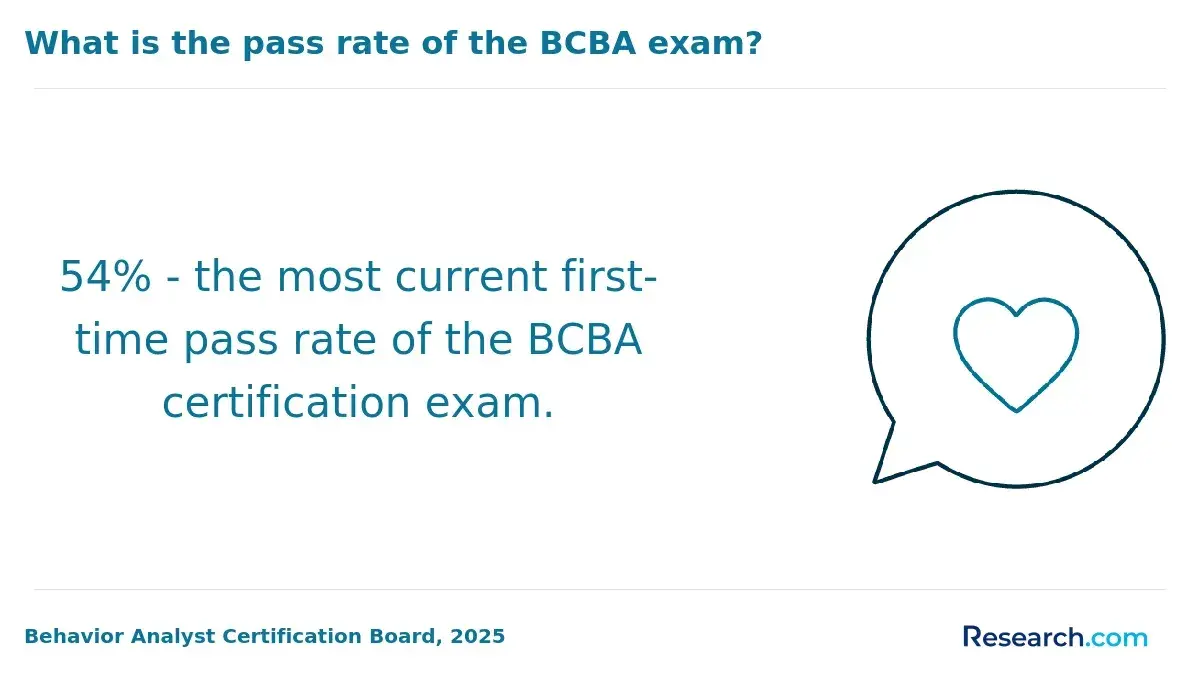
The global average first-time BCBA exam pass rate is approximately 65%, which makes curriculum quality important. Pass rates should not be the only factor in choosing a program, but they can help applicants ask better questions about academic support, exam preparation, faculty involvement, and student outcomes.
Before enrolling, review course descriptions rather than relying only on program titles. A strong curriculum should clearly show how coursework connects to ethical practice, assessment, intervention, measurement, and supervision in applied behavior analysis.
Online BCBA programs in 2026 typically cost between $10,000 and $25,000 for the entire course of study. Public universities and programs designed for working professionals may be closer to $10,000, while private or specialized institutions may charge upwards of $20,000. Some schools use per-credit pricing, with rates ranging from $500 to $1,200 depending on accreditation, institution type, and program structure.
Tuition is only one part of the total cost. Applicants should also budget for application fees, textbooks, online learning or technology fees, exam-related fees, background checks where required, and any travel or time-off costs connected to fieldwork. Supervision can also affect affordability, especially if a student must pay for supervision separately or complete unpaid practicum hours.
The Behavior Analyst Certification Board (BACB) requires 2,000 hours of supervised fieldwork, usually completed over two years post-graduation by about 85% of certificants (Behavior Analyst Certification Board Handbook, 2025 edition). Because fieldwork can influence both cost and schedule, applicants should ask whether the program helps students locate supervisors or expects them to arrange supervision independently.
| Cost category | Why it matters | Question to ask |
| Tuition | This is usually the largest direct cost. | Is pricing listed per credit, per course, or for the full program? |
| Fees | Online programs may charge technology, registration, or student service fees. | Are all mandatory fees included in the published cost estimate? |
| Books and materials | Course materials can add to each term’s expenses. | Are digital materials included or purchased separately? |
| Supervision | Fieldwork may require paid supervision or unpaid work hours. | Does the program provide placements, supervision contacts, or only advising? |
| Financial aid | Aid availability may differ between degree and certificate programs. | Is the program eligible for federal aid, scholarships, or employer reimbursement? |
Financial aid, scholarships, payment plans, and employer tuition reimbursement can reduce out-of-pocket costs. However, applicants should compare net cost, not just advertised tuition. A cheaper program that lacks advising or supervision support may become more expensive if it causes delays, extra coursework, or additional supervision expenses.
BCBA certification can lead to roles in applied behavior analysis, education, healthcare, autism services, developmental disability services, mental health programs, residential treatment, and private practice. BCBAs often design, monitor, and revise behavior intervention plans using data-based decision-making.
Common BCBA career paths include:
- Behavior interventionist or therapist, supporting behavior plans that improve communication, adaptive skills, and social functioning
- Clinical director or program supervisor, overseeing treatment programs, staff training, and service quality
- School-based behavior analyst, collaborating with educators on individualized education programs (IEPs) and classroom supports
- Consultant, advising organizations on behavioral health, organizational behavior management, or staff performance
Some BCBAs work directly with clients every day, while others move into supervision, program design, training, research, policy, or higher education. The best career fit depends on the populations you want to serve, your tolerance for documentation and compliance work, and whether you prefer one-on-one intervention, team consultation, or leadership responsibilities.
| Work setting | Typical focus | Useful strengths |
| Schools | Student behavior support, IEP collaboration, teacher consultation | Communication, classroom systems, special education familiarity |
| Clinics | Assessment, treatment planning, staff supervision, family training | Clinical judgment, data analysis, supervision skills |
| Home and community services | Skill-building and behavior support in natural environments | Flexibility, family collaboration, practical intervention design |
| Private practice or consulting | Independent services, organizational consulting, specialized interventions | Business judgment, documentation discipline, niche expertise |
Demand varies by state and service system. California employs over 4,200 BCBAs, accounting for 15% of the national workforce, which shows how strongly geography can influence opportunity. Applicants who know where they want to work should research local employers, state requirements, insurance rules, and service settings before selecting a program.
Employers commonly value supervised experience, assessment skills, intervention planning, data analysis, ethical decision-making, and the ability to communicate clearly with families, educators, technicians, and clinical teams.
The BCBA salary outlook for 2026 remains strong because behavior analysts are used across schools, healthcare organizations, autism service providers, private clinics, and consulting settings. Entry-level board certified behavior analysts (BCBAs) generally earn between $60,000 and $75,000 annually. Experienced professionals, especially those in supervisory or clinical director roles, can see salaries rise to $80,000-$100,000.
Salary depends heavily on location, employer type, experience, caseload complexity, supervision duties, and specialization. Urban centers and shortage areas may offer stronger compensation, while roles with significant travel, crisis support, or leadership duties may pay differently from school-based or entry-level clinical positions.
Recent certification pathway updates, including the shift to Pathway 2 coursework attestation, have shortened the time to certification. The Behavior Analyst Certification Board Implementation Report (2026) reveals 92% of graduates from attested programs benefited from faster applications early in 2026. For applicants, the practical takeaway is clear: choosing a program that understands current certification processes can reduce administrative delays and help candidates enter the workforce sooner.
Specialization can also affect earning potential. BCBAs working with autism spectrum disorder clients or in organizational behavior management often command higher wages. Additional credentials, supervisory responsibilities, private consulting, and leadership roles may increase income beyond typical salaried positions.
Students who want to improve long-term salary potential should look for programs that build strong assessment, supervision, data interpretation, and communication skills. These competencies are often what separate entry-level practitioners from candidates ready for senior clinical or management roles.
What is the job demand for BCBAs?
Job demand for Board Certified Behavior Analysts (BCBAs) is strong across education, healthcare, private clinics, community agencies, and autism service providers. The U.S. Department of Education projects a 28% growth in demand for BCBAs in schools by 2030, reflecting the need for professionals who can design, implement, and monitor behavior intervention plans.
Schools are a major source of demand, but they are not the only option. BCBAs also work in hospitals, outpatient clinics, early intervention programs, residential settings, telehealth services, and private practice. Demand is especially tied to the need for evidence-based behavioral supports for individuals with autism and other developmental disorders.
Applicants can strengthen job prospects by building skills that employers consistently need, including verbal behavior therapy, early intervention, telehealth platforms, data-driven treatment planning, regulatory compliance, and staff supervision. Experience with assessment tools and applied behavior analysis software commonly used in schools and clinics can also make candidates more competitive.
Program choice can affect employability. Students should prioritize online BCBA pathways with supervised fieldwork planning, BACB-aligned coursework, practical assignments, and faculty or advising support. A program that is convenient but weak on certification planning may create avoidable delays after graduation.
For the strongest career preparation, choose a program based on four factors: certification alignment, fieldwork support, curriculum depth, and employer relevance in the region where you plan to work.
Other Things You Should Know About Applied Behavior Analysis
The BACB requires 2,000 Supervised Fieldwork hours or 1,500 Concentrated Supervised Fieldwork hours for BCBA eligibility. Hours must be completed under an approved supervisor and documented in line with BACB fieldwork standards before you can apply for the certification exam.
Yes, individuals with non-behavioral science degrees can pursue certification by completing the required approved coursework in applied behavior analysis. They must ensure their course sequence meets the Behavior Analyst Certification Board (BACB) standards and complete supervised fieldwork. Meeting these requirements allows them to apply for the BCBA exam regardless of their original degree field.
Supervised experience involves working directly under a qualified BCBA to gain hands-on practice in behavior analytic assessment and intervention. Typically, candidates must complete a set number of hours in this fieldwork, which may be practicum, intensive, or concentrated experience. Supervision ensures ethical practice and skill development before obtaining certification.
Ethics are fundamental in applied behavior analysis, ensuring client dignity, confidentiality, and informed consent. Practitioners must follow the BACB's Professional and Ethical Compliance Code, which guides responsible and respectful treatment. Maintaining objectivity and avoiding harm are central ethical principles throughout all phases of intervention.
- ABA Certification Explained: RBT, BCaBA, BCBA, BCBA-D https://onlinecounselingprograms.com/mental-health-careers/how-to-become-behavior-analyst-bcba/aba-certification-explained/
- BCBA® Certification Prep – Online ABA Certificate | PCOM https://www.pcom.edu/academics/programs-and-degrees/applied-behavior-analysis/aba-certificate/bcba-certification.html
- BCBA Career Path to Take https://www.besteveraba.com/blog/bcba-career-path-to-take
- Certification Pathways, VCSs, & Accreditation: A Student's Guide https://www.abatechnologies.com/blog/certification-pathways-vcss-accreditation-a-students-guide
- Exploring the Roadmap to a Rewarding BCBA Career - apricott ABA https://www.apricott.com/resources/bcba-career-path-to-take
- Behavior Analysis Jobs - ABAI Career Center https://job.abainternational.org/
- Career Types in Applied Behavior Analysis | Regency ABA https://regencyaba.com/career-types-in-applied-behavior-analysis/
- BCBA Jobs and Salary: Demand for Behavior Analysts Continues to Grow, New Report Finds https://www.abamatrix.com/bcba-jobs-and-salary-demand-for-behavior-analysts-continues-to-grow-new-report-finds/
- Board-Certified Behavior Analyst (BCBA) Salary Guide â Trusted Health https://www.trustedhealth.com/allied-career-guide/behavior-analyst/salary-guide
- Is BCBA Certification Worth It? Expert Analysis | Level Ahead https://www.levelaheadaba.com/blog/is-bcba-certification-worth-it