2027 How to Tell if an ABA Program Offers Real Student Support

Co-Founder and Chief Data Scientist
The hard part of choosing an applied behavior analysis (ABA) program is not only comparing tuition, format, or course names. It is determining whether the program will actually help you finish the degree, meet certification requirements, build supervised practice skills, prepare for the BCBA exam, and move into an ABA-related role.
Strong student support is especially important in ABA because the field is competency-based. Students must learn technical concepts, apply them ethically with real clients or cases, document progress with data, and often balance coursework with fieldwork, employment, and certification timelines. A program that leaves students to figure out advising, supervision, exam preparation, or career planning on their own can make an already demanding path harder than it needs to be.
This guide explains how to evaluate whether an ABA program offers meaningful support rather than vague promises. You will learn what to ask about accreditation, curriculum, faculty access, online support, advising, mentoring, career services, certification preparation, BCBA exam outcomes, and alumni success metrics before you enroll.
Key Things You Should Know
- Effective ABA programs provide personalized support through regular progress assessments, with 78% of accredited programs using data-driven adjustments to enhance student outcomes as of 2025.
- Accessible mentorship and qualified faculty with BCBA credentials are crucial indicators, with 85% of top programs requiring direct faculty engagement for successful certification.
- Transparent communication about student resources, including mental health services and career guidance, correlates with a 40% higher student satisfaction rate in ABA programs nationwide.
What signs show an ABA program offers real student support?
A supportive ABA program does more than assign an advisor and publish a student handbook. Real support is visible in how often students receive feedback, how clearly the program tracks progress, how quickly staff respond when students fall behind, and how well coursework connects to certification and field expectations.
One warning sign is a program that describes support in broad terms but cannot explain what students actually receive. Strong programs can tell you who advises students, how fieldwork questions are handled, how struggling students are identified, and what happens when a student needs academic, technical, or professional help.
The broader education context also shows why support should not be assumed. The RAND Report from Partnership for Student Success (2025) found that only 45% of U.S. K-12 public schools offered high-intensity, ABA-like supports in 2024-25, down from 52% the previous year. While this data is about schools rather than graduate ABA programs, it highlights a useful point for applicants: intensive support requires staffing, planning, and sustained resources.
Practical signs of meaningful ABA student support
- Students receive individualized academic planning tied to degree requirements, certification goals, and fieldwork timelines.
- Faculty or supervisors give regular, specific feedback on case analysis, data interpretation, intervention planning, and ethical decision-making.
- The program collects performance data, such as course progress, competency checks, fieldwork milestones, and exam preparation outcomes.
- Students can access instructors, advisors, supervisors, and support staff through clearly defined communication channels.
- Support addresses academic, professional, technical, behavioral, and wellness needs rather than treating coursework as the only challenge.
- The program explains what happens if a student fails a course, loses a fieldwork site, changes pace, or needs help preparing for certification.
Questions to ask before applying
- How often do students meet with academic advisors or faculty mentors?
- Who helps students understand certification and supervised fieldwork requirements?
- What support is available for students who are struggling in statistics, assessment, ethics, or intervention design?
- How does the program monitor whether students are on track to graduate and pursue certification?
- Are support services available to online, part-time, and working students?
Programs that rely only on generic course shells, automated reminders, or occasional office hours may not provide enough structure for students preparing for clinical or educational ABA roles. If you are comparing online pathways, reviewing options for a BCBA degree online can help you identify programs that combine affordability with the support needed for certification-focused study.
How can you verify ABA program accreditation and legitimacy?
To verify an ABA program’s legitimacy, do not rely only on marketing language. Check whether the institution is properly accredited, whether the ABA coursework is aligned with current certification expectations, and whether the program clearly explains how students meet educational and supervised experience requirements.
The Behavior Analyst Certification Board (BACB) sets certification requirements, while the Association for Behavior Analysis International (ABAI) is a key organization to review when evaluating behavior analysis program quality. A legitimate program should be transparent about its institutional accreditation, ABAI status if applicable, curriculum alignment, faculty qualifications, and fieldwork support. If a program claims recognition, accreditation, or certification alignment, verify that claim through official sources rather than assuming the website is accurate.
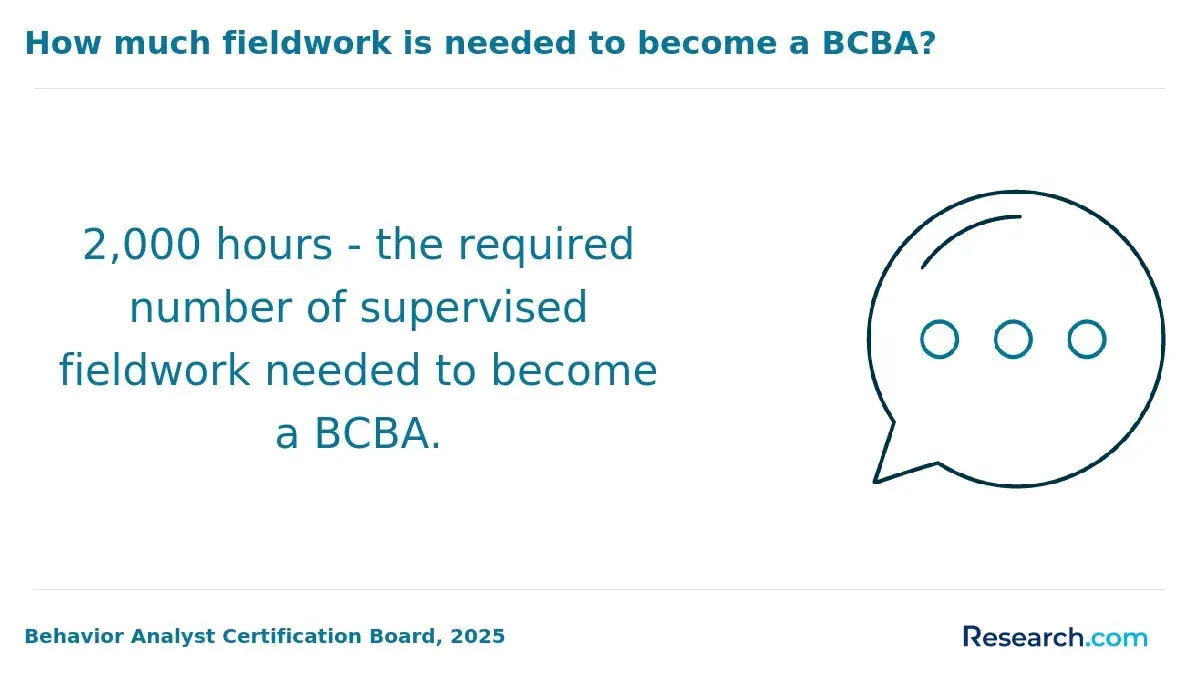
Students should also confirm whether the program’s coursework and advising match BACB requirements for the credential they plan to pursue. Supervisors involved in fieldwork should hold appropriate current credentials, such as BCBA or BCBA-D, when required. Programs affiliated with reputable universities are usually easier to verify because accreditation, faculty listings, catalogs, and student outcomes are more publicly accessible.
Demand for ABA-related support is also increasing in many settings. The RAND Report, Partnership for Student Success, 2025, found that 30-40% of school principals highlighted growing demand for high-intensity supports like ABA since 2024. For students, that makes legitimacy especially important: a program should prepare graduates for ethical, supervised, standards-based practice rather than only offering a fast or convenient credential pathway.
Legitimacy checklist for ABA applicants
- Confirm the institution’s accreditation through an official accreditor database or the school’s institutional accreditation page.
- Review whether the ABA program has ABAI accreditation or recognition, if the program claims it.
- Check how the curriculum maps to BACB coursework expectations for your intended credential.
- Ask whether faculty and supervisors hold current BCBA or BCBA-D credentials where relevant.
- Request details on supervised fieldwork guidance, approved settings, documentation, and oversight.
- Look for published student outcomes, including graduation, employment, and BCBA exam pass rate information when available.
Red flags that require closer scrutiny
- The program uses terms such as “certified,” “approved,” or “accredited” without naming the relevant organization.
- Faculty credentials are missing, vague, or difficult to verify.
- The school cannot explain how students prepare for certification eligibility.
- Fieldwork support is advertised but not documented in writing.
- The program promises quick career outcomes without discussing supervision, licensure, certification, or state requirements.
Before committing, compare program claims with independent resources such as behavioral analysis degree guides so you understand how accreditation, certification preparation, and program legitimacy fit together.
What curriculum features indicate strong ABA training?
A strong ABA curriculum teaches more than terminology. It helps students move from understanding principles to applying them in assessment, intervention design, data-based decision-making, ethics, and supervision-ready practice. The best indicator is not the number of courses alone but whether the curriculum builds measurable competence over time.
High-quality ABA training should be aligned with BACB expectations and should include systematic instruction in behavior assessment, skill acquisition, behavior reduction, data collection, experimental design, ethics, and professional practice. Students should also learn how to interpret client data, revise interventions, communicate with families or teams, and recognize when a case requires consultation or referral.
Curriculum features to look for
- Clear mapping between courses and BACB-related content areas.
- Repeated practice with functional behavior assessment, behavior intervention planning, and progress monitoring.
- Training in data collection, visual analysis, treatment integrity, and outcome evaluation.
- Ethics instruction embedded across applied assignments, not isolated in one course.
- Exposure to client diversity, cultural responsiveness, disability contexts, and interdisciplinary collaboration.
- Case-based assignments that require students to justify decisions using evidence and data.
- Preparation for supervised fieldwork expectations and professional documentation.
Effective programs often include evidence-based teaching methods such as discrete trial training, natural environment teaching, and functional communication training. However, a program should not present techniques as one-size-fits-all solutions. Students need to learn when an approach is appropriate, how to individualize it, how to evaluate outcomes, and how to practice within ethical boundaries.
Academic support is also part of curriculum quality. The RAND Report on the Partnership for Student Success (2025) reported that schools offering high-intensity tutoring or mentoring in 2024-25 saw a 20% increase in students served despite federal funding declines. For ABA students, the lesson is practical: programs that build mentoring, tutoring, and competency checks into the learning model are more likely to catch problems before they affect fieldwork or exam readiness.
Curriculum questions applicants should ask
- How does the program assess clinical and conceptual competence throughout the degree?
- Are students given structured feedback on assessment reports, intervention plans, and data displays?
- Do courses use current research literature and applied case examples?
- How does the program prepare students for the BCBA exam without reducing training to test prep?
- Are online students given the same access to faculty feedback and applied learning activities as campus students?
If you are comparing flexible graduate options, review applied behavior analysis master programs with attention to both speed and substance. A faster program is only a good choice if it still provides enough practice, feedback, advising, and certification-focused preparation.
Student-to-faculty ratio matters in ABA because students need detailed feedback on technical, ethical, and applied work. A program can have strong content but weak support if faculty are responsible for too many students to review assignments carefully, meet individually, or guide fieldwork questions.
Effective student-to-faculty ratios indicating quality ABA program support typically range from 10:1 to 20:1. In that range, faculty are more likely to know students’ progress, identify misunderstandings, and provide meaningful feedback. Programs with ratios above 25:1 may still deliver lectures efficiently, but they risk weakening mentorship, case discussion, and individualized academic support. Ratios below 10:1 may indicate a more intensive environment, which can benefit students who need closer coaching or more hands-on learning.
| Student-to-faculty ratio | What it may mean for ABA support | What to verify |
| Below 10:1 | Potentially intensive mentoring and frequent feedback. | Whether the low ratio applies to the ABA program itself, not just the institution overall. |
| 10:1 to 20:1 | Often a practical range for balancing access, discussion, and individualized guidance. | How often students meet with faculty and who reviews applied assignments. |
| Above 25:1 | Support may depend more heavily on teaching assistants, group feedback, or self-paced modules. | Whether students still receive direct faculty mentoring and fieldwork-related guidance. |
A 12:1 ratio, for example, may allow instructors to review student case conceptualizations in depth. A 20:1 ratio may work well for lecture-based content if students also receive field supervision, discussion sections, and timely individualized feedback. The key is not the ratio by itself but how faculty time is used.
Prospective students should ask whether published ratios include adjuncts, teaching assistants, or faculty outside the ABA program. They should also ask how many students each advisor, thesis chair, practicum coordinator, or faculty mentor supports. A low classroom ratio does not guarantee strong fieldwork support if supervision questions are handled elsewhere.
Evidence for ABA depends on qualified implementation. Cross River Therapy reports that 48% of children with autism succeeded in regular classrooms when prescribed ABA therapy early. For students, that underscores why direct faculty guidance matters: learning ABA responsibly requires more than watching lectures or completing quizzes.
Students comparing flexible graduate options can review masters in ABA online programs and ask each school how faculty access, supervision guidance, and applied feedback are delivered in practice.
Online ABA programs provide student support through a combination of academic advising, faculty access, supervised fieldwork guidance, technical help, peer interaction, and career planning. The strongest programs do not simply place campus courses into an online platform. They design support around the realities of distance learners, many of whom are working adults balancing coursework, fieldwork, and family responsibilities.
Core support features in strong online ABA programs
- Dedicated advisors who help students plan courses, understand deadlines, and stay aligned with certification goals.
- Faculty mentors, often BCBAs or professionals with equivalent expertise, who clarify concepts and connect coursework to practice.
- Live webinars, virtual office hours, and discussion sessions for real-time questions and case-based learning.
- Recorded demonstrations, case examples, simulations, and applied assignments that support skill development.
- Technical support for the learning platform, video tools, proctoring systems, and digital library access.
- Peer forums or cohort groups that reduce isolation and encourage professional discussion.
- Administrative support for enrollment, financial aid, registration, and documentation requirements.
Online support should be predictable. Students should know how quickly instructors respond, when office hours are offered, how urgent issues are handled, and who to contact for academic versus technical problems. A program that advertises flexibility but offers limited evening, weekend, or asynchronous support may be difficult for working students.
ABA also requires applied competence, so online students should ask how the program handles practice-based learning. Useful online models may include video analysis, structured case reviews, remote supervision discussions, interactive data exercises, and feedback on intervention plans. These tools do not replace appropriate fieldwork where required, but they can strengthen preparation when used well.
Given that ABA therapy represents 45% of successful long-term autism treatments according to the U.S. Surgeon General's report, online programs should be especially careful to emphasize ethical practice, evidence-based intervention, and supervised skill development. Convenience should not come at the expense of professional readiness.
Questions to ask an online ABA program
- Are live sessions required, optional, or recorded?
- How do students receive feedback on applied assignments?
- Who helps online students interpret certification and supervised fieldwork requirements?
- What support is available outside standard business hours?
- How does the program build community among online students?
Top ABA programs treat career support as part of professional preparation, not as an optional service students use at the end of the degree. Because ABA roles may exist in schools, clinics, autism service agencies, hospitals, residential programs, research settings, and consulting organizations, students need guidance on matching their training, certification goals, and preferred population with realistic job paths.
Effective career services begin early. Students should receive help understanding the difference between ABA-related job titles, certification-dependent roles, supervised fieldwork opportunities, and positions that may require state-specific licensure or additional credentials. Career staff should also understand the ABA labor market well enough to review resumes and interview answers for behavior analysis roles, not just generic graduate employment.
Career services that signal strong ABA support
- ABA-specific career counseling for clinical, educational, research, supervisory, and organizational pathways.
- Resume, cover letter, and portfolio review tailored to fieldwork, assessment, data collection, and intervention experience.
- Guidance on practicum, internship, or fieldwork sites in community, school, healthcare, or agency settings.
- Job boards featuring local, regional, remote, and hybrid ABA-related opportunities.
- Mock interviews using ABA-specific scenarios, ethical questions, and case discussion prompts.
- Mentorship from practicing behavior analysts who can explain certification, supervision, and early-career decisions.
- BCBA exam planning and continuing education guidance for students pursuing certification.
- Alumni career services that remain available after graduation.
Career support is especially important because student services can be vulnerable during budget pressures. Nearly 30% of higher education institutions expect significant budget cuts to student services, according to Every Learner Everywhere, Driving Toward a Degree 2025 report. Applicants should therefore ask whether ABA career services are dedicated, routinely available, and staffed by people who understand the field.
Questions to ask career services
- How many ABA-specific employers recruit from the program?
- Does the program help students locate supervised fieldwork opportunities, or must students find them independently?
- Are career services available to online and part-time students?
- Do alumni receive job search or certification-related support after graduation?
- Can the program share employment outcomes for recent graduates?
A strong career services office will be candid. It should not guarantee employment or certification. Instead, it should help students make informed choices, document their skills, prepare for interviews, understand credential requirements, and connect with appropriate professional networks.
ABA certifications that involve coursework, supervised experience, ethical practice, and exam preparation require strong program support. Students pursuing Board Certified Behavior Analyst (BCBA) or Board Certified Assistant Behavior Analyst (BCaBA) credentials benefit from programs that provide structured advising, supervision guidance, competency feedback, and exam preparation aligned with BACB expectations.
Doctoral-level recognition, such as BCBA-D, also benefits from advanced support. Students at that level may need mentoring in research, leadership, supervision, interdisciplinary collaboration, complex case consultation, and professional ethics. The higher the credential goal, the more important it becomes to have faculty who can guide both technical mastery and professional judgment.
Support matters because certification is not only an academic milestone. Candidates must understand eligibility pathways, document supervised experience correctly, apply behavior analytic principles competently, and prepare for high-stakes assessment. A student who completes coursework but lacks supervision guidance or exam preparation may face delays, added costs, or gaps in readiness.
Research shows that only 20-30% of students needing high-intensity supports like ABA actually receive proper intervention. This reinforces the importance of programs that prepare future practitioners to deliver services responsibly, especially through hands-on practice, feedback, and exposure to varied client needs.
Certification-focused support to look for
- Structured supervision guidance that helps students understand BACB eligibility requirements.
- Clear explanations of the differences among BCBA, BCaBA, and BCBA-D pathways.
- Opportunities to learn across varied client settings and service models.
- Regular evaluations of skill development in assessment, intervention, data collection, and ethics.
- Workshops or review sessions that connect coursework to certification exam content.
- Mentoring on professional documentation, scope of competence, and ethical decision-making.
Applicants should be cautious if a program talks about certification in general terms but does not provide written guidance. Certification rules can change, and requirements may interact with state employment or licensure expectations. A strong program helps students verify current requirements and plan accordingly instead of leaving them to interpret the process alone.
In a well-supported ABA program, advising and mentoring are distinct but connected. Advising helps students make correct academic and certification-related decisions. Mentoring helps students grow into competent, ethical professionals who can apply ABA principles in real settings.
Effective advising usually begins before or soon after enrollment. Students should receive a clear course plan, information about program milestones, guidance on certification-related coursework, and help understanding how fieldwork fits with degree progress. Advisors should also help students adjust plans if they change pace, fail a course, take a leave, or shift career goals.
Mentoring is more developmental. A mentor may help a student interpret client data, think through ethical tensions, prepare for supervision, evaluate career options, or connect classroom concepts to field experiences. Strong mentors are often credentialed BCBAs, clinically experienced faculty, or professionals with deep ABA expertise.
What strong advising includes
- Course sequencing tied to graduation and certification timelines.
- Clear explanations of practicum, fieldwork, and documentation expectations.
- Early alerts when students are at risk academically or administratively.
- Help navigating institutional processes such as registration, transfer credit, and financial aid questions.
- Referrals to tutoring, writing support, disability services, or counseling when needed.
What strong mentoring includes
- Regular one-on-one or small-group conversations about applied ABA practice.
- Feedback on professional communication, case conceptualization, and ethical reasoning.
- Discussion of career fit across schools, clinics, research, healthcare, or community agencies.
- Support for managing workload, fieldwork stress, and professional identity development.
Student well-being should not be treated as separate from academic success. Given that 76% of students report moderate to severe mental health distress, according to Kutest Kids Early Intervention, 2024 student mental health statistics, ABA programs with strong advising should know how to connect students with licensed counselors, wellness resources, crisis support, or peer support groups when appropriate.
Questions to ask about advising and mentoring
- What is the advisor-to-student ratio?
- Are mentors credentialed BCBAs or clinically experienced faculty?
- How often do students meet with advisors and mentors?
- Are online students given the same access to advising and mentoring?
- Are mental health and wellness resources integrated into student support?
- Who helps students if fieldwork, employment, or personal circumstances disrupt their plan?
The best ABA programs do not wait for students to ask every question. They create a support system that anticipates common problems, normalizes help-seeking, and gives students consistent access to knowledgeable professionals.
ABA program support can affect BCBA exam pass rates because students are more likely to succeed when exam preparation is built into the learning experience rather than left until after graduation. Strong programs align coursework with BACB content expectations, assess student understanding throughout the program, and provide structured review before candidates sit for the exam.
Support does not guarantee a passing score, and applicants should be cautious of any program that makes that promise. However, programs with consistent advising, faculty feedback, practice questions, case analysis, and study planning can help students identify weak areas earlier and prepare more efficiently.
Support practices that can improve exam readiness
- Individualized coaching that helps students address specific knowledge gaps.
- Practice exams and question reviews that reflect the style and reasoning demands of the BCBA exam.
- Case study discussions that require students to apply concepts rather than memorize definitions.
- Frequent feedback on assignments tied to assessment, intervention, ethics, supervision, and data analysis.
- Group study sessions that encourage peer explanation and accountability.
- Study plans that help students manage review timelines and reduce information overload.
Without structured support, students may underestimate how much applied reasoning the exam requires. They may also struggle with test anxiety, poor study sequencing, or difficulty connecting course content to real-world scenarios. Programs that track student progress can intervene earlier with review sessions, tutoring, faculty meetings, or targeted resources.
The demand for BCBAs has surged dramatically, with a 1,942% increase reported from 2010 to 2018 by Cross River Therapy citing a BACB study. That demand makes exam preparation a high-stakes issue for students who want to enter the field efficiently and responsibly.
How to evaluate pass rate claims
- Ask for the most recent BCBA exam pass rate data the program can provide.
- Clarify whether the rate includes first-time test takers, repeat test takers, or all candidates.
- Ask how many graduates were included in the reported rate.
- Find out what exam preparation support is included in tuition and what costs extra.
- Compare pass rates with graduation rates, fieldwork support, and student satisfaction rather than viewing one number in isolation.
Documented BCBA exam pass rates can be useful, but they should be interpreted alongside the support systems that produce them. A program with transparent outcomes and specific preparation resources is easier to evaluate than one that cites success without explaining how students are supported.
What alumni success metrics prove ABA program effectiveness?
Alumni success metrics help show whether an ABA program prepares students for graduation, certification, employment, and long-term professional growth. No single metric proves quality by itself. The strongest evidence comes from several outcomes viewed together, including graduation rates, BCBA exam pass rates, employment placement, alumni satisfaction, and continued professional engagement.
Programs with over 85% pass rates on the Board Certified Behavior Analyst (BCBA) exam indicate strong academic training aligned with professional standards. Employment rates within six months post-graduation, often exceeding 75%, can also suggest that the program’s fieldwork, networking, and career services are helping students transition into ABA-related roles. Applicants should still ask how these figures are calculated, how many graduates are included, and whether employment is specifically related to ABA.
Useful alumni success metrics
- Graduation and retention rates for the ABA program.
- BCBA exam pass rates, especially for first-time test takers when available.
- Employment placement in ABA-related roles within six months post-graduation.
- Types of employers hiring graduates, such as schools, clinics, agencies, healthcare organizations, or research settings.
- Graduate satisfaction with advising, mentoring, supervision guidance, and faculty access.
- Alumni participation in professional ABA organizations.
- Alumni contributions to research, policy, supervision, program development, or service innovation.
Student support during the program can also influence alumni outcomes. Mental health resources, academic advising, and mentoring may affect whether students persist through difficult coursework and fieldwork demands. Only about 25% of students use on-campus counseling services, according to Kutest Kids Early Intervention, 2024 data, which suggests that programs should make wellness support visible, accessible, and normalized rather than assuming students will find it on their own.
How to use alumni data when choosing a program
- Ask for outcomes specific to the ABA program, not the entire university or college.
- Look for multi-year patterns rather than one strong graduating class.
- Compare exam pass rates with the level of exam preparation and faculty support offered.
- Review whether graduates are working in roles aligned with your own goals.
- Ask whether alumni remain connected through mentoring, job boards, continuing education, or networking events.
The most effective ABA programs are transparent about both strengths and limitations. They can explain where graduates go, how students are supported before graduation, and what systems are in place to improve outcomes over time.
Other Things You Should Know About Applied Behavior Analysis
Strong ABA programs publish a clear crisis-response process, including 24/7 campus security contacts, a counseling hotline, and same-day referral steps for students in distress. They also name who handles emergencies, how fast help is offered, and whether follow-up occurs within 24 to 48 hours.
Supervisor feedback is essential in ABA training as it guides students in applying behavior analytic principles accurately and ethically. Constructive, timely feedback helps students refine their clinical skills and ensures adherence to professional standards. Programs with structured supervision tend to produce more competent practitioners.
Ethics courses are a fundamental component of ABA programs because they train students to navigate complex professional dilemmas and maintain responsible conduct. These courses cover the BACB's Professional and Ethical Compliance Code and emphasize client rights, confidentiality, and informed consent. A strong ethics foundation promotes trust and effectiveness in practice.
Many ABA programs encourage peer collaboration through group projects, study groups, and practicum settings. Collaborating with peers enhances learning by exposing students to diverse perspectives and problem-solving approaches. Effective programs facilitate these interactions to build professional networks and improve communication skills.
- ABA Therapy Certification Requirements https://www.besteveraba.com/blog/aba-therapy-certification-requirements
- How to Train School Staff on ABA Principles | Links https://linksaba.com/how-to-train-school-staff-on-aba-principles/
- BCBA Exam First Time Pass Rates Explained | Little Champs https://littlechampsaba.com/blog/bcba-exam-first-time-pass-rate/
- How ABA can support digital literacy https://www.magnetaba.com/blog/how-aba-can-support-digital-literacy
- 9 Careers in Applied Behavior Analysis | The Chicago School https://www.thechicagoschool.edu/insight/career-development/4-ways-to-use-degree-in-applied-behavior-analysis/
- How to Recognize Signs That Your Child May Benefit from ABA Therapy https://www.crossrivertherapy.com/articles/how-to-recognize-signs-that-your-child-may-benefit-from-aba-therapy
- The Best ABA Programs for BCBA Certification https://www.abaresourcecenter.com/post/best-aba-programs-for-bcba-certification
- How ABA Therapy Can Improve Active Engagement in Learning | SoaringHigh ABA https://www.soaringhighaba.com/post/how-aba-therapy-can-improve-active-engagement-in-learning
- What Can I Expect from a Quality ABA Program? https://asatonline.org/research-treatment/clinical-corner/quality-aba-program/
- Professional Certifications for Bankers | American Bankers Association https://www.aba.com/training-events/certifications