2027 Paying for BCBA School With Employer Reimbursement

Co-Founder and Chief Data Scientist
If you want to become a Board Certified Behavior Analyst (BCBA), the biggest question is often not whether the credential is valuable. It is how to pay for the graduate coursework, supervised fieldwork, exam preparation, and related costs while continuing to work. Employer reimbursement can make BCBA school more affordable, but the rules are rarely simple. Coverage limits, eligible programs, grade requirements, approval deadlines, and post-completion service commitments can all affect whether you actually receive the benefit.
This guide explains how BCBA school reimbursement works, what employers typically cover, how to qualify, and how to compare programs before you enroll. It is designed for working professionals in education, healthcare, autism services, behavioral health, and human services who want to use employer support strategically without choosing the wrong program or missing reimbursement deadlines.
Key Things You Should Know
- Employer reimbursement can cover significant costs for BCBA programs, with 42% of U.S. employers offering partial or full tuition support as of 2025.
- Most reimbursement programs require proof of enrollment or passing related coursework, emphasizing the importance of maintaining eligibility and academic progress throughout schooling.
- Reimbursement often extends beyond tuition to include exam fees, certification costs, and continuing education, reducing financial barriers for future BCBAs starting in 2026.
What is BCBA certification and school reimbursement?
BCBA certification is a professional credential for behavior analysts who meet education, supervised experience, and examination requirements set by the Behavior Analyst Certification Board (BACB). Certified professionals are trained to assess behavior, design intervention plans, supervise implementation, evaluate outcomes, and support clients in clinical, educational, home-based, and organizational settings.
For most candidates, the path includes graduate-level coursework in applied behavior analysis, supervised fieldwork, and successful completion of the BCBA exam. These requirements can create several categories of expense, including tuition, university fees, textbooks, supervision costs, application fees, and exam-related costs.
BCBA school reimbursement refers to employer financial support for some or all of these education-related expenses. It may appear under several names, including tuition assistance, tuition reimbursement, professional development funding, certification support, or education benefits. The details matter because one employer may cover only degree tuition, while another may also support supervision, exam fees, or approved continuing education.
Demand for BCBAs gives candidates more leverage than many realize. With 76% of employers reporting difficulty filling BCBA roles (Kids Club ABA), organizations that rely on behavior analysts may use reimbursement benefits to recruit, retain, and promote qualified staff. That does not mean reimbursement is automatic. Employees usually must document eligibility, obtain approval before enrolling, and follow the employer’s process closely.
For working adults, flexible programs can be especially useful. An online BCBA masters may make it easier to complete required coursework while staying employed, but you should confirm both BACB alignment and employer reimbursement eligibility before committing.
Can employers reimburse BCBA school tuition costs?
Yes. Employers can reimburse BCBA school tuition costs if their education benefits policy allows it and if the program meets the employer’s eligibility rules. Reimbursement is most common among organizations that directly benefit from having certified behavior analysts, such as autism service providers, school districts, behavioral health clinics, hospitals, residential programs, and larger healthcare or education employers.
Interest in continuing education is high, but use of reimbursement benefits is often low. Although about 80% of employees show interest in continuing education, only around 2% utilize employer tuition reimbursement for BCBA programs. That gap often comes from unclear policies, missed deadlines, limited awareness, or employees assuming certification-related education will not qualify.
Employer reimbursement may cover:
- Graduate tuition for approved BCBA or Applied Behavior Analysis coursework
- Mandatory university fees tied to eligible courses
- Books, materials, or technology fees if the policy includes them
- Supervision-related costs, if the employer treats supervision as part of certification support
- Certification or exam-related costs, if professional credential fees are included
Reimbursement methods vary. Some employers pay the school directly, which reduces the employee’s upfront cost. Others require employees to pay first and submit receipts after completing the course. Annual caps often range from $2,000 to $10,000, so you may need to plan your course load around reimbursement limits.
Before you enroll, ask HR or your manager these questions in writing:
- Does the policy cover BCBA coursework, Applied Behavior Analysis graduate courses, or only traditional degree programs?
- Must the program be accredited, BACB-approved, or listed as an approved provider?
- Are online programs eligible?
- What expenses are covered and what expenses are excluded?
- Is approval required before the course begins?
- What grade must I earn to qualify for reimbursement?
- Is there a repayment requirement if I leave the organization?
- What documentation is required for reimbursement?
A strong BCBA degree can support long-term career advancement, but reimbursement depends on policy compliance. Treat the employer approval process as part of your program selection process, not as something to handle after enrollment.
How to qualify for employer-sponsored BCBA education?
To qualify for employer-sponsored BCBA education, you typically need to meet both employee eligibility rules and program eligibility rules. The most common mistake is assuming that a program qualifies because it is related to your job. Employers usually require formal approval before enrollment, and some will deny reimbursement for courses taken before approval is granted.
Eligibility often depends on your employment status. Many programs are limited to full-time employees, employees in good standing, or employees who have completed a probationary period of six months to a year. Part-time employees, temporary workers, contractors, or employees with recent disciplinary issues may be excluded, depending on the employer’s policy.
Employers may also require proof that the education is connected to your current role or a defined career path within the organization. For example, a behavior technician, special education staff member, case supervisor, or clinical team member may have a stronger reimbursement case than an employee whose role has no connection to behavior analysis.
Common qualification requirements include:
- Proof of admission or enrollment in an eligible BCBA, ABA, or related graduate program
- Course descriptions or syllabi showing relevance to behavior analysis
- Program documentation showing alignment with certification requirements
- Manager approval, HR approval, or both
- A minimum grade, often a "B" or higher
- Receipts, invoices, and proof of payment
- Final grade reports or transcripts after course completion
- A signed agreement covering repayment terms or service commitments
Tax treatment can also be important. Employers benefit from significant tax advantages, deducting up to $5,250 per employee annually for qualifying tuition assistance, while employees receive these benefits tax-free. If your education expenses exceed that amount, ask HR or a tax professional how the remaining support may be treated.
Some employers require a post-completion service commitment. This means you may need to remain employed for a set time after receiving reimbursement or repay part of the benefit if you leave early. Read this agreement carefully, especially if you are using reimbursement for a multi-year program.
If you are comparing accelerated or flexible options, an ABA master degree may fit your career timeline, but it should still match your employer’s reimbursement rules, academic requirements, and certification goals.
BCBA program admission requirements vary by institution, but most programs expect applicants to show academic readiness, relevant interest in behavior analysis, and the ability to complete graduate-level work. In the United States, applicants commonly need a bachelor's degree in psychology, education, human services, or a related field. A minimum GPA of around 3.0 on a 4.0 scale is usually expected, though some programs review applicants holistically.
Most applications require official transcripts. Programs may also request a statement of purpose, resume, letters of recommendation, and evidence of relevant work or volunteer experience. Experience in autism services, special education, behavioral health, developmental disabilities, counseling support, or classroom intervention can strengthen an application, even when it is not strictly required.
Prerequisite expectations may include coursework in statistics, research methods, ethics, psychology, education, or introductory behavior analysis. Some programs allow students to complete prerequisites after conditional admission, while others require them before enrollment. If you are using employer reimbursement, confirm whether prerequisite courses are covered, because some employers only reimburse courses that count directly toward the approved degree or certification pathway.
GRE requirements have become optional in many programs, with greater emphasis on prior academic performance, professional experience, and fit with the field. Strong letters of recommendation from supervisors, faculty, or professionals who can speak to your work with clients, data collection, ethical judgment, and communication skills can help distinguish your application.
Nearly half of employers (47%) offered tuition reimbursement as of 2020, encouraging continuing education (Society for Human Resource Management via InStride, 2025). If you plan to use this benefit, choose a program that can provide the documents employers typically request, such as accreditation information, billing statements, course descriptions, and grade reports. An applied behavior analysis master's degree online may be practical for working professionals, but admission fit, certification alignment, and reimbursement eligibility should all be verified before applying.
Accredited schools offering BCBA programs generally provide coursework designed to meet Behavior Analyst Certification Board (BACB) Verified Course Sequence (VCS) standards. These programs may be offered online, on campus, or in hybrid formats. Notable institutions include Arizona State University, Florida Institute of Technology, and Simmons University, all of which ensure their curricula meet certification criteria.
Other schools, including the University of North Texas and Rutgers University, offer options that may appeal to working students who need structured coursework, fieldwork coordination, or employer reimbursement documentation. Some community colleges also partner with universities to support more affordable bachelor's-to-bcba bridge pathways, which can improve access for students planning a longer-term certification route.
When reviewing schools, do not rely only on the program title. A degree labeled as psychology, special education, counseling, or human services may include some relevant coursework but may not automatically satisfy BCBA coursework expectations. Ask the program directly how its curriculum aligns with current certification requirements and what support it provides for supervised fieldwork planning.
Key factors to compare include:
- Accreditation and certification alignment: Confirm that the coursework supports your intended BCBA pathway.
- Delivery format: Online programs may suit working adults; campus programs may offer more direct access to faculty and local practicum networks.
- Fieldwork support: Ask whether the school helps locate supervisors or expects students to arrange fieldwork independently.
- Total cost: Compare tuition, fees, books, technology costs, and supervision expenses.
- Employer documentation: Make sure the school can provide invoices, course descriptions, grade reports, and program verification.
- Schedule fit: Review course pacing, term length, synchronous meeting requirements, and expected weekly workload.
Choosing an accredited school affects more than academic quality. It can influence certification eligibility, financial aid access, employer reimbursement approval, and your ability to move through the BCBA process without repeating coursework. The average school-based bcba salary ranges from $70,000 to $80,000, with expected 20-23% annual job growth in educational settings (Kids Club ABA, 2024), so the program you choose should be evaluated as both an education investment and a career step.
Online and campus BCBA programs can both prepare students for certification, but the best format depends on your schedule, learning style, fieldwork access, and reimbursement rules. The main difference is not academic seriousness; it is how instruction, supervision coordination, peer interaction, and time management are handled.
| Factor | Online BCBA programs | Campus BCBA programs |
| Schedule | Often more flexible, with asynchronous or evening options | More structured, with set class times and location requirements |
| Work compatibility | Usually better for full-time employees and caregivers | May be harder for students with fixed work schedules |
| Faculty access | Often through video meetings, email, discussion boards, and virtual office hours | More face-to-face interaction and on-campus support |
| Fieldwork | Students may need to arrange local supervision and sites | Programs may have stronger local practicum relationships |
| Cost considerations | May reduce commuting or relocation costs, though fees vary | May include commuting, housing, or campus-related expenses |
| Best fit | Self-directed students who need flexibility | Students who prefer structure and in-person support |
Online programs are often attractive to working professionals because they allow students to keep earning income while completing coursework. However, online learning requires reliable internet, strong time management, and comfort with digital platforms. If you are not proactive about scheduling, readings, assignments, and supervisor communication, flexibility can become a disadvantage.
Campus programs can provide more routine, direct access to instructors, classmates, and university resources. They may also have established relationships with local schools, clinics, or agencies. The trade-off is reduced flexibility, which can make attendance difficult for students working full time or living far from campus.
Fieldwork is a major deciding point. Online students often coordinate local fieldwork themselves, which can delay supervision access if they do not already work in an appropriate setting. Campus students may benefit from affiliated practicum sites, although placement is not guaranteed and should always be confirmed.
Employer tuition reimbursement can also affect persistence. Research by Bright Horizons via InStride shows 76% of employees are more likely to remain with an employer because of such benefits. Before choosing a format, ask your employer whether online, hybrid, and campus programs are treated equally under the reimbursement policy.
- Choose an online program if you need schedule flexibility, already have access to a qualifying work setting, and can manage independent learning.
- Choose a campus program if you value in-person instruction, structured routines, and stronger local practicum connections.
- Choose based on reimbursement rules as well as academic preference; an otherwise strong program may be too costly if your employer will not cover it.
BCBA programs usually take between 1.5 to 3 years to complete, depending on enrollment status, course pacing, fieldwork availability, and the program structure. Most master's degree candidates in behavior analysis or a related field complete coursework and supervised experience in about two years. Accelerated programs for working professionals may reduce the timeline to approximately 18 months, while part-time students balancing work and family responsibilities may need closer to three years.
The timeline includes more than classroom instruction. Students must account for graduate coursework, supervised fieldwork hours, documentation, exam preparation, and the BCBA certification exam process. A program that looks short on paper may take longer if fieldwork sites are difficult to secure or if course sequencing limits how quickly students can progress.
Academic calendars can also affect pace. Programs using semester schedules may move differently from those using quarters or accelerated terms. If you are trying to finish quickly, ask whether courses are offered every term or only once per year. Missing a required course sequence can extend your completion date.
Employer reimbursement should be considered when planning your pace. According to the Lumina Foundation via Shortlister, employers offering education reimbursement experience a 129% return on investment, earning $1.29 for every dollar spent. For employees, the practical issue is whether the reimbursement cap supports full-time enrollment or makes part-time enrollment more affordable.
Before enrolling, ask these timeline questions:
- What is the typical completion time for full-time and part-time students?
- Are courses offered year-round?
- Can working students take fewer courses without losing progress?
- How does the program support fieldwork planning?
- Will employer reimbursement caps affect how many courses you can take each term?
- Does the program provide a recommended course sequence for students working full time?
The fastest program is not always the best choice. A realistic timeline that fits your work schedule, fieldwork access, and reimbursement limits is usually more sustainable than an accelerated plan that creates academic or financial strain.
The BCBA career path typically begins with a graduate degree in behavior analysis or a related field, followed by supervised fieldwork and the BCBA certification exam. After certification, professionals may work in autism services, schools, behavioral health clinics, hospitals, residential programs, early intervention, private practice, staff training, or organizational behavior management.
Many candidates start in direct service roles before certification, such as behavior technician, registered behavior technician, classroom support staff, case assistant, or program coordinator. These roles can help candidates gain practical experience, build supervisor relationships, and determine whether behavior analysis is the right long-term field.
After earning certification, BCBAs may move into roles with more responsibility, including assessment, treatment planning, supervision, parent or caregiver training, staff training, program oversight, and clinical leadership. With additional experience, some professionals become clinical directors, consultants, practice owners, researchers, faculty members, or doctoral-level practitioners through the BCBA-D pathway.
Job prospects remain strong because demand for behavior analytic services continues across autism treatment, special education, developmental disability services, and behavioral health. The U.S. Bureau of Labor Statistics predicts above-average growth in this field over the coming decade. Employers in healthcare, education, and social services actively recruit BCBAs, with salaries typically ranging from $50,000 to over $90,000 annually based on experience and location.
Despite available education benefits, only about 25% of employees interested in employer tuition reimbursement apply for these benefits, according to InStride/Bain & Co. For aspiring BCBAs, that means one of the most practical career moves is simply asking early and submitting a complete reimbursement request before enrollment.
A smart career plan should connect four pieces: certification eligibility, fieldwork access, employer support, and post-certification advancement. If your employer needs BCBAs, ask whether certification can lead to a new title, salary adjustment, supervision role, or promotion after you pass the exam.
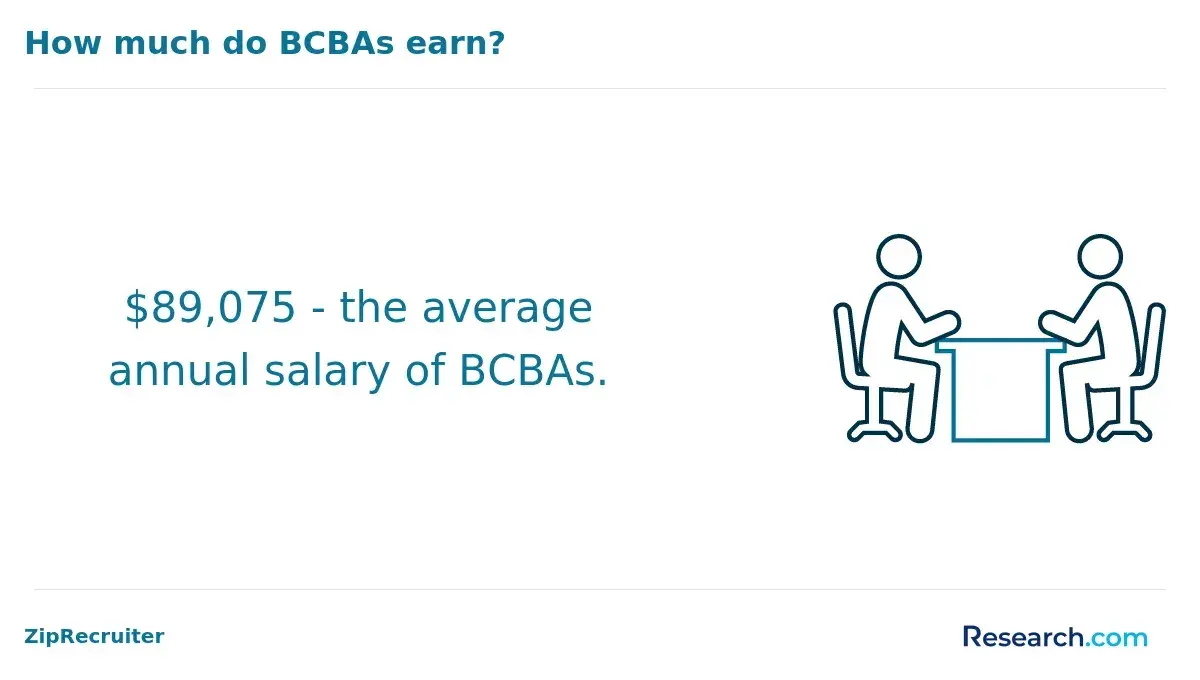
BCBA professionals in the United States typically earn a median annual salary between $60,000 and $80,000, with pay varying by experience, location, employer type, and work setting. Entry-level BCBAs often start near $55,000, while those with five or more years of experience or specialized clinical responsibilities can earn over $90,000. Urban states like California, New York, and Texas generally offer higher pay because of increased demand for behavioral services.
Work setting has a major effect on compensation. School-based roles may offer predictable schedules and strong benefits. Healthcare providers, autism service organizations, and hospitals may offer higher salaries or advancement pathways. Nonprofit roles may pay less but can offer mission-driven work, stability, or loan and benefit advantages. Contract roles may offer higher hourly rates but typically exclude benefits like health insurance, paid time off, retirement contributions, and tuition reimbursement.
Total compensation matters, not just base salary. Benefit packages frequently include education perks, tuition reimbursement, supervision support, paid professional development, certification fee coverage, or salary increases tied to credentials. Research shows that 88% of Gen Z workers are more likely to recommend their employers when education benefits like tuition reimbursement are provided.
Some employers, including school districts, healthcare providers, and private practices, connect salary growth to additional certifications or graduate coursework completed while employed. For example, completing a master's degree with employer assistance may lead to a 5% to 10% salary raise post-certification.
When evaluating a BCBA job offer, compare:
- Base salary and expected caseload
- Billable-hour requirements or productivity expectations
- Supervision responsibilities
- Benefits, paid time off, and retirement contributions
- Tuition reimbursement or continuing education support
- Certification fee and conference support
- Promotion pathways after certification
- Workload sustainability and clinical support
A higher salary may not be the better offer if it comes with unrealistic caseloads, weak supervision systems, or no support for continuing education. For candidates still in school, reimbursement and supervised fieldwork access can be as valuable as immediate pay.
How to choose the best BCBA program for reimbursement?
The best BCBA program for reimbursement is one that meets certification requirements, fits your schedule, and satisfies your employer’s written tuition assistance policy. Do not choose a program based only on tuition price or convenience. A low-cost program can become expensive if it is not eligible for reimbursement, does not provide the right documentation, or fails to align with your certification plan.
Start with your employer’s policy. Confirm whether the organization covers graduate degrees, certificate programs, BCBA coursework, online programs, supervision costs, exam fees, or only tuition for approved degree programs. Ask whether reimbursement is paid before or after course completion and whether you need manager approval before enrolling.
Then verify the program. Review the curriculum carefully to ensure it meets BACB requirements, including appropriate coursework and supervised fieldwork expectations. Programs that integrate fieldwork planning with coursework may reduce administrative burden, but you should still confirm whether the employer will count those costs as reimbursable.
Use this decision checklist before applying:
- Policy match: Does your employer specifically approve this degree, school, or type of coursework?
- Certification alignment: Does the curriculum support your BCBA eligibility plan?
- Accreditation and recognition: Does the program meet the standards your employer requires?
- Cost transparency: Are tuition, fees, books, technology charges, and supervision costs clearly listed?
- Reimbursement timing: Will you need to pay upfront and wait for repayment?
- Annual cap fit: Can you pace courses around reimbursement limits?
- Documentation: Can the school provide receipts, course descriptions, grade reports, and enrollment verification?
- Schedule realism: Can you complete coursework while meeting job and fieldwork obligations?
- Service commitment: Are you comfortable with any required post-completion employment period?
The job outlook for BCBAs remains strong, with a 17-19% annual increase in job postings over the past decade and a 22% projected growth in behavioral health jobs through 2031, according to Kids Club ABA and Burning Glass Labor Insights 2024. That demand can support a strong return on education, but only if you choose a program that advances certification, protects your finances, and works with your employer’s reimbursement process.
Before you sign an enrollment agreement, get reimbursement approval in writing. Keep copies of the policy, approval emails, invoices, syllabi, transcripts, and receipts. A well-documented process can prevent denied claims and help you use employer support as intended: to reduce the cost of becoming a BCBA while building a stronger career path.
Other Things You Should Know About Applied Behavior Analysis
Yes, up to $5,250 per calendar year can be tax-free under IRS Code Section 127 if the employer uses a qualified educational assistance plan. Amounts above that limit are usually taxable wages unless another exclusion applies.
Employer reimbursement for BCBA school may have tax implications. In 2027, amounts exceeding $5,250 are generally considered taxable income according to IRS guidelines. It's crucial to confirm with your HR department for specifics applicable to your circumstances.
In 2027, the process for employer reimbursement for BCBA school typically involves submitting a reimbursement request through the employer's educational assistance program. This may require providing tuition receipts, registration documentation, and maintaining a certain GPA. Policies can vary, so checking with HR for specific requirements is advised.
Progress in applied behavior analysis is measured through systematic data collection and analysis over time. Practitioners track specific target behaviors using baseline data and monitor changes in frequency, duration, or intensity. This empirical approach allows for data-driven adjustments to intervention plans, ensuring they remain effective and personalized to client needs.
- Employer Tuition Assistance Program / Employee Tuition Reimbursement - Finance | Learn & Work Ecosystem Library https://learnworkecosystemlibrary.com/topics/employer-tuition-assistance-program-employee-tuition-reimbursement-finance/
- 20 Best Schools Offering Master's in ABA Programs https://www.appliedbehavioranalysisedu.org/20-best-schools-offering-aba-masters-programs/
- BCBA Certification Without a Master’s Degree | Little Champs https://littlechampsaba.com/blog/bcba-without-masters-degree/
- How to Become a Behavior Analyst https://onlinecounselingprograms.com/mental-health-careers/how-to-become-behavior-analyst-bcba/
- The Best ABA Programs for BCBA Certification https://www.abaresourcecenter.com/post/best-aba-programs-for-bcba-certification
- BCBA Programs and Schools: How to Choose https://www.apexaba.com/blog/bcba-programs-and-schools
- BCBA Job Outlook 2025 Shows Strong Growth and Demand https://blossomabatherapy.com/blog/bcba-job-outlook
- What to Expect from a BCBA Job: Salary, Growth & Opportunities - Big Dreamers ABA https://www.bigdreamersaba.com/blog/what-to-expect-from-a-bcba-job-salary-growth-opportunities
- 11 Best BCBA Programs & Schools (In-Person & Online) https://www.crossrivertherapy.com/behavioral-analysts/best-bcba-programs
- How to Become a BCBA https://bluegemsaba.com/how-to-become-a-bcba/