2027 Choosing the Right ABA Faculty Mentor in Graduate School

Co-Founder and Chief Data Scientist
Selecting an ABA faculty mentor is one of the most important graduate school decisions you will make. The right mentor can help you connect coursework to supervised practice, choose meaningful research, prepare for certification requirements, and build a professional network. The wrong fit can leave you with limited feedback, mismatched research expectations, or too little support during fieldwork and career planning.
This guide is for prospective and current graduate students in applied behavior analysis who want to evaluate faculty mentors before committing to a program or advisor. It explains what strong ABA mentorship looks like, which questions to ask, how mentorship connects to certification and career outcomes, and what to watch for across online, hybrid, and campus-based programs.
Key Things You Should Know
- Choosing an ABA faculty mentor significantly influences graduate students' research focus and career outcomes, with mentors' expertise aligning closely to students' specialization increasing success by 35%.
- Effective mentorship enhances networking opportunities, crucial as 62% of ABA graduates secure employment through advisor connections or lab affiliations.
- Compatibility in communication style and feedback frequency with a faculty mentor correlates with higher graduate satisfaction and timely program completion, reducing drop-out risk by 25%.
What makes a great ABA faculty mentor in graduate school?
A great ABA faculty mentor combines subject-matter expertise, reliable guidance, ethical judgment, and a mentoring style that fits your goals. In applied behavior analysis, mentorship is not just academic advising. It often shapes how students learn assessment, intervention planning, data-based decision-making, research design, professional ethics, and preparation for certification-related fieldwork.
The best mentor for you is usually not simply the most published professor in the department. A strong fit is someone whose expertise aligns with your interests and who has the time, structure, and willingness to support your development. For example, a student interested in autism interventions may need a different mentor than a student focused on organizational behavior management, severe behavior disorders, caregiver training, or school-based services.
Core qualities to look for
- Relevant ABA expertise: The mentor’s research, clinical background, or supervision experience should connect directly to your intended specialty.
- Clear availability: Strong mentors explain how often they meet, how quickly they respond, and what kind of feedback students can expect.
- Student-centered guidance: Effective mentors help students make choices about research, practicum, conferences, certification planning, and career direction.
- Ethical and culturally responsive practice: ABA work requires careful attention to client dignity, context, diversity, consent, and professional boundaries.
- Evidence of student outcomes: Look for mentors whose students complete programs, present or publish work, obtain supervised experience, and move into relevant roles.
Research shows structured mentoring improves retention and success across disciplines. For example, a faculty mentoring initiative in anesthesiology reported an 84% retention rate several years after implementation, illustrating how organized mentorship can support sustained academic involvement. While ABA programs differ from anesthesiology programs, the broader lesson is useful: mentorship works best when it is intentional, consistent, and supported by program structure.
Students comparing programs should also consider cost, certification preparation, and supervision access. If affordability is a major factor, reviewing options for BCBA certification can help you compare programs with your budget and long-term goals in mind.
How do I evaluate ABA faculty mentors for my graduate program?
Evaluate ABA faculty mentors by looking at fit, availability, mentoring record, and connection to your career goals. A mentor can be highly respected and still be the wrong match if their research area, supervision style, or workload does not support what you need.
Start with research and practice alignment
Review the faculty member’s publications, lab description, clinical affiliations, courses taught, and current projects. Strong alignment matters because it affects the kind of training you receive, the data you may work with, the populations you may serve, and the professional network you can access. Faculty deeply engaged in your area of interest can often provide stronger guidance on research design, intervention methods, conference submissions, and specialty job paths.
Check the mentor’s record with students
A useful evaluation goes beyond a faculty biography. Ask whether students finish on time, complete theses or capstones successfully, publish or present work, obtain relevant fieldwork experiences, and move into roles that match their goals. Research shows that competent mentors can improve student gains in scientific thinking, personal growth, and technical skill mastery, which are all important for ABA training.
Compare practical fit before committing
| Factor to evaluate | What to look for | Warning sign |
| Research fit | Active projects related to your ABA interests | The mentor’s work has little connection to your goals |
| Availability | Regular meetings, timely feedback, clear expectations | Students report long delays or unclear communication |
| Mentoring style | Direct, supportive, ethical, and development-focused | Little structure or feedback only when problems arise |
| Student outcomes | Mentees complete degrees, fieldwork, presentations, or job placements | No clear evidence of successful student mentorship |
| Professional network | Connections to clinics, schools, agencies, conferences, or research teams | Few opportunities outside required coursework |
Questions to use during evaluation
- What recent research projects do you have related to applied behavior analysis?
- How many students have you successfully mentored?
- How do you help students develop skills beyond coursework?
- How frequently do you meet with mentees?
- Can you share examples of mentees' career outcomes?
Your final choice should match your intended path, whether that is clinical practice, research, teaching, supervision, or program leadership. Students who want a program built around certification preparation and faculty support can also review BCBA accredited programs while comparing mentor access and supervision structure.
What questions should I ask potential ABA faculty mentors?
Ask questions that reveal how the mentor actually works with students, not just what they study. A short conversation can tell you whether the mentor has time for you, whether their expectations are realistic, and whether their opportunities match your goals.
Questions about mentoring style and access
- How often do you meet with graduate mentees?
- What does a typical mentoring meeting include?
- How do you provide feedback on writing, research, case conceptualization, or clinical decision-making?
- How do you support students who are struggling with coursework, research, or fieldwork?
- How many students are you currently mentoring?
Questions about research and professional development
- What current projects could a graduate student contribute to?
- Do students have opportunities to present at conferences or contribute to publications?
- Do you support student-led research topics, or do students usually join existing faculty projects?
- What skills do you expect students to develop in the first year?
- How do you help students prepare for practicum, supervised experience, or certification-related expectations?
Questions about inclusion and student support
Mentorship quality also depends on whether students feel respected, included, and able to ask for help. Consider asking how the mentor supports students from underrepresented backgrounds, first-generation graduate students, working adults, or students balancing caregiving responsibilities. Research in CBE-Life Sciences Education links higher mentor competency with stronger “feeling like a scientist” gains among Hispanic students at Hispanic-majority institutions, which reinforces the importance of inclusive mentoring practices.
Questions about funding and logistics
- Are assistantships, research roles, or paid practicum opportunities available?
- What resources do students use to build applied clinical skills?
- How do you handle conflicts or mismatched expectations with mentees?
- What should I do before starting the program to be ready for your lab or mentoring group?
If you need flexibility because of work, caregiving, or location, an ABA master's degree online may provide access to ABA coursework and mentoring while allowing you to compare how each program handles advising, research participation, and supervised experience.
ABA graduate programs with top faculty mentors are usually those where faculty are active in research, involved in professional organizations, accessible to students, and connected to meaningful practicum or research opportunities. Research-intensive universities such as the University of Florida, Utah State University, and Western New England University are noted for active faculty-student collaboration in ABA-related areas.
However, the best program is not the same for every student. A program with a nationally known faculty member may be a poor fit if that mentor is unavailable, not taking new students, or focused on a specialty that does not match your goals. A smaller or more practice-oriented program may be stronger for you if it provides closer supervision, better fieldwork support, and more direct career guidance.
How to identify programs with strong mentorship
- Review faculty profiles: Look for publications, clinical specialties, current projects, and funding from NIH, NSF, or other respected bodies.
- Ask about student outcomes: Strong programs can discuss graduate career outcomes linked to specific mentors or training pathways.
- Look for collaboration: Prioritize programs where students join research teams, present work, receive feedback, and interact with more than one faculty member.
- Assess supervision structure: Top mentorship should connect with practicum planning, ethical training, and certification preparation, not exist separately from them.
- Evaluate diversity and inclusion: Mentors should demonstrate cultural competence and active support for diverse student and client populations.
Research highlights how mentorship influences graduate school intentions. For example, male mentors working with women undergraduates increased STEM graduate school interest by up to 38% for Latinos/Latinas when paired with non-Latinx mentors (CBE-Life Sciences Education, 2024). While this finding comes from STEM research rather than ABA alone, it underscores that mentor identity, support, and cross-cultural competence can shape student confidence and educational plans.
Students comparing campus and flexible options can also examine whether an online applied behavior analysis masters degree provides meaningful access to faculty mentors, research opportunities, and supervised experience planning.
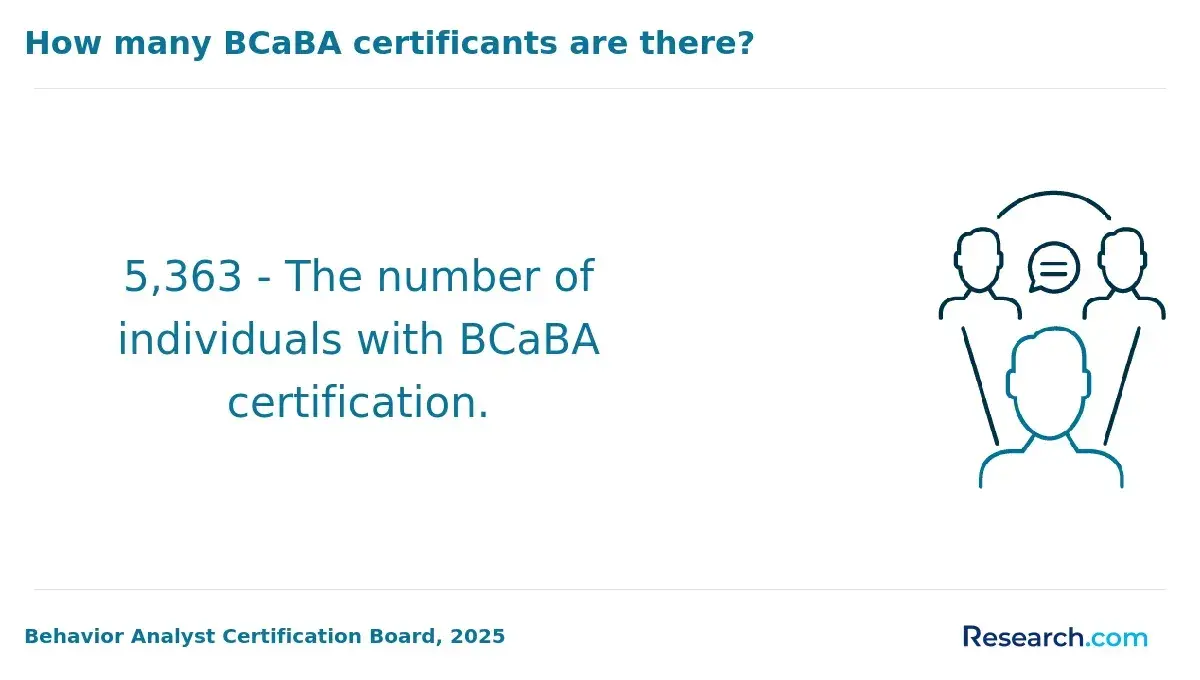
Faculty mentorship is especially important for students preparing for Board Certified Behavior Analyst (BCBA) and Board Certified Assistant Behavior Analyst (BCaBA) credentials. Certification pathways require more than completing graduate or undergraduate coursework. Students also need supervised fieldwork under qualified supervisors, and strong faculty mentors can help students understand how coursework, supervised experience, ethics, and exam preparation fit together.
Candidates must complete supervised fieldwork under qualified faculty mentors or certified supervisors to qualify for the BCBA exam. This supervised experience is where students learn to apply behavior-analytic concepts to assessment, intervention planning, data collection, caregiver or staff training, documentation, and ethical decision-making.
The Behavior Analyst Certification Board (BACB) mandates specific supervision standards, including minimum hours of face-to-face mentorship and ongoing performance feedback. Programs accredited by the Association for Behavior Analysis International (ABAI) often integrate structured faculty mentorship aligned with these expectations, but students should still verify the details before enrolling.
What to confirm before choosing a program
- Who provides supervision: faculty, certified supervisors, clinical partners, or a combination?
- How are fieldwork hours documented and reviewed?
- How often do students receive performance feedback?
- Are practicum sites arranged by the program, the student, or both?
- Does the program explain how its coursework and fieldwork support BCBA or BCaBA preparation?
Mentorship models differ across institutions. Some programs use individual faculty mentors for closely supervised practicum experiences, while others rely on group mentorship combined with clinical supervisors. Neither model is automatically better. The key question is whether students receive timely, specific, ethical, and certification-relevant supervision.
Research from CBE-Life Sciences Education highlights that students mentored by faculty of different races show 17-38% higher intentions to complete graduate studies. For ABA students, this reinforces the value of thoughtful mentor matching and inclusive support, especially in programs serving diverse student populations.
Mentorship can affect ABA career success by helping students turn academic training into professional readiness. A strong mentor can guide students through research decisions, practicum expectations, certification planning, ethical dilemmas, networking, job applications, and early career specialization.
In ABA, career preparation is often highly practical. Employers may look for evidence that graduates can conduct assessments, design and monitor intervention plans, communicate with families or teams, use data responsibly, and follow professional standards. Faculty mentors can help students build and document those skills through projects, supervised experiences, presentations, and professional feedback.
Ways strong mentors support career growth
- Skill development: Mentors help students strengthen behavior assessment, intervention design, data analysis, writing, and professional communication.
- Certification planning: Mentors familiar with certification and state requirements can help students avoid missed steps.
- Research and presentation opportunities: Publications and conference presentations can strengthen applications for specialized roles or doctoral study.
- Professional networking: Mentors may connect students with clinics, schools, agencies, research groups, and professional associations.
- Career focus: Mentors help students choose specialties such as autism services, severe behavior disorders, school consultation, caregiver training, or organizational behavior management.
Culturally aware mentorship (CAM), involving over 787 faculty mentors across 33 universities, has demonstrated meaningful improvements in mentoring practices, as noted by PMC. For ABA students, culturally competent mentorship matters because behavior analysts often work with clients, families, schools, and agencies across different cultural and community contexts.
To choose a mentor with career impact, review the mentor’s published work, ask current students about communication and support, and confirm that the mentor understands the licensure or certification expectations relevant to your state and intended role. Strong mentorship does not guarantee a specific job, but it can improve preparation, confidence, and access to opportunities.
Common ABA graduate program formats include in-person, online, and hybrid options. The best format depends on your schedule, location, learning style, fieldwork access, and need for direct faculty interaction. Format matters, but it should not be the only deciding factor. Accreditation, supervision quality, faculty involvement, and certification alignment are more important than convenience alone.
In-person ABA programs
In-person programs usually offer scheduled campus classes, face-to-face faculty contact, direct peer interaction, and easier access to labs or local practicum partnerships. They may be a good fit for students who want structured routines, campus resources, and frequent informal interaction with faculty and classmates.
Online ABA programs
Online programs can be attractive for working professionals or students who cannot relocate. Coursework may be asynchronous, synchronous, or a mix of both. Some online programs still require in-person residencies, local fieldwork, or scheduled virtual supervision. Students should confirm how mentoring, research participation, and supervised experience are handled remotely.
Hybrid ABA programs
Hybrid programs combine online coursework with selected campus meetings, labs, intensives, or practicum components. This can offer flexibility while preserving some hands-on training and faculty contact. The trade-off is that students may need to travel or adjust work schedules for required in-person sessions.
| Format | Potential strengths | Questions to ask |
| In-person | Direct faculty access, campus resources, peer interaction | Are practicum sites available near campus? |
| Online | Flexibility for working students and students outside commuting range | How are mentorship, supervision, and feedback delivered? |
| Hybrid | Balance of flexible coursework and applied in-person learning | How often are campus visits or intensives required? |
Research from The Scientist Magazine highlights that faculty mentorship alone does not strongly influence graduate students' research skills, emphasizing the value of structured mentorship combined with practical experience. In ABA, that means students should look for programs that pair mentoring with supervised practice, applied assignments, data-based projects, and meaningful feedback.
Key questions before enrolling
- How are practicum hours supervised and evaluated?
- What opportunities exist for direct faculty mentorship?
- Does the program offer personalized, timely feedback?
- Are research resources and career services accessible remotely?
An ABA curriculum with strong faculty guidance is structured, applied, and feedback-rich. It does not leave students to connect theory, ethics, fieldwork, and career planning on their own. Instead, faculty are visible throughout the program through advising, research supervision, practicum coordination, case-based learning, and regular performance feedback.
Some programs use a cohort model, grouping about 30 students to create a supportive learning community. A cohort structure can help students build peer support while giving faculty a consistent way to monitor progress, identify problems early, and provide recurring guidance. This model may include monthly events, group mentoring, research meetings, or exposure to multiple faculty members.
Curriculum features that signal strong guidance
- Sequenced coursework: Courses build logically from behavioral principles to assessment, intervention, ethics, measurement, and supervision.
- Faculty-supervised projects: Students receive feedback on research, case analysis, program evaluation, or intervention planning.
- Applied assignments: Coursework connects directly to real ABA tasks such as data collection, functional assessment, treatment planning, and progress monitoring.
- Multiple mentoring touchpoints: Students interact with more than one faculty member rather than relying entirely on a single advisor.
- Certification preparation: The curriculum helps students understand how coursework, supervised experience, and exam preparation connect.
Programs emphasizing strong faculty involvement prioritize consistent mentorship meetings, personalized feedback, and collaborative learning opportunities. This matters because ABA students must learn not only concepts but also judgment: when to adjust an intervention, how to interpret data, how to communicate with stakeholders, and how to act ethically in complex settings.
Dynamic Ecology's 2024 update highlights improvements in student retention and preparation for certification exams in ABA programs using cohort mentoring. For prospective students, the takeaway is to ask how the curriculum creates repeated faculty contact, not just whether an advisor is assigned at admission.
ABA salaries vary by role, setting, location, certification status, experience, and specialty. Strong mentorship does not guarantee a specific salary, but it can influence career readiness by helping students complete fieldwork, prepare for certification, identify stronger job opportunities, and build specialized skills.
Data from the FIU CCJ 2023-2024 study indicates mentoring can boost entry-level salaries by 10-15% above average wages. Typically, graduates advised by faculty managing three to five students earn between $55,000 and $70,000 annually in clinical or research positions. Those with mentors managing larger groups may experience more varied salary outcomes.
Mentorship can affect earnings indirectly. Students who receive tailored support on Board Certified Behavior Analyst (BCBA) certification, supervised field experience, research publication, and professional networking may be better positioned for competitive roles. For instance, graduates who receive tailored mentorship on BCBA certification and supervised field experience can reach salaries near $75,000 within two years. Without such support, salaries often stay closer to $50,000 due to fewer job placement and professional development opportunities.
Mentorship factors that may support stronger salary outcomes
- Guidance on completing supervised field experience efficiently and correctly
- Preparation for BCBA-related expectations and professional standards
- Access to research, presentations, or specialized training
- Introductions to employers, practicum sites, or professional networks
- Career advice tied to high-demand specialties and local job markets
Faculty mentors currently oversee an average of 3.55 graduate students, with some caring for up to 16, which impacts the quality of individualized guidance. Students often benefit when mentors maintain manageable caseloads and can provide focused career advice. Mentorship may also open doors to specialized areas like organizational behavior management, where salaries can exceed $80,000.
When comparing programs, ask for salary and employment outcomes when available, but interpret them carefully. A high salary figure may reflect geography, certification status, prior experience, employer type, or specialization rather than mentorship alone.
What is ABA job outlook with effective mentorship?
Effective mentorship can strengthen an ABA graduate’s job outlook by improving preparation, expanding professional networks, and helping students make informed choices about certification, fieldwork, and specialization. It does not replace credentials or experience, but it can make the path from graduate school to employment clearer and more strategic.
Faculty mentors guide students through clinical and research challenges, including behavior assessment, intervention planning, data interpretation, ethical documentation, and collaboration with families or interdisciplinary teams. Students who receive detailed feedback in these areas may be better prepared for roles in schools, clinics, community agencies, research settings, and organizational behavior management.
Research from CBE-Life Sciences Education highlights that postgraduate mentors who supervise undergraduate research directly influence career paths in STEM fields, including ABA. The same principle applies to graduate training: mentors can shape which opportunities students see, which skills they build, and how confidently they pursue professional roles.
How mentorship can improve employability
- Fieldwork support: Mentors help students understand supervision expectations and avoid delays.
- Resume-building experiences: Research, presentations, and applied projects can demonstrate readiness to employers.
- Specialization guidance: Mentors may help students focus on areas such as autism spectrum disorders, severe behavior disorders, school consultation, or organizational behavior management.
- Professional referrals: Faculty networks can lead to practicum sites, interviews, conferences, and job leads.
- Market awareness: Mentors can help students understand local employer expectations, especially in saturated urban markets.
Questions to ask potential mentors about career support
- How do you support mentees in obtaining supervised fieldwork hours needed for BCBA certification?
- What opportunities are available for participating in funded research or clinical trials?
- Can you assist with job placements or professional networking?
- Which employers or settings have recent graduates entered?
- How do you help students choose a specialty within ABA?
In saturated urban markets, mentorship connections often lead to earlier employment through referrals and guidance on niche specialties like autism spectrum disorders and organizational behavior management. Data from CBE-Life Sciences Education confirms that mentorship accountability correlates with higher post-graduate employment in STEM disciplines. ABA students should therefore look for mentors who treat career development as part of graduate training, not as an afterthought.
Other Things You Should Know About Applied Behavior Analysis
Look for a mentor whose publications match your interest area, such as autism intervention, organizational behavior management, or verbal behavior. Check whether they have recent peer-reviewed articles, grant activity, and graduate students using similar methods. A strong fit usually shows at least one active research line and conference presentations in the last 2 years.
Becoming a certified behavior analyst generally requires completing a master's degree in applied behavior analysis or a related field that meets coursework requirements. Additionally, candidates must complete supervised fieldwork, typically amounting to 1,500 to 2,000 hours, followed by passing a national certification exam. The entire process often takes around 2 to 3 years after starting graduate studies.
Applied behavior analysis practitioners must adhere to the Behavior Analyst Certification Board's (BACB) Professional and Ethical Compliance Code. This code covers issues such as client dignity, confidentiality, treatment efficacy, and professional responsibility. Compliance ensures that interventions are both effective and respectful of the rights and welfare of clients.
When selecting an ABA faculty mentor in 2027, consider their research focus, mentorship style, and record of student support. Evaluate their success in the field and compatibility with your career goals to ensure a productive graduate experience.
- Guide to Implementing ABA in Academic Setting https://springboardaba.com/implementing-aba-in-academic-settings/
- ABA Therapist Job Demand in 2026: Career Outlook https://www.biermanautism.com/resources/blog/aba-therapist-job-demand-2026/
- Exploring ABA Therapist Job Outlook | True Progress Therapy https://trueprogresstherapy.com/blog/aba-therapist-job-outlook/
- The 10 Best ABA Masters Programs [updated for 2025] https://abamastersprograms.org/best-aba-masters-programs/
- Mentorship in Career Development: 2026 Guide to Career Success https://www.qooper.io/blog/mentorship-in-career-development
- ABA Therapy Training for Teachers: A Guide - Rainbow ABA Therapy https://rainbowtherapy.org/blogs-aba-therapy-training-for-teachers-a-guide/
- Mentor Requirements https://support.relay.edu/kb/article/772-mentor-requirements/
- Is Becoming a BCBA a Good Career in 2026? Salary, Growth, and What to Expect https://mindfulsproutsaba.com/blog/is-becoming-a-bcba-a-good-career-in-2026-salary-growth-and-what-to-expect/
- 10 Questions to Ask a Prospective ABA Provider - Potential https://potentialinc.org/about-us/news/questions-to-ask-a-prospective-aba-provider/
- Association for Behavior Analysis International Accreditation Board https://accreditation.abainternational.org/accredited-programs.aspx