2027 What to Expect in Your First Semester of an Online BCBA Program

Co-Founder and Chief Data Scientist
Choosing an online BCBA program is not just a school decision; it is a certification, fieldwork, and career-planning decision. Students often enter these programs while working full time, changing careers, or coming from undergraduate majors that did not focus on behavior analysis. The first semester can be demanding because learners must quickly understand ABA terminology, adjust to graduate-level expectations, and begin thinking about supervised fieldwork long before the certification exam.
This guide explains what online BCBA programs include, how they compare with campus-based options, what certification and admission requirements typically involve, and what students should expect from curriculum, timelines, costs, careers, salary, and job demand. It is written for prospective students who want a realistic view of the path before enrolling—not a sales pitch.
Key Things You Should Know
- The first semester of an online BCBA program typically involves foundational coursework in behavior principles, with over 70% of students starting with ethics and measurement studies.
- Expect a mix of asynchronous lectures and live discussions, requiring strong time management, as 65% of learners report balancing coursework with work or family duties.
- Practical skill development is emphasized early, with virtual practicum components preparing roughly 40% of students for hands-on client interactions later in the program.
What Is an Online BCBA Program?
An online BCBA program is graduate-level training designed to prepare students for Board Certified Behavior Analyst certification. These programs teach applied behavior analysis, or ABA, through online coursework while requiring students to complete supervised fieldwork that builds practical clinical and professional skills.
Most online programs combine asynchronous learning, such as recorded lectures and weekly modules, with live virtual sessions, discussion boards, case studies, and faculty feedback. This format is often attractive to working professionals because it allows coursework to fit around employment, caregiving, or other commitments. However, the flexibility also requires strong self-management; students must keep up with readings, assignments, fieldwork planning, and exam preparation without the structure of daily campus attendance.
What students typically study
Core coursework usually covers behavior measurement, functional behavior assessment, behavior change procedures, ethics, research methods, and single-subject research design. Students learn how to define behavior, collect and interpret data, design intervention plans, evaluate outcomes, and apply professional and ethical standards in real service settings.
Students must also complete approximately 1,500 supervised fieldwork hours. Depending on the program and placement model, those hours may be completed through local agencies, schools, clinics, telehealth-supported supervision, or employer-based practicum arrangements. Before enrolling, students should ask how the program helps them secure supervision and whether fieldwork support is built into the tuition or handled separately.
The certification path is rigorous. Recent data showing a 51% BCBA exam pass rate among over 23,000 candidates makes program quality especially important. Prospective students should confirm that the curriculum and supervised experience structure align with Behavior Analyst Certification Board requirements and that the school provides meaningful exam preparation, advising, and fieldwork guidance.
Students comparing affordability and format can review online BCBA master’s program options to understand how cost, curriculum, and support differ across schools.
How Do Online BCBA Programs Differ from Campus Ones?
Online and campus BCBA programs usually cover similar academic content, but the student experience can be very different. The biggest differences involve scheduling, fieldwork logistics, faculty access, peer interaction, and the level of structure built into the program.
| Factor | Online BCBA programs | Campus BCBA programs |
| Schedule | Often built around asynchronous lectures, virtual meetings, and independent weekly work. | Typically follows set class times with required in-person attendance. |
| Fieldwork | Students often need to secure supervised practical experience locally and verify that supervision meets BACB standards. | Students may have more direct access to university-affiliated supervisors, clinics, or practicum partners. |
| Interaction | Communication happens through video calls, email, discussion boards, and virtual office hours. | Students have more immediate face-to-face access to classmates, faculty, and campus resources. |
| Best fit | Working adults, career changers, students outside major metro areas, and learners who need scheduling flexibility. | Students who prefer in-person instruction, structured routines, and campus-based networking. |
Online programs can reduce relocation and commuting costs, but convenience should not be the only reason to enroll. A flexible program that offers weak supervision support or little exam preparation may create problems later. The BCBA certification exam pass rates show why preparation matters: retake pass rates were 23% compared to 51% for first-timers.
The main trade-off is autonomy versus built-in structure. Online students often have more control over when and where they study, but they also carry more responsibility for staying on pace, asking for help, arranging fieldwork, and building professional relationships. Campus students may have less flexibility but more immediate access to faculty, peers, and practicum networks.
When comparing formats, students should prioritize accreditation, curriculum alignment, supervised fieldwork arrangements, faculty responsiveness, and certification outcomes. Those still deciding between delivery models can compare BCBA program options in person and online to identify programs that match their learning style and career plans.
What Are BCBA Certification Requirements?
The BCBA certification requirements in 2026 include a master’s degree in behavior analysis, education, psychology, or a related field from an accredited institution. The degree and coursework must align with Behavior Analyst Certification Board curriculum standards, including foundational and advanced applied behavior analysis content.
Candidates must also complete 1,500 to 2,000 hours of supervised fieldwork, depending on the practicum type. These hours are not a formality. They are where candidates learn to apply behavior analytic principles, collect and interpret client data, design intervention plans, communicate with stakeholders, and practice under qualified supervision.
Main certification components
- Graduate education: A qualifying master’s degree from an accredited institution in an approved or related discipline.
- Approved coursework: Graduate-level study that meets BACB curriculum expectations in behavior analysis, ethics, assessment, intervention, measurement, and research design.
- Supervised fieldwork: Documented completion of 1,500 to 2,000 hours under qualified supervision, depending on the practicum type.
- Application documentation: Submission of transcripts, coursework verification, supervised experience records, and any other required materials before exam eligibility.
- BCBA exam: Passing the certification exam to demonstrate competency in applied behavior analysis knowledge and practice.
Program selection can affect exam readiness. Success rates vary widely: 33 university programs report first-time BCBA pass rates of 80-100%, while 57 fall below 50%. Students should not interpret admission into a program as a guarantee of certification eligibility or exam success. They should verify coursework alignment, fieldwork support, documentation procedures, and exam preparation resources before enrolling.
Online students need to be especially organized because coursework, supervision, and exam preparation often happen at the same time. A strong plan includes early fieldwork planning, a system for tracking hours, regular supervisor feedback, and a study schedule that begins before the final semester. Students seeking flexible routes can explore online master’s in ABA programs that are structured around certification preparation.
Admission requirements for online BCBA programs vary by school, but most programs expect applicants to show academic readiness for graduate study and a clear interest in behavior analysis. A bachelor’s degree or higher is typically required, often in psychology, education, behavior analysis, or a related field. Applicants must submit official transcripts so the school can verify prior coursework and degree completion.
Many programs look for previous coursework connected to BACB content areas, such as ethics, behavior assessment, and intervention strategies. Some schools allow provisional or conditional admission if prerequisite courses are still in progress, but students should confirm how missing prerequisites affect their start date, course sequence, and certification timeline.
Common application materials
- Official transcripts: Used to confirm degree completion, prior coursework, and academic performance.
- Minimum GPA: Programs generally expect a minimum GPA around 3.0 to show readiness for graduate-level work.
- Letters of recommendation: These should speak to academic ability, professionalism, communication skills, and fit for behavior analytic work.
- Personal statement: Applicants may be asked to explain career goals, relevant experience, and reasons for pursuing BCBA certification.
- Relevant experience: Work with developmental or behavioral challenges can strengthen an application, though it is not always mandatory.
- English proficiency: International students usually must show English proficiency through TOEFL or IELTS scores.
Applicants should avoid focusing only on whether they can get admitted. The better question is whether the program is likely to help them complete coursework, secure supervision, and prepare for the exam. Building a strong virtual study community also matters, especially in programs where most interaction occurs online. Florida State University’s high first-time BCBA pass rates, according to BACB data reported by certifyndaba.com, show how structured preparation and student support can matter in certification outcomes.
Prospective students comparing admissions standards, formats, and program quality can review online master’s in ABA programs before applying.
A typical BCBA curriculum teaches students how to understand behavior, measure it accurately, identify environmental variables that influence it, and design ethical interventions based on data. The coursework is technical, cumulative, and practice-oriented. Students should expect to learn terminology quickly and apply concepts to case examples, written assignments, data sets, and supervised fieldwork.
Core curriculum areas
- Principles of behavior: Reinforcement, punishment, stimulus control, motivation, and related concepts that explain how behavior changes.
- Behavior assessment: Functional behavior assessment, observation methods, interviews, and data-based interpretation.
- Measurement and data collection: Defining behavior, choosing measurement systems, graphing data, and evaluating progress.
- Behavior change procedures: Selecting interventions, monitoring outcomes, and adjusting plans based on client response.
- Research design: Single-subject research designs and methods used to evaluate intervention effectiveness.
- Ethics and professional practice: Decision-making, supervision, client rights, documentation, and professional conduct.
Online BCBA programs often use case studies and scenario-based discussions to connect theory with practice. Students may analyze behavior plans, critique assessment procedures, interpret graphs, and discuss ethical dilemmas that resemble real clinical or school-based situations. This is important because certification preparation depends on more than memorizing definitions; students must learn how to apply concepts under professional standards.
The curriculum can be fast-paced, especially for students who are new to psychology, education, or behavior analysis. Consistent weekly study is usually more effective than last-minute review because later courses build on earlier concepts. Students who fall behind in measurement, assessment, or research design often struggle when assignments require integrated case analysis.
Online delivery can work well when programs provide structure. For example, Simmons University’s fully online BCBA program boasts an 86% first-time exam pass rate, showing how organized support, clear expectations, and strong academic design can help students succeed in a virtual format.
Online BCBA programs typically take between 1 and 3 years, depending on the format, course load, fieldwork arrangement, and whether the student enrolls full time or part time. Accelerated paths may be completed in 12 to 18 months, while part-time options can extend up to 3 years for students balancing work, family, and supervision requirements.
The academic calendar is only part of the timeline. Students must also account for supervised fieldwork hours, documentation, exam application processing, and exam preparation. A program that looks short on paper may take longer if fieldwork is not well integrated or if students must find supervisors on their own after coursework begins.
What can affect completion time?
- Enrollment pace: Full-time study usually shortens the academic timeline, while part-time study can make the workload more manageable.
- Fieldwork timing: Programs may require supervised fieldwork to occur concurrently with coursework or after certain courses are completed.
- Supervisor access: Delays in finding qualified supervision can extend the certification timeline.
- Work schedule: Students working full time may need a slower pace to complete assignments and fieldwork responsibly.
- Exam readiness: Finishing coursework is not the same as being ready to pass the BCBA exam.
Some online programs support remote supervision, which allows candidates to gain experience locally without relocating. For example, the University of South Florida’s online MA ABA program reported an 80% first-time BCBA pass rate in 2022, surpassing the national average of 55%, showing that structured online programs can prepare students effectively when coursework and supervised practice are well designed.
Before enrolling, students should ask whether supervised fieldwork must occur during coursework or after coursework, because that policy can significantly affect program length. Programs aligned with the BACB’s 12-month certification eligibility rule require finishing all requirements, including exams, within a year to maintain certification candidacy.
The cost of an online BCBA program depends on the institution, credit requirements, tuition model, supervision support, and whether the program includes exam preparation. Tuition typically ranges between $7,000 and $20,000 for the full certification sequence. Many schools charge by credit hour, often between $400 and $700.
Students should look beyond advertised tuition. Additional costs may include textbooks, software, technology fees, supervision fees, exam preparation resources, and certification exam fees. Practicum supervision may be billed separately, adding $1,000 to $3,000 depending on hours and supervisor credentials. Technology fees are common and usually range from $100 to $300 per semester.
| Cost category | What to check before enrolling |
| Tuition | Whether the quoted amount covers the full certification sequence or only selected coursework. |
| Supervision | Whether supervised fieldwork is included, arranged through the school, or paid separately. |
| Technology and materials | Whether online platform fees, textbooks, software, and assessment tools are included. |
| Exam preparation | Whether review materials, practice exams, or faculty-led preparation are part of the program. |
| Certification exam | Students must budget for the $245 BCBA exam fee and possible retake costs. |
Exam preparation deserves special attention. The BCBA exam is difficult; candidates must score at least 76%, but the 2024 first-time pass rate was only 51%, according to Pepperdine University’s ABA program page. Paying less for a program may not be a good value if students later need additional supervision, tutoring, retake fees, or extended study time.
Scholarships, employer tuition assistance, and federal aid may help offset costs, but students should apply early and ask each school what aid applies to certificate-only coursework versus degree programs. The most useful cost comparison is total out-of-pocket cost through exam eligibility, not tuition alone.
BCBA certification can lead to roles in clinical, educational, healthcare, home-based, residential, research, and organizational settings. The credential signals that a professional has completed graduate-level behavior analysis training, supervised experience, and the certification exam process.
Many BCBAs work with children with autism spectrum disorder or individuals with developmental disabilities, but the field is broader than one population or setting. Certified professionals may design behavior intervention plans, supervise direct service staff, consult with families and educators, evaluate treatment data, and help organizations improve performance and safety.
Common career paths for BCBAs
- Clinical behavior analyst: Designs and monitors behavior intervention plans in clinics, hospitals, residential treatment centers, or home-based programs.
- School-based behavior analyst: Supports students with behavioral needs, collaborates with teachers, and helps implement school behavior plans.
- Early intervention specialist: Works with young children at risk of developmental delays and supports families in applying behavior strategies.
- Consultant: Advises families, educators, agencies, or treatment teams on assessment, intervention, and data-based decision-making.
- Organizational behavior management specialist: Applies behavior analytic methods to employee performance, safety, training, and workplace systems.
- Research or program development professional: Contributes to evidence-based behavioral interventions and service model improvement.
Some BCBAs specialize in geriatric care, mental health, verbal behavior, pediatric ABA, or services for adults with developmental disabilities. Specialization can improve career fit, but students should build a foundation in assessment, ethics, data analysis, and supervision before narrowing their focus.
Online BCBA programs can be a practical route for working professionals because they allow students to continue gaining related experience while completing coursework. However, pass rates for BCBA certification exams have declined from 66% in 2020 to 51%, reflecting the difficulty of the curriculum and credentialing process. Career success depends on more than earning credits; students need strong fieldwork, feedback, professional judgment, and exam readiness.
The salary outlook for Board Certified Behavior Analysts is strong because the credential is specialized and tied to services used in education, healthcare, behavioral health, and private practice. Entry-level salaries usually range from $55,000 to $65,000 annually, varying by geographic location, employer type, population served, and prior experience. Salaries can exceed $80,000 with experience, especially in healthcare settings or private practice.
Pay can differ significantly by work setting. School districts may offer more predictable schedules and benefits but often pay less than private clinics or hospitals. Private practice and specialized clinical roles may offer higher compensation but can involve productivity expectations, supervision responsibilities, or less predictable caseloads. Urban areas and roles focused on specialized populations, such as autism spectrum disorders, may also offer higher wages.
Factors that can influence BCBA earnings
- Certification status: Employers may distinguish between candidates still completing requirements and fully certified BCBAs.
- Experience level: Supervisory, clinical leadership, and program management experience can increase earning potential.
- Work setting: Schools, clinics, hospitals, home-based agencies, and private practice often use different pay structures.
- Specialization: Expertise in high-need service areas can strengthen a candidate’s negotiating position.
- Location: Salaries vary by local demand, cost of living, and state-level requirements.
Program outcomes can also matter. For instance, 98% of graduates from the University of South Florida’s online MA ABA program have obtained BCBA certification, reflecting preparation that may help graduates compete for roles requiring the credential. Job seekers should evaluate salary offers alongside caseload expectations, supervision duties, billable-hour requirements, benefits, and opportunities for advancement.
How Strong Is the Job Demand for BCBAs?
Job demand for board certified behavior analysts remains strong across healthcare, education, behavioral health, and related service settings. According to the BACB Annual Data Report via certifyndaba.com, the first-time BCBA exam pass rate dropped from 66% in 2020 to 51% in 2025, signaling a challenging certification process but not a reduced need for qualified professionals.
Employers continue to seek BCBAs who can assess behavior, design intervention plans, supervise services, interpret data, and communicate effectively with families, educators, clinicians, and administrators. Demand is especially visible in autism services, school-based behavioral support, mental health programs, home-based care, residential services, and organizational behavior management.
Major employment sectors
- School districts: BCBAs help design and implement behavior intervention plans for students with special needs.
- Healthcare providers: Clinics, hospitals, and home-based care organizations use BCBAs to develop individualized treatment plans.
- Behavioral health agencies: BCBAs support clients with complex behavioral needs and supervise direct service teams.
- Corporate sectors: Organizational behavior management specialists apply behavioral principles to improve safety, training, and performance.
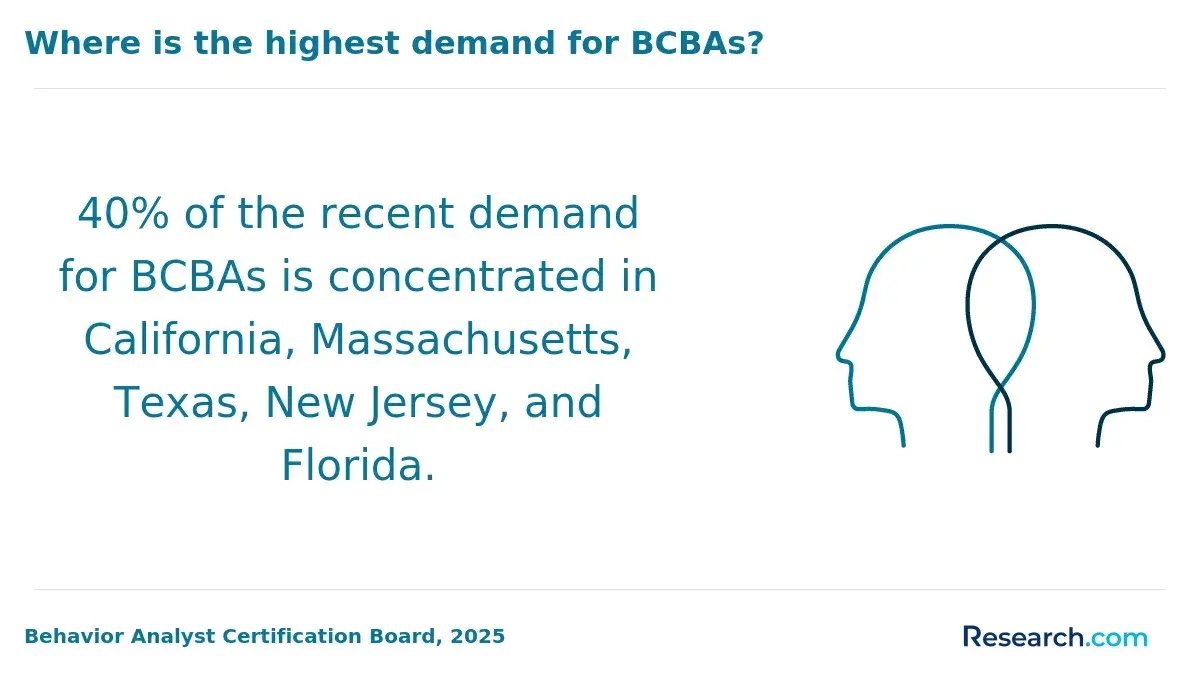
Demand varies by location, so students should research local job postings, state licensure requirements, employer expectations, and supervision opportunities before choosing a program. Some areas may have more openings but also more competition or more specific state-level requirements.
New graduates can improve employability by using fieldwork placements strategically. Practicum sites can become references, networking channels, and future employers. Specialized skills such as verbal behavior or pediatric ABA may also strengthen a candidate’s profile. In a field where certification is demanding, the strongest job candidates combine exam readiness with documented practical experience and professional communication skills.
Other Things You Should Know About Applied Behavior Analysis
Supervision in online BCBA programs typically involves regular remote meetings with a qualified BCBA supervisor. These sessions include reviewing casework, discussing treatment plans, and overseeing practicum hours. Many programs require a minimum number of supervision hours completed under direct observation or video review to meet certification eligibility.
You need a reliable computer, webcam, microphone, stable internet, and access to the program’s learning platform. Most online BCBA courses also require secure video conferencing for synchronous classes and supervised fieldwork check-ins, plus software such as Zoom, Canvas, or a similar system used by the university.
Applied behavior analysis training emphasizes adherence to the Behavior Analyst Certification Board's (BACB) Professional and Ethical Compliance Code. Students learn about confidentiality, informed consent, and proper reporting of data. The program also covers the importance of avoiding dual relationships and maintaining professional boundaries throughout clinical practice.
- What to Expect in Your First Year as a BCBA | Links https://linksaba.com/what-to-expect-in-your-first-year-as-a-bcba/
- 11 Best BCBA Programs & Schools (In-Person & Online) https://www.crossrivertherapy.com/behavioral-analysts/best-bcba-programs
- What is a BCBA? Your Guide to the BCBA Certification and Exam https://www.thechicagoschool.edu/insight/career-development/bcba-guide-bcba-certification-exam/
- Association for Behavior Analysis International Accreditation Board https://accreditation.abainternational.org/accredited-programs.aspx
- How Long Does It Take to Become a BCBA® and Keep Learning? https://dobettercollective.com/how-long-does-it-take-to-become-a-bcba-and-keep-learning/
- Understanding the Role of a BCBA® in an Educational Setting https://masteraba.academy/post/understanding-the-role-of-a-bcba-in-an-educational-setting
- BCBA Requirements: College Years Explained | Divine Steps https://www.divinestepstherapy.com/blog/bcba-exam-college-years
- BCBA Jobs and Salary: Demand for Behavior Analysts Continues to Grow, New Report Finds https://www.abamatrix.com/bcba-jobs-and-salary-demand-for-behavior-analysts-continues-to-grow-new-report-finds/
- Is Becoming a BCBA a Good Career in 2026? Salary, Growth, and What to Expect https://mindfulsproutsaba.com/blog/is-becoming-a-bcba-a-good-career-in-2026-salary-growth-and-what-to-expect/
- Certifyndaba https://certifyndaba.com