2027 What Is BCBA Supervision & How It Works in Online Programs

Co-Founder and Chief Data Scientist
Choosing an online BCBA pathway is not only a coursework decision. Students also need reliable, standards-aligned supervision that helps them turn applied behavior analysis concepts into competent practice with real clients. Without consistent supervision, students may complete assignments but still feel unsure about assessment, intervention planning, data-based decision-making, ethics, and documentation.
That concern is common. In a recent survey, 47.35% of respondents reported they were receiving ongoing supervision, pointing to a meaningful gap in structured guidance for many future behavior analysts. For students preparing for BCBA certification, the quality of supervision can affect exam readiness, fieldwork completion, professional confidence, and long-term client outcomes.
This guide explains how BCBA supervision works in online programs, what students should expect from different supervision formats, how requirements and documentation are handled, what platforms are commonly used, and how to prepare for productive sessions. It is designed for prospective and current ABA graduate students, career changers, and fieldwork trainees who want to choose supervision carefully and use it well.
Key Things You Should Know About BCBA Supervision & How It Works in Online Programs
- Approximately 65% of online BCBA supervision now incorporates telehealth platforms, reflecting the shift toward remote learning and real-time observation.
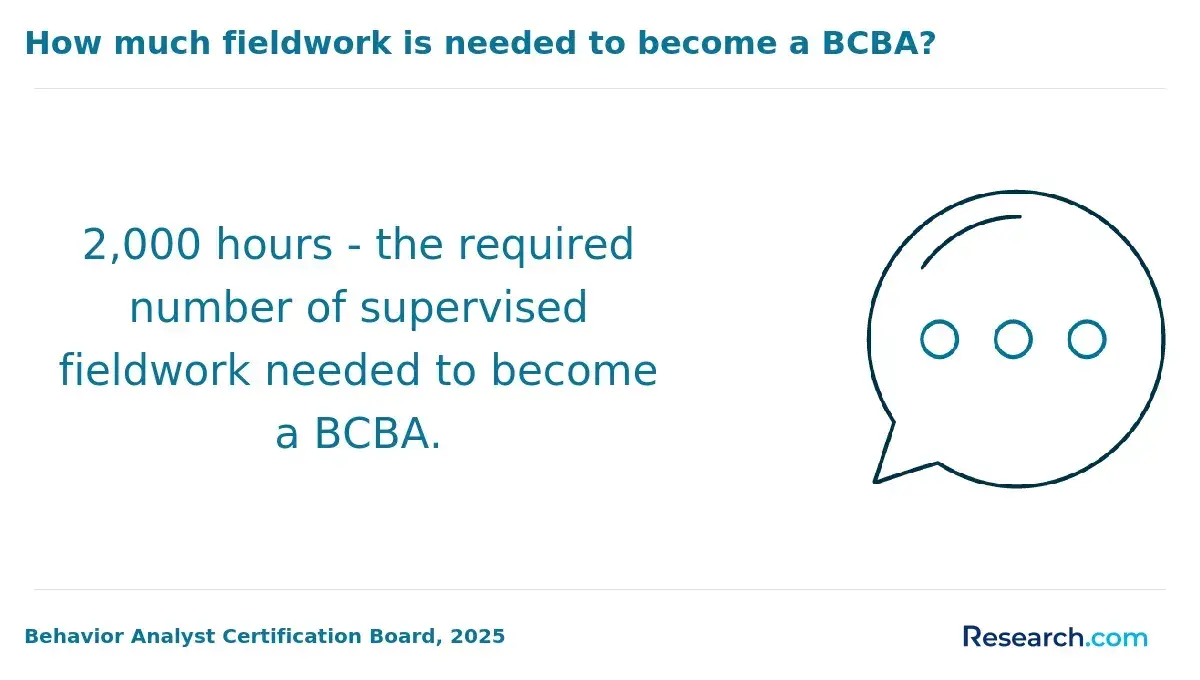
- Students must complete 1,500–2,000 hours of supervised experience depending on the type of fieldwork, meeting BACB requirements for certification.
- One-on-one supervision typically costs $50–$150 per hour, while group sessions are often more affordable, and some online programs include supervision in tuition.
What is BCBA supervision, and how does it support behavior analysis students?
BCBA supervision is a structured training relationship in which a qualified behavior analyst oversees a student’s fieldwork, reviews performance, and helps the student develop the practical and ethical competencies required for professional behavior analysis. It is not simply a check-in to count hours. Effective supervision connects coursework to client-facing work, helps students interpret behavioral data, and teaches them how to make defensible clinical decisions.
For students in online programs, supervision is especially important because coursework may be delivered at a distance while fieldwork occurs in schools, clinics, homes, community agencies, or telehealth settings. Students enrolled in programs such as the best BCBA programs online should look for supervision arrangements that are clear, documented, and aligned with professional expectations from the beginning.
Strong BCBA supervision supports students in several practical ways:
- Translating theory into practice: Supervisors help students apply ABA principles to assessment, intervention design, skill acquisition, behavior reduction, and treatment evaluation.
- Building clinical judgment: Students learn how to choose interventions based on data, client needs, environmental variables, and ethical considerations rather than habit or convenience.
- Improving performance through feedback: Supervisors observe sessions, review recordings or case materials, and give specific feedback that students can apply in future sessions.
- Strengthening ethical decision-making: Supervision gives students a safe place to discuss consent, boundaries, confidentiality, cultural responsiveness, scope of competence, and client welfare.
- Tracking progress toward competence: Supervisors help students set goals, monitor skill development, and identify gaps before they become larger professional problems.
- Maintaining fieldwork documentation: Accurate records of hours, activities, supervision meetings, and performance feedback are essential for compliance and exam eligibility.
The best supervision relationships are active and collaborative. Students should expect to prepare, ask questions, accept corrective feedback, and show evidence of growth over time. Supervisors should provide more than encouragement; they should help students become careful, ethical, data-driven practitioners.
What are the different types of BCBA supervision?
BCBA supervision can be delivered in several formats. Most students benefit from a combination because each format develops different skills. A one-on-one meeting may be best for sensitive case feedback, while group supervision can expose students to a wider range of clinical scenarios. Online programs may use live video, recorded sessions, shared documentation, and virtual meetings to support these formats.
- Individual Supervision: One-on-one supervision gives the student direct access to the supervisor’s feedback. It is useful for reviewing performance concerns, discussing client-specific issues, setting personalized goals, and developing advanced decision-making skills.
- Group Supervision: Group sessions allow several trainees to learn from one supervisor at the same time. They can be valuable for case discussions, peer feedback, ethical scenarios, role-play, and exposure to different service settings. Students should still make sure group supervision meets applicable requirements and does not replace needed individualized feedback.
- Live Observation Supervision: In live observation, the supervisor watches the student work in real time, either in person or through secure video. This format is useful when the supervisor needs to evaluate implementation, rapport, prompting, reinforcement delivery, or response to client behavior as it occurs.
- Video Review Supervision: Students record sessions and submit them for supervisor review. This format offers scheduling flexibility and allows the supervisor to pause, replay, and analyze specific moments. Students must follow all consent, privacy, and data-security rules before recording any client interaction.
- Remote or Online Supervision: Remote supervision uses video conferencing, shared files, messaging systems, and digital tracking tools. It can expand access to qualified supervisors, especially for students in areas with fewer local BCBAs, but it requires strong organization and secure technology.
- Hybrid Supervision: Hybrid models combine individual, group, live, recorded, and asynchronous elements. This is often the most practical approach because it balances flexibility with direct observation and meaningful feedback.
When comparing supervision options, students should ask how often they will receive direct observation, how feedback is documented, what types of fieldwork activities are accepted, and how the supervisor verifies progress. BCBA schools may structure supervision differently, so students should not assume that every online program provides the same level of fieldwork support.
What are the BCBA supervision requirements for online programs?
Online BCBA programs must prepare students to satisfy BACB fieldwork expectations as well as academic requirements. The exact supervision plan depends on the student’s fieldwork type, site, supervisor, and program structure, but students should treat requirements as a compliance issue from the first day of fieldwork. Missing signatures, incomplete logs, insufficient supervision, or unclear activity records can create delays when applying for exam eligibility.
Core supervision requirements commonly include the following:
- Supervised Hours: Students must complete 1,500–2,000 hours of supervised experience, depending on the type of fieldwork, to satisfy BACB requirements.
- Verified Course Sequence (VCS): Supervision should complement coursework from a BACB-approved program so that fieldwork develops the same competencies students are studying academically.
- Frequency of Supervision: Students typically receive weekly supervision sessions, either individually or in groups, to maintain consistency, feedback, and progress monitoring.
- Qualified Supervisor: Supervision must be provided by an appropriately credentialed professional who meets BACB expectations for supervising trainees.
- Acceptable Fieldwork Activities: Students should confirm which activities count toward fieldwork, such as assessment, data analysis, intervention planning, caregiver training, behavior plan review, or direct implementation.
- Documentation: Accurate logging of supervised hours, session notes, feedback, and progress reports is required for verification and exam eligibility.
- Performance Feedback: Supervisors should evaluate clinical skills, professional behavior, ethical reasoning, behavior intervention planning, and data collection.
- Fieldwork Flexibility: Online programs may allow a combination of live, remote, and video-reviewed sessions to support students who are completing fieldwork away from campus.
Students in online masters ABA programs should ask early whether supervision is included, optional, separately billed, or arranged independently. They should also review current BACB guidance directly because eligibility rules and documentation expectations must be followed as written at the time the student applies.
BCBA supervision sessions should be organized around skill development, case review, ethical decision-making, and documented progress. A strong session has a clear purpose before it begins and a clear action plan when it ends. The structure may vary by supervisor, but the meeting should do more than review hours or ask whether the week went well.
A typical supervision session may include:
- Review of prior goals: The supervisor and student examine what was assigned during the previous session and whether the student met the expected performance target.
- Fieldwork activity review: The student presents relevant client data, behavior plans, assessment notes, treatment materials, or session recordings.
- Observation or performance feedback: The supervisor evaluates implementation, clinical reasoning, documentation, or communication skills and gives specific corrective or reinforcing feedback.
- Case conceptualization: The session may include discussion of function, setting events, intervention fit, generalization, maintenance, or barriers to treatment integrity.
- Ethical analysis: Supervisors may ask students to identify risks, consent issues, confidentiality concerns, cultural factors, or scope-of-competence questions.
- Planning for next steps: The session should end with concrete assignments, updated goals, documentation tasks, or practice activities for the next supervision period.
Online supervision may blend synchronous and asynchronous formats. For example, a student might upload a recorded session before the meeting, receive written feedback, and then discuss clinical decisions during a live video call. Group sessions may focus on case presentations, role-play, literature discussion, or common fieldwork challenges, while individual sessions can focus on the student’s specific performance and professional growth.
Students should leave each session knowing what they did well, what needs improvement, and what evidence will show progress. If supervision feels vague or repetitive, students should ask for clearer goals, more direct observation, and written feedback tied to competency development.
Online BCBA supervision depends on technology for observation, communication, file exchange, documentation, and data review. The platform matters because supervision often involves sensitive client information. Convenience is important, but security, consent, access control, and reliable recordkeeping are equally important.
Common platform categories include:
- Video Conferencing Tools: Platforms like Zoom or Microsoft Teams may be used for live supervision meetings, real-time observation, screen sharing, role-play, and feedback discussions.
- Learning Management Systems (LMS): Online programs may use an LMS to distribute materials, organize assignments, track progress, and store supervision-related documents.
- Secure File Sharing: Tools such as Google Drive or Dropbox may be used to upload session recordings, behavior data, intervention plans, and feedback forms when configured appropriately for privacy and access control.
- Specialized ABA Software: Platforms like CentralReach or Catalyst provide ABA-specific tools for data collection, reporting, treatment planning, progress monitoring, and supervision review.
- Messaging and Collaboration Apps: Slack or Microsoft Teams chat features can support communication between meetings, but students should use them only in ways approved by their program, supervisor, and service setting.
- Integrated Supervision Platforms: Some online programs use systems that combine video meetings, documentation, feedback, hour tracking, and file storage in one workflow.
Before using any platform, students should confirm whether it is approved for client-related materials, whether consent is required for recording or observation, who can access files, how long records are retained, and how documentation will be backed up. A strong technology setup prevents missed feedback, lost records, and privacy problems.
Ethical BCBA supervision protects clients while helping students become competent professionals. Supervisors are responsible for monitoring the quality of services delivered under their oversight, and students are responsible for practicing within their training level, seeking help when needed, and following ethical and documentation expectations. In online supervision, ethics also extends to privacy, recording, data sharing, and the limits of remote observation.
1. Prioritizing Client Welfare
Client welfare comes before trainee convenience, program timelines, or hour completion. Supervisors should ensure that interventions are appropriate, data-informed, and focused on meaningful outcomes. If a student is not ready to perform a task independently, the supervisor should provide additional training, observation, or support before the student proceeds.
2. Competence and Professional Boundaries
Supervisors should work within their areas of competence and should not assign students tasks that exceed the student’s preparation. Both parties must maintain professional boundaries, avoid conflicts of interest, and keep the supervision relationship focused on training and client service quality.
3. Informed Consent and Transparency
Clients, families, caregivers, and service settings should understand the student’s role and the supervisor’s involvement. When sessions are observed or recorded, consent and privacy procedures must be clear before supervision begins. Students should never assume that a recording is acceptable simply because it is useful for training.
4. Accurate Documentation and Reporting
Supervision records should accurately reflect dates, times, activities, feedback, client-related work, and progress. Inflating hours, backfilling logs without reliable records, omitting performance concerns, or using vague descriptions can create ethical and eligibility problems.
5. Feedback and Mentorship
Ethical supervision includes timely, specific, and usable feedback. Supervisors should model professional communication, data-based decision-making, cultural humility, and ethical problem-solving. Students should respond to feedback professionally, ask clarifying questions, and show how they applied the guidance in later work.
Online BCBA supervision can be effective, but it requires planning. The most common problems usually come from weak communication, poor documentation, unclear expectations, limited observation, or technology that is not suited to clinical training. Students should address these issues early rather than waiting until fieldwork hours are at risk.
- Technical Difficulties: Internet disruptions, software failures, audio problems, or file-access issues can interrupt live observation and delay feedback. Students should test platforms before sessions and have a backup plan.
- Limited Direct Observation: Remote supervision may reduce opportunities for in-person observation. Students may need to use secure live streaming, approved recordings, or detailed performance samples to show their work.
- Time Zone Differences: Students and supervisors in different regions may struggle to schedule consistent meetings. A recurring supervision calendar can prevent last-minute gaps.
- Engagement and Accountability: Online meetings can become passive if students arrive unprepared. Agendas, action items, and written follow-up help keep supervision active.
- Documentation and Compliance: Errors in hour logs, missing signatures, unclear activity descriptions, or late paperwork can affect eligibility. Students should update records regularly, not at the end of a supervision period.
- Communication Barriers: Remote formats can make tone, nonverbal cues, and nuanced correction harder to interpret. Supervisors and students should use direct language, examples, and written summaries.
- Privacy and Recording Concerns: Video review can be valuable, but recording client sessions requires proper approval, secure storage, and careful access control.
- Mismatch Between Field Site and Supervisor: A student’s fieldwork setting may not provide enough appropriate learning opportunities, or the supervisor may be unfamiliar with the setting’s daily demands. This should be discussed before hours accumulate.
Students can reduce these risks by confirming expectations in writing, keeping organized supervision files, asking for direct observation regularly, and raising concerns as soon as supervision quality or compliance becomes uncertain.
Students get more value from BCBA supervision when they treat each session as a professional consultation, not a casual meeting. Preparation allows the supervisor to focus on higher-level feedback instead of spending the session reconstructing what happened during the week.
Before each supervision session, students should prepare the following:
- A brief agenda: Identify the cases, skills, ethical questions, or documentation issues that need attention.
- Updated fieldwork records: Bring accurate hour logs, activity notes, and any required forms so questions can be resolved quickly.
- Relevant client data: Organize graphs, frequency counts, ABC data, skill acquisition data, treatment integrity notes, or other materials needed for discussion.
- Specific questions: Replace broad questions such as “How am I doing?” with targeted questions about intervention fit, data interpretation, prompting, generalization, caregiver communication, or ethical concerns.
- Examples of performance: When allowed, bring approved recordings, session notes, role-play materials, or written behavior plans for review.
- Reflection on strengths and gaps: Identify what improved since the last meeting and what still feels uncertain.
- Follow-up from prior feedback: Be ready to explain how previous supervisor recommendations were applied and what results occurred.
During the session, students should take notes, ask for examples when feedback is unclear, and confirm next steps before leaving. Afterward, they should update documentation, complete assigned tasks, and apply feedback during fieldwork. Consistent preparation shows professionalism and helps supervision become a true competency-building process.
The cost of BCBA supervision in online programs varies by provider, supervision format, location, supervisor experience, and whether supervision is included in tuition. On average, students can expect to pay $50–$150 per hour for one-on-one supervision, with group sessions often being more affordable. Some programs include supervision as part of the academic package, while others require students to find and pay a supervisor separately.
Students should look beyond the hourly rate. A lower-cost option may become expensive if meetings are inconsistent, feedback is minimal, documentation is weak, or the supervisor does not provide enough observation. A higher-cost option may be worthwhile if it includes structured feedback, reliable scheduling, exam-aligned competency development, and strong documentation support.
Cost factors to compare include:
- Included versus separate supervision: Ask whether supervision is built into tuition, offered through an affiliated partner, or arranged independently.
- Individual versus group format: Group sessions may reduce cost, but students still need sufficient individualized feedback.
- Live observation requirements: Supervision that includes frequent live or video observation may cost more but can provide stronger performance feedback.
- Documentation support: Some supervisors provide templates, tracking systems, and regular record reviews; others expect students to manage logs independently.
- Cancellation and scheduling policies: Missed sessions, late cancellations, or limited availability can affect both cost and fieldwork progress.
- Supervisor expertise: Experience with the student’s client population, practice setting, and training goals can influence value.
Before committing, students should request a written supervision agreement that explains fees, meeting frequency, documentation responsibilities, communication expectations, and what happens if either party ends the arrangement.
What are emerging trends in online BCBA supervision?
Online BCBA supervision is becoming more structured, technology-supported, and data-informed. The main trend is not simply moving meetings to video. Strong programs are using digital tools to improve observation, feedback, documentation, and access to qualified supervisors while still protecting client welfare and professional standards.
- Telehealth Integration: Approximately 65% of online supervision now incorporates telehealth platforms, allowing real-time observation and feedback from remote locations.
- Hybrid Supervision Models: Programs increasingly combine live meetings, recorded session review, group discussion, and individual feedback to balance flexibility with meaningful oversight.
- Data-Driven Feedback: Supervisors are using digital data collection, graphs, treatment integrity measures, and performance rubrics to make feedback more objective.
- Interactive Learning Tools: Case simulations, virtual role-playing, structured scenarios, and interactive modules can help students practice decision-making before applying skills in live settings.
- Accessibility and Flexibility: Remote supervision can help students in rural, underserved, or geographically isolated areas connect with qualified BCBAs.
- Professional Networking: Some programs build online communities where students discuss fieldwork challenges, share resources, and develop professional contacts.
- Stronger Documentation Workflows: More supervision models are moving toward integrated systems for hour tracking, feedback records, file sharing, and progress monitoring.
These trends can improve access and training quality, but students should still evaluate supervision carefully. Technology does not replace competent oversight, ethical judgment, or direct performance feedback. Students considering online masters in applied behavior analysis programs should ask how supervision is delivered, how client information is protected, and how the program ensures students are developing the skills needed for independent practice.
Other Things You Should Know About About BCBA Supervision & How It Works in Online Programs
Online BCBA supervision must document supervision dates, hours, contacts, supervised activities, and the supervisor’s credentials. The BACB requires records that verify the required supervised fieldwork hours, including individual and group supervision, so candidates can prove compliance during certification review.
In 2027, BCBA supervision supports exam preparation by aligning with the current BACB Task List requirements, offering targeted feedback, and collaborating on study strategies. Supervision helps candidates apply theoretical knowledge practically, ensuring a deep understanding of ABA principles crucial for the BCBA exam.
- AllStarABA.org. (n.d.). BCBA supervision requirements. Retrieved from AllStarABA.org
- Behavior Analyst Certification Board. (n.d.). Supervision, assessment, training, and oversight. Retrieved from BACB
- BehaviorAnalystSupervisor.com. (n.d.). BCBA supervision resources. Retrieved from BehaviorAnalystSupervisor.com
- Behavior Analyst Certification Board. (2022, January). BCBA Handbook. Retrieved from BACB
- Behavior Analyst Certification Board. (2022, January). BCBA compliance code and code enforcement system. Retrieved from BACB
- BCBA‑Supervision.com. (n.d.). Remote and in‑person BCBA supervision guidance. Retrieved from BCBA‑Supervision.com
- Association for Behavior Analysis International. (n.d.). Verified course sequence directory. Retrieved from ABAI
- Bureau of Labor Statistics. (n.d.). Substance abuse, behavioral disorder, and mental health counselors. Retrieved from BLS
- Path 4 ABA. (n.d.). How to find a qualified BCBA supervisor (in‑person or remote). Retrieved from Path 4 ABA