2027 Online BCBA Programs That Support Career Placement

Co-Founder and Chief Data Scientist
Choosing an online BCBA program is not just a question of convenience. The larger decision is whether a program can help you meet certification requirements, secure supervised fieldwork, prepare for the BCBA exam, and move into a behavior analysis role without unnecessary delays. This matters most for career changers, working educators, psychology graduates, special education professionals, and people with unrelated undergraduate backgrounds who need a structured path into applied behavior analysis.
The strongest online BCBA programs combine verified coursework, qualified faculty, practical supervision guidance, and career placement support. The weakest programs leave students to interpret certification rules, find fieldwork sites alone, or discover too late that their coursework does not align with professional expectations. This guide explains what online BCBA programs include, how certification works, what to compare before enrolling, and how career support can affect your transition into the applied behavior analysis workforce.
Key Things You Should Know
- Most 2026 online BCBA programs integrate career placement support, increasing graduate employment rates by up to 25% within six months of certification.
- Accredited programs emphasize supervised fieldwork and exam preparation, essential for aligning with the Behavior Analyst Certification Board's 2026 standards.
- Tuition costs vary widely, but programs offering career services frequently report higher student satisfaction and job placement, reflecting growing demand in many U.S. states.
What Are Online BCBA Programs?
Online BCBA programs are graduate-level applied behavior analysis programs designed to help students prepare for the Board Certified Behavior Analyst credential. They deliver coursework through a virtual format while helping students complete the academic preparation and supervised experience needed for exam eligibility under Behavior Analyst Certification Board requirements.
Most programs cover behavior assessment, intervention design, ethics, measurement, data collection, research methods, and treatment evaluation. Many are built around a verified course sequence or a curriculum aligned with BACB expectations. Some programs also offer focused study in areas such as autism spectrum disorder interventions, school-based behavior support, developmental disabilities, or organizational behavior management.
The main advantage of the online format is access. Students can often complete lectures, assignments, and discussions around work and family responsibilities. However, online coursework does not eliminate the need for supervised fieldwork. Students still need approved supervision from qualified BCBA mentors and must confirm how the program helps them find or document those hours.
| Program feature | Why it matters |
| Verified or BACB-aligned coursework | Helps students meet the education component for certification eligibility. |
| Supervised fieldwork guidance | Reduces the risk of delaying certification because required hours were not planned correctly. |
| Career placement support | Connects students with clinics, schools, agencies, and supervisors that hire behavior analysts. |
| Flexible online delivery | Supports working professionals who cannot relocate or attend daytime campus classes. |
Program length commonly falls between 12 and 24 months, depending on whether the student enrolls full time or part time. Some online BCBA programs also include internships, mentorship, exam preparation, or employer connections to help students move from coursework into the workforce.
Demand for BCBA professionals is growing rapidly, with a 28% increase projected nationwide through 2025 according to BACB's 2026 Lightcast report. Students comparing options can review additional information about a BCBA program online to understand cost, format, and affordability considerations.
BCBA Certification Requirements?
BCBA certification requires more than completing an online degree. Candidates must satisfy education, coursework, supervised experience, examination, and ongoing maintenance requirements set by the Behavior Analyst Certification Board. Because BACB standards can change, applicants should verify the current handbook before enrolling and again before applying for the exam.
In general, candidates need a master's degree or higher from an accredited institution, with graduate preparation connected to behavior analysis, education, psychology, or a related field depending on the applicable certification pathway. The program should include coursework that covers behavior-analytic principles, ethics, assessment, intervention, measurement, supervision, and data-based decision-making. California BCBA certification education requirements also emphasize these foundational areas.
Supervised practical experience is a major part of eligibility. Programs and candidates may reference experience models involving 1,500 hours, 2,000 hours, or 2,500 hours, depending on the pathway and rule set being applied. These hours must be completed under qualified supervision and documented carefully. Many BCBA programs online with career placement support help students identify supervisors, understand contracts, and avoid documentation errors that can delay exam approval.
After completing the education and fieldwork requirements, candidates must pass the BCBA certification exam. The exam evaluates applied knowledge of behavior analysis, ethical practice, assessment, intervention planning, and professional responsibilities. A strong program should prepare students for both the content of the exam and the judgment required in real clinical, educational, and community settings.
Graduates should also plan for continuing education every two years to maintain their credentials. Given that BCBA roles are projected to grow by 22% over the next decade, according to BLS data cited in Grateful Care ABA's 2025 analysis, proper certification can open opportunities in clinics, schools, behavioral health agencies, and community-based services. Students researching accredited options can compare BCBA schools before choosing a pathway.
Best Accredited Online BCBA Programs?
The best accredited online BCBA programs are not simply the most convenient or the fastest. They are the programs that clearly align coursework with certification requirements, provide access to qualified faculty, support supervised fieldwork planning, and offer career services that are specific to applied behavior analysis.
Students should prioritize programs with a verified course sequence or clearly documented BACB-aligned curriculum, transparent fieldwork expectations, and faculty who have direct experience in behavior analysis. Course quality matters because BCBA work requires more than memorizing principles. Graduates must be able to conduct assessments, design ethical interventions, measure outcomes, supervise others, and adjust plans based on data.
Career placement support is another key difference among programs. Top online BCBA programs with job support services may help students locate fieldwork sites, connect with alumni, prepare for interviews, review resumes, and understand hiring trends in clinics, schools, and behavioral health organizations. Programs that teach telehealth delivery, interdisciplinary collaboration, and supervision practices may also better reflect current workplace demands.
| What to evaluate | Questions to ask before applying |
| Coursework alignment | Does the program clearly explain how its courses support BCBA exam eligibility? |
| Fieldwork support | Will the school help identify supervision options, or must students arrange everything independently? |
| Faculty expertise | Are instructors credentialed and experienced in applied behavior analysis practice? |
| Career services | Does the program offer ABA-specific placement support rather than generic university career advising? |
| Outcome transparency | Does the school publish useful information about exam preparation, completion, or employment outcomes? |
Data from Intelligent.com's 2025 Best Online BCBA Programs rankings show an average starting salary of approximately $32,000 for entry-level BCBAs after completing a master's degree. That figure makes program quality, supervised experience, and career support especially important for students trying to improve early-career outcomes.
Before enrolling, confirm how the program handles practicum planning, supervision, and exam preparation. Students who want a flexible but structured pathway can also review online BCBA masters programs that balance speed, academic rigor, and hands-on preparation.
Online and campus BCBA programs can both lead to certification preparation, but they serve different types of students. The better choice depends on schedule, location, learning style, fieldwork access, and the strength of the program's professional network.
Online BCBA programs are often the practical choice for working professionals, parents, rural students, and career changers who cannot relocate. They allow students to complete coursework remotely and may offer asynchronous lectures, evening sessions, or virtual advising. The trade-off is that online students may need to take more responsibility for finding supervised fieldwork in their area.
Campus BCBA programs offer more face-to-face interaction with faculty and peers. They may also have established relationships with local clinics, school districts, autism service providers, or research labs. This can make it easier to secure practicum experiences and professional references. However, campus programs are less flexible and may require commuting, relocation, or daytime availability.
| Factor | Online BCBA programs | Campus BCBA programs |
| Flexibility | Usually stronger for working adults and remote learners. | Often more structured and location-dependent. |
| Faculty access | May rely on virtual office hours and online discussion. | Allows in-person meetings and informal networking. |
| Fieldwork support | Varies widely; some schools assist, while others expect students to find sites. | May have stronger local practicum pipelines. |
| Networking | Can be national but may require more student initiative. | Often stronger in the local job market. |
| Best fit | Students who need flexibility and already have access to a service setting. | Students who want in-person mentoring and local clinical connections. |
Both formats must align with Behavior Analyst Certification Board standards for students to pursue certification. Prospective students should verify that the curriculum, supervised experience process, and state authorization for online education support their goals.
Regional demand also affects the value of each format. According to Steady Strides ABA's 2025 outlook, Texas universities have expanded BCBA-aligned programs to meet the need for clinical supervisors and private practice owners. Students in high-demand states may benefit from programs with strong local agency connections, while students in underserved areas may find online study more accessible. Those comparing ABA online programs should weigh flexibility against the practical need for supervision and employment connections.
A typical BCBA program curriculum teaches students how to assess behavior, design interventions, measure progress, apply ethical standards, and use data to make treatment decisions. The curriculum should build from foundational behavior-analytic principles to applied practice with individuals, families, schools, and organizations.
Core courses commonly cover behavioral assessment, intervention strategies, data analysis, experimental design, measurement, learning theory, and single-subject research methods. Students learn how to conduct functional behavior assessments, select evidence-based interventions, monitor treatment progress, and modify plans when data show that a strategy is not working.
Programs also emphasize ethics because BCBAs often work with vulnerable populations, including children with autism and adults with developmental disabilities. Ethical training should address informed consent, scope of competence, supervision, documentation, client dignity, cultural responsiveness, and conflicts of interest.
Many curricula include electives or advanced topics such as verbal behavior, supervision techniques, autism intervention, school consultation, organizational behavior management, and technology use in behavioral services. These courses can help students tailor the program to clinical, educational, or leadership career goals.
| Curriculum area | What students should be able to do |
| Assessment | Identify behavior patterns, conduct functional assessments, and define measurable goals. |
| Intervention | Design behavior support plans based on evidence and client needs. |
| Measurement and data | Collect, graph, interpret, and use data to guide decisions. |
| Research design | Evaluate whether interventions are producing meaningful behavior change. |
| Ethics | Apply professional standards in client care, supervision, and documentation. |
| Fieldwork | Develop applied judgment through supervised practice. |
Programs typically require 1,500 to 2,000 supervised fieldwork or practicum hours, which are essential for building clinical judgment and effective treatment planning. Prospective students should confirm exactly how fieldwork is arranged, who approves supervisors, and how documentation is reviewed.
Geography can influence career opportunities after graduation. Urban areas usually provide higher BCBA salaries and more job openings because of a larger concentration of clinics and service providers, while rural regions often face shortages that may ease hiring but generally offer lower pay. Students should choose electives and fieldwork sites that fit the settings where they plan to work.
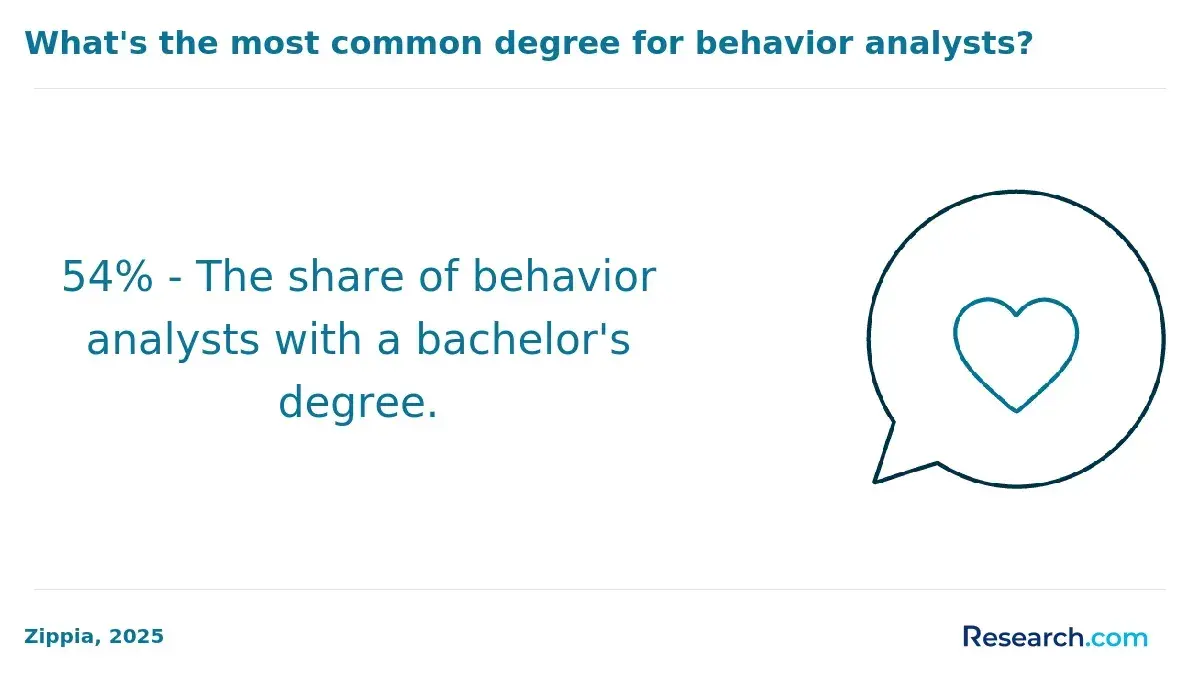
Admission requirements for online BCBA programs vary by school and credential pathway, but most programs expect applicants to show academic readiness for graduate-level applied behavior analysis. At minimum, applicants typically need a bachelor's degree. Many institutions increasingly prefer or require a master's degree, especially when the program is designed for certification preparation rather than a full graduate degree.
Relevant academic backgrounds often include behavior analysis, psychology, education, special education, counseling, social work, or related human services fields. Applicants from unrelated majors may still be considered, but they should expect to explain their career goals and may need prerequisite coursework before beginning advanced ABA classes.
Common application materials include official transcripts, letters of recommendation, a statement of purpose, and sometimes an interview. The statement of purpose should do more than express interest in helping people. It should explain why the applicant wants to practice behavior analysis, what populations or settings interest them, and how they plan to complete supervised fieldwork.
Programs may also ask applicants to document previous coursework that meets Behavior Analyst Certification Board verified course sequence standards or to complete prerequisite courses before entering the main curriculum. Students should ask whether the program includes all required coursework or assumes that some requirements were completed elsewhere.
- Confirm whether the program is a degree program, certificate program, or coursework-only option.
- Ask whether applicants need prior ABA experience or a current role in a service setting.
- Check whether supervised fieldwork can be completed while enrolled.
- Verify whether the school accepts students from your state for online education.
- Request clear information about certification eligibility before paying a deposit.
With autism diagnoses rising, the demand for qualified BCBAs is growing by 8-10% annually. That demand makes the field attractive, but it also raises the stakes for choosing a program that can support certification readiness, fieldwork planning, and long-term employability.
Online BCBA programs typically take between 12 and 24 months, depending on enrollment status, program design, and fieldwork pace. Full-time students may finish coursework faster, while part-time students often spread classes over a longer period to balance employment, family responsibilities, and supervision hours.
Tuition varies widely. According to Intelligent.com's rankings, per-credit tuition for top online BCBA master's programs ranges from $383 to $790. Since most programs require 30 to 45 credits, total tuition can range from approximately $11,490 to $35,550. Students should treat these figures as tuition estimates, not the full cost of attendance, because fees, textbooks, supervision, technology, travel, and exam preparation may add to the total.
| Cost factor | What to check |
| Tuition per credit | Multiply by the required number of credits and confirm whether rates differ for in-state and out-of-state students. |
| Supervision fees | Ask whether supervision is included, discounted, arranged externally, or billed separately. |
| Program fees | Review technology fees, clinical fees, graduation fees, and online learning fees. |
| Exam preparation | Determine whether exam review materials are included or must be purchased separately. |
| Financial aid | Confirm eligibility for federal aid, scholarships, employer tuition benefits, or payment plans. |
Shorter programs can reduce time away from full earning potential, but they may be demanding for students who work full time. Lower-cost programs can be appealing, but students should not choose on price alone if the school provides limited fieldwork support or unclear certification guidance.
- Some programs bundle supervision fees and exam prep into tuition while others charge separately.
- Lower per-credit costs may still lead to a substantial total cost if the program requires more credits.
- Financial aid and scholarships can significantly reduce overall expenses.
- Accelerated programs might cost more upfront but decrease time-related costs.
The best financial decision is the program that fits your certification timeline, budget, and support needs. Before enrolling, request a written cost breakdown and ask how the school helps students avoid delays in coursework, supervision, and exam preparation.
BCBA graduates can work in clinical, educational, residential, community, and organizational settings. Common roles include behavior analyst, clinical supervisor, school consultant, autism services specialist, early intervention provider, program coordinator, and behavioral consultant. Some BCBAs later move into private practice, agency leadership, staff training, or organizational behavior management.
Career placement support matters because applied behavior analysis is a supervised, practice-based field. Students need more than a diploma; they need fieldwork sites, qualified supervisors, professional references, and familiarity with the expectations of clinics, schools, and service agencies. Online BCBA programs that provide ABA-specific career support can make the transition from student to practitioner more efficient.
Strong placement support may include internship referrals, practicum coordination, resume review, mock interviews, employer panels, alumni mentoring, and help identifying agencies that employ or supervise future BCBAs. The most useful services are connected to the actual labor market for behavior analysts, not generic career resources that are disconnected from certification and supervised practice.
| Career support service | Why it helps BCBA students |
| Practicum and fieldwork assistance | Helps students secure supervised experience required for certification eligibility. |
| Employer partnerships | Creates pathways to clinics, schools, and agencies that hire behavior analysts. |
| Resume and interview coaching | Helps students present ABA skills, supervision experience, and client-service experience clearly. |
| Exam preparation | Supports certification readiness and can reduce delays in entering the profession. |
| Alumni networking | Connects students with professionals already working in local or specialized ABA settings. |
Practical concerns such as salary expectations and educational debt should be part of the decision. The average student debt for BCBA master's graduates is about $22,000, which may be manageable for many graduates if the program leads to timely certification progress and strong employment opportunities. However, students should compare debt against realistic entry-level salaries in their region and the support provided by the program.
Before applying, ask each school for specific evidence of support, including internship and practicum placement assistance, alumni employment rates within 6 to 12 months, access to professional networking opportunities, and certification exam preparation assistance. These factors help bridge the gap between online coursework and paid work in applied behavior analysis.
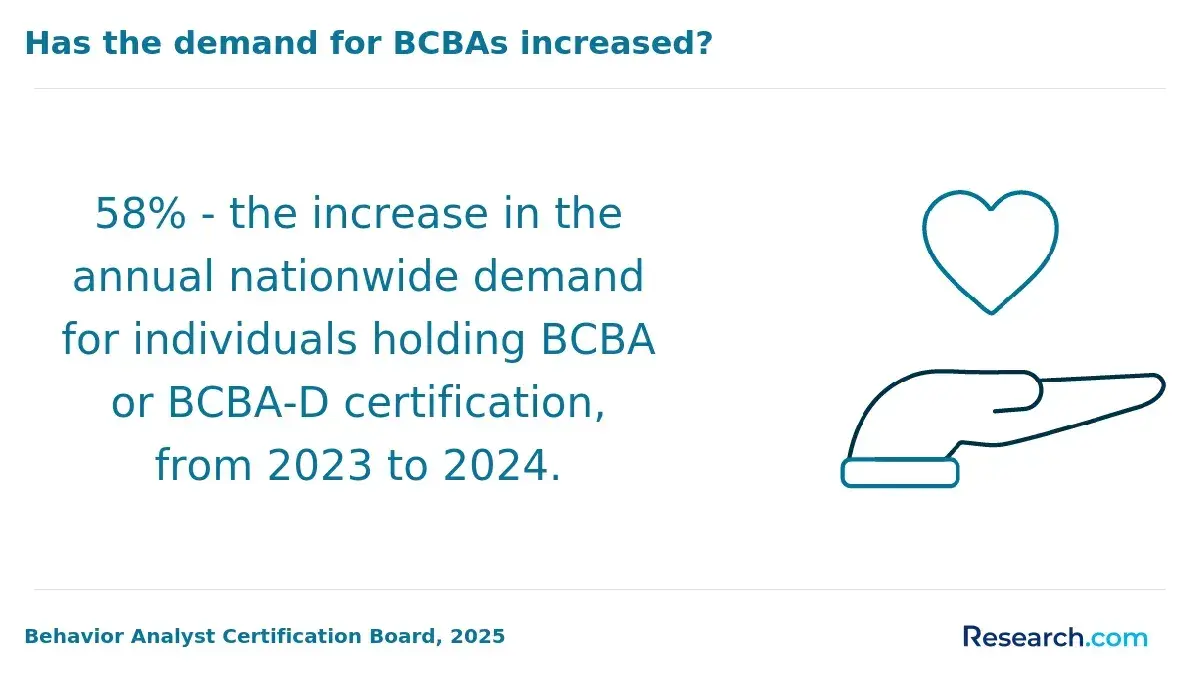
The job outlook for Board Certified Behavior Analysts is strong across healthcare, education, autism services, behavioral health, and private practice. According to the University of Cincinnati's 2025 outlook report, BCBA positions grew by 58% from 2023 to 2024. This growth reflects continued demand for professionals who can assess behavior, design interventions, supervise services, and document outcomes.
Salary varies significantly by experience, state, employer type, caseload, specialization, and whether the role includes supervision or leadership responsibilities. Entry-level BCBAs in more affordable areas may earn around $55,000 annually, while experienced practitioners in urban or specialized clinics can exceed $100,000. Median salaries in school districts hover near $65,000, while healthcare and private practice settings often offer higher compensation tied to specialized services and direct client billing.
| Work setting | Typical salary and career considerations |
| Schools and districts | Median salaries hover near $65,000, with schedules and benefits often influencing total value. |
| Healthcare and clinics | May offer higher compensation, especially for specialized services and supervisory roles. |
| Private practice | Can provide strong earning potential but may involve billing, compliance, and business responsibilities. |
| Community agencies | Often provide broad client exposure and leadership pathways, with pay depending on funding and location. |
Geography also matters. States with more funding for autism and developmental disability services often offer more openings. Populous areas may provide a larger employer base, while underserved regions may have fewer providers and persistent hiring needs. Graduates with focused experience in pediatric autism intervention, school consultation, or supervision may have stronger employment prospects.
- Strong overall job growth of 58%
- Salary range typically $60,000 to $90,000+
- Higher demand in populous and well-funded states
- Specialty certifications enhance job prospects
Increasing insurance coverage and state mandates for Applied Behavior Analysis services support steady demand in public schools, behavioral health agencies, outpatient clinics, and community-based programs. Students should evaluate salary alongside workload, supervision responsibilities, benefits, billable-hour expectations, and career advancement options.
Choosing Reputable Online BCBA Program?
Choosing a reputable online BCBA program requires more than checking whether classes are available online. Students should verify accreditation, coursework alignment, faculty qualifications, fieldwork support, certification guidance, and career services before enrolling. A program that is flexible but unclear about certification requirements can create costly delays.
Start with academic legitimacy. Confirm that the institution is accredited and that the BCBA coursework is clearly connected to current Behavior Analyst Certification Board expectations. Ask whether the curriculum covers required domains such as ethics, measurement, assessment, intervention, research design, supervision, and data analysis. If the school claims to prepare students for certification, it should be able to explain exactly how.
Next, evaluate supervised fieldwork support. Some online programs provide structured practicum partnerships, while others expect students to find their own supervisors. Neither model is automatically wrong, but the expectations should be transparent. Students who do not already work in an ABA setting should be especially cautious about programs with limited placement assistance.
Career placement support is often overlooked, but it can strongly affect a graduate's transition into the workforce. Programs with partnerships with local agencies and employers tend to offer stronger internship opportunities and job leads. Useful services include professional networking events, résumé reviews, interview preparation, alumni connections, and direct referrals to organizations hiring behavior analysts.
Demand for BCBA professionals continues to rise rapidly. The global BCBA workforce grew by 21.6% in 2022, with U.S. demand outpacing national averages through 2025. That demand makes the credential valuable, but it does not remove the need to choose a program carefully.
- Verify institutional accreditation and certification alignment before applying.
- Ask for written details about coursework, fieldwork, and exam preparation.
- Confirm whether the program is authorized to enroll students in your state.
- Compare total cost, not just tuition per credit.
- Request information about graduation rates, certification exam pass rates, and alumni employment data when available.
- Choose programs with clear faculty access and ABA-specific career support.
The right online BCBA program should give students a realistic path from admission to coursework, fieldwork, certification preparation, and employment. If a school cannot clearly explain that path, keep comparing options before committing.
Other Things You Should Know About Applied Behavior Analysis
Behavior analysts commonly work in a variety of settings including schools, healthcare facilities, and private practices. They also provide services in homes and community centers. These diverse environments allow them to apply Applied Behavior Analysis principles to support individuals with developmental disabilities, behavioral challenges, and skill acquisition.
Supervision is a critical component of Applied Behavior Analysis training, ensuring that trainees apply techniques ethically and effectively. Board Certified Behavior Analysts provide direct oversight during practicum experiences, which is required for certification. This hands-on guidance helps maintain professional standards and improve client outcomes.
Yes, there are several specialties within Applied Behavior Analysis. Professionals may focus on areas such as autism spectrum disorder, organizational behavior management, education, or gerontology. Specializing allows practitioners to develop expertise tailored to specific client populations or workplace environments.
To sit for the BCBA exam, candidates must complete 2,000 supervised fieldwork hours or 1,500 concentrated supervised fieldwork hours under BACB requirements. The experience must include approved supervision, documented client contact, and activities aligned with the BCBA task list before the BACB will authorize testing.
- Exploring the Roadmap to a Rewarding BCBA Career - apricott ABA https://www.apricott.com/resources/bcba-career-path-to-take
- BCBA master's programs | edX https://www.edx.org/masters/psychology/online-aba-programs/bcba-programs-online
- A list of popular Autism & ABA curricula | Motivity | Motivity https://www.motivity.net/blog/aba-curricula
- What is a BCBA? Your Guide to the BCBA Certification and Exam https://www.thechicagoschool.edu/insight/career-development/bcba-guide-bcba-certification-exam/
- BCBA Career Options: Exploring Diverse Career Paths for BCBAs https://www.abaresourcecenter.com/post/bcba-career-options
- BCBA Job Opportunities: Career Paths, Growth, and Impact https://championsaba.com/bcba-job-opportunities/
- ABA Certification Explained: RBT, BCaBA, BCBA, BCBA-D https://onlinecounselingprograms.com/mental-health-careers/how-to-become-behavior-analyst-bcba/aba-certification-explained/
- 10 Online BCBA Programs to Advance Your ABA Career https://hireaba.today/blog-posts/10-online-bcba-programs-to-advance-your-aba-career
- Applied Behavior Analysis (ABA)—Board Certified Behavior Analyst (BCBA) Certification - University of Mount Saint Vincent https://mountsaintvincent.edu/graduate-adult/graduate-programs/applied-behavior-analysis-aba-board-certified-behavior-analyst-bcba-certification/
- BCBA Jobs & Board Certified Behavior Analyst Careers - LEARN Behavioral https://learnbehavioral.com/careers/advance-your-career