2027 Online BCBA Programs With the Best Support for Career Changers

Co-Founder and Chief Data Scientist
Choosing an online BCBA pathway is a high-stakes decision for career changers. You may already have a degree and work experience, but if your background is outside applied behavior analysis, you need a program that clearly explains certification requirements, helps you plan supervised fieldwork, and fits around work and family obligations.
The best online BCBA programs for career changers are not simply the fastest or cheapest options. They are programs that align with Behavior Analyst Certification Board expectations, are offered by properly accredited institutions, provide reliable advising, and help students secure qualified supervision. This matters because a poor fit can delay exam eligibility, increase out-of-pocket costs, or leave you scrambling to find fieldwork hours.
This guide explains what BCBA certification involves, how online programs compare with campus-based options, what accreditation and curriculum details to verify, what costs and timelines to expect, and how to evaluate student support, fieldwork help, and job outcomes before enrolling.
Key Things You Should Know
- Online BCBA programs in 2026 increasingly offer tailored support services, including dedicated career counseling, mentoring, and flexible scheduling to accommodate career changers' unique needs.
- Data from recent studies show that 62% of career changers pursuing BCBA certification successfully transition within two years, aided by comprehensive online resources and community networks.
- The expanding demand for BCBA professionals, projected to grow by 20% through 2030, highlights the importance of selecting programs with strong practical training and job placement support.
What is a BCBA certification and why do career changers pursue this credential?
A Board Certified Behavior Analyst (BCBA) certification is a professional credential for practitioners trained to apply behavior analysis in real-world settings. BCBAs assess behavior, design intervention plans, monitor progress with data, and adjust strategies based on outcomes. Their work is commonly associated with autism and developmental disability services, but behavior analysis is also used in schools, healthcare, organizational settings, and community programs.
Career changers pursue the BCBA credential because it offers a defined route into a specialized, service-oriented field. Instead of starting over with an unrelated undergraduate degree, many professionals can build on prior experience in teaching, counseling, psychology, healthcare, social services, or child development while completing the required graduate-level ABA coursework and supervised fieldwork.
The credential is especially attractive to working adults because the pathway is structured: complete qualifying graduate education, finish supervised experience, meet eligibility requirements, and pass the certification exam. Flexible online BCBA credential programs can make that sequence more realistic for adults who cannot pause employment or relocate for a campus program.
Demand is another reason many professionals consider the transition. The U.S. Bureau of Labor Statistics projects 14% employment growth for behavioral health counselors, including BCBAs, from 2023 to 2033-significantly faster than the average for all occupations. That growth is not limited to one setting; employers include schools, clinics, hospitals, home-based service providers, telehealth organizations, and community agencies.
Before choosing a program, compare how each option supports your specific transition. Some programs are better for educators, some for healthcare workers, and others for students who need help finding fieldwork placements. You can review BCBA certification programs to compare paths that fit different budgets, schedules, and career goals.
What are the specific education and experience requirements to become a Board Certified Behavior Analyst?
To become a Board Certified Behavior Analyst in the United States, candidates generally need a qualifying master's degree, graduate-level behavior analysis coursework, supervised fieldwork, and a passing score on the BCBA certification exam. Career changers should verify current BACB requirements and any state-specific licensure rules before enrolling, because certification and state practice requirements are related but not always identical.
Candidates must have a master's degree in behavior analysis, education, psychology, or a related field from an accredited institution. The degree must include graduate-level coursework aligned with the BACB's 5th Edition Task List. For students whose previous degree is not closely related to behavior analysis, completing an approved Verified Course Sequence (VCS) is often the key academic step.
Supervised fieldwork is the second major requirement. Candidates may complete 2,000 hours of supervised independent fieldwork over at least 12 months or 1,500 hours of concentrated supervised fieldwork completed in a minimum of 6 months. In both cases, supervision must be provided by a qualified BCBA, and the experience should prepare candidates to apply assessment, intervention, ethics, documentation, and data-analysis skills with clients or service populations.
| Requirement area | What career changers should verify |
| Graduate degree | Whether your degree field is accepted and whether additional coursework is needed |
| ABA coursework | Whether the coursework aligns with the BACB's 5th Edition Task List and includes an approved VCS when required |
| Fieldwork | Whether the program helps you identify qualified supervisors and appropriate experience sites |
| Exam eligibility | Whether the program can clearly explain how its coursework supports your path to the BCBA exam |
| State rules | Whether your intended state has separate licensure or practice requirements |
After meeting the education and experience requirements, candidates must pass the BCBA certification exam, which evaluates knowledge of assessment, intervention, ethical standards, data analysis, and professional practice. Career changers are not unusual in this pathway; career changers represented 39% of ABA professionals, underscoring that the field is accessible to adults entering from adjacent professions.
If you are missing required coursework, do not assume any online master's program will solve the issue. Ask whether the curriculum includes the needed sequence, how fieldwork is coordinated, and whether advisors have experience guiding nontraditional applicants. Prospective students can explore BCBA accredited programs to compare options that align with their educational background and certification plans.
How do online BCBA programs compare to campus-based options for working professionals?
Online BCBA programs are often the better fit for working professionals because they reduce commuting, allow more control over study time, and make it possible to remain employed while completing graduate coursework. Campus-based programs may offer stronger face-to-face networking and immediate access to faculty, but they can be harder to schedule around full-time work, caregiving, or geographic limitations.
According to 2025 enrollment data from the National Center for Education Statistics, online ABA master's completers had 22% higher retention rates than those in hybrid programs. For career changers, that suggests flexible course delivery can make persistence more realistic, especially when coursework must be completed alongside employment and fieldwork planning.
| Factor | Online BCBA programs | Campus-based programs |
| Schedule flexibility | Often stronger, especially with asynchronous lectures, recorded sessions, and evening deadlines | Usually more fixed, with set class meeting times and commuting requirements |
| Access | Useful for students who do not live near a suitable ABA graduate program | Best for students near a strong local program or university-based clinic |
| Interaction | May include live virtual sessions, discussion boards, remote office hours, and peer groups | Offers more in-person discussion, informal networking, and immediate classroom feedback |
| Fieldwork | Typically completed locally with qualified supervision, depending on program support | May be easier if the school has nearby practicum partners or on-campus clinics |
| Best fit | Working adults, caregivers, military students, rural learners, and career changers needing flexibility | Students who prefer in-person learning and can attend campus consistently |
The main concern with online study is not the quality of lectures; it is fieldwork coordination. Accredited institutions and BACB-aligned programs may deliver coursework online, but supervised fieldwork still requires appropriate experience, documentation, and qualified oversight. Strong online programs explain early how students find supervisors, what settings qualify, and what happens if a placement falls through.
Campus programs can be valuable for students who want direct access to faculty labs, local clinics, or university partner sites. However, many online programs now use live seminars, virtual supervision tools, cohort discussions, and local placement support to reduce the isolation that once made online graduate study harder.
Prospective students comparing online and campus-based BCBA programs should focus less on format alone and more on fit: Can you attend consistently? Can you complete fieldwork without leaving your job? Are faculty accessible? Are exam and employment outcomes transparent? For additional program comparisons, see top applied behavior analysis graduate programs.
When selecting an online BCBA program, verify two separate quality signals: institutional accreditation and BACB-related coursework recognition. Institutional accreditation tells you whether the college or university meets broader academic standards. A BACB-recognized Verified Course Sequence (VCS) tells you whether the program's coursework has been reviewed for alignment with required behavior analysis content.
Do not treat the word "accredited" as enough. Some schools use broad language that sounds reassuring but does not answer the practical question: Will this coursework support BCBA exam eligibility? Ask the program to identify its VCS status, the exact coursework sequence, and how students with different academic backgrounds are advised.
| Quality check | Why it matters | What to ask |
| Regional accreditation | Supports academic credibility, credit transfer, financial aid access, and employer recognition | Which U.S. Department of Education-recognized accreditor oversees the institution? |
| Verified Course Sequence | Helps confirm that coursework includes required ABA content and ethics standards for BCBA preparation | Is the sequence currently recognized, and which courses are included? |
| Qualified supervision | Fieldwork must be overseen by a qualified BCBA | Does the program provide placement support, supervisor referrals, or supervision partnerships? |
| Advising | Career changers need help mapping prior education to certification steps | Will an advisor review my transcripts before I enroll? |
| Student support | Online learners need accessible faculty, technical help, and academic guidance | What support is available outside standard business hours? |
Regional accreditation is also important for practical reasons. Recognized regional accreditors by the U.S. Department of Education, such as the Middle States Commission and Southern Association of Colleges and Schools, can affect credit transfer, financial aid, graduate-school recognition, and employer confidence in the degree.
Cost should be evaluated only after you confirm quality and eligibility. According to AppliedBehaviorAnalysisEdu.org's 2025 Cost Analysis Report, average tuition for online BCBA VCS dropped 12%, now around $12,500 for a 21-credit program. Lower tuition can be valuable, but a cheap program is not a good deal if it lacks advising, fieldwork support, or the correct coursework for your certification plan.
Before applying, request written clarification on accreditation, VCS status, fieldwork expectations, and total program cost. A curated list of options such as masters in applied behavior analysis online can help you narrow the search, but final verification should always come directly from the institution and current BACB guidance.
Accredited BCBA degree programs, and programs offered by accredited institutions with BCBA-aligned coursework, are designed to build competence in behavior assessment, intervention design, ethics, data use, and supervision. The curriculum is usually structured around the knowledge and skills candidates need for supervised practice and exam preparation, not just general psychology or education theory.
Typical coursework covers foundational principles of behavior, ethical and professional conduct, applied research methods, behavior assessment, intervention planning, data collection, experimental evaluation, and behavior-change procedures. Students learn how to identify the function of behavior, design measurable goals, choose evidence-based interventions, and evaluate whether an intervention is working.
| Curriculum area | What students learn | Why it matters in practice |
| Foundations of behavior analysis | Core concepts, terminology, and principles of behavior | Provides the language and logic used across ABA practice |
| Ethics | Professional responsibilities, client rights, documentation, and decision-making | Helps practitioners avoid harmful, inappropriate, or poorly justified interventions |
| Assessment | Functional behavior assessment, data collection, and interpretation | Connects behavior plans to observable patterns rather than assumptions |
| Intervention design | Skill acquisition, behavior reduction strategies, and treatment planning | Prepares students to create individualized and measurable plans |
| Research and data analysis | Single-case designs, progress monitoring, and outcome evaluation | Supports evidence-based adjustments during treatment |
| Supervision and professional practice | Collaboration, staff training, and oversight responsibilities | Prepares BCBAs to guide teams and maintain service quality |
Most programs require between 15 and 25 semester credits, typically over 1-2 years of full-time study. Online programs often combine asynchronous lectures with synchronous seminars, faculty meetings, discussion boards, and applied assignments. For working adults, the best structure is one that provides flexibility without leaving students to interpret complex certification requirements alone.
Supervised fieldwork is separate from coursework but closely connected to it. Students generally need 1,500 to 2,000 hours of supervised fieldwork before certification, depending on the approved fieldwork pathway. Strong programs help students understand how coursework concepts appear in real cases, including assessment interviews, behavior plans, progress reports, and team consultation.
Practical assignments matter because BCBA work is data-driven and client-centered. Case studies, mock assessments, treatment-plan reviews, and graphing exercises are more useful than purely theoretical assignments. According to Payscale's BCBA Salary Survey, the median annual salary is $92,500, with many career changers reporting a 28% average income increase within a year after certification. Those outcomes depend on certification, experience, location, and job setting, so students should treat salary figures as useful context rather than a guarantee.
Most online BCBA programs take 12 to 24 months to complete, depending on course load, term structure, transfer credits, and whether the student enrolls full time or part time. Full-time students may finish within a year, while part-time students often need closer to two years. Accelerated options can be completed in as little as 9 months, but they are best for students who can handle a demanding academic schedule alongside fieldwork planning.
Cost varies by institution and program design. Tuition generally falls between $8,000 and $18,000, with additional expenses for textbooks, software, exam preparation, application fees, background checks, and supervision-related costs. Some programs charge the same tuition regardless of residency, but students should confirm this directly rather than assuming online tuition is flat-rate.
| Cost or time factor | What to check before enrolling |
| Program length | Whether the schedule is full time, part time, accelerated, or self-paced |
| Tuition | Total tuition, not just cost per credit |
| Fees | Technology fees, course materials, graduation fees, and exam preparation costs |
| Fieldwork supervision | Whether supervision is included, discounted, referred, or fully student-arranged |
| Financial aid | Eligibility for federal aid, scholarships, payment plans, or employer reimbursement |
| Schedule flexibility | Whether deadlines, live sessions, and practicum expectations fit your work schedule |
Fieldwork planning can affect both timeline and cost. Students who already work in an ABA-related setting may have an easier time arranging supervised experience, while career changers may need more help finding qualified sites and supervisors. About 85% of online students secured local field placements with the help of their programs, which shows why placement support should be part of your cost-benefit analysis.
Before committing, ask for a complete written estimate of tuition, fees, expected materials, supervision costs, and any charges tied to clinical placement or fieldwork documentation. Also ask what happens if you need to slow down, pause, or repeat a course. A program that appears affordable can become expensive if it offers little fieldwork support or charges extra for services students assumed were included.
Top-ranked online BCBA programs typically expect applicants to hold a bachelor's degree from an accredited institution. Many prefer backgrounds in psychology, education, behavior analysis, human services, or related behavioral sciences, but career changers from other fields may still be considered if they show relevant experience, strong academic preparation, or a clear commitment to ABA.
GPA expectations generally range from 3.0 to 3.3 on a 4.0 scale. Some programs may offer conditional admission to applicants below that range if they have strong professional experience, certifications, graduate coursework, or a compelling statement of purpose. Applicants should not self-reject based only on GPA; instead, they should ask whether the program reviews candidates holistically.
| Admission item | What programs commonly look for | How career changers can strengthen the application |
| Bachelor's degree | Degree from an accredited institution, often in a related field | Explain how prior work connects to behavior analysis, client support, teaching, or data-based decision-making |
| GPA | Often 3.0 to 3.3 on a 4.0 scale | Highlight recent coursework, professional achievements, or readiness for graduate study |
| Transcripts | Evidence of preparation in research methods, statistics, psychology, education, or behavioral science | Ask whether prerequisite or bridge coursework is available |
| Recommendations | Letters from supervisors, faculty, or professionals who can evaluate readiness | Choose recommenders who can speak to reliability, ethics, communication, and work with clients or learners |
| Personal statement | Clear goals and understanding of the BCBA pathway | Describe why you are changing careers and how you plan to complete fieldwork |
| Interview or GRE | Required by some programs, not all | Use the interview to show maturity, schedule awareness, and realistic expectations |
Admissions committees often look for readiness in research methods, statistics, and foundational behavioral concepts because ABA relies heavily on measurement and data interpretation. If your undergraduate degree did not include those areas, ask whether the program offers preparatory coursework or recommends specific classes before admission.
Career changers should contact advisors before applying, especially if their degree is outside education, psychology, or behavioral sciences. A transcript review can clarify whether the program is a realistic fit and whether you need extra coursework. Career changers have demonstrated exceptional success, with a 92% first-time pass rate on the certification exam among online BCBA graduates from this group, well above the national average of 68% reported by BACB. Strong advising, appropriate preparation, and relevant fieldwork all contribute to that kind of exam readiness.
Newly certified behavior analysts can work in clinical, educational, healthcare, community, telehealth, and organizational settings. The right role depends on your prior experience, preferred population, supervision history, and comfort with direct service, consultation, documentation, and team leadership.
Common job titles include board-certified behavior analyst, behavior analyst, behavior specialist, behavior interventionist, behavior technician supervisor, clinical supervisor, program coordinator, and care coordinator. Some professionals work directly with children with autism spectrum disorder or developmental disabilities, while others support school teams, train staff, consult with families, or design behavior support plans for adult services.
| Setting | Possible roles | Good fit for career changers with experience in |
| ABA clinics | BCBA, clinical supervisor, treatment plan coordinator | Healthcare, psychology, child development, social services |
| Schools | Behavior specialist, inclusion support staff, district consultant | Teaching, special education, counseling, school support roles |
| Home and community services | Behavior analyst, family consultant, program coordinator | Case management, social work, direct support, caregiving |
| Healthcare and interdisciplinary teams | Consultant, care coordinator, behavior support specialist | Nursing, therapy support, mental health, rehabilitation |
| Telehealth | Remote BCBA, caregiver coach, virtual supervision consultant | Digital service delivery, parent coaching, remote training |
| Organizational settings | Performance improvement consultant, training specialist | Human resources, management, operations, corporate training |
Many new BCBAs begin in roles that combine direct clinical responsibility with supervision of behavior technicians. With experience, they may move into clinical director, program manager, training director, consultant, or research-oriented positions. Specializations such as early intervention, gerontology, trauma-informed care, school consultation, and telehealth can expand career options.
Program support can affect early career opportunities. Online university programs supporting career changers provide connections to internship sites and licensed supervisors, saving an average of $4,200 in fieldwork supervision fees, according to Forbes Advisor's ABA Program Economics Review. Those connections may also lead to interviews or job offers after certification.
When evaluating roles, look beyond the title. Ask about caseload size, supervision responsibilities, travel expectations, documentation time, billable-hour targets, client population, and training for new BCBAs. For telehealth roles, prioritize programs and fieldwork experiences that include virtual service delivery, caregiver coaching, ethical documentation, and remote collaboration.
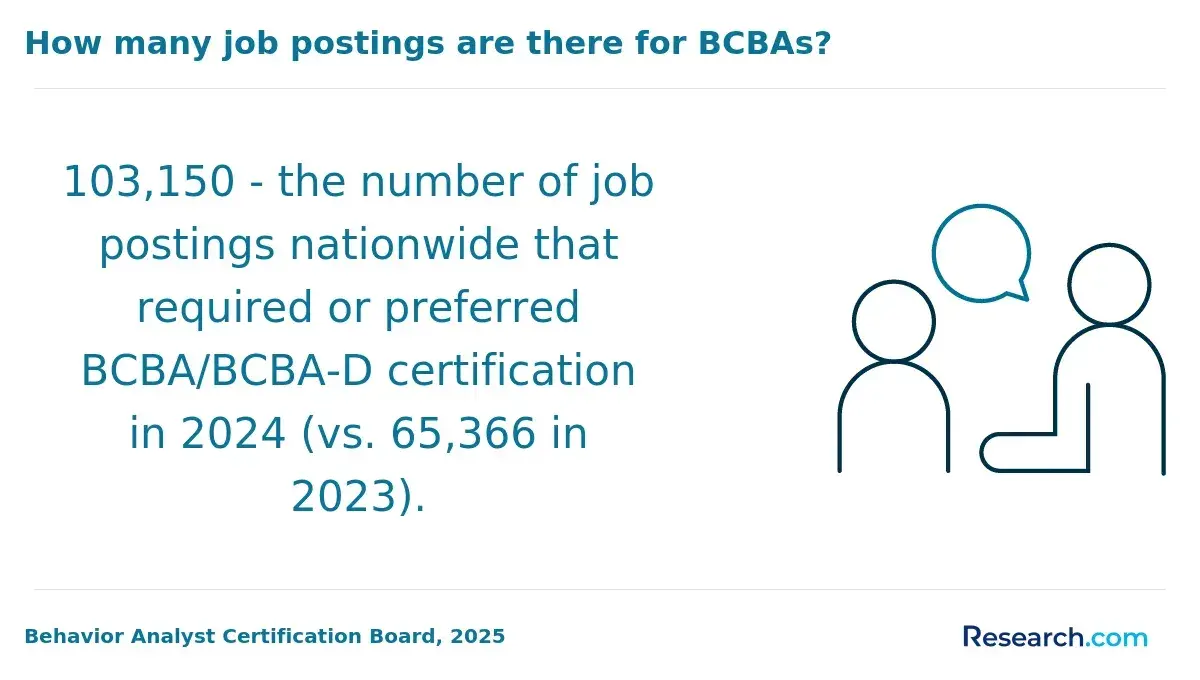
The job outlook for Board Certified Behavior Analysts is strong, especially in healthcare, education, autism services, and behavioral health settings. Demand is driven by the need for evidence-based behavior support, early intervention, school-based services, and expanded access through telehealth.
According to Purdue University Global's 2025 Outcomes Dashboard, leading online BCBA programs report a 96% job placement rate within six months after graduation, highlighting the value of employer partnerships, fieldwork networks, and career services. Placement outcomes vary by school, region, experience level, and student effort, so applicants should ask programs to explain how their placement rate is calculated.
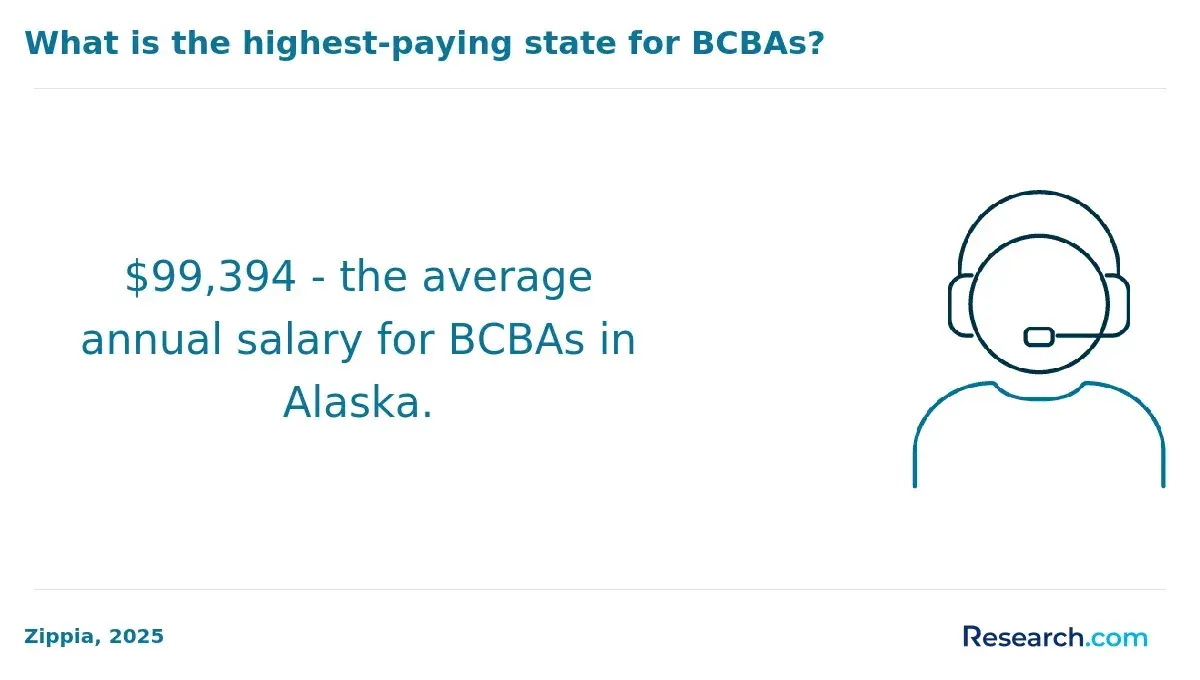
Salary potential depends on role, location, employer type, experience, specialization, and whether the position is school-based, clinic-based, home-based, remote, or supervisory. Entry-level BCBAs generally earn between $60,000 and $70,000 annually, while experienced specialists, particularly those in metropolitan or private clinical roles, can earn over $90,000. School-based and nonprofit positions tend to offer lower starting salaries, though they may provide other advantages such as predictable schedules, benefits, or mission fit.
| Factor | How it can affect salary or hiring |
| Experience before certification | Teaching, healthcare, counseling, or supervisory experience can strengthen applications |
| Practice setting | Private clinics and metropolitan employers may offer higher pay than some school or nonprofit roles |
| Location | Underserved regions may offer faster placement or salary incentives |
| Specialization | Telehealth, early intervention, supervision, and complex behavior support can improve competitiveness |
| Employer relationships | Programs with strong placement networks may help students connect with openings sooner |
Career changers may have an advantage when they can connect their prior work to ABA responsibilities. Educators understand classroom behavior and individualized plans. Healthcare workers may be comfortable with documentation and interdisciplinary teams. Social service professionals often bring experience with families, community agencies, and client advocacy.
To improve employment outcomes, build relationships during fieldwork, join local professional networks, track measurable accomplishments, and pursue continuing education aligned with your target setting. If remote work is a goal, seek supervised experiences and coursework that address telehealth ethics, caregiver coaching, and virtual data collection.
How should you evaluate program quality, student support services, and career placement rates?
Evaluate an online BCBA program by asking one question: Will this program help you become eligible, prepared, supervised, and employable? Marketing language is less important than documented outcomes, clear advising, transparent costs, and a realistic fieldwork plan.
Start with academic quality. Verify institutional accreditation, BACB-aligned coursework, faculty qualifications, course sequencing, and exam preparation support. Faculty should understand both behavior analysis and online teaching; strong subject expertise alone does not guarantee an effective online learning experience.
Next, examine student support. Career changers often need more than access to lectures. They need transcript review, course planning, fieldwork guidance, flexible office hours, tutoring, technical assistance, writing support, and mentoring from practicing BCBAs. Programs that serve working adults should be able to explain how students get help outside traditional campus hours.
| Evaluation area | Strong sign | Warning sign |
| Certification alignment | Clear explanation of coursework, VCS status, exam eligibility, and fieldwork requirements | Vague claims that the program is "BCBA-ready" without details |
| Advising | Individual transcript review and a written plan for career changers | Generic advising that does not account for prior degree field |
| Fieldwork support | Placement guidance, supervisor referrals, documentation help, and contingency plans | Students are fully responsible for finding supervision with little guidance |
| Faculty access | Responsive instructors, virtual office hours, and feedback on applied assignments | Limited faculty contact or heavy reliance on self-paced modules |
| Career services | Employer partnerships, resume help, interview preparation, and alumni connections | No clear placement data or career support for online learners |
| Outcomes | Transparent exam pass rates, retention data, and employment outcomes | Only testimonials or selective success stories |
Career placement and internship access deserve close attention. Programs with partnerships in clinics, schools, community agencies, and telehealth providers may help students move from fieldwork into employment. This is increasingly important as job-market patterns change: ABA job postings show a 35% year-over-year increase, with telehealth positions making up 28% of new openings.
Ask programs for specific data, including BACB exam pass rates, graduate employment within six months, retention rates, fieldwork placement support, and the percentage of students who complete the program on time. Also ask how outcomes differ for online students, part-time students, and career changers.
A strong program should be transparent about both benefits and limitations. If a school cannot clearly explain accreditation, coursework alignment, fieldwork expectations, total cost, and job outcomes, keep looking. The best choice is the program that matches your schedule and budget while giving you a credible, supported path to certification and employment.
Other Things You Should Know About Applied Behavior Analysis
Successful individuals in applied behavior analysis should demonstrate strong analytical and observational skills. Effective communication is also crucial to collaborate with clients, families, and other professionals. Additionally, patience and adaptability help behavior analysts implement interventions and adjust strategies based on client response.
Career changers must complete at least 1,500 supervised fieldwork hours, or 2,000 concentrated supervised hours, before taking the BACB BCBA exam. Supervision must meet BACB rules, including documented contacts, qualified supervisors, and a required mix of unrestricted and restricted activities.
Ethics in applied behavior analysis emphasize respect for client dignity, confidentiality, and informed consent. Behavior analysts must avoid harm and ensure interventions are evidence-based and tailored to individual needs. The Behavior Analyst Certification Board provides a comprehensive code of ethics to guide professional practice.
Maintaining BCBA certification requires ongoing continuing education to stay current with the latest research and practices. Certified behavior analysts must complete a set number of professional development hours regularly. Additionally, those new to the field often receive supervised practical experience to ensure competency and adherence to ethical standards.
- BCBA Job Outlook 2025 Shows Strong Growth and Demand https://blossomabatherapy.com/blog/bcba-job-outlook
- BCBA Job Outlook in 2025 Growing Demand and Opportunities https://www.connectncareaba.com/blog/bcba-job-outlook
- 25+ Affordable ABA/BCBA Online Programs (Masters & Certs) https://abamastersprograms.org/affordable-online-aba-masters-programs/
- 11 Best BCBA Programs & Schools (In-Person & Online) https://www.crossrivertherapy.com/behavioral-analysts/best-bcba-programs
- Association for Behavior Analysis International https://www.abainternational.org/vcs.aspx
- How to Become a Behavior Analyst https://onlinecounselingprograms.com/mental-health-careers/how-to-become-behavior-analyst-bcba/
- Board-Certified Behavior Analyst (BCBA) Salary Guide â Trusted Health https://www.trustedhealth.com/allied-career-guide/behavior-analyst/salary-guide
- BCBA Jobs: What Can You Do as a Board Certified Behavior Analyst? https://www.moralismachina.com/blog/bcba-jobs
- Is BCBA Certification Worth the Investment? | Little Rays ABA https://www.littleraysaba.com/blog/bcba-certification
- What Jobs Can a BCBA Do - What are the Roles? https://www.biermanautism.com/resources/blog/what-jobs-can-a-bcba-do/