2027 BCBA Degree Online vs Campus Programs: Pros, Cons & Cost

Co-Founder and Chief Data Scientist
Choosing a BCBA degree format is a career decision as much as a scheduling decision. BCBAs in the U.S. earn an average of $89,075 per year, so the program you choose should help you meet certification requirements, complete supervised fieldwork, prepare for the exam, and enter the job market with confidence.
Online and campus BCBA programs can both lead to the same credential path when they meet BACB requirements. The best option depends on how you learn, where you can complete fieldwork, how much structure you need, and what total cost you can realistically manage. This guide compares online and campus BCBA programs by learning format, fieldwork access, student support, satisfaction, cost, and employment outcomes so you can choose the path that fits your life and career goals.
What are the benefits of taking a BCBA degree?
- The field projects job growth of about 22% over the next decade.
- BCBAs can work in diverse settings (schools, clinics, private practice, telehealth), allowing for greater choice in work environment and schedule.
- BCBAs have average annual salaries of around $89,075, with mid‑career and experienced professionals often earning $95,000‑$115,000.
What are the key differences between online and campus BCBA degree programs?
The main difference between online and campus BCBA degree programs is not the credential itself but how students complete coursework, receive support, build professional networks, and arrange supervised fieldwork. Both formats can satisfy BACB certification requirements when the curriculum and fieldwork structure are approved, but the student experience can be very different.
Campus programs usually provide a more structured academic environment, with scheduled classes, in-person faculty access, and easier access to university-affiliated clinics or practicum sites. Online programs typically offer more flexibility, making them attractive to working adults, parents, and students who do not live near a campus with a BCBA pathway.
- Learning format: Online BCBA programs often use asynchronous or flexible coursework, while campus programs usually follow fixed schedules with in-person lectures, seminars, labs, or clinical activities.
- Fieldwork setup: Campus programs may have established practicum placements through university clinics, schools, or local agencies. Online students more often need to coordinate supervised fieldwork locally, although some programs help identify approved supervisors.
- Networking: Campus learners benefit from regular face-to-face interaction with classmates, faculty, supervisors, and visiting clinicians. Online students build networks through discussion boards, video meetings, group projects, and local fieldwork sites.
- Cost and accessibility: Online programs may reduce housing, relocation, and commuting expenses, though specific national savings figures for BCBA programs weren’t verifiable. Campus programs can carry higher indirect costs but may offer easier access to facilities and in-person services.
- Exam outcomes: Candidates from campus delivery modes had a first-time pass rate of approximately 73%, while those from online-only modes had about 60%. This does not mean every campus program is stronger than every online program, but it does show why students should review exam preparation, faculty support, and fieldwork quality before enrolling.
- Employer hiring perception: In a broad higher-education survey, 87.4% of employers reported hiring graduates with online degrees, and 100% of those reported paying them equal starting salaries compared to in-person degree holders.
- Flexibility for working students: Online learning suits professionals balancing work, family, and coursework. Campus programs work better for students who want a consistent weekly routine and direct accountability.
A practical way to decide is to ask where you will complete your supervised hours, how much live faculty interaction you need, and whether your schedule can support fixed class times. For BCBA preparation, fieldwork quality and exam readiness matter more than the delivery format alone.
What are the main benefits of attending a campus BCBA program?
Campus-based BCBA-accredited programs are often strongest for students who want structured learning, immediate feedback, and direct access to faculty, peers, clinics, and practicum sites. The in-person environment can make it easier to develop applied skills because students can observe, practice, ask questions, and receive correction in real time.
- Direct supervision and real-time feedback: In-person training allows students to work directly with faculty and supervisors during applied behavior analysis sessions. This can help students refine observation, data collection, intervention planning, and ethical decision-making more quickly. According to the BACB, supervised fieldwork is one of the strongest predictors of exam success.
- Stronger networking and peer collaboration: Campus settings create regular opportunities to interact with professors, classmates, alumni, and visiting clinicians. Research by the National Survey of Student Engagement (NSSE, 2024) found that 71% of students in in-person programs felt more connected to mentors compared to 49% in online programs.
- Access to on-campus clinical facilities: Many universities operate ABA therapy clinics, research centers, school partnerships, or community service programs. These settings can help students gain supervised experience with clients while connecting coursework to practice.
- Structured academic environment: Fixed class meetings, physical attendance, and cohort-based learning can improve accountability. A 2024 report by Inside Higher Ed noted that campus students report 18% higher completion rates than online learners in professional graduate programs.
- Enhanced academic and emotional support: Campus students can often access office hours, tutoring, counseling, library services, writing support, and disability services in person. For students who learn best through frequent interaction, this support can improve persistence and confidence.
A campus BCBA program may be a better fit if you are entering the field with limited ABA experience, want close mentoring, or prefer learning complex clinical skills through live demonstration and practice. It can also be useful if the university has strong local partnerships that simplify practicum placement.
What are the disadvantages of pursuing a BCBA degree on campus?
Campus BCBA programs can offer strong academic and clinical support, but they are not the right fit for every student. The biggest drawbacks are usually cost, location, and schedule rigidity. Compared with BCBA online options, campus programs often require students to live near the institution, commute regularly, and attend classes at fixed times.
- Higher total cost of attendance: Campus-based programs typically add expenses for housing, transportation, parking, meals, and campus services. According to the National Center for Education Statistics, graduate students at public universities spend about $17,000 more annually on living and commuting expenses than online learners.
- Limited flexibility for working professionals: In-person classes follow fixed schedules, which can be difficult for students with full-time jobs, caregiving responsibilities, or unpredictable work hours. A 2024 Eduventures report showed that 64% of graduate students choose online study mainly for schedule flexibility.
- Geographic and access limitations: Many students do not live near universities offering BCBA-accredited programs. Relocating may not be realistic, and long commutes can reduce study time, increase costs, and create additional stress.
- Smaller course variety and cohort options: Campus programs may have fewer electives, start dates, or specialization options if enrollment is limited. Online programs often draw students from multiple regions, which can broaden discussion and professional perspectives.
- Potential scheduling conflicts for supervised fieldwork: Fixed academic calendars and class times can make it harder to align practicum schedules with clinics, schools, or agencies, especially for students who also work part time. Online programs may allow students to coordinate fieldwork around local employment or community placements.
The main risk is choosing a campus program because it feels more traditional without calculating the full commitment. Before enrolling, confirm the weekly class schedule, commute time, practicum expectations, total cost of attendance, and whether the program has reliable fieldwork placements.
Online BCBA programs are designed for students who need flexibility but still want a pathway to BACB-aligned coursework and supervised fieldwork. Many students choose online study because they cannot relocate, cannot attend daytime classes, or want to continue working in education, behavioral health, social services, or ABA settings while completing the degree.
Some BCBA accelerated programs also combine flexible online coursework with supervised fieldwork that meets BACB standards. A BCBA accelerated program online in 2027 can be especially useful for students who already have relevant experience and are prepared for a faster academic pace.
- Flexible scheduling: Online students can often complete lectures, readings, assignments, and discussions around work and family responsibilities. This is especially helpful for students employed in schools, clinics, or human services agencies.
- Continue earning while you learn: Many online students keep their jobs while completing coursework. This can reduce opportunity cost and may allow students to complete supervised fieldwork at or near their current workplace when appropriate supervision is available.
- Lower associated costs: Online formats can reduce or eliminate commuting, relocation, housing, and some campus-based fees. This does not mean every online program is cheaper, so students should compare tuition, technology fees, supervision costs, and required campus visits.
- Broader access from anywhere: Students can consider accredited online programs outside their immediate region without moving. This expands options for students in rural areas or states with limited campus-based BCBA pathways.
- Relevant skills for today’s workplace: Online study builds habits that matter in modern ABA practice, including digital communication, remote collaboration, time management, and comfort using technology-supported learning and documentation tools.
The strongest online BCBA programs are not simply convenient; they are organized, transparent, and fieldwork-focused. Look for clear supervision guidance, responsive faculty, exam preparation resources, and a curriculum that connects assignments to applied behavior analysis practice.
Online BCBA study can be effective, but it requires planning. Students must manage deadlines, stay engaged without a physical classroom, and arrange supervised fieldwork in a way that satisfies program and BACB expectations. The flexibility that makes online learning attractive can become a weakness if the program lacks structure or the student lacks a consistent routine.
- Self-discipline and time-management demands: Online formats require students to create their own weekly study schedule, track assignments, participate in discussions, and prepare for exams without regular in-person reminders.
- Reduced live engagement: A study found that 72% of students reported that low engagement during online lectures hurt their learning experience. Students who learn best through immediate discussion should look for programs with live sessions, active faculty feedback, or synchronous supervision opportunities.
- Technical and connectivity issues: Nearly 46% of students in one survey experienced device malfunctions, and 64% reported unstable internet connections when studying remotely. A reliable computer, stable internet access, and a backup plan are essential.
- Higher distractibility risk: Research shows that online students spend more time on off-task activities than on-site students in hybrid settings. Students should create a dedicated study space, use calendar blocks, and limit multitasking during lectures and assignments.
- Balancing responsibilities: Online-only students were more likely (52%) to cite balancing academics with personal, family, or financial responsibilities compared to in-person students (44%). Flexibility helps, but it does not reduce the workload.
Fieldwork coordination is another major challenge. Online students should ask whether the program helps locate supervisors, verifies fieldwork sites, provides documentation templates, and offers guidance if a placement changes. A program with weak fieldwork support can delay progress even if the coursework is convenient.
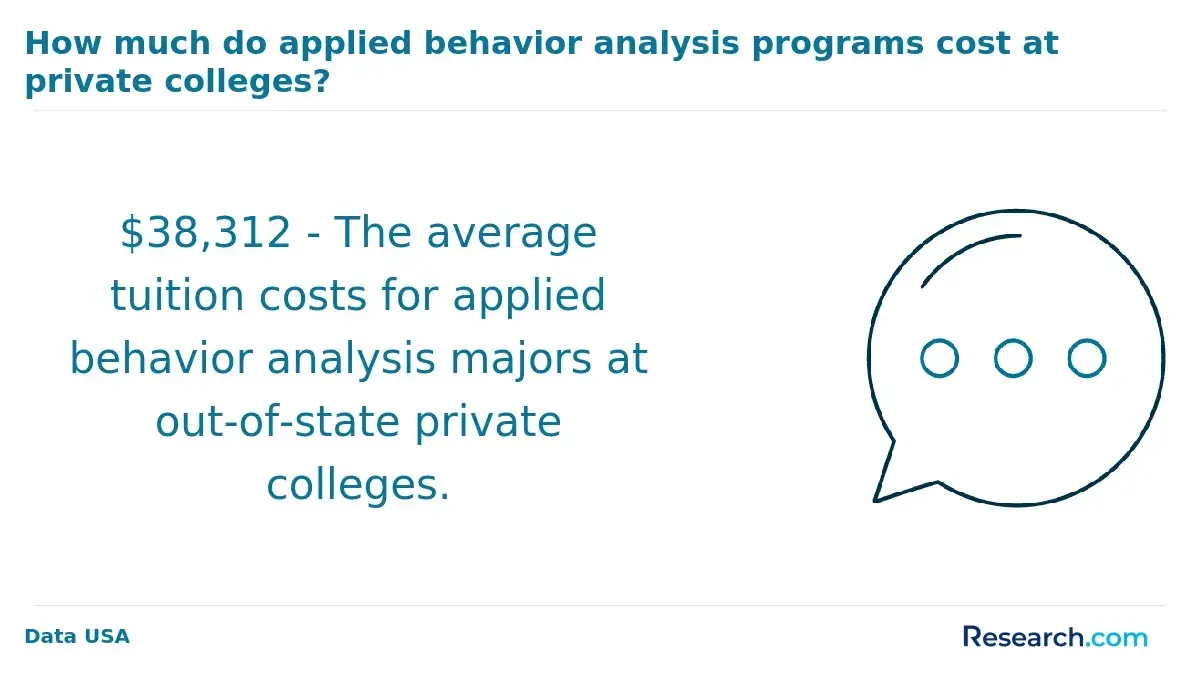
Online BCBA programs often have lower total costs because students can avoid relocation, campus housing, daily commuting, and some location-based expenses. Tuition alone does not tell the full story. Students should compare the complete cost of attendance, including fees, books, technology requirements, supervision expenses, travel, lost work hours, and any required campus visits.
Data show that online degree programs at public institutions averaged around $40,536 for a bachelor-level program in 2024-25. In contrast, the total cost of attendance for traditional on-campus graduate programs averaged about $43,620 per year.
Some sources also report per-credit tuition averages of $316 for online programs versus $390 for in-state traditional on-campus courses. These figures suggest that online options may be more cost-effective, especially for students who can live at home, keep working, or complete fieldwork locally.
However, the cheaper option is not automatically the better value. A higher-cost campus program may be worth considering if it provides strong practicum placement support, high-quality supervision, reliable faculty access, and strong exam preparation. Likewise, an online program can become more expensive than expected if students must pay separately for supervision, travel for intensives, or extend enrollment because fieldwork is delayed.
- Compare tuition by credit: Check whether the program charges different rates for in-state, out-of-state, online, or graduate students.
- Ask about fees: Technology fees, clinical fees, distance learning fees, background checks, and exam preparation materials can add to the total.
- Estimate fieldwork costs: Some students receive supervision through employment, while others may need to pay for supervision or travel to approved sites.
- Calculate time costs: A campus commute or daytime class schedule may reduce work hours, while online study may allow continued employment.
- Review financial aid eligibility: Confirm whether the program qualifies for federal financial aid, employer tuition assistance, scholarships, or graduate assistantships.
Yes, an undergraduate or master's in behavior analysis online program can offer fieldwork and practicum opportunities comparable to a campus-based program when it meets BACB requirements and provides a clear supervision structure. The key issue is not whether the coursework is online; it is whether the student can complete approved supervised fieldwork with qualified oversight.
For example, the University of South Florida Online MA in Applied Behavior Analysis requires students to complete 1,500 hours of supervised fieldwork under a BCBA. This illustrates how an online program can still require substantial hands-on experience in real ABA settings.
Many accredited online programs also have partnerships with local clinics, schools, community agencies, or ABA providers. Supervision may be conducted virtually, in person, or through a combination of both, depending on program rules, BACB requirements, and site availability. Students should verify these details before enrolling rather than assuming the program will arrange everything automatically.
- Ask who finds the placement: Some programs place students directly, while others expect students to locate a site and supervisor.
- Confirm supervisor qualifications: Fieldwork should be supervised by an appropriate BCBA or approved professional under current requirements.
- Review documentation procedures: Strong programs teach students how to track hours, activities, supervision meetings, and competency development.
- Check local site availability: Students in rural or underserved areas may need extra time to secure a qualified supervisor.
- Clarify virtual supervision rules: If supervision is remote, confirm how observations, feedback, client confidentiality, and documentation are handled.
Online students can graduate with strong applied experience, but they need to be proactive. Fieldwork should be planned early, ideally before the first term begins.
Student support differs mainly in delivery, immediacy, and relationship-building. Online students often have access to advising, tutoring, digital libraries, writing centers, and technical help remotely. Campus students usually have more informal access to faculty, classmates, supervisors, and campus offices.
Online support can be convenient and effective when it is well designed. Over 80% of colleges offer online access to academic counseling/advising and other services. This matters for BCBA students because advising, fieldwork planning, and exam preparation all require timely communication.
The challenge is engagement. Studies show online students may engage less in informal help-seeking than campus students, with in-person students demonstrating far higher frequencies of turning to instructors and peers. Campus-based students can ask questions after class, visit office hours, study with classmates, and receive in-person encouragement more naturally.
- Online support strengths: flexible advising appointments, digital resources, recorded sessions, remote tutoring, and easier access for students who work or live far from campus.
- Online support weaknesses: slower relationship-building, less spontaneous help-seeking, possible delays in responses, and greater dependence on email or learning platforms.
- Campus support strengths: face-to-face faculty access, peer study groups, in-person mentoring, clinical observation opportunities, and a stronger sense of community.
- Campus support weaknesses: services may be tied to business hours, commuting may limit access, and students with work obligations may not be able to use support resources regularly.
Before choosing a program, ask how often advisors meet with students, whether faculty respond within a stated timeframe, what fieldwork support is available, and whether exam preparation is built into the curriculum. Good support should be visible before enrollment, not promised vaguely after admission.
Student satisfaction can be high in both online and campus BCBA programs, but satisfaction depends on what students value most. Online students often appreciate flexibility and convenience. Campus students may report stronger connection, collaboration, and faculty access.
In one survey, 74% of online students rated their experience as “satisfied” or “very satisfied,” compared to only 53% of public four-year on-campus students. Another study reported that 82.6% of students in an online learning mode were satisfied with the instructor’s active guidance and timely feedback.
Those results show that online learning can be satisfying when instructors are active, responsive, and organized. However, research also indicates that online students may feel less engaged or supported in collaborative learning and student-faculty interaction compared to traditional on-campus students. In other words, online satisfaction is strongest when the program deliberately creates connection through live sessions, feedback, cohort interaction, and accessible support.
- Online students are more likely to be satisfied when: the platform is easy to use, deadlines are clear, instructors provide timely feedback, and fieldwork guidance is practical.
- Campus students are more likely to be satisfied when: faculty are accessible, practicum sites are strong, the cohort is supportive, and the schedule is manageable.
- Dissatisfaction in either format often comes from: poor communication, unclear expectations, weak supervision, limited exam preparation, or difficulty balancing coursework and fieldwork.
Students should not rely on format alone as a predictor of satisfaction. A well-run online program can feel more supportive than a poorly organized campus program, and a strong campus cohort can provide motivation that is difficult to replicate online.
Do graduates from online BCBA programs have similar employment rates as campus graduates?
Graduates from online BCBA programs can have employment outcomes similar to campus graduates when the program is BACB-accredited, the coursework is rigorous, and the supervised fieldwork is well documented. Employers generally care most about certification eligibility, BCBA exam performance, applied skills, ethical judgment, and relevant experience.
According to the National Association of Colleges and Employers (NACE), 87.4% of employers reported hiring graduates with online degrees. All of these employers indicated that starting salaries were equal to those of in-person graduates.
For BCBA candidates, the most important employability factors are not limited to whether the degree was online or in person. Students should be able to show competency in ABA assessment, intervention design, data analysis, behavior support planning, supervision, and professional communication. Practicum quality and supervisor feedback can matter as much as classroom format.
Some employers may still value in-person networking or direct experience from campus-based clinics. A campus program may also provide easier access to local hiring pipelines if it has established relationships with schools, hospitals, autism service providers, or behavioral health agencies.
Online programs can offer a different advantage: students may complete fieldwork in their own communities while maintaining employment. This can help them build local professional relationships and transition into roles where BCBA demand is strong. A well-structured online program with strong supervision can prepare graduates to compete effectively with campus-trained candidates.
- Choose an online program carefully: Confirm BACB alignment, exam preparation, faculty qualifications, and fieldwork support.
- Build experience while enrolled: Work or volunteer in ABA, education, developmental disability services, or behavioral health when possible.
- Track fieldwork professionally: Keep accurate records and be prepared to discuss cases, interventions, data, and ethical decision-making in interviews.
- Use local networking: Online students should connect with supervisors, clinics, schools, and professional associations in their region.
- Focus on certification readiness: Passing the BCBA exam and demonstrating applied competence are central to employment outcomes.
Other Things You Should Know About BCBA Degree Online vs Campus Programs
BCBA coursework must include a qualified instructor, verified course content, and supervised fieldwork that meets BACB standards. The BACB requires a master’s degree, specific behavior-analytic coursework, and supervised experience before the BCBA exam. Programs should be checked against current BACB Verified Course Sequence and fieldwork requirements.
Campus programs often provide on-site labs, clinics, or partner facilities, giving students easier access to direct supervision and hands-on ABA therapy experience. Online programs, in contrast, require students to arrange local fieldwork placements that meet BACB supervision requirements. While both formats satisfy certification mandates, online students may need to be more proactive in securing qualified supervisors and practicum sites, whereas campus students typically have placements integrated into the program.
- Behavior Analyst Certification Board. (2025, March 4). Inside the BACB newsletter. https://www.bacb.com/
- Chicago School of Professional Psychology. (2025, September 26). What is a BCBA? Your guide to the BCBA certification exam. https://www.thechicagoschool.edu/insight/career-development/bcba-guide-bcba-certification-exam/
- Online Counseling Programs. (n.d.). ABA certification explained: RBT, BCaBA, BCBA, BCBA‑D. https://onlinecounselingprograms.com/mental-health-careers/how-to-become-behavior-analyst-bcba/aba-certification-explained/
- Path4ABA. (n.d.). Understanding the cost of pursuing a BCBA certification. https://path4aba.org/understanding-the-cost-of-pursuing-a-bcba-certification/
- BestPsychologySchools.com. (n.d.). Cheapest online BCBA degree programs. https://www.bestpsychologyschools.com/cheapest-online-bcba-degree-programs/